- Ibiza
On 1 August 1936, Republican forces secured Ibiza after local Republican militia and security forces suppressed the Nationalist uprising on the island. The operation formed part of the Republican government’s wider effort to regain control of the Balearic Islands before they could be consolidated by the Nationalists. While Ibiza and neighbouring Formentera remained under Republican control for several weeks, the larger island of Mallorca stayed firmly in Nationalist hands, becoming the principal base from which Nationalist and Italian forces would later dominate the western Mediterranean and ultimately reverse Republican gains in the archipelago.
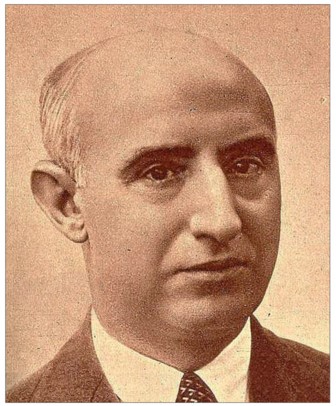
On 1 August 1936, French Prime Minister Léon Blum faced an impossible dilemma. Blum led the Popular Front government, a coalition of socialists, radicals, and left republicans ideologically sympathetic to Spain’s own Popular Front administration. French trade unions, communists, anti-fascists, and much of the French left demanded immediate assistance for the Spanish Republic, viewing the military uprising as a fascist attack on democracy itself. For several days during late July, limited French arms shipments and aircraft had begun reaching Republican Spain, yet the pressure against intervention mounted rapidly.
Inside France, conservatives, Catholic groups, industrial elites, and sections of the military warned that aiding Spain could drag France into civil conflict or even European war. French right-wing newspapers increasingly portrayed the Spanish Republic not as a democratic government defending itself, but as a revolutionary chaos dominated by anarchists, socialists, and anti-clerical violence.
The British government under Prime Minister Stanley Baldwin strongly opposed French intervention. British officials feared that open support for the Republic might provoke direct confrontation with Adolf Hitler and Benito Mussolini, potentially triggering a wider European war. But anti-war fears were not the only reason for British caution. Many within the British political establishment deeply distrusted the revolutionary atmosphere emerging inside Republican Spain. Reports from Barcelona and Madrid described armed workers’ militias, collectivised factories, church burnings, anti-clerical killings, and revolutionary committees replacing state authority in some districts. To many conservative politicians and diplomats in Britain, social revolution appeared nearly as threatening as fascism itself.
Under mounting pressure, France began retreating toward the policy that soon became known as non-intervention. Publicly, the policy was presented as an effort to prevent foreign escalation in Spain. In reality, it quickly became clear that the agreement would not be enforced equally. Because while Britain and France discussed neutrality, Fascist Italy was already intervening.
On 1 August, Mussolini agreed to send aircraft to assist the Nationalists after urgent appeals from monarchist and aristocratic supporters of the rebellion, including the Marqués de Viana and the exiled former king Alfonso XIII. The financing for the operation came largely from Juan March Ordinas, the immensely wealthy Mallorcan businessman who became one of the rebellion’s most important financial backers. Often described as one of the richest men in Spain, March used his fortune to help purchase aircraft, fuel, and supplies for the Nationalist cause.
The Republic was the internationally recognised legal government of Spain, yet democratic Europe already appeared reluctant to defend it. Meanwhile, Germany and Italy were increasingly willing to ignore international agreements altogether in order to support the rebellion. The sense of abandonment deepened rapidly inside Republican territory. Newspapers in Madrid, Barcelona, and Valencia denounced Britain and France for appeasing fascism while restricting aid to the Republic. Left-wing groups increasingly concluded that the democracies feared revolution more than dictatorship. Among anarchists and communists especially, the belief spread that Spain had become the front line of a much larger international struggle. The Republic found itself increasingly isolated diplomatically even as fascist assistance strengthened the rebellion militarily.
Inside Republican Spain, the arrival of the Army of Africa generated growing panic. Eyewitnesses in Madrid and Barcelona later recalled rumours spreading constantly through cafés, newspapers, militia headquarters, and railway stations about massacres in Andalusia and the advance of los moros (the Moroccan Regulares) toward Republican territory. The language used in many Republican accounts was often racialised and reflected both fear and colonial stereotypes, but the terror surrounding the Army of Africa was also rooted in the very real brutality accompanying the Nationalist advance. Refugees fleeing northward from Andalucia and Extremadura already carried stories of executions, public beatings, disappearances, and bodies left in village squares after Nationalist occupations.
- Monte de Estépar, Burgos
On 2 August 1936, the Nationalists launched one of the most important offensives of the Spanish Civil War. From the area around Seville, the Army of Africa began its advance north through Extremadura, the first stage of the campaign that would eventually carry Franco’s forces to the gates of Madrid.
During the night of 1–2 August 1936, Republican prisoners began disappearing from Burgos Provincial Prison. In a stretch of pine woodland near the village of Estépar, approximately 21 kilometres west of Burgos, lie some of the most important mass graves from the opening months of the Spanish Civil War. Between 2 August and 12 October 1936, prisoners removed from Burgos Prison were taken to this isolated hillside, executed without trial and buried in unmarked graves. During this period, sixteen documented sacas departed the prison for Monte Estépar, where 371 victims have been documented by name, but the true number of those killed is believed to have been considerably higher.
- Toledo, New Castile
On 1 August 1936, Toledo had been at war for almost two weeks. The military uprising that began on 18 July had divided the ancient provincial capital into two worlds. Republican authorities controlled the streets, government buildings, railway station, hospitals and most of the city beyond the walls of the Alcázar, while the fortress itself remained in Nationalist hands under the command of Colonel José Moscardó Ituarte. Between them lay a city of around 30,000 people, where everyday life continued beneath the constant threat of gunfire and artillery. Click here for the August Alcázar siege
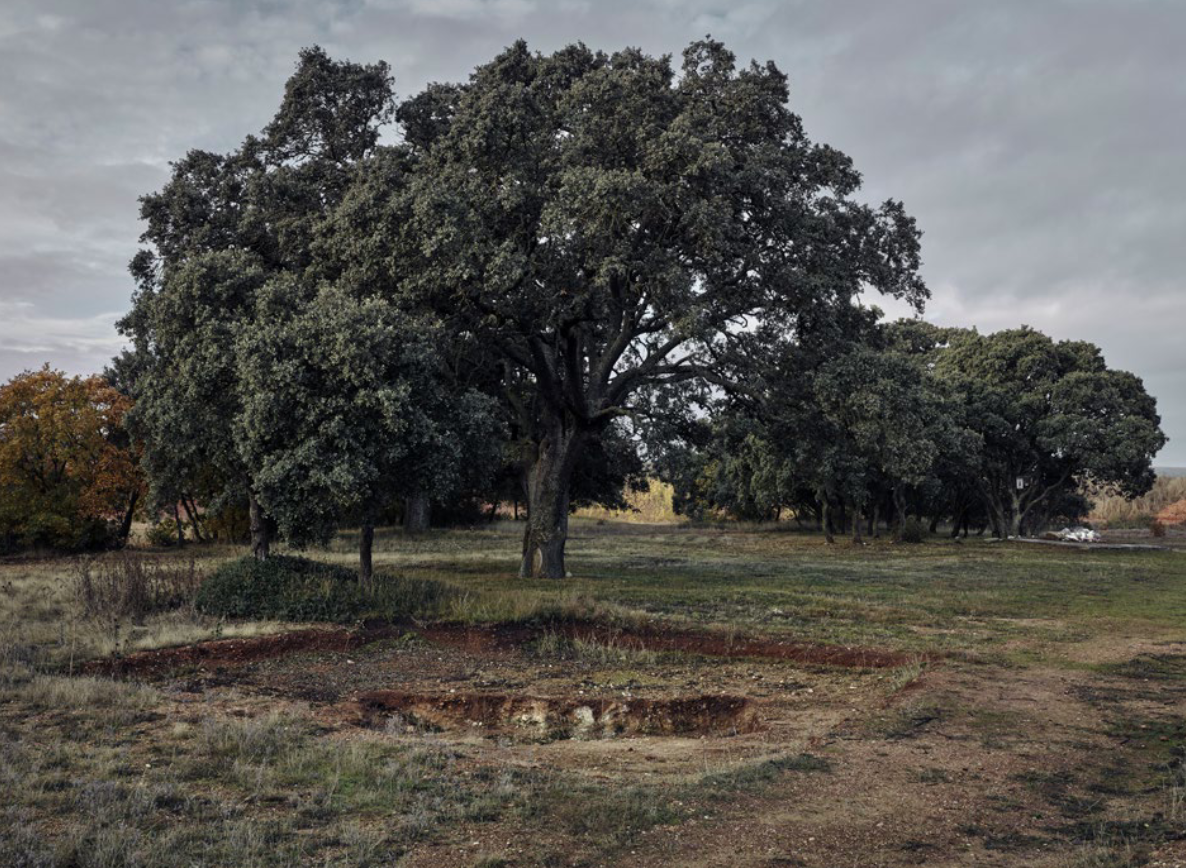
Monte Estépar’s significance lies entirely in its role as one of the principal execution sites of the Nationalist repression in Burgos Province during the first months of the war. The victims were civilians, local politicians, trade unionists, teachers, railway workers, labourers and other men and women accused of supporting the Republic or considered politically ‘unreliable.’ Most had first been imprisoned in Burgos before disappearing in the nightly sacas.
The military uprising of July 1936 encountered little organised resistance in Burgos. By 19 July the city was firmly under the control of the rebels, and the province rapidly became one of the safest areas in the Nationalist zone. While fighting continued across much of Spain, Burgos became an administrative and military centre for the rebellion. The Junta de Defensa Nacional established its headquarters there on 24 July, and after General Francisco Franco was proclaimed Generalísimo on 1 October, the city became the seat of his government, the political heart of the Nationalist war effort.
The absence of military opposition meant that repression became one of its defining characteristics. During the first days after the coup, the Guardia Civil, Falange, Carlist requetés and military authorities arrested hundreds of people throughout the province. Those detained included elected Republican officials, trade union leaders, teachers, railway workers, labourers, municipal employees and others suspected of loyalty to the Republic. In many cases, arrests were based on denunciations from neighbours, political rivals or local right-wing organisations rather than evidence of criminal acts.
Families knew that relatives had vanished after being taken from prison but received no official notification of death, no marked grave, and no explanation beyond silence. It was not until archaeological excavations began in 2014 that the first graves were scientifically examined, confirming both the scale of the killings and the accuracy of the memories preserved by survivors and relatives. Four pits have since been excavated, returning the remains of 96 victims, while documentary research indicates that hundreds more remain buried elsewhere within the forest or in nearby locations yet to be discovered.
Many of those arrested were transferred to the Prisión Central de Burgos. The prison became the principal holding centre for political detainees from across the province. Historical documentation shows that the majority of those later buried at Monte Estépar had first passed through its gates, often spending days or weeks in custody before being removed. There is no evidence that these prisoners were tried or sentenced before their disappearance. The method used to remove prisoners became known as the saca. Officially, prisoners were recorded as leaving the prison, sometimes under the pretence of release or transfer. They were handed over to armed groups composed principally of Falangists and Carlist requetés, accompanied by members of the Civil Guard, who transported them to isolated execution sites outside the city. Between 2 August and 12 October 1936, prison records document sixteen sacas from Burgos Prison to the graves at Monte Estépar, providing one of the clearest surviving administrative records of organised political executions during the opening months of the Civil War.
The existence of these records is historically significant. At many execution sites across Spain, historians have been forced to reconstruct events almost entirely from oral testimony and forensic evidence. At Monte Estépar, the prison registers, documentary research and archaeological investigations reinforce one another, allowing the process of arrest, imprisonment, removal and burial to be traced with unusual precision. Together, they reveal that the killings carried out in the forest were a coordinated system of repression implemented in Burgos during the first months of Nationalist rule.
The prison registers show when prisoners left Burgos Prison, and the excavations demonstrate where many of them were buried. The final stage of their journey is less clearly documented, as no participant left a detailed account of the executions carried out at Monte Estépar. But the documentary records, forensic evidence, and testimonies from comparable execution sites across Nationalist Spain make it possible to reconstruct the sequence of events with a reasonable degree of confidence. The sacas almost always departed after darkness had fallen. Prisoners were removed from their cells, their names entered in the prison register, and they were handed over to armed escorts waiting outside. Contemporary documentation does not identify the composition of every escort, but members of the Falange, Carlist requetés, the Guardia Civil and military personnel all participated in the repression in Burgos Province. The prisoners were then transported by lorry along the road towards Estépar, a journey of approximately thirty minutes.
Whether the prisoners knew where they were being taken is impossible to determine. Some may have believed they were being transferred to another prison, though in reality most certainly recognised that they would not return. Accounts from survivors of sacas elsewhere in Spain describe prisoners praying, embracing one another, writing hurried farewell notes or remaining silent during the journey, knowing this was the end. There is no evidence to show that these events occurred at Monte Estépar, but they illustrate the uncertainty that surrounded prisoner removals throughout the summer of 1936.
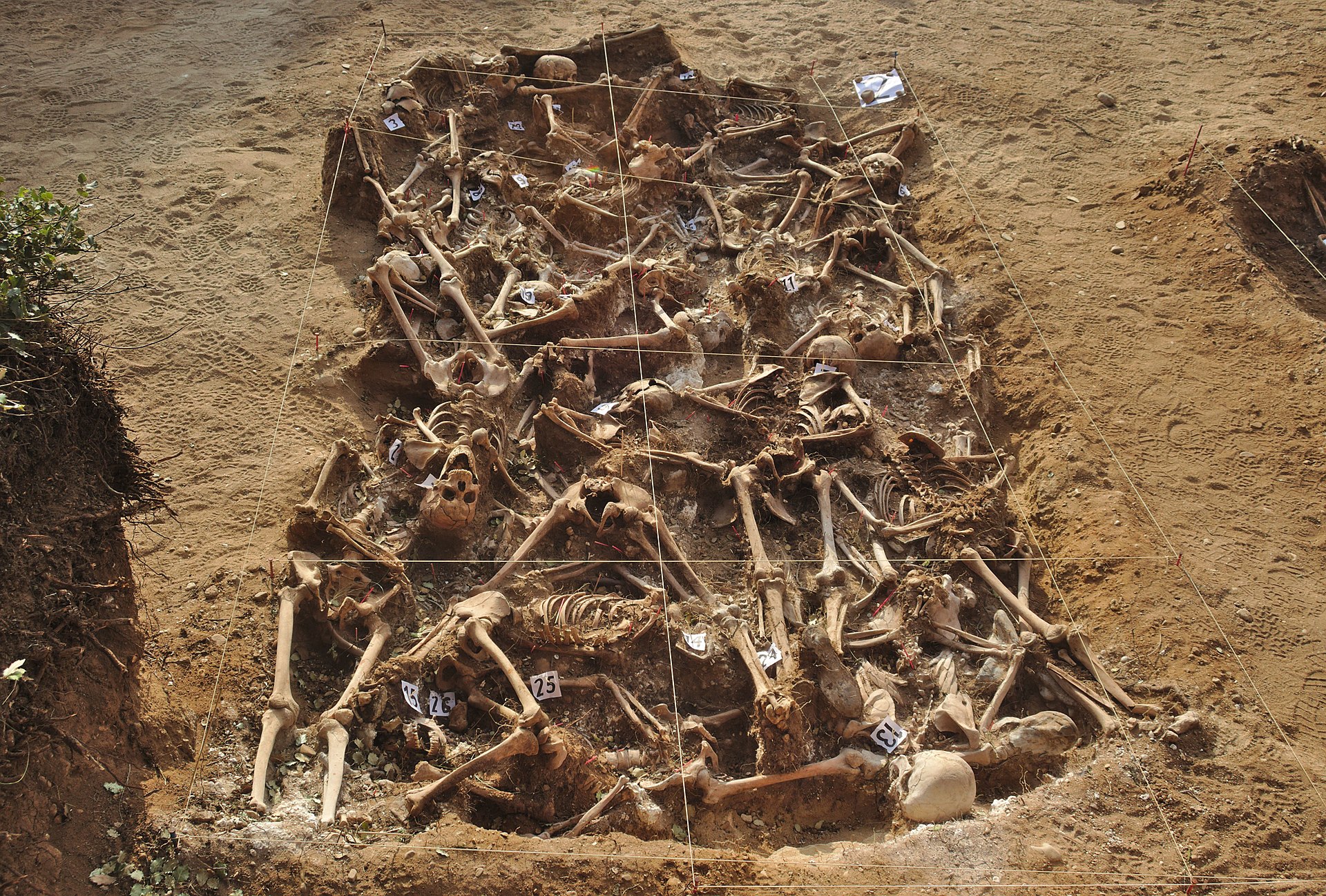
The excavated graves provide important clues about what happened once the lorries reached the forest. The four pits were laid out in a deliberate arrangement and were similar in size and orientation. Archaeologists concluded that they had probably been excavated before the prisoners arrived, rather than being dug after each execution. This preparation reduced the time spent at the site and allowed successive sacas to be carried out efficiently. Victims were removed from the vehicles in small groups and taken to the edge of the prepared graves. Forensic examination of the recovered skeletons found that the overwhelming majority had died from gunshot wounds to the head. Many individuals also displayed additional traumatic injuries sustained around the time of death. Several victims were recovered with their wrists still bound, indicating that at least some prisoners remained restrained until shortly before or during the execution. The bodies were pushed directly into the graves in layers rather than in individual plots. There was no attempt to identify the dead or mark the burial sites. Personal possessions, including footwear, spectacles, coins, jewellery, rosary beads, watches, combs and fragments of clothing, remained with the bodies, demonstrating that there was little effort to remove valuables before burial. Once the graves had been filled, they were covered with earth and left unmarked beneath the pine forest.
Ballistic evidence recovered during the excavations added another important dimension to the investigation. Cartridge cases and projectiles were documented alongside the human remains, allowing specialists to examine the weapons used during the executions. The findings demonstrated the use of military ammunition consistent with the arms available to Nationalist forces in Burgos during the opening months of the Civil War. Combined with the prison records and forensic evidence, the ballistic analysis strengthened the conclusion that the executions formed part of an organised operation rather than isolated acts of violence.
For almost eighty years, the families of those taken from Burgos Prison had little more than rumours to guide them. Relatives knew that prisoners had disappeared during the sacas, but the authorities neither acknowledged the executions nor revealed where the bodies had been buried. As a result, many families spent decades searching for answers, preserving letters, photographs and personal memories while hoping that documentary evidence might one day reveal the fate of their loved ones. The search for those answers began in the archives. Historians working with the Coordinadora Provincial para la Recuperación de la Memoria Histórica de Burgos examined the surviving registers of Burgos Prison, where officials had recorded the names of prisoners removed during the sixteen documented sacas between 2 August and 12 October 1936. The researchers compared those prison records with municipal registers, civil records, cemetery records, contemporary newspapers, military documentation and family papers. They also interviewed relatives, who frequently preserved details that had never appeared in official documents, including the circumstances of an arrest, a prison visit or the last time a family member had been seen alive. Through this work, historians have documented 371 individuals believed to have been murdered at Monte Estépar, but they acknowledge that additional victims almost certainly remain unidentified.
Historical research alone could not confirm where those people had been buried. In 2014, the Coordinadora launched the first systematic archaeological excavation of Monte Estépar. Archaeologists, forensic anthropologists, historians and volunteers worked together to locate the graves using historical documentation, witness testimony and field surveys. After identifying probable burial sites, the excavation team removed the soil by hand, exposing the graves gradually to preserve every possible piece of evidence. They photographed each stage of the excavation, mapped the precise position of every skeleton and recorded every artefact before removing it from the grave.
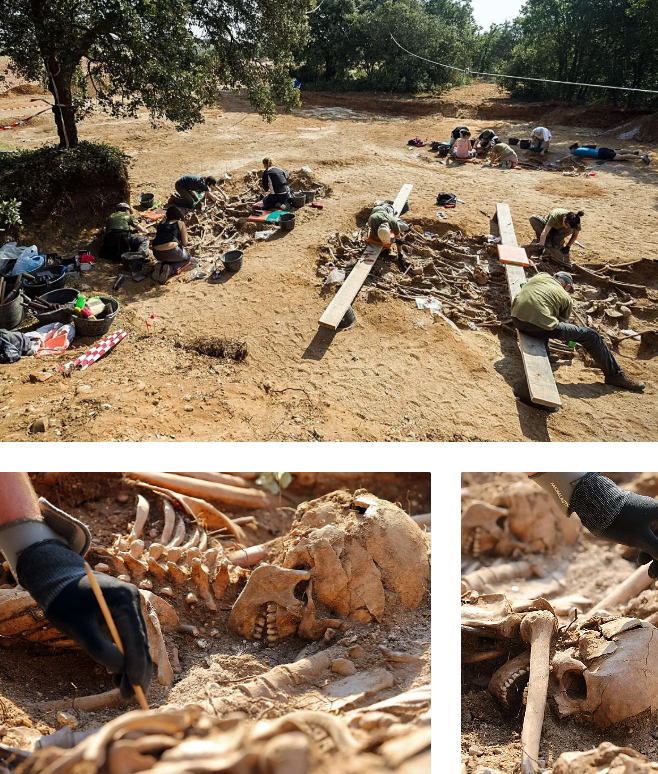
The forensic team then examined each set of remains individually to determine age, biological sex and stature, recorded evidence of disease or healed injuries, and documented the trauma associated with death. Ballistics specialists analysed bullet fragments and cartridge cases recovered from the graves, while archaeologists catalogued every personal possession found with the bodies. Watches, spectacles, rosary beads, combs, pencils, keys, coins, belt buckles, shoes and fragments of clothing all entered the project’s catalogue, where researchers compared them with archival records and family descriptions.
The final stage of the investigation relied on forensic genetics. The Coordinadora invited relatives of the disappeared to provide DNA samples, allowing geneticists to compare living family members with samples taken from the recovered remains. Scientists considered DNA alongside the archaeological evidence, documentary records and forensic examinations before confirming an identification. This cautious approach ensured that every identification rested on multiple independent lines of evidence rather than genetics alone. By combining archival research, archaeology, forensic anthropology and DNA analysis, the investigation has reconstructed the identities and life stories of people whom the Franco dictatorship attempted to erase from the historical record. Each confirmed identification allows a family to bury a relative with dignity after decades of uncertainty, while each unidentified victim reminds researchers that the work at Monte Estépar remains unfinished.
Mapa de Fosas Comunes de la Guerra Civil y El Franquismo en Castilla y León
- Barbastro, Huesca
In the early hours of 2 August 1936, three senior members of the Claretian community of Barbastro in Huesca, were taken from prison and executed at the town cemetery. Felipe de Jesús Munárriz Azcona, the community’s superior, was killed alongside Juan Díaz Nosti, a professor of moral theology, and Leoncio Pérez Ramos, the seminary’s bursar. They were the first members of the community to die in a sequence of executions that would continue throughout August. The Claretian house had been occupied on 20 July, shortly after the military uprising failed in Barbastro. Its community consisted of sixty members: nine priests, twelve religious brothers and thirty-nine students preparing for ordination. Armed militiamen searched the building for weapons but found none. Nevertheless, the community was detained, its senior priests separated from the younger members, and most of the prisoners confined in the former Piarist school of San Lorenzo.

Munárriz, Díaz Nosti and Pérez Ramos were held apart from the main body of Claretian students. At approximately two o’clock on the morning of 2 August, prisoners were removed in groups and driven to the cemetery. The three Claretians were executed there with other detainees, including diocesan clergy and Catholic civilians, and their bodies were placed in a communal grave. The surviving Claretian prisoners remained confined in Barbastro, aware that the removal of their superiors probably marked the beginning of further killings over the next few weeks.
- Puente Genil, Córdoba
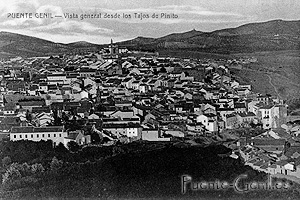
In the summer of 1936, Puente Genil was one of the largest and most economically important towns in the south of Córdoba province. Situated on the River Genil near the border with Seville and Málaga, it occupied a strategic position on the railway linking Córdoba, Málaga and the wider Andalusian network. Its flour mills, olive oil production, wineries, metalworking industries and surrounding farmland made it an important commercial centre whose prosperity depended on both industry and agriculture. By 1936, the town’s population exceeded 25,000, making it one of the province’s principal urban centres outside the capital, with very powerful bourgeoisie tempered by strong socialist and communist support in government.

Like many industrial towns in southern Spain, Puente Genil had developed a strong labour movement during the Second Republic, while the UGT and CNT represented many agricultural labourers, railway workers and industrial employees. Elections, strikes and disputes over wages, land ownership and working conditions had sharpened political divisions throughout the early 1930s. Conservative landowners, industrialists and Catholics increasingly viewed the Republic as a threat to the existing social order, while many workers believed meaningful reform had still not gone far enough.
When the military uprising began on 18 July, workers’ organisations, Republican authorities and loyal security forces prevented the local coup from succeeding, leaving the town under Republican control. A pact was instituted between the Captain and the Mayor, ordering that the workers would surrender their weapons at the Town Hall, but Republican forces from the three barracks joined together rand the Guardia Civil declared a state of war, and 200 leftwing workers were soon killed in sporadic fighting. The town was divided into the workers in the upper part and the area around the train station, and the lower part the area of the upper bourgeoisie, which sided with the rebels. Reinforcements soon arrived to protect the Guardia Civil, leading to days on ongoing violence between the two sides, including when militia stopped rebel reinforcements at Los Reinas estate and killed and burned their bodies. An assault from Republican militia form Malaga tried to storm the Guardia Civil barracks, so the guards killed 50 Republican prisoners in retaliation.
Militiamen began to take to the streets, going house to house, and many bourgeois homes fell, killing many of their defenders. The Las Pitas farmhouse witnessed the deaths of many right-wingers. The Guardia Civil were forced to abandon their barracks but 25 were killed while fleeing. On 28 July, Republic militia manged to shoot down a rebel plane over their town, and daily violence brought e right wing death total to 115. But during the final days of July, Nationalist forces advancing north through Andalusia rapidly overran one Republican town after another. Better armed, professionally trained and supported by artillery, they steadily dismantled organised resistance across the region. As neighbouring towns fell, it became increasingly clear that Puente Genil could not remain isolated for long.
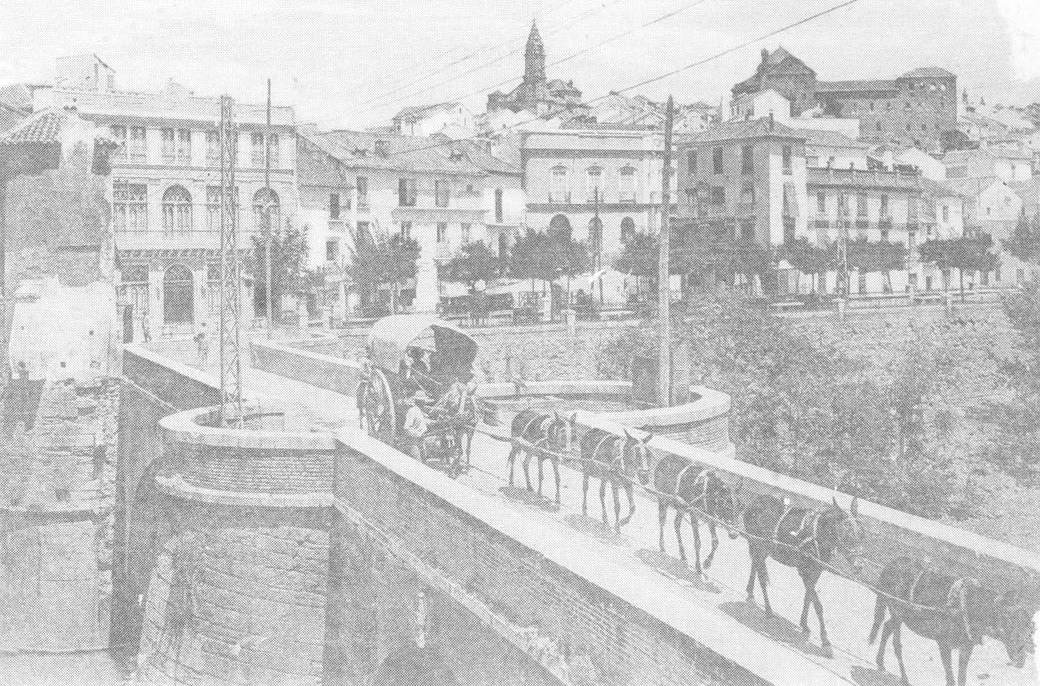
On 1 August, the murderous Lieutenant Colonel Castejón and his column of 1200 men, formed by a Company of the 5th Battalion of the Legion and reinforced by other smaller columns, entered the town over the Genil River bridge with a brutality and artillery that eclipsed the local violence. Most towns had seen one-sided violence and repression, bit Puente Genil had put up a fight. The Nationalist propaganda machine had worked overtime, sending word countrywide that leftist had killed 700 ‘innocents,’ burned down homes, mutilated corpses, destroyed churches and killed the clergy, and worn ecclesiastical robes while playing football with the Virgin Mary’s head. While approximately 155 Nationalist were dead, the rest had no occurred, and more than double that number of Republicans had already been slain. Still, Castejón demanded 100 leftists killed for every lost Nationalist life, happy to claim the false number of 700 already dead.
The occupation of Puente Genil brought an immediate campaign of arrests and executions at Venta Flores near the cemetery, a place on the outskirts of town. Republican councillors, trade union leaders, members of left-wing political parties, municipal employees and people identified with the Republic became the principal targets. Armed patrols detained many in their homes or workplaces, while others surrendered believing they would be imprisoned rather than killed. Later records shows 501 people killed almost immediately, some killed in their homes or on the streets, and another 500 would also soon share the same fate. The women of Puente Genil were not spared, and are included in the executed, along with the now familiar story of being shaven, poisoned and raped by soldiers and local sympathisers.
Establishing the true scale of the killings has proved difficult. The Civil Registry records 334 violent deaths in Puente Genil during 1936, but modern historians have shown that these official records capture only part of what occurred. Research by Diego Igeño Luque has identified numerous victims whose executions were never entered into the register, demonstrating that the official figures significantly understate the number of people killed during the occupation and its immediate aftermath. The victims represented every part of the town’s Republican community. Labourers, railway workers, factory employees, craftsmen, municipal officials and political activists all appeared among the dead. Their common characteristic was not military service but their perceived loyalty to the Republic or their association with trade unions and left-wing organisations. For many families, the executions ended any hope that the occupation would bring only a change of government. Fathers, sons and brothers disappeared within days, while relatives were left to discover their fate through rumour, cemetery workers or neighbours willing to speak in secret.
Among the known victims was Concepción Cáceres Jurado, a respected local midwife. Women who represented Republican civic life or who were associated with the Republic could also become targets. Although men made up the overwhelming majority of those killed, her death remains one of the clearest examples of the occupation reaching beyond the political leadership and into the wider fabric of the community. Wives, parents and children were left to cope with the sudden disappearance of husbands, sons and fathers, often without being told where they had been buried. Many learned of a relative’s death only through rumours, cemetery workers or neighbours willing to speak in private. Public mourning was dangerous, and families quickly understood that asking questions could bring unwanted attention from the new authorities.
The occupation also transformed everyday life. Families identified with the Republic lost not only relatives but also their place within the community. Widows frequently became the sole providers for their households after the execution or imprisonment of their husbands. Children grew up without fathers, while many families faced poverty after losing their principal wage earner. Those associated with Republican organisations found it difficult to obtain work, and political loyalty became an important consideration in public employment and local administration.
The Republicans who managed to escape trekked to Málaga over 120km away, only to be caught up in the infamous massacre a year later. Many who were arrested at home were taken to Córdoba to be executed. Local right-wing groups continued their reprisals in the postwar period, arresting all those returning from Republican territory and carried out further executions.
Approximately 334 people died in Puente Genil, according known, or acknowledged deaths up until 1986, and only 111 victims were buried in unknown pits in the town’s cemetery, with the rest given ‘no identified location.’ The first excavation in 2019 around 25 meters from the west wall of the cemetery, two sets of niches, San Agustín and Santa Gema, which were demolished due to their poor structural condition in May 2022, and at the end of 2023, a team focused its work on the Patio de La Purísima of the municipal cemetery. These three pits are thought to hold the 111 recorded victims, though the initial 25-metres long pits have only discovered eight people, all found to have suffered violent deaths. Puente Genil had dared tofight back, and four percent of their little town was killed for it.


One thought on “On This Day in the Spanish Civil War: 1 August 1936, including Monte de Estépar and Puente Genil”