Click here for the July siege update
On 1 August 1936, Toledo had been at war for almost two weeks. The military uprising that began on 18 July had divided the ancient provincial capital into two worlds. Republican authorities controlled the streets, government buildings, railway station, hospitals and most of the city beyond the walls of the Alcázar, while the fortress itself remained in Nationalist hands under the command of Colonel José Moscardó Ituarte. Between them lay a city of around 30,000 people, where everyday life continued beneath the constant threat of gunfire and artillery.
Perched on a rocky hill almost entirely surrounded by the Tagus River, Toledo had always been easy to defend. Narrow medieval streets climbed steeply towards the Alcázar, whose commanding position overlooked every approach to the city. The fortress dominated both the skyline and the siege. From its walls, the defenders could observe much of Republican Toledo. In return, Republican artillery positioned on surrounding high ground fired regularly into the building, while rifle fire echoed across the valley throughout the day.
Inside the Alcázar, approximately 1,700 people remained cut off from the rest of the city. Around 1,200 were armed defenders, Army officers, cadets of the Infantry Academy, members of the Guardia Civil, Falangists and civilian volunteers, while roughly 500 were civilians, including women, children and elderly relatives who had taken refuge there during the first days of the uprising. Moscardó had organised strict rationing almost immediately, recognising that every sack of flour, every preserved food store and every litre of water would have to sustain the garrison until relief arrived. No one inside knew how long that might take.
Beyond the city, the province remained overwhelmingly Republican, but the situation was becoming increasingly uncertain. Roads leading south and west carried refugees, militia reinforcements and military supplies, while neighbouring villages organised defence committees, recruited volunteers and watched developments elsewhere in Spain with growing anxiety. Each newspaper brought reports of fresh fighting in Andalucía, Aragón and Extremadura. Those battles seemed distant, yet the people of Toledo understood that the outcome of campaigns hundreds of kilometres away would eventually determine the fate of their own city.
The first week of August brought no decisive assault or dramatic breakthrough, but neither side remained idle. Each day began with the expectation of renewed shelling, sniper fire or another demand for surrender. Each evening ended with the Alcázar still standing and the Republicans still controlling the city around it. Republicans relied increasingly on artillery, machine guns and snipers to wear down the garrison. The bombardment varied from day to day. Some days passed with only intermittent exchanges of fire, while others saw prolonged shelling that shook buildings across Toledo and forced civilians to shelter indoors until the firing eased.
Foreign journalists also began arriving in greater numbers, drawn by the unusual spectacle of a medieval fortress holding out in the middle of a Republican-controlled city. Their reports introduced Toledo to an international audience, transforming what might otherwise have remained a local siege into one of the earliest symbols of the Spanish Civil War.
As the siege settled into a stalemate on the ground, the Republicans increasingly turned to the air in an effort to break the defenders’ resistance. Aircraft had appeared over Toledo since the opening days of the siege, but during August their visits became a familiar part of daily life. The sound of aero engines overhead often prompted civilians to look towards the Alcázar, wondering whether another bombing raid was about to begin. On 8 August, Republican aircraft had dropped sixteen bombs onto the Alcázar while also releasing tear-gas grenades, hoping to make the defenders’ already difficult conditions even more unbearable. The following day, aircraft again attacked the fortress while Republican artillery joined the bombardment from positions around Toledo. A week later, on 15 August, another raid introduced incendiary and smoke bombs, attempting to ignite fires within the complex and further reduce the defenders’ ability to live and fight inside the damaged buildings.
On 11 August, Nationalist forces captured Mérida after fierce fighting. The victory secured one of the most important crossings of the Guadiana River and linked the Nationalist territories advancing from Seville with those moving south from Cáceres. Three days later, on 14 August, they captured Badajoz, eliminating the last major Republican stronghold on the Portuguese frontier. For the first time, a Nationalist force existed that could realistically advance towards Madrid. The news reached Toledo quickly and Republican commanders immediately recognised the implications. If the Army of Africa continued advancing north, Toledo lay directly on one of the principal routes towards the capital.
Republican authorities responded by increasing their efforts to force a surrender before relief could arrive. Artillery positions around Toledo remained active, while engineers continued searching for ways to breach the fortress’s formidable defences. Militia reinforcements arrived from Madrid and neighbouring districts, and discussions intensified over whether a larger assault should be attempted. Every day the Alcázar remained in Nationalist hands increased the risk that an advancing relief column would eventually reach the city.
By 14 August, Republican commanders accepted that their original plan had failed. The bombardment had damaged roofs, upper floors and defensive positions, but the thick masonry walls and the fortress’s elevated position continued to frustrate every attempt to force a decisive breakthrough. Inside, Colonel José Moscardó had introduced strict rationing from the outset, while engineers repaired damage whenever the shelling eased. The defenders had shown no sign of surrendering, and so the Republicans the Republicans adopted a more aggressive approach. Their attention shifted to the Military Government House, an adjoining complex immediately north of the Alcázar. Capturing it would place Republican troops within little more than 40 metres of the fortress itself, allowing engineers to work closer to its walls and giving assault troops a far better starting point for a final attack.
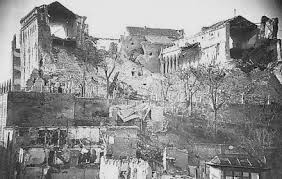
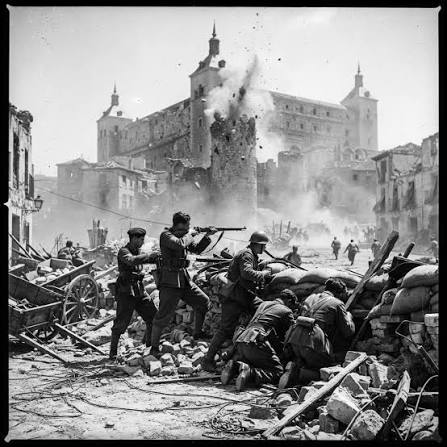
The new plan was implemented almost immediately, and over the following weeks, Republican forces launched a sustained series of assaults against the Military Government House. In total, eleven separate attacks were made, supported by artillery and machine-gun fire. Some assaults briefly secured parts of the building before determined Nationalist counterattacks drove the attackers back. Others ended after fierce fighting in corridors, staircases and adjoining rooms where control of individual floors changed hands repeatedly. Though the Republicans demonstrated increasing determination and came closer to the fortress than at any previous stage of the siege, none of the attacks achieved the decisive breakthrough they sought.
The change in tactics altered the atmosphere across Toledo. Instead of artillery alone dominating the siege, prolonged infantry fighting erupted around the northern approaches to the Alcázar. Residents living nearby heard sustained bursts of rifle and machine-gun fire as assaults developed, while explosions echoed through streets that had previously experienced only intermittent shelling. Hospitals received a steady stream of wounded militia, and ambulances became an increasingly familiar sight moving through the city.
At approximately 05:00 on Saturday, 22 August, lookouts inside the Alcázar reported another aircraft approaching Toledo. This one came from the south-west, the direction in which Nationalist forces were advancing through Extremadura rather than from Madrid, where Republican aircraft normally appeared. The aircraft circled above the fortress before departing, prompting what the Alcázar operations diary described as considerable discussion among the defenders. The aircraft disappeared as unexpectedly as it had arrived, and there was no immediate indication that it had left anything behind. If it had been a Nationalist aircraft, it had come and gone without firing a shot.
The remainder of the day offered little indication that anything had changed. Republican aircraft continued to operate over Toledo, while artillery maintained its bombardment of the fortress. One version of the Alcázar operations diary records that Republican aircraft attacked later that morning before artillery batteries fired seventy-four 155 mm shells against the northern façade. Another surviving version records two Republican fighters over Toledo during the afternoon and later describes a Nationalist trimotor attacking Republican positions around Zocodover, the Seminary, and the Cigarrales de San Servando. The surviving versions of the diary are not entirely consistent on the sequence of aerial operations that day, but all agree that the Alcázar remained under sustained attack. Whatever had happened during the early morning flight, it did not interrupt the siege. Republican artillery continued firing, engineers repaired fresh damage inside the fortress, and the defenders returned to the routines that had sustained them for more than a month. Yet somewhere beyond the walls of the Alcázar lay something none of them had yet discovered.
Early the following morning, 23 August, a search of the eastern esplanade revealed a weighted message container that had been dropped during the previous day’s flight. Other contemporary and later accounts state that the aircraft had also released four food parcels, three landing within the Alcázar and a fourth on the eastern esplanade. Though the surviving accounts differ over the number and location of the parcels, they agree that the defenders recovered food, a signalling code for communicating with Nationalist aircraft, and two letters signed by General Francisco Franco, both dated 22 August 1936.
The letters carried a simple message. Franco informed Colonel José Moscardó that the Nationalist command knew the Alcázar still resisted, that relief forces were advancing towards Toledo, and that the defenders were to continue holding the fortress until they arrived. The package also contained food, variously described as including sardines, mortadella, preserved fruit, condensed milk and supplies intended for children and the sick. After weeks of strict rationing, even these modest provisions carried enormous symbolic value. According to the operations diary, the discovery produced immense joy throughout the fortress. The letters were displayed publicly so that everyone sheltering inside could read them. Women used the red-and-yellow ribbons that accompanied the package to make cockades, while orders were given to restore the same colours to the flag flying above the Alcázar. Using the signalling code that had been dropped with the message, the defenders laid out recognition panels so that future Nationalist aircraft could communicate with the fortress. For the first time since the siege had begun, the garrison possessed direct evidence that the outside Nationalist command knew they were still holding out.
Outside the Alcázar, the siege showed no sign of easing. Artillery continued firing against the fortress throughout 23 August, while aircraft again appeared over Toledo. Time, which had once appeared to favour the Republicans, was rapidly becoming their greatest enemy. The optimism that spread through the Alcázar on the morning of 23 August found no reflection elsewhere in Toledo. While the defenders read Franco’s letters and prepared new signalling panels for future aircraft, the Republican authorities faced another day of bombardment, rumours and growing pressure. The siege continued unabated. Artillery shells struck the fortress throughout the morning, mortars fired intermittently, and aircraft again appeared over the city. For most residents, it was another day in a city that had grown accustomed to living with war.
The continuing air attacks heightened tensions beyond the walls of the Alcázar. One version of the Alcázar operations diary records Republican aircraft attacking the fortress, while another also describes a Nationalist aircraft bombing Republican positions elsewhere in Toledo. Whatever the precise sequence of events, explosions across the city added to an already volatile atmosphere. Militia remained on constant alert, hospitals continued receiving casualties, and rumours spread rapidly through Republican Toledo as people attempted to understand what was happening.
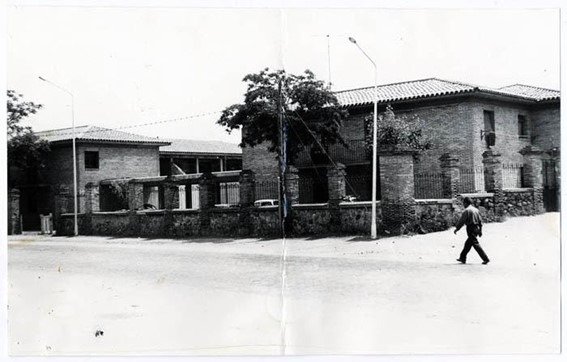
That afternoon, events took a far darker turn, where the Provincial Prison of Toledo had become increasingly overcrowded during the first month of the war. Suspected Nationalist sympathisers, military officers, Falangists, clergy and political opponents had been arrested following the failure of the uprising in the city. As the number of prisoners increased, additional detainees were housed in other buildings, including the San José flour factory, which was also being used as a detention centre.
Later on 23 August, an angry crowd of militia and civilians forced its way into the Provincial Prison. The precise sequence that triggered the violence has been described differently in surviving accounts. Most agree that it followed aerial attacks over Toledo and the heightened emotions surrounding the continuing siege. Once inside, approximately 60 prisoners were removed from their cells, taken towards the Puerta del Cambrón, and shot. Among those killed was Luis Moscardó, the son of Colonel José Moscardó, who had already been rumoured to have died a month earlier. His death became one of the most symbolic moments associated with the siege because it corrected a story that had already entered wartime legend. During the famous telephone conversation of 23 July, Republican commander Cándido Cabello had threatened to execute Luis unless his father surrendered the Alcázar. Later Nationalist propaganda often created the impression that the threat had been carried out immediately after Moscardó refused. Luis instead remained alive for another month before being executed with the other prisoners on 23 August.
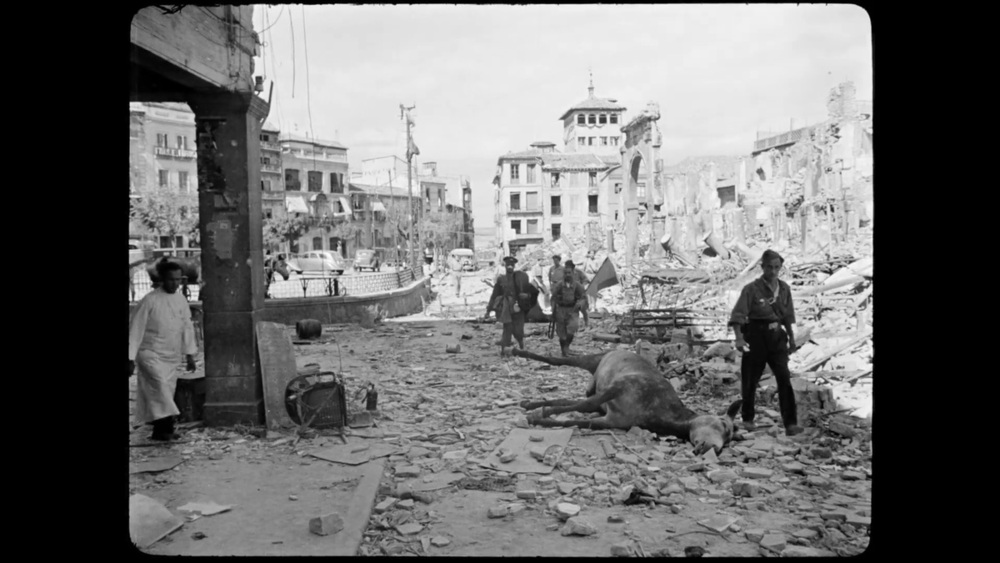
For Toledo’s civilians, the violence demonstrated how quickly the strain of the siege could spill beyond the battlefield. Though the Republican authorities continued to administer the city and maintain essential services, political prisoners remained vulnerable to outbreaks of mob violence whenever military events intensified emotions. The prison killings became by far one of the largest episodes of Republican repression in Toledo during the siege. The murdered prisoners were buried in the local cemetery and were later transferred to Franco’s super-creepy crypt. While Toledo has huge mass graves, they are of Republicans murdered later in the war.
By the final week of August 1936, the siege had entered its most critical phase. More than a month had passed since Colonel José Moscardó and his garrison had withdrawn into the Alcázar, yet the fortress remained in Nationalist hands. Republican commanders still controlled Toledo, its bridges, railway station, government buildings and surrounding countryside, but they no longer believed that time alone would secure victory. Every day the Alcázar continued to resist increased the possibility that relief would arrive before the fortress could be captured.
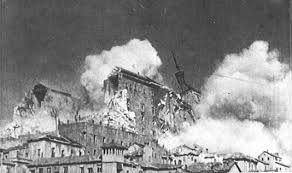
The renewed assaults against the Military Government House continued. Republican militia, Assault Guards and other government forces repeatedly attempted to establish positions immediately beside the Alcázar, where engineers hoped explosives could achieve what artillery had failed to accomplish. Fighting was often conducted room by room and floor by floor, with attackers briefly occupying parts of the building before being driven back by determined counter-attacks. By the end of the siege, 11 assaults had been launched against the complex, but despite moments of temporary success, none produced the decisive breakthrough required to storm the fortress itself. Artillery batteries maintained pressure on the Alcázar whenever ammunition allowed, while aircraft remained a familiar presence over Toledo. Engineers inside the fortress repaired damaged walls, extinguished fires and reinforced weakened positions as quickly as conditions permitted. The siege had become a relentless cycle of bombardment, repair and renewed attack in which neither side could gain a decisive advantage.
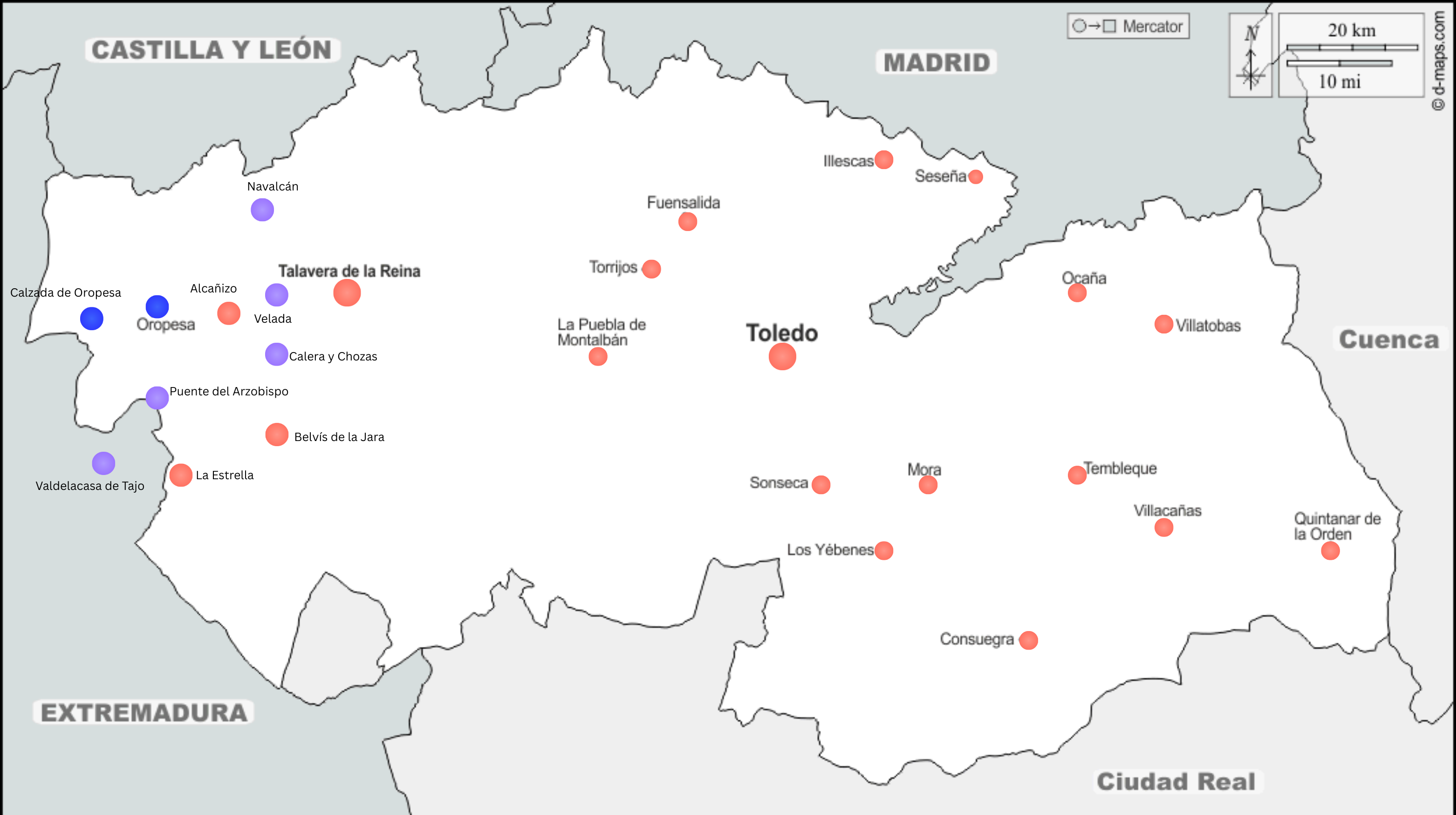
Outside Toledo, events continued moving steadily closer as the Army of Africa advanced through Extremadura and into Toledo Province, overcoming Republican resistance as it approached the capital. Reports of fighting at Guadalupe, Navalmoral de la Mata, Maqueda and other locations reached Toledo through newspapers, military dispatches and rumour, though information was often incomplete or contradictory. By 28 August, the Army of Africa had reached the western edge of Toledo province. Nationalist forces advancing eastwards from Extremadura entered Calzada de Oropesa, carrying the campaign across another provincial boundary and bringing the column increasingly close to the main Republican defensive positions protecting the approaches to Madrid. Oropesa itself fell on 30 August after Republican forces proved unable to establish a lasting defensive line in the area. The significance of the two captures lay less in their size than in their position; the Army of Africa had now advanced roughly 300km from Seville and was only about 35km west of the new Republican stronghold of Talavera de la Reina, itself only 80km from Toledo. Refugees and retreating militiamen moving east along the same roads carried news of the advance ahead of the columns, while Republican commanders attempted to gather sufficient forces around Talavera to stop them. By the end of August, the fighting that had begun in Andalucía and swept through Extremadura had reached Toledo itself, and the Army of Africa was no longer a distant threat to Madrid.