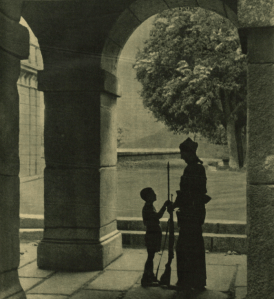
TOWNS MUST BE CONQUERED BY THE VIOLENCE OF OUR WILL.—Just as in Madrid they fight with inextinguishable rage, until fascism falls, in the spirit of the men who defend their home and their lands remains whole, like us who are in the last battle. Once this is won, the war is won. Let each one see his responsibility and think of the alternative that is being taken from him. Here, in the photo, under the arches, the boy and the father are talking. They are the symbol of yesterday and today, that the spirit of the men who defend their home and their land remains whole in the towns that must unite indissolubly in the conquering struggle – the cover of Ahora newspaper in Madrid, 8 November 1936
- Madrid
The morning of Sunday, 8 November 1936, broke cold, grey, and thick with the smell of brick dust a over Madrid. Two days earlier, the official Republican government had packed up and fled east to Valencia, quietly resigning the capital to what they believed was its inevitable demise. The international press had already drafted their obituaries for the city. But 8 November is marked in history as the definitive start of the Siege of Madrid because it was the day General Francisco Franco’s Nationalist forces launched their massive frontal assault to storm the city. Rather than a swift coup, it transformed into a two-and-a-half-year deadlock. It was the exact moment when an army of ordinary citizens, shopkeepers, construction workers, seamstresses, and printers, stood entirely on their own to push back a professional military machine.
Outside the western gates of the city stood roughly 20,000 elite troops, split into six columns, under the operational command of General José Enrique Varela (with General Emilio Mola directing the wider northern and southern campaign) and his Moroccan Regulares, who had raped and murdered their way to Madrid, alongside the Spanish Foreign Legion, professional mercenaries whose identity was built on absolute obedience and martial fanaticism. Backing them were Italian Fascist Fiat tankettes and the terrifying air superiority of Nazi Germany’s Condor Legion, using modern aerial bombing tactics against a civilian population for the first time in history.
Defending the city were roughly 30,000 Spanish Republican combatants. Nearly 90% of them were popular militias raised directly from trade unions like the anarchist CNT-FAI and political parties like the communist-led JSU and socialist factions. When the central government fled, leadership fell to General José Miaja, who formed the Junta de Defensa de Madrid. Alongside him was Colonel Vicente Rojo, a brilliant, loyalist staff officer who instantly realised that standard open-field military doctrine was useless. Rojo’s plan was to turn Madrid’s unique urban geography into a meatgrinder.
Before any international help arrived on the afternoon of November 8, the lines were held entirely by makeshift, autonomous Spanish units who had spent months learning how to fight on the fly. The 5th Regiment, organised by the Communist Party and led by figures like Enrique Líster and Juan Modesto, brought a fierce, self-imposed discipline to the militia ranks. They were regular workers who understood that organisation, not just passion, wins wars. The Anarchist columns were fiercely egalitarian units who elected their officers and rejected traditional military hierarchy, driven by pure anti-fascist conviction. (The famous Durruti Column, numbering 2,000 anarchists under Buenaventura Durruti, was still racing to the capital from the Aragon front, arriving on 14 November).
Though the Republican government had begun pulling women back to rearguard duties in autumn to standardise the army, on 8 November, women were still actively fighting on the absolute front line. The Unión de Muchachas, an all-women communist battalion, was thrust directly into the fray. They held vital, heavily assaulted positions at the Segovia Bridge and the Carabanchel sector, making up the literal bulk of the active defence in those zones. Young women like 22-year-old Aurora Arnáiz commanded youth columns, while 17-year-old Julia Manzanal served as a frontline political commissar, exchanging her books for a rifle and pistol.
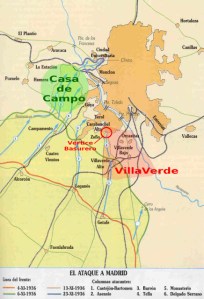
General Mola had infamously boasted that he had four columns marching on Madrid and a fifth column of fascist sympathisers waiting inside to sabotage the defence. On 8 November, Varela’s plan was to strike swiftly. He bypassed a direct assault on the dense, working-class southern quarters like Carabanchel, where he knew the resistance would be fanatical, and instead focused a 1km wide spearhead directly through the open terrain of the Casa de Campo park. His objective was to cross the Manzanares River, seize the modern campus of University City (Ciudad Universitaria), and cut down into the heart of the city before a cohesive defence could form. But when a Republican patrol discovered the body of a fallen Italian officer in a destroyed tank, and in his pocket was the Nationalist operational map, the Republicans knew to be ready. Colonel Vicente Rojo pulled resources from other sectors and massed his worker militias exactly where the blow would fall, heavily fortifying the strategic Puente de los Franceses.
Sector 1 was the north-west areas of University City and Moncloa, the strategic high ground and the primary target of the Nationalist flanking manoeuvres. The Republicans had the 3rd Brigade/Galán Column of approximately 2,500 to 3,000 fighters, led by Communist commander Francisco Galán Rodríguez, this unit was heavily composed of disciplined milicianos from the 5th Regiment. Over the previous four months, these workers had taught themselves tactical discipline. They knew how to maintain visual contact, dig interlocking fire trenches, and, crucially, how to suppress the natural urge to panic when flanked. Alongside them was the Etchegoyen Column, of 1,500 to 2,000 fierce, politically mixed militia drawn heavily from Madrid’s industrial metalworkers. They arrived at the campus directly from the union halls, carrying a wild assortment of older rifles. What they lacked in military polish, they made up for in mechanical ingenuity and a fierce, brotherhood-driven resilience.
Coming at them were two Nationalist columns commanded by Colonel Joaquín Delgado Serrano and Colonel Eduardo Sáenz de Buruaga. The Elite Moroccan Regulares and elements of the Spanish Foreign Legion used the open layout of the modern university campus to attempt a rapid breakthrough, using lethal knife work and rapid machine-gun flanking manoeuvres designed to panic untrained troops The open, park-like campus of University City was the perfect geometric path to bypass Madrid’s heavily barricaded working-class streets. If the columns could seize the campus, they could march straight down the wide avenues into Plaza de España and storm the heart of the city within hours, especially when backed by the rumbling treads of Italian Fiat light tanks and low-flying Nazi aircraft.
As the Foreign Legion and Regulares attempted to surge up from the Manzanares stream beds into the campus, they found themselves caught in lethal crossfires. The metalworkers of the Etchegoyen Column turned the open construction sites, drainage ditches, and building foundations into natural firing pits. When German-supplied tanks tried to climb the slopes, militiamen stepped out from behind brick pillars, risking their lives to hurl improvised dinamiteros (bundles of mining dynamite wrapped with nails) directly into the tank treads and the Nationalists would cross the river into University City until 15 November.
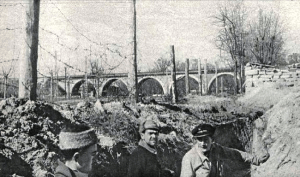
Sector 2 in the west areas of Casa de Campo and Puente de los Franceses, was the vortex of the battle on 8 November. This is where the stolen Nationalist map allowed Colonel Rojo to stack his defences. The Republicans had the 4th Brigade/Enciso Column, led by Major Eduardo Enciso, a loyalist regular army officer. This unit comprised highly motivated socialist and communist youth militias (JSU) numbering 2,500 to 3,500 fighters. Alongside was the the Libertad Column, a legendary anarchist unit of 1,500 to 2,000 CNT-FAI fighters that refused to back down, fiercely defending the Puente de los Franceses rail crossing.
The Nationalists had a column commanded by Colonel Alberto Asensio Cabanillas. This was Franco’s primary battering ram column, packed with battle-hardened Foreign Legionnaires and backed by Italian Fiat CV-35 tankettes, alongside another column commanded by Colonel Francisco Castejón, a brutal, highly effective officer who had led the bloody march through Extremadura. The attack began at dawn under a heavy blanket of autumn mist. Moving through the oaks and undulating ravines of the Casa de Campo were two of Franco’s most terrifying forces: Column 3 (Asensio Cabanillas) and Column 4 (Castejón). They moved in perfect tactical harmony, supported by light Italian Fiat tankettes and devastating artillery cover from the Garabitas hills.
Sector 2 was the literal gateway where the entire fate of Madrid hung by a thread during those first 48 hours. This sector comprised the sprawling, heavily wooded royal hunting grounds of the Casa de Campo and the vital railway crossing over the Manzanares River: the Puente de los Franceses. This was the exact axis where General Varela intended to smash through the Republican lines, cross the river, and enter the capital. It was also where the stolen Nationalist map allowed Colonel Vicente Rojo to anticipate the blow, setting the stage for a savage, claustrophobic clash of wills.
The fighting inside the Casa de Campo instantly devolved into a chaotic, fragmented nightmare. There were no continuous trenches, only pockets of desperate resistance centred around stone walls, hunting lodges, and small streams. The young workers of the Enciso Column, many of whom had never seen Moroccan Regulares or a Foreign Legionnaire, found themselves targeted by expert marksmen and deadly flanking manoeuvres. The Regulares would filter through the trees in silence, using psychological terror, ululating war cries and brutal knife work, to break the lines.
The milicianos did not run. Driven by the raw terror of what would happen to their families in the city just a mile away, they clung to the terrain. When the Italian light tanks clanked through the groves, anarchist fighters from the Libertad Column rushed them from the blind spots, throwing hand grenades into the view slits or jammed into the tracks. By midday on 8 November, the physical cost was catastrophic. The Enciso and Libertad columns were being slowly rolled back toward the river, bleeding heavily but dragging out every single yard of the fascist advance into a hours-long struggle. By the afternoon, the Nationalist columns had pushed the remnants of the Spanish militias out of the park and reached the western bank of the Manzanares River. Their immediate objective was the Puente de los Franceses, a brick railway viaduct crossing the river. If Castejón’s Legionnaires crossed that bridge, they would break directly into the Moncloa district.
But Spanish workers had spent the previous 48 hours turning the brick embankments, railway tracks, and nearby buildings into a dense network of machine-gun nests. As the Foreign Legion launched wave after wave of frontal assaults across the bridge, they were met with a wall of lead. The Republican fighters, completely outgunned in terms of heavy artillery, relied on rapid-fire Maxim guns and pure human endurance. Every time the fascists reached the tracks, they were repelled in desperate hand-to-hand combat with bayonets, rifle butts, and heavy knives. The viaduct became choked with the casualties of both sides.
By 4:00pm on 8 November, the Spanish worker columns in Sector 2 were on the verge of physical and structural collapse. They had been fighting without rest for over nine hours, ammunition was running critically low, and the sheer weight of Varela’s professional military machinery was beginning to fracture the river defence. It was at this crisis point that the XI International Brigade arrived.
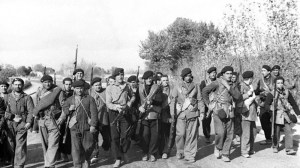
Marching in tight, disciplined formation up the main boulevard of the Gran Vía came 2,000 foreign volunteers of the XI International Brigade. Clad in mismatching uniforms but carrying their rifles with military precision, they sang revolutionary anthems in German, French, and Polish. The watching citizens of Madrid wept and cheered on the sidewalks, famously shouting ‘¡Vivan los rusos!,’ assuming the Soviet Union had sent its regular army.
These volunteers, many of them anti-fascist exiles from Germany and Italy who knew exactly what a fascist victory meant, marched directly off the trains and straight into the smoking trenches of the Casa de Campo to reinforce the weary Spanish workers.
The first 48 hours were among the bloodiest of the entire war. Precise records are impossible because many militia units kept informal tallies, but historians estimate thousands of casualties across November 8 and 9. The International Brigades lost nearly half their effective strength within days, while the Spanish trade union columns suffered devastating losses holding the riverbanks. But Varela’s professional army also bled at an unprecedented rate, losing the momentum Franco desperately needed.
Led by General Kléber, the Internationals deployed into the remaining pockets of the Casa de Campo and alongside the Spanish workers at the Bridge of the French. Unlike the enthusiastic domestic militias, many of these foreign volunteers were veterans of World War I or European paramilitary struggles. They brought an immediate, chilling tactical professionalism to the field. They dug in with mathematical precision, organised clear fields of fire, and launched a fierce, coordinated counter-charge back into the woods of the Casa de Campo. The Nationalist troops, who believed they were dealing with a defeated, fleeing rabble, were suddenly struck by highly disciplined infantry firing back in synchronised volleys. The German volunteers of the Edgar André Battalion held their ground with an icy resolve, singing the Internationale as they traded fire with the Foreign Legion.
The fighting did not stop when darkness fell; it carried on through a bitterly cold night and into Monday 9 November. Varela threw his remaining reserves into Sector 2, desperate to regain the momentum lost the day before. The Nationalist artillery systematically targeted the Bridge of the French, turning the surrounding masonry into a wasteland of pulverised brick. Yet, a combined, unbreakable front of Spanish milicianos and international volunteers held the eastern bank. Every single fascist attempt to establish a secure bridgehead across the Manzanares in Sector 2 was thrown back into the river.
By the night of 9 November, the first 48 hours of the siege concluded with a staggering reality: Franco’s finest troops had been checked. In the blood-soaked mud of the Casa de Campo and on the shattered tracks of the Bridge of the French, the ordinary people of Madrid, joined at the final moment by their international comrades, had successfully closed the western gate.
While the battle raged on the city’s western fringes, a distance that could be reached by a simple walk from the city centre, the civilian population underwent a profound social transformation. The city’s transit network became a literal pipeline for the war effort. Citizens watched as regular city trams, packed to the windows with armed workers and crates of ammunition, rattled along their tracks right up to the western terminus lines, dropping men off directly at the battlefield before looping back to pick up the wounded.
Franco’s heavy artillery, positioned on the Garabitas hills, began systematically pounding residential areas. The Gran Vía was targeted so relentlessly that locals calmly renamed it Avenida del Quince y Medio (Avenue of the 15.5, after the calibre of the fascist shells). Yet, cafes stayed open. People stood in long lines for bread while shrapnel pinged off stone walls, ducking into doorways during air raids and stepping right back out into the sun the moment the sirens ceased.
In sector 3 in the south-west areas of the Puente de Segovia Bridge and San Isidro, the gateway to the city centre stood the 1st Brigade/Líster Column led by the legendary Enrique Líster, an Austrian-trained stonemason turned brilliant military commander. This was the elite backbone of the 5th Regiment, renowned for its rigid organisation and refusal to retreat, with approximately 3,500 to 4,000 fighters. They were joined by the Unión de Muchachas Battalion, the all-women communist militia unit numbering 2,000, which reinforced the bridge’s stone parapets with machine-gun nests. Coming at them, commanded by Colonel Helí Rolando de Tella, his Nationalist column’s objective was to seize the bridges, but his forces were pinned down by Líster’s disciplined crossfire and the fierce resistance at the riverbank.
The battle began with a terrifying artillery and aerial barrage. From their high vantage points on the Garabitas hill, Nationalist batteries rained high-explosive shells down onto the San Isidro cemetery and the open slopes leading to the river. Nazi Germany’s Condor Legion flew low over the sector, strafing the makeshift Republican trenches with heavy machine-gun fire to demoralise the defenders.
As the smoke cleared, Tella’s Regulares advanced up the slopes of San Isidro. They expected to find a shattered, fleeing rabble. Instead, Líster’s men rose from the dirt. Because Líster had forced his men to dig deep, interlocking trenches over the preceding days, the Republican casualties from the initial bombardment were remarkably low. When the Regulares closed to within fifty yards, they were met with devastating, synchronised volleys of rifle and machine-gun fire. The fighting quickly devolved into a savage, close-quarters melee among the tombstones and cypress trees of the historic cemetery. Every mausoleum and stone wall became a miniature fortress.
Frustrated on the slopes of San Isidro, Colonel de Tella ordered a direct, aggressive frontal assault across the massive granite spans of the Puente de Segovia . This is where the young women of the Unión de Muchachas made their historic stand. Having reinforced the bridge’s ancient stone parapets with sandbags and heavy Maxim machine guns, they waited until the Nationalist legionnaires packed tightly onto the bridge approach before opening fire. The crossfire was apocalyptic. The granite walls of the bridge absorbed the Nationalist rifle fire, while the Republican machine guns tore through the charging fascist ranks. Tella threw wave after wave of colonial troops onto the bridge, but the defence refused to buckle. Young women worked in pairs, one firing, one frantically reloading hot ammunition belts, while shrapnel from fascist mortars chipped away at the stone around them. When Italian light tanks tried to force their way onto the bridge, Líster’s anti-tank squads used improvised dynamite bundles to blow the tracks off the lead vehicle, effectively blocking the narrow passage and turning it into a smoking barricade.
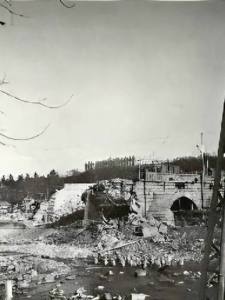
By the morning of Monday 9 November, the approach to the Puente de Segovia was a wasteland of spent shells and casualties. Colonel de Tella, realising that a direct breakthrough here was costing him the core of his professional army, was forced to halt his frontal charges and pull his troops back into defensive positions on the far side of the river. Líster’s column and the Unión de Muchachas had successfully held the line entirely on their own, without the assistance of the arriving International Brigades, who had been fully deployed to the north in Sector 2. Through sheer discipline, structural organisation, and local bravery, the Spanish workers of Sector 3 proved that Franco’s professional military could not simply march into the capital. They had turned the historic gateway of Madrid into an impassable wall.
In sector 4 in the south of the city at Carabanchel and Usera, the working-class heartland of Madrid, was characterised by dense, narrow streets. The 2nd Brigade Martínez de Aragón Column was led by Carlos Martínez de Aragón. This unit of 3,500 to 4,000 men was heavily composed of local neighbourhood defence committees, trade unionists (UGT and CNT), and older workers who knew every alleyway and sewer line. This unit swelled significantly because it was actively reinforced by thousands of local neighbourhood civilians, grandfathers, and off-duty workers who lived in the Carabanchel tenements and fought right outside their own front doors. They faced the Nationalist flanking cavalry and skirmishers trying to probe for weaknesses in the residential blocks. The Nationalists largely avoided a full frontal assault here because the milicianos had turned every single apartment building into an independent fortress.
General Varela and his field commanders knew that entering Carabanchel head-on would be a meatgrinder, so their initial plan for Sector 4 over those first 48 hours was not a massive frontal assault. Instead, they deployed cavalry scouting units, light infantry skirmishers, and heavy mortar teams to probe the southern lines, looking for a weak spot to exploit while trying to pin down Republican forces so they couldn’t reinforce the western sectors.
When the Rebel scouts and Moroccan light infantry advanced into the outer streets of Carabanchel on November 8, they found a city that had physically transformed overnight.
The local population didn’t wait for the military to dig trenches. Using iron beds, overturned streetcars, cobblestones ripped from the ground, and heavy sacks of earth, the neighbourhood committees had erected massive barricades at every single intersection.
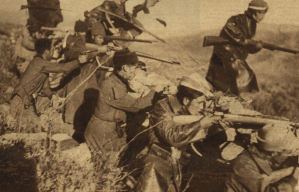
Martínez de Aragón’s men occupied the upper floors and roofs of the brick tenement blocks.
When Rebel skirmishers advanced down the narrow alleys, they were struck by a lethal rain of fire from above. Factory workers used older rifles, while others dropped improvised gasoline bombs (early Molotov cocktails) and dynamite bundles from balconies directly onto Rebel scouting vehicles.
Because Sector 4 was a hub for Madrid’s manufacturing and construction workers, the 2nd Brigade weaponised their trade skills. Over the first 48 hours, metalworkers and miners worked through the night under the streets. They fortified the local sewer networks, creating hidden underground passageways that allowed Republican fighters to pop up behind Rebel scouting lines, launch a surprise counter-attack, and vanish back into the tunnels before the Nationalists could call in artillery. In the Usera sector, older workers who lacked military training but possessed immense construction expertise dug deep, jagged anti-tank ditches across the main roads, completely neutralising the mobility of the Nationalist cavalry and light Italian tankettes.
Frustrated by their inability to easily penetrate the suburbs, the Nationalists retaliated with brutal, punitive bombardments. From the Garabitas hills, howitzers systematically pounded the residential blocks of Carabanchel. The social history of Sector 4 during these 48 hours is defined by the extraordinary resilience of the rearguard. While the shells fell, locals organised makeshift soup kitchens in basement cellars, cooking large pots of beans and carrying hot food directly to the men and women on the barricades. If a building collapsed, neighbours formed immediate human chains to dig out the survivors, dust themselves off, and return to their firing positions.
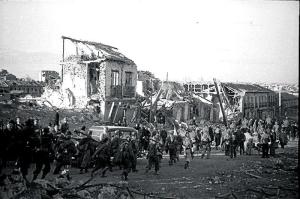
By the end of 9 November, the Nationalist attempt to probe and crack the southern flank had completely failed. The Rebel forces in Sector 4 were forced to halt their advance at the absolute fringes of the suburbs, realizing that entering the dense urban maze of Carabanchel meant fighting for every individual room, hallway, and rooftop. The ordinary people of the south had successfully locked their doors and turned their neighbourhoods into an impenetrable red bastion, ensuring the safety of the city’s southern flank entirely through community solidarity and desperate, unyielding urban defence.
In the neighbourhoods, solidarity was absolute. Seamstresses who had formed cooperative workshops spent the 48 hours sewing massive red and black banners emblazoned with Dolores Ibárruri’s immortal battle cry: ¡No pasarán!. Loudspeakers on street corners blasted news from the front mixed with revolutionary songs, ensuring that every citizen, whether carrying a rifle or baking bread, knew they were an active part of a collective human wall.
On 8 November 1936, the professional military completely underestimated the capacity of ordinary people. They believed a city without a formal government would fold. Instead, the plumbers, teachers, and milicianas of Madrid wrote one of the most inspiring pages of the 20th century, proving that when a populace decides to resist, an army cannot simply march through them.
While previous conflicts had seen small-scale or sporadic air raids, the assault on Madrid starting in autumn 1936 marked a terrifying historical turning point. The city became an experimental testing ground for a new type of warfare: targeting residential neighbourhoods to destroy civilian morale and force a quick surrender. Franco notoriously stated, ;I will destroy Madrid rather than leave it to the Marxists.; The German and Italian commanders eagerly embraced this mindset, using Madrid to test the aeronautical theories of total war, specifically that bombing working-class urban centres would cause panic and break the population’s will to resist. During the initial frontal assault, the bombing focused heavily on the frontline sectors like Sector 1 (University City) and Sector 4 (Carabanchel) to clear the path for the ground troops. However, the bombers deliberately overflew the front lines to drop ordnance on working-class residential areas. The Nationalists explicitly avoided bombing the wealthy Salamanca district, assuming it contained many secret fascist sympathisers.
The French journalist Louis Delaprée, who was in Madrid during the siege, wrote a series of searing dispatches titled Bombs Over Madrid, describing the low-flying Nationalist planes and their ‘rain of killer meteorites’ on residential homes. With no official civil defence ready, neighbourhood committees and trade unions organized ordinary citizens to dig out basements, fortify underground Metro stations, and construct makeshift public shelters. The strategy completely backfired on Franco. Instead of panic pressing the militia to surrender, the sight of dead children, pulverized apartments, and smoking hospitals filled the Madrileños with a cold, unyielding rage. It bonded the civilian population and the worker militias into a singular unit. Every bomb dropped on a tenement block in Carabanchel or Usera only hardened the resolve of the fighters at the riverbanks.
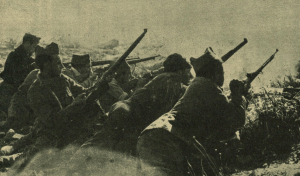
On 8 November 1936, the aerial and artillery bombardment directly struck the Estación del Norte, the Manzanares riverbank, and buildings in the city centre, including Calle Sacramento. Located at the base of the hill below the Royal Palace, Estación del Norte was a vital strategic choke point. By pounding it with artillery from the Garabitas hills, the Nationalists aimed to prevent reinforcements and ammunition from moving up to Sector 1 (University City) and Sector 2 (Casa de Campo).
To the ordinary people, the shattering of the station’s iron and glass roof was a direct assault on the heartbeat of the city’s transit. The relentless shelling of the Manzanares riverbanks was designed to obliterate the barricades and trenches thrown up by the milicianos. The explosions kicked up geysers of mud and stone, turning the shallow river into a smoking, open graveyard for both sides. Calle Sacramento sits in the absolute historic core of Madrid, near the Plaza de la Villa. Shelling this area had zero military utility; it was pure psychological terror directed at ancient residential blocks to show the Madrileños that no square inch of their city was safe.
In November 1936, the British Embassy in Madrid was located at Number 16, Calle Fernando el Santo, situated in the affluent, central neighbourhood of Chamberí. The consular annexe and diplomatic offices sat immediately alongside the main building. Early in the war, embassy staff painted a massive Union Jack across the building’s roof, hoping Nationalist pilots would recognize it as a neutral, international diplomatic zone. In practice, it had the opposite effect, functioning as a perfect, high-visibility crosshair for fascist bomber crews navigating over the city centre. While the British government officially maintained a policy of Non-Intervention, the embassy grounds at Calle Fernando el Santo, and five other properties the British quietly secured across Madrid, became a massive humanitarian sanctuary. They packed the buildings with British nationals, international journalists, and hundreds of right-wing Spanish refugees fleeing popular justice. Captain Edwin Lance operated directly out of this Chamberí headquarters, coordinating with local Republican authorities to secure trucks and drivers to secretly evacuate rightist refugees from the capital down to the ports of Valencia and Alicante.
When a shell splinter or bomb fragment wounded Edwin Lance during the 8 November aerial bombardment, it shattered any illusion that international diplomatic status would offer protection from Franco’s total war. For your article, this detail is a powerful tool to show that the fascist forces did not care about diplomatic boundaries, they were willing to risk international outrage to break Madrid.
- Markina-Xemein, Bizkaia, Basque Country
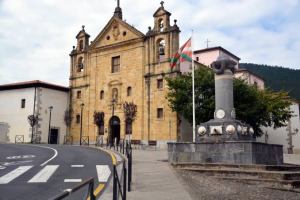
While the eyes of the world were transfixed on the apocalyptic frontal assault against Madrid on Sunday, 8 November 1936, a parallel, quieter terror was unfolding hundreds of kilometres to the north. In the green valleys of the Basque Country, the front lines had solidified for the winter, and the small, deeply religious town of Markina-Xemein in Bizkaia again found itself directly under the shadow of fascist wings when Nationalist aircraft targeted the heart of Markina-Xemein, dropping three or four bombs that detonated in a tight, chillingly symbolic cluster near the town’s church, the local cemetery, and its makeshift blood hospital. Miraculously, no fatalities were reported from the strike. Yet, when writing from a Republican lens focused on ordinary people, this specific incident is a profound case study in how Franco’s forces weaponised psychological terror against civilian communities.
For the Basque people, who were overwhelmingly devout Catholics yet fiercely loyal to the democratic Republic. the targeting of their sacred and humanitarian spaces was a deeply calculated insult. In the Basque Country, the church and the parish cemetery were the dual anchors of communal life, family history, and town identity. Pounding these sites with high explosives was a direct attempt to shatter the spiritual morale of a population that the Nationalists falsely branded as godless reds.
The blood hospital, housed in local structures like the Carmelite convent, these improvised medical centres were run entirely on community solidarity. Local women volunteered as nurses, doctors worked without rest, and neighbours donated linen and food. Dropping bombs near a clearly marked sanctuary for the wounded was a blatant violation of humanitarian norms, telegraphing that not even the dying were safe.
- Cádiz, Andalucía
Nine citizens were recorded as killed around the former Plaza de Toros in Cádiz city (located at what is today the Plaza de Asdrúbal). The bullring was constructed with heavy masonry outer walls that sat on what was then the sandy, open outskirts of the expanding city. For the Nationalist execution squads, this site offered seclusion and an solid stone backdrop to prevent ricochets during early morning firing actions.
Two days earlier, a group of detainees held in the Cádiz Provincial Prison and the Miraflores prison ship were signed out under the direct authority of the Nationalist Civil Governor, for being transferred out to the nearby prison facility at El Puerto de Santa María, which always instead meant a saca. In the early hours the nine men and women were killed by firing squad and left at the San José Cemetery in Cádiz. Andrés Cózar Cantero, 38 was a shoemaker and had previously stood as a Communist candidate for a local municipal council seat. His partner, María Castillo Gutiérrez, 42, was a widow who lived on the same street in Cádiz city. Both were arrested together on 17 September 1936 in the Plaza de las Flores by a municipal guard named José Guerrero, an active agent tracking down suspected left-wingers. Rebel authorities searched María’s house, fabric scraps were discovered, and she was accused of participating in the sacking of a local religious school. She was initially held in the local civil jail, moved briefly to the Provincial Prison, and then confined aboard the prison ship Miraflores until the order for her faked transfer was signed.
Pedro Morillo Palomo was the son of Villamartín’s democratically elected Republican mayor, José Morillo, and Antonio Jaén Fernández, who also from the small village, over 80km northwest of Cádiz city had been arrested together. Just weeks before the coup, graffiti had appeared on a street in Villamartín displaying a hammer and sickle alongside a slogan reading Muera la Guardia Civil (Death to the Civil Guard). A local informant named Antonio Perez Ruiz went to the barracks and denounced Pedro and Antonio, claiming to have seen them painting the wall. They were arrested in August and on 6 September they were moved to the grim Castillo de Santa Catalina fortress in Cádiz. They were held there under military investigation for two months until they were bundled into the 6 November saca to the bullring.
Another five people were included; Antonia Pérez Montero, Enrique Canal Rubiera, Francisco de Dios Ríos, Gregorio Rioja Castillejo, and Francisco Sánchez Amaro, all listed on the 6 November ‘transfer.’ the nine were taken on the evening of 6 November and were killed likely in the early hours of 7 November, but they were not registered as dumped at the cemetery until 8 November, so their exact time of death is difficult to establish. These types of deaths in Cádiz were common and happening most days in November 1936.
- Badajoz, Extremadura
The regular, ongoing executions behind Nationalist lines proved that the rebel command had no intention of stopping the violence once they achieved power. They were not killing to overpower an enemy, they were actively looking to annihilate anyone who might ever speak up after they stormed Madrid and stole a country. This reality is etched into the civil and cemetery registries of Badajoz from 8 November 1936, where the lives of fourteen ordinary men were abruptly brought to an end under the cold machinery of Nationalist repression.
The daily killing in Badajoz city were larger than normal on 8 November, taking 14 lives.
- José Ramón (Julio) Aragüete Díaz, 46, a local mechanic who officially applied for and was granted the very first official taxi driver’s licence in the city of Badajoz. He went on to become a key mechanic and a prominent leader of the local drivers’ trade society. This leadership role within the local labour movement made him a prime, deliberate target for the Nationalist authorities when they seized the city. His death notice was actually filed on 7 November 1936, and admits to him being executed as a party to war
- Francisco Avecilla Gómez, 35, a bricklayer originally from Santa Marta
- Gumersindo Díaz Román, 39, a local of Badajoz
- Fructuoso Falcón Rodríguez, 52, a day labourer originally from Barcarrota
- Luis Guzmán Casas, 27, a day labourer originally from Barcarrota
- Braulio Guzmán Mulero, 49, a day labourer from Barcarrota
- Antonio Llamazares Perales, a local man
- Antonio Martín Botello, 28, a day labourer originally from Alconchel
- Agustín Martín Prieto, 24, a local day labourer
- Julián Martínez de la Cruz, a local of Badajoz. José and Manuela Martínez de la Cruz were also arrested, but acquitted in September 1938 on unspecified charges
- Juan Piedad Rodríguez, 27, a local carpenter
- Juan Rabazo Rubio, 42, from Villanueva del Fresno
- Juan Rohoso Pinilla, from Oliva de la Frontera, who died of the ‘current struggle against Marxism’
- Manuel del Valle Castro, a local man
All are listed as dying of the ‘Current National Struggle’ unless specified above and registered as dead between 1937 and 1941. Those from outside Badajoz city were likely refugees who had been ‘caught’ and not shot on the spot.
- Zamora, Old Castile (Castilla y Leon)
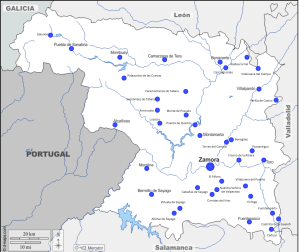
The deliberate, systematic cleansing designed to permanently uproot the social and political structure of the Second Spanish Republic was still in full swing in Zamora in November 1936. The system targeted anyone associated with left-wing politics, secular education, or trade unionism. In rural areas like Castroverde de Campos, the primary focus was the agrarian worker movement and the local workers’ society’s board members and treasurers.
On 8 November 1936 labourers from Castroverde de Campos who were extrajudicially executed after being taken from the Zamora provincial prison – Juan Burón Díez, 44, day labourer and vice president of the local workers’ society, Elías Burón Bezos, 55, and Eutimio Lisner Herrera, 41,, both agricultural worker and board members, Feliciano Rodríguez García, 46, day labourer and treasurer, alongside day labourers Julián Canseco López, 26, Emeterio Morejón García, 37, Félix Rodríguez Alonso, 24, Vicente Rodríguez Fernández, 54, really punching down on the most vulnerable of local society.
Three days later, on 11 November 11, the following workers were executed by firing squad – Pedro Burón García, 23, (son of Elías, above), a day labourer, Balbino Bausela Abad, 31, a day labourer (whose brother Pedro had already been murdered), Zósimo Cea Fernández, 17, a local mason, Perfecto Cuesta Conde, 26, a farmer, Félix Espinilla Martín, 18, a farmer, and schoolteacher José Fernández Ortega, 33.
The next day they took Pascual Huerta Morejón, 38, a day labourer, Manuel Martín García, 17, a day labourer, Alejandro Morejón Aldonza, 63, a day labourer, and Pablo Villar Martínez, 20, a tailor whose father, Pablo Villar Morejón, was town councillor in 1931 and served as mayor on several occasions, including during the months following the electoral victory of the Popular Front. On 14 November they took Germán Baza Mellado, 46, a day labourer who served as a member of the Workers’ Society’s audit committee, Faustino Fernández Morejón, 27, a day labourer, Aurelio Morejón García, 29, a bricklayer, and Julián Vázquez Espinaco, 39, a day labourer.

