For the Battle of Madrid, see here
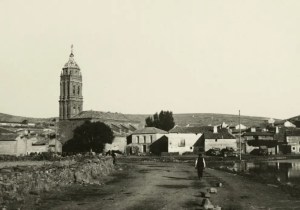
- Alba del Campo, Teruel, Aragon
On the night of 11 November 1936, the quiet Aragonese village of Alba del Campo, located in the province of Teruel, became the stage for a calculated display of political terror. Eleven local men were marched into the heart of the village, lined up in the square outside the parish church, and executed by Nationalists. Unlike the covert sacas that occurred in other parts of wartime Spain, this massacre was designed to be seen. According to historical testimonies and regional memory archives, the entire population of the village was forced out into the square to watch the killings unfold. The tragedy at Alba del Campo illustrates a chilling tactic of the Spanish Civil War: the use of exemplary terror to paralyse rural communities into absolute submission.
By November 1936, the province of Teruel was a bitterly contested front line splitting Nationalist-held Aragon from the Republican zone. In small, tight-knit rural villages like Alba del Campo, the Nationalists sought to quickly and permanently eliminate anyone linked to the Popular Front, local trade unions, or Republican municipal leadership. Executing prisoners behind closed prison walls or in remote ditches served to eliminate political enemies. However, executing them in the main town square, directly in front of the church, the traditional symbol of social order, served a much broader psychological purpose. Forcing neighbours, friends, and relatives to witness the deaths ensured that the trauma would linger over the village for decades, extinguishing any thought of local resistance.
In 1936, Alba del Campo had a population of around 750 people. Because the village was so small and compact, armed militiamen and Civil Guards could easily herd the entire community into the main square by going door-to-door and announcing a mandatory town assembly. In an atmosphere of martial law, failing to appear in the square was treated as an act of rebellion or sympathy for the victims. The church square was the natural gathering point of the village, easily large enough to hold a few hundred terrified residents surrounded by armed guards. Executing 11 local men, including sitting town councillors and union members like 30-year-old Francisco Arribas Clavero, wiped out a significant portion of the village’s working-age male population and local leadership in a single night.
Following the shootings, the bodies of the eleven men were deliberately left lying in the open square for the townspeople to see before they were finally moved to a mass grave in the local cemetery. Because the massacre occurred in the open centre of the village and involved lifelong residents, the victims were never anonymous. Their names have been preserved through family memory, municipal records, and the Aragon Cultural Heritage Information System (SIPCA), alongside the Association for the Recovery of Historical Memory in Aragon (ARMHA):
• Ignacio Zarzoso Reguillo
• Vicente Royo Garzón
• Jesús Muñoz Plumed
• Brothers Bienvenido Arribas Clavero and Francisco Arribas Clavero, sitting municipal councillor for the CNT
• and their cousin, Víctor Arribas López
• José Sánchez Ortiz
• Miguel Villalba Cañete
• Pascual Paricio García
• Román Domínguez Hernández
• Fernando Gómez Segura
While Alba del Campo only endured this once, historians note that this method, known as terror ejemplarizante, was used regularly across Teruel, Aragon, and Extremadura during the summer and autumn of 1936. Nationalist columns moving through rural towns frequently staged one massive, public execution in the main plaza upon taking control, using a single night of public horror to pacify a village for the rest of the war.
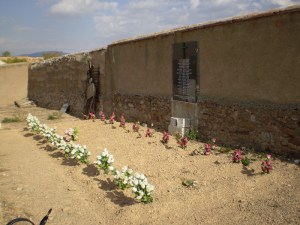
The village’s only other wartime fatalities were seven local young men who later died fighting on the front lines after being conscripted into the Nationalist army. Mothers and widows who had been forced to watch their husbands and sons die outside the church doors on 11 November 1936 had to watch their remaining boys march off to fight, and die, under the very same flag. Under the Francoist dictatorship that followed, the seven conscripted men who died at the front were officially honoured as Caídos por Dios y por España (Fallen for God and Spain), with their names carved onto the church walls. Meanwhile, their murdered brothers and cousins, buried just steps away in the unmarked cemetery mass grave, could not even be spoken of aloud.
One was Gregorio Arribas Cavero, brother of executed brothers Bienvenido and Francisco Arribas Clavero, and another of their cousins Pedro Arribas Pérez (also cousin to executed Víctor Arribas López), alongside Pedro Ginés Paricio, Isidoro Hernández Ginés, Mateo Hernández Gómez, all cousins of each other and of execution victims Román Domínguez Hernández and Fernando Gómez Segura, Fausto Sánchez Garzón, cousin of executed Vicente Royo Garzón and José Sánchez Ortiz, and Celestino García Moreno, cousin of executed Pascual Paricio García.
- Torredembarra, Tarragona, Catalonia
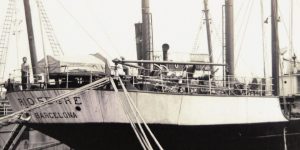
By the autumn of 1936, the collapse of traditional state authority in Catalonia had left local revolutionary committees and radical militias largely in control of public order. As standard prisons overflowed with political dissidents, military officers, and religious figures suspected of sympathising with Franco’s Nationalist uprising, authorities turned to makeshift alternatives. Chief among these were prison ships . In the port of Tarragona, a cargo vessel named the ARA Río Segre was requisitioned and converted into a floating penitentiary.
Conditions aboard the Río Segre were notoriously harsh. Hundreds of prisoners were crammed into the dark, poorly ventilated holds of the ship, living in a state of constant terror. They knew that their survival depended entirely on the volatile political temperature on the mainland. Whenever news arrived of Republican defeats at the front, or Nationalist air raids on nearby cities, the threat of retaliatory violence against the prisoners reached a fever pitch.
On the night of 11 November, a armed militia unit acting on behalf of local revolutionary authorities boarded the Río Segre. Armed with a pre-selected list, they extracted 24 men from the ship’s hold. The prisoners were transported a few kilometres up the coast to the town of Torredembarra for a quick, unceremonious burials in mass graves.
The victims of the massacre represented a specific cross-section of Catalan society that the radical revolutionaries sought to eradicate – 16 clergymen and eight right-wing sympathisers, wealthy landowners and conservative feared to be fifth columnists. Fourteen of the 16 clergy members executed that night have been formally beatified. They include prominent educators, theologians, and missionaries who were targeted for their religious status –
- Fr. Federico Vila Bartrolí, 52, Claretian priest and eminent professor at the Pontifical University of Tarragona.
- Fr. Damián Rodríguez Pablos (Damián de la Santísima Trinidad), 40, Discalced Carmelite priest.
- Fr. Pedro de Eriz Eguiluz (Pedro de San Elías), 69, Discalced Carmelite priest.
- Fr. Josep Alberich Lluch (Josep Cecili de Jesús Maria),71, Discalced Carmelite monk.
- Fr. Felipe Arce Fernández (Fray Elipio de Santa Teresa), 58, Discalced Carmelite master of novices.
- Fr. Joan Roca Vilardell, 31, secular priest and cathedral salmista.
- Fr. Josep Maria Bru Ralduá, 66, secular parish priest from Tarragona.
- Fr. Miquel Saludes Ciuret, Secular priest and theologian.
- Fr. Mariano Navarro Blasco, Secular priest.
- Br. Julio Alameda Camarero, 25, brother of the Carmelite Tertiary of Teaching order.
- Br. Bonaventura Toldrá Rodón, 40, brother of the Carmelite Tertiary of Teaching order.
- Br. Lluís Domingo Oliva, 44, brother of the Carmelite Tertiary of Teaching order.
- Br. Isidre Tarsá Giribets, 70, brother of the Carmelite Tertiary of Teaching order.
- Br. Josep Boschdemont Mitjavila (Brother Gilberto de Jesús), 56, Brother of the Christian Schools (La Salle)
- Two additional unnamed clergy members completed the tally of 16 religious figures extracted that night, but they did not enter the formal beatification process due to incomplete biographical files.
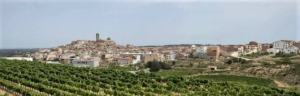
Four of the eight civilians were farmers and landowners from the village of Batea in the Terra Alta region, on the far western edge of the Tarragona province, bordering Aragon. In the autumn of 1936, the frontline of the war in Aragon was incredibly volatile and close by. Local revolutionary committees and militias were terrified of fifth columnists. Because Batea was a rural, deeply conservative, and religious village, where the local anarchists and communist committees viewed wealthy local landowners and farmers with intense suspicion. To prevent any potential uprising or espionage near the front, the local militias did not wish to keep them in village lockups, where their families could attempt to free them or local sympathy could protect them, and so send them 140km away to Tarragona.
- Four men, close neighbours, farmers, and landowners from Batea who were captured and transferred to the prison ship together – Pau Aguiló Vaquer, Santiago Vilanova Vaquer, Miguel Freixas Montlleo, and Baldomero Vaquer Peris, before being moved to Torredembarra to be executed alongside the clergymen. During the 1941 exhumation of Fosa Común Nº 1, their families travelled to Torredembarra and successfully identified them through physical descriptions, dental work, and the remnants of their clothing. However, instead of repatriating the bodies back to Batea, the families requested that they remain buried together at Torredembarra. Today, their names are formally carved onto a dedicated commemorative tombstone marking their original plot.
- Dr. Vicente Loscos Pardo was the town doctor of Horta de Sant Joan, 25km south of Batea and even closer to the Aragon border. He was fully identified, but because he was found carrying religious relics, the anarchist patrol misidentified him as a priest using a fake medical alibi. He was processed alongside the clergy rather than the Batea group. The final three men completing the eight-civilian count also had no connection to Batea.
- • One Unreclaimed Man (Box No. 26) was identified by his son during the 1941 grave openings. However, due to severe economic hardship or the immense political terror of the early Franco regime, the family chose not to legally claim the remains or sign the paperwork. He was re-interred back into the communal grave as unclaimed.
• Two Anonymous Men (Boxes No. 27 and 36), were never identified by any family members due to the advanced state of decomposition. The fiscal only had basic, vague physical matching descriptions from old prison ship rosters, but no living relative ever came forward to claim them, leaving them listed as unknown for eternity.
The man behind the execution orders that night was Josep Recasens Oliva, one of the most feared anarchist figures in wartime Catalonia, universally known by his chilling underworld alias of El Sec de la Matinada (The Skinny One of the Dawn), one of the extreme incontrolados (uncontrolled militants) who seized absolute power on the streets during the collapse of law and order in 1936. Before the war, Recasens was a labourer from a modest home on Carrer Talavera in Tarragona. Long before he picked up a rifle for the revolution, he was well-known to local police as a violent, reckless, and combative criminal who frequented the city’s underworld.
Recasens had been jailed multiple times for both common crimes and radical political violence. As early as 1922, he participated in a notorious train robbery in Sant Andreu to steal a company payroll, funnelling the stolen money into anarchist prisoner funds. In 1933, he was arrested again for subversion. When the Civil War broke out in July 1936, the traditional police force vanished, and Recasens became a leader within the Joventuts Llibertàries (Libertarian Youth) and the CNT-FAI death squads. He earned the moniker El Sec de la Matinada due to his remarkably gaunt, thin frame (el sec) and his terrifying habit of conducting his raids and extractions in the pitch-black hours just before dawn.
Between July 1936 and May 1937, Recasens and his personal inner circle, which locals bitterly called the Patrulles de la Mort (Death Patrols), held a monopoly on fear in Tarragona. They operated with complete impunity, hunting down priests, burning property, and executing political targets. In one horrific instance, his group was linked to the murder of a local doctor, Josep María Vives Salas, who was burned alive. On the night of the Torredembarra massacre, Recasens was the mastermind. Accompanied by his regular gang of enforcers, he boarded the Río Segre.
Historical accounts note his chilling cruelty on deck, he personally walked down the line of prisoners, forcing them to bow their heads so he could inspect their scalps for a tonsure, the distinct shaved crown worn by Catholic monks and priests. If he saw the mark, or if a prisoner confessed their faith (as Brother Julio Alameda courageously did), Recasens personally marked them for the death bus.
Recasens’ rule by the gun ended precisely the way he lived. In May 1937, the Republican central government finally cracked down on the anarchists during the May Days civil conflict inside the Republican zone. According to historical records compiled by Catalan researcher J.M. Prats Biarnés, Recasens was shot and killed by a Guardia Civil officer during a shootout as the state finally reasserted control over Tarragona.
The collapse of state authority in the summer of 1936 created a dangerous political vacuum, transforming the social revolution into a dual-edged sword. While many embraced the chaos to fight for idealised visions of liberty and equality, the sudden absence of laws and policing simultaneously dismantled the moral guardrails of society. For men like Recasens, the revolution did not inspire a noble struggle for justice; instead, it acted as a license for cruelty, offering a veneer of political legitimacy to pre-existing criminal tendencies. In the dark holds of the Río Segre and against the quiet cemetery walls of Torredembarra, the grand ideological rhetoric of the war evaporated. Left in its place was a baser, more terrifying reality, a world where absolute power allowed the worst, most sadistically violent impulses of human nature to masquerade as revolutionary justice.
(The murder of Dr. Josep María Vives Salas was one of the most infamous and gruesome crimes committed in Tarragona during the chaotic early days of the conflict. He was a highly respected local medical examiner and father of seven children who lived on the Rambla in Tarragona. In the chaotic aftermath of the July 1936 uprising, common criminals were released from prisons and armed by local radical committees. On the early morning of 28 July 1936, a militia patrol, which included Recasens, dragged Dr. Vives Salas from his home. The patrol drove him to a site near the Escuela de Trabajo, tied his hands, doused his body in petrol, and burned him alive. The groups later openly boasted about how they ‘purified’ the doctor. Dr. Vives Salas’ own medical colleagues and successor forensics had to process his charred body later that day. The state of the remains, bound wrists and distinct accelerant burns, chemically and physically proved the exact nature of his death. Dr. Vives Salas had spent years before the war providing expert forensic evidence that put local underworld criminals, including associates of Recasens, behind bars.)
It touches directly on the profound moral tragedy of the conflict, of how a movement built on the genuine, idealistic hope of liberating workers and peasants from centuries of feudal poverty and clerical oppression became stained by horrific violence. Had the Republicans defeated Franco, the war would likely not have ended in 1939; instead, it would have morphed into a decisive clash between the different factions of the Left. The revolutionary collectives in Aragon and Catalonia achieved remarkable things in terms of worker self-management, education, and women’s liberation. However, as seen in Tarragona, the lack of a central justice system meant that local committees held absolute power of life and death, often resulting in arbitrary purges of anyone deemed a class enemy.
Leaders like Juan Negrín and Lluís Companys, alongside the Soviet-backed Communist Party (PCE), were actively working to crush the uncontrolled militias, dismantle the collectives, and restore traditional state authority, courts, and policing. By 1937 and 1938, the sacas and death patrols had largely been stamped out by the Republican government itself, though replaced by the strict, authoritarian political policing of the SIM (Military Investigation Service).
If the Republic had won, the nature of the post-war era would have depended entirely on which faction held power at the moment of victory. If the Democratic Republicans prevailed, Spain might have evolved into a progressive, secular, social-democratic state, similar to post-war Western European nations, after a painful period of political trials and reconstruction. If the Stalinist-backed Communists dominated, Spain could have become a Soviet satellite state long before the Cold War, subjecting both the political Right and the anarchists to totalitarian purges. If the Anarchists held total sway, without a unifying state, Spain risked fragmenting into rival, self-governing communes, where justice and human rights varied wildly depending on whether a local council was led by idealistic educators or ruthless figures like Recasens.
Recognising that dark reality does not diminish the nobility of the workers and peasants who fought for a fairer world; rather, it underscores the timeless historical lesson that without the rule of law and accountability, even the highest ideals can be hijacked by human cruelty. And now of it ultimately matter, since right-wing cruelty was the winner anyway.
- Barcelona, Catalonia
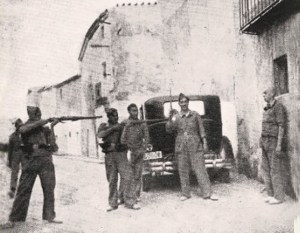
On 11 November 1936, as Nationalist troops closed in on Madrid, a tense and historically overlooked debate unfolded inside the Palau de la Generalitat in Barcelona. The Council of the Generalitat, the autonomous government of Catalonia, gathered to confront a delicate political dilemma – if the central Spanish Republican government had to flee the capital, where should it go? For Catalan President Lluís Companys, the answer was clear, pragmatic, and remarkably firm. He expressed a strong preference that the central government establish itself in Valencia, rather than relocating to Barcelona.
This single meeting exposes the complex, war within a war power dynamics that defined the Republican side during the Spanish Civil War. By early November 1936, Francisco Franco’s Nationalist forces were at the gates of Madrid. Fearing the imminent fall of the capital, the central Republican government, led by Prime Minister Francisco Largo Caballero, made the difficult decision to evacuate. While the central government ultimately chose Valencia as its temporary capital, the prospect of them moving to Barcelona hovered heavily over Catalan leadership. For general history fans, it might seem logical that the Republic would seek refuge in Spain’s industrial powerhouse and second-largest city. However, the reality on the ground in Catalonia made that a recipe for disaster.
To understand Companys’ reluctance, one must look at the unique political reality of Catalonia in the autumn of 1936. Following the failed July military uprising in Barcelona, the traditional instruments of state power had effectively collapsed. Instead, a system of dual power emerged – the Generalitat, the official, legal autonomous government led by Companys, and the CNT-FAI, the powerful anarchist trade unions and militias who held the actual monopoly on violence and controlled the streets, factories, and border checkpoints.
Barcelona was in the throes of a profound social revolution. The factories were collectivised, workers’ militias patrolled the city, and bourgeois political authority hung by a thread. Companys was walking a political tightrope. On one hand, he was trying to preserve Catalan autonomy and gradually rein in the radical anarchist elements. On the other hand, he had to maintain a united front with the central Republic to win the war. Inviting the central government into Barcelona at that moment would have been combustible for two reasons. The arrival of the central ministries would inevitably clash with the Generalitat’s newly expanded wartime autonomy. Companys feared that a displaced central government would try to reassert total control over Catalonia’s industries, finances, and borders. Secondly, The central government was deeply hostile to the anarchist revolution. Had Largo Caballero’s government set up shop in Barcelona in November 1936, a violent clash between central state forces and local anarchist militias would likely have erupted months earlier than it eventually did.
By preferring Valencia, Companys was buying time. Valencia was heavily republican but lacked the entrenched, fiercely independent anarchist state-within-a-state that dominated Catalonia. It allowed the central government room to breathe and reorganise without suffocating the fragile political equilibrium of Barcelona. The debate on 11 November proved to be highly prophetic. Companys managed to keep the central government at arm’s length for a year. However, following the infamous May Days of 1937, where internal fighting between anarchists, communists, and regional forces shook Barcelona, the central government finally stripped Catalonia of much of its autonomy. In October 1937, the Republican government did exactly what Companys had feared: they moved the capital from Valencia to Barcelona. Just as anticipated, the move severely marginalised the Generalitat, strained local resources, and heightened the political paralysis that plagued the Republic until its ultimate defeat in 1939.
- Alicante, Valencia
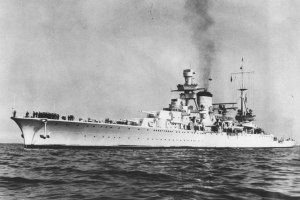
On 11 November 1936, the ARA 25 de Mayo, a heavy cruiser belonging to the Argentine Navy arrived as part of a massive, multi-nation naval evacuation that saved thousands of lives from the escalating fury of the war. When the Spanish Civil War erupted in July 1936, Latin American nations found themselves uniquely entangled in the crisis. Millions of Spanish citizens lived in South America, and countless South Americans lived in Spain. Argentina, in particular, shared deep cultural, familial, and economic ties with the Iberian peninsula.
As cities like Madrid and Barcelona descended into political violence, thousands of people, including right-wing sympathisers, religious figures, wealthy bourgeois families, and foreign nationals, found themselves targeted by radical militias.
Desperate for safety, they flooded foreign embassies and consulates seeking diplomatic asylum. Argentina’s response under President Agustín Pedro Justo, was that the country vigorously championed the right of asylum. When embassies in Madrid became overcrowded, the Argentine government dispatched its naval pride, the 25 de Mayo, to the coast of Spain to act as a floating sanctuary.
By November 1936, Alicante had become a critical bottleneck for those trying to flee the Republican zone. The city’s port was one of the last remaining gateways to the outside world, but it was also a dangerous place. The city was subject to frequent Nationalist air raids, and local revolutionary committees kept an eye on the docks to prevent political enemies from escaping. Foreign warships became literal lifelines. Under international maritime agreements and humanitarian protocols, vessels from Great Britain, France, Argentina, and other nations docked in Spanish ports to coordinate the evacuation of non-combatants.
The operation on 11 November was a masterclass in tense, high-stakes diplomacy. Argentine naval officers and consular staff had to negotiate with local Republican authorities to secure safe-conduct passes for the 77 refugees. Any minor bureaucratic dispute or suspicion of the refugees’ identities could have resulted in arrests, or worse.
The 77 individuals who boarded the Argentine cruiser that day were women, children, elderly citizens, and political dissidents who feared for their lives. The Argentine sailors welcomed the exhausted refugees, providing them with food, medical attention, and safety. The ship served as a neutral, sovereign piece of Argentine territory floating in a sea of conflict. From Alicante, the cruiser transported its human cargo to neutral ports, often Marseille in France or Genoa in Italy, from where the refugees could safely travel to western Europe or onward to South America. By the time the 25 de Mayo was recalled to Argentina in late late 1936 (to be replaced by the cruiser Almirante Brown), Argentine naval and diplomatic efforts had saved more than 1,500 lives.
- Seville, Andalucía
On 11 November 1936, a bureaucratic decree issued from Seville solidified one of its weapons of the Nationalist war effort, the systematic economic ruin of its political enemies. General Gonzalo Queipo de Llano, the undisputed and ruthless military ruler of Nationalist-controlled Andalucía, issued comprehensive, detailed instructions governing the confiscation of property belonging to anyone accused of supporting the Spanish Republic. It was a process designed not just to eliminate dissenters, but to strip them and their families of their livelihoods, homes, and futures.
By November 1936, Queipo de Llano had established a terrifying state-within-a-state in southern Spain. Operating with a high degree of independence from Francisco Franco’s central command, Queipo ruled through absolute military authority and a nightly radio broadcast used to terrorise the Republican population. To fund his army and permanently crush the social classes that had supported the left-wing Republic, labourers, intellectuals, unionists, and liberal politicians, he turned to institutionalised plunder.
The instructions issued on 11 November established a rigid, weaponised legal pipeline to seize private property under the guise of military justice. The process began entirely at the discretion of the military authorities, who formally initiated cases against targeted individuals and appointed specialised military investigators to build the files. To prove a target’s guilt or disloyalty, investigators were ordered to gather political and ideological reports from three distinct local sources, the municipal authorities, the Guardia Civil ( and ‘approved’ local residents, the right-wing civilian informants and Falangist sympathisers.
Before any case could proceed to the Territorial Court for the final, permanent seizure of land, bank accounts, or personal belongings, Queipo de Llano personally retained the sole authority to review and approve it. This structure ensured that local scores could be settled legally, wealth could be redistributed to Nationalist loyalists, and the military command maintained total control over the spoils of war.
The requirement for reports from ‘approved’ local residents turned Andalucían towns and villages into hotbeds of paranoia and betrayal. Neighbours denounced neighbours to prove their own loyalty to the new regime, to settle old grudges, or to position themselves to buy seized land and property at auction for a fraction of its value. If a person had fled to the Republican zone, stood trial, or had already been executed by Francoist firing squads, their family was not spared. The economic penalties were retroactive. Wives, children, and parents were routinely evicted from their homes and left destitute, carrying the dual stigma of being related to a red and being financially ruined by the state.
The decree of 11 November is historically vital because it served as a direct blueprint for the future. The mechanisms Queipo de Llano perfected in Andalucía in the autumn of 1936 were later expanded nationwide. They formed the backbone of the infamous Ley de Responsabilidades Políticas enacted by Franco in 1939, which criminalised support for the Republic out of existence and economically paralysed millions of Spaniards for decades.
Queipo’s decree reminds us that the Nationalist victory was achieved not only through bullets and foreign intervention, but through a highly organised bureaucratic terror that used the law to weaponise greed and permanently alter the social and economic fabric of Spain.
- Jaén, Andalucía
Throughout November 1936, ‘s western border with Nationalist-held Córdoba was a quiet but anxious front line. Nationalist General Gonzalo Queipo de Llano was actively massing troops in Córdoba to invade Jaén’s lucrative olive-growing region. That offensive, known as the Olive Campaign, launched the following month in December 1936 (culminating in the bloody Battle of Lopera where International Brigade volunteers (including British poets John Cornford and Ralph Fox) fought to halt the Nationalist advance).
Following a major military disaster on 30 September 1936, when Nationalist forces under General Queipo de Llano captured the strategic southwestern town of Alcalá la Real, the front lines in Jaén stabilised into a high-stakes mountain stalemate. October and November 1936 were characterised by defensive fortification, desperate worker-militia mobilisations, and intense rear-guard revolutionary repression. Both sides used the operational pause to fortify their positions; Republican militias and local miners dug trenches and built machine-gun nests along the western border of Jaén and the rugged ridges of the Sierra Morena.
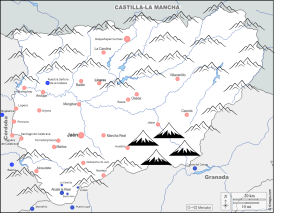
The landscape of Jaén is defined by two contrasting elements: an endless rolling sea of agricultural olive trees, surrounded on its borders by massive, rugged mountain ranges. It is a territory where deeply manicured agriculture abruptly collides with raw, untamed wilderness. The central valley floor and low rolling hills of Jaén form one of the most distinctive, uniform agricultural landscapes on Earth and contains over 66 million olive trees. Looking out from high vantage points, the land appears as an infinite, geometric pattern of silver-green dots stretching across valleys and up hillsides all the way to the horizon. The soil beneath the trees alternates between rich, reddish-orange clay and pale chalky limestone.
Occupying the entire eastern third of the province is Spain’s largest single protected area, the Sierras de Cazorla, Segura y Las Villas Natural Park. This is a wild, alpine world of towering limestone crags, deep ravines, and hidden valleys. It is heavily forested with pine and oak trees, offering a sharp green break from the exposed olive valleys. This mountain range is the hydrographic heart of southern Spain. It contains the headwaters of the great Guadalquivir River, as well as massive, bright turquoise reservoirs like the Tranco de Beas.
Rising abruptly out of the olive groves in the south are independent, monolithic limestone formations. The Sierra Mágina is stark, rugged mountain massif whose highest peak reaches 2,165 metres. The higher altitudes are completely barren, rocky alpine environments that contrast sharply with the agricultural heat of the lower valleys. The Sierra Sur de Jaén, the southwestern border features narrow limestone passes and steep terrain, which is precisely why the frontline froze around Alcalá la Real in October 1936. The Republican forces easily dug into these ridges to build an impenetrable defensive wall.
In the absolute south-eastern corners bordering Granada, the mountains cast a severe rain shadow. The green slopes dry out rapidly, transitioning into arid, heavily eroded, beige badlands and semi-desert ravines. Jaén is almost entirely encircled by massive, rugged mountain ranges. The province acts as a geographical horseshoe, bordered on three sides by some of the most dramatic and formidable mountain systems in southern Spain. These mountains form a natural fortress around the central olive valleys and created severe tactical challenges during the 1936 military campaigns.
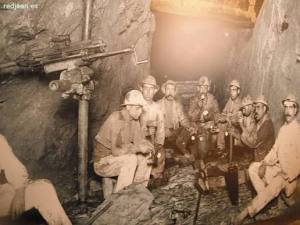
Following the panic of late September, the Republican command’s immediate objective was to establish a permanent defensive wall to prevent Nationalist columns from exploiting the loss of Alcalá la Real and driving deep into the heart of the province toward the mining hubs of Linares. The Nationalist objective in this sector was to pause their advance, consolidate their gains, and secure their flanks. The Republican defensive line was rapidly reinforced by 2,500 to 3,000 milicianos composed of highly politicised miners from the Linares-La Carolina basin and socialist Federación de Trabajadores de la Tierra (FTT-UGT) agrarian syndicates. The Nationalist force occupying the sector consisted of roughly 2,000 troops, including regular army units and right-wing Falange and Requeté militias.
Combat in October and November transformed from open manoeuvres into fierce, small-scale trench and skirmish warfare across the mountain cortijos. The Republicans successfully dug into the high ridges, halting any further Nationalist breakthroughs. Casualties during these localised encounters are estimated 200 dead and wounded combined, effectively freezing the front lines until the major winter offensives in December.
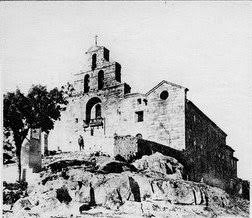
The northern siege in the Sierra Morena, the vast, ancient range that runs all along the northern border of Jaén, and separates Andalucía from the plains of Castilla-La Mancha, was home to the El Santuario de la Virgen de la Cabeza, the highly isolated, rocky sanctuary sanctuary perched atop the Sierra de Andújar. The siege continued, with roughly 200 right-wing Guardia Civil and their families who had revolted against the Republic, had retreated up into the mountain sanctuary.
The Republican objective throughout late October and into November was to lock down a total blockade to starve out the insurgents. The besieged Nationalists sought strictly to survive until a relief column could reach them. Approximately 1,500 Republican militia members still surrounded the mountain base with light artillery. Inside the sanctuary, the Guardia Civil protected nearly 900 women, children, and the elderly. These were the families of the Guardia Civil members alongside wealthy conservative members of the Andújar bourgeoisie who had fled up the mountain to escape the left-wing revolutionary committees in the towns below.
By mid-to-late November 1936, the situation had deteriorated into a brutal, grinding siege. The leadership of the sanctuary underwent a radical, internal purge just prior to late October. The original commander of the group, Commander Major Nofuentes, recognised that they were surrounded by thousands of government troops and had no heavy weaponry. Believing resistance was suicide, he began negotiating an unconditional surrender and evacuation with the local Republican committees. The hardline faction, led by Captain Santiago Cortés, viewed negotiation as treason. Cortés successfully staged an internal mutiny, deposed and arrested his own commanding officer (Nofuentes), and declared an absolute policy of resistir hasta morir (resist until death). By late October, Cortés had held total dictatorial control inside the building.
Because the complex was built as a remote pilgrimage church rather than a military barracks, the defenders had to structurally convert the sacred space into a self-sustaining underground city during November. The monastery rooms, crypts, and cellars were subdivided into a crowded makeshift hospital, basic living quarters for families, and an ad-hoc elementary school for the children. Cut off from radio frequencies, the Nationalists used a flock of carrier pigeons to send messages over the Republican front lines to Nationalist high commands in Cordoba and Seville.
By November, the surrounding Republican forces had all severed all mountain water lines and roads. The defenders would have starved within days if not for a highly specific tactical invention. A Nationalist twin-engine DC-2 bomber piloted by Captain Carlos de Haya had managed to fly low over the mountain peaks and successfully drop the first major cargo packages of food and ammunition directly onto the sanctuary courtyard in October. Medicine, glass vials, and fragile supplies could not survive a hard impact drop. To solve this, the Nationalist pilots attached delicate cargo crates to live turkeys. The large birds flapped frantically on the way down, slowing the descent enough to act as organic parachutes, which then served double-duty as fresh meat for the improvised hospital kitchen once they landed safely on the stone terrace.
While the massive, final Republican infantry and tank assaults did not occur until the spring of 1937, November 1936 saw frequent, localised mortar shelling and light aerial bombardment from Republican aircraft trying to break the defenders’ morale. The stone walls of the 16th-century basilica began absorbing their first layers of shrapnel scars. Captain Cortés used strict military discipline and religious devotion to the statue of the Virgen de la Cabeza to convince the trapped families that Francisco Franco’s relief columns were only days away, unaware that the Nationalist high command would largely leave them stranded for another six months.
In November 1936, the economic and social life of Jaén province was completely reshaped by the war. While the military front was frozen, the interior became a massive workshop and agricultural engine for the Spanish Republic. Jaén was heavily dominated by the socialist UGT (specifically the Federación Nacional de Trabajadores de la Tierra, or FNTT) alongside the CNT. By November, the spontaneous seizures of the summer had transitioned into an organised, province-wide system of collectivised labour.
Jaén was, and still is, the world’s largest producer of olive oil, making its autumn harvest a vital strategic resource for feeding Republican cities and funding the war. The olive harvest typically begins in late November and runs through winter. Throughout November 1936, local municipal committees and peasant unions worked urgently to repair damaged olive presses, secure fuel and transport trucks, and organise thousands of landless day labourers into structured work brigades.
Prior to July 1936, Jaén’s land was concentrated in the hands of wealthy aristocratic latifundistas (landowners), most of whom had fled to Nationalist territory or been arrested when the war broke out. Without private owners to pay wages or manage sales, local worker councils stepped in to run the estates from planting to pressing. Because currency was scarce and inflation was rising, many rural collectives replaced traditional cash wages with a family wage paid in local vouchers (vales) or basic goods. Workers were guaranteed bread, olive oil, chickpeas, and housing based on the number of dependents in their household rather than individual output.
Following the central Republican government’s Decree of 7 October 1936, which legally expropriated land belonging to anyone who had supported the Nationalist uprising, Jaén’s collectivisation process became officially institutionalised in November. Across the province, roughly 60% to 70% of all agricultural land was expropriated and placed under collective management. In towns like Úbeda, Baeza, and Villacarrillo, dozens of massive estates were merged into single municipal collectives.
Because the socialist FNTT-UGT held massive influence in Jaén, collectives here tended to be more centralised and tied to the state than the purely libertarian communes of Aragon. Local assemblies elected administrative committees that coordinated directly with the Ministry of Agriculture in Madrid to ensure olive oil and grain reached the front lines. Unlike large estates, Pequeños Propietarios (small family farms) worked directly by their owners were generally respected and left uncollectivised, provided the owners did not oppose the Republic. However, many small farmers voluntarily joined the collectives because the worker committees controlled the local olive mills, tractors, and distribution networks.
In northern Jaén, the mining district centred around Linares and La Carolina underwent an equally dramatic transformation during November 1936. Linares was one of Europe’s premier lead-producing regions. Because lead was indispensable for manufacturing bullets, shrapnel, and battery plates for military vehicles, the mines were immediately declared essential war industries. Following the July uprising, miners’ unions (dominated by the UGT and CNT) seized control of foreign-owned mining companies, such as the British-owned Linares Lead Mining Company and French-owned Compagnie Royale Asturienne des Mines, after foreign managers fled. By November, elected worker committees were managing extraction quotas, safety, and smelting operations.
Local foundries and metal workshops in Linares were rapidly retooled to produce hand grenades, artillery shell casings, and armoured plates for trucks. Miners worked exhausting double shifts under slogans urging them to treat every ton of lead as ammunition for the defenders of Madrid. Because thousands of young miners and farmworkers had volunteered or been drafted into Republican militia battalions, November saw severe labour shortages. Women, older men, and refugees arriving from Córdoba and Seville were integrated into sorting ores at the mines and picking olives in the groves to keep production moving.
But in November 1936, Jaén province was experiencing a massive, straining humanitarian crisis as it became one of the primary inland sanctuaries for thousands of displaced civilians fleeing Nationalist advances across southern and western Spain. While the military front lines bordering Jaén were temporarily static during that month, the province’s towns and villages were overwhelmed by waves of exhausted refugees arriving from neighbouring territories. Throughout late summer and autumn 1936, General Queipo de Llano’s Nationalist columns swept through Seville, Huelva, Badajoz, and western Córdoba. Tens of thousands of left-wing families, trade unionists, and terrified peasants fled eastward ahead of the Nationalist advance, pouring across the border into Republican-held Jaén.
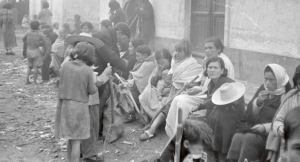
Following the central Republican government’s decision in early November 1936 to evacuate non-essential civilians from besieged Madrid, new waves of women, children, and elderly residents were routed south via the Despeñaperros railway pass directly into Jaén’s towns. By November 1936, Jaén, a province with a pre-war population of roughly 670,000, was absorbing tens of thousands of displaced people. In major transit hubs like Linares, Andújar, Úbeda, and Jaén city, refugees quickly swelled local populations by 10% to 20%.
Local municipal committees and Comités de Refugiados (refugee relief boards) struggled to shelter families arriving with little more than the clothes on their backs. Authorities requisitioned vacant aristocratic mansions, abandoned convents, monasteries, schools, and theatres to serve as communal dormitories. When public buildings overflowed, town councils issued mandatory billeting orders, requiring local residents with spare rooms to house displaced families. With winter setting in across the Andalusian interior in November, poor sanitation, inadequate heating, and severe overcrowding in makeshift shelters led to rising outbreaks of typhus, scabies, and respiratory illnesses.
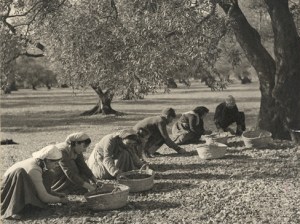
Though Jaén produced vast quantities of olive oil, it did not produce enough wheat, meat, or dairy to feed a suddenly inflated population. In November 1936, municipal councils introduced strict cartillas de racionamiento (ration cards) to prevent hoarding and ensure bread and basic staples were divided between locals and newcomers. To ease the financial burden on local relief funds and solve wartime labour shortages, agricultural collectives actively recruited able-bodied refugees into the upcoming winter olive harvest. In exchange for working in the groves, displaced families received shelter, meal tickets, and a share of the collective’s food rations.
Integrating refugees into the workforce was actively encouraged and practically essential. Because thousands of local men had left for the front lines, the Republican zone faced a severe labour shortage right as the winter olive harvest arrived. While putting refugees to work was official policy, how smoothly it went depended on who was doing the work and how local collectives managed their resources. But without outside help, the vital winter olive harvest risked rotting on the trees, and lead production in Linares would have stalled. Municipal councils were struggling to pay for food and shelter for tens of thousands of displaced people. Integrating able-bodied refugees into local work brigades allowed them to earn their own rations and housing vouchers rather than draining local relief funds. Both the socialist UGT and anarchist CNT unions viewed productive labour as a core anti-fascist duty. Refusing to work while able-bodied was frowned upon, whereas joining a collective work crew was seen as contributing directly to the war effort.
Even though working was expected, several practical and social tensions complicated the process. A huge proportion of the refugees arriving from Madrid and western Andalucía were women, young children, and the elderly, because their husbands and fathers were either fighting at the front, trapped behind enemy lines, or already dead. While women stepped into lighter agricultural roles like gathering fallen olives (rebusca) or sorting ore at the mines, heavy physical labour was harder to replace. Urban refugees evacuated from Madrid often had no experience with agricultural work, olive pruning, or deep-shaft lead mining, leading to frustration among seasoned local farmers. Plus, in many Jaén collectives, refugees were treated as temporary wage labourers rather than full voting members of the local commune. Because they did not belong to the village originally, they sometimes received smaller ration shares or had less say in how the collective was run, creating quiet resentment between locals and newcomers.
Initially, refugees were greeted with genuine anti-fascist solidarity by local UGT and CNT committees. However, by November 1936, the sheer length of the crisis began causing friction. Local residents increasingly resented the strain on food supplies, housing requisitions, and rising prices, while refugees often struggled with trauma, poverty, and feeling treated like second-class citizens in unfamiliar towns. Tragically, for many refugees who settled in western Jaén towns like Lopera, Porcuna, or Andújar in November 1936, safety proved short-lived. When Queipo de Llano launched the Olive Campaign the following month in December 1936, thousands of these families were forced to pack up and flee eastward once again toward Albacete, Murcia, and Valencia.
Because Jaén province remained entirely under Republican control, the nature of the terror here was the inversion of Nationalist Granada. Rather than clandestine military sacas and fascist death squads operating in the dark, the repression in Jaén during October 1936 transitioned into highly institutionalsed, state-sanctioned revolutionary justice. Following the failure of the July military uprising, thousands of local right-wing sympathisers, wealthy landowners, and members of the clergy were swept into custody. The Provincial Jail of Jaén was completely saturated, forcing the Republican civil governor to convert the massive Jaén Cathedral into an improvised detention facility holding over 800 political prisoners.
Early in the war, violence had been driven by chaotic street committees (such as the actions surrounding the infamous Death Trains of August). However, on 7 October 1936, a major legal had shift occurred. The Republican government formalised the Tribunales Populares inside the capital. Throughout October and November, these tribunals began operating as a bureaucratic processing line for the bourgeoisie. While many cases resulted in long prison sentences or asset seizures, the court systematically passed capital sentences.
Unlike the unrecorded executions of the Nationalist zone, the Republican tribunals kept meticulous legal dockets. The overwhelming majority of Jaén’s wartime killings occurred in July, August, and September 1936, most notably the August Death Trains, which claimed roughly 200 to 260 lives. By November, uncontrolled executions had largely stopped. In autumn 1936, provincial authorities replaced mob violence. Across all of 1936, Jaén’s Popular Tribunals processed 373 individuals and handed down 79 death sentences, meaning executions in November were comparatively rare and tied to formal legal proceedings rather than mass purges. This relative quiet lasted until April 1937, when a devastating Nationalist air raid on Jaén city triggered a massive retaliatory saca, resulting in the execution of roughly 130 prisoners. According to historian Luis Garrido González, the total number of people killed by Republican repression in Jaén across the entire three-year war was 1,368 (with other estimates reaching up to 1,830). By comparison, post-war Francoist repression in the province resulted in 3,715 documented deaths.

