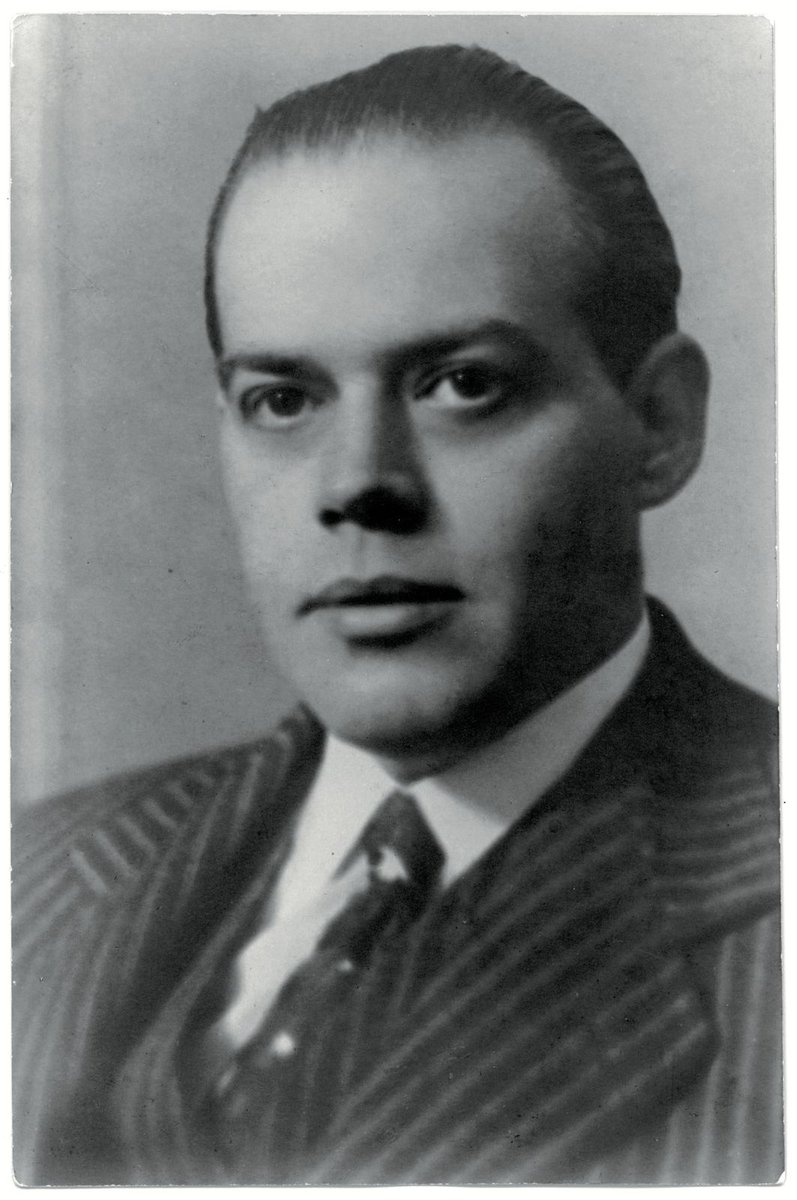
- Guadarrama, Madrid
On 6 August 1936, near the Guadarrama front north of Madrid, Catalan politician and president of FC Barcelona Josep Sunyol was captured and executed by Nationalist troops. Born in Barcelona in 1898 into a wealthy Catalan family, Sunyol became a lawyer, journalist, businessman and prominent supporter of Catalan nationalism and republican politics. He served as a deputy in the Cortes for Esquerra Republicana de Catalunya, ERC (Republican Left of Catalonia), the principal Catalan nationalist and left-republican party associated with Lluís Companys. In 1935, Sunyol became president of FC Barcelona during a period when the club already represented far more than sport for many Catalans. Barcelona increasingly functioned as a cultural and political symbol connected to Catalan identity, republicanism and opposition to authoritarian centralism.
On 6 August, while travelling near the Guadarrama front north of Madrid, Sunyol’s vehicle entered territory controlled by Nationalist forces operating in the mountain sector. The precise circumstances remain partly unclear because of contradictory wartime accounts and limited surviving documentation. At the beginning of the Civil War he traveled to Valencia and Madrid, before he travelled by car to the Guadarrama mountains, accompanied by three others to visit the front to raise morale for the Republican fighters. The Republican press had been inflating the supposed victories of the Republicans in the area, which was not secure or stable at that point and and Sunyol and his companions accidentally entered the area controlled by Franco’s forces. The four were captured in their car, and Sunyol and two of his companions were immediately shot, while the fourth member was shot dead while trying to escape.
Sunyol’s death rapidly became one of the earliest widely remembered political killings of the war. News spread quickly through Catalonia, where many Republicans regarded him as representing the union of Catalan autonomy, democratic republicanism and popular civic culture now under attack from the military rebellion. During the Franco dictatorship, public discussion of Sunyol’s death remained heavily restricted because of its association with Catalan nationalism and Republican memory. Following Spain’s transition to democracy, however, Sunyol increasingly came to be commemorated publicly by FC Barcelona and its supporters. Later generations would connect figures like Sunyol to the broader idea that FC Barcelona represented cultural identity, political memory and resistance to authoritarianism.
Sunyol’s death occurred amid increasingly bitter fighting around the Sierra de Guadarrama north of Madrid. Since late July, Republican and Nationalist forces had struggled to control the mountain passes leading towards the capital. The fighting exposed the chaotic nature of the conflict during its opening weeks, as many Republican militia volunteers arriving at the front possessed almost no military training. Students, railway workers, office clerks, labourers and political activists suddenly found themselves fighting in mountain warfare against professional soldiers. Eyewitnesses later recalled shortages of ammunition, confusion over command structures, arguments between militia groups and volunteers sleeping in improvised trenches without proper equipment.
Morale among many Republican militias initially remained high, and volunteers departing Madrid often believed the rebellion could still be defeated quickly through revolutionary mobilisation and armed resistance. Songs, political speeches and militia banners remained common features at the front despite increasingly harsh battlefield conditions. The Guadarrama fighting also reflected the growing political fragmentation inside Republican Spain. Socialist, communist, anarchist and republican militias frequently operated beside one another while maintaining separate command structures and political identities. The war was becoming militarised, but it was not yet fully centralised. Instead of opening the road to Madrid, the Sierra de Guadarrama was becoming one of the Civil War’s first relatively stable fronts. The deadlock encouraged Nationalist commanders to place greater emphasis on the offensive advancing north through Extremadura, where the Army of Africa offered the prospect of a decisive campaign.
A train carrying one hundred Carabineros from Figueres, near the French border in Girona province, arrived in Madrid on 6 August after travelling from Portbou. Rather than remaining in Catalonia, the men reported directly to the Republican government and volunteered for immediate service at the front. Their arrival illustrated the growing movement of trained security forces across Republican territory as the government concentrated experienced personnel where they were needed most. While militia columns continued to form from volunteers, the transfer of Carabineros provided disciplined troops with military training at a time when Madrid was preparing for larger operations and the expected advance of the Nationalist forces.
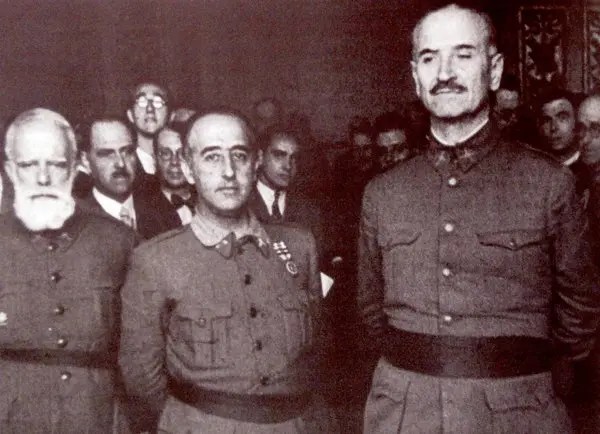
- Seville
While Catalonia mourned Sunyol’s death, Franco arrived in Seville, one of the rebellion’s most important strongholds. The city had fallen to the Nationalists during the opening days of the coup under the command of General Gonzalo Queipo de Llano. Since then, Seville had become both a military headquarters and a centre of severe repression. Thousands of suspected Republicans, trade unionists, anarchists, socialists, teachers, labour organisers and ordinary workers had already been arrested or executed across Seville province during the first weeks of the war. In many districts, political killings occurred almost daily as Nationalist forces consolidated their control.
Queipo de Llano reinforced his authority through nightly radio broadcasts transmitted from Seville. The broadcasts mixed propaganda, threats, mockery, anti-Republican and anti-left rhetoric, and explicit references to violence. Some speeches openly encouraged terror against Republican opponents and included repeated threats of sexual violence directed towards women associated with the political left. Historians now widely regard the broadcasts as part of the broader atmosphere of psychological warfare and gendered terror accompanying the Nationalist advance during the summer of 1936. Eyewitnesses later recalled cafés and homes falling silent while Queipo’s broadcasts played over radios across much of southern Spain.
Franco established himself in Seville because it offered direct access to the Army of Africa and the developing Extremadura offensive. The successful airlift and the Convoy of Victory had brought thousands of Legionnaires and Moroccan Regulares from Spanish Morocco to Andalusia, together with artillery, vehicles and vital military supplies. From Seville these experienced troops were already advancing north towards Mérida and Badajoz, carrying out severe repression in many towns and villages captured along their route.
At this stage, Franco was not yet the undisputed leader of the Nationalist rebellion. Overall command remained shared among several senior generals, most notably Emilio Mola in the north. Nevertheless, the arrival of the Army of Africa and the rapid success of the southern campaign steadily increased Franco’s prestige. During the weeks that followed, these victories would strengthen his claim to become the rebellion’s supreme commander.
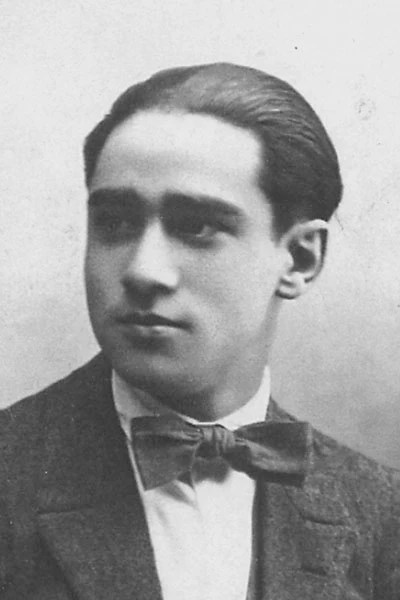
- Burgos
While the war’s larger military and political events unfolded, repression continued elsewhere in Spain. On 6 August, the Burgos composer Antonio José Martínez Palacios, one of Spain’s most promising young musicians, and nicknamed musical soul of Castile, was arrested by Nationalist authorities. Imprisoned without trial, he would later be executed near Monte de Estépar in October 1936, becoming another victim of the repression that accompanied the Nationalist consolidation of northern Spain.
By the close of 6 August, the Civil War was becoming increasingly defined by both military momentum and symbolic loss. Franco now commanded the Army of Africa from Seville as it advanced through Extremadura, while the execution of Josep Sunyol demonstrated that political identity, regional culture and public life had become targets of the conflict as surely as armies on the battlefield.

