* To be clear, this is not a ‘both sides’ defence of the Spanish Civil War. One half of the country were the people, who had won the recent election, and wanted to be treated as equals. The other side was a vicious invading army who sought to destroy civilians, and caused irreparable harm. This article is to help if you are new to the topic.
Historians often use the terms ‘Republican’ and ‘Nationalist’ for simplicity and readability, but neither side of the Spanish Civil War was politically unified. Both were broad coalitions containing groups with profoundly different visions for Spain’s future, many of whom distrusted one another almost as much as they hated their enemies. Modern readers can also struggle with the terminology because words such as ‘Republican,’ ‘liberal,’ ‘socialist,’ and even ‘fascist’ carried meanings in 1930s Spain that do not neatly align with modern political language, especially with the distortion caused by crumbling American politics constantly making international news. Republican is now associated with right-wing groups, liberal and socialist are both insults, fascism and nationalism are both still dangerous yet strangely underestimated, and communism and anarchism have been intentionally villainised. Yet understanding these differences outside of modern day interpretations is essential to understanding Spain’s history.
The conflict which erupted in July 1936 was not simply a struggle between two ideologies. It was a collision between revolution and counter-revolution, secularism and clericalism, regional identity and central authority, democracy and authoritarianism, reform and reaction. Millions of ordinary Spaniards found themselves trapped between these forces as the country descended into catastrophe. Of course, not all people would align perfectly with any group; they may believe in some parts of an ideology, but not all of it. These constantly clashing beliefs meant that two brothers could head to war, but for opposing sides, despite been raised in the same social class. Each description here is generalised, not to pigeonhole each person into a group.
THE LEFT-WING REPUBLICANS
The Republicans were not a single ideology, but a coalition defending the Second Spanish Republic, the elected government established after the monarchy fell in 1931. Many Republican supporters agreed on only one thing – opposition to the military uprising launched in July 1936. Within the Republican zone existed enormous political divisions, and those divisions would increasingly shape the course of the war itself.
- Liberal Republicans
Moderate republicans generally supported parliamentary democracy, constitutional reform, secular government, and gradual modernisation. Many came from educated middle-class backgrounds and believed Spain had remained politically and economically backward compared to much of Europe. Their reforms during the Second Republic included expanding public education, reducing the political power of the military, limiting the influence of the Catholic Church within government, and introducing legal reforms such as divorce and women’s suffrage. These liberals were not revolutionaries in the socialist or anarchist sense. Many feared violent revolution almost as much as they feared fascism. Their goal was usually a modern democratic Spain similar to France or other European republics. However, this form of slow, comfortable change did not benefit the working class, and the middle-class were not eager to do anything that might disrupt their comfortable lives.
- Socialists
Spanish socialism covered a broad spectrum of beliefs and strategies. Some socialists hoped to achieve reform gradually through elections and trade unions, while others believed capitalism and stagnant, traditional Spanish society could only be transformed through revolution. The socialist movement was closely tied to industrial workers, miners, railway workers, and urban trade unions. Conditions for many workers in Spain during the early twentieth century were undeniably harsh, with widespread poverty, inequality, poor housing, no women’s rights, severely limited healthcare, and dangerous working conditions. For many working-class supporters, socialism represented not abstract theory, but the hope of better wages, land reform, education, and dignity. For many who worked rurally, living conditions had not advanced in hundreds of years, barely living lives beyond feudalism, still trapped as peasants.
Among this group reigned La Unión General de Trabajadoras y Trabajadores boasting 1.5 million members, including 50,000 from the Federación Nacional de Trabajadores de la Tierra (Land Workers Federation). The UGT was aligned with the Partido Socialista Obrero Español (PSOE, Spanish Socialist Workers’ Party), Spain’s oldest political party, who were in power in a majority government in 1936 (and peacefully lead Spain today under Pedro Sanchez).
- Communists
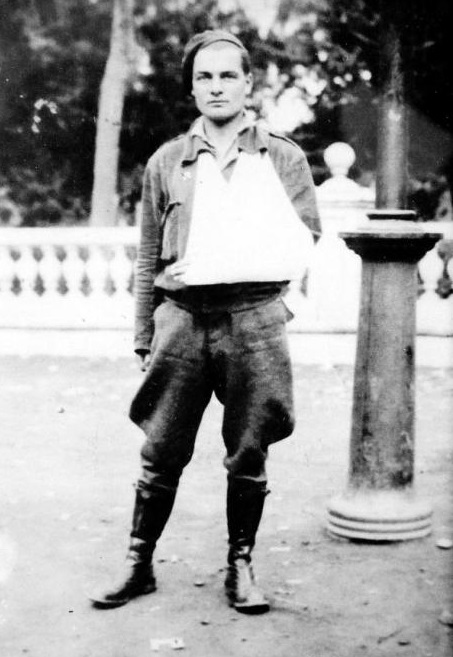
The communist movement in Spain was relatively small before the war but grew rapidly during the conflict because the Soviet Union became one of the Republic’s few major foreign supporters. Communists generally argued that the Republic could only survive by creating a disciplined centralised army instead of relying on loose revolutionary militias. Soviet military aid, tanks, aircraft, advisers, and political organisers gave communist groups increasing influence inside Republican Spain. Communist organisations also became deeply involved in internal Republican power struggles, especially against anarchists and anti-Stalinist groups such as the POUM. To many supporters, communism represented disciplined resistance against fascism, and went from 30,000 member at the start of the war, to upwards of 400,000 members (some estimate’s claim up to one million) within one year. To critics, it increasingly represented Soviet interference and political repression within Republican territory itself. Because the communist movement had international support in a way other Republican groups did not, this created an uneasy alliance.
- Anarchists
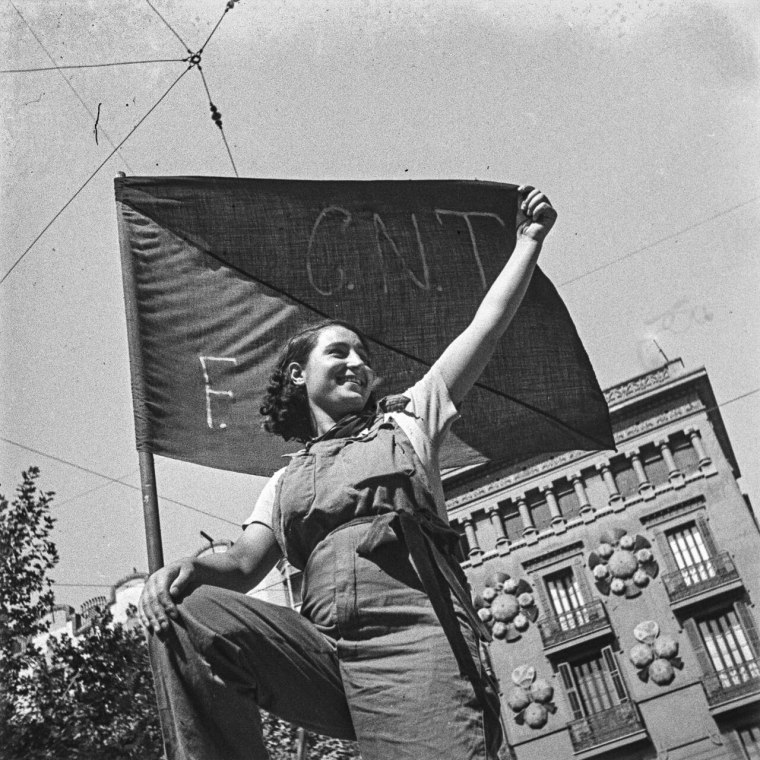
Spain possessed one of the largest anarchist movements in Europe, particularly in Catalonia and Aragón. Unlike socialists or communists, anarchists did not simply seek to take control of the state – many wanted to abolish the oppressive hierarchical government entirely. Organisations such as the Confederación Nacional del Trabajo (CNT or National Confederation of Labour) and Federación Anarquista Ibérica (FAI or Iberian Anarchist Federation)believed society should be organised through workers’ collectives, local assemblies, and voluntary cooperation rather than governments, aristocrats, churches, or capitalist ownership. The CNT-FAI is now celebrated as one of the most successful collaborations in worker-managed socialism and anarcho-syndicalism in modern history. At its peak, the CNT had 1.5 million members and represented many workers unions, while the FAI brought another 1.5 million members.
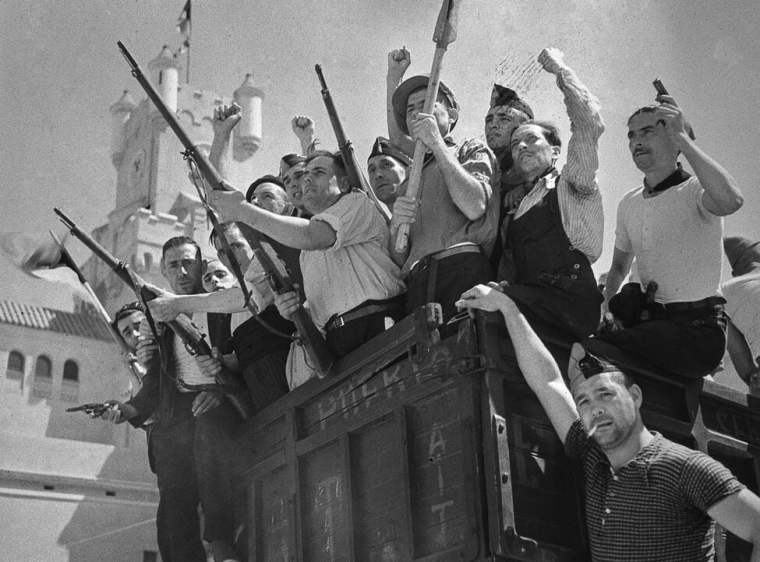
When the military uprising failed in parts of Spain during July 1936, anarchist movements helped unleash a genuine social revolution. Factories, farms, workshops, transport systems, and even hotels were collectivised in some regions. Revolutionary slogans covered walls, churches were seized or destroyed, and traditional social structures briefly collapsed. For many workers and labourers, this represented liberation and equality. For conservatives and many middle-class Spaniards, it represented terrifying chaos and the destruction of civilisation itself. Anarchist imagery, militia columns, and armed women became some of the defining symbols of the early war.
- Regional Autonomists
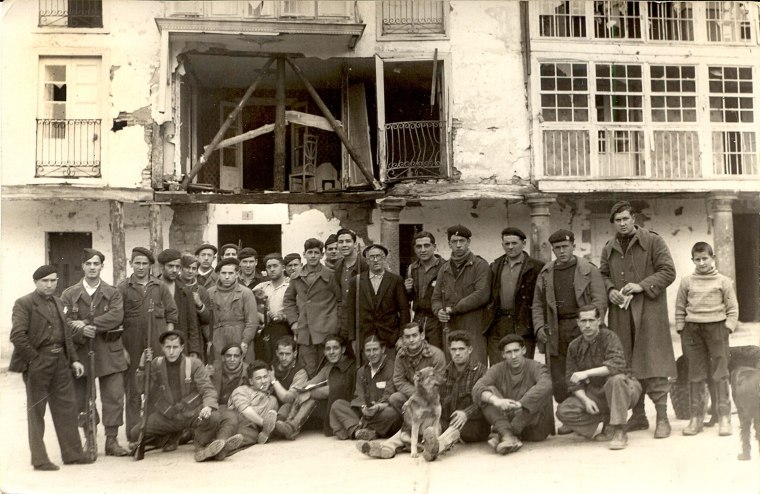
Regional identity played an enormous role in the conflict, particularly in Catalonia and the Basque Country, and are referred to under different name, such as regional nationalists or separatists, fighting to maintain the autonomy of the area where they lived. Many Catalans supported the Republic because it granted varying degrees of regional autonomy, allowed the preservation of Catalan political and cultural identity, and would empower their worker populations. Barcelona became one of the great centres of revolutionary Republican Spain. The Basque situation was even more complex. Many Basques were deeply Catholic and socially conservative yet still sided with the Republic because they feared Franco would destroy Basque autonomy and regional freedoms. These regional movements remind modern readers that the war was not simply ideological. Questions of language, culture, regional identity, and local government were deeply important throughout Spain. Franco and the Nationalist sought to ban autonomy of Spain’s many regional autonomies and languages, which were, and remain, an essential part of Spain as a collection of regions bound together on the Iberian peninsula.
- Soviet Union
The Republic’s most important state supporter was the Soviet Union. Unlike Italy’s mass deployment, Soviet involvement focused on military advisers, tank crews, pilots, intelligence personnel, and weapons deliveries. The Soviets supplied T-26 tanks, aircraft, artillery and small arms. The T-26 was arguably the best tank in Spain during the early stages of the war. Several hundred Soviet specialists served directly in combat roles, though Moscow generally avoided sending large infantry formations. Estimate range between 2,000-3,000 men on the ground rotated in and out throughout the war.
An interesting note is that there were more German and Italian anti-fascists fighting for the Republic in the International Brigades than there were Soviet citizens sent by Stalin. Thousands of German and Italian exiles volunteered to fight, whereas Moscow kept its direct military presence relatively limited.
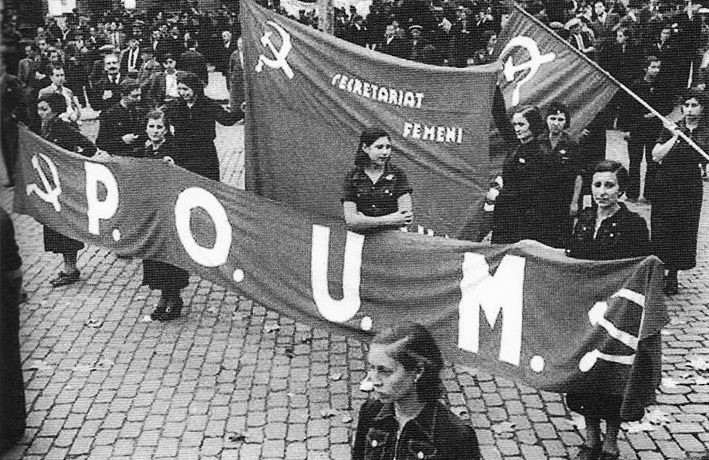
- The Partido Obrero de Unificación Marxista, POUM
The POUM or Workers’ Party of Marxist Unification, was a smaller anti-Stalinist Marxist party most famous internationally because of its association with George Orwell. The group opposed fascism but also distrusted Soviet communism and Stalin’s growing influence within Republican Spain. Members believed the war against Franco could not be separated from wider social revolution.
As Soviet-backed communists gained power inside the Republican coalition, the POUM became increasingly targeted. Its leaders were arrested, persecuted, or killed during internal Republican political struggles. The existence of the POUM demonstrated how divided the Republican coalition truly was. Even while fighting Franco, elements inside Republican Spain were simultaneously fighting one another politically and sometimes violently. Despite being a small group, the POUM claimed 40,000-70,000 members and 8,000 militants at the start of the war.
- The International Brigades
The most famous foreign volunteers of the war were the International Brigades. These units were organised with Communist assistance and recruited volunteers from more than fifty countries. Around 32,000–35,000 men and women served over the course of the war. Major groups included volunteers from France, Germany, Italy, Britain, Ireland, Poland, Yugoslavia, Hungary, Canada, United States, Australia, and New Zealand. Many were refugees from fascist regimes who believed Spain was the first battlefield in a wider struggle against fascism. The Brigades suffered extremely heavy casualties, and those who survived were often villainised or imprisoned when they returned home.
THE RIGHT-WING NATIONALISTS
The Nationalists emerged from the military uprising launched against the Republic in July 1936. Like the Republicans, they were also a coalition rather than a single ideology. What united them was opposition to the Republic, fear of revolution, their anti-communism and conservative Catholicism, and their belief that Spain required authoritarian order. Many supporters believed Spain was collapsing into atheism, class warfare, regional fragmentation, and social disorder, a fear not unfounded, as these things represented a way to empower the lower classes. The Nationalist movement promised hierarchy, unity, discipline, religion, and the destruction of revolutionary politics.
- Army Officers
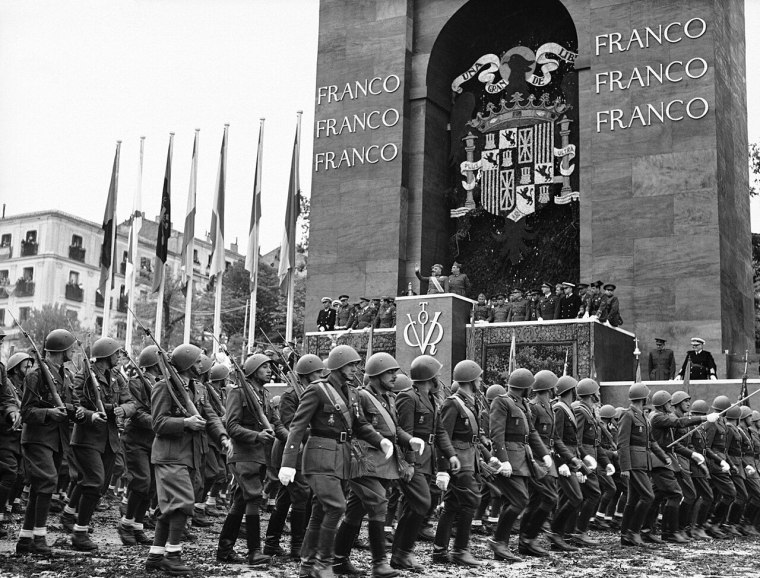
Senior military figures such as Francisco Franco and Emilio Mola believed the Republic had weakened Spain through political instability, regional separatism, labour unrest, and attacks upon traditional authority. Many officers had served in Spain’s indescribably brutal colonial wars in Morocco, where military violence and authoritarian discipline were considered necessary tools of control. These experiences shaped the mentality of many future Nationalist commanders. The military uprising was not a democratic movement. It was an attempt by armed officers to overthrow the elected government and replace it with authoritarian rule.
- The Falange
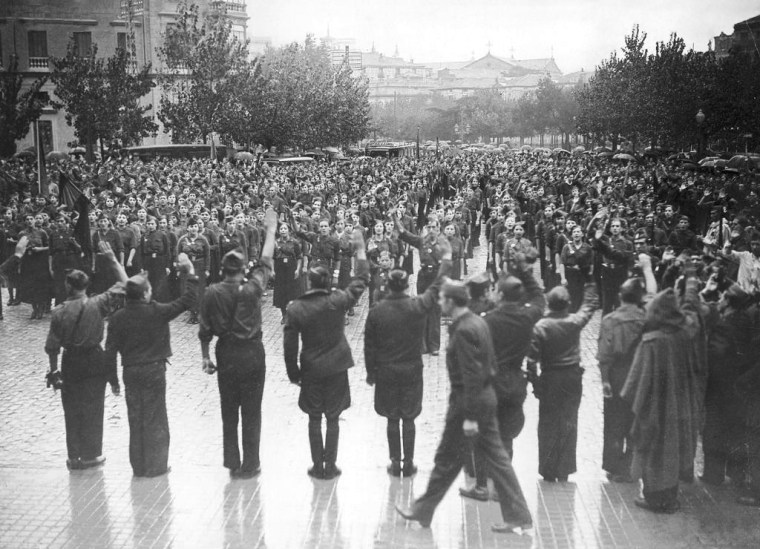
The Falange was Spain’s fascist movement, founded by José Antonio Primo de Rivera. Inspired partly by Italian fascism, the movement promoted authoritarian nationalism, political violence, militarism, anti-communism, and the destruction of liberal democracy. Falangist propaganda glorified sacrifice, discipline, masculinity, youth, and national rebirth. Its supporters often marched in uniform, used fascist salutes, and embraced confrontational street politics even before the war began. At the start of the war, the Falange only had 10,000 members, and that was a result of multiple fascist groups joining together. By the outbreak of war, the number grew to 25,000, though 70% were under the age of 21, thanks to propaganda and student movements that aligned with the rich and powerful. Within a year, as Franco took over the Falange, number swelled to 250,000, two-thirds of which were in Franco’s army.
- Carlists
The Carlists were radical ultra-conservative monarchists who supported a rival branch of the exiled Spanish royal family and defended militant Catholic traditionalism. Unlike fascists who often embraced modern political spectacle, the Carlists looked backward toward a deeply religious and traditional Spain rooted in monarchy, localism, and Catholic authority. Their requeté militias became famous for their red berets, religious banners, and brutal battlefield reputation, and had a mindset that the war was their crusade for their 40,000 soldiers. The existence of the Carlists demonstrates how strange the Nationalist coalition could be. Traditionalist monarchists and modern fascists often disliked one another intensely yet fought side by side against the Republic. Through the 19th century, the Carlists had fought multiple brutal wars against their own people to establish order in Spain, including the Third Carlist War of 1874), where 100,000 armed volunteers, crushed vast swathes of the Basque Country, Catalonia, and Aragon.
- Conservative Catholics
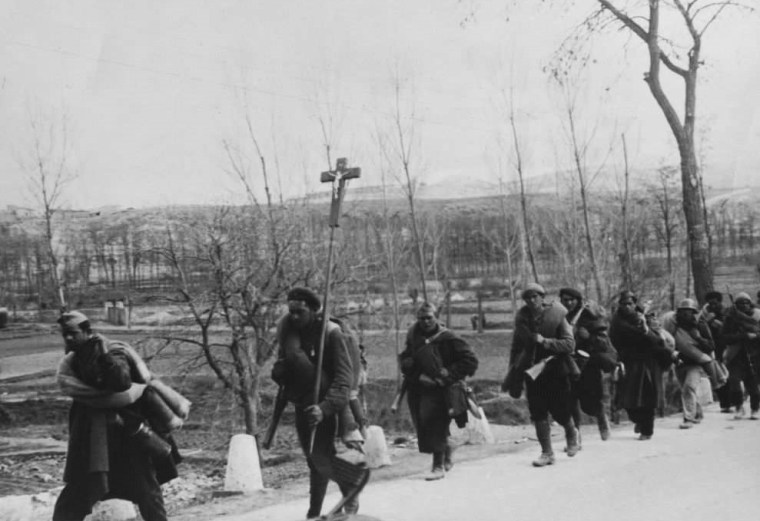
Many ordinary Catholics supported the Nationalists after anti-clerical violence exploded in Republican territory during the chaotic opening months of the war. Churches were burned, priests and nuns were killed, religious artwork destroyed, and Catholic institutions attacked in parts of Republican Spain. Nationalist propaganda heavily emphasised these atrocities, portraying the conflict as a holy crusade against atheism and godlessness. For many conservative Catholics, support for the Nationalists came not from fascist ideology, but from fear that religion and traditional society itself were under attack. Conservative Spaniards often viewed socialism as a direct threat to religion, property, and social order. At the same time, Franco would later use Catholicism as one of the central pillars of his dictatorship, tightly linking church authority to the authoritarian state.
- International forces
The Army of Africa (Ejército de África) was not technically an international intervention, was the most effective fighting force available to the Nationalists in July 1936. It consisted of the Spanish Foreign Legion (Tercio), and Moroccan Regulares. The Regulares were indigenous Moroccan soldiers recruited in Spain’s protectorate in northern Morocco. Around half were Europeans who served in the Spanish Legion and the artillery, while the rest were Moroccans, most of whom were in the Regulares and Mehelas, and by the time the war ended, Morocco had sent about 8,000 men. They were commanded by Spanish officers and had earned a fearsome reputation during the Rif Wars of the 1920s. Francisco Franco had spent much of his early career commanding these troops and knew their value. When the coup began in July 1936, the Army of Africa became trapped in Morocco. German and Italian aircraft helped airlift thousands of troops across the Strait of Gibraltar in what was then the largest military airlift in history. The Moroccan troops quickly gained a reputation among Republican civilians for their discipline in combat but also for brutality, rape, looting, and reprisals, especially with the atrocities advance through Extremadura and Andalusia. By late 1936 they were among the most feared troops in Spain.
- The Condor Legion (Legión Cóndor)
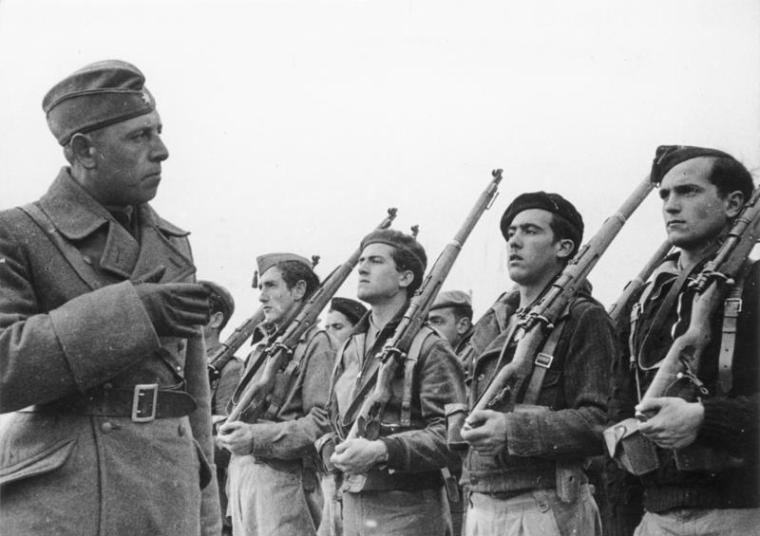
Condor Legion was Nazi Germany’s military force sent to assist the Nationalists. It arrived in late 1936 after a request from Franco. The force included fighter aircraft, bombers, anti-aircraft units, tank crews, signals specialists, military advisers. The Germans wanted to prevent a left-wing victory, gain influence with Franco, and test new weapons and tactics. Many future Second World War commanders served there, including Wolfram von Richthofen. The Condor Legion became famous for its air operations, and by the end of the war around 19,000 German personnel had served in Spain, though only a fraction were present at any one time.
- Italian Corpo Truppe Volontarie (CTV)
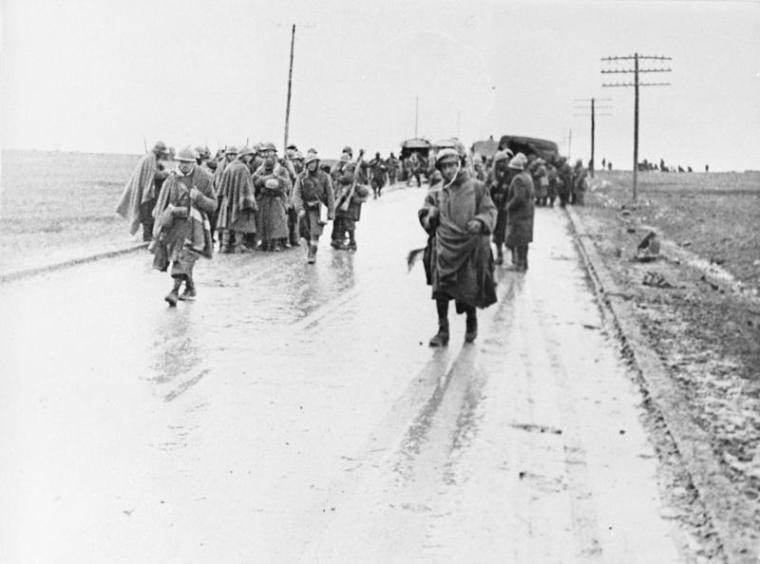
The largest foreign force fighting for the Nationalists came from Fascist Italy. The Italian expeditionary force, known as the Corpo Truppe Volontarie, was sent by Benito Mussolini. At its peak it numbered roughly 45,000 regular army troops and 29,000 fascist militiamen. The Italians provided infantry divisions, tanks, artillery, aircraft, and naval support Unlike the Germans, who concentrated on specialist roles, the Italians often fought as large independent formations.
- Portuguese Volunteers (Viriatos)
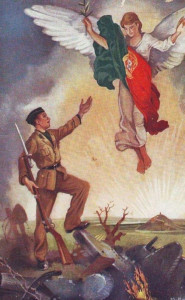
The authoritarian government of António de Oliveira Salazar strongly supported Franco. Several thousand Portuguese volunteers crossed the border to fight for the Nationalists. These men are often collectively called the Viriatos, after an ancient Iberian warrior, although they did not form a single organised unit, and estimates of troop number vary between 8,000-12,000. Portugal was particularly important because it provided safe supply routes, border access, diplomatic support, and intelligence cooperation. Without Portuguese assistance, Nationalist logistics would have been much more difficult.
Understanding these coalitions is essential because the Spanish Civil War cannot be understood as a simple struggle between two unified sides. The Republican coalition contained liberals, anarchists, communists, socialists, regional nationalists, and revolutionaries who often disagreed profoundly about Spain’s future. However, on the battlefield, with limited supplies, these differences would have meant far little in the face on ingoing armies supplied with weapons, back-up and authority to leave no one unharmed.
The Nationalist coalition united fascists, monarchists, conservative Catholics, military officers, and reactionary traditionalists behind an authoritarian military uprising. The war also did not end in 1939 with reconciliation or democratic compromise. Franco’s victory led to decades of dictatorship, censorship, imprisonment, executions, political repression, and the destruction of many of the freedoms introduced during the Second Republic. The Spanish Civil War was not merely a military conflict. It was a struggle over what kind of country Spain would become; modern or traditional, secular or clerical, democratic or authoritarian, and its consequences shaped Spain for generations.
 CAROLINE ANGUS