For the Siege of Madrid, see 8 November
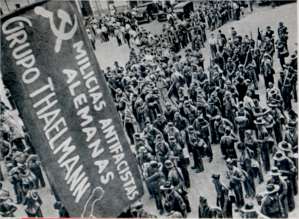
- Albacete, Murcia (Castilla La-Mancha)
On 9 November, the military bases at Albacete, Mahora, and Madrigueras received an urgent order to send reinforcements to Madrid. In response, three international volunteer battalions that had not been included in the previously dispatched XI Brigade were quickly assembled. These forces were organised to form the XII International Brigade.
The newly established brigade was placed under the command of the Hungarian writer and revolutionary Máté Zalka, who operated under the pseudonym General Lukács. The brigade brought together a diverse, multinational force divided into three battalions. The Garibaldi Battalion, composed primarily of 500–600 Italian anti-fascist volunteers. The André Marty Battalion: 50–500 men, primarily composed of French and Belgian volunteers, and the Thälmann Battalion had 450 – 500 French and Belgian volunteers.
The Garibaldi and Thälmann units primarily used the training camp infrastructure setup in Madrigueras and Mahora. Training was exceptionally brief, lasting only a couple of weeks. Many of the men were World War I veterans, meaning they relied heavily on prior combat experience rather than the brief drilling they received in the Albacete province.
During the night of 10 November, the International Brigades gathered at the Albacete railway station. The troops boarded trains and departed for Madrid to reinforce the Republican lines against the advancing Nationalist forces. The train travelled northwest through the Castilla-La Mancha region toward the capital, bypassing areas heavily contested by the advancing Nationalist forces, and travelled through Vallecas to get into central Madrid. Almost immediately upon arrival, on 12–13 November, General Lukács’s brigade was thrown directly into a counter-offensive against Nationalist positions on the Cerro de los Ángeles and near the Almost immediately upon arrival, on 12–13 November, General Lukács’s brigade was thrown directly into a counter-offensive against Nationalist positions on the Cerro de los Ángeles and the northern sector to stop the Nationalist advance.
- Bizkaia and Gipuzkoa Borders, Basque Country
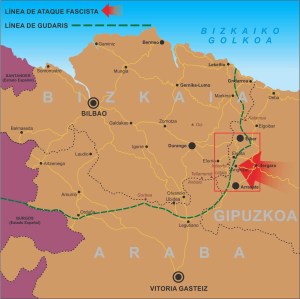
The operational orders issued by the Army of the North on 8 and 9 November marked the initial planning phase for what would become the Villarreal Offensive. The primary purpose of these movements for the Basque forces aimed to push south from their strongholds to capture Vitoria (the capital of Álava) and advance toward Miranda de Ebro, a critical railway hub. Broadly, the Republican high command ordered this offensive to relieve the immense Nationalist pressure on Madrid, which was facing a direct assault at that moment. The strategic Arlabán pass, a mountain gateway positioned between the provinces of Álava and Gipuzkoa, was designated as a vital axis of advance. Securing this pass was meant to encircle Nationalist positions from the east. The operation was highly ambitious for the young autonomous government, mobilising 33 battalions comprising approximately 21,500 men.
As the Basque Army organised its push south, Nationalist forces used air superiority to strike towns behind the Republican lines in Bizkaia and Gipuzkoa, aiming to disrupt logistics and demoralise the population. In Elorrio on 9 November, a Nationalist aircraft dropped a bomb directly behind the town hall. Fortunately, no casualties were reported in this strike.
The following day, at nearby Markina-Xemein and Elgeta, both towns were targeted by air raids. Elgeta, positioned on high ground near the front lines, and Markina-Xemein, a vital rear crossroads, suffered infrastructural damage.
In areas already captured by the Nationalists in Gipuzkoa, such as San Sebastián/Donostia, the regime carried out swift, systematic purges of suspected Republican sympathisers, Basque nationalists, and left-wing civilians. Individuals were typically held in prisons like Ondarreta before being taken to nearby sites (such as Hernani) to face firing squads. Agustín Ibáñez Tapia and Miguel Larrea Iriarte were executed on 9 November and on 10 November, Luis Irisarri Piquer, a local worker from the Basotxiki farmhouse in Intxaurrondo. He had no known political affiliation and was arrested by Nationalist soldiers at a local tavern the night before his execution. He was briefly held at Ondarreta prison before being shot, leaving behind a wife and a two-year-old daughter. All three are missing among the over 200 people buried at Hernani.
Because the front line had temporarily stalled at the edge of Bizkaia, the occupying Nationalist forces turned their full attention to consolidating control through terror, purges, and cultural erasure. The repression in San Sebastián/Donostia and the wider Gipuzkoa province during November 1936 was characterised makeshift detention centres bursting at the seams. The infamous Ondarreta Prison, the Zapatari facility, the Kursaal cinema, and local Falange offices were packed with thousands of local Republicans, Basque nationalists, and trade unionists. Interrogations under severe torture were standard practice, as the military authorities cross-referenced prisoners against pre-prepared blacklists compiled in Pamplona.
A large portion of San Sebastián/Donostia’s population had already fled west toward Bilbao before the city fell. For the civilians who remained behind, the consequences were devastating. While official courts-martial existed, the first few months of occupation were dominated by paseos. The exterior walls of the Hernani Cemetery served as one of the primary and most notorious execution locations in the region. Historical estimates suggest around 200 people were executed against this single wall during the autumn months. Across the first few months of the occupation, roughly 600 people were murdered in San Sebastián/ via these paseos.
The repression went far beyond physical violence; it aimed to completely dismantle the Basque identity and regional infrastructure. Speaking the Basque language Euskera in public was strictly forbidden by official military proclamation. Teachers who taught the language or promoted Basque history were stripped of their livelihoods or jailed. The Nationalist Comisión Gestora carried out an aggressive purge of local administrative entities. In the Diputación/Aldundia alone, 1,051 civil servants and public workers (including 123 railway operators) were permanently expelled from their jobs, leaving thousands of families politically blacklisted and economically destitute.
Approximately 600 people are estimated to have been killed or vanished within the immediate municipal limits of San Sebastián alone during the opening phase of the occupation through early pseudo-trials, street violence, and executions. Additionally, across the entire Basque Country, Nationalist forces executed another 991 people through formal military courts-martial (consejos de guerra) as the system became increasingly bureaucratised heading into 1937.
Before Gipuzkoa’s regional capital San Sebastián/Donostia fell on 13 September 1936, the Basque Nationalist Party had organised an orderly evacuation of the city. British field journalist George L. Steer recorded that approximately 30,000 of San Sebastián’s 80,000 inhabitants fled the city en masse toward Bilbao. When factoring in surrounding towns like Tolosa and Irun, historians estimate that over 50,000 internal refugees from Gipuzkoa crammed into Bilbao and surrounding Bizkaian towns by November 1936. This influx caused a severe humanitarian and supply crisis in Bilbao even before the city itself came under siege.
The capture of Irun on 3 September 1936 had become a critical bottleneck, physically cutting off the northern Republican zone from land access to France. During the fierce fighting for the border towns, approximately 15,000 people crossed the Bidasoa River or fled by sea into southern France to escape General Mola’s columns. Because France was a signatory to the Non-Intervention Agreement, French authorities did not permit a permanent settlement at this stage of the war. Consequently, around 10,000 of these refugees were quickly sent back across the border into Republican-held territory via Catalonia or the remaining western Basque ports, filtering back into the war zone. They were transported by train or via merchant ships from French ports (like Bayonne) straight into the remaining Republican-held northern pocket to Bilbao and its surrounding industrialised towns in Bizkaia.
For those who did not have immediate family ties left in the north, or who were too traumatised to return to the active front lines in Euskadi, the French authorities diverted them south. Thousands were sent by rail down through the eastern Pyrenees border crossings (such as Portbou) into Catalonia, arriving directly at Barcelona’s overcrowded rail hubs. Catalonia was a stronghold for the Spanish Republic and acted as the primary humanitarian safe haven during the early stages of the war. Returned Basque refugees here were processed by local anti-fascist committees and distributed into welcoming communities across the Catalan countryside, far away from the immediate fighting. A smaller portion of the returned refugees were routed further south into the central Levant region. These groups entered through Catalonia but continued moving down to Valencia or parts of Castilla-La Mancha, though these places were increasingly swamped by refugees from Andalucía and Extremadura. Some young, able-bodied men among these returned refugees chose to go straight to Madrid, volunteering for the newly forming militias and international brigades to fight the advancing Nationalist columns on the capital’s doorstep.
- Henares River, Guadalajara, New Castile (Castilla La-Mancha)
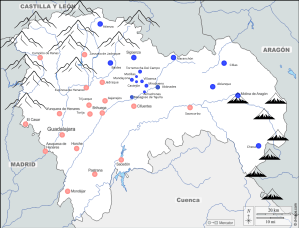
While the main body of General Francisco Franco’s African Army was launching a direct assault on the western gates of Madrid, Nationalist commanders sought to widen the theatre of operations. Operating south and east of their stronghold in Sigüenza (which they had captured in October), local Nationalist columns of around 1,500 to 2,000 men aimed to push down the Henares River valley. Their primary strategic objectives were to cut the vital Madrid-Zaragoza railway and secure the Valencia highway (N-II) near Almadrones. By severing this highway, the Nationalists intended to completely isolate Madrid from Valencia, which had just become the new seat of the Republican government on 6 November.
Moving with high mobility, Nationalist forces successfully overran Republican militia outposts which had a combined number 2,500 to 3,000 militia combatants, local union members reinforced by retreating elements from the Sigüenza campaign. The Nationalists occupied Castejón de Henares on 8 November, rapidly expanding their footprint the following day to capture Cendejas de Enmedio, Villaseca de Henares, Matillas, and Almadrones. This advanced their front lines significantly closer to the provincial capital of Guadalajara. The operation was a tactical success for the Nationalists. They achieved their immediate geographical objectives, captured vital high ground, and firmly dug into Almadrones. Recognising the existential threat to their communications line with Valencia, the Republican military command hastily assembled forces to launch repeated counterattacks specifically targeting the newly lost position at Almadrones between 10-12 November, but this was a failure due to their lack of communication equipment, proper artillery support, and air cover, since all major Republican aviation assets were concentrated over the skies of Madrid, the militias could not dislodge the entrenched Nationalist troops.
The Henares valley was largely rural, made up of small farming villages. As the Nationalist forces advanced, hundreds of local peasants fled south toward Guadalajara and Madrid, adding to the refugee crisis. For those who stayed behind, the occupation meant immediate martial law, the dismantling of local agrarian collectives, and a systematic rearguard purge of left-wing village officials, though most captured were transported away from their villages, to be killed among the hundreds executed at Sigüenza, who were then dug up and stolen to be added to the Valle de los Caídos/Cuelgamuros.
- Perdiguera, Zaragoza, Aragon
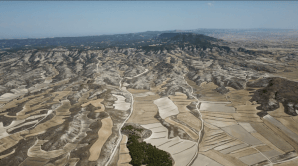
The Aragon front had largely stalled in the rugged terrain surrounding the Nationalist-held city of Zaragoza in November 1936. Perdiguera, located in the Los Monegros desert region, was a vital still strategic outpost along this line. The objective of the Nationalist forces here was to push the anarchists back from the immediate approaches to Zaragoza by securing the dominant geographical heights that overlooked the valleys, resulting in heavy fighting in the town through October.
On 9 November, Nationalist units launched an assault just five kilometres east of Perdiguera, successfully seizing two critical high points, Monte Calvario and the Ermita de Santa Cruz. By capturing these elevated positions, the Nationalists secured an excellent vantage point for artillery observation and effectively fortified their defensive perimeter, making any future Republican advance toward Zaragoza through this sector incredibly difficult.
By capturing the Ermita and Monte Calvario, the Nationalists successfully stabilised a vulnerable sector of the Aragon front, achieving maximum defensive gain with a relatively small number of troops. For the Republican (primarily anarchist) forces, losing these heights highlighted their structural weaknesses, specifically a lack of heavy weaponry and unified military command required to hold open terrain against disciplined Nationalist units.
- Córdoba, Andalucía
The San Rafael cemetery in Córdoba city was hard at work, receiving large group fo victims to be executed every day in November 1936. On 9 November, nine nine and one woman lost their lives – Antonio Jiménez Pérez, Juan Ochoa Romero, Joaquín Pagador Pimenter, Rafael Pedregosa Pérez, Juan Romero Badillo, Miguel Cerrato Fuentes, Antonio Alcántara Ariza, José Ferrer Cazorla, Amador Morales Muñoz, Miguel Muriana González, and Joaquina Millán García all lost their lives. On 10 November, three men and one woman were murdered – Gregorio Serrano Cobos, Manuel Pozo Vila, Francisco Robles López, and Estrella González Madueño.
On 12 November, six men and four women were killed in the early hours – Juan Aranda Vida, José Ortega Luján, José Navarro Serrano, Pilar Cruz Torres, Isabel Ramírez Hinojosa, Rafael Morillo Beato, Miguel Martínez Mármol, Antonio Bergillos Gálvez, María Algar Cortés, and Dolores Llamas Luque. The following early morning saw another five men killed – Francisco Castilla Lara, Francisco Cazorla Ávila, Antonio Montes Jerez, Antonio Martínez Jiménez, and Narciso Gómez Martínez. Then on 14 November, another 16 were executed, including two women – Josefa Díaz Collado, Francisca Reyes Nieto, José María Durán Carvajal, José Carabias Anguita, Rafael Perales Márquez, Francisco Paz Osuna and Luis Paz Ramos, Cayetano Ramírez Llamas, Antonio Muñoz Cabello, José María López Aguilar, Emilio López Galindo, Felipe Granados Guerrero, Antonio Chacón Arcos, José María Bermejo Cantero, Manuel García Casas, and Valeriano González Ruiz.
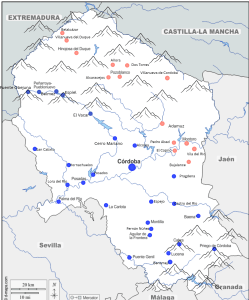
The human tragedy and psychological landscape in Córdoba province during late 1936 was arguably even more chaotic and fractured than in Granada. While Granada’s frontline solidified relatively early, Córdoba was a province radically split right down the middle, facing the collapse of entire industrial valleys, a failed Republican counter-offensive, and some of the most brutal repression of the war. Like Granada, the capital city of Córdoba fell to the military coup almost immediately. For the large working-class population trapped inside, the feeling was one of absolute, helpless terror under an iron fist.
Under the exceptionally ruthless military governor Colonel Ciriaco Cascajo and his chief of public order, Bruno Ibáñez (known fearsomely as Don Bruno), the city was subjected to a rapid, industrial cleansing. In the first few weeks alone, roughly 2,000 people were systematically executed. In August 1936, the Republican Army launched a massive counter-offensive to retake the city. Republican troops fought their way right to the gates, reaching just 5 kilometres from the city centre. For the hidden Republicans and families trapped inside, the sound of the approaching artillery brought a frantic, breathless hope of liberation.
That hope turned to ash when the offensive failed. To break the will of the advancing Republican General Miaja, Colonel Cascajo publicly threatened to execute Miaja’s own wife and children, who were trapped inside the city. When the Republican forces retreated, a wave of profound despair washed over the local population as the Nationalist reprisal executions spiked to nearly 100 people a day.
By October 1936, the exact timeframe of your map, the psychological epicentre of the province shifted to the rugged north-west, particularly the industrial mining towns of Peñarroya-Pueblonuevo and Bélmez. This region was a bastion of heavily unionised miners and socialist labourers. Unlike the city, they did fight back fiercely. There was an intense feeling of revolutionary solidarity and community defence; the miners used their industrial dynamite to craft crude explosive weapons, successfully holding off the Nationalist advance for months. In mid-October 1936, the professional troops of the Nationalist Army of Africa broke through the mountain passes. The realisation that their makeshift defences could not stop regular army artillery caused an immediate, overwhelming panic. What followed was one of the most heart-breaking events of the early war in Andalucía. Over the nights of October 11–13, realising the town was falling, a massive, desperate railway evacuation took place. More than 30,000 miners, wives, and children packed into cargo trains and fled into the mountains of the Sierra Morena, abandoning their homes in a mass exodus to escape the approaching terror. Those left behind faced swift, merciless executions as the Nationalists seized the valuable coal mines.
In the agrarian regions that remained in Republican hands, the initial revolutionary hope quickly dissolved into starvation, defensiveness, and profound grief. The rural day-labourers and peasant families lived under a cloud of deep psychological trauma. They were constantly receiving waves of traumatised refugees fleeing the neighbouring provinces of Seville and Badajoz, who brought horrifying eyewitness accounts of mass slaughters. These rural communities had no anti-aircraft defences. They lived in constant, agonising fear of the Italian and German bombers flying out of Seville, which regularly struck unfortified towns to break civilian morale. If the feeling in Granada was one of being trapped inside a silent cage, the feeling in Córdoba was a frantic, chaotic nightmare of shifting frontlines, mass civilian flight, and a desperate realisation that industrial courage was being crushed by mechanised military brutality.
The sudden territorial shift during these two weeks triggered devastating waves of political terror on both sides of the new border. As Nationalist troops overran the northern mining towns during the offensive, they enacted instant social cleansing. In newly captured Belmez and Peñarroya, trade union leaders, socialist miners, and anyone associated with the Batallón del Terrible were rounded up. Mass summary executions were carried out in local plazas and mine shafts to instantly break the backs of the labour unions. In the eastern pocket that successfully held out against the Nationalist advance, the repression shifted to institutionalised revolutionary justice. On 20 October 1936, a formalised Tribunal Popular was established in Pozoblanco to systematically process, try, and execute local right-wing sympathisers, wealthy landowners, and clergy members who were accused of aiding the fascist uprising.
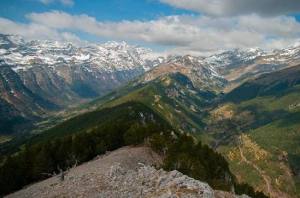
The Los Pedroches valley and the strategic hub of Pozoblanco in the north-eastern pocket of the province. continued to be violative in the final week of October 1936. Following the total collapse of their western lines, the retreating Republican militias desperately scrambled to fortify Pozoblanco. The Nationalist objective was to pursue the broken lines and capture the town to secure total dominance over northern Córdoba. The fighting stalled into a bloody stalemate during the final week of October. The Republican forces successfully re-organised their remaining units, holding the line just outside the town. The terrain grew increasingly rugged, and as Nationalist resources were increasingly diverted north toward the massive Siege of Madrid, Queipo de Llano’s advance halted. Pozoblanco remained firmly in Republican hands, setting the stage for it to become the primary government military base in the province for the next year.
The Defensive Standoff at Pozoblanco 23–31 October 1936 represented a vital turning point on the Córdoba front lines. It was the direct aftermath of the devastating Guadiato Valley Offensive, where Nationalist forces fractured the Republican mining basin. Rather than allowing the entire north of the province to collapse, retreating Republican forces turned the agricultural hub of Pozoblanco into a desperate, heavily fortified bastion. This standoff effectively froze the southwestern advance, setting up a static boundary line that would endure for months.
Unlike the deep vertical gorges of the mining basin, Pozoblanco sits within the Valle de los Pedroches, characterised by vast oak dehesas and granite-veined pasturelands. However, the approach from the captured southern fields required Nationalist columns to cross increasingly rugged, exposed territory flanked by the Sierra Morena mountains. For General Gonzalo Queipo de Llano’s Southern Army, Pozoblanco was the final gateway needed to secure total control over the northern Córdoba transport network. Capturing it would safeguard their rear guard all the way back to Seville. For the Republic, losing Pozoblanco meant giving the enemy an open door to march into the neighbouring provinces of Ciudad Real and Badajoz.
The early days of the standoff (23–25 October) were chaotic. The defence was anchored by the battered survivors of the Batallón del Terrible (the coal miners’ brigade) and local agrarian trade-union militias. Recognising the critical emergency, the Republican command began rapidly channelling retreating militia units into the sector, bringing the defensive total to roughly 3,000 personnel. The pursuing Nationalist vanguard was led by fast-moving mobile columns featuring seasoned Moroccan Regulares and local Falange cavalry units. While highly disciplined, these columns, numbering close to 2,500 troops, were suffering from intense operational fatigue after a week of aggressive uphill fighting through the mining zone.
The fighting during this final week of October did not result in massive, sweeping breakthroughs, but rather a series of violent, grinding infantry clashes along the rural approaches to the town. As the Nationalist columns pushed deeper into the Los Pedroches territory, their logistical tail grew dangerously thin. They lacked the heavy, continuous artillery support that had previously blasted open the gates of Belmez and Espiel. By 26 October, a severe autumn storm hit the Córdoba highlands. Heavy rainfall turned the rural dirt tracks and clay pastures into deep mud channels, grounding Nationalist transport vehicles and severely limiting the effectiveness of their Italian-supplied tactical bombers. Simultaneously, the decisive drain of military assets north toward the Siege of Madrid hit the Southern Army hard. Realising they would receive no fresh reinforcement blocks or heavy air wings from Seville, the Nationalist command was forced to call a halt to their offensive push.
With the front lines freezing just kilometres outside the town, Pozoblanco became a tightly monitored, paranoid garrison town under the control of a strict wartime council. To prevent any internal sabotage or fifth-column uprisings that might assist the nearby Nationalist columns, the Republican administration institutionalised its security apparatus. Independent, uncoordinated militia squads were disarmed, and an official Tribunal Popular was established inside the municipality. Throughout the final days of October, this court held rapid, formalised hearings targeting prominent local traditionalists, wealthy estate owners, and clergy members who were suspected of aiding the initial military uprising. Those convicted of fascist sympathies were systematically marched to the walls of the local municipal cemetery and executed. The registries from this specific pocket document a distinct surge in court-mandated capital sentences during this specific fortnight of defensive panic.
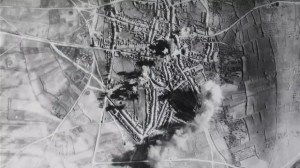
When the frontline compressed along the immediate rural approaches to Pozoblanco, the two armies faced major, localised changes in force structure. The chaotic retreat was brought to a halt under the emergency leadership of military organisers like the local commandants in Villanueva de Córdoba. After losing the mining centres, the Republic concentrated a unified pool of approximately 3,000 combatants right outside Pozoblanco. This force comprised the remnants of the Batallón del Terrible (the surviving coal miners) who re-entrenched themselves alongside local peasant units and elements of the Garcés Communist militia regiment, which had just officially restructured itself in the sector on 18 October.
The Nationalist column driving toward Pozoblanco from the newly captured Espiel and Belmez lines consisted of roughly 2,500 personnel. Commanded by Major Gómez Cobián, this force was highly professional, using regular army infantry from the local Córdoba garrison alongside mobile Falange and Requeté cavalry units. However, by 25 October, this force was heavily overextended, entirely lacking fresh reinforcement blocks due to the diversion of Nationalist assets to the Siege of Madrid.
Because the fighting in this final week shifted to a static, defensive war of attrition amid severe autumn rainstorms, the casualty rates were smaller but highly lopsided compared to the initial offensive. During the heavy infantry clashes as Nationalist troops tried to press forward to the edge of Pozoblanco (stalling about 2km), combined combat casualties reached between 150 and 250 men killed or wounded across both sides. The sudden drops in battlefield casualties after 26 October were caused directly by a total loss of mechanical mobility. Heavy rains turned the granite and clay pasturelands of the Valle de los Pedroches into deep mud channels, grounding Nationalist logistical trucks and eliminating their air support superiority.
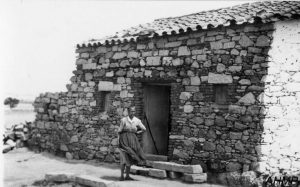
While the battlefield stabilised, the human toll inside the towns surged due to the creation of the permanent wartime border. Terrified of a fifth column uprising inside Pozoblanco while Nationalist troops sat just down the road, the local Republican Tribunal Popular accelerated its legal executions. While a massive trial in September had already resulted in 18 executions, the final days of October saw a sharp, recorded spike in summary executions against the local municipal cemetery walls, ultimately claiming a total of 55 local right-wing sympathisers, landowners, and clergy over the course of the town’s initial wartime period. Conversely, in the villages left behind the new Nationalist lines, local union centres were systematically closed. Workers who failed to flee to Pozoblanco were subjected to unrecorded, immediate executions by Falangist cleansing squads, a process that left hundreds of late-October victims entirely omitted from civil death logs.
Throughout November 1936, the dynamic frontlines of Córdoba province ground to a sudden, exhausted halt. With the elite columns of the Nationalist Army of Africa heavily diverted north to the bloody siege of Madrid, offensive operations in the south were completely starved of ammunition, vehicles, and reinforcements. The battle-tested Republican forces and surviving industrial miners used this operational pause to frantically dig deep into the rugged granite ridges of the Sierra Morena and the Los Pedroches valley, erecting machine-gun nests and defensive fortifications. Consequently, the fighting in November dissolved into localized trench skirmishes and occasional artillery duels across the newly formed diagonal border, leaving the territorial map completely unchanged as both sides consolidated their positions for the winter.
The province of Córdoba suffered an exceptionally high level of violence, making it one of the absolute bloodiest epicentres of rearguard repression in all of Nationalist-held Spain.
The historical data compiled by major specialists, most notably the exhaustive archival research of historian Francisco Moreno Gómez, shows the total number of victims executed by Nationalist forces across the entire province between 9,500 and 11,500+ deaths. The official count of fully documented and named victims sits at 11,910 according to comprehensive regional memory registry reports. Out of the entire province’s death toll, more than 4,000 people were executed in Córdoba city alone, primarily by firing squad at the walls of the San Rafael and La Salud cemeteries. The vast majority of the province’s deaths were concentrated in the terrifying initial months of 1936 alone. In Córdoba city alone, the brutal public safety sweeps led by Bruno Ibáñez resulted in roughly 2,000 executions in just the first few weeks following the 18 July uprising. During the peak of the panic, executions averaged nearly 100 people a night.
In contrast to Granada’s isolated pocket, Córdoba was a province violently sliced completely in half by the frontline. This physical division created a very different, highly volatile cycle of violence. Córdoba was directly in the path of the battle-hardened Army of Africa, with its Legionnaires and Moroccan Regulares, as they advanced from Seville. The repression here was uniquely militarised, brutal, and fast. Towns were heavily bombarded, shelled, and then systematically swept by professional vanguard troops who viewed the local civilian population as hostile enemies rather than fellow citizens.
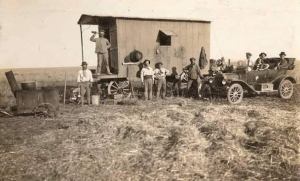
In Córdoba, the social divide was just as wide as in Granada, but it expressed itself through an entirely different structural dynamic. Córdoba was a province defined by raw, unvarnished industrial and agrarian class conflict. Unlike Granada, where the urban centre was an island of culture and conservatism, Córdoba province was a powder keg where organised, highly politically conscious masses of workers directly confronted a deeply entrenched, ultra-wealthy oligarchy. When the province was violently split in two by the frontlines, the repression became a systematic effort to permanently crush the economic power of the lower classes.
The southern and eastern plains of Córdoba (the Campiña) featured some of the most concentrated latifundios (agricultural estates) in Spain. Here, the social system was strictly binary; a tiny handful of immensely wealthy landowners ruled over a massive, starving population of landless day labourers. During the Second Republic, these labourers had organised powerful anarcho-syndicalist (CNT) and socialist (UGT) unions, successfully forcing landowners to pay fair wages and lease out uncultivated land. When the Nationalist columns swept through the Campiña, the wealthy landowners didn’t just welcome the troop, they actively financed them and formed their own vigilante squads.
The repression here was driven by pure class vengeance. Landowners stood alongside military officers in village plazas, pointing fingers at any labourer who had been a union delegate or had participated in land occupations. In towns like Palma del Río, hundreds of peasants were rounded up and shot in the bullring or the cemetery. The psychological goal was clear, to terrorise the rural poor back into absolute, feudal submission so they would return to the fields as cheap, compliant labour.
In the rugged northwest of the province sat a completely different world, a dense industrial corridor of coal and lead mines centred around Peñarroya-Pueblonuevo and Bélmez. This population was highly literate, fiercely unionised, and deeply ideological. They were the pride of the Andalucían working class. Because these miners possessed industrial explosives and a highly disciplined union structure, they successfully organised a formidable armed resistance that halted the Nationalist advance for months. This deeply enraged the military command. When the miners’ front finally collapsed in October 1936, the Nationalist retaliation was merciless. The military and the corporate mine owners viewed the highly conscious industrial worker as a disease that needed to be eradicated. Those miners who couldn’t escape in the mass exodus were systematically hunted down. The repression uniquely targeted the entire infrastructure of industrial labour, the union leaders, engineers who had sympathised with the workers, and even the staff of the local workers’ cooperatives. The regime’s goal was to strip the mines of their political consciousness, turning the survivors into a terrified, captive workforce.
In Córdoba city, the population experienced a chillingly clinical form of class warfare. Unlike Granada’s focus on eliminating an intellectual renaissance, Córdoba’s capital was swept by a highly organised, bureaucratic apparatus designed to decapitate the urban trade unions and the local municipal government. Córdoba was also a major railway hub and industrial centre. The Chief of Public Order, Bruno Ibáñez, systematically used neighbourhood informants to draw up blacklists of every railway worker, typesetter, and metalworker who had ever engaged in a strike. The geography of the city reflected the horror. While the wealthy elite in the historic centre and upper-class neighbourhoods celebrated the coup with religious processions, the working-class districts like San Lorenzo and El Campo de la Verdad were subjected to nightly cordons. Fascist squads dragged workers from their beds based on administrative lists, filling the trucks headed for the San Rafael cemetery wall, ensuring the urban proletariat was entirely broken.
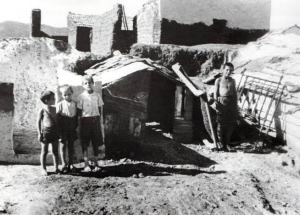
While not exclusive to these provinces, it is impossible to understand the repression in Andalucía without Juan March, the wealthiest man in Spain and the sixth richest in the world, and a multi-billionaire financier. March personally funded the purchase of the Italian Savoia-Marchetti bombers and German transport planes that airlifted the brutal Army of Africa from Morocco into Seville to bomb the Republican towns of Córdoba and Granada, and those regular troops carried out the bloodiest sweeps through the Andalucían countryside. March famously declared he was willing to spend his entire fortune to eradicate the Republic (and naturally died old and rich and untouched by the myriad of evil things he did).
In the Córdoba Campiña, the most infamous and starkly documented example of a wealthy landowner funding and organising the slaughter occurred in Palma del Río under a billionaire landowner named Félix Moreno Ardanuy. Ardanuy was a massive landowner and breeder of fighting bulls. When the military coup initially struggled to control the rural population in his area, he personally flew to Seville to meet with General Queipo de Llano. He presented the Nationalist command with a massive financial donation to fund the military operations. In return, he was given a detachment of troops to ‘pacify’ his estates. He stood in the town square alongside the military, pointing out union day-labourers who had asked for higher wages during the Republic. His direct financial backing and personal involvement resulted in the immediate mass execution of roughly 300 to 400 local peasants in the Palma del Río bullring (he too died old and rich, showered in medals).
In Granada, the funding of the fascist Falange death squads and the military garrison was institutionalised through coerced and voluntary donations called Suscripciones Populares.
The wealthy families, elite business owners, and traditionalist aristocracy of Granada city published open lists in the local right-wing newspaper, Ideal, boasting about the massive sums of money, jewellery, and gold they were donating to the Nationalist war effort. For the rich, these public donations served two purposes – they funded the logistics of the Escuadra Negra paramilitary squads who carried out the nightly paseos, and they bought immunity for themselves. Conversely, if a wealthy progressive or moderate citizen did not donate enough, the Nationalists used it as a pretext to declare them unpatriotic, execute them at the Víznar Ravine, and completely confiscate their family’s estates and bank accounts to further fund the regime.
But in the Guadiato mining basin of northwest Córdoba, the funding came from corporate interests. The mines were heavily controlled by international and domestic conservative capital, including the massive Peñarroya SMMP consortium. SMMP was founded in Paris by the engineer Charles Ledoux and backed explicitly by the massive capital of the House of Rothschild. This made it one of the largest multinational enterprises in Spain, controlling not just the coal and lead mines, but an entire private network of railways, metal foundries, and chemical plants.
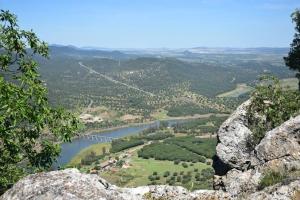
The French corporate executives and international financiers and directors of the mining companies despised the powerful miners’ unions, which had cut into their profits through strikes. When the Nationalists captured the basin in October 1936, the company directors immediately provided financial capital, logistical transport, and internal corporate payroll lists to the Nationalist military command. They used these corporate files to identify union leaders for execution, effectively funding the administrative overhead of the local purge to replace their politically active workforce with terrified, low-wage captive labour. While the supreme board sat in Paris, the day-to-day operations and the ensuing political crackdown in Córdoba were orchestrated by high-ranking French and Spanish directors, engineers, and foremen. To these executives, the highly unionised miners were not just workers, but an existential threat to corporate profits.
Logically and economically, killing your own workforce is terrible for business. It destroys productivity, creates labour shortages, and halts production. Yet, the wealthy oligarchs and the Nationalist military did it anyway. They were fully prepared to take a massive, short-term economic hit because they were playing a much bigger, more terrifying game; they chose total social control over immediate economic profit.
To the mine directors and large landowners, a worker who demanded higher wages, shorter hours, or safer conditions was a broken machine. During the Republic, unions like the UGT and CNT had become so powerful that they could completely shut down operations through strikes. The oligarchs looked at the mass executions not as losing workers, but as a permanent political investment. By executing the top 10% or 15% of the workforce, the union delegates, the outspoken organisers, the literate leaders, they permanently broke the spine of the labour movement. They calculated that the surviving 85% of the workers would be so deeply traumatised and terrified that they would never dare to strike, complain, or ask for a pay raise again for the next thirty years. In the long run, docility meant higher profit margins.
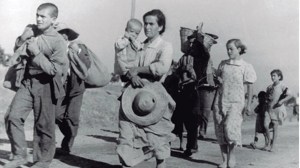
The oligarchs didn’t just leave the fields and mines empty; they replaced free, organised workers with captive and forced labour. In the agrarian Campiña, the widows and children of the executed peasants were forced to return to the fields. Because they were branded as the families of reds, they had no legal rights. Landowners could pay them starvation wages, essentially turning the agrarian economy back into a feudal system. In the industrial sectors, Franco’s regime quickly developed a massive system of penal colonies and forced-labour battalions (Batallones de Trabajadores). Political prisoners captured on other fronts were shipped directly to mines, railway constructions, and infrastructure projects. These prisoners were worked to the bone for virtually no pay, providing the corporate oligarchy with an incredibly cheap, disposable workforce to replace the miners they had executed.
For the Nationalist military command, the war was viewed as a holy crusade against Marxism. General Queipo de Llano famously operated on a doctrine of total war; it was better to rule over a smoking, compliant ruin than a wealthy, rebellious province. The military forced the business owners to comply with the purges. If a mine manager argued that a specific engineer or union foreman was too essential to lose, the military often ignored the plea or accused the manager of being a sympathiser themselves. The immediate military goal was to pacify the rearguard at all costs so that no rebellion could erupt behind their lines while they marched on Madrid. Economic stability was an afterthought; it could be rebuilt later, but an armed worker uprising in the rear could lose them the war today. The rich and the military viewed the executions as a brutal pruning process. They chopped off the politically conscious branches of the workforce to ensure that the rest of the tree grew entirely in their shadow, completely submissive to the authority of the state and the boardroom.

