For many women in Spain, the outbreak of civil war in July 1936 was not only a military and political crisis. It was also the beginning of a profound social upheaval which briefly transformed what seemed possible in Spanish society. The years before the Spanish Civil War had already seen dramatic changes in the lives of many Spanish women. The establishment of the Second Republic in 1931 introduced reforms which challenged deeply rooted conservative traditions surrounding religion, education, marriage, politics, and women’s public roles. These changes inspired hope among reformers and left-wing activists, while provoking alarm among conservatives, monarchists, and the Catholic right.
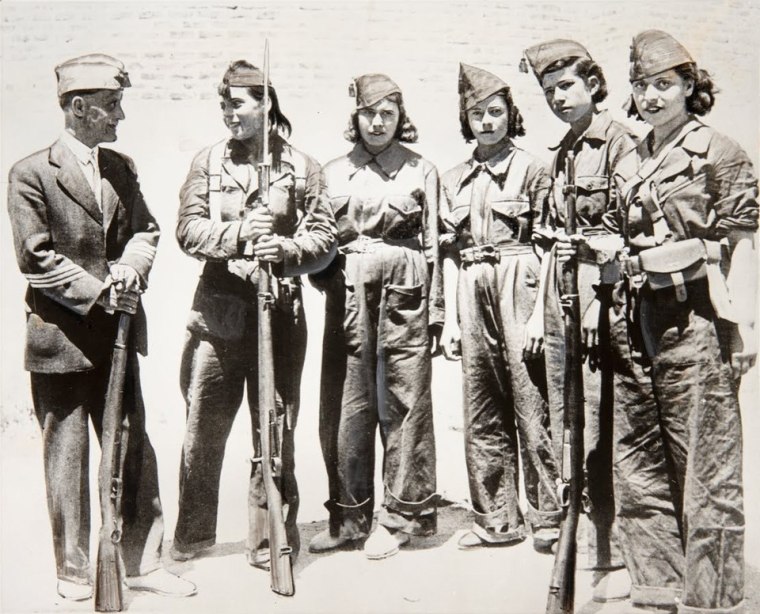
When war erupted in 1936, women became visible participants in the conflict in ways that shocked much of the outside world. They fought in militias, organised hospitals, produced propaganda, drove ambulances, worked in factories, wrote journalism, smuggled weapons, educated refugees, and participated openly in political movements. Photographs of armed militiawomen in trousers carrying rifles through the streets of Barcelona and Madrid became internationally symbolic of revolution itself.
Yet the transformation was also fragile. Many of the freedoms and public roles women briefly experienced during the early months of the war would later be restricted or destroyed as the conflict hardened and conservative forces regained influence. The story of women during the Spanish Civil War is therefore not simply one of progress or liberation. It is a story of conflict over who women were allowed to be in modern Spain.
Women in Spain Before the Republic
At the beginning of the twentieth century, life for most Spanish women remained heavily shaped by traditional Catholic social values. Women were generally expected to marry, raise children, maintain households, and remain largely outside formal life. Educational opportunities were limited for many women, with approximately 65% of women in Spain illiterate in 1900. Only 0.1% of the Spanish population over the age of 25 had received any lower secondary education or higher. Heavily rural region in the south and interior, such as Andalusia, Extremadura, and Galicia, suffered from illiteracy rates of up 80%. Employment opportunities were often restricted to domestic work, textile labour, agriculture, or poorly paid factory work.
Spanish law strongly reinforced male authority within both marriage and public life. Divorce was illegal, contraception was restricted, and women possessed very limited political influence. The Catholic Church exercised enormous control over education, morality, and family life. Conservative ideas about femininity emphasised obedience, modesty, motherhood, and religious devotion.
At the same time, Spain was changing. Industrialisation and urban growth gradually drew more women into factories, offices, schools, and public spaces. Working-class women in cities such as Barcelona and Madrid increasingly participated in labour activism, strikes, and political organisations. By the early twentieth century, feminist writers, teachers, reformers, and activists were beginning to challenge traditional restrictions on women’s education and legal rights.
- The Second Republic and Women’s Rights
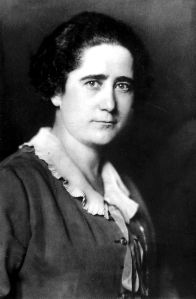
The establishment of the Second Spanish Republic transformed political debate surrounding women’s roles in Spain. Republican reformers viewed women’s education and legal equality as essential parts of modernising the country. The Republic introduced several major reforms which dramatically altered women’s legal and political status. These included women’s suffrage, legal divorce, secular education, expanded educational opportunities, and reforms weakening Church authority over family life.
One of the most important figures in this transformation was Clara Campoamor, who became one of the leading advocates for women’s suffrage in Spain. Campoamor argued passionately that women could not be excluded from democracy simply because society remained conservative. Despite opposition from many politicians ,including some women, suffrage was granted in 1931.
The reforms of the Republic deeply divided Spanish society. For supporters, they represented long-overdue progress and modernisation. For many conservatives, they represented an assault upon religion, family authority, and traditional gender roles. The role of women quickly became entangled in wider political arguments about the future of Spain itself.
- Working-Class Women and Political Activism
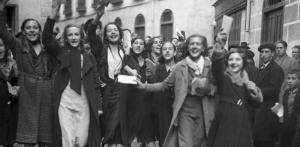
The Republic also intensified political participation among working-class women. Women became increasingly active within socialist organisations, anarchist movements, labour unions, secular education campaigns, and neighbourhood activism. In industrial cities such as Barcelona, women participated in strikes, demonstrations, and political meetings in growing numbers. Many working-class women experienced politics not as abstract ideology, but through everyday struggles involving wages, food prices, housing, literacy, childcare, and workplace conditions.
Anarchist and socialist organisations sometimes offered women opportunities unavailable within conservative society, including literacy education and political involvement. At the same time, even many left-wing organisations remained male-dominated, and women often faced sexism inside movements supposedly committed to equality.
- The Outbreak of War and Revolutionary Transformation
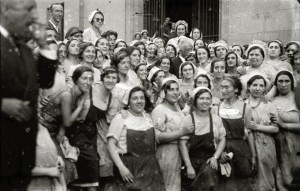
When military officers launched their uprising against the Republic in July 1936, much of Republican Spain erupted into revolutionary activity. State authority collapsed in many regions, particularly in Barcelona and parts of Aragón, where anarchist and socialist movements gained enormous influence. Women suddenly appeared in public political life with unprecedented visibility. Some joined militias directly, carrying rifles and wearing uniforms alongside men. Others worked in hospitals, kitchens, refugee centres, propaganda offices, and transportation networks.
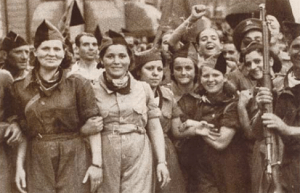
The image of the miliciana, armed militiawoman, became one of the defining symbols of the early war. For supporters of the Republic abroad, these women represented revolutionary modernity and resistance to fascism. For conservatives and Nationalists, they represented social disorder, anti-religious politics, and the collapse of traditional society. The visibility of armed women deeply shocked many observers both inside and outside Spain.
- Milicianas: Women at the Front
During the chaotic early months of the war, women served openly in militia units, particularly within anarchist and socialist organisations. Photographs from Barcelona and Madrid showed women carrying rifles, manning barricades, training with militia units, and marching publicly in revolutionary demonstrations.
Many were young working-class women inspired by revolutionary politics and anti-fascism. Others joined because they believed the military uprising threatened the freedoms introduced by the Republic. Among the most famous militiawomen was Lina Odena, who became an important propaganda symbol after her death in 1936.
International newspapers often portrayed militiawomen as symbols of radical social transformation. Their appearance challenged conservative assumptions about femininity, politics, and military service. Yet women’s frontline participation remained controversial even within Republican Spain. As the war became increasingly militarised during late 1936 and 1937, many Republican leaders pushed women away from combat roles and back into support work. The revolutionary atmosphere of the war’s opening months gradually gave way to more traditional military structures.
- Mujeres Libres and Revolutionary Feminism
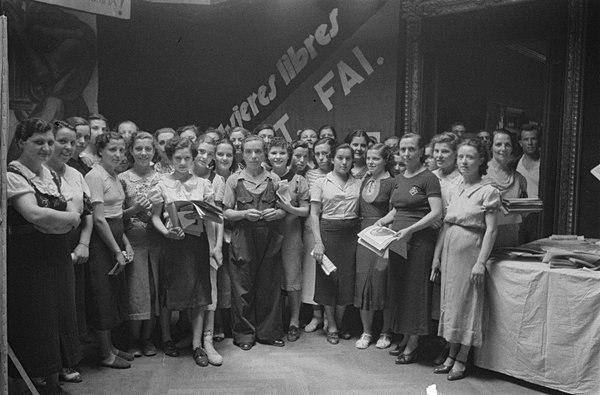
One of the most important women’s organisations during the war was Mujeres Libres. Founded by anarchist women, the organisation believed women’s liberation could not be separated from broader social revolution. Members argued that women faced a triple struggle against ignorance, exploitation, and male domination.
Mujeres Libres organised literacy programmes, childcare, vocational education, healthcare initiatives, political training, and support networks for working-class women. The organisation sought not only to help the Republican war effort, but to fundamentally transform women’s position within Spanish society. Importantly, Mujeres Libres also criticised sexism within left-wing movements themselves, arguing that revolutionary politics often continued treating women as secondary participants. The organisation eventually reached tens of thousands of members during the war.
- Famous Women of the Republican Cause
note – all of these women and many more will receive their own individual biographies soon
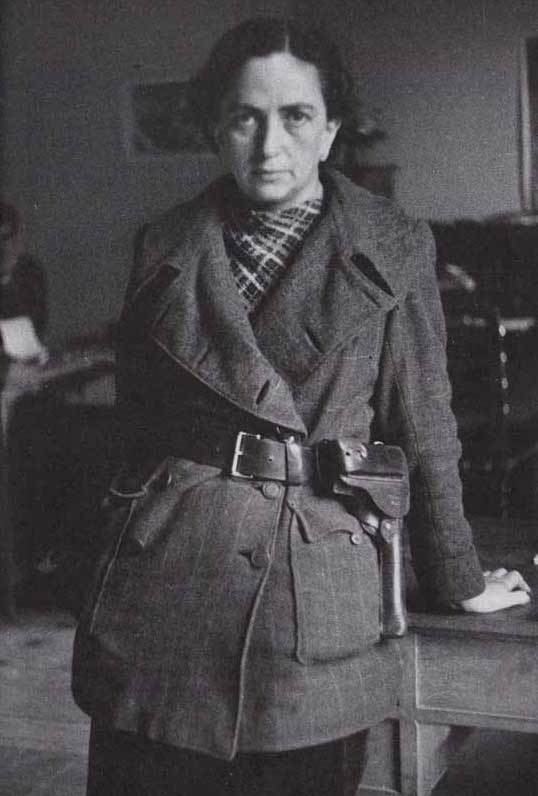
Several women became internationally recognised symbols of Republican Spain and anti-fascist resistance.
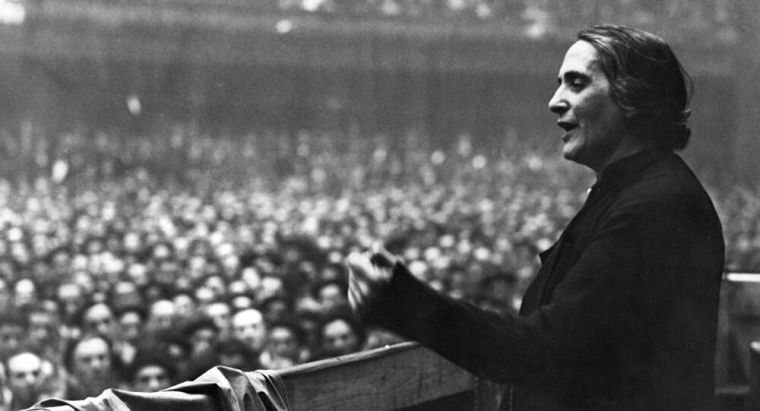
Dolores Ibárruri, La Pasionaria, became one of the most famous Communist figures of the war. A communist politician and powerful public speaker, she became internationally known for passionate anti-fascist speeches and slogans such as ¡No pasarán! (They shall not pass!). Ibárruri symbolised resistance, sacrifice, and Republican determination during the defence of Madrid.
Federica Montseny became one of the first female government ministers in Western Europe when she joined the Republican government in 1936. An anarchist writer and activist, she advocated healthcare reform, childcare, women’s rights, and social welfare programmes. Her appointment reflected the revolutionary atmosphere of early Republican Spain.
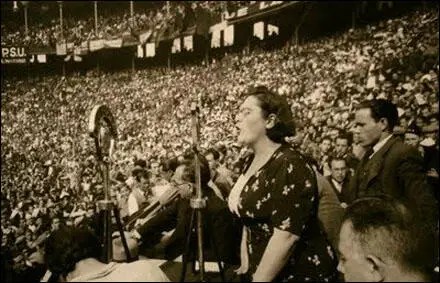
Margarita Nelken was a socialist politician, writer, and advocate for labour and women’s rights. She became known for her involvement in left-wing politics and anti-fascist activism during the Republic and Civil War.
Victoria Kent became one of Spain’s first female lawyers and played an important role in Republican prison reform and legal modernisation. She represented the emergence of women into professional and political life during the Republic.
- Women Supporting the Nationalists
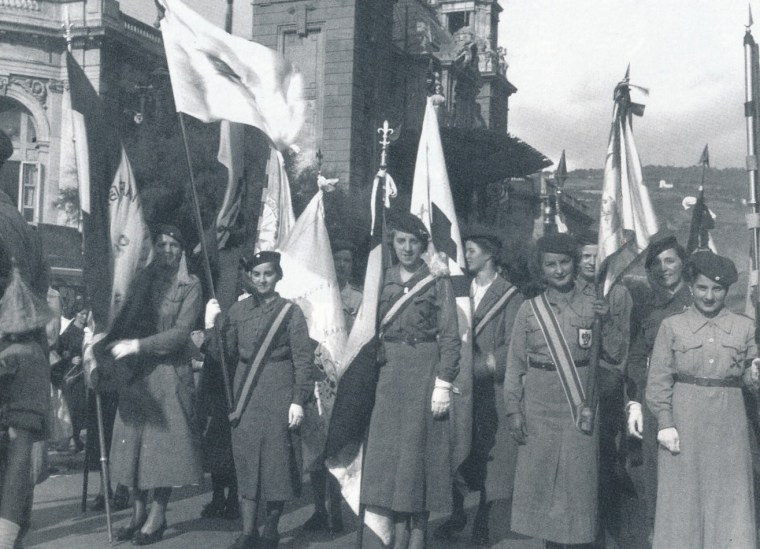
Sadly, no dictatorship or tyranny can be complete without women carrying water for the patriarchy. Women also played important roles within the Nationalist zone, though under very different ideological expectations. Nationalist propaganda emphasised Catholic motherhood, sacrifice, religious devotion, and traditional femininity. Women organised charity work, nursing services, food distribution, and religious support for Nationalist troops. Among the most important figures was Pilar Primo de Rivera, sister of Falange founder José Antonio Primo de Rivera. She led the Sección Femenina, the women’s branch of the Falange, which promoted conservative gender roles, domestic training, obedience, and Catholic nationalism. Nationalist ideology generally rejected feminist reforms introduced during the Republic and sought to restore traditional social hierarchies.
- War, Violence, and Civilian Suffering
Women also experienced the war as civilians living amid bombing, hunger, displacement, imprisonment, and political terror. Women endured aerial bombardment, refugee flight, food shortages, mass rape, executions, imprisonment, and social collapse. Many became heads of households after husbands, fathers, or sons were killed, imprisoned, or conscripted. Women worked in hospitals, refugee centres, orphanages, and emergency relief organisations under increasingly desperate conditions. The war transformed everyday life for millions of ordinary women far beyond the battlefield itself, and yet they were then expected to return to their pre-war lives.
The Spanish Civil War was not only a military and political conflict. It was also a struggle over social identity, gender roles, religion, and modernity. Women became central symbols within these wider conflicts symbols of revolution, tradition, emancipation, motherhood, nationalism, and anti-fascist resistance. The visibility of women during the war shocked international audiences and helped transform global perceptions of Spain. Their experiences reveal how deeply the conflict affected everyday life and how fiercely Spaniards disagreed about the future of society itself.
Recommended reading –
Mujeres Libres by Mary Nash
Free Women of Spain by Martha Ackelsberg
Vision on Fire: Emma Goldman on the Spanish Revolution
Entre el sol y la tormenta by Sara Berenguer
Cuatro años en París by Victoria Kent
Mis primeros cuarenta años by Federica Montseny
Memorias de la Pasionaria by Dolores Ibárruri
My War in Spain by Mika Feldman de Etchebéhère
In Place of Splendor by Constancia de la Mora
Milicianas by Lisa Margaret Lines
Free Women/Mujeres Libres: Voices and Memories for a Libertarian Future by Laura Ruiz


You must be logged in to post a comment.