For the Battle of Madrid, see here
*a finca refers to any registered piece of rural property (finca rústica) or land parcel in Spain, which can range from a small plot to a large farm. While historically self-sufficient working farms, many are now used as private rural retreats, vacation homes, or tourist rentals you see offering luxurious country holidays amid white-washed walls, swimming pools, and sweeping mountain views, a stark difference in reality compared to 1936.
* a latifundio refers to vast, concentrated landed estates spanning hundreds or thousands of hectares. Traditionally owned by a single wealthy landowner or nobility and worked by a large labour force of low-paid or tenant farmers, it has historically defined issues of regional economic inequality and agrarian reform in Spain. The men who owned these giant latifundios were strongly pro-Franco and the military uprising, as it was their chance to take revenge on the workers in their region who dared ask for enough pay to survive without living in a feudal system that was more suited to the medieval era. In the 20th century, labourers were literally still peasants.
A latifundio was an easy place to hide large number of civil war victims, as the owners and their sons and associates were the murders of the workers and fleeing refugees on their land. In private ownership, no one has ever been able to freely dig up their relatives. Even though finca estates are smaller, they have the same legal capacity to hide war bodies. It is now up to the current owners, or generation, to allow access. The finca in this article has no recorded owner in 1936, though once fell under the enormous estate of Suárez Figueroa family (the Dukes of Feria) from the 13th century., who ruled from nearby Zafra. The area in question was close to other lands and castles that had fallen into disrepair and were owned by the government, and underwent the similar agrarian reforms as latifundios around the country in the 19th century. As a result, estates like the one here were sold or leased in large lots, and records are not in good condition. Whichever exceedingly wealthy family that owned this land, either personally or through a trust, have managed to evade history.
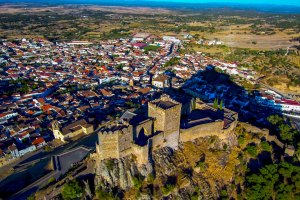
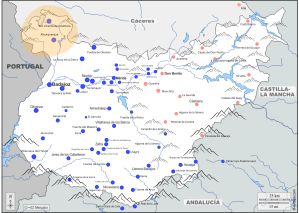
In the 1930s, Alburquerque was a deeply divided society. The vast majority of the population were landless day labourers who lived in systemic, crushing poverty. The land around the town was carved into massive private latifundios owned by a handful of absentee landlords who used the workers as cheap, seasonal machinery. For most of the year, families survived on the brink of starvation, similar to the destitution of Toledo and Cuidad Real.
When the Second Spanish Republic was declared in 1931, it promised Agrarian Reform, the legal redistribution of uncultivated estates to the peasants. In Albuquerque, this triggered an explosion of hope. The workers organized heavily under the socialist UGT and the anarchist CNT. By March 1936, after years of bureaucratic delays from Madrid, the patience of the day labourers broke. In a massive, coordinated, peaceful wave, thousands of peasants across Badajoz, including Albuquerque, marched onto the great estates, drove boundary stakes into the ground, and began ploughing the land for themselves. The local oligarchy was humiliated and terrified. They did not see starving labourers asking for bread; they saw a communist revolution.
When the military coup began on 18 July 1936, the class battle lines in Alburquerque were already drawn. But like the rets of Badajoz province, the uprising failed in Albuquerque. The Guardia Civil and local right-wing elements tried to seize the town, but the day labourers and leftist municipal authorities fought back, barricading the streets and keeping the town loyal to the Republic. For nearly a month, Alburquerque existed as an isolated, besieged Republican outpost. In August, General Juan Yagüe’s professional, Army of Africa arrived. Realizing that the Spanish Legionnaires and Moroccan Regulares were approaching, and knowing the horrific reputation of the massacres in nearby Almendralejo and Badajoz city, the local Republican defence collapsed. Nationalist troops entered had Alburquerque on 17 August 1936.
Before August 1936, the war felt far away. Suddenly, the local telephone lines went dead as neighboring towns fell one by one. The only information came from terrified refugees arriving on foot, carrying whispers of what the Regulares and Legionnaires did to anyone with a union card. Long before the troops physically arrived, the town could hear them. The low, rhythmic rumble of German-supplied Junkers transport planes overhead, paired with the distant thud of artillery clearing roadblocks miles down the road, created a suffocating sense of entrapment. The day labourers were utterly on their own, standing behind hastily built barricades of overturned carts and cobblestones, holding old hunting shotguns with only a handful of cartridges.
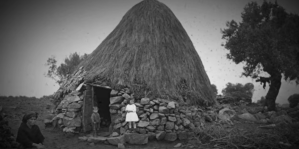
Like its neighbours, Alburquerque was dominated by massive latifundios dedicated to cork oak harvesting, livestock, and charcoal production. Because these towns bordered Portugal, the local economy was also deeply tied to smuggling. The landless day labourers relied on illicit cross-border trade just to survive the winter months. This made the local working class fiercely independent, highly collaborative, and heavily unionised under the CNT and UGT to fight the near-feudal control of the estate owners. When the army rolled in, the local wealthy elites targeted these border networks with extreme prejudice. They viewed smuggling channels and union structures as potential supply lines for a republican guerrilla resistance.
Alburquerque’s reliance on abandoned infrastructure like Mina Valdihuelo and the Pozo de las Vacas was the standard operational method for the entire sector north of Badajoz.In Valencia de Alcántara, the fascist squads utilized the Mina de las Vacas. In La Codosera, they used the horrific Pozo de la nava. Rather than digging mass graves in local cemeteries, which left a highly visible, public focal point for grieving families, the squads across this entire northern border strip systematically used the deep, vertical wounds of the mining landscape to swallow whole generations of workers out of sight.
Because these towns sat off the main N-V highway to Madrid, they were not crushed in the immediate August blitzkrieg. Instead, they were occupied by detached units and then handed over to local Falangist guards. This created a specific timeline where the worst of the massacres happened weeks to months after the initial takeover. Once the military front moved east toward Toledo from September onwards, the local landlords had the quiet isolation they needed to methodically work through their pre-war blacklists, arresting and executing entire family lines without any outside eyes.
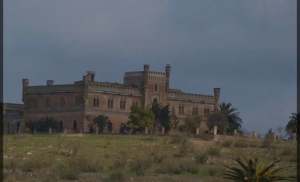
In the wider region north of Badajoz city, the most prominent landowning families who controlled the vast latifundios included the López de Ayala family, holders of massive estates near the Portuguese strip. They were deeply conservative and fiercely opposed to the Republic’s land-redistribution policies. Members of this family network held considerable influence over local municipal governance once the military took control. The Gragera Family, centred around nearby hubs like Montijo and spreading their agrarian influence northward, were premier examples of caciques, the feudal-style political bosses. They viewed unionized agricultural labour as an act of treason against their ancestral property rights. The Count of Torre Arias was major absentee landlord whose sweeping rural holdings across Badajoz province were temporary targets of peasant occupations during the March 1936 agrarian uprisings. His estate managers actively collaborated with the incoming military columns to draw up lists of ‘subversives.’
Rather than the wealthy landowners pulling the triggers themselves, the violence in the field was spearheaded by their sons, local professionals, and fascist leaders who ran the local saca networks. The Señoritos (Gentry) across Alburquerque and San Vicente, made up the execution squads, the young, wealthy, educated sons of the local estate owners. They joined the Falange in droves, using their personal vehicles to transport prisoners to rural dumping grounds like Mina Valdihuelo. The local Guard Civil officers who turned against the Republic coordinated directly with the landowning elite, matching the payroll registries of the large cork and farming estates with the rosters of the UGT and CNT unions to create the definitive blacklists.
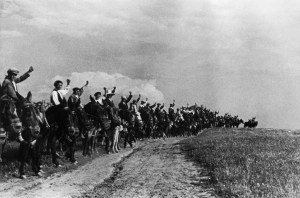
Because these same landowning families maintained their vast wealth, status, and local political power throughout the 40 years of the Franco dictatorship, identifying them in writing remained incredibly dangerous for decades. It wasn’t until the landmark 2003 archaeological exhumation of the Mina Valdihuelo fosa común that the physical evidence directly shattered the historical impunity of these local elites. The discovery of the co-mingled remains of 15 individuals, including women and children, fundamentally proved that the local landlords and their paramilitary allies did not wage a war; they conducted a systematic class cleansing to ensure they would never lose control of their land again.
On 15 November, 13 men were seized in a massive operational haul. The list shows that the perpetrators were systematically targeting the town’s micro-economy and small-scale craft infrastructure, the very people who formed the backbone of the local trade unions. Juan Aspano Cordero, 44, Gregorio Caldera Escudero, 48, Félix Rodríguez Vara, 45, and Esteban Resmella Marmelo, 52, were the landless day labourers who had spent the spring fighting for basic wage guarantees. Juan Correa Blanco, 35, a local carpenter, and Fermin García Jiménez, 57, a shoemaker and a guardian of the municipal depot during the Republican period, were also marked him out to local informants. Antonio Orantos Cordero, 49, Julián Pardo Espino, 45, Santiago Nieto Santos, 53, and Magdaleno Matador de la Cruz, 54, were self-employed shop workers and locals who were targeted because they financially supported or ideologically aligned with democratic municipal groups rather than the traditional landed elite. Reyes Mayo Cordero, a goat herder who was executed at just 17 years old, and Miguel Tienza Rodríguez, 37, an out-of-town labourer, left an immediate void in the rural town landscape, alongside an unknown victim.
The next day, on 16 November 1936, the killings narrowed down to two people, but with a highly specific undercurrent of violence. María García Matador ‘La Ciervita’, was executed by a fascist militia member at just 18 years old. Her status as a housewife/homemaker executed in place of her absent father and brothers. Manuel Robles Gil, 53, was a shoemaker who also served as a local municipal guard. In rural Spain, executing local municipal guards was standard practice for the rebel forces, as these men represented the legitimate civil authority of the Republic.
On 17 November, another ten victims focused on completely eliminating family structures to eliminate future blood feuds. Damián Gómez León, 44, another local day labourer, died alongside Dolores Santos Hernández, 49, Calixto Santos Rodríguez, Fernanda Santos Palacinos, and Ana María González Vinagre, destroying the Santos family. Emilio Cano Vadillo, Pedro Fernández Sánchez, 24, a local rope-maker, Bartolomé González Aldana, Jesús Jalcón González, and Felisa Márquez Durán completed the men and women targeted to end any notion of these left-wing families surviving the war, as if their place in society threatening hundreds of years of feudal rule.
By December, because the town’s records were completely broken and later burned, the documentation shifts heavily toward the anonymous or those who were never registered in the local civil logs. One of the most profound examples of the late 1936 isolation terror in Alburquerque involves a woman known locally as Carme ‘La Catalana’. Carme was an outsider who had recently arrived in Alburquerque to teach at the local La Tahona school. Because she was an educated, independent woman, she was automatically viewed with intense ideological suspicion by the local conservative factions. Sometime in November 1936, the military authorities formally released her after an interrogation, but immediately tipped off the local Falange. The fascist squad subjected her to a brutal el último paseo. Local oral history preserves the detail that before they executed her and threw her into the abandoned mineshaft, her executioners intentionally threw her glasses to the ground and stomped on them right in front of her. Because she was a newcomer, her full name and origins never appeared in any civil registries.
Archival research and the 2003 forensic exhumation of the Mina Valdihuelo shaft revealed that her real name was Carmen Delgado Vicente. She wasn’t actually from Catalonia, she was born in Salamanca, but the townspeople likely associated her with Catalonia because she was arrested alongside Serafina Roca Solana, the wife of Alburquerque’s Republican mayor, who was a prominent, highly visible Catalan woman in the town.
Serafina Roca was a prominent, highly visible Catalan woman living in Alburquerque, and she was the wife of the town’s democratic Republican mayor. When the town fell to the Nationalist forces in August 1936, the mayor’s family was immediately marked as a high-priority target for political repression. She was arrested by the local Falangistas alongside the schoolteacher Carmen Delgado Vicente. Because Serafina Roca Solana was known in the pueblo as a woman from Catalonia, her high-profile arrest fundamentally fused in the local collective memory with the execution of her colleague Carmen. Over seventy years of whispered stories, the townspeople began referring to the schoolteacher who was cast into the mine as La Catalana. When historians and archaeologists finally opened the Mina Valdihuelo shaft in 2003, local families expected to find a woman matching the Catalan profile. What the physical evidence, process of elimination, and historical record mapping eventually proved was that while Serafina Roca’s presence heavily defined the story of that specific arrest wave, the woman actually buried in the shaft was Carmen Delgado Vicente, the teacher from Salamanca who had been linked to her in the town’s memory.
Carmen’s husband, Francisco Fernández Bravo, was a fellow progressive schoolteacher and an active member of the Partido Socialista. Knowing he faced certain execution if captured, he fled Alburquerque alongside another local socialist teacher, Felipe Mesía Carballo, and a larger group of men from the town, typically, leaving their wives and children behind. She was raising their young son and an orphaned nephew whom they cared for as their own. Living in the hot mountains with two children would not have been easy, but she would have known she was as under threat as the men, but she was left behind anyway.
The town’s Democratic mayor, Martín Casanova, also managed to escape, fleeing across the nearby border into Portugal and eventually reaching France, also leaving his wife and children behind, surely knowing they were not safe from a violent, raping army and a town filled with Falangists out for blood. Because the high-profile men had escaped, the local Falangistas channelled their fury toward the families left behind. They arrested the men’s wives, detaining the mayor’s wife, Serafina Roca Solana (a mother of two who was also six months pregnant), and Carmen Delgado Vicente inside a makeshift cell in the town hall, until their deaths.
The execution of Carmen Delgado Vicente left her children orphaned and possibly taken in by someone nearby. Serafina Roca Solana was murdered on 21 November 1936, which left her two children, Juan and eight-year-old Rosa, completely alone in the village with no family to care for them, and the children were taken in by the guards at their father’s factory. From there, they endured a long journey until they were eventually reunited with their father in Paris after the end of World War II. It was Rosa who eventually returned to the village decades later, carrying these memories back to Alburquerque to spearhead the 2003 scientific exhumation of Mina Valdihuelo to finally recover her mother’s remains.
Alongside Serafina Roca Solana that dawn, being thrown in the mineshaft was Isabel Gamero Aspano, 38. The next morning, Ángel Martín Astudillo, 38, another teacher was murdered with Toribio Vaca Domínguez ,37,Alejandro Román Ferrera, 40, José Gómez Bernal, 29, a farmer, and Julio González Guerra, 30, a farmer, Rufino Aceituno Serrano, 44, a bricklayer, Juan Aparicio Méndez, 39, Felipe González Resmella, 23, Antonio Lara Coriano, 23,Elias Refolio Roman, 67, Julian Sanz Izquierdo, 41, all day labourers died on 23 November. Cristina Perez Muñoz, 58, was murdered on 24 November, the mother-in-law of Agustin Ramos Piriz, the local bricklayer, one of 18 locals chased even after the war and murdered. Alongside her was Cipriano Vadillo Sanchez, 20, a day labourer.
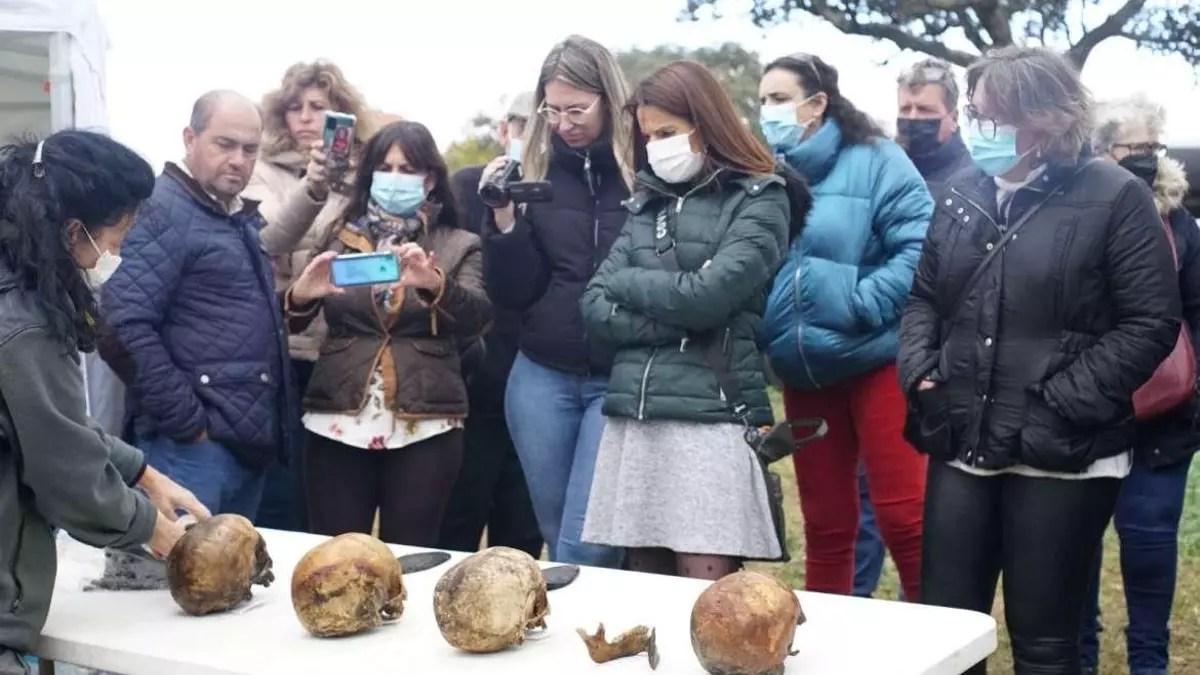
The archeological and forensic exhumation of the Mina Valdihuelo mass grave in Alburquerque is a landmark event in Spanish contemporary history. Conducted in July 2003, it was the very first scientific, methodologically controlled exhumation of a Spanish Civil War mass grave in the province of Extremadura. Led by archaeologist and historian Ángel Olmedo, the study broke decades of local silence and exposed the physical reality of the rearguard executions.
The physical mechanics of a mineshaft required highly specialized archaeological engineering. Over nearly 70 years, the bodies had been dropped down a deep vertical mine opening. As soil, debris, mining waste, and rainwater collapsed into the shaft over the decades, it compressed the skeletons into a dense, heavily commingled block of bone and clay. Because the victims fell a significant distance onto hard stone or previous bodies, many bones suffered catastrophic skeletal impact fractures at the time of death, which fractured the remains before decomposition took place.
The forensic study dismantled the official post-war administrative silence by revealing a far more violent reality than surviving town registries had ever shown. While the surviving civil paperwork only registered fractions of the town’s losses, the scientific recovery team physically extracted the skeletal remains of at least 15 individuals from the mud. Anthropological analysis of the skulls and pelvic bones confirmed that the grave was not a military dump. It contained civilians of varying ages, including women. Forensic examination of the skulls revealed clear entrance and exit ballistic trauma, bullet wounds concentrated at the base of the skull or the parietal bones, verifying close-range executions.
Because DNA preservation in damp, acidic mining environments is incredibly difficult and highly degraded, the archaeological study relied heavily on the materiality of the grave to cross-reference oral family accounts. The team uncovered everyday personal artefacts embedded alongside the bones, leather shoe soles, fragments of utility belts, clothing buttons, and small pocket objects. These artifacts allowed forensic teams to cross-reference testimonies from families (like Rosa Casanovas Roca) regarding what their loved ones were wearing on the night they were taken from the town hall.
One of the most significant conclusions of the Valdihuelo exhumation study was proving that the mine acted as a centralized regional dumping ground. The forensic tracking and subsequent historical alignment established that the 15+ bodies did not just belong to the November blacklists of Alburquerque. The perpetrators had actively transported victims from neighbouring jurisdictions, mixing residents of Alburquerque, San Vicente de Alcántara, and Villar del Rey into the exact same shaft.
The scientific data gathered during the 2003 field camp provided the definitive evidence required to legally classify these deaths as violent executions. Following years of laboratory analysis and identification efforts, the remains were cremated in December 2008. On 2 November 2009, the families finally held a public burial and memorial service in the cemetery of San Vicente de Alcántara, erecting a permanent monument to ensure these names would never be erased again.
The total number of those killed from Alburquerque and surrounding towns can never be known. testimony has hundreds missing from the town, and hundreds more from nearby locations, but time has now obscured much of the history, evidence, and gravesites continue to sit unmarked on rich family estates which are private land. The Mina Valdihuelo mineshaft is located on private land within the municipal boundaries of San Vicente de Alcántara next to Alburquerque. In Spanish property law, historic rural mining concessions that were abandoned in the late 19th or early 20th centuries generally reverted to the ownership of whichever private finca or farm boundary they sat on. Because it is located on private agricultural property, the 2003 exhumation team had to negotiate formal, state-backed access and archaeological permits through the Junta de Extremadura to bypass the private boundary restrictions. Following the successful exhumation, the shaft itself was physically secured, but because the location remains within private estate boundaries, the physical memorial monuments, plaques, and the shared urns holding the ashes of the unidentifiable victims were not placed at the mine itself.
The geographical strip running north of Badajoz city along the Portuguese border features numerous abandoned mineshafts and deep wells that were systematically converted into hidden mass graves. The geological reality of the Sierra de San Pedro region, rich in tin, tungsten, lead, and antimony mining, provided execution squads with vertical burial spaces that required no digging and guaranteed long-term concealment.
Located near the Portuguese border, Pozo de la Nava, a deep vertical well became one of the most feared execution sites in the western sector of Badajoz. Local Falangist squads used the well to hide victims extracted from La Codosera, San Vicente, and surrounding hamlets. Like Mina Valdihuelo, its remote location meant executions could happen at night with absolute geographical privacy. La Codosera was taken by Nationalist forces on 26 August 1936. Prior to the invasion, the town had registered no violent incidents or reprisal killings against local right-wing residents. Despite this absence of local conflict, the incoming paramilitary forces and local Falangists immediately initiated a unilateral campaign of systematic executions targeting left-wing townspeople, landless labourers, and trade unionists. Historians estimate that approximately 20 individuals were systematically executed at the lip of the well or thrown into its depths between August and September 1936. The well functioned as a secret disposal site where squads could rapidly conceal large groups of victims under the cover of darkness, avoiding formal registration in municipal death logs.
For 85 years, the bodies remained hidden under layers of debris. In November 2021, a specialized team led by archaeologist Lourdes Herrasti from the Aranzadi Science Society (Sociedad Científica Aranzadi) conducted a formal scientific exhumation of the well. The perpetrators had intentionally filled the well with a dense mass of heavy stone blocks, large rocks, and debris to pack the bodies down and mask the scent of decomposition. The recovery team had to systematically pump out the subterranean water table flooding the well and manually clear the heavy masonry debris before reaching the burial layer.
The scientific study successfully recovered the skeletal remains of 13 victims from the base of the well. The excavation was completed in the presence of surviving relatives, including descendants over 90 years old who had lived their entire adult lives with the unverified absence of their parents. The physical trauma documented on the bones provided the definitive forensic proof needed to officially record the executions, closing another blank chapter in the Badajoz border purge.
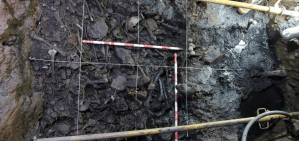
Just north of Alburquerque, in the mountain sector of Valencia de Alcántara, this abandoned mine complex was utilized for large-scale executions. It served as a centralized dumping point for the northernmost strip of the border region. The deep, vertical shafts swallowed unionized slate-quarry workers and rural agricultural labourers alike. The location referenced in regional historical investigations is Mina Terría (often structurally linked in oral memory to the mine and well systems across the Cuadrillas de Arriba estate). Just like Mina Valdihuelo and Pozo de la Nava, what happened at this abandoned tungsten mine in Valencia de Alcántara stands as one of the most mechanically complex, industrialized instances of rearguard terror along the Cáceres-Badajoz border strip.
Modern forensic teams had to break through decades of physical barriers and subterranean flooding to finally recover these victims. The perpetrators utilized the vertical depth of Mina Terría to achieve total concealment. The victims were shot directly at the lip of a tight, rectangular extraction shaft that plunged 27 metres straight down into the earth. After dropping the bodies inside, they threw layers of soil, stone, and quicklime down the shaft to accelerate decomposition and suppress the smell. After the war, the site was intentionally used as a rural refuse dump, piling decades of municipal trash over the burial layer. In 1988, when the mine was officially closed, the entrance was completely sealed with a thick reinforced concrete slab, physically locking the crime away under a structural vault. For 82 years, the site was considered an impenetrable grave until a major historical and engineering intervention was launched in March 2018, funded by the Diputación de Cáceres. Led by archaeologist Dr Laura Muñoz, the exhumation was a feat of contemporary conflict archaeology. The team had to break through the concrete seal, manually clear tons of compressed historical garbage, and deploy heavy-duty pumping rigs to continuously drain several metres of flooding subterranean water. Working 27 metres below the surface in deep mud and lodo, the team successfully recovered the skeletal remains of 49 individuals.
Because the bones had been immersed in acidic water and mud for nearly a century, extracting viable DNA was an immense challenge. Despite this, specialized genetic labs successfully cross-referenced family lines, officially identifying victims including the Mayor, Amado Viera, and a municipal employee named Diego Vital Díaz. Diego Vital Díaz’s story recently gained widespread national attention; he was the missing father of Manuel Vital, the historic Barcelona bus driver who famously hijacked his own transit vehicle in 1978 to prove public transport could reach the marginalized working-class neighborhood of Torre Baró (the subject of the acclaimed movie El 47). Tragically, Manuel Vital passed away before the 2018 project successfully identified his father’s bones in the lodo of the mine. In July 2022, nearly 90 years after they were cast into the dark, the 49 men were finally given a dignified, public burial in the municipal cemetery, permanently breaking the silence of the Cuadrillas de Arriba.
Not to be confused with the mine in Valencia de Alcántara, Pozo de las Vacas water well sat right on the rural outskirts of Alburquerque itself. Local oral histories indicate that it ran parallel to Mina Valdihuelo. When a specific night’s extraction was smaller or logistics required a faster drop closer to the village, squads used this well instead of driving further out to the primary mine complex. While the neighboring Mina Valdihuelo fosa común was thoroughly excavated and documented by archaeologists in 2003, the Pozo de las Vacas remains un-exhumed. The Pozo de las Vacas was a deep, vertical water well located closer to the municipal outskirts of Alburquerque than the more distant mining complexes like Valdihuelo. Local testimonies indicate that it was utilized by the local Falange and paramilitary units as a logistical alternative for faster body disposal. When a night’s extractions from the provisional town hall prison involved fewer individuals, or when moving trucks along the main roads to the distant mining sectors risked drawing unwanted attention from local herdsmen, the execution squads utilized this nearby well as a rapid concealment vault.
Because the site was never subjected to a modern, controlled archaeological dig, historians do not speculate on the exact number or names of the victims contained inside its walls.
Following the war, extrajudicial killings at the well were completely omitted from the town’s surviving civil logs, and any local records that might have hinted at the site’s logistical use were lost when the Alburquerque municipal archive was later destroyed in a fire.
The Pozo de las Vacas remains a physical blind spot in the provincial database—known strictly through the generational memory of the townspeople as a site where extrajudicial drops occurred, but entirely missing from modern state maps due to the lack of physical, forensic verification.
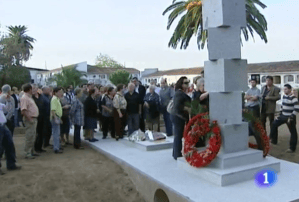
This method of using vertical industrial topology was so effective for the regime’s secrecy that it was replicated across the entire province wherever mining existed. Further south, sites like Mina Terría (Valencia de las Torres) and the massive rural burial networks in the mining hubs of the Rio Tinto and Nerva basin just across the Huelva border show the exact same blueprint. The landscape’s industrial architecture became a silent partner in the rearguard executions.
Francisco Espinosa Maestre’s verified investigations (La Columna de la Muerte) document a minimum of 6,610 victims killed across the western sector of Badajoz alone. When incorporating all 85 municipalities and subsequent post-war judicial executions, modern regional databases managed by Extremaduran memory projects document more than 11,000 to 12,000 confirmed deaths due to Francoist repression across the single province of Badajoz. In sharp contrast, the asymmetric nature of the rearguard violence is highlighted by the fact that Republican reprisals in the same province prior to its fall accounted for around 1,400 deaths.
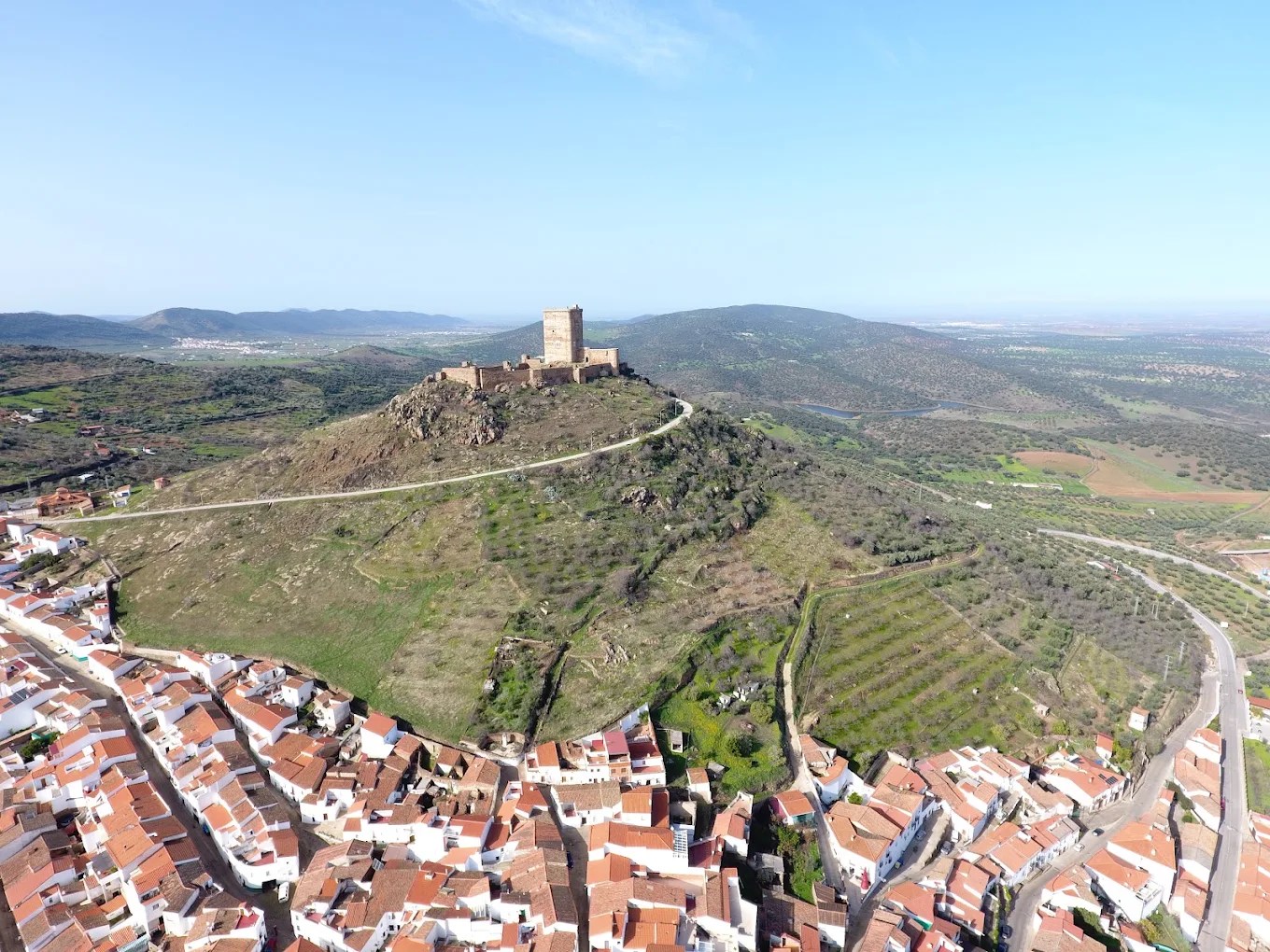
In the summer of 1936, Feria was a small agricultural town in the Zafra judicial district of Badajoz Province with approximately 4,200 people, and the majority depended directly or indirectly upon agriculture for their livelihood. The occupations recorded for those later killed during the Nationalist repression reflect this social structure. Most worked as braceros, agricultural labourers, while others earned a living as builders, carpenters, shoemakers, livestock dealers, or small tradespeople. They were members of a rural working community whose lives revolved around the surrounding estates and seasonal agricultural work
Republican authorities had retained control of the town after the failed military uprising in July 1936, But once the Army of Africa’s march north from Seville in early August, advancing north through Monesterio, Fuente de Cantos, Zafra, Mérida, and Badajoz, and gradually extended their control across the province. Feria remained outside that first line of advance until the second half of August, when Nationalist forces turned east to occupy the remaining Republican-held towns in the district. Republican authorities in Feria had ensured there were no Nationalist deaths since the start of the war, until 19 August 1936, when Lieutenant Colonel Juan Seguí Almuzara, Captain Patricio Medina Lafuente, and Captain Rodrigo de la Calzada Vargas-Zúñiga entered the district while travelling from Seville towards Badajoz to organise volunteer Nationalist forces. Republican militiamen intercepted them near Feria, and all three officers died during the fighting. Within twenty-four hours, Nationalist forces under Lieutenant Colonel Francisco Delgado Serrano advanced on Feria, ending a month of Republican control and beginning a campaign of repression that would claim the lives of almost one hundred local residents over the following years.
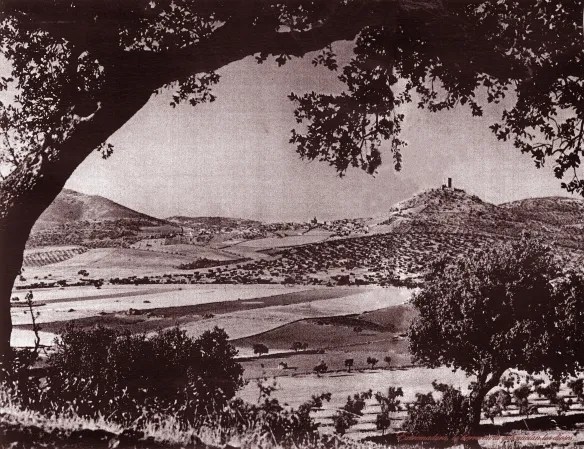
On 20 August 1936, Nationalist forces under Lieutenant Colonel Francisco Delgado Serrano occupied Feria during the second phase of the campaign to secure southern Extremadura. By this stage, Badajoz had already fallen, allowing Nationalist commanders to eliminate the remaining Republican-held towns beyond the principal line of advance. Although the battle itself remains poorly documented, its outcome is clear. Nationalist forces established control of the town on 20 August, replacing the Republican authorities. The occupation formed part of a wider operation that brought the remaining Republican communities of the district under Nationalist control. Neighbouring La Parra, where the El Salamanco Chico finca stood, remained outside Nationalist control for several more days before falling on 27 August 1936. That chronology would later prove significant, because the known victims associated with El Salamanco Chico disappeared after both towns had come under Nationalist occupation.
The capture of Feria marked the beginning of a sustained campaign of political repression rather than a single episode of violence. Javier Martín Bastos identified approximately 97 victims from Feria who died through Francoist repression during the Civil War and its immediate aftermath. That total includes 88 people executed without judicial process or killed in paseos, one recorded ‘disappearance,’ and eight people executed after military courts sentenced them to death. These figures cover several years and should not be interpreted as casualties from the occupation itself. The chronology of the surviving victim register demonstrates that repression began almost immediately. The first documented killings occurred within days of the occupation, while executions continued throughout September and October 1936 before extending into later years. The pattern indicates an organised process of arrests, detention, and removal rather than indiscriminate violence confined to the day the town fell. Many of those taken from Feria during the following weeks would never return. Decades later, forensic archaeologists would recover some of them from the abandoned mine shaft at El Salamanco Chico.
Most of those killed came from the town’s agricultural working class. Several women also appear among the documented victims, including Teresa García Salguero, Elena Pereira Noriega, Joaquina Pereira Salguero, and María del Pilar Pérez Sánchez, all executed on 8 October 1936. Among those who disappeared was Nicolás Martín Tejada, a fifty-year-old agricultural labourer whose granddaughter, Isabel Perera, spent decades searching for his fate. Another was Silvestre Indias Carvajal, whose descendants retained the family memory of his disappearance until his great-grandson, Roberto Palomo, began reconstructing the events through municipal records, military archives, family testimony, and local oral history.
Their efforts reflected a wider pattern within the community. Long before archaeologists arrived, residents of Feria believed that some of the missing had been taken beyond the town to an abandoned mine shaft on the El Salamanco Chico finca in neighbouring La Parra. During the Franco dictatorship those memories remained private. After Spain’s transition to democracy, families gradually began sharing their testimony, preserving a remarkably consistent account of where the prisoners had disappeared. For decades they possessed no physical proof. That changed in 2012, when Isabel Perera’s search brought forensic archaeologists to the abandoned shaft.
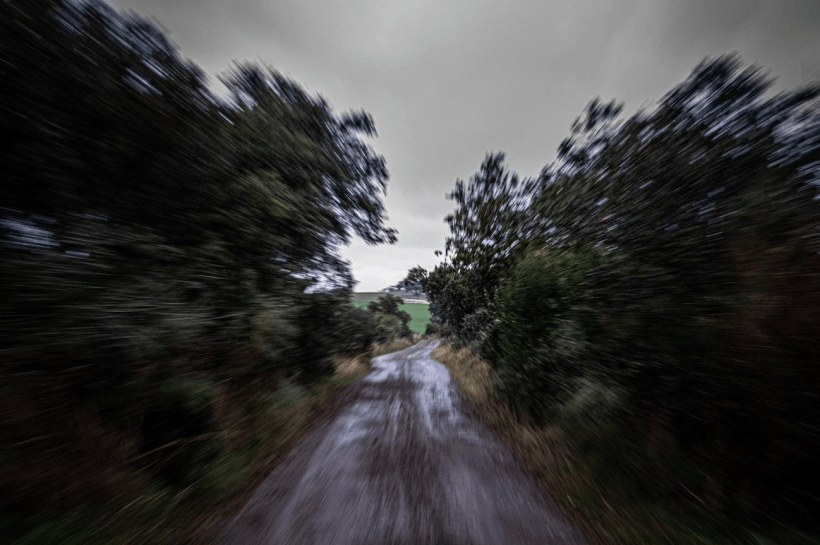
The El Salamanco Chic finca lies within the municipality of La Parra, several kilometres south-east of Feria. Although the recovered victims came principally from Feria, the execution site itself stood beyond the town boundary on private agricultural land. The location is significant. Nationalist forces occupied Feria on 20 August 1936, but La Parra remained under Republican control until 27 August. The chronology suggests that El Salamanco Chico could only become a secure disposal site after Nationalist forces controlled both communities. The estate functioned as a rural livestock finca. At its centre stood the working buildings from which the property was managed, while an abandoned mining shaft lay in their immediate vicinity. The published forensic investigation repeatedly describes the shaft as standing close to the finca buildings, demonstrating that it was part of the estate rather than an isolated feature hidden deep in the countryside. The available reports do not include a measured site plan, so the precise distance between the buildings and the shaft cannot yet be established.

The shaft itself had begun as a mining excavation before being adapted for agricultural use. It descended approximately thirty metres and contained two lateral galleries through which groundwater entered the workings. Later owners modified the entrance with brickwork, concrete, and a bucket mechanism so that the abandoned mine also served as a water source. By 1936 it combined two characteristics that made it attractive as a disposal site – exceptional depth and permanent water. Unlike a cemetery fosa, where bodies remained comparatively accessible, the shaft concealed anything thrown into it beneath darkness, water, and unstable rock. The choice of El Salamanco Chico was deliberate, even if the decision-makers remain unknown. The perpetrators selected a working rural property that contained an abandoned mine capable of concealing bodies far more effectively than an ordinary burial site. Rather than digging a new fosa, they exploited an existing feature of the landscape and then attempted to erase the evidence beneath water, lime, and tonnes of stone.
The published evidence does not yet identify who owned El Salamanco Chico during the Civil War. Nor does it establish who administered the estate, how many people lived or worked there permanently, or whether the buildings were occupied when the killings occurred. Those questions remain unanswered because they depend upon cadastral records, property registers, municipal archives, and estate documentation that have not yet been examined or published. The only owner identified with certainty is Manuel García Durán, who owned the finca in 2012 and granted the Sociedad de Ciencias Aranzadi full permission to investigate the shaft. Nothing presently links him or his family to the ownership of the estate in 1936.
For more than seventy years, the fate of many of Feria’s missing remained unknown. Families passed down the belief that some of those arrested after the Nationalist occupation had been taken to the abandoned shaft at El Salamanco Chico, but they possessed no physical evidence to prove it. The dictatorship discouraged public discussion of the disappearances, and no official investigation took place. The search finally began through the efforts of Isabel Perera, who was trying to discover what had happened to her grandfather, Nicolás Martín Teja, an agricultural labourer from Feria who disappeared during the repression in September 1936. Working with Cayetano Ibarra, then responsible for historical memory projects within the Junta de Extremadura, she asked the Sociedad de Ciencias Aranzadi to investigate the shaft.
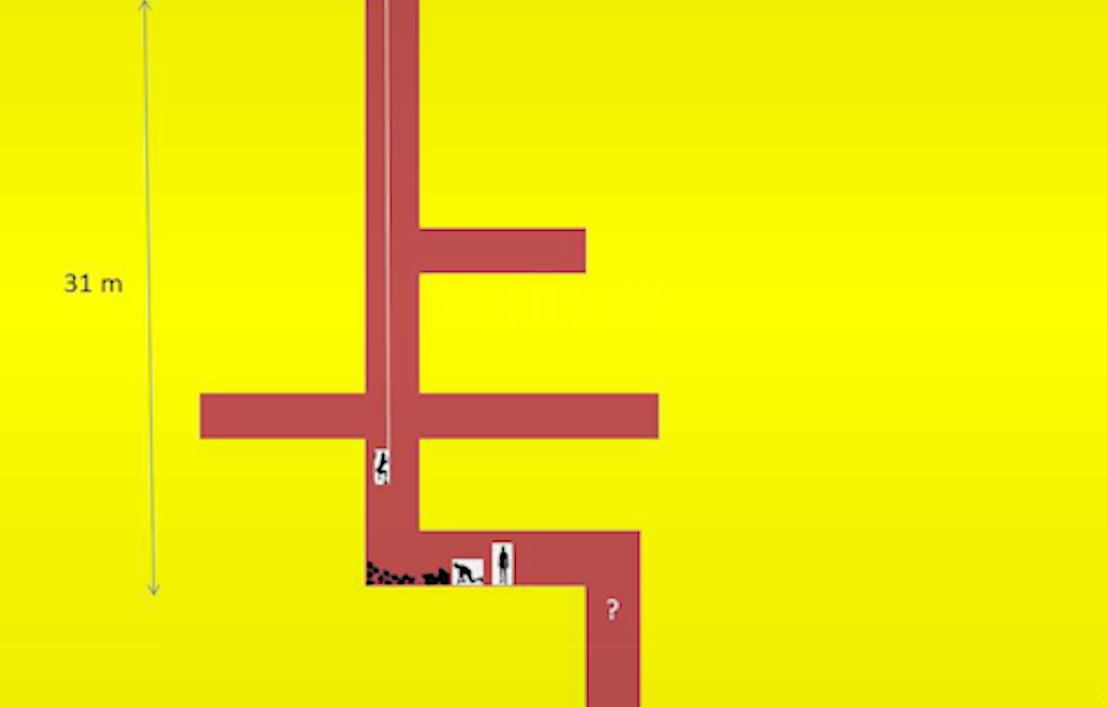
In May 2012, investigators lowered a camera into the flooded mine to determine whether any evidence survived below the water. Two months later, on 14 July, a multidisciplinary team led by forensic anthropologist Francisco Etxeberria returned to carry out the first physical examination. After installing ropes, lighting, and a powered winch, the team pumped thousands of litres of water from the shaft before descending into the workings. The descent itself illustrated why the site had remained untouched for decades. The opening dropped approximately thirty metres into a confined space partly filled with water, rubble, and collapsed debris. The first inspection immediately confirmed that the families’ memories had preserved a real crime scene. Archaeologists located human bones beneath the water near the entrance to one of the lower galleries, including a femur, a scapula, and a sternum belonging to adult victims. The investigation demonstrated that the shaft contained the remains of people who had disappeared during the Nationalist repression, but the confined conditions and the volume of debris made it impossible to determine how many individuals lay below. The shaft also revealed clear evidence that somebody had tried to prevent future discovery. Investigators found that the opening had been deliberately filled with large quantities of stone, earth, and other debris after the bodies entered the mine. Recovering the victims would require the removal of tonnes of material before archaeologists could even reach the human remains.
A full archaeological excavation was not complete until 2021, almost nine years after the initial inspection confirmed the presence of human remains. Before archaeologists could recover a single victim, they first had to reverse the deliberate concealment of the site. The team pumped approximately ten metres of water from the shaft before removing several metres of large stones, earth, and other debris that had been dumped into the opening after the killings. Only then could they begin excavating the human remains lying at the bottom of the abandoned mine.
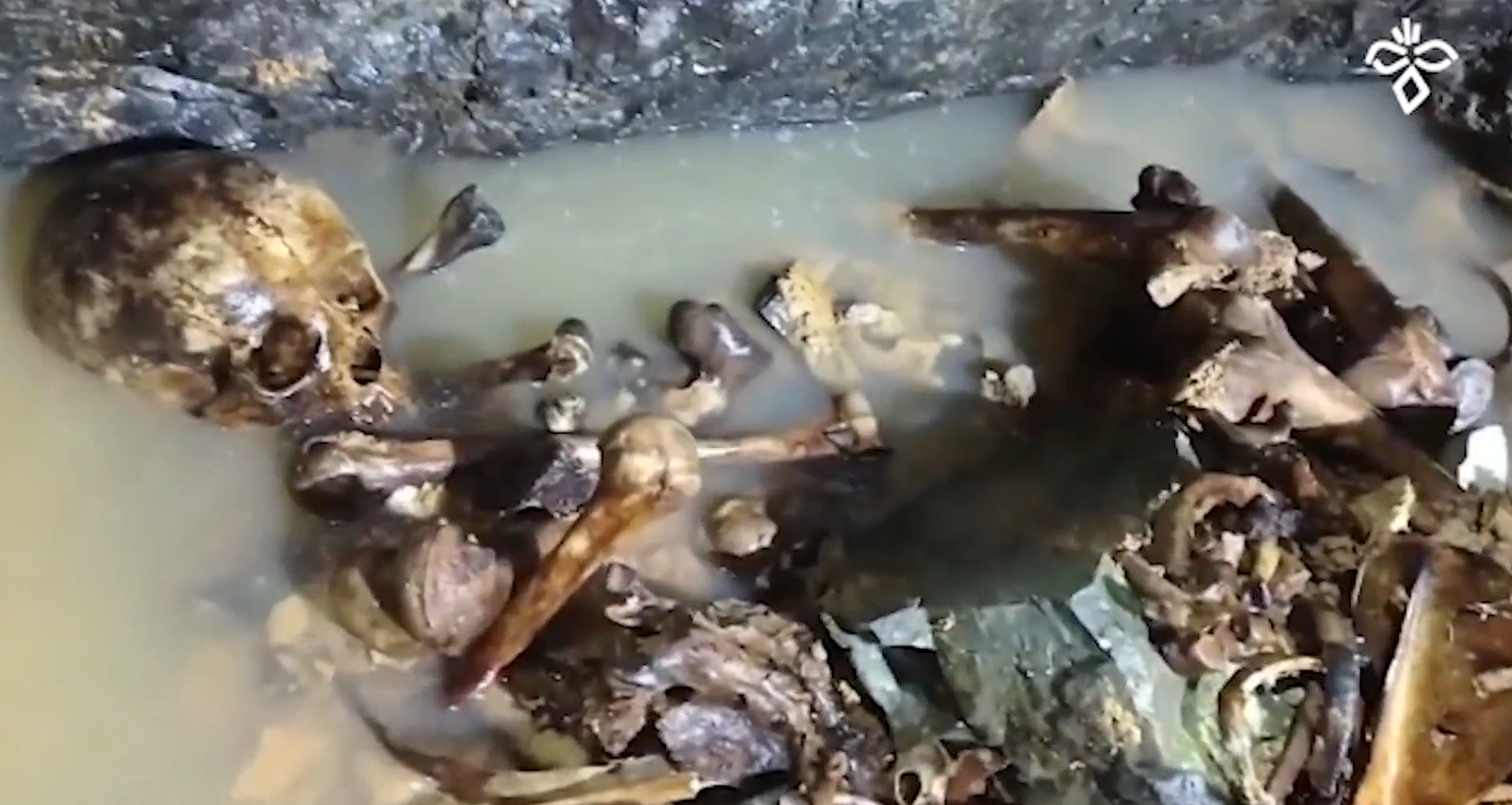
The excavation confirmed that El Salamanco Chico had not been used to dispose of a single group of prisoners. The archaeological evidence demonstrated that bodies entered the shaft on more than one occasion. Investigators found layers of lime between human remains and evidence that the perpetrators had repeatedly returned to the site before sealing it beneath rubble. The same location served repeatedly as a place where victims disappeared.
By the completion of the excavation, archaeologists had recovered the remains of 18 individuals. Forensic anthropologists examined each skeleton, documenting trauma, biological profile, and any features that might assist identification. DNA specialists then compared samples taken from the remains with DNA provided by surviving relatives from Feria and the surrounding district. The analysis identified Francisco Becerra Gómez, Francisco Fernández Ramírez, Florencio Gil Portero, Silvestre Indias Carvajal, and Miguel Picón Sánchez. All came from Feria, confirming the long-held belief that prisoners arrested after the occupation had been transported beyond the town and concealed on the neighbouring finca. Other victims remain unidentified, either because suitable family DNA has not yet been obtained or because the surviving evidence does not permit a conclusive match.
The excavation also established what the perpetrators had tried to achieve. They did not simply dispose of bodies inside an abandoned mine. They selected a shaft more than thirty metres deep, covered the victims with lime, buried them beneath tonnes of stone and debris, and left the site to fill with water. Every stage increased the difficulty of any future recovery. Without the persistence of local families and the application of modern forensic archaeology, the victims would probably have remained hidden indefinitely. In November 2023, the recovered victims finally left El Salamanco Chico. After forensic examination and DNA analysis, relatives received the identified remains for burial, while the unidentified victims were reburied collectively in Feria. For many families, it marked the end of a search that had begun with disappearances in 1936 and continued across three generations.
El Salamanco Chico is more than an archaeological site. It preserves evidence of how the Nationalist repression operated in the countryside after the occupation of southern Extremadura. The victims identified from the shaft were not killed during a battlefield engagement. They were residents of Feria who disappeared after Nationalist forces established control of the district. Their occupations, predominantly agricultural labourers, reflect the social groups most heavily represented among the town’s documented victims.
The archaeology demonstrates that the perpetrators selected the site deliberately. They repeatedly transported victims beyond the limits of Feria to a privately owned finca in neighbouring La Parra, using an abandoned mine shaft beside the estate buildings to conceal the bodies. They then covered the remains with lime, earth, and large quantities of stone before allowing the shaft to fill with water. These actions required planning, repeated access to the property, and a sustained effort to prevent future discovery. The evidence does not identify every individual involved, but it does show that the concealment formed part of an organised process rather than an isolated act.
At the same time, important questions remain unanswered. The published evidence has not identified who owned El Salamanco Chico in 1936, who managed the finca, or how many people lived and worked there during the Civil War. Nor has it established who selected the prisoners in Feria, where they were held before their disappearance, who transported them to the estate, or which individuals carried out the executions. These gaps reflect the limits of the surviving documentary record rather than a lack of forensic evidence.
Today, El Salamanco Chico stands as one of the most thoroughly investigated rural execution sites in Extremadura. The excavation transformed decades of family testimony into documented historical evidence, while the identification of victims restored individual identities to people whom the perpetrators had attempted to erase. Although much about the operation of the site remains unknown, the shaft now provides one of the clearest forensic records of how Republican prisoners disappeared in the countryside during the first months of the Civil War.
An important contribution came from Roberto Palomo, great-grandson of Silvestre Indias Carvajal, one of the identified victims recovered from the shaft. While searching for his great-grandfather, Palomo examined municipal records, military archives, historical documents, family collections, and oral testimony preserved within Feria. His research culminated in the project Hijas del olvido, which brought together documentary evidence, photographs, and family histories to reconstruct the experiences of those who disappeared during the repression. His work demonstrates how local historical research and family testimony can complement professional archaeological investigations.