The Spanish Civil War did not erupt suddenly in July 1936. The conflict emerged from decades of political instability, economic inequality, social unrest, military intervention, and bitter arguments over what Spain itself should become. For some Spaniards, the country needed modernisation – democratic reform, secular education, expanded rights for workers and women, and greater regional autonomy. For others, these same changes represented national collapse, the destruction of religion, hierarchy, monarchy, and traditional society.
The decades before the war transformed nearly every aspect of Spanish life. Workers organised into mass unions, women entered public political life in unprecedented numbers, regional nationalist movements gained strength, and governments increasingly struggled to maintain authority. Violence, repression, and political polarisation deepened year by year. By 1936, millions of Spaniards had come to believe compromise itself was impossible.
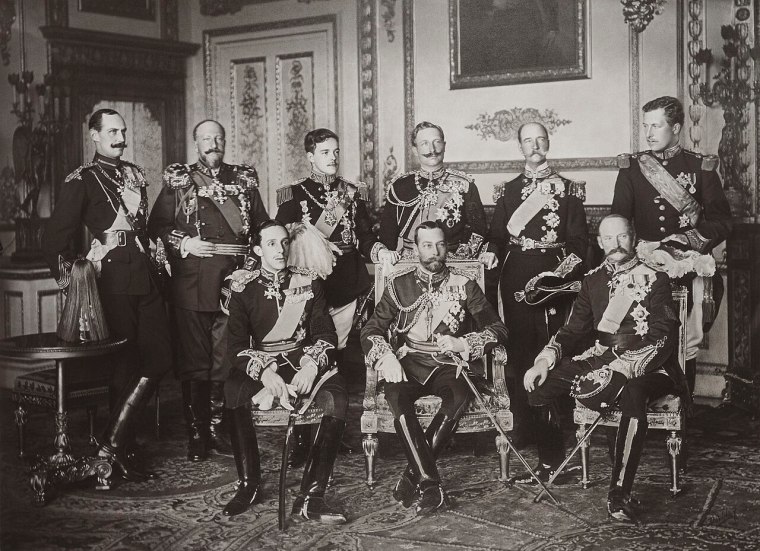
1902 – Alfonso XIII Begins Personal Rule
In 1902, Alfonso XIII formally assumed full royal authority at the age of sixteen. Spain at the beginning of the twentieth century remained deeply unequal. Large aristocratic landowners controlled enormous estates, particularly in the south, while millions of rural labourers lived in poverty and seasonal unemployment. Industrial workers in cities such as Barcelona, Bilbao, and Madrid often faced dangerous conditions, low wages, overcrowded housing, and minimal labour protections. Political power remained concentrated among wealthy elites, the military, the monarchy, and the Catholic Church. Elections were frequently manipulated through a system of local political bosses known as caciques, leaving many ordinary Spaniards feeling excluded from genuine political participation.
The monarchy itself became increasingly associated with corruption, stagnation, and political paralysis. For the working class, the period produced growing anger over inequality and living conditions. Socialist and anarchist organisations expanded rapidly among industrial workers and labourers who believed the existing system could not reform itself peacefully.
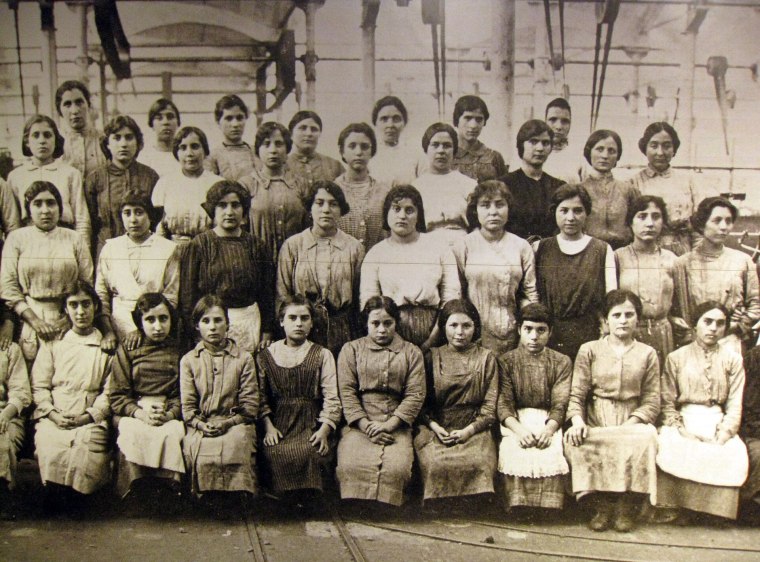
Women remained heavily constrained by conservative social expectations and Church authority. Educational opportunities for women were limited, divorce remained illegal, and political participation was almost non-existent. At the same time, urbanisation and industrialisation slowly began drawing more women into factories and public life, particularly in larger cities.
Regional tensions also intensified. In Catalonia and the Basque Country, many people increasingly resented the dominance of central government in Madrid. Industrial growth in these regions strengthened demands for greater cultural and political autonomy.
1909 – Semana Trágica en Barcelona (The Tragic Week in Barcelona)
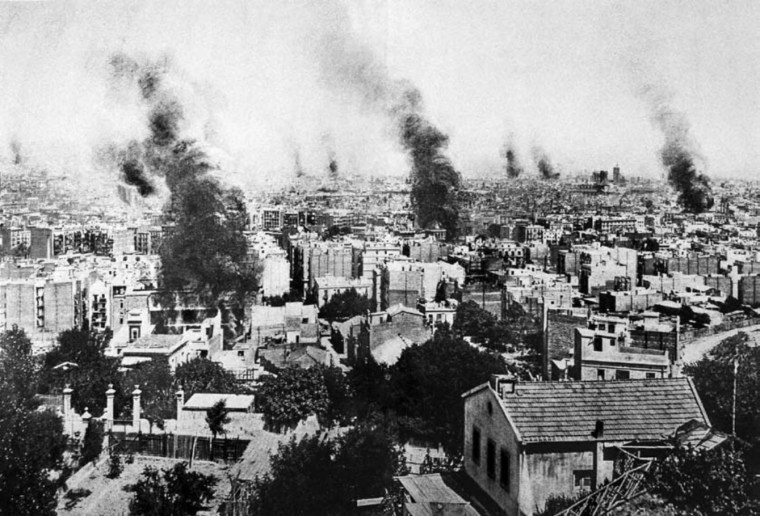
In July 1909, protests erupted in Barcelona after reservists were mobilised to fight colonial wars in Morocco. The immediate cause of the unrest was the government’s decision to call up working-class reservists while wealthier Spaniards could often avoid military service through payment. Many labourers viewed the war in Morocco as a conflict fought for elite interests while ordinary people bore the cost.
Barcelona, already a centre of labour activism and anarchist politics, exploded into strikes, barricades, and anti-government demonstrations. Anti-clerical anger rapidly intensified, with churches, convents, and religious schools attacked or burned. The government responded with military force and harsh repression. Hundreds were arrested, and several people were executed, including the educator and anarchist sympathiser Francisco Ferrer.
The ‘Tragic Week’ revealed several tensions that would later reappear during the Civil War – resentment toward the military, anger over inequality, hostility toward the Church, and the growing radicalisation of urban workers. For the working class, the events reinforced the belief that the state protected elites while violently suppressing ordinary people. For conservatives and Catholics, the attacks upon churches and clergy became evidence that left-wing politics threatened religion and social order itself.
Women participated heavily in demonstrations, strikes, and neighbourhood protests during the unrest, particularly among working-class communities. Their public involvement alarmed conservative observers who believed women should remain outside politics entirely. The events also strengthened Barcelona’s reputation as a rebellious and politically radical city, deepening tensions between Catalonia and the central state. Between 104 and 150 civilians were killed, along with eight military personnel. Around 1,700 were arrested, and another 441 were injured, and five civilian were executed after the riots.
1910 – The Rise of Spanish Anarchism
In 1910, the anarchist trade union Confederación Nacional del Trabajo (CNT) was founded in Barcelona. Unlike many socialist movements elsewhere in Europe, Spanish anarchism became a mass movement with enormous support among industrial workers, labourers, and sections of the rural poor. Anarchists believed society should be organised through workers’ collectives and voluntary cooperation rather than governments, capitalism, or Church authority. The CNT proudly proclaimed, ‘We make no distinction at the time of admission, we require only that you are a worker or a student, employed or unemployed. The only people who cannot join are those belonging to repressive organizations (police, military, security guards), employers or other exploiters.’
The growth of anarchism was driven largely by poverty, poor working conditions, inequality, and frustration with traditional politics. Many workers believed parliamentary reform would never seriously challenge the power of landowners, industrialists, or the military. In industrial regions such as Catalonia, anarchism became deeply tied to working-class identity. General strikes, labour unrest, and clashes with employers became increasingly common throughout the 1910s and 1920s. For women, anarchist and socialist organisations sometimes offered opportunities unavailable within conservative society. Some left-wing groups promoted female education, literacy, and greater social participation, though many radical movements still remained male-dominated in practice.
The rapid growth of anarchism terrified conservative Spain. Industrialists, landowners, army officers, and Catholic leaders increasingly viewed revolutionary politics as a direct threat to civilisation itself.
1917 – Political and Social Crisis
Spain remained neutral during the First World War, but neutrality produced severe internal tensions. Three challenges threatened the government at the same time, along with the system of the Restoration – the Juntas de Defensa, a military union movement created without the approval of the Spanish legislature, challenged the government of Manuel García Prieto, who, unable to control them, was forced to resign., the Parliamentary Assembly, organized by the Regionalist League of Catalonia in Barcelona, a political movement who represented the Catalan bourgeoisie, who demanded the convening of a constitutional assembly to re-structure the government to recognise regional autonomy. They also demanded measures in the military and economic sectors, though as the military were filled with working class people, they did not have that support. They claimed they would create ‘a profound renovation of Spanish public life,’ meaning crushing the spirits of the working class.
Meanwhile, ongoing clashes between workers and their employers had continued for years, and long-running threats and meetings promised a strike in August 1917 across Spain, for ‘fundamental changes of the system that guarantee the public, at minimum, decent living conditions and the development of their self-emancipation.’ Industrial profits had risen sharply in some sectors, while inflation had dramatically increased the cost of living for ordinary people. The ruling class employers had been hiring men to beat workers on a regular basis whenever workers’ rights were being asserted. Wages failed to keep pace with rising prices, and working-class hardship intensified across much of the country. Mass strikes spread through industrial centres, while political dissatisfaction grew among republicans, socialists, regional nationalists, and even sections of the military. The strike halted activity in major industrial zones like Barcelona d Biscay and urban centres of Madrid, Valencia, Zaragoza, and A Coruña, and the mines at Río Tinto, Jaén, Asturias, and León), but only for one week . Small cities and rural areas were not affected. Leaders of the strike movements were imprisoned for life, yet still won seats in the 1918 election.
The crisis of 1917 exposed how fragile the monarchy had become. Parliamentary governments appeared increasingly incapable of responding to economic and social unrest. For workers, inflation and food shortages deepened support for unions and radical political movements. For women, rising living costs created enormous pressure inside working-class households. Women often carried much of the burden of maintaining families amid unemployment and shortages. Regional tensions intensified as Catalan political movements demanded greater autonomy and recognition. Many Catalans viewed Madrid as corrupt, inefficient, and hostile toward regional identity.
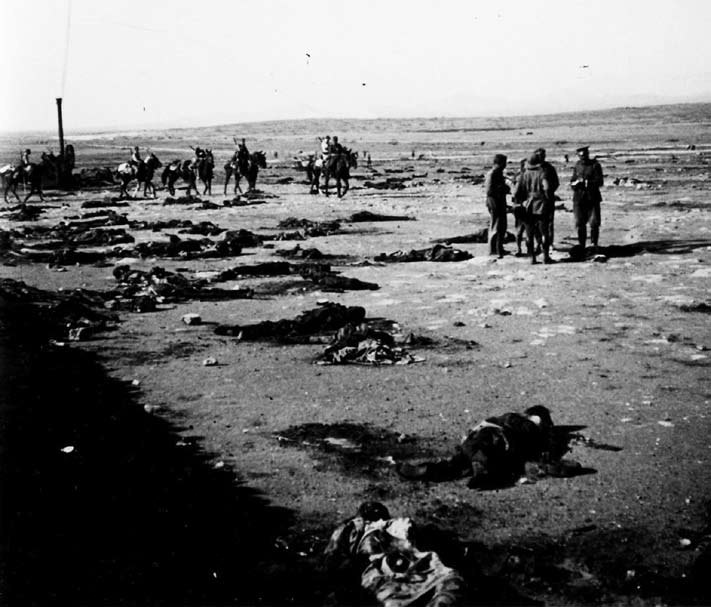
1921 – Disaster at Annual
In 1921, Spanish forces suffered a catastrophic defeat in Morocco during the Battle of Annual. The disaster resulted largely from military overconfidence, poor leadership, corruption, and underestimation of Moroccan resistance forces led by Abd el-Krim. Approximately 13,000 Spanish troops were killed in one of the greatest military humiliations in modern Spanish history, though some estimate up to 23,000 mean including the Moroccan forces also killed. The defeat shocked Spanish society and badly damaged confidence in both the military and monarchy. At the same time, the Moroccan wars profoundly shaped a generation of officers, including future Nationalist leaders such as Francisco Franco. Many developed an increasingly authoritarian worldview rooted in military discipline, violence, nationalism, and contempt for civilian politicians. For the working class, the war reinforced resentment toward a political system that repeatedly sent poor conscripts to die in colonial conflicts. The war also deepened militarisation within Spanish politics itself. Many officers increasingly believed only authoritarian rule could preserve national unity and order.
1923 – Primo de Rivera’s Dictatorship
In 1923, a week before the publication of a report directly implicating Alfonso XIII in the disastrous outcome of the Battle of Annual, General Miguel Primo de Rivera launched a military coup with the support of King Alfonso XIII, after many Spaniards started to demand that Spain completely pull out of its remaining African colonies.
The disaster at Annual had accelerated the expansion and militarisation of the Spanish Legion under the leadership of José Millán-Astray and rising officers such as Francisco Franco. Created partly in response to the enormous losses suffered in Morocco, the Legion was designed as a hardened professional fighting force. Its culture glorified discipline, sacrifice, violence, and absolute obedience, cultivating an image of ruthless masculinity and contempt for weakness. Following the humiliation of Annual, the Legion became central to Spain’s efforts to reassert control in Morocco through increasingly brutal counterinsurgency warfare. The Moroccan campaigns profoundly shaped the mentality of officers such as Franco, who emerged from the conflict convinced that authoritarian discipline and military force were the only reliable answers to instability and social unrest.
General Miguel Primo de Rivera claimed parliamentary politics had failed and promised order, stability, and national regeneration. Political parties were restricted, censorship expanded, and regional nationalist movements were suppressed. The dictatorship initially gained some support from conservatives, industrialists, and parts of the middle class who feared labour unrest and political instability.
For workers, however, repression of strikes and political activism intensified. Although some infrastructure projects improved employment temporarily, underlying inequalities remained unresolved. Women remained largely confined within conservative social structures during the dictatorship, with traditional Catholic values strongly emphasised. The regime also cracked down heavily on Catalan identity. Use of the Catalan language was restricted in official contexts, and regional autonomy movements faced increasing repression. These policies deepened resentment in Catalonia and strengthened regional nationalism.
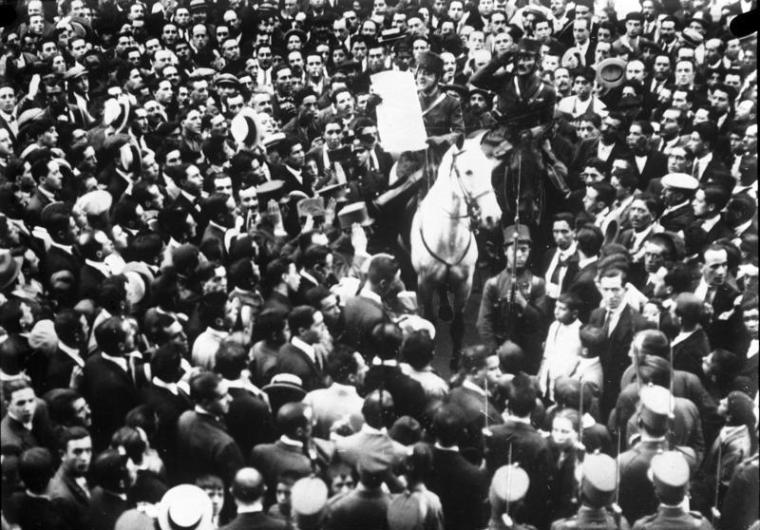
In 1924, the dictatorship relented to suffrage movements and gave unmarried women the right to vote in local elections (as long as they were over 23 and had no male authority in their lives). Women could run for office in town councils, and fourteen women joined the National Assembly in 1927. Primo de Rivera claimed women were as good as men in all ways, but, ‘there is one that is essential in women: housekeeping, and that is what really underscores their importance,’ and provided cash incentives to women with eight or more children. Individual workers’ rights began in the 1926 labour code, which introduced maternity benefits and paid breastfeeding breaks at work, and rights for groups and unions to meet fairly with employers. Women’s participation in the workforce as skilled workers also increased rapidly, 36% of apprentices being female in the late 1920s. None of these improvements were made by the dictatorship, rather decades of fighting by women’s groups, which were still seen as a joke by most men.
1930 – Collapse of the Dictatorship
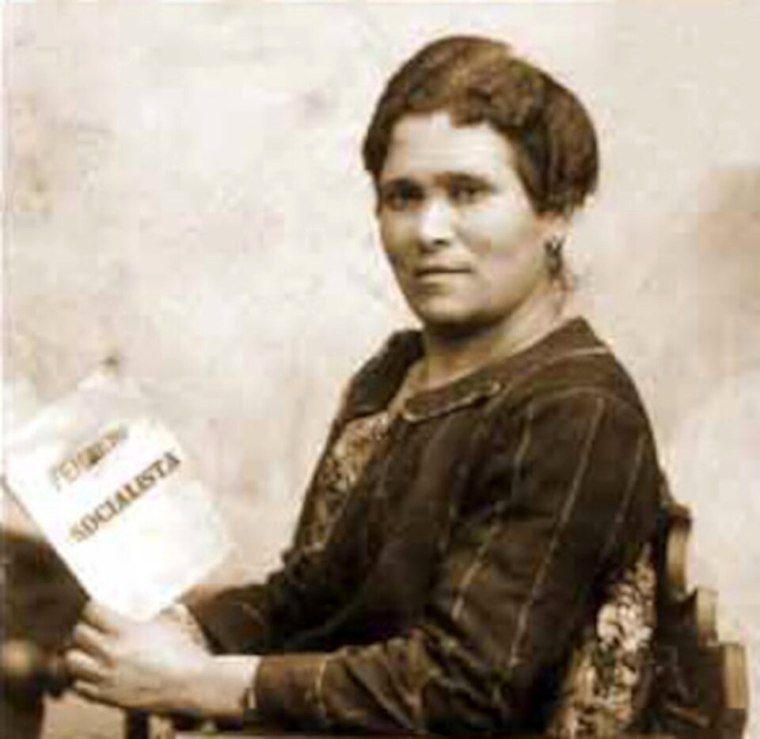
By 1930, Primo de Rivera’s dictatorship had lost support across much of Spanish society. Severe economic problems in 1929, political dissatisfaction, and opposition from intellectuals, republicans, workers, and regional movements increasingly weakened the regime. Primo de Rivera resigned in January 1930. The monarchy itself now appeared deeply compromised because Alfonso XIII had openly supported the dictatorship. Republican movements gained momentum rapidly in urban areas. Many Spaniards increasingly viewed monarchy and military authoritarianism as obstacles to modernisation and democracy. Among workers and students especially, hope grew that Spain might finally undergo meaningful political reform.
1931 – The Second Republic Is Declared
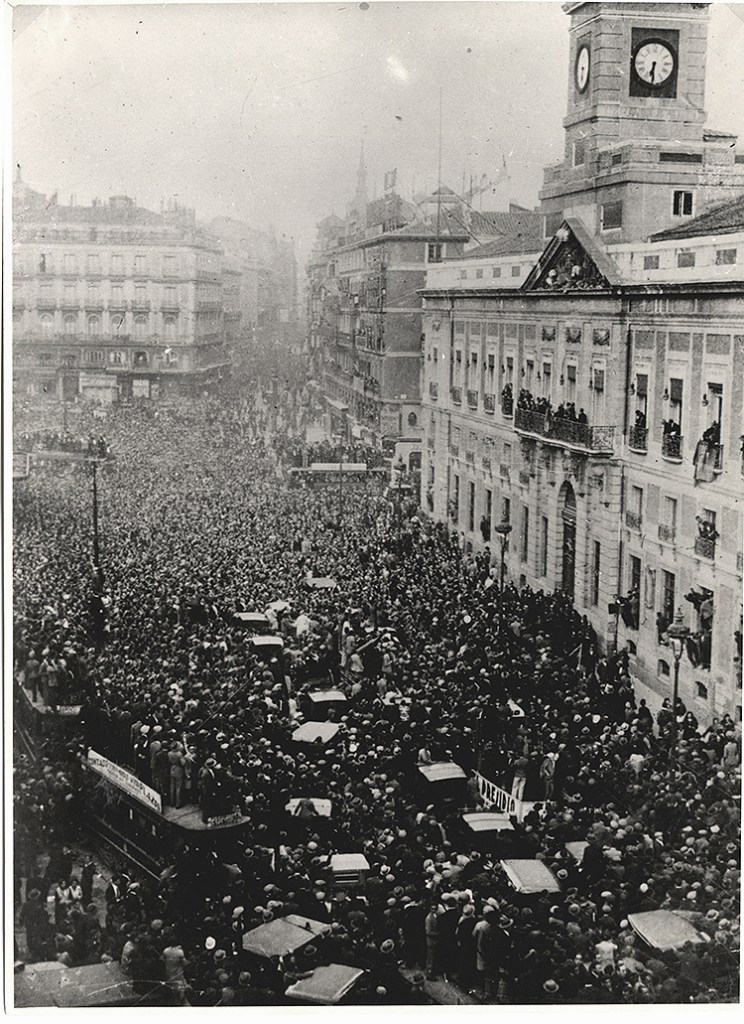
Municipal elections held in April 1931 produced major Republican victories in many Spanish cities. Facing mounting opposition, Alfonso XIII and the royal family left Spain. On 14 April 1931, the Second Spanish Republic was proclaimed (the First Spanish Republic was February 1873 to December 1874).
For supporters, the Republic represented enormous hope. Reformers sought to modernise Spain through secular education, expanded civil rights, labour protections, land reform, and democratic government. The Republic introduced major reforms – women’s suffrage, divorce legalisation, secular schools, military reform, reduced Church influence, and attempts at land redistribution.
For the working class, the Republic raised hopes for better wages, improved conditions, and greater political participation. For women, the Republic represented a dramatic social transformation. Women gained voting rights, expanded educational opportunities, and greater public visibility. Conservative critics viewed many of these reforms as attacks upon traditional family and religious values. Regional autonomy also expanded. Catalonia gained a degree of self-government, while Basque autonomy movements strengthened.
To supporters, the Republic represented democratic modernity. To opponents, it represented disorder, secularism, and the destruction of traditional Spain.
1932 – The Sanjurjada (Sanjurjo Coup Attempt)
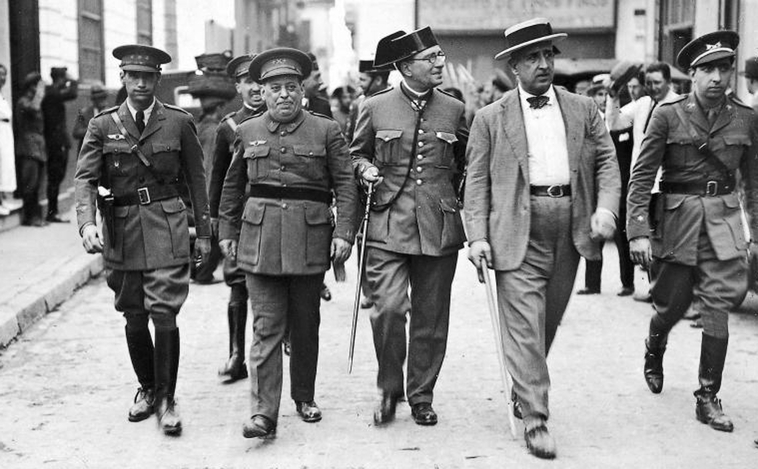
In August 1932, General José Sanjurjo attempted a military coup against the Republic. The coup was organised by conservative officers and monarchists who opposed Republican reforms, particularly military restructuring and reductions in army privilege. Although the coup failed, it demonstrated that sections of the military already viewed the Republic as illegitimate. The attempted uprising intensified fears on both sides – Republicans increasingly feared military dictatorship, while conservatives increasingly feared revolutionary transformation. The event also foreshadowed the much larger military conspiracy which would eventually erupt in 1936.
1933 – Political Polarisation Deepens
By 1933, economic hardship, political violence, and growing disappointment weakened support for moderate politics. Conservative Catholic parties gained support from Spaniards alarmed by anti-clericalism, labour unrest, and fears of revolution. At the same time, left-wing groups accused moderate Republicans of failing to deliver meaningful social change. Women voted in Spanish national elections for the first time in 1933, a major milestone in Spanish political history.
Political rhetoric grew increasingly extreme across the country. Street violence, strikes, and clashes between rival groups became more common. For many working-class Spaniards, reform seemed too slow. For many conservatives, reform already seemed dangerously radical.
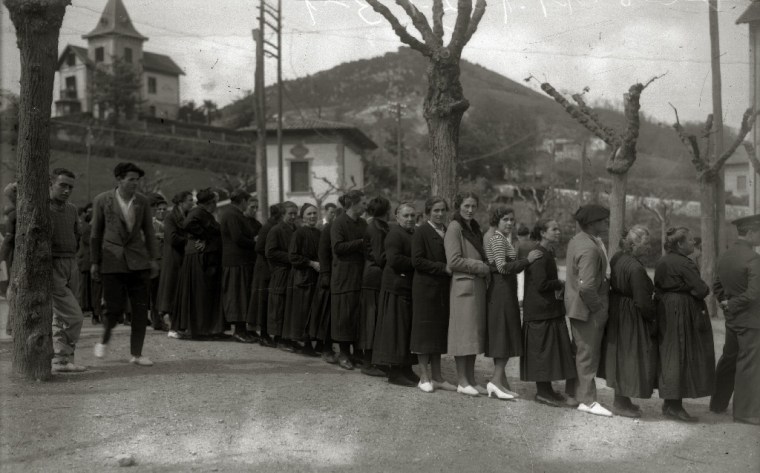
1934 – The Asturias Uprising
The 1934 Asturian Uprising, often called the October Revolution in Asturias, was one of the most important and violent events of the Second Spanish Republic before the outbreak of the Spanish Civil War. It took place in the mining region of Asturias in October 1934 and grew from a workers’ strike into a full-scale armed rebellion.
The immediate cause was the entry of the conservative Catholic party CEDA into the Spanish government. Many socialists, communists and anarchists believed this signalled the arrival of fascism in Spain, especially after the recent rise of Adolf Hitler in Germany. Left-wing organisations called for a general strike across Spain, but only in Asturias did it develop into a major revolutionary uprising.
Asturian coal miners, joined by members of the socialist UGT union, anarchist CNT militants and communists, seized towns across the region. They captured weapons, occupied much of Asturias, and took control of the provincial capital, Oviedo, after fierce fighting. Revolutionary committees attempted to govern the areas under their control, and around 30,000 workers were mobilised. Churches, government buildings and police barracks were attacked, while several priests, members of the security forces and political opponents were killed. The Spanish government responded by deploying the battle-hardened Army of Africa, including the Spanish Foreign Legion and Moroccan Regulares. Although General Francisco Franco coordinated operations from Madrid, command in Asturias was officially given to General Eduardo López Ochoa. The fighting lasted roughly two weeks and involved artillery, aerial bombardment and brutal street battles.
Casualty figures remain debated, but most historians estimate around 2,000 deaths. Approximately 1,500 miners were killed, along with 230–260 soldiers and police, and 33 clergy. Thousands more were wounded. Between 30,000 and 40,000 people were arrested after the revolt, and many workers lost their jobs. Reports of torture, summary executions and other abuses by government forces became a lasting source of bitterness on the Spanish left. The uprising failed militarily, but its political impact was enormous. The Spanish right saw it as proof that the left was preparing a revolution, while many on the left viewed the repression as evidence that democracy was collapsing. The violence and hatred unleashed in Asturias deepened the divisions that would erupt into civil war less than two years later. Many historians regard the Asturian Uprising as a rehearsal for the wider conflict that began in July 1936.
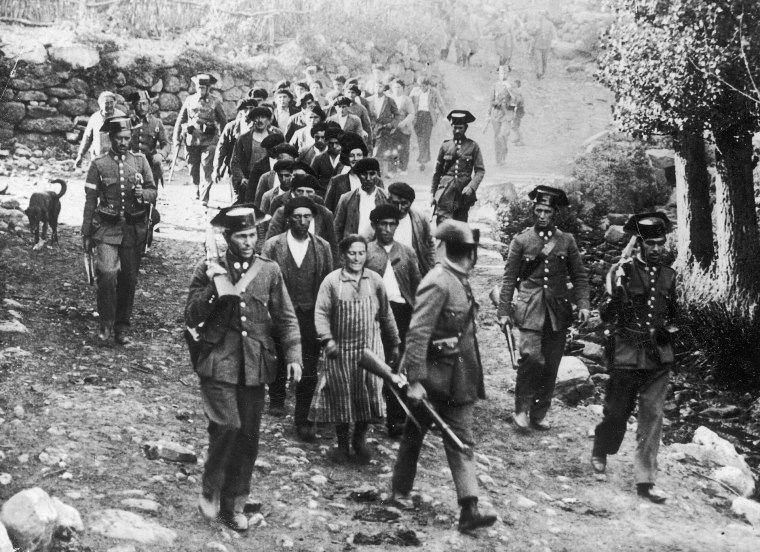
1935 – Political Breakdown
By 1935, Spain’s Second Republic was entering one of the most turbulent periods in its short history. The failed Asturian Uprising of October 1934 had left deep scars across the country. Thousands of workers and trade unionists remained in prison, while the political right pointed to the rebellion as proof that the left was prepared to overthrow democracy through violence.
The government was dominated by conservative forces. Prime Minister Alejandro Lerroux’s Radical Republican Party relied heavily on parliamentary support from the Catholic conservative party CEDA, led by José María Gil-Robles. To many on the left, CEDA resembled the authoritarian movements gaining power elsewhere in Europe. The rise of Hitler in Germany and Mussolini in Italy made fears of fascism seem very real. Yet the government itself was increasingly unstable. Throughout 1935 a series of corruption scandals, most notably the Straperlo gambling affair, badly damaged Lerroux’s administration. Public confidence in the government collapsed. Politicians who had once supported the Republic now openly questioned whether the parliamentary system could solve Spain’s problems.
Economic difficulties added to the tension. Unemployment remained high in many regions, particularly among agricultural labourers in the south. Land reform had stalled, disappointing thousands of peasants who had hoped the Republic would break up large estates. Strikes, demonstrations and political clashes became increasingly common. The political centre was disintegrating. Moderate parties that had helped create the Republic in 1931 were losing support as voters drifted toward more radical alternatives. On the left, socialists, republicans and communists began discussing electoral cooperation. On the right, monarchists, traditionalists and conservative Catholics warned that Spain faced revolution if the left returned to power.
Political violence, while not yet on the scale seen in 1936, became a regular feature of public life. Newspapers portrayed opponents as enemies rather than rivals. Many Spaniards came to believe that the country’s future would be decided not through compromise, but through victory over the other side. By the end of 1935, President Niceto Alcalá-Zamora concluded that the fractured parliament could no longer govern effectively. New elections were called for February 1936. They would become one of the most consequential elections in Spanish history, fought in a climate of fear, bitterness and growing extremism.


You must be logged in to post a comment.