- Madrid
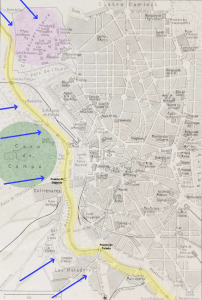
Between 12 and 13 November 1936, the Battle of Madrid pivoted from a stalled Nationalist frontal assault into a fierce struggle for strategic high ground on the western and southern approaches to the Spanish capital. While Nationalist forces had stormed Cerro Garabitas while a major Republican counteroffensive at Cerro de los Ángeles south of the city collapsed in heavy casualties, setting the stage for the decisive crossing of the Manzanares River two days later.
Following the failure of their initial 7–11 November assaults across the Manzanares bridges, Nationalist commanders reorganised their elite Army of Africa columns along the western edge of Madrid. Simultaneously, the Republican Junta de Defensa de Madrid, led by General José Miaja and his chief of staff Lieutenant Colonel Vicente Rojo, rushed fresh brigades and foreign volunteers into the line to stabilise the perimeter and mount a flanking counterattack.
Nationalist Forces in the western and southern sectors, commanded in the field by General José Enrique Varela, numbered roughly 14,000–15,000 veteran troops organised into specialised mobile columns under Carlos Asensio, Fernando Barrón, Antonio Castejón, Heli Rolando de Tella, and Maximino Delgado. Each column comprised tabors of Moroccan Regulares, banderas of the Spanish Foreign Legion, artillery batteries, and light Italian Ansaldo tankettes.
Republican Forces, the capital defence and counterattack croup, totalled roughly 28,000–48,000 defenders across all Madrid sectors (comprising newly formed Mixed Brigades, militia columns, and regular army remnants), the active forces in the 12–13 November engagements included the XI International Brigade, the newly arrived XII International Brigade (~1,550–1,900 men), Enrique Líster’s 1st Mixed Brigade, the 2nd and 5th Mixed Brigades and Dmitry Pavlov’s Soviet T-26 tank group.
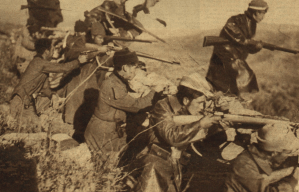
Lieutenant Colonel Rojo prioritised reinforcing the Manzanares crossings (such as the Puente de los Franceses) and holding the elevated ridges inside Casa de Campo to deny Nationalist artillery a clear line of sight into central Madrid, though the Nationalist now had Cerro Garabitas. On 12 November, a cold front brought heavy rainfall (6 l/m²) and dense low cloud cover across Madrid, grounding most Nationalist air support. Infantry skirmishing continued across Casa de Campo and Carabanchel as Varela’s columns consolidated their positions on the western bank while Republican units dug trenches along the river.
The following morning under cold, misty morning conditions, Colonel Fernando Barrón’s Nationalist column assaulted and completed their capture Cerro Garabitas (which had begun on 10 November), along with the neighbouring Paquillo and Basurero heights, pushing back Republican defenders and elements of the XI International Brigade. In the skies above Paseo de Rosales, 13 Soviet-supplied Republican Polikarpov I-15 Chato fighters clashed inconclusively with 14 Nationalist Fiat CR.32 biplanes, but the weather hampered the bulk of the support.
The full capture of Cerro Garabitas and the immediate areas were a major tactical victory for the Nationalists. Positioned less than two kilometres from Plaza de España, it gave Nationalist gunners an unobstructed view of downtown Madrid, enabling the relentless artillery bombardment of the Gran Vía for the remainder of the war. Heavy attrition occurred on both sides during the close-quarters woodland fighting in Casa de Campo, though exact daily figures for 12–13 November are folded into the broader 7–15 November Casa de Campo toll (which cost the attacking columns well over 1,000 casualties and inflicted even higher, though uncalculated, losses on Republican militia units).
Ciudad Universitaria was immediately across the Manzanares River from the Casa de Campo and Cerro Garabitas. During 12–13 November, Nationalist artillery and aircraft heavily shelled the campus buildings, trenches, and bridges, including the Puente de los Franceses and the Pasarela de la Muerte (Footbridge of Death), to soften Republican defences ahead of their planned river crossing.
While fighting raged on the hills across the river, Republican troops, sappers, and Madrid civilians worked under fire to sandbag the modern brick-and-concrete university buildings (such as the Casa de Velázquez, the Hospital Clínico, and the Facultad de Filosofía y Letras) and dig trenches along the eastern riverbank. Battalions of the XI International Brigade alongside Spanish Republican brigades were already deployed along the Ciudad Universitaria–Casa de Campo riverfront, exchanging continuous sniper, machine-gun, and mortar fire with Nationalist columns pushing down from Cerro Garabitas toward the water’s edge.
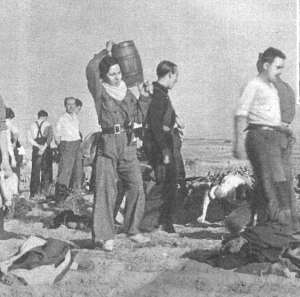
In the southern sector, believing the Nationalist assault on the western edge of Madrid had temporarily stalled, General Miaja and Vicente Rojo issued orders on 12 November for a bold flanking counteroffensive roughly 10 kilometres south of the capital. The target was Cerro de los Ángeles, a steep isolated hill overlooking the Madrid–Andalucía/Toledo highway corridor that Nationalist forces under Varela had captured on 6 November. Seizing the hill would sever the Nationalists’ southern supply line and relieve pressure on Madrid’s western riverfront.
The strike force was spearheaded by the newly formed XII International Brigade, commanded by Hungarian writer and veteran Máté Zalkaand composed of the German Thälmann, Franco-Belgian André Marty, and Italian Garibaldi battalions (~1,550–1,900 men), operating alongside the Spanish 2nd and 5th Mixed Brigades (plus support elements tied to Enrique Líster’s sector) and Soviet T-26 tanks. They faced an entrenched Nationalist garrison of several hundred Legionnaires and Regulares.
On 12 November, Republican units received mobilisation orders and began moving toward staging areas south of Madrid. The XII International Brigade, hastily assembled in Albacete with mixed weaponry, mismatched uniforms, and no shared language across its three battalions, was rushed directly into the sector with almost no prior tactical training. The following day, the plan called for a surprise pre-dawn approach by truck from Chinchón followed by a coordinated dawn attack. Instead, several transport trucks got lost in the dark on unfamiliar rural roads, delaying the deployment until broad daylight and completely forfeiting the element of surprise.
Launching their assault up the exposed slopes in daylight amidst rain and mud, the infantry suffered severe breakdowns in communication. Supporting Soviet T-26 tanks became bogged down in the mud, while Spanish mixed brigades and the international battalions failed to coordinate their advances. Entrenched Nationalist machine-gunners on the summit fired down onto the exposed attackers throughout the day until Republican commanders called off the assault at nightfall. It was complete tactical failure for the Republic. The Nationalist held Cerro de los Ángeles, and Republican forces withdrew on 14 November without altering the strategic balance around Madrid. The attack proved a costly baptism of fire for the XII International Brigade and accompanying Spanish units, resulting in over 270 Republican dead (and hundreds more wounded) in a single day, compared to light defensive losses among the entrenched Nationalist garrison.
During 12 and 13 November 1936, the civilian population of Madrid experienced a temporary lull in aerial bombardments due to severe autumn weather, even as artillery shelling, food rationing, mass evacuations, and mobilisation efforts reshaped daily life inside the besieged capital. As skies partially cleared on 13 November, Nationalist artillery stepped up shelling against western and central neighbourhoods, particularly Argüelles, Moncloa, and Rosales, following the capture of Cerro Garabitas, which gave Nationalist gunners a direct line of sight over the city. That afternoon, Soviet-supplied Republican Chato fighters intercepted a formation of Nationalist bombers and Fiat CR.32 escorts over the Paseo de Rosales, preventing a major raid on the city centre. But the people of Madrid were experiencing a ra re quiet moment before all hell broke loose days later. Municipal hospitals and makeshift first-aid clinics across central Madrid were already overwhelmed, treating thousands of wounded civilians and militiamen from the preceding week’s raids while coping with acute shortages of surgical supplies and anaesthetics.
On Thursday, 12 November, the Madrid City Council officially instituted mandatory food ration cards. With Nationalist forces cutting off the western and southern agricultural highways, basic staples, bread, olive oil, sugar, lentils, and coal for winter heating, became strictly rationed, leading to long, tense queues outside bakeries and supply depots at dawn. Thousands of Madrid civilians, organised by trade unions (UGT and CNT), neighbourhood committees, and women’s organisations like the Mujeres Antifascistas, worked in shifts right behind the front lines. Men, women, and teenagers dug anti-tank trenches, filled sandbags, and tore up cobblestone streets to build barricades along the roads leading up from the Manzanares River into Argüelles, Rosales, and University City.
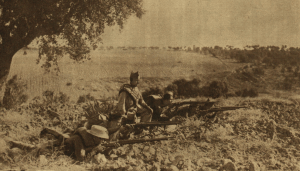
Fear of night air raids drove tens of thousands of residents to abandon top-floor apartments and sleep in the Madrid Metro stations (such as Sol, Opera, and Goya) or reinforced cellars. At the same time, the Madrid Defence Junta aggressively urged non-combatants, especially women, children, and the elderly, to evacuate eastward toward Valencia and Alicante along the sole remaining open highway. Between 3 and 10 November, as Nationalist columns reached the western suburbs and the Republican government relocated to Valencia, the exodus had accelerated to an average of 6,000 people per day, mostly women, children, and the elderly. Thousands crowded onto the eastern highway toward Valencia and Catalonia. This outbound flight was complicated by the fact that Madrid was already severely overcrowded. Between July and October 1936, up to 500,000 rural refugees from Andalucía, Extremadura, and Toledo had fled into the capital ahead of the advancing Nationalist army, pushing Madrid’s population from roughly 1 million to nearly 1.5 million before the siege began.
But despite the siege, theatres, cinemas, and radio stations remained active to maintain morale. Loudspeakers on street corners broadcast updates from the front, anti-fascist songs, and urgent calls for blood donations and winter clothing for the militiamen freezing in the wet trenches along the Manzanares.
On 9 November, the CNT national committee and the Republican government dispatched anarchist minister Federica Montseny and CNT envoy David Antona to Aragon to convince a reluctant Buenaventura Durruti to leave the Aragon front. A formal meeting of Aragon militia leaders on 11 November finalised the transfer of roughly 1,400–2,000 of Durruti’s best fighters to Madrid. Then Federica Montseny addressed the besieged population of Madrid over Unión Radio on 10 November to bolster morale, she spoke broadly about unifying the militias under a new Supreme War Council, deliberately omitting any mention of Durruti or his column.
According to anarchist minister Juan García Oliver, Prime Minister Francisco Largo Caballero had tentatively agreed to let Durruti replace General José Miaja as head of the Madrid Defence Junta once he arrived, a plan Largo Caballero insisted be kept completely secret until Durruti established himself in the capital (and which was ultimately dropped). Keeping troop movements off the airwaves and out of the Madrid press prevented Nationalist intelligence from anticipating fresh reinforcements on the northern Manzanares sector. At the same time, it created a massive psychological boost when the column marched through Madrid’s streets on 15 November, surprising both the exhausted defenders and local anarchist leaders like Cipriano Mera.
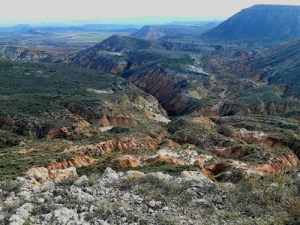
- Balsaforada (Tudela) and Los Llanos (Fontellas), Navarra
Balsaforada is a rural area near Ribaforada and Tudela in southern Navarre. Like other isolated ravines and fields in the region, it was used as a clandestine execution and burial site for prisoners taken from nearby jails. The executions between November 12 and 14, 1936, were sacas from the regional prison in Tudela and several locals transferred from Fort of San Cristóbal under the pretense of release or transfer, only to shoot them. According to local historical reconstructions published in outlets like Noticias de Navarra, these specific killings were carried out by Falangist squads, including figures such as Joaquín Corral and Eugenio Zalduendo, as direct retaliation for the death of a requeté fighting on the Sigüenza front.
These victims were residents of Tudela (some originally born in nearby towns in Navarra, Aragón, or La Rioja) and were executed across three consecutive nights.
On 12 November 1936 –
- Francisco Amigot Ciria, 62, day labourer, of Tudela
- Leoncio Castillejo Barea, 42, reportedly shouted ‘Man dies, but the idea lives, comrades’ before being shot, of Tudela
- Leoncio Resines Expósito, 42, railway worker with the PCE and CNT, of Pamplona
- Joaquín Meler Mur, 36, chauffeur and PSOE city councillor in Tudela, of Estadilla
- Manuel Castellano Rus, 30, electrician and PSOE member, of Tudela
- Julián Morales Ruiz , 30, day labourer, of Tudela
- Josefa Bueno Azcárate, 29, resident of Tudela (of Morata de Jiloca); widow of previously executed Republican Juan Fidao López
- Jesusa Olloqui, communist activist, of Tudela
Executed on November 13, 1936
- Aquilino Ochoa Pascual, 50), commercial agent, UGT member, president of the Tudela socialist group, and PSOE councillor (of Cervera del Río Alhama); taken from Fort San Cristóbal.
- Gregorio Albero Jiménez, 46, electrician and PSOE member in Tudelo (of Cintruénigo).
- Luis Pérez Pérez, 40, municipal veterinary inspector and socialist member; taken from Fort San Cristóbal (of Tudela)
- Teodoro Villanueva Baigorri, 34, bricklayer, of Tudela
- Manuel Espadas Moneo, 28, lLawyer and secretary of the Tudela socialist group; taken from Fort San Cristóbal (of Tudela)
Executed on November 14, 1936
- Serafín Carrascón Aguado, 69, businessman; executed alongside his son Luis Carrascón Jiménez, 43, businessman
- Juana Charela Vidas, 54, resident of Tudela
- Felipa Ramírez Vicente, 50, resident of Tudela
- Eugenio Tutor Lozano, 40, railway worker and PSOE city councillor (of Tarazona)
All ten Cadreita victims were taken from the Tudela regional prison on the night of November 12, 1936. Several were born in neighbouring towns before settling in Cadreita.
- Benito Burgaleta Pérez, 51, merchant and former mayor of Cadreita
- Ángel Prat Pérez 42 farm labourer; officially recorded as dying due to ‘social violence’
- Mauro Allo Les, 40, farmer
- Ciriaco Pegenaute León, 34, farmer
Jesús Antonio Sánchez Jiménez, 30, farmer and UGT member; executed alongside his brother, Ángel Daniel Sánchez Jiménez, 28, day labourer and UGT member - Modesto Esparza Munárriz, 25, labourer
- Eusebio Jiménez Anso, 53, farmer
- Galo Ozcoz Aranaz, 53, farmer.
- Tomás Pérez Ozcoz, 36, farmer/day labourer
Beginning in the late 1970s after the death of Franco, and expanding significantly after the 2003 Navarrese parliamentary recognition of the victims and Spain’s Historical Memory laws, associations of relatives and forensic teams (such as the Aranzadi Science Society) excavated numerous mass graves in the Ebro valley, including sites around Tudela, Ribaforada, and Fontellas, to recover remains and restore the victims’ names. None of these victims have been recovered.
While Balsaforada and Los Llanos (Fontellas) are distinct execution and burial sites located a few kilometres apart along the same stretch of highway south of Tudela, both were part of the same three-day reprisal triggered by the funeral of a local Carlist requeté, who had been killed on the Sigüenza front. All victims were from Tudela (unless stated seperately) –
- Manuel Úcar Ramírez, 60–71, farmer and neighbourhood mayor, xecuted alongside his son Francisco Úcar Liñán, SOE city councillor in Tudela. The pair helped Tudela’s Republican ex-mayor Aquiles Cuadra escape.
- Juan Navarro Anguiano, 55, bricklayer, works inspector, and PSOE city councillor
- Francisco Añino García, 55, cashier at the Tudela sugar factory, of A Coruña
- Pablo Bermejo Díez, 27, day labourer and communist activist
- José Huguet Imaz, member of the local PSOE committee
- Lucas Gallego, member of Izquierda Republicana and local businessman
- Rodrigo Sáinz Lashera, municipal employee of the Tudela City Council
- Nicolás Jalle Marzal, local merchant
- Francisco Jacoste Vallés, tilemaker / mosaicist
- Julio Bardavío Rada, mechanic.
- Luis Recasens López, resident of Tudela
- José Sesma Bueno, resident of Tudela.
All had been held in Tudela local jail. According to historical investigations documented by Noticias de Navarra, more than 640 people passed through the Tudela jail in 1936 alone, and roughly 40% of them were executed. Many of the November 12–14 victims had been arrested in July, temporarily released, and then re-arrested in a sweep in October they were already behind bars when the November reprisals began. None have been recovered.
Another nearby mass grave in Tudela on the road from Alfaro to Tudela, at kilometre 5 took place along the left-hand roadside ditch. The site has undergone significant changes and now might be might be in the Canraso industrial estate in Tudela. Most of those murdered were from Cuesta de las Avellanas and died on various dates and were dumped together. The original road no longer exists, meaning the location can only be estimated and all 19 victims cannot be found. Alost none of the approximately 300 people killed and dumped in the Tudela area, though an unknown number were stolen and shipped to Valle de los Caídos.
The nearby town of Alfaro had its own residents dug up their relatives in 1980, and a memorial was built over 19 victims held in eight coffins. In an area of only around 20km, nearly two dozen mass grave sites exist, most filled over the months of latter 1936.
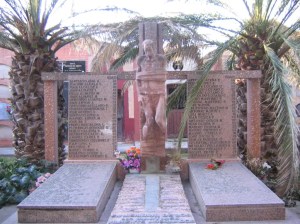
- Castroverde de Campos, Zamora, Old Castile (Castilla y León)
Castroverde de Campos is a rural municipality in northeastern Zamora province (Tierra de Campos) that had a strong agricultural workers’ union and a Popular Front local government. According to historical memory reconstructions documented by Documentalismo Memorialista y Republicano, residents were detained in the provincial prison in Zamora and taken out in successive groups across November 1936.
Executed on November 12, 1936 was Pascual Huerta Morejón, 38, day labourer, Manuel Martín García, 17, day labourer, Alejandro Morejón Aldonz, 63, day labourer, Pablo Villar Martínez, 20, tailor, the son of Pablo Villar Morejón, the town’s Popular Front mayor.
Executed on November 14, 1936 was Germán Baza Mellado, 46, day labourer and auditor for the local workers’ society, Faustino Fernández Morejón, 27, day labourer, Aurelio Morejón García, 29, bricklayer, Julián Vázquez Espinaco, 39, day labourer. A ninth resident from this group, bricklayer Félix Morejón Vidal, 36, was executed a few days later on 20 November.
On 13 November 1936, Adolfo García Rueda, 22, was a newly qualified primary school teacher and student at the Escuela Normal in Zamora. According to biographical archives from Botones de Nácar, he was active in the Zamora Professional Students’ Association and helped organize the socialist teachers’ union (FETE-UGT) in February 1936. Teachers were heavily targeted across Zamora during the 1936 purge. Adolfo was arrested alongside his older brother Carmelo García Rueda, 24, who was also a socialist teacher. Carmelo was taken from the Zamora prison and executed on 11 November, and Adolfo was killed in a saca two days later on November 13, 1936.
On 17 November 1936, two victims from Morales de Toro, Filemón Alonso Domínguez and Marciano Gutiérrez Motrel, were shot at the San Atilano Cemetery in Zamora city and buried in its common graves. Over 800 prisoners taken from the Zamora jail were executed and buried in the rear sections of San Atilano between 1936 and 1940, where many remains were covered in quicklime or later disturbed by cemetery expansions.
Since 2019, local historical memory groups, including the Foro por la Memoria and the Círculo Republicano Zamorano, hold annual tributes at the San Atilano ossuary to honor Adolfo García Rueda, the men from Castroverde de Campos, and the victims from Morales de Toro. None have ever been found.
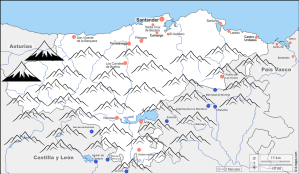
- Santander (Cantabria) / Burgos-Palencia Old Castile (Castilla y León)
While the eyes of the world were fixed on the desperate street fighting in Madrid during mid-November 1936, the Republican Army of the North was quietly preparing a major counter-offensive hundreds of kilometres away. Isolated along Spain’s northern coast and cut off from the rest of the Republic, northern commanders wanted to launch a surprise attack south into Nationalist-held territory. Their goal was twofold:, to relieve the immense pressure on Madrid by forcing Nationalist troops to rush north, and capture Miranda de Ebro, a vital railway hub that connected the Nationalist heartland. On 12 and 13 November, this build-up took shape through a mix of small-scale frontline attacks and detailed staff planning in Santander.
Before launching a full-scale invasion, Republican commanders needed to test Nationalist defences, disrupt supply lines, and prevent enemy reinforcements from moving freely. On 12 November, Republican militia battalions launched a series of coordinated local attacks across the southern mountain perimeter of the Santander front.
In the Villarcayo Sector (northern Burgos), Republican units holding the high Cantabrian mountain passes pushed forward to attack Nationalist outposts guarding the Villarcayo basin. These probes were meant to feel out weak spots along the exact roads the main army planned to use later that month.
Further west, Republican troops attacked Nationalist positions around the coal-mining town of de Santullán (northern Palencia). Because Nationalist trains relied heavily on Barruelo’s coal to move troops and weapons across Spain, even small Republican attacks here threatened the enemy’s logistics and pinned down local garrisons. Just south of Barruelo, Republican forces also struck at Nationalist defences covering the strategic town of Aguilar de Campoo, keeping defenders on edge along the main highway leading south toward Palencia.
At the same time troops were skirmishing in the mountains, the headquarters of the Santander Army (led by Lieutenant Colonel José García Vayas alongside Northern Army Chief of Staff Francisco Ciutat) finalised the blueprint for the main offensive. On 12 November, headquarters issued an operational order mapping out a major southward advance along the Villarcayo–Trespaderne–Miranda de Ebro corridor. To break out of the Cantabrian mountains into the open plains of northern Burgos, the plan called for two separate attacking columns to descend from two major mountain passes – Los Tornos in the east and Puerto del Escudo further west. The following day, a second, more detailed operational order assigned specific commanders and step-by-step road routes to ensure the two columns would converge smoothly on their targets. First, the Eastern Column, led by Major José Gállego Aragüés, would advance south from the Puerto de Los Tornos pass, capturing Villasante, Medina de Pomar, and Trespaderne on a direct path toward Miranda de Ebro. The Western Column, led Major César Puig García would descend from the Puerto del Escudo pass through Soncillo, capture Villarcayo, link up near Medina de Pomar, and push east toward Puentelarrá and Miranda de Ebro to secure a crossing over the Ebro River.
Though the orders were written on 12 and 13 November, harsh early winter snowstorms in the mountains, supply shortages, and delays in coordinating with the neighbouring Basque Army forced commanders to postpone the main attack until the end of the month.
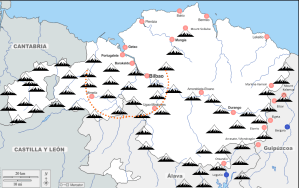
- Bizkaia, Basque Country
Inside Bilbao, the headquarters of the Army of the North, under General Francisco Llano de la Encomienda and Chief of Staff Francisco Ciutat, worked alongside the Basque Defence Department to finalise the operational orders for a major offensive toward Vitoria and Miranda de Ebro. By ordering the Eusko Gudarostea to push south through Villarreal (Legutio), with flanking drives toward Murguía and the Arlabán pass, Bilbao hoped to relieve besieged Madrid and link up with the Santander Army columns descending from the Cantabrian passes.
At the same time, around the hills encircling Bilbao, thousands of labourers and engineers were working day and night to construct a massive ring of concrete bunkers, trenches, and barbed wire designed to protect the city and its vital steelworks and shipyards from a future Nationalist advance. Bilbao’s population was swollen with tens of thousands of refugees who had fled the fall of Gipuzkoa (San Sebastián and Irún) in September. With Nationalist warships patrolling the Bay of Biscay, the city relied on British merchant blockade-runners and Basque armed trawlers to bring in food, coal, and Soviet weaponry.
Located in a narrow valley on the Gipuzkoa–Bizkaia border, Eibar was the heart of Spain’s small-arms and munitions industry. After the front stabilised along the nearby Intxorta and Karakate mountains in late September 1936, Eibar was within range of Nationalist artillery and minutes away from enemy airfields in Vitoria. Eibar’s workshops, such as Star, Orbea, and Alfa, had been converted to repair rifles, produce ammunition, and manufacture armoured trucks for the Basque militia. Because of this, the town endured near-daily artillery shelling from Nationalist batteries positioned on the surrounding heights, forcing civilians to live around air-raid sirens and improvised shelters.
Around midday on 12 November 1936, a single Nationalist biplane flew over Eibar and dropped small bombs on the town centre. One bomb pierced the roof and upper floors of the Aberri-Etxea (the local Basque nationalist headquarters), smashing through its library wall and plunging into the basement of the Bide-Onera cooperative below. Although the strike destroyed books and goods, no residents were killed, a stroke of luck in a town that would later be heavily flattened by Condor Legion bombings in April 1937.
Sitting just across the Bizkaia border a few kilometres west of Eibar and the Intxorta front, Elorrio served as a crucial staging, supply, and medical rearguard hub for the Basque battalions holding the mountain trenches. Because Elorrio sat at the foot of the Kanpazar and Elgeta mountain passes leading directly to the frontline, Basque gudaris rotated through the town for rest, ammunition resupply, and medical care. Its large manor houses and convents were requisitioned as field hospitals, barracks, and command posts for the eastern Bizkaia sector.
Because of its role as a military staging area right behind the front, Elorrio was a frequent target for Nationalist reconnaissance and light bombing planes flying out of Vitoria. On 11 November (reported in Bilbao’s press on 12 November), a lone Nationalist aircraft bombed Elorrio’s urban centre, killing two to three civilians and wounding two others. Unlike the massive carpet-bombings of 1937, these November 1936 raids were small-scale harassment strikes aimed at disrupting road traffic and demoralising civilians in the immediate rear of the Intxorta front, and it was working, as both these areas were bombed almost daily.
- Seville, Andalucía
On 12 November 1936, a major prison saca took place at the Seville Provincial Prison (La Ranilla), resulting in the execution of at least 27 detainees. This mass killing occurred on the sameday that Nationalist authorities abruptly replaced Seville’s chief enforcer of the terror, marking a transition in how the repression was administered while the bloodshed itself continued unabated.
Built in 1933 in Seville’s Nervión district, the Prisión Provincial de Sevilla (La Ranilla) had become severely overcrowded following the July 1936 military coup led by General Gonzalo Queipo de Llano. Thousands of trade unionists, Republican officials, and suspected leftists from across the province were packed into cells designed for a fraction of that number. According to surviving prison exit logs documented by historian José María García Márquez in La UGT de Sevilla, 34 prisoners were removed from La Ranilla on 12 November 1936 under the standard euphemism of a release. Archival reconstructions confirm that 27 of those 34 detainees were then executed by firing squad.
Following the standard procedure established in Seville during the autumn of 1936, armed Falangist squads and Guardia Civil arrived at the prison before dawn with lists authorised by military intelligence. Prisoners were loaded onto trucks and driven to the outer walls of the San Fernando Cemetery, or to isolated roadsides such as the Carmona highway and La Pañoleta, where they were shot around 5:30am and buried in unmarked mass graves, most notably the massive Pico Reja trench (where only 1,786 victims of violent deaths are identified among the 5,000 bodies in the space).
Because Nationalist authorities strictly forbade recording extrajudicial executions in Seville’s Civil Registry, and intentionally left saca exit logs incomplete, no full roster of all 27 executed prisoners has survived. However, provincial memory archives on En Recuerdo De identify specific Seville residents killed on 12 November 1936, including Josefa Pelayo Victoria, 40, a housewife originally from Santa Olalla del Cala, Huelva, and José Vela Cala, 45, a local businessman originally from Las Cabezas de San Juan.
The 12 November executions coincided with a major shake-up at the top of Seville’s repressive apparatus. General Franco abruptly removed Captain Manuel Díaz Criado from his post as Seville’s Delegate of Public Order, replacing him with Guardia Civil commander Santiago Garrigós. Since late July, Díaz Criado had presided over the bloodiest phase of the terror in western Andalucia, routinely signing off on roughly 60 execution orders per day with his notorious X-2 code, so many that the first enormous burial trench at the San Fernando Cemetery reached capacity around this time.
Though Díaz Criado was dismissed following a diplomatic and smuggling scandal involving the Portuguese consulate rather than out of humanitarian concern, his removal did not halt the killings. Under Garrigós, summary executions and prison sacas from La Ranilla continued throughout November and December 1936, merely shifting toward a slightly more bureaucratic veneer of rapid military tribunals alongside ongoing clandestine shootings.
- Alcudia de Carlet (L’Alcúdia), Valencia
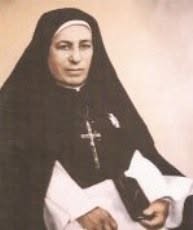
On 12 November 1936, four siblings from the town of Algemesí – Úrsula, José, Vicente, and Ernesto Medes Ferrís – were executed together by Popular Front militiamen in the neighbouring municipality of Alcudia de Carlet (L’Alcúdia), Valencia. Their deaths were the culmination of a targeted arrest triggered by the siblings’ deep ties to the Catholic Church and their decision to shelter fugitive clergy during the early months of the Spanish Civil War.
When the conflict broke out in July 1936, revolutionary committees across the Valencian countryside seized church properties and dissolved religious communities. Three of the Medes Ferrís siblings were members of suppressed orders: Úrsula (known as Mother María Natividad) was a Cistercian nun and co-founder of Algemesí’s Monastery of Fons Salutis, while her brothers Ernesto and Vicente were Discalced Carmelite friars from the Convent of the Desierto de las Palmas. With their convents closed, all three took refuge in the Algemesí home of their eldest brother, José. A married farmer with no children, José was a prominent layman active in Acción Católica, the Catholic Agricultural Syndicate, and the Third Order of Carmel.
Sheltering expelled religious personnel carried severe risks in the Republican rearguard. On 7 November 1936, local Popular Front militiamen raided José’s home and arrested Úrsula, Ernesto, and Vicente. They returned the following day to arrest José himself. The siblings were imprisoned in Algemesí inside the confiscated Monastery of Fons Salutis, the convent Úrsula had helped establish, now operating as a militia jail. Following a tribunal by local revolutionary authorities, all four were selected for execution during a wider wave of November prison clearances across the Ribera Alta comarca.
On 12 November 1936, militiamen transported the four siblings from Algemesí to the road near Alcudia de Carlet, where they were executed together by firing squad. José was later beatified by Pope John Paul II in 2001, and Úrsula was beatified by Pope Francis in 2015, while the beatification cause for their brothers Ernesto and Vicente was opened alongside other Discalced Carmelite martyrs of the province.
Three other residents of Carlet were killed in Alcudia de Carlet on 12 November 1936 alongside the Medes Ferrís siblings – José Casanovas Arlandis, a local farmer, Salvador Vercher Alcover, a notary clerk, and Alejo Carbonell Alcover, a resident member of Acción Católica. In the Ribera Alta region during autumn 1936, individuals targeted by local revolutionary committees were typically arrested at their homes and held briefly in municipal jails, only a few days at most, before being executed.

