For the March on Madrid, see here
For the Battle of Sigüenza, see here
For the Siege of Oviedo, see here
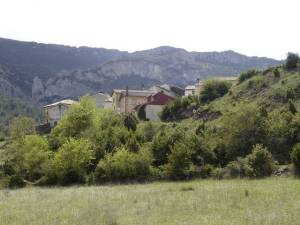
- La Peña, Huesca, Aragon
By morning, the Requetés were getting annoyed that they could not find the men they searched for, and instead seized six old men, claiming they were Marxists and shot them against the cemetery wall. The eleven women who had been shaved endured seven days of torture, pulled from their homes each day and paraded undressed and filled with castor oil in front of local right-wing villagers. On day eight of their torture, Pilar, Lucía and Matilde were violently removed from their homes, and the Requetés set fire to the buildings. Their children escaped, and together the women moved their families into a cattle shed, but the daily collection and degradation through town continued another seven days.
After 15 days of torture, a stranger arrived at the cattle shed, and guided the families away from the village into the mountains, the start of a 50-hour walk without stopping, covering 55km to Apiés, arriving on 7 October 1936. Once the Requetés learned of Pilar, Lucía and Matilde and their children’s escape, they changed tactics and began killing others in the village. None of the victims of La Peña (also known as La Peña Estacion) have been found, though there are several mass gravesites at nearby Las Peñas de Riglos, one of which is identified, another covered by a gas station and removed to another town, and a cemetery remains at Santa Maria La Peña, which may have been the eventual fate of those in La Peña, whose population has dwindled to only around 50 people.
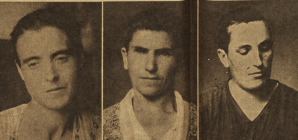
Quílez reported: ‘I have seen them with my own eyes. I have watched them with vacant expressions, as though wishing to forget the suffering to which they were subjected by men without conscience or humanity. Their gaunt, pallid faces told us of long journeys through mountains and ravines, keeping watch and fleeing from the torment of so much degradation. Their poor, emaciated, trembling children, with frightened eyes, cling to their mothers’ torn clothing as though anticipating new torments for their young hearts. They are three poor women whose homes were destroyed by armed groups of Requetés infesting the Alto Aragonese Pyrenees, who beat their children and finally shaved their hair, marking them with the tragic sign that meant they were destined, at a fixed time, to become victims of execution. They managed to escape when only a few hours remained before they would have been made to stand in the painful line beside the cemetery wall of their village. They can barely recount all their anguish and suffering.’
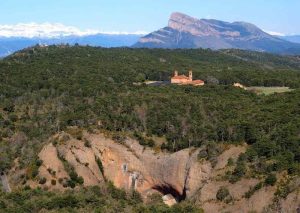
Just 10km southwest of La Peña is Murillo de Gállego. Their own attack came at 1am. Requetés identified the household of a man nicknamed el Soriano and demanded entrance. The man’s wife answered the door in defiance, and refused their entrance or to bring them her husband. The men dragged her outside, beat her with their rifle butts and shot her on the street. Her husband received the same treatment moments later and the pair were left in place. The following morning, the Requetés threatened the rest of the town that those who had fled needed to return, and there would be amnesty for those who gave themselves up, and those who told the forces of hiding locations. The threats worked, as they did in many places, and 25 men returned to town, and they were taken in the town square and killed by machine guns over the local water fountain, left for five days to warn the rest of the population. Murillo de Gállego has four mass grave sites, one being for militia in the area, and while two others containing 16 identified people, the final one is a ravine which has been damaged by mining and those tossed in cannot be recovered. The town has suffered a purge in late September and then another on 24 October, out of a population of only approximately 750 people.
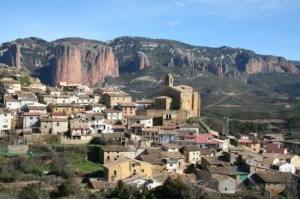
The women of the area had been suffering for months. The village of Villalangua, population 120 at the time, sits 20km of hard mountain hiking northwest of La Peña. The Requetés killed 11 locals residents and arrested the schoolteacher Cecilia Álvarez Calvo, who was also the mayor, alongside with one of her sisters, Purificación Álvarez Calvo, local seamstress and councillor, on 12 September 1936. The sisters were unmarried and occupied positions of power women, no longer allowed after the coup. They were shaved and degraded through the streets. But the pair were then sent home, and told they could survive if they paid a fine of 2,000 pesetas (approximately €3,500 today), payable within a day. With no way to pay such a sum, the sisters lit a brazier inside and blocked all oxygen into the room. Their executioners found them well-dressed and suffocated the following day, along with the letter identifying the man responsible for their deaths. They were thrown in the town’s mass grave pit named Solano de Cayo, along with seven others, but were moved to a proper burial location at an unknown date.
Quílez reported: ‘The entire village still feels the weight of that brutal tragedy. Even the very wolves who had caused it apparently felt, for a moment, shame at their own ferocity and left the village at dawn, when nobody could see them.’
- Zaragoza, Aragon
In reality, those to be enlisted were not volunteering. Locations were meticulously chosen from towns in Navarra, Logroño (Le Rioja), Zaragoza province in Aragon, and parts of Soria province. The locations were all already ‘pacified’ towns, areas where the Nationalist military coup had already completely succeeded, and where local fascists and Carlist Requetés had already spent July and August rounding up, jailing, and making lists of everyone associated with left-wing political parties, the Republican government, or trade unions (like the UGT and CNT). Local mayors and Guardia Civil officers used their existing registries of left-wing sympathisers who had not been killed yet. They explicitly offered enlistment to these targeted individuals as a last chance to prove their loyalty to the new regime. Other who were already in prison awaiting execution, had no choice but to be signed up as fascist soldiers.
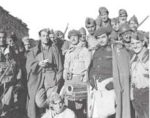
On 29-30 September, the unit was deployed 55km north to the volatile Almudévar front line 20km south of Huesca, intended to reinforce the Nationalist positions. The moment the men reached the trenches, the illusion shattered on 1 October when the Nationalist military command panicked. They heard rumours that the leftist soldiers were planning a mass desertion to run across no-man’s-land and join the Republican forces. Before they could fire a single shot , the entire unit was ordered onto trucks and trains and sent back to Zaragoza under heavy armed escort by the Falange Mobile Band. By the following day back at the San Gregorio camp, the soldiers were completely stripped of their weapons and locked into various military barracks.
Between 2 – 9 October, a systematic slaughter took place. The men were kept in the dark, pulled out of the barracks in successive small groups of roughly 20 individuals at a time, and taken to the fields 500 meters behind the Military Academy and executed by firing squad. As the men were being initially recalled back to barracks, a Navarrese man named Felipe Marín thought it suspicious they were being taken away without their weapons, and became the only man to survive the planned executions. Marín survived the rest of the war in hiding and lived long enough into Spain’s transition to democracy to tell his story. In the late 1970s, he gave a ground-breaking, harrowing interview, explaining how so many men had been sent to die. Marín said: ‘I was on the first day, in the second group. On the first day, in the first group, they killed one of my brothers. When they were about to execute us, in the same group they took out a friend of mine, Eustaquio García, who will be on the list. We were all conscripts. We arrived at the site and they lined us up. A man shorter than me, with a submachine gun, was in charge of the firing squad of Falangists, who were also volunteers. Then, with their rifles pointed, about 15 paces away from us, he goes and says, “Come on, get in line!” rudely. And he tried to line us up. This García guy was going to move a little further away than me, and I said to him, “Come here, we’ll die together!” And we stayed close together. I grabbed his arm and we stayed close together. When the bullets were about to come, and I can say this for sure, and nobody can change that, when that guy in charge of the firing squad was lowering his pistol, that’s when I had this sudden impulse and said, “These people aren’t going to kill me here.” And I started running. It took a second or a second and a half for those who were left there to die. Then everyone started shooting at me. It was flat terrain, a little downhill, but flatter than this table. More than 2 kilometres without any cover. The bullets were coming at me as if I’d walked into a hornet’s nest and no bee wanted to sting me. They were whistling this way, whistling that way, from all sides. And not one hit me.’
Between 300-400 soldiers were murdered during this week. Anyone who had held an official title like a local town councillor, a spokesperson for the UGT or CNT, or an organiser for a peasant land-reform collective was marked for execution. To the Nationalists, these men were the ideological masterminds who had undoubtedly organised the intercepted desertion plot and marked as irredeemable. Marín recalled seeing the bodies being taken away: ‘I know exactly how it happened because the trucks drove through Zaragoza, leaving a trail of blood in every street, and there was a terrible uproar in the city. They brought them in dump trucks, pulled up to the ditch, dumped them out, and then came back for another group. From the Academy to Torrero, where they buried them, it’s eight kilometres, and they had to cross the entire city. It was a scandal. They had killed many by the time they stopped the executions. That’s why they stopped.’
Men from Navarra (like Sartaguda or Lodosa) and specific agricultural pockets of La Rioja (like Pradejón) were executed at a staggeringly disproportionate rate because those specific agrarian communities had been the epicentre of highly militant land-reform strikes during the Second Spanish Republic. Coming from Sartaguda automatically made a soldier a prime suspect in the eyes of the firing squads.
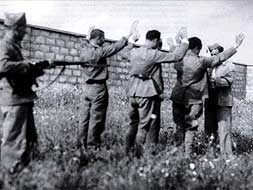
On 19 October, the Tercio de Sanjurjo was officially dissolved and the minority of the unit who survived, those deemed members of unions but had no leadership roles, or those who had signed up out of panic and no pre-war political paper trail, stood a chance of survival. They were viewed as gullible masses who could still be coerced into compliance. Several soldiers survived because they had fallen ill or been injured during training in September were being treated in the Zaragoza Military Hospital when the unit was abruptly recalled from the Almudévar front. These men were split up, stripped of their identity, and scattered into the 51st Division to serve under intense Carlist surveillance for the remainder of the war. For the rest of the war, they were used as high-risk frontline troops, forced to fight for the very regime that had just systematically executed their brothers, neighbours, and friends.
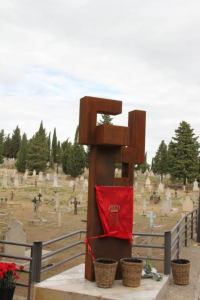
Nationalist forces in Zaragoza loaded the bodies of the killed onto dump-trucks and transported them to the back walls of the Torrero Cemetery, where they were thrown into a massive, unmarked common fosa, one of many being quickly filled at the site as people from all over area were being used to fill the pits. They filled two large 250-metre trenches alone. o completely cover up the internal purge, the military command ensured that the names of the executed Tercio de Sanjurjo soldiers were strictly omitted from the cemetery’s daily logbooks. Officially, in the regime’s military records, the unit consisted almost entirely of loyal Aragonese, hiding the mass execution of Navarrese and Riojan men. Over the decades of Franco’s dictatorship, the common graves were hidden and the cemetery expansion built over the trenches, covering them with stone slabs to form a permanent pedestrian walkway known as Andador de la Manzana 4. Families who suspected where their loved ones lay could only look at a blank walkway.
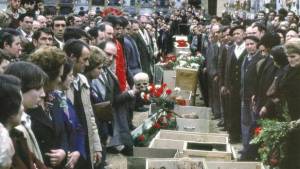
When the Tercio de Sanjurjo soldiers were massacred in the first week of October, they were not a lone anomaly breaking a peaceful city silence. They were a massive wave fed into a slaughterhouse that was already running at peak capacity, killing local Zaragoza citizens every single night. In the immediate weeks following the coup, the criteria for being collected and murdered was strictly defined. The death squads targeted the visible pillars of the Spanish Republic, like elected officials, mayors, city councillors, and civil governors, and union leadership, high-ranking organisers of the socialist UGT and anarchist CNT unions. Also, intellectuals, journalists, schoolteachers, and freemasons who openly supported secular, progressive ideas. Once the prominent figures were dead or had fled, the executioners needed to keep the momentum going to justify the ongoing martial law. They began raiding the administrative archives of political parties and syndicates. The criteria shifted from what a person did to what papers they signed, like union members, ordinary factory workers, railway laborers, and farmhands who had merely paid union dues to secure work. Also, anyone who had voted for or signed petitions in support of the left-wing Popular Front coalition in the February 1936 elections. Then, any people who had simply failed to openly cheer for the military uprising or refused to attend right-wing Carlist or Falangist rallies.