- Madrid
Behind the scenes, both at the front lines of the University City and in the smoke-filled offices of the Republican high command, a catastrophic breakdown was occurring.
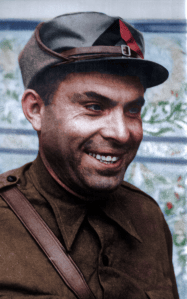
The situation had turned into an absolute emergency for the anarchist column, sparking fierce political manoeuvring behind closed doors. Buenaventura Durruti, who, with his column had only been in Madrid less than a week were at breaking point, far from the frontline of Aragon where they had found success.
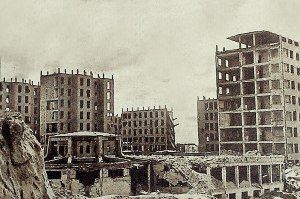
By the morning of 19 November, the situation inside the Hospital Clínico at University City had gone from a tactical crisis to a psychological slaughterhouse. The men of the Durruti Column had been fighting without sleep, proper rations, or relief for nearly four days. They were trapped in the levels of a half-destroyed concrete shell, surrounded by the stench of rotting flesh, cordite, and open latrines. The Nationalist Moroccan Regulares had managed to fortify the lower floors of the building. They were dropping hand grenades down elevator shafts and firing through holes blasted in the floorboards. The anarchists were pinned down in the dark, unable to retreat across the exposed, machine-gun-swept lawns of the campus.
Whole sections of the column had simply ceased to exist. Of the roughly 3,000 anarchists who had arrived from Aragon, hundreds were already dead, wounded, or missing. The survivors were experiencing severe shell shock.
At 4:00am on 19 November, the Durruti Column discovered the Nationalists had abandoned the Hospital Clínico building and they quickly took control of the building. But only hours later, the Nationalists returned, through a tunnel under the building and launched an attack the militia which drove them to the upper floors of the building with no escape, forcing them to retreat to the upper floors. Durruti himself was in another building nearby and sent in reserve militia to help free their comrades while he went in search of aid and relief for his exhausted men.
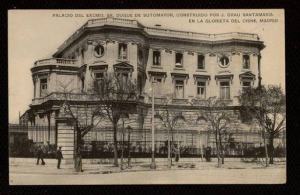
At 12:30pm Durruti arrived at his headquarters, Calle de Miguel Ángel, the old palace of the Duke of Sotomayor which had been requisitioned, and spoke with his commander José Mira back at the frontline, telling them to stay at their posts until replacements arrived to help them. , who was begging for relief. He responded by ordering Mira to remain at his post until replacements arrived later that day.
At 1:00pm, as Durruti worked to ensure replacements, Antonio Bonilla Albadalejo, one of Durruti’s closest men, arrived to let him know things were getting worse at University City so Durruti felt he needed to get back. Durruti gathered with José Manzana, another of his closest advisors left for the front in his car, driven by Julio Graves. Antonio Bonilla went ahead in his own car with Miguel Doga (another Catalan anarchist), and a driver named Lorente. At that point, the story starts to blur.
According to José Manzana, he and Durruti travelled in the Packard, driven by Graves, and three other people were present, Miguel Yoldi Beroiz of the CNT, and two messengers. They drove through Cuatro Caminos and along Avenida de Pablo Iglesias and stopped of small houses east of the Hospital Clínico. Manzana said they saw a man running in their direction, and Durruti, worried about desertion, stopped the car to speak to the man, who explained they were looking for stretchers for the dead and wounded and Durruti let them carry on. As Durruti turned to get back in the car, Manzana said that the Moroccan Regulares inside the nearby Hospital Clínico, started firing at them. At 2:30pm, Durruti was hit in the chest by a bullet and fell back towards Manzana, who pulled him back into the car and Graves quickly turned the Packard in the direction of the hospital that had been set up at the Ritz Hotel 4km away.
According to Antonio Bonilla, Durruti travelled in the Packard with Manzana, and Graves driving, and no one else present. Durruti was armed with only a Colt 45, while Manzana carried a submachine gun. As they returned to the front, Bonilla said they saw a group of militia ‘sunbathing’ behind a wall, and Durruti got out of the car, worried about desertion. He spoke with the men and then was turning back to the car, which had the door still open, and Bonilla who was in his own car and not watching, reported nothing, no sound, no firing, nothing happening until they notice the Packard screaming away at high speed. Bonilla jumped out and spoke to the militia Durruti had just spoken with, and they mentioned someone was wounded, but they did not know who, or what happened. Confused, After Bonilla, Doga and Lorente raced back tot he headquarters, to find only Manzana there, who said Durruti had gone to a CNT meeting. Bonilla knew he was lying, and Manzana left in a hurry, promising to tell him the truth later.
According to Julio Graves, Durruti’s driver, he took only Durruti and Manzana back to the front in the Packard. They went to Cuatro Caminos, then down Avenida de Pablo Iglesias and to the front near the Hospital Clínico. They stopped when they saw a group of militia heading in their direction, and Durruti got out, worried about desertion. He ordered them back to the frontline and the men did not say a word in reply. As Durruti was standing in the open door of the car, he heard shots from the Hospital Clínico building, and Durruti was shot in the chest around 2:30pm, and Manzana pulled Durruti back into the car and they raced from the scene in the direction of the Ritz.
Then came more accounts. According to militiaman named Ramón García López (Ragar), Durruti had travelled to the front in a Buick. He said he travelled with Durruti, alongside Manzana, Bonilla and Graves. Another militiaman, Ricardo Rionda, said Durruti travelled with Manzana, Graves, and a Catalan bodyguard (Doga, in the other car with Bonilla, was Catalan). These men claimed to be the two unnamed militia that travelled that day in Manzana’s account. These accounts were immediately treated as suspicious, as Bonilla did not know these men, and Durruti did not travel with a bodyguard, though discrepancies could easily be a misunderstanding on Rionda’s part.
Ragar claimed, at about 4:00pm they travelled around Paseo del Pintor Rosales to Plaza Moncloa (the direction does not make sense, but the locations are within a block of one another, and Plaza Moncloa is very close to the site discussed by the others). Ragar claimed Graves got out of the car, followed by Durruti, despite there being gunfire in the area. Ragar said that Durruti’s naranjero gun hit the car’s running board and went off as he was getting out of the car, hitting him in the chest. Ragar claimed that Durruti was bleeding profusely as they rushed him to the hospital.
Then came another claim. A Belgian volunteer Mathieu Corman and an anonymous militiaman known as J.M., who claimed he saw Durruti, Manzana, Bonilla, and an unknown other person (likely Graves) in Plaza Moncloa, where a group of fifth columnist started shooting at the car from a house window, smashing a window. One of Durruti’s companions shot at the columnists, killing one while two escaped. (The body was later found in a morgue with a CNT membership card on it, which had been lost or stolen on an earlier date). Corman told the same story, which was covered by Barcelona CNT paper Solidaridad Obrera.
Ricardo Rionda later said they had been at Plaza Moncloa when it happened, which claimed it was Ragar who told him what happened, as he did not see the events, and then later changed his story, claiming Manzana told him what happened. The inconsistencies of the militiamen’s stories have meant they cannot carry the same weight as the others, and yet the wide variation in stories has stuck.
(Later, Durruti secretary, Jesús Arnal, who was not present, recounted the story as told to him, and had the same story as the militiamen, though believed Durruti was killed by his own gun, as the safety was off, and when he put it on the ground, it went off and shot him in the chest. Arnal had long been close to Durruti and believed his friend had accidentally killed himself).
At 3:00pm, Durruti was rushed to the basement of the Ritz, which had become an operation room. He was till conscious, and sat up in the bed and spoke with the doctors and told them his name. They were instantly very nervous to treat such an immense figure. Doctor Martinez Fraíle and Doctor Josep Santamaria Jaume inspected the bullet wound between Durruti’s sixth and seventh ribs and severe pericardium damage (the fluid-filled sac that surrounds and protects the heart). The doctor thought there was no hope and did not want Durruti dying on his operation table, and sent for Doctor Manuel Bastos Ansart, the CNT surgeon at the Palace Hotel.
According to Bastos, militiamen came to him at the Palace Hotel for his help, and said Durruti had been shot by his own men. At the Ritz, Bastos found that Durruti had a 9mm calibre bullet wound which had crossed horizontally between his sixth and seventh ribs, ripping his large intestine, bursting his spleen and stabbing his diaphragm before stopping his lung. There was nothing he could do either.
At 4:00pm, Cipriano Mera Sanz was waiting for Durruti at headquarters for their meeting. Manzana came in Durruti’s place and admitted to Mera that Durruti was shot and could not survive, and recounted his version of events. Both in shock, they agreed not to tell anyone; both were scared the Durruti Column men would assume other Republicans had fired the shot. (This is likely when Manzana lied to Bonilla about Durruti’s whereabouts) militiamen might conclude he had been assassinated by other Republicans.
Mera and Manzana found Eduardo Val Bescós, the head of the Central Defence Committee of the CNT and the three rushed back to the Ritz. Mera went to see Durruti, kissing him on the forehead, and told Manzana that Durruti was going to die. Val ordered Mera to go to Valencia personally to see Mariano R. Vázquez, the general secretary of the CNT, Health Minister Federica Montseny and Justice Minister Joan Garcia Oliver, who needed to hear the news, but phone lines could not be trusted.
According to Ragar, meanwhile, the Ritz lobby began to fill with grieving CNT members though who had shared the story was unclear, and Manzana and Bonilla got the whole Durruti Column withdrawn from the front. the would travel to their barracks at Vallecas 18km from the site of the shooting. Enrique Líster Forján, who was running the Siege of Madrid, agreed the Durruti Column be removed as they were a ‘real danger for the whole of the Madrid Front.’ Because of the fighting, they were not able to escape at Hospital Clínico until the following day.
At 5:00pm, Julio Graves returned to the Durruti Column headquarters, and found Josep Bort-Vela and Eduard Bort-Vela, and shared the news that Durruti had been wounded but asked them not to share the news (Josep Bort-Vela was a Solidaridad Obrera correspondent). The trio visited Durruti’s doctor and the CNT, and decided on what the official story would be while at the Solidaridad Obrera offices. The story was starting to get more twisted.
According to Soviet journalist Roman Karmen, who had been nowhere near the shooting, claimed to have heard that ‘They’ve killed Durruti’ from Hadji-Umar Mamsurov, who claimed to have been a communist advisor travelling with Durruti that day, though no one’s account mentioned Mamsurov at the site, and could not have known of what was happening that afternoon. Carta del Este, a Madrid magazine, later published that Mamsurov was the shooter, despite Mamsurov’s repeatedly denials, claiming that anarchists killed Durruti, not communists. How he came to that conclusion was not offered.
While everyone was gathering and deciding what version of the story they were going to share, Buenaventura Durruti was still alive, filled with large doses of morphine for the intense pain he must have suffered Various versions of his last hours passed with militiaman Ragar claiming Durruti lost consciousness at 2:00am on 20 November. Doctor Bastos claimed Durruti’s last words were, ‘they’re going away now,’ in reference to the quietening of the aerial bombing attacks that had been happening all over the city (though he later told Durruti’s partner that his final words were ‘Mimi’ after her, which she did not believe). According to militiaman Ricardo Rionda, Durruti final words were, ‘too many committees’, talking of how layers of bureaucracy was hampering the defence of Madrid.
Durruti died at 4:00am on 20 November 1936, with Dr Santamaria at his bedside. He soon completed the autopsy, and found the 9mm bullet had gone in through under his left nipple, making it a miracle he survived as long as he did, and whoever aimed to kill him had just slightly misjudged their mark. Gunpowder stains on Durruti’s leather jacket showed Santamaria that the gun was fired at point blank range, no more than 35cm away. He believed maybe the surgery had been possible after all, but the likelihood was survival would have remained unlikely. José Buenaventura Durruti Dumange was dead at age 40, the killer was unknown, and the anarchist revolution would never recover.
Part 2 tomorrow, including the cover story, the conspiracies, those who did not stick to the story, what his partner and daughter believed, the death of Primo de Rivera at the exact same time, and how everyone around Durruti coped with the loss
- Menorca, Balearic Islands
On 12 November, 1936, the Nationalist cruiser Canarias had captured a Republican ship, the steamship Ciudadela, sailing between Menorca and Barcelona. They forced it to dock in Sóller and arrested 41 passengers, including the captain. Then, on 18 November 1936 a short, violent raid was carried out by Benito Mussolini’s fascist Italian Royal Air Force (Regia Aeronautica), who used the neighbouring island of Mallorca as an ‘unsinkable aircraft carrier’ to project air power across the western Mediterranean, and this this occasion, to attack Menorca.
The attack happened at approximately 3:00pm on the afternoon of 18 November 1936. The target was the Mahón Naval Base, a vital choke point for the Spanish Republican Navy in the Mediterranean. The bombers flew in low across the mouth of Mahón’s deep natural harbour, dropping six 100kg bombs over the military installation. The bombs made a direct hit on a crew of local bricklayers and construction workers who were actively building an air-raid shelter inside the naval base, and seven people were killed instantly on the tarmac. They included one young 21-year-old Republican sailor named Marcos Vidal Vidal and six civilian labourers.
In an unusual historical anomaly, at the exact same hour that the Italian aircraft dropped six 100kg bombs on Republican Mahón, the Republican air force launched an identical retaliatory strike on Nationalist Palma de Mallorca 40km away. They dropped the exact same payload, six 100kg bombs, on Mallorca’s capital.
While the actual military damage in Mahón was limited, the psychological impact was devastating. In 1936, aerial bombardment of civilian and military bases was a terrifyingly new concept. The bodies of the six local construction workers and the young sailor were brought into the town, sparking instant panic and immense fury among the local populace, left-wing trade unions, and Republican sailors stationed in the port.
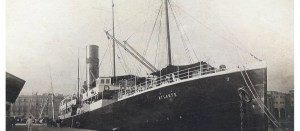
Fuelled by anger, a local Republican newspaper (La Voz de Menorca) condemned the strike, which incited an immediate, spontaneous mob of armed sailors, militiamen, and civilians. Demanding immediate revenge against right-wingers, the armed crowd marched down to the docks to target the prisoners held aboard the Atlante, a civilian Transmediterránea steamship that the Republican authorities had anchored in the harbour to use as a floating prison. Within an hour of the smoke clearing from the naval base, the mob formed on the waterfront, marched down the piers of Cala Figuera, and breached the gangways of the Atlante.
The backbone of the several hundred strong crowd consisted of Republican sailors and naval crewmen stationed at the Mahón naval base, working alongside local militiamen from the town. They were joined by a large group of angry local civilians, workers, and members of various trade unions, all driven by the morning’s fatal Italian airstrike. Leaders within the crowd carried pre-approved prisoner manifest lists compiled from the local Republican war committees. They marched up the gangplanks, and read the names of the 76 targeted conservative civilians, military officers, and priests aloud.
The 167 prisoners had been rounded up at the outbreak of war and transferred to the ship on 12 October, and were attempting to live ordinary lives; allowed to socialise, play chess, and sometimes send letters. Relatives see their loved ones from shore, or could swim or row to the ship to get closer to their loved ones. Those on the list, which had been made up by wartime committees cataloguing inmates, were 37 local parish priests, village chaplains, and rural educators, 26 Spanish army, naval, and quartermaster officers who happened to be stationed at the Mahón naval base or were living on the island in retirement when the war broke out, plus local elites, including prominent merchants, landowners, and conservative town councillors. All had been arrested after being perceived as a threat to safety, or being fifth columnists (which was not without basis, these same demographics were mass killing over on the mainland).
By the time the committees finalised their lists, gathered the armed sailors and began dragging the first groups of prisoners up from the hold, it was late afternoon. their tugboat could only move people in small groups from the ship to the dock where a crowd gathered to watch. First they took the officers to the dock and executed them in plain sight of the crowd and international ships, and then started moving through the priests to be killed. By nightfall, 52 were dead, and the physical demands of this stopped the killing, leaving two dozen men still alive, and left on the ship. The bodies were then taken over to Es Castell municipal cemetery and buried as a group.
As the night progressed, cooler heads among the Republican political leadership on the island grew concerned about the optics of murdering people in broad daylight on a central town dock (albeit far too late). When the remaining 23 prisoners were pulled out the next morning on 19 November, the organizers changed their tactics. Instead of shooting them on the pier, they loaded them into trucks while they were still alive and drove them out of the town to the Es Castell municipal cemetery, where they could shoot them against an isolated wall, away from the public eye, where the bodies could be placed directly into the pre-dug mass graves immediately. Post-war they were exhumed, and all those identified were reburied by their families, and the clergymen honoured as martyrs. Some remain in a marked and defined mass grave.
Following the massacre, the Republican authorities on Menorca recognized that a poorly secured wooden and iron steamship anchored in an open harbour was highly vulnerable to both aerial bombings and uncontrolled militia raids. Shortly after the tragedy, the prison population was phased off the ship. The remaining 90 prisoners were transferred to more secure, land-based military installations on the island. Most were moved to La Mola Fortress (the massive 19th-century coastal defence fort guarding the entrance to Mahón harbour) and the San Felipe Castle barracks. On land, they were kept under formal military guard, away from the public eye. They were all released in February 1939. The main perpetrators of the mass killing, including the man who made the list, were all executed after the war.
When news of the Atlante prison ship massacre reached Nationalist Mallorca, the Nationalist military authorities and local Falangists were furious. They decided to make the captive passengers of the Ciudadela pay for what happened in Menorca. On 21 November 1936 the Nationalists subjected 11 prisoners from the Ciudadela to a lightning-fast military summary trial, which included nine military personnel who had been key in preventing the original military coup from succeeding in Menorca (alongside a few local civilians) . All were marched to the wall of the Palma de Mallorca cemetery and executed by firing squad and dumped in the trenches colloquially known as Los Hoyos (The Holes). They were mixed in with hundreds of other victims of Nationalist repression on the island, with zero individual markers or headstones and have not been identified. The Columbari de la Dignitat at the nearby Son Valentí facility in Palma securely houses over 200 anonymous victims, providing a dignified final resting place while forensic teams continue working with families to match DNA profiles. No one involved in the killings were identified or punished.
After the horror of the Atlante massacre, the Republican authorities on Menorca took drastic steps to prevent another group killing destroying their international reputation. While killings stopped, the official revolutionary tribunals continued to try, condemn, and execute suspected Nationalist sympathisers through formal military firing squads. Meanwhile, in Mallorca, the execution of the Ciudadela crew was just a tiny drop in a massive, systemic cleansing operation. Under the oversight of local Falangists and Italian fascists, the island continued a terrifying political purge. Thousands of local leftists, trade unionists, and democratically elected officials were systematically removed from prisons like Can Mir, taken to regional cemeteries (such as Porreres or Palma), and executed. This mechanical slaughter continued relentlessly for years before they could finally get to Menorca nearly three years later and begin the killings there.
- Bizkaia, Basque Country
Wilhelm (Guillermo) Wakonigg, an aristocratic Austrian citizen, had been serving as the Austrian Consul in Bilbao. Claiming to be a neutral diplomat protecting foreign interests, Wakonigg was the mastermind behind a highly sophisticated, high-level Nationalist espionage network operating from within the Republican rear guard. Using his diplomatic immunity, he systematically gathered critical intelligence on Bilbao’s heavy iron industries, maritime shipping schedules, and Basque troop movements, smuggling the data directly to General Franco’s intelligence agencies.
Wakonigg’s luck ran out when Basque counter-intelligence intercepted him attempting to board a foreign vessel carrying top-secret military maps and industrial blueprints hidden in his luggage. Wakonigg was subjected to a rapid public trial by the People’s Tribunal. Confronted with undeniable documentary evidence of treason and fifth-column subversion, he was found guilty and sentenced to death on 18 November.
At dawn the following morning, Wakonigg was marched to the walls of the Derio Cemetery on the rural outskirts of Bilbao, where he was executed by a Republican firing squad. His death sent shockwaves through the foreign diplomatic corps and signaled that the Basque government would tolerate no internal subversion.
While the spy network was being dismantled in the capital, the Nationalist air force, bolstered by tactical assets from the Italian Aviazione Legionaria, intensified its aerial campaign over the rugged mountain valleys dividing Bizkaia and Gipuzkoa. On 18 November, coordinated bombing operations targeted a string of strategic towns behind the Basque defensive lines Sitting on highly contested, fortified high ground, Elgeta was repeatedly pounded by incendiary and explosive ordnance to soften Basque trench positions. Nationalist Generals Emilio Mola and Pablo Solchaga recognised that Elgeta was the most viable mountain gateway to break the front line and open the road toward Bilbao. However, the Basque army had built an intricate system of trenches and machine-gun nests in the surrounding peaks.
Basque fighters had successfully dug in and blocked the invading Nationalists a month earlier, stabilising a permanent geographic wall along the Eibar–Elgeta–Intxortas–Kalamua line. Because the Nationalist ground forces were completely stuck against this defensive line, they could only use Italian and German air power. At nearby Markina-Xemein, a vital regional crossroads connecting the coast to the interior valleys, the town’s civilian centre and transit routes were hammered to disrupt the movement of Basque reinforcements. Every shipment of food, reinforcement troops, and medical supplies travelling from the capital of Bilbao toward the front lines had to pass through this sector. Markina-Xemein was also home to the Esperanza y Cía arms factory, a vital local asset producing mortars and munitions for the Republican forces. By constantly bombing the town, the Nationalist air force aimed to flatten this manufacturing capability and blow up the bridges and mountain roads, leaving the front-line soldiers in Elgeta isolated, unsupplied, and stranded in the mud.
By mid-November 1936, Nationalist intelligence knew that the young autonomous Basque government was secretly organising a massive counter-offensive. The Basque command was preparing to mobilise over 20,000 men to push south and strike Vitoria. The relentless bombing sweeps over Elgeta and Markina-Xemein during this fortnight were designed to create mass chaos in the staging areas. By keeping the rear guard in a constant state of emergency, the Nationalists successfully disrupted Basque troop movements, broke up communication networks, and delayed the planned offensive.
By 19 November, military operations began colliding directly with a rapidly deteriorating Atlantic weather front. In the Markina-Xemein sector, defensive logs from the Basque Department of Defence recorded persistent alarms of reconnaissance and light bombing activity. As a dense, freezing cloud cover rolled in off the Cantabrian Sea, visibility over the mountain peaks dropped to near-zero. While individual Nationalist pilots undoubtedly flew blind reconnaissance sorties through the valleys, the effectiveness of the air strikes on 19 November remain uncertain due to the chaotic atmospheric conditions that obscured the battlefield.
By the morning of 20 November, the weather achieved what the Basque battalions had been desperately fighting for – a complete halting of the Nationalist war machine. A massive storm system brought relentless, heavy downpours of rain and a suffocating, thick mountain fog that completely blanketed the Gipuzkoa and Bizkaia frontlines. The environmental impact on the war was immediate. All Nationalist and Italian aircraft were completely pinned to their airfields in Mallorca and Vitoria, unable to take off. Spotters could no longer see the opposing ridges, bringing the daily artillery duels to an abrupt end. Mountain paths and trenches instantly dissolved into deep, impassable mires of mud, making offensive manoeuvres an impossibility. The torrential rains brought a marked, temporary lull across all sectors of the front. For a brief moment, the guns fell silent, granting the freezing soldiers in the trenches of Elgeta a rare, desperate reprieve from the terror of the skies as nature took absolute control of the Spanish Civil War.

