At four o’clock in the morning on 21 November 1936, a mahogany coffin was carried out into the pre-dawn dark of besieged Madrid. Inside lay Buenaventura Durruti, the legendary Spanish anarchist leader who had died at the same hour the previous morning in the Hotel Ritz, then operating as the Catalan Confederated Militias Hospital. Over the next eighteen hours, a small convoy of dusty cars would carry his body across Republican Spain to Barcelona, turning a secret wartime transport into an impromptu, rolling vigil.
For 24 hours after Durruti’s fatal shooting near University City, anarchist and Republican leaders had desperately tried to contain the news. In the capital, the Durruti Column had just been pulled off the frontline, battered and decimated after days of relentless street fighting. Fearing that word of their commander’s death would trigger panic among the exhausted militiamen or embolden Nationalist forces.
With Nationalist armies holding Zaragoza and severing the direct highway through Aragon, only one artery remained open between Madrid and Barcelona. The transport had to follow the Carretera de Valencia east-southeast toward the Mediterranean coast before turning north through Castellón and Tarragona. Though intended as a discreet, rapid transit, word of Durruti’s death outpaced the convoy. As the vehicles left Madrid behind, what began as a small escort swelled into a long motorcade of automobiles. At the town of Chiva, 30km outside Valencia city, anarchist ministers of the Republican government, including Justice Minister Joan García Oliver, intercepted the cortege to privately pay their respects. According to Catalan Propaganda Commissar Jaume Miravitlles, residents gathered silently in the towns and villages through which the procession passed, standing along the roadsides with wreaths and CNT flags in the autumn chill as the muddy cars from the Madrid front headed north toward Catalonia. Durruti’s death was publicly announced in the CNT daily Solidaridad Obrera on the morning of 21 November, so as the closer they travelled to home, the larger the crowds became.
In Valencia itself, the convoy crossed paths with Ricardo Sanz Garcia, the veteran Valencian anarchist whom CNT General Secretary Mariano Vázquez had appointed the previous day to replace Durruti in Madrid. Travelling south from Catalonia to take command of the shattered column, Sanz spotted the funeral motorcade passing the San Miguel de los Reyes monastery-prison on the northern edge of the city and ordered it to halt.
Sanz questioned José Manzana and Miguel Yoldi about what had really happened in Madrid. Looking up toward the van carrying Durruti’s coffin, Manzana issued a blunt warning, ‘I already know they have appointed you to replace him. Do not go to Madrid. They are going to kill you just like they killed him.’ Sanz said nothing in reply and asked no further questions. The two parties separated, Sanz driving west into the besieged capital, while the funeral cortege turned north toward Catalonia. Many anarchists believed Durruti had been assassinated by communists and doubted the official narrative that he was killed by the Nationalists.
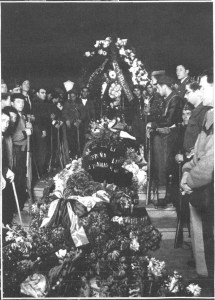
By the time the convoy reached Barcelona on the rainy night of 21 November, tens of thousands of workers had already flooded the streets around the Casa CNT-FAI headquarters on Via Laietana. When the transport vehicle pulled up outside the building, the scene stood in stark contrast to the solemnity of a state funeral. The militiamen who had driven from Madrid were exhausted, travel-stained fighters straight from the trenches, utterly unaccustomed to formal ceremony. Carrying the heavy mahogany coffin through the surging, tightly packed crowd, they discovered that organisers had misjudged the width of the entrance; the bearers had to wrestle the coffin sideways through a narrow side door to get it into the building.
Inside the undecorated lobby, spectators leaned over the upper galleries, talking loudly and keeping their hats on while wreaths were dropped in the commotion. Once the coffin was finally set down and its lid raised, one of the battle-worn militiamen from Madrid calmly pulled out his pipe, struck a match, and lit it beside the body—a quiet, unceremonious farewell from the front-line comrades who had brought Durruti home.
On 22 November, at the Durruti Column’s Madrid barracks on Calle de Granada, Federica Montseny arrived to speak with the men and formally announc Sanz as Durruti’s successor. Sanz was told by men at the barracks that they believed Durruti was assassinated by, ‘enemies within the Republic,’ who wanted to remove all ‘revolutionary ideas’ connected with the defeating the Nationalists in battle. Speaking with Doctor Martinez Fraíle, one who had treated Durruti when he first went to the Ritz, noticed how the city was emptying of anarchists, who no longer felt safe around the communists, forever cementing his view that Durruti was assassinated. Despite all the stories Sanz heard upon reaching Madrid, he claimed to believe the Nationalists shot Durruti from the Hospital Clínico throughout his life.
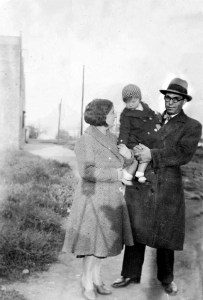
Like many of Durruti’s front-line comrades, his partner Émilienne Morin refused to accept the sanitised myths surrounding his death. In her later interviews (such as her 1977 testimony), she pointedly noted that she was deliberately kept away from the details of the investigation by the CNT leadership in Madrid and Barcelona. She believed Durruti’s own submachine gun could not have discharged by accident without a deliberate hand or negligence, and she rejected the propaganda narrative that a distant fascist sniper had shot him from the Clínico building.
Émilienne Morin was a lifelong anarchist activist, journalist, and militia administrator in her own right, not merely Durruti’s domestic partner. Because anarchists rejected state and church marriage on principle, they lived in a committed free union from 1927 until his death, meaning she was his partner, intellectual equal, mother to heir daughter Collette, and comrade-in-arms, even as she openly criticised the sexism she encountered within the Spanish movement.
When the Spanish Civil War broke out in July 1936, Morin climbed onto a supply lorry heading to the Aragon front. At the Durruti Column headquarters in Bujaraloz, she organised the column’s administrative apparatus and ran its press department, earning the frontline nom de guerre Mimi-FAI. Despite her dedication, Morin later spoke candidly about being side lined by both Durruti and Spanish male anarchists, who kept military preparations secret from her in Barcelona and barred her from taking up a rifle during street fighting.
Morin was deeply aware of the hostility Durruti faced in Madrid, not just from Franco’s forces, but from Communist Party (PCE) commissars, Soviet advisors, and Republican military officers who resented the autonomy of the Durruti Column. She echoed the suspicion held by José Manzana and the militiamen that Durruti had been eliminated, or left exposed, because he was an obstacle to the militarisation of the militias and the consolidation of state control.
While CNT ministers like Joan García Oliver used Durruti’s body and the massive Barcelona procession to project unity with the Republican government and the Catalan Generalitat, Morin despised the official pageantry and political speeches. As an uncompromising anarchist, she viewed the transformation of Durruti into a state-sanctioned martyr as a betrayal of everything he had fought against, especially since Durruti had fiercely opposed the CNT joining the government just weeks earlier.
Morin’s strained relationship with the organisation’s leadership became explicit immediately after the transfer and funeral. When she later tried to obtain Durruti’s personal effects, including his notebooks, watch, and the briefcase he had carried in Madrid, the CNT committees repeatedly stalled her, eventually claiming the items had been lost or archived, leaving her convinced that documents critical of the leadership or revealing what happened in Madrid had been suppressed. But Durruti only carried the absolute bare essentials, not even having clothes to be buried in, and their deliberate obstruction only had themselves look worse.
After Durruti’s death, Morin refused to let government ministers or Communist rivals turn him into a symbol of state obedience or militarisation. In essays such as her 1938 piece ‘Our Victory,’ she publicly attacked politicians who twisted Durruti’s words to justify sacrificing social revolution for a bourgeois republic, and later spent decades in the French anti-fascist underground and Spanish exile solidarity networks. Morin had Durruti’s leather jacket with the bullet hole and powder burns (lost when the Nazis took Paris), and could see clear as day that it was not a stray Nationalist bullet that shot him from far away.
Morin believed that José Manzana shot Durruti with the naranjero that he was holding in the car. At first, it was possible that the shot could have been accidental, but then saw Manzana later happily adapt to the new Republican army hierarchy, forgetting all his anarchist beliefs of anti-militarisation. He accepted regular military rank, integrated smoothly into the Communist-favoured Popular Army structures, and preserved his own command and standing. This made her wonder if Manzana had done it on purpose to eliminate Durruti and help remove the anarchist beliefs from the Republican unit trying to save the country.
In 1977, Antonio Bonilla, who had been in the other car that day and did not see or hear the shooting, admitted the accepted story, of a Nationalist bullet from a distance, was not true. Bonilla stated that when they stopped and prepared to get back into their cars, Sergeant José Manzana opened the door of Durruti’s vehicle. According to Bonilla, the naranjero slung over Manzana’s shoulder slipped, its butt struck the running board of the car, and the weapon discharged into Durruti’s chest at point-blank range, explaining the bullet hole, the close range gunshot Graves heard, Ramón García López’s claim of a gun hitting the running board of the car, and Ricard Rionda’s claim, backed by Jesús Arnal, that it was an accidental shooting by a gun with no safety. The guns were notoriously prone to accidental discharge if dropped or knocked against a hard surface, as its open-bolt design lacked a reliable safety catch against sharp impacts. Bonilla explained that he had remained silent for four decades because he wanted to confront Manzana personally to verify whether the discharge had been an accident or deliberate, but he never managed to see Manzana again after the war.
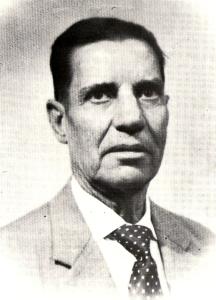
An accidental fatal discharge by Durruti’s own trusted military advisor would have been catastrophic for anarchist morale and potentially fatal for Manzana himself if the rank-and-file militiamen found out. Covering it up immediately as a fascist sniper was a survival reflex shared by Manzana, Miguel Yoldi, and the Madrid CNT leadership. Bonilla, too, wondered if it was accidental or not after seeing Manzana’s willingness to adapt to communist-aligned style of operation within the Republican faction. Manzana quickly moved into the Republican Army’s 26th Division after Durruti’s death, while Bonilla was alienated and pushed aside when he refused to renege his anarchist beliefs. Both survived the war, but lived in exile in Mexico and France, respectively.
(For the record, I though it was obvious that Manzana did it from the beginning, and that was why he lied about there being extra people in the car. That was why he refused to speak to Bonilla had CNT headquarters that day; Bonilla was already suspicious. The story of the Nationalist bullet made sense for the narrative and the keep up morale, and explains his attempt to tell Sanz that he would get shot in Madrid by ‘them’ when he took over the column. But on purpose? There would have been many better opportunities to get away with it than in that car. He likely quietly disappeared into the Republican machine as a way to distance himself what he did)
I will cover the funeral on 23 November
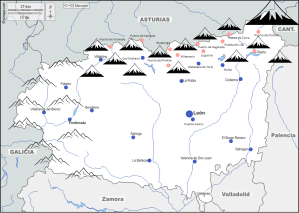
- León, Old Castile (Castilla y León)
Because Durruti was born in León’s working-class Santa Ana neighbourhood and was the most famous anarchist commander fighting Franco’s forces, Nationalist authorities and censored local newspapers in León treated his death as a major propaganda victory. Conflicting Narratives on the Radio. Nationalist radio stations broadcast triumphant but contradictory stories about his death, claiming he had been shot by his own rebellious militiamen or murdered in Republican infighting, to demoralise surviving Republican pockets in northern Spain.
Durruti’s parents, Santiago Durruti (a railway worker) and Anastasia Dumange, along with his siblings, still lived in León. His family in León could not hold a public wake, wear mourning openly, or display any grief without risking immediate arrest. Bearing the Durruti surname in Nationalist-held León was dangerous. His brother Pedro Marciano Durruti (a confusing man, who had actually joined the Falange before the war, only to seemingly rebel from the inside out) was executed by Francoist forces at Monte de El Ferral in 1937. His cousin Bonifacio Durruti, a schoolteacher, was also executed following the military uprising. Another brother, Manuel Durruti, had already been killed in León during the October 1934 uprising at the San Marcos bridge.
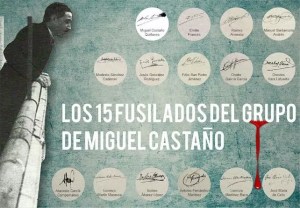
Inside the San Marcos concentration camp, the provincial prison, and the northern coal-mining valleys, where Durruti had begun his career as a railway mechanic and UGT unionist during the 1917 strike, news of his death spread quietly by word of mouth. For imprisoned workers and guerrillas hiding in León’s mountains, Durruti had represented the hope that Republican columns might eventually march north to liberate the province. His death, occurring within 24 hours of the execution of León’s Mayor Miguel Castaño and fourteen other local leaders at Puente Castro, cemented the feeling that the Republic’s resistance in León had been crushed. But December 1937, his nephew was quietly baptised José Buenaventura Durruti in León in honor of his late uncle.
Meanwhile, León’s executions on 21 November 1936 were one of the defining political purges of the Spanish Civil War in north-western Spain, designed to permanently erase the province’s entire democratic government, labour movement, and civic leadership in a single morning. A single firing squad eliminated the top three legitimate constitutional authorities of the province at once, the representative of the central government, the head of the provincial government, and the head of the capital city. Seven of the twelve members of León’s Republican Provincial Council were executed at the same time.
Historians describe 21 November 1936 as the day Republican democracy was executed in León. By putting these well-known figures through a public, high-profile military show trial in the Provincial Council’s own plenary hall before shooting them, the military authorities sent an unmistakable warning to the population about the absolute zero-tolerance nature of the emerging Francoist dictatorship.
At approximately 3:00pm on 20 July 1936, just one hour after Nationalist forces declared the state of war in León, military troops surrounded the Civil Government building. There, they arrested top Republican officials on the spot, including Civil Governor Emilio Francés, Mayor Miguel Castaño, and Provincial Council President Ramiro Armesto. Over the following days, military patrols detained the remaining union organisers, party leaders, and intellectuals across the city. The group prosecuted in this proceeding was composed to eliminate the entire political and social backbone of Republican León. It united the top executive authorities with the leaders of the Popular Front coalition, socialist and communist parties, the UGT miners’ union, and influential local journalists and educators.
Miguel Castaño Quiñones (Mayor of León) was veteran journalist, printer, and lifelong Socialist (PSOE) leader who had first been elected mayor in 1931 and restored to office after the Popular Front victory in February 1936. He was known for modernising León’s public infrastructure and schools. A self-taught printer and veteran journalist who founded local progressive newspapers (La Democracia), before his execution, he wrote deeply moving farewell letters from prison urging his family to live without hatred and to protect his memory.
Emilio Francés Ortiz de Elguea (Civil Governor), was appointed by the Republic’s central government in Madrid, he was the highest-ranking state authority in León. On 20 July 1936, he refused military demands to surrender power peacefully before troops stormed his headquarters.
Ramiro Armesto Armesto (President of the Diputación Provincial) was prominent lawyer and leader of Izquierda Republicana who headed the provincial government, who had spent years advocating for rural infrastructure and modernisation in León’s mountainous districts.
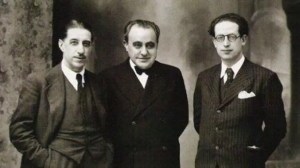
Félix Estanislao Sampedro Jiménez was President of the Popular Front coalition in León, uniting the left-wing parties that won the February 1936 general election.
Manuel Santamaría Andrés was ahigh school professor and local leader of the Unión Republicana / Izquierda Republicana.
José María de Celis Gascón was a representative of the Communist Party (PCE) in León.
Atanasio Carrillo Campomanes was a municipal employee in León’s city hall and Secretary of the Provincial Socialist Federation (PSOE), who had previously been active in the October 1934 workers’ uprising.
Antonio Fernández Martínez was a key leader in the UGT miners’ union (Sindicato Minero), representing the coal-mining basins of northern León, the epicentre of armed resistance against the coup. The coal miners of northern León were the only force in the province capable of mounting armed resistance to the military coup, making him a prime target for military retribution.
Lorenzo Martínez Vaca was a prominent political and trade-union representative.
Orestes Vara Lafuente was a telegraph operator and section chief at the León Post Office, as well as a student at the School of Commerce. Telegraphists were heavily targeted because they controlled communications during the July 1936 coup.
Isidoro Álvarez López was a municipal sergeant of the city night watchmen (serenos), targeted for keeping municipal security loyal to the elected mayor.
Modesto Sánchez Cadenas was a respected local painter and cultural figure who refused to go into hiding after the coup, believing his status as an artist would protect him. He had exhibited his work in Belgium and helped launch the career of renowned muralist José Vela Zanetti, and the secretary of León’s Casa del Pueblo. Military prosecutors used letters found in his studio from his 1934 stay in Brussels to accuse him of aiding the October 1934 general strike.
Onofre Gerardo García García was a journalist and printer who collaborated closely with Miguel Castaño on progressive and labour newspapers in León.
Lorenzo Martín Marasa was a schoolteacher and Republican activist, a prime local targeted against secular educators.
Jesús González Rodríguez was a young medical doctor from Riaño, León. Doctor, alongside the teachers, were viewed as dangerous spreaders of secular, progressive ideals among working-class and peasant communities.
With the mayor, civil governor, and provincial president gone, alongside the heads of the city’s main political parties and unions, León was left without any organised civilian leadership. The municipal council and Diputación were immediately replaced by military appointees and Falangist loyalists, erasing five years of democratic reforms in public housing, sanitation, and secular schooling. During the early 1930s, León had experienced a vibrant intellectual awakening centred around figures like Modesto Sánchez Cadenas, Miguel Castaño, and journalist Onofre Gerardo García. The removal of these men, and the exile of those who managed to escape, created an immediate cultural vacuum that lasted for decades, turning the city into what writer and San Marcos prisoner Victoriano Crémer later described as a place ruled by ‘pain, silence, and fear.’
During the four months leading up to their execution, the men were held in the San Marcos concentration camp and the Prisión Provincial de León. The summary court-martial took place over two days, 4 and 5 November 1936, in the hall of the León Provincial Council. The fifteen executed men were tried alongside other prominent Republicans, such as Nicostrato Vela Esteban (who was executed weeks later on 4 December) and Salvador Ferrer Culubret (who managed to survive the sentence). All fifteen men were charged with military rebellion/treason for defending the constitutional government against the coup. The tribunal handed down death sentences on 5 November, leaving the men in prison for over two weeks awaiting confirmation of the sentence.
With civilian resistance broken by high-profile executions like their case, Causa 467/1936, León became a major rear-guard prison centre for the Nationalist war effort. At least 10,000 political prisoners passed through the city’s San Marcos concentration camp, while more than 1,000 to 1,500 people were executed at the Puente Castro shooting range alone.
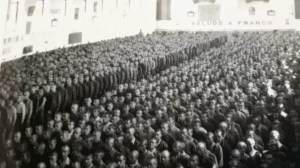
The group was transported taken to Puente Castro at dawn on 21 November. Victims executed by firing squad at Puente Castro were transported directly to the nearby León Cementerio de San Froilán and buried in unmarked mass graves, with their deaths officially logged in the civil and cemetery registries.
Following the executions, the regime’s Responsabilidades Políticas (Political Responsibilities) tribunals seized the bank accounts, homes, and businesses of the executed men in 1937. Their widows and children were stripped of pensions, barred from public employment, and subjected to public humiliation, forcing an entire generation of León families into poverty and silence until Spain’s transition to democracy in the late 1970s.
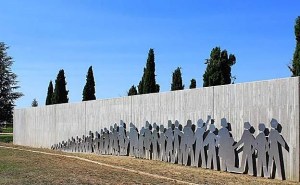
Unlike paseos where bodies were dumped in ditches, and either secretly or publicly later found and recovered, the remains of the fifteen men have never been exhumed or returned to their families. The mass graves in the León cemetery were later built over with modern burial niches, making physical exhumation practically impossible. Because the remains cannot be individually recovered, families and the Asociación para la Recuperación de la Memoria Histórica (ARMH) have focused on symbolic restitution. A memorial wall with plaques bearing the names of the executed stands over the former mass grave site at the León cemetery, complemented by the 2023 monolith at the Puente Castro shooting range.
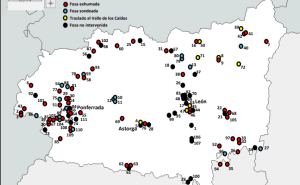
The is currently 1,483 registered victims at the cemetery, but the number could be as high as 2,000 when taking into account the unregistered bodies that were dumped there are roadside killings that had victims dropped at the site. Through the State Secretariat for Democratic Memory and the Spanish Federation of Municipalities and Provinces (FEMP), the national government funds exhumations via multi-year plans (such as the II Four-Year Exhumation Plan 2025–2028) and maintains a national DNA bank and official Map of Mass Graves. While the regional administration continues to process and approve technical exhumation permit, authorising multiple excavations in León municipalities such as Sena de Luna, Garrafe de Torío, Páramo del Sil, Piedrafita de Babia, and Fresno del Camino, memory groups have frequently criticised regional and municipal authorities for bureaucratic delays, limited regional funding, and political resistance (such as the León City Council’s cancellation of a planned June 2026 ceremony to hand over exhumed remains from Mansilla de las Mulas.
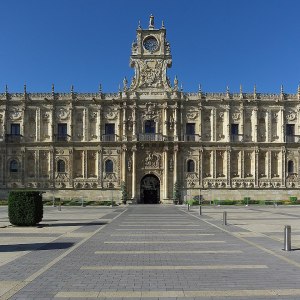
Between July 1936 and late 1940, the Renaissance Convent of San Marcos in León operated as one of Francoist Spain’s largest and deadliest concentration camps, holding at least 20,000 political prisoners (with some researchers estimating up to 40,000 across the wider León camp complex). Originally founded in the 12th century as a pilgrim hospital on the Camino de Santiago and rebuilt in the 16th century as the headquarters of the Military Order of Saint James, the Convento de San Marcos was serving as a military cavalry depot when the Civil War broke out in July 1936. Immediately after Nationalist forces took León on 20 July 1936, San Marcos became the central hub of a four-site concentration complex in the city (alongside annexes at Santa Ana, the provincial Hospice, and Colegio Ponce).
Designed for a few hundred soldiers or friars, the building routinely crammed 7,000 men and 300 women into its rooms, stables, cloisters, choir stalls, and even inside the consecrated church simultaneously. Inmates included León’s elected leaders (such as Mayor Miguel Castaño and Civil Governor Emilio Francés), Asturian miners, Republican soldiers captured on the northern front, intellectuals, schoolteachers, and entire families arrested as hostages. Torture and severe punishment were routine. In a cramped basement coal cellar known as la carbonera, measuring roughly 40 square metres, up to 70 prisoners were packed together in total darkness without ventilation or sanitation. Prisoners slept shoulder-to-shoulder on cold stone floors with minimal rations, leading to widespread outbreaks of typhus, tuberculosis, and dysentery.
Religious and military authorities subjected inmates to mandatory Catholic Mass, confessions, fascist salutes, and patriotic lectures aimed at breaking Republican identity. Many inmates were also drafted into forced labour battalions to build roads, railways, and public infrastructure. San Marcos functioned as a holding pen for both official court-martial executions at the Puente Castro shooting range (nearly 800 documented firing-squad deaths) and night-time sacas and paseos carried out by Falangist squads, which claimed over 1,500 additional lives.
In 1964–1965, Francisco Franco inaugurated the renovated building as the flagship Hostal de San Marcos, a five-star state-run luxury hotel (Parador), erasing physical traces of its years as a prison camp. Today, the Parador de León operates alongside the Museo de León annex and the Church of San Marcos. After decades of campaigning by survivors and the Association for the Recuperation of Historical Memory (ARMH), plaques and official memory acknowledgments have been installed to recognise the thousands who suffered and died within its walls.
During the nearly forty years of the Franco dictatorship, daily life in León, especially in small villages, mining valleys, and tight-knit city neighbourhoods, was defined by enforced silence, constant vigilance, and a deep, unspoken divide between the victors and the vanquished living on the same streets. Because León fell quickly to the insurgents in July 1936, most executions and denunciations were carried out by by local Falangists, Civil Guards, and neighbours who knew the victims personally.
Inside the homes of executed Republicans, silence became a literal survival mechanism. Mothers and widows, known locally as las mujeres de negro (the women in black), deliberately hid photographs, burned letters, and refused to tell their children what had happened to their fathers or uncles out of fear that a child might repeat something at school and trigger another arrest. As ARMH founder Emilio Silva noted regarding rural León, families almost always knew exactly who had denounced or murdered their relatives, and they passed those individuals on the street every day. Yet open confrontation was impossible; surviving meant swallowing grief, lowering one’s gaze, and keeping daily interactions strictly polite and superficial.
For supporters of the regime, the dictatorship brought stability, Catholic restoration, and state patronage, often directly benefiting from properties, businesses, or municipal jobs confiscated from executed Republicans. Conversely, victims’ families lived as internal outcasts. As documented in research on repressed women in León by Diario de León, wives and daughters of reds were routinely subjected to public humiliations. such as having their heads shaved, being forced to ingest castor oil, or being barred from widows’ pensions and public employment, while being forced to attend mandatory Catholic Masses and patriotic rallies led by the very authorities who had ruined their families.
Throughout the 1940s, neighbour-on-neighbour denunciations remained common. Any grudge, over land boundaries, debt, or personal rivalry, could result in a neighbour being reported to the local Guardia Civil or Falange headquarters as a sympathiser. In León’s mountainous districts (such as El Bierzo, La Cabrera, and the northern coal basins), thousands of Republicans fled into the hills to form anti-Franco guerrilla groups (maquis). Villagers were caught in a terrifying vice; military forces brutally punished entire families suspected of giving food or shelter to relatives hiding in the mountains, deepening distrust even among extended kin.
Because publicly mourning executed Republicans or laying flowers on mass graves was forbidden and seen as subversive, widows and mothers developed quiet, coded ways to remember. In León, women would discreetly walk past the walls of the municipal cemetery or leave single unmarked flowers near the Puente Castro shooting range at dawn, refusing to let the state erase their dead entirely while never daring to speak their names aloud in public.
The combined loss of thousands of executed, imprisoned, and exiled citizens, spanning skilled miners, railway workers, educators, doctors, and civic administrators, hollowed out León’s social, economic, and intellectual infrastructure for decades, turning a rapidly modernising province into a quiet, conservative, and economically dependent periphery. The Second Republic had invested heavily in rural literacy across León’s isolated mountain valleys. When public schoolteachers like Lorenzo Martín Marasa were executed, imprisoned, or permanently stripped of their licenses, dozens of village schools closed or were handed over to underqualified regime loyalists and Catholic clergy. Literacy and secular education stalled for a generation. The execution and exile of progressive physicians, engineers, and telegraph/postal officials left rural districts with acute shortages of medical and technical expertise during the severe post-war poverty and epidemics of the 1940s.
León’s economy relied heavily on two vital industries: coal mining in the northern basins (Laciana, Gordón, Sabero, El Bierzo) and railways (León was a major northern rail hub). Because miners and railway workers were the backbone of the UGT and CNT unions, they suffered the highest casualty rates. With union leaders like Antonio Fernández Martínez dead and thousands of experienced miners either executed, sent to forced labour battalions, or fleeing into the mountains (maquis), the surviving workforce lost all collective bargaining power. Mining companies operated under strict military-style discipline with low wages, dangerous working conditions, and state-controlled vertical syndicates (Sindicato Vertical), while prison labour battalions were frequently used to extract coal and build infrastructure.
The combination of male deaths, imprisonment, and blacklisting created severe labour shortages and poverty in working-class households. Many surviving families eventually abandoned León’s rural valleys in the 1950s and 1960s, accelerating the long-term depopulation (la España vaciada) that still affects the province today.
Before July 1936, municipal leaders like Mayor Miguel Castaño and Diputación President Ramiro Armesto had focused on modernising León’s water supply, sanitation, public housing, and rural roads. After their execution, city halls and the provincial council were staffed through political patronage by Falangists, military officers, and conservative landowners. Independent newspapers (like Castaño’s La Democracia), cultural circles, workers’ Casas del Pueblo, and artistic movements vanished overnight. Public life was reduced to state-approved newspapers, Catholic Church institutions, and military ceremonies, creating a deep intellectual and cultural conformity that lasted until the late 1970s.
Through the Responsabilidades Políticas tribunals, the state confiscated land, homes, printing presses, shops, and savings from the families of executed and exiled workers and professionals. This wealth was redistributed to regime supporters or absorbed by the state, permanently altering property ownership and widening the economic gap between conservative elites and working-class families in León for generations.
At the same time, the defeat of the Republic erased one of Europe’s most progressive legal frameworks for women, stripping women in León of their civil rights and forcing them back into strict legal and domestic subordination for nearly four decades. Under Francoist rule, showing open pity, collecting money for victims’ widows, or mourning executed Republicans in public was treated as aiding rebellion. Neighbours who spoke up risked arrest, heavy fines, or losing their own jobs. Despite the danger, quiet sympathy survived in secret. In León’s villages and working-class neighbourhoods, sympathetic neighbour’s and occasionally discreet parish priests secretly slipped food, milk, or clothing to starving widows (las mujeres de negro) at night, or warned families when Guardia Civil patrols were coming to search their homes. Outside the San Marcos concentration camp and the León Provincial Prison, local women formed informal support networks, washing prisoners’ bloodied clothes, smuggling notes sewn into hems, and pooling scarce rations for inmates whose own families lived too far away in the mountains to visit.
The Franco regime systematically abolished all of these rights, replacing them with the strict patriarchal ideology of National Catholicism and the Falange’s Sección Femenina (Women’s Section). Women were legally reduced to the status of minors under the guardianship of their fathers or husbands. Under the restored 1889 Civil Code, a married woman could not open a bank account, sign an employment contract, buy or sell property, or apply for a passport without her husband’s written permission. Divorce was outlawed retroactively, civil marriages performed under the Republic were annulled, and contraception and abortion were criminalised. Through laws like the 1938 Fuero del Trabajo (Labour Charter), the regime aimed to free married women from the workshop and the factory. Women were barred from becoming judges, prosecutors, diplomats, or notaries, and many female teachers, telegraphists, and civil servants in León were purged or forced to resign upon marriage.
Because thousands of men in León were dead, imprisoned, or in exile, women suddenly became the sole breadwinners for their families, yet the state simultaneously stripped them of legal rights and blacklisted them from decent jobs. Many widows and daughters of executed men were forced to survive through low-paid domestic service, black-market smuggling, or humiliating charity while being forced to attend mandatory domestic training through the Sección Femenina.
While the laws changed rapidly between 1975 and 1981 as women fight back the rights lost in 1936, overcoming four decades of National Catholic conditioning in conservative provinces like León took much longer. Women who had been forced out of universities, professions, and public life in the 1940s and 1950s could not recover lost decades of education, career advancement, or pensions. It was not until the late 1970s and 1980s, and more comprehensively under the 2007 Historical Memory Law and 2022 Democratic Memory Law, that the widows and families of executed Republicans in León were finally recognised as victims rather than criminals and granted modest state pensions or formal declarations of legal nullity for the 1936 court-martials.
Public sentiment toward exhumations in the province of León is deeply polarised along generational and political lines, combining a pioneering grassroots movement for family closure with persistent political friction and quiet social resistance. León holds a unique emotional and historical connection to exhumations because the first scientific excavation of a Civil War mass grave in Spain took place in Priaranza del Bierzo (León) in October 2000, led by Emilio Silva to recover his grandfather’s remains. That dig launched the Association for the Recuperation of Historical Memory (ARMH), which maintains its main forensic laboratory in Ponferrada.
Among descendants of victims and rural communities across El Bierzo, La Pola de Gordón, and the northern mining basins, exhumations are widely viewed as a basic humanitarian right to give murdered relatives a dignified burial after decades of silence. When excavations occur in small villages, such as Candemuela, Busdongo, or Sena de Luna, local residents frequently cooperate with volunteers, sharing oral histories passed down in whispers to help locate unmarked roadside ditches.
At the institutional level, exhumations and public tributes frequently trigger sharp clashes between left-wing and right-wing parties. Conservative and far-right leaders in Castile and León have often argued that state-funded memory initiatives reopen old wounds or disrupt the spirit of Spain’s 1970s Transition to Democracy, pushing for Leyes de Concordia (concord Laws) that treat all wartime violence symmetrically rather than focusing specifically on Francoist repression. Even when exhumations themselves proceed smoothly, public ceremonies can spark local political pushback as seen when the PP fought the basic dignity of the Mansilla group just a few months ago.
In some conservative rural towns, older residents still express discomfort or reluctance to talk openly about where graves are located, either out of lingering fear from the dictatorship era or to avoid friction with neighbours whose families were on opposite sides of the conflict. Because many direct children of the victims have passed away, grandchildren and great-grandchildren, alongside university researchers and volunteer archaeologists, now drive much of the local momentum, viewing the work as finishing an overdue historical and human obligation before living memory disappears completely.
- Fuenferrada, Teruel, Aragon
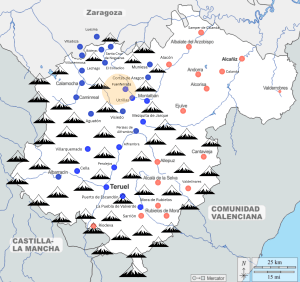
On 21 November 1936, the highlands of northern Teruel province were the setting for a sharp offensive along the Aragon Front. Spearheaded by Catalan Republican militia forces, the assault struck a triangle of Nationalist-held villages, Villanueva del Rebollar de la Sierra, Fuenferrada, and Torre los Negros, in an effort to relieve Nationalist pressure on besieged Madrid and sever the vital Zaragoza–Teruel corridor. Though the Republican attackers briefly breached the outer defences, rapid Nationalist reinforcements arriving from Calatayud and Molina de Aragón counterattacked and restored the original frontline before nightfall.
Republican commanders across the Aragon Front were ordered to launch local diversionary attacks to pin down Nationalist reserves and prevent them from being transferred to the central front. Geography made this specific cluster of villages strategically vital. Sitting along the watershed dividing the Martín and Pancrudo/Jiloca river valleys, Villanueva del Rebollar, Fuenferrada, and Torre los Negros formed the eastern defensive shield protecting Calamocha and the Zaragoza–Teruel highway and railway, the sole logistical lifeline connecting Teruel city to the Nationalist rear guard in Aragon.
The attack was led by detachments of the Macià-Companys Column, a Catalan militia unit organised in Barcelona by Esquerra Republicana de Catalunya and Estat Català volunteers under Lieutenant Colonel Jesús Pérez Salas. At full sector strength in autumn 1936, the column fielded approximately 1,200 men supported by 4 machine guns and 2 mountain artillery batteries, operating out of staging bases in Utrillas, Vivel del Río Martín, and Portalrubio.
The forward villages were defended by small local garrisons composed of regular infantry detachments, Guardia Civil troopers, and Falangist and Requeté (Carlist) volunteers from the Calamocha judicial district. When the attack began, Nationalist regional command dispatched mobile motorised relief columns from Calatayud (Zaragoza province, ~75 km northwest) and Molina de Aragón (Guadalajara province, ~85 km west), totalling several hundred to roughly a thousand infantrymen with light artillery, to execute the counterattack.
Advancing west from their fortified positions around Venta del Diablo, Vivel del Río Martín, and Portalrubio, Catalan militiamen attacked the forward Nationalist perimeters at Villanueva del Rebollar, Fuenferrada, and Torre los Negros, briefly penetrating the outer trenches and village approaches. Alerted by telegraph and field runners, Nationalist relief columns converged from Calatayud and Molina de Aragón along the Jiloca road network. Outgunned in open terrain without armored support, the Catalan detachments were forced to withdraw back to their starting ridges, fully restoring the pre-battle frontline.
The failure of the 21 November assault demonstrated the limits of early militia columns against mobile Nationalist relief forces. The engagement locked the northern Teruel front into a static war of attrition that remained virtually unchanged until the major Republican winter offensive of December 1937–January 1938.