- Granada, Andalucía
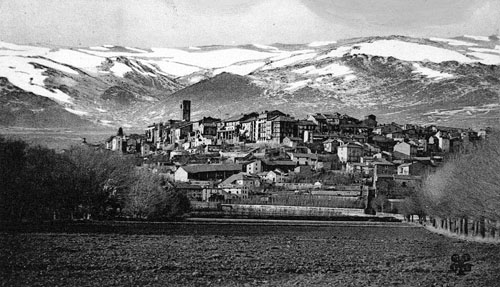
On 9 September 1936, thirty-two people were executed in Granada under Nationalist authority. The killings took place as the systematic execution of prisoners from Granada and surrounding municipalities continued at the city’s cemeteries and other execution sites. Among the prisoners associated with the day’s killings were twenty residents of Lanjarón, who had been detained after Nationalist forces established control of the town. The Lanjarón prisoners were part of the wider system through which detainees from towns across Granada province were brought into the provincial capital and killed alongside prisoners detained in Granada itself. On 11 September 1936, thirty-six people were executed in Granada under Nationalist authority. The killings continued the mass executions that had been taking place at the San José cemetery and other sites around the city since the Nationalist seizure of Granada in July. By September, large numbers of political prisoners were being held in Granada’s detention facilities. Groups of detainees were repeatedly removed from the prisons and taken to execution sites, where they were killed without the process of individual trials that would later become characteristic of the Nationalist repression.
- Toledo, New Castile
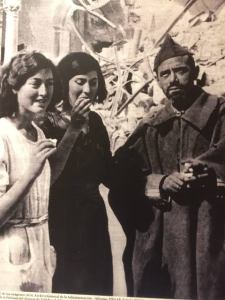
By the second week of September 1936, the Siege of the Alcázar of Toledo had devolved into a gruelling war of attrition. Trapped inside the massive stone fortress, roughly 1,300 Nationalist defenders under Colonel José Moscardó, alongside approximately 500 women and children, faced relentless Republican artillery fire and the threat of underground mines. Desperate to resolve the siege before the advancing Army of Africa arrived, the Republican government attempted a different approach. The first formal diplomatic opening of the month occurred on 9 September 1936, when Major Vicente Rojo Lluch crossed the battered plaza under a flag of truce. Rojo was a highly respected Republican military officer and a former professor at the Alcázar’s infantry academy, he was uniquely suited to speak to the defenders in their own language. Rojo was blindfolded and led into the subterranean offices of his former colleague, Colonel Moscardó. He offered an honourable surrender with the safe passage of all women and children, and the guarantee that the officers would face regular courts-martial rather than summary execution. Moscardó flatly refused to yield the fortress. However, recognizing the psychological weight of their long isolation, the Colonel made a counter-request, and asked Rojo to arrange for a priest to be allowed inside the citadel to administer sacraments and baptise children born in the cellars during the siege.
Republican authorities granted the request, hoping a man of the cloth might convince the defenders to stand down. On 11 September, Father Enrique Vázquez Camarasa, a prominent left-leaning canon from Madrid, was permitted inside the Alcázar for three hours. Camarasa’s visit quickly transformed into a profound spiritual event. Surrounded by hollow-eyed soldiers and terrified families in the dim basement galleries, he performed a mass absolution for the entire garrison and baptised two newborns. He then delivered a sermon that went beyond religious comfort, directly urging the defenders to surrender to prevent further bloodshed and save their families. His words failed to move the officers. Before Camarasa departed, the garrison took a vote, choosing unanimously to hold their positions.
- Zaragoza, Aragon
The executions in Zaragoza continued at a relentless pace during the second week of September. Prisoners were being taken from the city’s detention centres and brought out to the execution sites around the city, while their bodies were subsequently registered and taken to Torrero cemetery. On 9 September, at least twelve people were killed in one of the recorded mass shootings. Among the victims was Florinda Arjol Naudín, a nineteen-year-old teacher from Castejón de Valdejasa. Alongside her fellow teacher and childhood friend, Pilar Cambronero Arjol, Florinda was a passionate militant for the Juventud de Izquierda Republicana (the youth wing of Manuel Azaña’s Left Republican party). She was also a dedicated local organiser for the emerging feminist movement in Aragon. Florinda Arjol Naudín represents the highly specific and deliberate nature of the Francoist purges against independent, educated women. Because her existence as a free-thinking public servant directly clashed with the regime’s traditional gender roles, she was taken from where was was living, to the Valdespartera sector on the southern outskirts of Zaragoza city, where she was shot by a firing squad. The following morning, her body was collected by the Hermandad de la Sangre de Cristo (Brotherhood of the Blood of Christ) and transported to the local morgue. Today, her name is formally preserved in Zaragoza’s municipal registers of pioneering teachers and state memory installations.
The following day brought another large execution. At least sixteen people were killed on 10 September, while the death register records twenty-two deaths connected with the repression. The bodies from the various killing sites were brought into the city’s established burial system, where Torrero was becoming the final resting place for increasing numbers of victims. On 12 September, at least fourteen people were killed in another mass shooting. Among those caught in the repression were Miguel Rius Pérez, a UGT postal worker, and Jesús Lorenzo Ciordia, a postal official and socialist activist. Fortunato Cortés Simón, the mayor of Longares, was also among those taken into the Zaragoza detention system and killed during this period.
The largest recorded group during these days came on 13 September, when at least 24 people were identified as victims of a mass shooting. Another seventeen deaths were registered on 14 September. Behind the individual entries in the registers was a continuing process – prisoners were detained in Zaragoza, groups were removed from custody, taken to the city’s execution grounds, and their bodies transported for burial. Valdespartera and San Gregorio were among the places where shootings took place, while Torrero cemetery became the principal cemetery for those killed.
The killings had already been going on for weeks. By September, execution had become a regular feature of life in Nationalist-held Zaragoza, with prisoners disappearing from the city’s detention system almost every day. The surviving records allow many of the victims to be named, but they also preserve the scale of what was happening: on some days individual groups were counted in the dozens, while the accumulated dead were carried away to the cemetery in a continuous stream.
- Puigcerdà, Girona, Catalonia
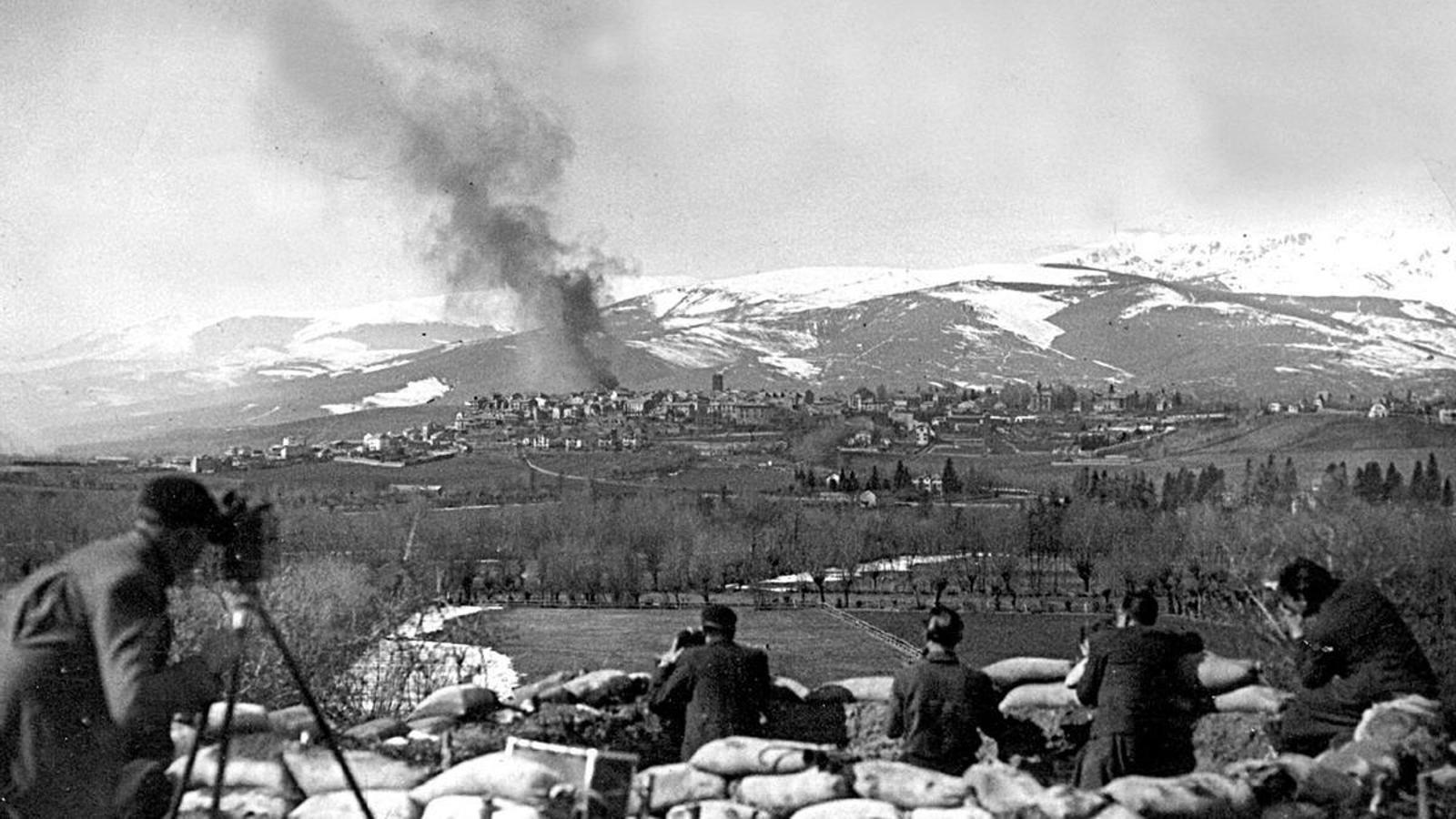
The 20 victims of the Puigcerdà/Urtx massacre were originally thrown into a makeshift, shallow mass grave right at the execution site inside the Còrrec del Gavatx ravine in Urtx.In May 1937, the central Republican government launched a massive military crackdown against Martín’s autonomous anarchist regime (an event known as the Hechos de Mayo). Once the government regained control of the French border and restored order, judicial investigators and grieving families safely returned to the Còrrec del Gavatx ravine to exhume the bodies. The town later had a Francoist concentration camp onsite for killing Republicans, which locals turned a blind eye to after the war.