- Madrid
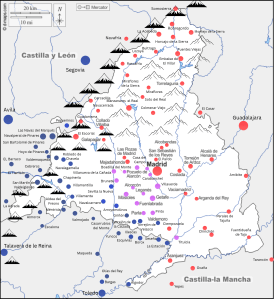
By November 1936, the survival of the Spanish Republic hung in the balance. Having violently carved their way north from the south, General Franco’s Nationalist forces, heavily backed by fascist Italy and Nazi Germany, had reached the outer municipal borders of Madrid. Standing as the last line of protection for the capital’s population was a network of working-class towns and rural communities of Fuenlabrada, Móstoles, and Villaviciosa de Odón. Over 48 hours between 2 November and 3 November 1936, the residents and popular militias of these towns put up a heroic, desperate resistance against a heavily armed, professional invasion force. While the defensive perimeter ultimately collapsed under relentless aerial bombardment, their sacrifice bought the capital precious time to organize the historic defense that would soon halt the fascist advance.
For the Republican government and the people of Madrid, holding this southwestern transversal corridor was a matter of sheer survival. Under the pre-war defensive strategy known as the Masquelet Plan, towns like Móstoles and Fuenlabrada were designated as a protective shield to keep heavy artillery out of range of Madrid’s civilian population.
If these towns fell, it meant fascist forces could cut off vital supply lines and communications between defensive sectors, the enemy would gain elevated positions to ruthlessly shell civilian neighbourhoods in Madrid, and the civilian populations of these immediate suburbs would be exposed to the brutal martial law of the Nationalist columns.
The defense of these towns fell upon ordinary citizens who had stepped forward to protect the Republic. The defence was patched together from volunteers of the Republican Centre Army (Ejército del Centro). These included trade unionists, political activists, and local residents organized into units like the anarchist-leaning España Libre column, alongside early regularized units led by communist commander Enrique Líster. They were severely outgunned, lacking standard radio equipment, unified training, and heavy weaponry. They fought using hastily dug trenches along the Guadarrama riverbed, relying on pure conviction and local knowledge.
The attacking forces under rebel General Varela held a massive technical advantage. The columns that assaulted Fuenlabrada (under Marcelino Barrón) and Móstoles (under Carlos Asensio Cabanillas) were comprised of battle-hardened Moroccan Regulares and the Spanish Foreign Legion. They were highly mobile, heavily supported by Italian CV-35 tanks, and held total control of the skies thanks to fascist tactical bombers.
Despite the overwhelming odds, Republican volunteers and local residents stood their ground in bitter defensive actions. When General Barrón’s colonial troops breached the outer perimeter from Humanes on 2 November 1936, Republican militia forces did not simply retreat. Utilizing newly arrived Soviet T-26 tanks, the defenders launched a fierce counter-push. The sudden, courageous resistance temporarily threw the rebel ranks into chaos. However, the fascists unleashed a devastating wave of aerial bombing, pounding the Republican lines and forcing a bloody, fighting retreat toward Leganés by nightfall.
Over the next 24 hours, the pressure shifted west. According to local historical archives, Republican volunteers held out in Móstoles until the afternoon of 3 November, when three separate Nationalist columns systematically encircled the town. In adjacent Villaviciosa de Odón, militia forces fought a delaying action along the Guadarrama riverbed, retreating only when they faced total encirclement by enemy cavalry, ensuring their surviving forces could live to defend the capital itself.
In traditional warfare, capturing a town means disarming the enemy combatants. In the Nationalist advance, however, the primary instrument used upon entering a town was the Bando de Guerra (Decree of War). This decree legally transformed ordinary civilians into enemy combatants on the spot. Anyone who had voted for the Popular Front, belonged to a trade union, or worked as a civic employee was classified as an active rebel against the ‘state.’
The violence was built into the operational mechanics of taking the territory. Because the Nationalist columns were small (only 1,200 to 2,000 men per column) and moving incredibly fast to reach Madrid, they could not leave troops behind to manage hostile towns. Killing local leadership was a tactical military requirement to secure the frontline and rearguard. Democratically elected mayors of these towns, like Luis Fernández Aguado, the socialist mayor of Fuenlabrada, or Modesto Montero Arribas, the mayor of Móstoles, were viewed as immediate political threats to be eliminated along any ‘enemy combatant’.
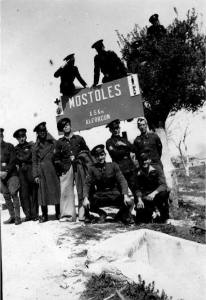
This overlap is exactly why it is so difficult to find isolated casualty lists for the fighting in Fuenlabrada or Móstoles. The deaths of civilians dragged from their homes by Moroccan Regulares or Legionnaires occurred simultaneously with the incoming artillery shellings and air raids. In the immediate aftermath, bodies were swept into anonymous mass graves without differentiation. A combat death and a summary execution looked exactly the same in a town being torn apart by bombs. The advance on Madrid was not a conventional campaign, it was an ideological war where the frontline was everywhere, and the civilian population itself was treated as the enemy fortress that needed to be dismantled.
While the fall of the Fuenlabrada-Móstoles-Villaviciosa line was a heavy blow, the resistance of these towns proved to be a turning point. The tragic loss of these communities acted as an urgent alarm for the Republic. It forced the immediate creation of the Junta de Defensa de Madrid under General José Miaja and united the civilian population.
- Puerto del Pontón, Asturias
By November 1936, the war for northern Spain had erased the border between the trench lines and civilian doorsteps. Across the fractured landscape of Asturias, a psychological contagion gripped both sides: the terror of the fifth column. In the high-stakes struggle for central Asturias, centred on the vulnerable Nationalist-held city of Oviedo and its thin highway lifeline, the Grado Corridor, this paranoia was an active, brutal front.
Inside the walls of Oviedo, Nationalist Colonel Antonio Aranda faced a mathematical reality. Though his recent connection with Galician relief columns had brought his total force to roughly 15,000 troops, his garrison was an artificial right-wing island occupying an aggressively left-wing, pro-Republican province. To stop the hidden majority of Republican sympathizers trapped inside the city, Aranda’s security forces weaponized terror. Throughout early November 1936, Nationalist patrols conducted sweeping roundups, taking hundreds of civilian family members of prominent local miners and trade union leaders hostage. These hostages were held under threat of immediate execution to prevent internal uprisings, worker strikes, or structural sabotage while the garrison fought off relentless Republican attacks from the surrounding hills.
Outside the city, the psychological damage of the fifth column was equally devastating for the newly formed Republican Popular Army of the North. The fact that Aranda had stolen Oviedo through military deception in July had left the Asturian miners hyper-vigilant against further betrayal. Following the narrow Galician breakthrough in October, a wave of defeatism swept the Republican valleys. In response, militia leadership initiated a fierce, defensive purge of their own rearguard. Anyone suspected of conservative leanings, wealth, or clerical ties was immediately viewed as a potential fascist spy feeding exact troop coordinates and ammunition positions to rebel artillery or Italian bomber squadrons.
With both sides consumed by internal terror, the conventional frontlines hardened into a claustrophobic deadlock. The Nationalists had a singular, desperate objective to protect their 30km highway lifeline back to Galicia. The Republicans, holding the vast block of mountainous terrain to the north and south, aimed to smash it.
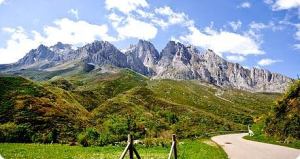
On the far southeastern border of the Asturian pocket, the Republic moved to secure its external perimeter. The Flórez Column, comprised of regular loyalist soldiers and local miner battalions, launched an aggressive assault on Nationalist outposts around the high-altitude Puerto del Pontón pass (1,280m elevation). By fighting through freezing alpine weather and boxing rebel forces into the neighbouring province of León, the Republic successfully sealed its eastern flank. This ensured they could divert maximum manpower to the primary target of the Grado Corridor.
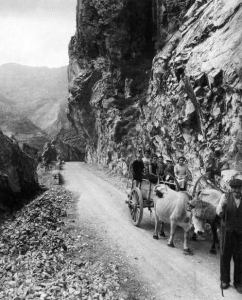
Two days later, the main Republican hammer fell directly on the fascist lifeline. Perched on the steep slopes of the Alto de La Cabruñana, the literal mountain gateway protecting the road into Grado, Republican miner militias launched a coordinated offensive. Spearheaded by dynamite-throwing miners who used the rocky crags for cover, the Republicans unleashed explosives and artillery fire onto the Nationalist positions below. The Galician columns holding the pass were hit with immense pressure, forcing them into a desperate, week-long struggle to keep their thin pipeline open. Though the Nationalist garrison clung to the asphalt using superior Italian air support, the battle proved that the rebel army was pinned down, unable to step a single yard off the main highway without facing immediate annihilation.
By the end of November 1936, the boundary between frontline combat and internal repression had completely collapsed. In the mountains, the landscape turned the conflict into a slow, industrial siege where traditional military maneuvers were useless. In the streets of Oviedo and the villages of the Nalón basin, the fear of the enemy within turned every citizen into a potential combatant. The Republic had successfully contained the fascist breakthrough to a narrow strip of asphalt, but at a terrible cost of a society wrapped in a vice of mutual paranoia, where survival required fighting a war on two fronts at once.
- Girona, Olot, and Sant Feliu de Guíxols, Girona, Catalonia
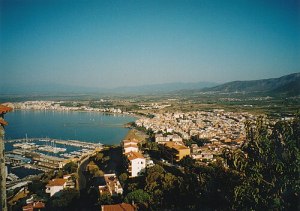
In Olot, on October 31, 1936, the local committee took 11 people from the prison, brought them to Camp del Triai, in the municipality of Sant Cristòfol les Fonts, and murdered them. After the war, a 5m-high cross was erected in homage to the victims. Their names were Jesús Miquel Girbau, Ramón Arqués Masoliver, Ramón Batlle Figueres, José M. Bolós Llabonera, Ramon Llongarriu Catalá, Juan Plana Moreu, José M. Plana Moreu, Juan Romero Alcaraz, Manuel Sellas Cardalús, Manuel Serra Legares, and Victoriano Díaz Gutiérrez.
In Sant Feliu de Guíxols, the prisoners were taken to the municipal cemetery and shot there. Their names were José Vives Borjas, Eneco Girbau Valls, Rufino Romá Roca, José Vilaret Xarnach, José Noguer Posá, Adelardo Magí Camps, Emilio Calzada Marsal, Pedro Compte Figueras, José Perelló Cuní, and Santos Boada Calzada.
- Barcarrota, Badajoz, Extremadura
By November 1936, the people of Extremadura had experienced almost four months of war, occupation, executions, arrests, and political persecution. The consequences were particularly severe in the province of Badajoz, where the Nationalist advance through the region had been accompanied by widespread killings, and in Cáceres, where the military uprising had succeeded much earlier. Although the two provinces had followed different paths since July, both were experiencing the consolidation of a new political order in which association with the Republic could bring imprisonment, dismissal, confiscation of property, or death.
The repression had not affected every part of Extremadura in the same way. Cáceres had fallen largely under Nationalist control during the first weeks of the uprising. In Badajoz, the capture of Mérida and Badajoz city in August, followed by the occupation of much of the province, brought a particularly violent campaign against Republican officials, trade unionists, agricultural workers, and people who had participated in the defence of the Republic. The north-eastern part of Badajoz, particularly La Serena, remained under Republican control, however, and continued to experience a different political and social situation.
In Cáceres, the initial violence following the occupation had already removed many of the province’s Republican political and social leaders. Arrests and extrajudicial executions had taken place in the provincial capital and in towns including Plasencia, Trujillo, Coria, Logrosán, and Navalmoral de la Mata. Those targeted included mayors, councillors, trade union representatives, political activists, and people whose involvement with left-wing organisations was considered sufficient grounds for suspicion.
By November, repression was increasingly being administered through military authorities and political investigations, although executions continued. Military courts had begun conducting summary proceedings during the summer, and executions following death sentences were increasingly recorded alongside the earlier extrajudicial killings.
The authorities were also turning their attention towards civilian institutions. On 8 November, the investigation of primary-school teachers began in Sierra de Gata, as part of a wider provincial process. Following Decree No. 66 of 11 November, the provincial commission began collecting political and personal information about teachers throughout Cáceres. Their professional positions were now subject to scrutiny based on their perceived political loyalties. The removal of Republican influence had long extended beyond the political leadership. Teachers, public employees, and other people working in local institutions faced investigations and possible dismissal. The new authorities were seeking to establish control over the institutions through which communities had previously organised their public and social lives.
The situation in Badajoz was particularly severe. The Nationalist occupation of Mérida and Badajoz city had been followed by mass executions, and the violence continued as the advancing forces occupied the surrounding towns and countryside. By November, executions were still taking place. Research into Badajoz city identifies the period from August to November as one of particularly intense repression. Mérida also remained an important centre of executions, with railway workers among those who had suffered particularly heavily following the occupation.
The repression extended beyond those who had actively resisted the military uprising. Membership of Republican parties and trade unions, participation in local committees, employment in Republican institutions, or involvement in agricultural organisations could all attract the attention of the new authorities. In many communities, the previous local political leadership had disappeared through arrest, execution, or flight.
The imprisonment of suspected Republicans was another important part of the process. Detention could lead to a military trial, a sentence of imprisonment, or execution. Families often had little information about the whereabouts or circumstances of relatives who had been arrested. Some people disappeared without their deaths being registered, leaving relatives uncertain about their fate.
For ordinary families, the consequences extended well beyond the immediate violence. The execution or imprisonment of a household’s principal wage earner could leave a wife and children without their usual means of support. In agricultural communities, where families often depended on seasonal work and the labour of several members, the loss of one adult could have serious economic consequences. Women were frequently left to maintain households, care for children, and find alternative sources of income. They also had to deal with the authorities when seeking information about detained relatives, arranging visits to prisons, or attempting to recover personal belongings. Families of executed Republicans could face additional difficulties because of their association with the victims.
The longer-term experience of women in Badajoz demonstrates the extent of this hardship. Historical research has documented women whose husbands or relatives had been killed or imprisoned being forced into domestic service, begging, or informal trading to support their children. The loss of a family member therefore often meant the loss of economic security, as well as the emotional consequences of bereavement.
Prisoners themselves faced difficult conditions. Republican detainees were held in provincial prisons and municipal detention facilities, where overcrowding, inadequate food, poor hygiene, and mistreatment were persistent problems. Some died in custody. For their families, imprisonment brought prolonged uncertainty, financial difficulties, and the fear that a prisoner might never return.
The repression also altered relationships within towns and villages. The authorities relied on information supplied by local supporters, denunciations, and investigations into the political activities of residents. People who had previously occupied positions of responsibility in municipal government, agricultural organisations, or trade unions had been removed, while others had fled or were in hiding. For survivors, everyday life required caution. Families had to consider what they said, whom they trusted, and whether maintaining contact with the relatives of prisoners or executed people might attract unwanted attention. In communities where the victims and those responsible for their arrest or execution were often known to one another, the consequences were particularly difficult.
The countryside was also experiencing the economic effects of the political changes. Agricultural workers who had participated in the land occupations and labour movements of the Republic faced a new administration closely associated with the landowning and conservative interests that had opposed those changes. The destruction of local Republican organisations removed much of the previous means through which agricultural workers had defended their interests.
In Republican-held La Serena, meanwhile, the population remained under a different administration, although the continuing war, military mobilisation, and proximity of Nationalist-controlled territory brought their own difficulties. It is important not to confuse the experience of these communities with that of people already living under Nationalist occupation. By November 1936,xtremadura was a region divided by the military situation and different experiences of civilian life. In the occupied areas, the removal of Republican political organisations had been accompanied by executions, imprisonment, economic punishment, and the systematic investigation of people considered politically unreliable.
For the families of those who had been executed, one of the most difficult consequences of the repression was having to continue living alongside the people they believed responsible for their relatives’ deaths. In small towns and agricultural villages, denunciations were rarely anonymous. Neighbours knew who had supplied information to the authorities, who had identified Republican activists, and who had participated in arrests. The families of the victims often knew exactly whose testimony or intervention had contributed to the disappearance of a husband, father, or son. There was no opportunity to seek justice or openly challenge those responsible. The authorities who might previously have investigated such accusations were now part of the political system that had carried out the repression. Confronting an informer could bring further trouble, particularly when that person had the support of local officials, the Guardia Civil, or Falange. For many families, silence and avoidance became practical necessities.
The problem was especially difficult in rural communities, where people could not easily leave their homes or find employment elsewhere. Widows and children had to continue working, obtaining food, and maintaining their households in villages where the families of victims and those who had denounced them lived alongside one another. In some cases, the survivors were economically dependent on the same landowners and local employers who supported the new authorities.
Resentment did not necessarily disappear simply because it could not be expressed. It remained within families and between neighbours, sometimes passing from parents to children. People remembered who had denounced their relatives, even when they could not safely speak about it. The distinction between public behaviour and private feelings became an important part of everyday life.
The experience of Cáceres demonstrates how long these tensions could survive. Historical research by Julián Chaves Palacios, Juan García Pérez, and Fernando Sánchez Marroyo documents continuing hostility between families, carefully controlled resentment, and occasional outbursts of anger that brought further punishment upon the victims’ relatives. The repression had therefore created divisions that extended well beyond the initial arrests and executions. Survivors were not only mourning their dead; they were attempting to continue their lives in communities where the people they held responsible remained present, often protected by the very authorities that had taken their relatives away.
The repression and military occupation had also produced a substantial refugee population. Thousands of people had fled their homes during the Nationalist advance through Extremadura, escaping both the fighting and the violence that followed the occupation of Republican-held towns. By November 1936, many were living elsewhere in Republican Spain, while others had sought refuge across the Portuguese border or were still hiding within their own province.
The Portuguese frontier had been one of the principal escape routes during August and September. Following the capture of Badajoz, large numbers of civilians attempted to cross into Portugal through Elvas, Campo Maior, and Barrancos. The Portuguese authorities, however, were reluctant to receive Republican refugees. Many were detained, and some faced the danger of being returned to Nationalist territory. In September, approximately a thousand Andalusian and Extremaduran refugees reached Barrancos, where they were accommodated in makeshift camps at Coitadinha and Russianas. Their survival depended partly on the assistance of local Portuguese inhabitants and the intervention of Lieutenant António Augusto de Seixas, who prevented their forced return.
Many more Extremadurans had fled eastwards into Republican territory. Madrid had received large numbers of refugees from Extremadura, Andalucía, and Toledo during the summer and early autumn. The capital, however, was becoming increasingly dangerous as Nationalist forces approached in November. The Republican authorities began organising the evacuation of refugees towards safer destinations, including Ciudad Real, Cuenca, Murcia, and the Mediterranean regions. Ciudad Real became an important receiving centre, although the arrival of so many displaced families placed considerable pressure on accommodation, food supplies, employment, and medical services.
In central Badajoz, the Sierra de Monsalud had become a refuge for more than a thousand people following the occupation of surrounding towns in August. Women, children, and men who feared arrest sheltered in the mountains for months. Some of the men also participated in resistance activities against the occupying forces. Their circumstances were particularly precarious, as they lacked secure accommodation and remained exposed to military operations intended to eliminate the Republican resistance.
For families who had reached Republican territory, displacement did not necessarily mean security or a return to ordinary life. Many had lost their homes, employment, possessions, and contact with relatives who had remained behind. They depended on relatives, charitable organisations, public buildings, or assistance from local authorities. Children were uprooted from their schools, and adults had to find ways of supporting their families in unfamiliar communities.

