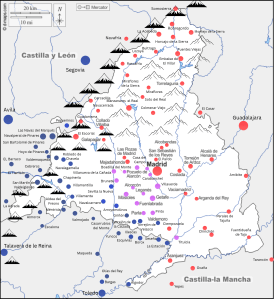
On 1 November 1936, the Madrid front was experiencing intense, coordinated military actions as the Nationalist forces under General Francisco Franco executed the final phase of their approach to the capital. At this point, the Republican forces were fighting desperate delaying actions to buy time to fortify Madrid’s urban boundaries. Pushing from the west, General Varela’s Nationalist columns successfully overran Republican militia positions, officially seizing the strategic town of Brunete. In a crucial effort to support retreating infantry columns, Krivoshein’s Soviet-manned tank group (utilising 23 T-26 tanks and 9 armoured cars) launched an aggressive armoured counter-strike against advancing Nationalist troops. This slowed the Nationalist operational tempo but could not prevent the loss of territory.
The fighting here was fluid, rapid, and devastating for the Republican infantry, punctuated only by a violent Soviet-led armoured counter-stroke. As the day began, the local anarchist and worker militias holding Sevilla la Nueva had found themselves entirely outmanoeuvred. Nationalist columns did not engage in slow urban warfare; instead, they used highly mobile motorised troops and cavalry to bypass the town’s static trenches. When the Republican defenders realised they were being completely flanked and encircled, their defensive lines fractured, leading to a disorganised, fighting retreat northward toward the Guadarrama River. Even with the aid of the Soviet tanks, the crews were forced to pull back, and by the end of the day, Brunete operationally fell into Nationalist hands.
To the south of the capital, Nationalist columns continued grinding northward along the main roads from Toledo. Skirmishes intensified on the approaches to Valdemoro and Pinto as Republican forces attempted to stop the encirclement of Madrid from the south-east. meanehile, both sides actively contested the skies over the capital. Republican Polikarpov fighters scrambled to intercept Nationalist Junkers Ju 52 bombers and Italian-supplied fighters attempting to disrupt defensive lines.
At Valdemoro and Pinto axis, which covered the approach along the main highway from Toledo, the Nationalists were grinding northward to pin down the Republic’s flanks with 5,000 troops, heavily armed and backed by German Panzer I light tanks. The Republicans strength in return was about 10,000 to 12,000 personnel, more organised, and anchored heavily by the Communist Fifth Regiment under Enrique Líster. An additional subsidiary Nationalist force of 5,000 men under General Valdes Cabanillas was operating further away to the northwest in the Sierra Guadarrama to create a diversion, but was not in action on 1 November.
Unlike the open-field manoeuvres of the west, the fighting in the south transformed into a gritty, urban holding action along the main highway from Toledo. Nationalist forces had breached Valdemoro’s outer limits just prior to 1 November. On this day, the Republican Fifth Regiment under Enrique Líster engaged in intense, house-by-house urban combat inside Valdemoro. The highly disciplined Communist militia used barricades, windows, and improvised explosives to contest every street. They intentionally fought a bloody delaying action, forcing the Nationalists to expend ammunition and time clearing individual buildings rather than advancing cleanly along the highway. Just a few kilometres north, at Pinto, Colonel Puig d’Asprer used the delay at Valdemoro to hastily fortify the town. Republican forces dug into the solid stone buildings and set up machine-gun nests across the southern entrances. Throughout 1 November, Pinto successfully held firm against intense Nationalist probing attacks, serving as the anchor that prevented a total breakthrough toward Madrid’s south-eastern supply lines.
The fighting on the ground was mirrored by a massive escalation in the sky. To prevent the Nationalist air forces from obliterating the retreating infantry in the west and the dug-in forces in the south, the Republican Air Force (Gloriosa) launched maximum sorties. Newly arrived Soviet Polikarpov I-15 Chato fighters aggressively dogfought Italian Fiat CR.32 fighters directly above the Brunete and Valdemoro axes, successfully distracting enemy bombers and allowing the surviving Republican ground units to reorganise closer to the capital.
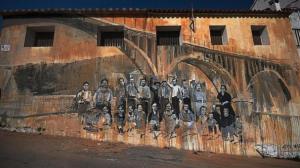
- Onda/Fanzana, Castellón, Valencia
Fanzara was a tiny enclave of roughly 300 to 400 residents experiencing immense political friction. In 1931, when the Republic was declared, Fanzara was one of the few towns in the Lucena district where a vote did not actually happen because only one uncompetitive right-wing Monarchist slate stepped forward. When partial municipal elections were finally forced in April 1933, bitter political factions erupted. The left-wing workers felt heavily squeezed by the local right-wing council (which included figures like former mayor José Durá Seguer). When the Popular Front leftist coalition took power nationally in February 1936, the local power balance flipped instantly. Municipal grudges festering since those local 1933 elections would resurface in November 1936.
A striking feature of the Fanzara victims is that they were explicitly classified as labradores (small-scale agricultural labourers or farmers) rather than elite, wealthy elite caciques (land barons). In the Castellón province, the local Falange (fascist movement) was not made up of aristocrats, it was heavily populated by working-class rural farmers who were deeply Catholic and fiercely anti-communist. Because Joaquín Gil Chiva had actively successfully recruited young, working-class agrarian men into the Fanzara Falange cadre before the war, the local revolutionary committee viewed the village’s right-wing pocket not as elite exploiters, instead active ideological traitors to the working class.
In a small, tightly-knit Spanish village like Fanzara, political power and ideological structures were heavily organised around extensive family clans rather than isolated individuals. In the rural Castellón province, the Falange and conservative networks relied entirely on family networks. Vicente Ibáñez Durá shared maternal and paternal lineages with the primary political targets: the former Primo de Rivera-era mayor (José Durá Seguer) and the core right-wing nucleus. In high-level rearguard purges, militant committees systematically eliminated the elder patriarchs of targeted right-wing families to completely break the family’s local influence, prevent future retaliation, and neutralise the head of the conservative household.
The timing of the executions on 1 November 1936 was highly specific. By late October 1936, Francoist troops were at the very gates of Madrid, and rumour spreads that a Nationalist fifth column would rise up and slaughter Republicans from within. Local antifascist committees in Castellón and Onda panicked. They decided to pre-emptively eliminate any local leadership that could act as a Nationalist asset if the frontline broke. The local Falange leader (Gil Chiva) and the former mayor (Durá Seguer) were seen as an active military threat to the rearguard, prompting the local committee to load them into trucks for execution before the Republic could lose the war.
The names of all 15 victims are not publicly available, but five are, and the other ten are all relatives of the victims – Joaquín Gil Chiva, a 24-year-old agricultural labourer who served as the local leader of the Falange Española, and his brother José Gil Chiva, a conservative sympathiser, alongside José Durá Seguer, a 42-year-old agricultural labourer who had previously served as the Mayor of Fanzara under the 1920s dictatorship of Miguel Primo de Rivera, and one of his uncles, Vicente Ibáñez Durá, a 75-year-old farmer and veteran right-wing sympathiser, and Miguel Edo Ortells, a local resident and right-wing political affiliate. The remaining ten victims, all close male relatives of these men, are preserved exclusively in the un-digitised physical folios of the Causa General de Castellón (Pieza Quinta: Ramo de Fanzara / Ramo de Onda) at the National Historical Archive in Madrid. These records consist of handwritten post-war exhumation logs, municipal autopsy files from the Onda cemetery pits, and private claims submitted by surviving family members during the early 1940s. Because these families successfully claimed, identified, and privately reburied the remains in Fanzara’s cemetery after the war, their names were never integrated into modern public databases or digital mass grave maps.
Oral histories from Fanzara reveal that the violence was highly selective. For instance, on other occasions, local leftist leaders like Benjamín Pascual explicitly stepped in to save right-wingers (such as the town priest, Miguel Serrano) by shouting: ‘I don’t want blood in this town, he is an honest man, get him off the truck!’ The 15 men executed at Onda on 1 November were those who failed to secure local left-wing character protectors. They were deemed un-redeemable by the militant factions controlling the Fanzara-Onda road corridor because of their explicit pre-war political offices and fascist party memberships. The outbreak of the Spanish Civil War weaponised local fractures that had been building for years. In the tiny, agrarian village of Fanzara, the political landscape had shifted permanently during the partial municipal elections of April 1933. A bitter divide emerged between left-wing agrarian workers and the deeply religious, conservative faction that controlled the local council.
Following the Nationalist capture of Castellón in 1938, the incoming Francoist regime launched a massive forensic and judicial effort to exhume right-wing victims, designating them as Mártires por la Dios y por la Patria (Martyrs for God and the Fatherland). Between 1939 and 1941, the mass graves within the Onda municipal cemetery were opened. Backed by the state, families from Fanzara travelled to Onda to identify the remains of their relatives through clothing, personal effects, and dental features. The bodies were officially exhumed, recorded in the Causa General archives, and returned to Fanzara for formal Catholic reburial in private family niches.
The local committee acted on a crude, frantic logic, believing that if you eliminate the primary organisers, the local Falange leader Joaquín Gil Chiva and the former mayor José Durá Seguer, the potential for an internal pro-Franco uprising vanishes. However, they treated a complex social network as a centralised military unit. In a small rural village, ideology is bound together by bloodlines, marriages, and generational neighbourly ties. Killing the 15 men did not dissolve the conservative sentiment; it simply traumatised and deeply radicalised the surviving family networks, turning passive political opponents into active, lifelong enemies of the Republic.
Rather than neutralising a military threat, the massacre on 1 November 1936 produced destructive outcomes that actively crippled the local Republican war effort. In small communities, the Republic’s moral authority relied on its promise of legal order, justice, and social progress. By bypassing the legal system and executing 15 neighbours in a ditch at Onda, the militant factions alienated moderate left-wingers and apolitical citizens who were horrified by the lawlessness. Trust within Fanzara evaporated. Neighbours who had lived side-by-side for decades now looked at each other as potential murderers or informants. This stifling environment made collective agricultural work and civic cooperation nearly impossible, crippling the village’s wartime economy. The purge achieved nothing for the Republic, but it handed the incoming Nationalist regime a perfect political weapon. When Francoist forces captured the Castellón province in 1938, they used the Causa General to investigate this exact massacre. The names of the Fanzara victims became the justification for a massive, legalistic counter-purge that resulted in the imprisonment, exile, or execution of the town’s left-wing population.
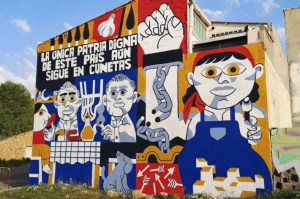
Fanzara is now a town coated in building-sized murals of incredible talent and well worth the visit. In 2023, a mural that violates the rules of the town, which ‘prohibits phrases, drawings or similar things of a political nature or any other intervention that may offend the sensibilities of individuals or different groups.’ The local right-wing government has been trying to get the mural removed, because it points out the ongoing hypocrisy of the town, where right-wingers are venerated as heroes, while left-wing innocents (and the guilty) remain unexhumed. The artist Elías Taño, whose Republican relative remains unexhumed post-war, has been able to maintain their mural on a technicality around the date of the installation, but those aligned with strict right-wing and fascist groups in the area still have hurt feelings. One of the managers of Valencia Cultural Management, José María Bullón warned the town that ‘censorship is not a good way to exercise democracy,’ and in September 2024, the Fanzara Council agreed to back down from legal action, but showed their true colours when they simultaneously voted to completely eliminate the municipal financial subsidy previously granted to the MIAU (Museo Inacabado de Arte Urbano) art festival.
The festival successfully celebrated its landmark 10th anniversary edition from 2 to 5 July 2026. The 2026 line-up featured a full program of international street artists, including Alex Senna, Amanda Arrou-tea, Asem Navarro, Dante Arcade, Sr. Don Pez, and Taqi Spateen. Alongside the creation of new large-scale murals, the 2026 festival retained its multi-disciplinary format, integrating live music, free community workshops, and contemporary dance performances by the Takiri Art Company. To strengthen its civil and global footprint, the festival solidified an ongoing collaboration with the UNRWA (United Nations Relief and Works Agency), hosting joint conferences on how urban art can be used as a tool for peace and human rights advocacy. The transition from the physical violence of the 1930s to the administrative and cultural disputes of the 2020s demonstrates how the underlying divisions have survived. While the methods of conflict have changed from firing squads to municipal ordinances, funding cuts, and threatened legal cases, the foundational ideological polarisation remains intact in 2026 in a population of 295, a third of which are over 65, in a town no longer agricultural, but an open-air museum out of necessity to survive.
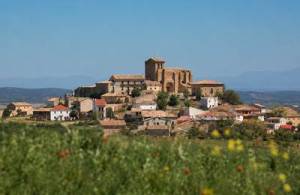
- Mount Ezkaba, Navarra
Perched high above the city of Pamplona, the massive 19th-century Fuerte de San Cristóbal (St. Christopher’s Fort) served as one of the most brutal high-security prisons of the Francoist regime. Following the military uprising of July 1936, the fortress was transformed into a freezing, overcrowded dumping ground for political dissidents, union organisers, and ideological opponents.
On 1 November 1936, 21 prisoners from the Fuerte de San Cristóbal fortress were killed and buried in the municipal cemetery of Berriozar, Navarra. The official records compiled by military prison authorities registered all 21 deaths at the same hour and listed the cause of death as trauma. Recent forensic excavations and archival investigations have documented the identities of these prisoners, the mechanics of the cover-up, and the physical reality of the executions. Many of these men at Fuerte de San Cristóbal were arrested during the labour strikes of October 1934. While the Popular Front government amnestied thousands of political prisoners in February 1936, this specific group consisted of anarchists and members of the CNT labour union whose cases were classified under common or union-related offenses, leaving them in detention when the war began.
The prison administration recorded the deaths as a collective event, attributing the casualties to an attempted prison escape. To maintain a standardised administrative record, officials logged trauma as the cause of death for all 21 individuals. This term was used to suggest injuries sustained while fleeing across the rocky terrain of Mount Ezkaba. The bodies were transported down the mountain by military truck and placed in a shared trench within the Berriozar municipal cemetery. Local residents noted the burial location, and the oral record of the site persisted within the community, distinct from official municipal registries.
The mass grave remained undisturbed until a coordinated effort by the local historical memory association Txinparta-Fuerte de San Cristóbal and the Aranzadi Science Society located the site. Excavations conducted at the Berriozar cemetery uncovered the remains of the 21 individuals. The osteological and ballistic analysis performed by forensic anthropologists altered the historical narrative recorded in the prison logs. The skeletal remains showed perimortem fractures caused by firearms rather than blunt force injuries from a fall or escape attempt. Multiple skulls exhibited entry and exit wounds at close range, indicating systematic execution. The investigation revealed the trench also contained 26 prisoners who died at the fort between 1936 and 1942 due to disease, malnutrition, and exposure.
As with other cemeteries around Fort of San Cristóbal, the cemetery in Berriozar has at least 47 prisoners from that penal facility. On November 1, 1936, remains transported by truck to Berriozar left a deep impression on the local population, who remembered the specific area of the cemetery where they were interred.
The Government of Navarre maintains a dedicated DNA database (Dirección General de Memoria y Convivencia) to cross-reference the remains with living descendants. Genetic testing has allowed researchers to verify individual identities within the group. Confirmed identifications include Ignacio Francisco Caneda Deza, a 19-year-old anarchist from O Grove (Pontevedra), and Tomás Nache Guzmán, a labour organiser. Once identified, the remains are legally transferred to their respective families for private burial. In June 2009, a tribute was held for the 47 individuals believed to be buried at the site, organised by the Berriozar City Council and promoted by the Txinparta Association. During the event, plaques bearing the names of those buried there were installed. On 29 June, 2026, a ceremony took place in which the remains of Epifanio Osoro Icobalceta, who had been identified through genetic analysis—were returned to his family.
- Huelva, Andalucia
During the opening days of November 1936, the administrative mechanism of the Nationalist repression in the Huelva province adjusted its operational script. The fluid, irregular roundups of the immediate post-coup period transitioned into a structured system of regional transfers and executions. Prisoners were systematically collected from outlying agricultural and mining towns, moved along transit corridors, and executed in small groups near municipal boundaries or central infrastructure points. Because these actions were conducted under the authority of military commands and Falangist squads, the deaths were rarely recorded in local parish books. Instead, remains were frequently funnelled into large common graves, principally within the La Soledad Cemetery in Huelva city, where hundreds of bodies remain un-exhumed and anonymous.
On the first day of November, the execution network conducted a series of killings spanning multiple judicial districts in the province. Miguel Camacho Chaves, a resident of Rociana, was transported and executed within the neighbouring territory of Niebla. Simultaneously, Diego Dancauce Pérez was executed within Rociana. In the mining and agrarian sectors, small nuclei of local union or political leaders were executed in pairs or trios, like Antonio Delgado Romero shot and buried at Escacena, Alonso González Márquez and Juan Herrera Domínguez, both residents of El Cerro de Andévalo, were executed together. Francisco Márquez Cortés and Benito Romero Hato, also from El Cerro de Andévalo, were moved and executed together at Calañas. Juan Núñez Cortés, Antonio Pérez Galindo, and Ángel Vázquez García, all from the radicalized mining centre of El Campillo, were executed as a single group. Francisco Pacheco Pinto of Nerva and Rafael Sánchez Romero of Almonaster were systematically eliminated within their respective zones. Valentín Maestre Pérez was executed in the northern mountain sector of Aroche.
The selections continued the following day, focusing on individuals holding ties to the pre-war left-wing municipal structures of the Andévalo and mining basins – Manuel Gómez Gento of El Cerro de Andévalo, and Diego Villalba Vázquez, alongside one unidentified male prisoner, was executed at El Campillo. On 3 November, the systemic movement of prisoners crossed provincial lines, showing the coordination between the Huelva commands and the central military division in Seville – Emilio Márquez García was executed at the regional hub of Aracena, Manuel Martín Blancowas transferred out of the province entirely and executed at the focal point of the southern repression in Seville.
The first wave of November killings culminated on 4 November with a major multi-person execution in the Cuenca Minera and the central plain – a targeted list in Zalamea resulted in the simultaneous execution of brothers Manuel González Martínez, Justo González Rodríguez, and Mario González Rodríguez. Juan Manuel López Castilla, a resident of Valverde del Camino, was moved to Beas and executed alongside six unidentified individuals. Their bodies were placed in a shared, undocumented pit within the Beas district. Juan Mantero Valero, also from Valverde, was transferred to the naval jurisdiction of San Fernando, Cádiz, where he was executed by naval authorities.
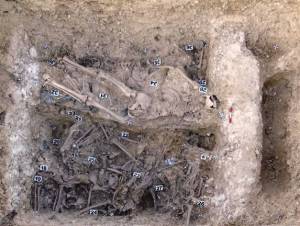
The concentration of these names within the first 96 hours of November 1936 illustrates the non-random nature of the White Terror in Huelva. The inclusion of unidentified individuals in the primary source data reflects the institutional erasure practiced by the execution squads; prisoners were routinely stripped of identification papers before being shot at close range. Because the central government has only recently allocated targeted funding for the complex mapping of large urban repositories like La Soledad Cemetery (where over a thousand victims lie packed into deep common trenches), these 21 men and their unidentified companions remain classified as unresolved missing persons within the historical geography of Andalucía.
Spain’s central government approved a Royal Decree in September 2025, giving the power to Andalucían provincial authorities and town halls for the search, location, exhumation and identification of the remains of victims of the Spanish Civil War and the dictatorship. The decree comes with a budget of just over one million euros, to help in Jaén,Seville, Córdoba as and Huelva, and help for the Nerva (Huelva) Víznar (Granada) town halls. Aid was also to the Caceres, Badajoz and La Coruña, with a total of 2.4 million euros in direct subsidies for democratic memory. A four year plan for the period 2025-2028 also includes €100,000 to erect memorials where human remains that cannot be identified.
- Torremocha de Jadraque, Guadalajara
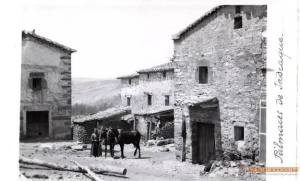
Following the high-profile Nationalist capture of Sigüenza in mid-October, Nationalist operations pushed westward across a wide territorial front to systematically clear out Republican rearguard pockets. On 31 October 1936, Nationalist columns, including Carlist Requetés attached to the América No. 23 Regiment, successfully occupied the nearby villages of Pálmeces, Negredo, and Baides.
The assault on the Torremocha de Jadraque sector was executed by spearheaded columns from the Division of Soria, operating under the broader command of General José Enrique Varela and Colonel Francisco García-Escámez. The América No. 23 Infantry Regiment was reinforced by the 1st and 2nd Companies of the Primer Requeté de Pamplona (Carlist volunteer militias). A typical infantry company at this stage of the war fielded between 150 and 200 combatants. The immediate tactical force contesting the village consisted of roughly 300 to 400 specialised front-line Carlist volunteers, supported by the regular infantry battalion.
The defence of towns like Torremocha de Jadraque fell directly onto the shoulders of everyday citizens, factory workers, small-scale farmers, miners, and tradespeople, who had to instantly self-organise into popular militias out of basic survival. Without access to a centralised supply chain or military academies, local trade unions (like the UGT and CNT) and municipal committees created their own administrative systems. They managed logistics, food distribution, and medical care entirely from scratch throughout the country, To counter the heavy weaponry and professional artillery of the Nationalist forces, these citizen militias were relying heavily on improvisational engineering. Because they lacked formal training in open-field manoeuvring, these militias, just a few hundred, used their intimate, lifelong knowledge of local terrain. They transformed familiar village stone walls, church towers, and olive groves into highly effective, stationary defensive networks that repeatedly succeeded in slowing down professional, well-equipped military columns.
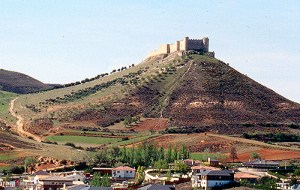
The resistance encountered by advancing Nationalists forces in early November 1936 was the direct result of this popular ingenuity when the Nationalist vanguard entered Torremocha de Jadraque on 1 November. Unlike earlier phases of the march where worker militias frequently scattered into open terrain when facing artillery, the entry into this village was met with structured, stationary defence lines. Local Republican forces and regional trade union detachments used the structural features of the village to mount an organised resistance, slowing the Nationalist timeline.
The combat reached its peak on 2 November 1936, developing into a high-intensity engagement as Republican reinforcements contested the road corridors leading deeper into the Henares river basin. Despite the organised Republican resistance, the technological superiority and tactical consistency of the Nationalist professional units forced a gradual Republican withdrawal. Once Torremocha de Jadraque was entirely cleared and secured as a frontline logistics hub, the rebel columns resumed their advance down the corridor, subsequently occupying Mirabueno and Mandayona on 6 November, followed by Castejón de Henares on 8 November 1936.
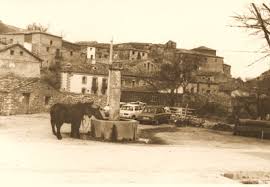
Following the end of the conflict, the post-war Francoist judicial authority activated the Causa General (Pieza Cuarta de Guadalajara: Checas) to systematically collect municipal reports, Falange telegrams, and local testimonies regarding the activities of the local Popular Front committee that had controlled Torremocha de Jadraque prior to its 1 November capture. By December 1936, the remnants of the militias that fought at Jadraque were officially consolidated and organised into the formal 48th, 49th, and 50th Mixed Brigades of the new Republican Popular Army.
The regional legacy of repression for the broader Jadraque zone was heavily defined by the Jadraque concentration camp. Established by the Nationalist military commands as a permanent detention depot, it held thousands of captured Republican soldiers and local citizens. Many prisoners succumbed to disease, malnutrition, and harsh conditions inside the barracks, with their bodies placed in local unmarked burial sites that are only recently being excavated by modern archaeological teams.

