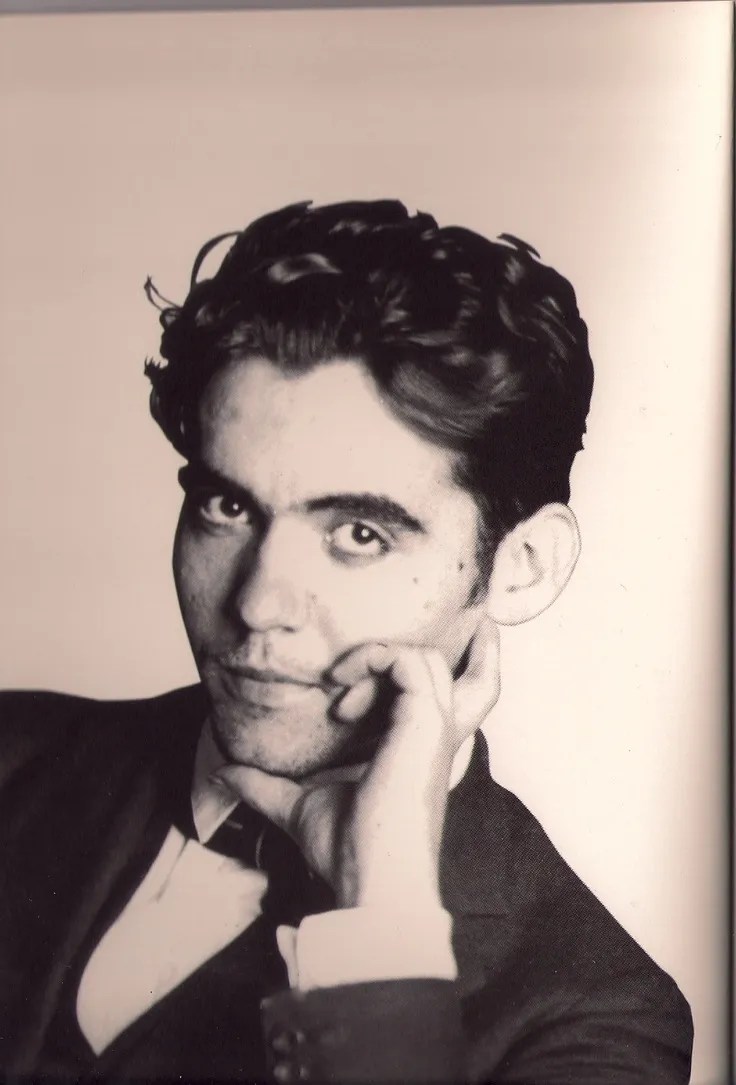
Federico del Sagrado Corazón de Jesús García Lorca was born on 5 June 1898 in the small agricultural village of Fuente Vaqueros, about 20 kilometres west of Granada. His father, Federico García Rodríguez, was a prosperous farmer and landowner, while his mother, Vicenta Lorca Romero, had worked as a schoolteacher before her marriage. From his mother, Lorca inherited a lifelong love of literature, music, and education. She encouraged him to read from an early age and fostered the artistic interests that would later define his career. In 1909, the family moved to Granada, where Lorca spent most of his youth. The city, with its mixture of Christian, Muslim, and Jewish heritage, left a lasting impression on him. The streets of the Albaicín, the palaces of the Alhambra, and the traditions of Andalucian music and folklore became recurring themes throughout his poetry and plays.
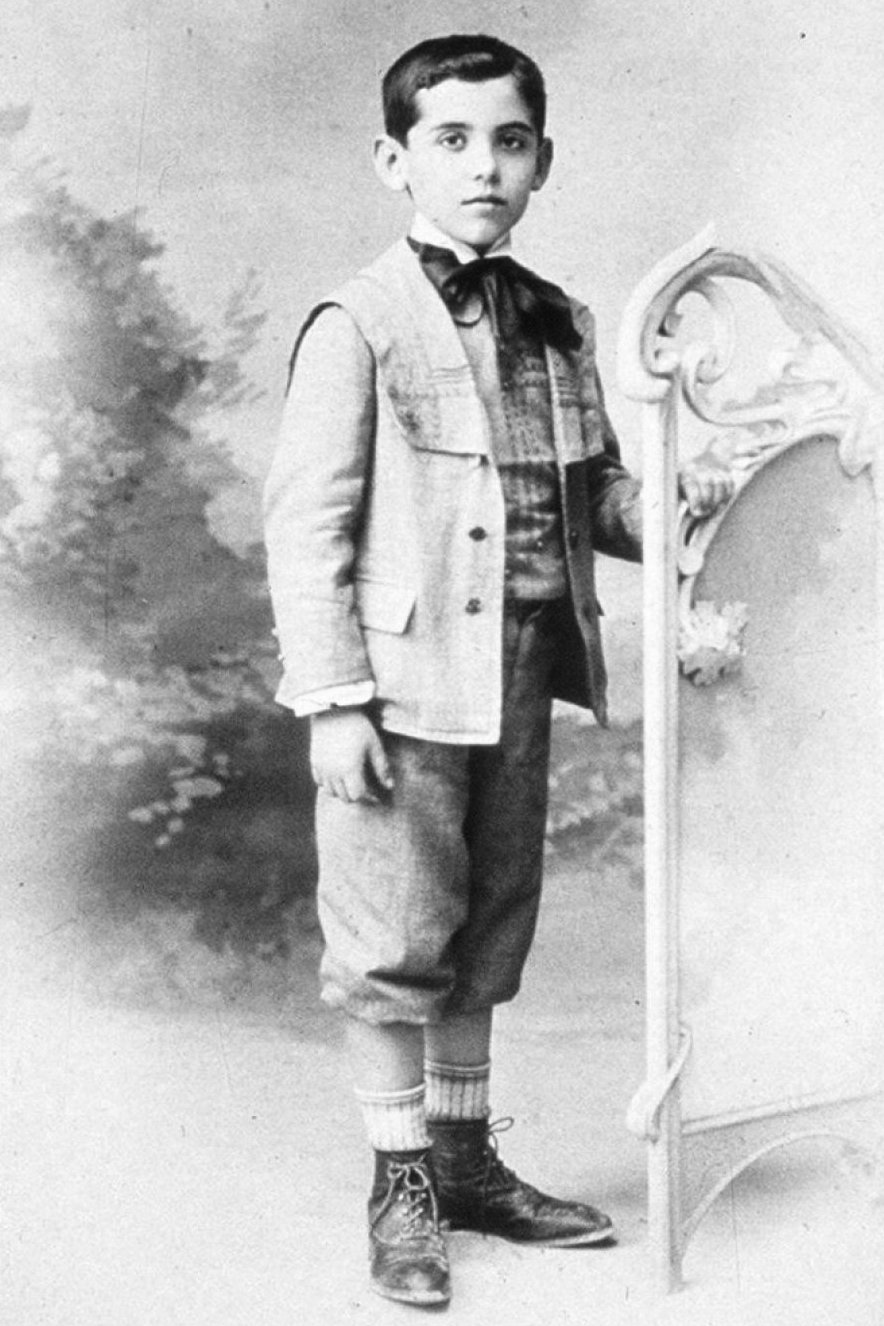
Lorca would become famous as a writer, music was his first passion. He studied piano seriously under the composer Antonio Segura Mesa and considered a professional musical career before turning increasingly towards literature. Friends later remarked that music shaped the rhythm and emotion of his writing, and its influence can be heard throughout his poetry and theatrical works. He enrolled at the University of Granada, studying law while also attending philosophy and literature courses, but he immersed himself in Granada’s intellectual and artistic circles, where he developed friendships with writers, musicians, and academics who encouraged his growing literary talent. During these years he also travelled widely across Spain with his professor Martín Domínguez Berrueta, journeys that exposed him to the country’s diverse landscapes, customs, and traditions.
His first book, Impresiones y paisajes, appeared in 1918. Based on those travels, it combined prose, observation, and reflection rather than poetry or drama. Although it attracted only modest attention, the publication marked the beginning of a literary career that would soon place Lorca among the most influential voices of twentieth-century Spanish literature. So in 1919, Lorca left Granada for Madrid, where he took up residence at the Residencia de Estudiantes, one of Spain’s leading centres of intellectual life, attracting students, artists, scientists, and writers from across the country. The institution promoted free enquiry, artistic collaboration, and modern European ideas at a time when Spain was undergoing profound cultural change.
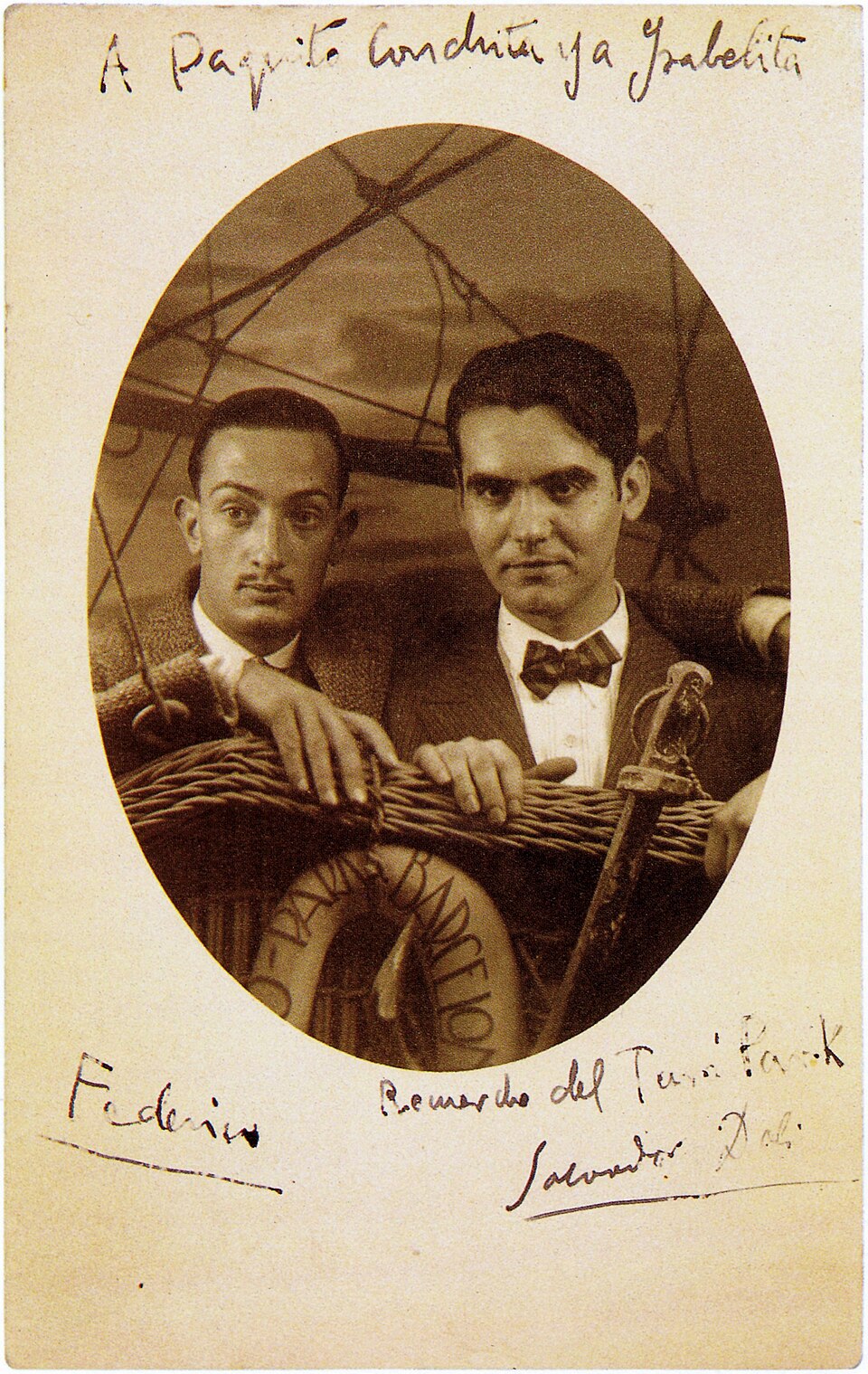
The Residencia introduced Lorca to many of the figures who would shape twentieth-century Spanish culture. Among them were the young painter Salvador Dalí and the aspiring filmmaker Luis Buñuel. Their friendships, collaborations, and occasional disagreements became part of one of the most remarkable artistic circles in modern Spain. Lorca also met musicians, philosophers, and writers whose influence broadened his interests beyond Andalucian themes while strengthening his commitment to artistic experimentation. During the early 1920s, Lorca began to establish himself as both a poet and playwright. His Libro de poemas appeared in 1921, followed by collections inspired by Andalucian folklore, traditional song, and the rhythms of flamenco. His first theatrical productions received mixed reviews, but they demonstrated an originality that distinguished him from many of his contemporaries.
Lorca achieved national fame in 1928 with the publication of Romancero gitano. Drawing on Andalucian landscapes, Romani culture, folklore, and symbolism, the collection became one of the most successful books of poetry published in modern Spain. Readers embraced its vivid imagery and musical language, although Lorca himself grew frustrated that many critics interpreted the work as a romantic portrayal of the Romani people rather than recognising its deeper exploration of freedom, repression, desire, and death.
By the end of the decade, Lorca had become one of Spain’s best-known writers. His poetry attracted an audience far beyond literary circles, while his growing reputation placed him alongside the poets who later became known as the Generation of ’27. Yet the sudden success of Romancero gitano also brought intense public attention that he found increasingly uncomfortable. Determined not to become confined by a single style or subject, he looked abroad for new artistic inspiration, and seeking distance from sudden fame, Lorca travelled to the United States in 1929. He enrolled at Columbia University in New York, but the city itself became his source of inspiration. Arriving only months before the Wall Street Crash, he witnessed vast economic inequality, racial discrimination, and the relentless pace of modern urban life. The experience marked a dramatic departure from the rural landscapes and folklore that had dominated his earlier writing.
The poems he produced during and after his stay, later published as Poeta en Nueva York, abandoned many of the traditional forms that had made him famous. Lorca embraced surreal imagery and darker themes to explore alienation, injustice, industrialisation, and the dehumanising effects of modern society. Today, the collection is regarded as one of the masterpieces of twentieth-century Spanish poetry. Lorca followed up this with several months in Cuba before returning to Spain in 1930. The visit deepened his appreciation of Spanish-language culture beyond the Iberian Peninsula, and the music and traditions of the Caribbean also found their way into his work.
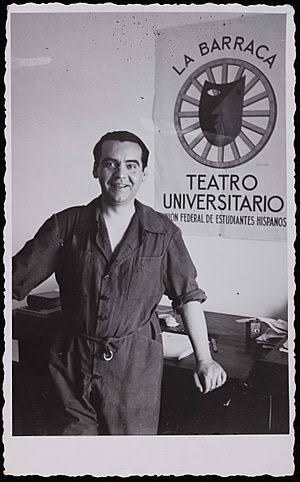
The proclamation of the Second Republic in April 1931 transformed Spain’s cultural landscape. The new government invested heavily in education and the arts, believing that culture should be accessible to everyone rather than confined to the country’s major cities. Lorca enthusiastically supported these efforts and, in 1932, became director of La Barraca, a travelling university theatre company funded by the Ministry of Education, and over the next several years, La Barraca toured towns and villages across Spain, performing classical works by playwrights such as Lope de Vega and Calderón de la Barca for audiences who had often never seen live theatre. Lorca believed that great literature belonged to ordinary people as much as to academics or wealthy theatre-goers. The project became one of the Second Republic’s most celebrated cultural initiatives and reflected his conviction that art could educate as well as entertain.
At the same time, Lorca reached the height of his career as a dramatist. He wrote Bodas de sangre (1933), Yerma (1934), Doña Rosita la soltera (1935), and completed La casa de Bernarda Alba in 1936, only weeks before his death. These plays explored themes of honour, repression, desire, authority, and the restrictions placed upon women in traditional Spanish society. Their emotional intensity and poetic language established Lorca as Spain’s leading playwright and secured his reputation far beyond the country’s borders. By the summer of 1936, Federico García Lorca was one of Europe’s most admired writers, whose work represented a confident, modern Spanish culture.
While Lorca became closely associated with the Second Republic, he was never a member of a political party. He repeatedly rejected attempts to label him a communist, socialist, or conservative, insisting that his loyalty was to culture, artistic freedom, and the people of Spain rather than to any political movement. But he welcomed the proclamation of the Republic in 1931 and supported its efforts to expand public education, reduce illiteracy, and make art and literature accessible beyond Spain’s largest cities. Through La Barraca, he helped bring classical theatre to rural communities that had rarely, if ever, experienced live performances. He believed that culture belonged to everyone, not only to the wealthy or the educated elite. His writing also reflected a deep sympathy for those living on the margins of society. Many of his poems and plays explored the lives of women constrained by tradition, rural labourers, the Romani community, and individuals whose lives were shaped by poverty, social expectations, or prejudice. Lorca examined injustice through human stories, allowing audiences to draw their own conclusions.
But as Spain became increasingly polarised during the 1930s, Lorca found himself criticised from different directions. Conservatives often viewed his support for the Republic’s cultural programme with suspicion, while some on the revolutionary left considered him insufficiently political because he refused to use literature as party propaganda. Friends later recalled that he was deeply troubled by the growing hatred between Spaniards and feared that violence would destroy the country’s cultural life. Lorca’s sexuality also placed him outside the social norms of conservative Spain. Although he rarely discussed his private life publicly, many people within Granada’s political and social circles were aware he was gay. Homophobic attitudes were widespread across Spanish society, and later evidence suggests that his sexuality formed part of the hostility directed towards him after the military uprising. His public prominence, his association with Republican cultural institutions, his liberal views, and local political rivalries all contributed to making him a target, alongside his sexuality.
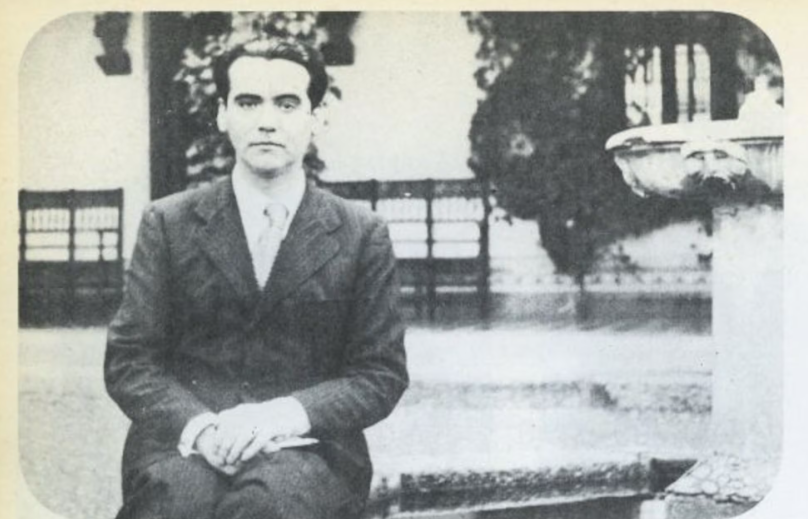
By July 1936, Lorca stood among the most recognisable cultural figures in Spain. He had avoided party politics, yet his name had become closely identified with the Republic’s vision of an educated, modern, and culturally vibrant nation. When sections of the army launched their uprising in July, he found himself in the city that would soon become one of the rebellion’s bloodiest centres of repression. Lorca had returned to Granada in mid-July 1936, intending to spend the summer with his family at the Huerta de San Vicente (San Vicente Orchard) only a few minutes’ walk away from the central city. Despite the increasingly tense political climate, there is no evidence that he anticipated becoming caught in the violence that was about to engulf Spain.
The military uprising reached Granada on 20 July. After two days of uncertainty, army officers, the Guardia Civil, Assault Guards who had joined the rebellion, and armed civilian supporters seized control of the city. Republican resistance collapsed after fighting around key government buildings, and Granada became one of the first provincial capitals to fall permanently into Nationalist hands. Nationalist authorities, led by Civil Governor José Valdés Guzmán, ordered the arrest of hundreds of people suspected of supporting the Republic. Soldiers, Guardia Civil, Falangists, and other armed supporters carried out arrests throughout the city and surrounding villages. Many detainees disappeared into prisons or makeshift detention centres before being taken to execution sites around Granada, particularly along the roads between Víznar and Alfacar.
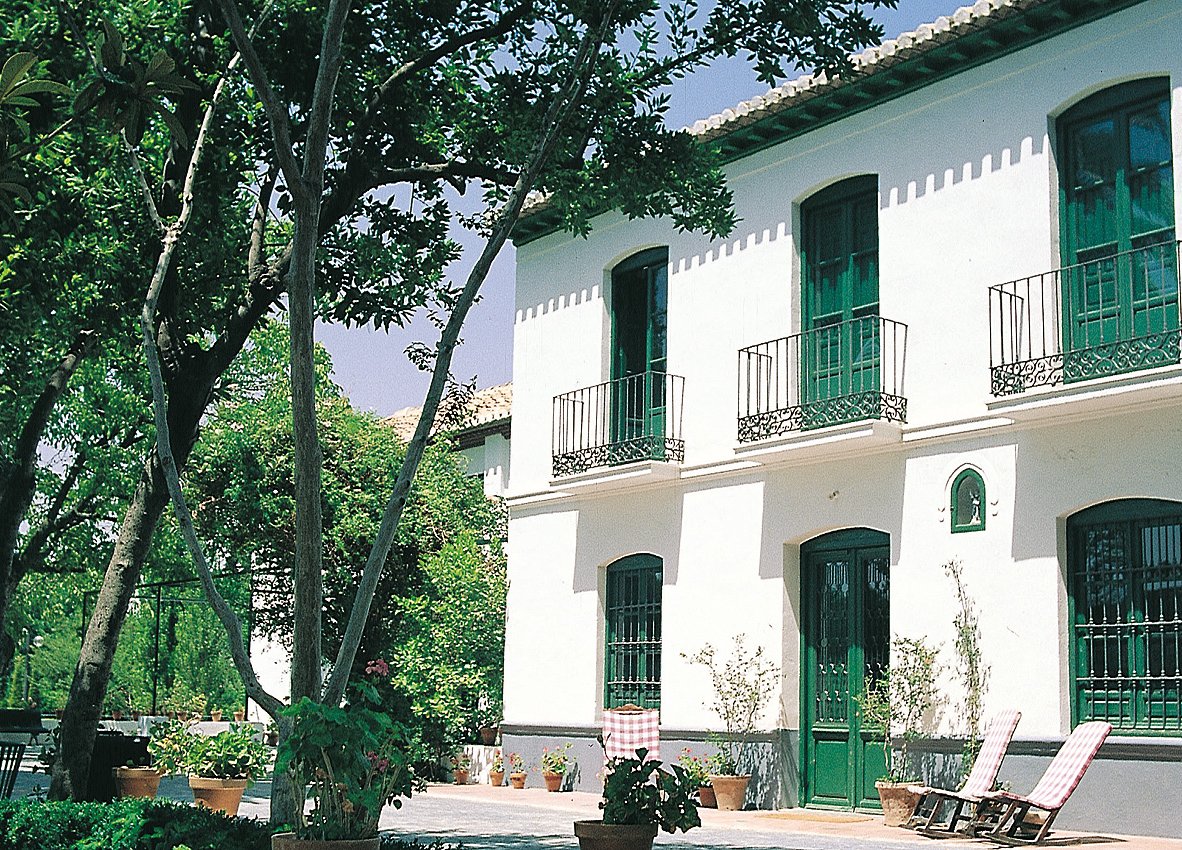
Lorca watched these events unfold from the Huerta de San Vicente. Friends urged him to leave Granada while escape was still possible, but the opportunities quickly disappeared as Nationalist forces tightened their control over the province. It remains uncertain why he chose to stay; he may have believed that his international reputation would protect him, or that his family’s social standing would shield him from suspicion. Others later suggested that he simply could not imagine that the authorities would execute a writer who had never taken up arms. Regardless of his opinion, Granada city was closed off by authorities quickly, so the opportunity to leave disappeared faster than most could have imagined.
Any remaining sense of security vanished weeks later on 16 August when Nationalist authorities executed Lorca’s brother-in-law, Manuel Fernández-Montesinos Lustau, the former Socialist mayor of Granada. Fernández-Montesinos had been arrested soon after the uprising despite offering no armed resistance, and had been lucky to have remained alive as long as he had, as Nationalist authorities had already begun their systemic arrest and execution procedures around the city. By then, Lorca had already left the Huerta de San Vicente. Believing that his presence endangered his family, he accepted an invitation from his close friend and fellow poet Luis Rosales Camacho to stay with the Rosales family in the centre of Granada at 1 Angulo Street. The Rosales brothers, Luis, Miguel and José, were prominent Falangists who admired Lorca’s work and believed that their political connections would protect him from arrest, even though they had already lost several friends to the uprising. For several days, their home appeared to offer a refuge from the violence sweeping the city, but would be only a temporary sanctuary. Lorca lived for seven days on the second floor with Luisa Rosales Camacho, sister of the Rosales’ mother Esperanza, in a spare bedroom on the second floor. During bombing raids, Lorca hid with the family in their improvised shelter.
By the middle of August 1936, Granada had settled into a grim routine. Every day, armed patrols carried out new arrests, prisoners filled the Civil Government building, and groups of detainees disappeared towards the execution sites outside the city. Despite the Rosales family’s political influence, Lorca’s continued presence in their home became increasingly difficult to conceal. Lorca had been staying there out of fear following two police searches of his own home, hoping all would well while his friend Luis travelled south to Motril on an undiscussed mission.
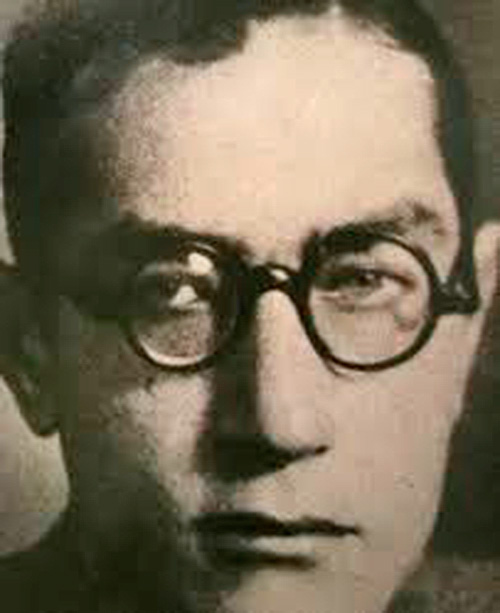
During the early afternoon of 16 August, a group of armed men arrived at the Rosales residence on Calle Angulo, officers surrounding the house and nearby streets before carrying out the arrest. They were led by Ramón Ruiz Alonso, a former deputy of the conservative Catholic party CEDA who had attached himself to the new Nationalist authorities after the military uprising, alongside Juan Luis Trescastro, Federico Martín Lagos and Luis García-Alix Fernández. Ruiz Alonso carried an arrest order signed by José Valdés Guzmán, the Civil Governor of Granada, whose office had become the centre of the province’s campaign of repression. At the time of the arrest, only Esperanza and her sister Luisa were home with Lorca, and the women protested the arrest, there was nothing they could do. Accounts of the arrest agree that Lorca offered no resistance. Aware that the Rosales family risked placing themselves in danger by continuing to argue on his behalf, he left the house with the arresting party and was driven to the Civil Government building in the centre of Granada.
Word travelled fast; Miguel Rosales was at Falangist headquarters and soon arrived home, and he and his brother José immediately went and challenged the arrest. As committed Falangists, they believed their standing within the movement would be enough to protect Lorca. Luis Rosales arrived home from Motril later than afternoon, and did the same, confronting Ruiz Alonso at the civil government headquarters, and in return was threatened he would be killed if he defended Lorca. Luis had argued that the poet had committed no crime, had taken no part in the fighting, and was a guest under his family’s protection. Ruiz Alonso refused to withdraw, insisting that he was acting under orders from the Civil Governor, who José Rosales travelled to pled with the following day, only to be told Lorca was already transferred to Víznar. After his arrest, another investigation decades later claimed that Lorca had been taken directly to a place known as Fuente Grande, between Víznar and Alfacar, though it might have happened that same day.
While temporarily inside the Civil Government building, Lorca probably entered the same system that had already consumed hundreds of prisoners since the Nationalists seized Granada. Somewhere within the building were Dióscoro Galindo González, Francisco Galadí Melgar, and Joaquín Arcollas Cabezas. González was a Republican schoolteacher from Pulianas, just north of Granada. A childhood accident had left him with a permanent disability in one leg, causing him to walk with a pronounced limp throughout his life. Melgar was professional banderillero and earned his living in the world of bullfighting, and was active in the labour movement and maintained links with left-wing organisations. Cabezas, another banderillero and a close friend of Galadí, moved within Granada’s working-class circles and shared similar political sympathies. These three men would later become known primarily because they died alongside Federico García Lorca, each had his own life, family, and place within Granada’s society.
At some point after 16 August 1936, Nationalist authorities removed Federico García Lorca, Dióscoro Galindo González, Francisco Galadí Melgar, and Joaquín Arcollas Cabezas from the Civil Government building. No official record survives documenting the transfer, and no contemporary witness left an account of their journey. For their families, the four men simply disappeared from Granada. In the days that followed, rumours spread quickly through the city. Some claimed the prisoners had been transferred to another detention centre, while others believed they had been taken to the hills north-east of Granada, where executions had already become commonplace. Families searched for information wherever they could, but the authorities gave no official explanation of what had happened. Again paperwork written in the aftermath of the arrest, which was hidden until the 1960s, claimed Lorca confessed to be being a ‘socialist…a freemason belonging to the Alhambra lodge… and engaged in homosexual and abnormal practices… was a Russian spy.’
The road between Víznar and Alfacar, 10km outside Granada had already acquired a fearful reputation. Since the Nationalists seized Granada in July, prisoners had repeatedly been removed from the city and driven towards the pine woods, ravines, and roadside cuttings beyond Víznar. Local people spoke quietly of gunfire heard before dawn and of bodies buried in hastily dug graves, but fear prevented most from speaking openly. For many years, the accepted account held that Lorca and the other three prisoners were executed before dawn on 19 August 1936. That date appeared in biographies, newspaper articles, and memorials, becoming part of the established narrative of the Civil War. More recent research has questioned that chronology. By comparing surviving documents with witness testimony collected over several decades, historians have suggested that the prisoners may have been removed from Granada and executed earlier, perhaps during the early hours of 17 or 18 August. The evidence remains incomplete, and no surviving contemporary document records the exact date of the execution. As a result, historians continue to debate the chronology, even though they broadly agree about what ultimately happened and that Lorca was dead by dawn on 19 August, and was shot and buried in a very shallow grave, in a ravine around 2km to the right of the Fuente Grande, chosen because it was so hard to find.
The available evidence indicates that the four prisoners were taken somewhere between Víznar and Alfacar, an area that Nationalist authorities were already using as one of the principal execution grounds in Granada Province. By the time news of Lorca’s disappearance reached the outside world, the four prisoners had vanished into the violence that engulfed Granada during the first month of the Civil War. Their fate soon became the subject of rumours, testimony, and competing accounts, many of which would not be recorded until decades later. Most researchers now agree that Lorca was removed from the Civil Government together with Dióscoro Galindo González, Francisco Galadí Melgar, and Joaquín Arcollas Cabezas, before being taken towards the execution grounds between Víznar and Alfacar. There, all four men were shot and buried in an unmarked grave.
The identities of those who carried out the execution are equally uncertain. Over the decades, various individuals have been named as members of the firing squad, while others have been identified as the officials who authorised or supervised the killings. Some of these claims rely on testimony recorded many years after the Civil War, while others derive from local tradition. The burial presents a similar problem. Witnesses directed investigators to several locations between Víznar and Alfacar, and successive archaeological excavations have examined a number of these sites. None has conclusively located the remains of Lorca or the three men who died with him. Whether the original witnesses were mistaken, whether the bodies lay elsewhere, or whether they were later moved remains unknown. The lack of certainty has sometimes encouraged sensational claims about Lorca’s final moments. Stories describing his last words, his behaviour before the firing squad, or the precise manner of his death continue to appear in books, documentaries, and newspaper articles. Some may contain elements of truth, but most cannot be traced to contemporary evidence and often contradict one another.
Few questions arising from the Spanish Civil War have attracted more debate than why Federico García Lorca was executed. Since 1936, numerous explanations have been offered, ranging from political persecution and personal revenge to family rivalries and homophobia. Modern historians generally conclude that no single motive adequately explains his death.
Historians also recognise that Lorca’s homosexuality almost certainly contributed to the hostility directed towards him. Conservative attitudes towards sexuality were deeply entrenched in 1930s Spain, and later documentary evidence shows that Nationalist officials regarded it as another reason to denounce him. The 1965 police report prepared during the Franco dictatorship referred explicitly to his homosexuality while attempting to justify his execution. Most historians regard it as one factor among several rather than the sole reason for his death. Local politics further complicated the situation. Granada was a city where personal relationships, political loyalties, and family rivalries frequently overlapped. The Lorca family had long-standing disputes with other influential families, while personal grievances dating from before the Civil War resurfaced after the Nationalists seized power. Some researchers believe these rivalries helped bring Lorca to the attention of the authorities or encouraged denunciations against him. Others argue that they merely accelerated a process already underway.
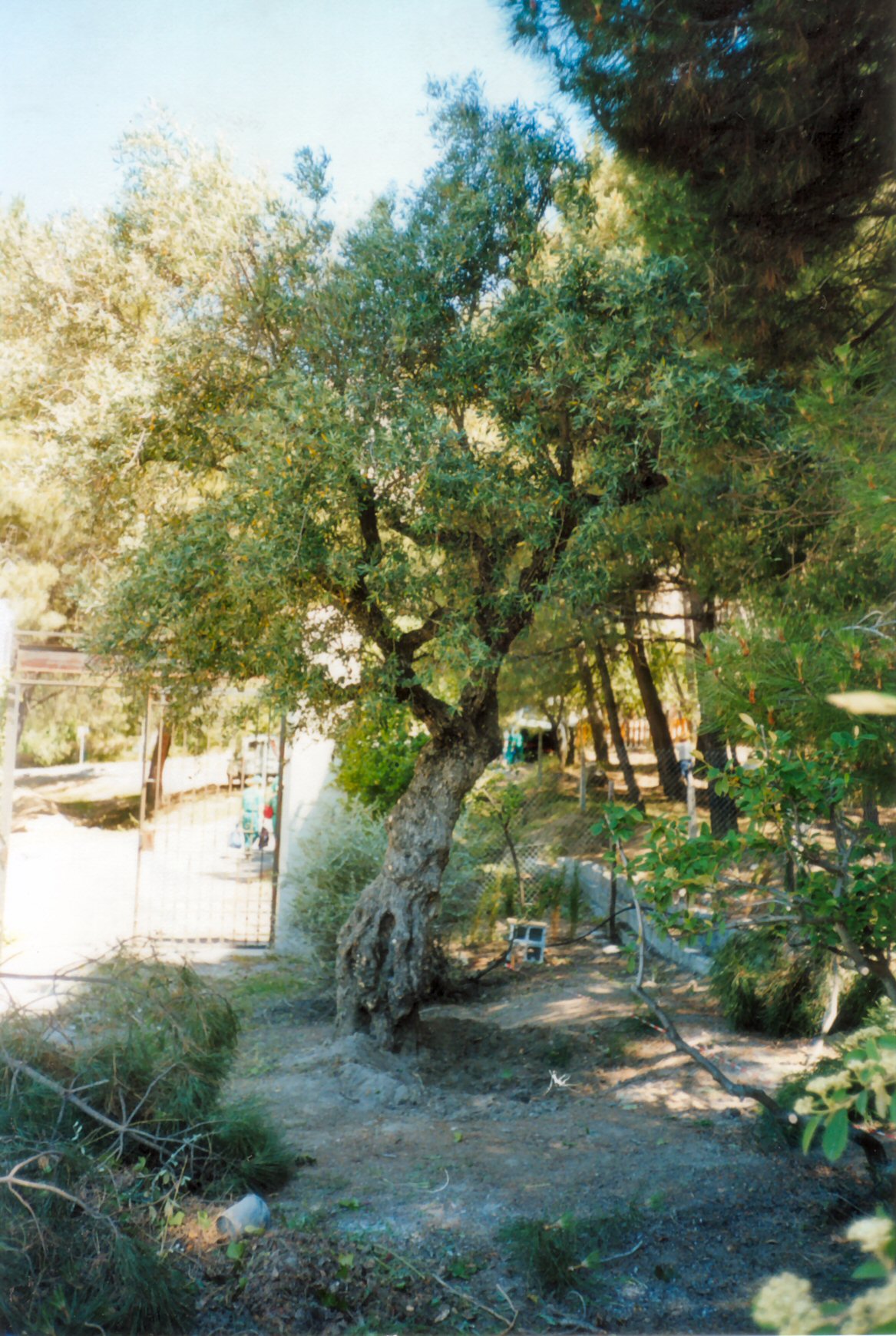
The search for Federico García Lorca’s grave began long before Spain returned to democracy. In the years immediately following the Civil War, fear and political repression prevented any public investigation, while witnesses remained reluctant to speak openly about what they had seen. Although many people in Granada believed they knew the general area where Lorca had been buried, those accounts remained untested and often conflicted with one another. The first serious investigation began in the 1950s when the American writer Agustín Penón travelled to Granada to reconstruct Lorca’s final days. Working discreetly during the Franco dictatorship, Penón interviewed former officials, local residents, and witnesses who had never previously spoken in detail about the executions. His research identified an area between Víznar and Alfacar as the most likely burial site, but his findings remained unpublished for many years.
Penón’s work provided the foundation for the Irish historian Ian Gibson, who began his own investigation during the 1960s. Gibson re-interviewed many of the surviving witnesses, examined documentary evidence, and compared conflicting testimonies in an effort to establish the chronology of Lorca’s arrest and execution. His research became the standard account of the case and shaped public understanding of Lorca’s death for decades. Although later historians have challenged parts of Gibson’s reconstruction, particularly the chronology of the final days, his work remains one of the most important studies ever undertaken into the case.
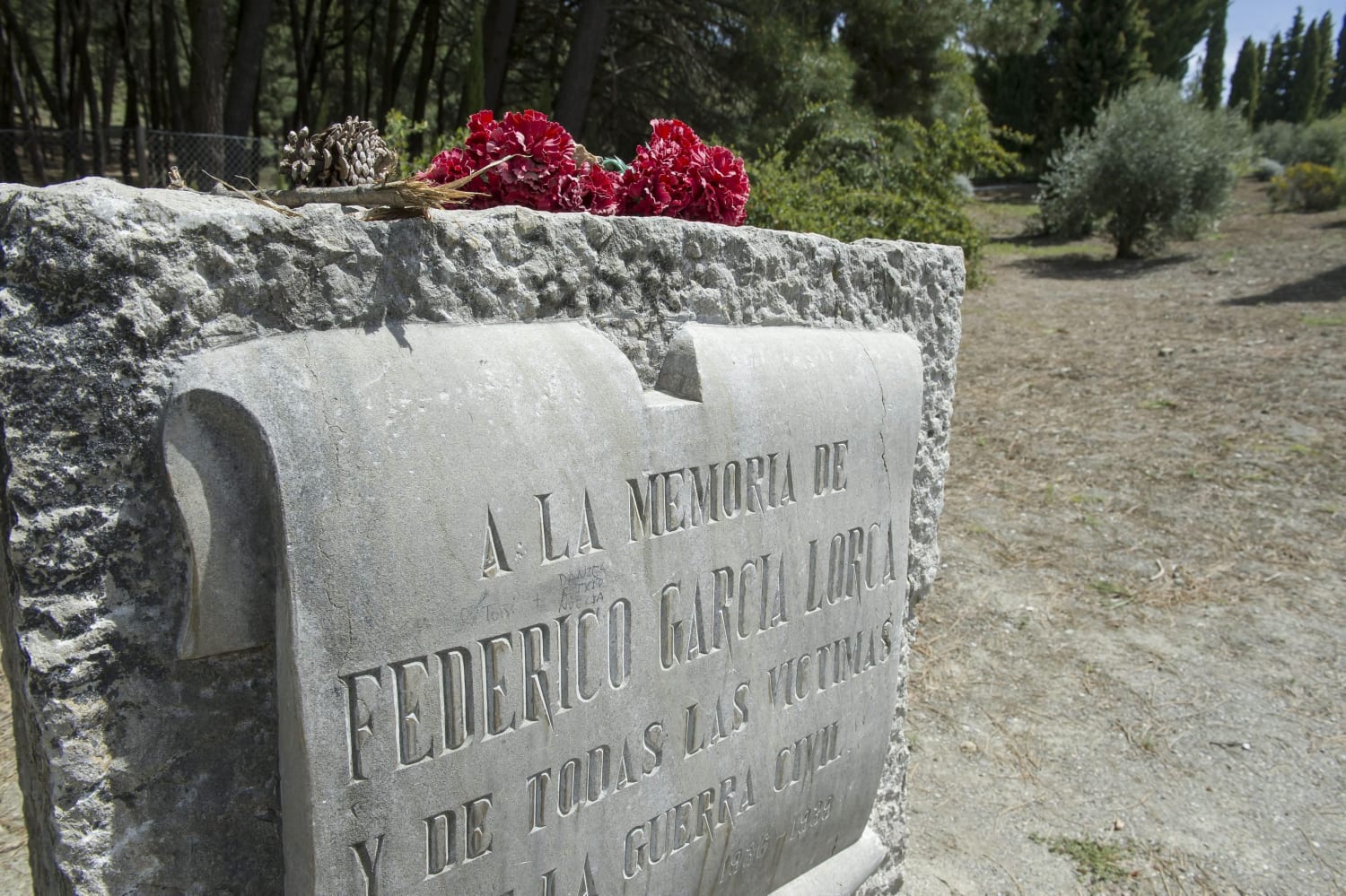
Interest in locating the grave increased after Spain’s transition to democracy, as families across the country began searching for relatives who had disappeared during the Civil War and the Franco dictatorship. Lorca’s grave became one of the best-known missing burial sites, but it also formed part of a much broader effort to locate the thousands of victims still lying in unmarked graves throughout Spain. In 2008, Judge Baltasar Garzón included Lorca’s disappearance within his wider judicial investigation into Franco-era crimes against humanity. Although legal disputes prevented the courts from directing an excavation, the case renewed international attention and encouraged further archaeological investigation.
The first major excavation took place in 2009 near Fuente Grande in Alfacar, at a site identified by several witnesses and long believed to contain the four men. The excavation attracted worldwide media coverage, yet archaeologists found no human remains. While disappointing, the investigation eliminated one of the most widely accepted locations and demonstrated the importance of testing witness testimony against archaeological evidence.
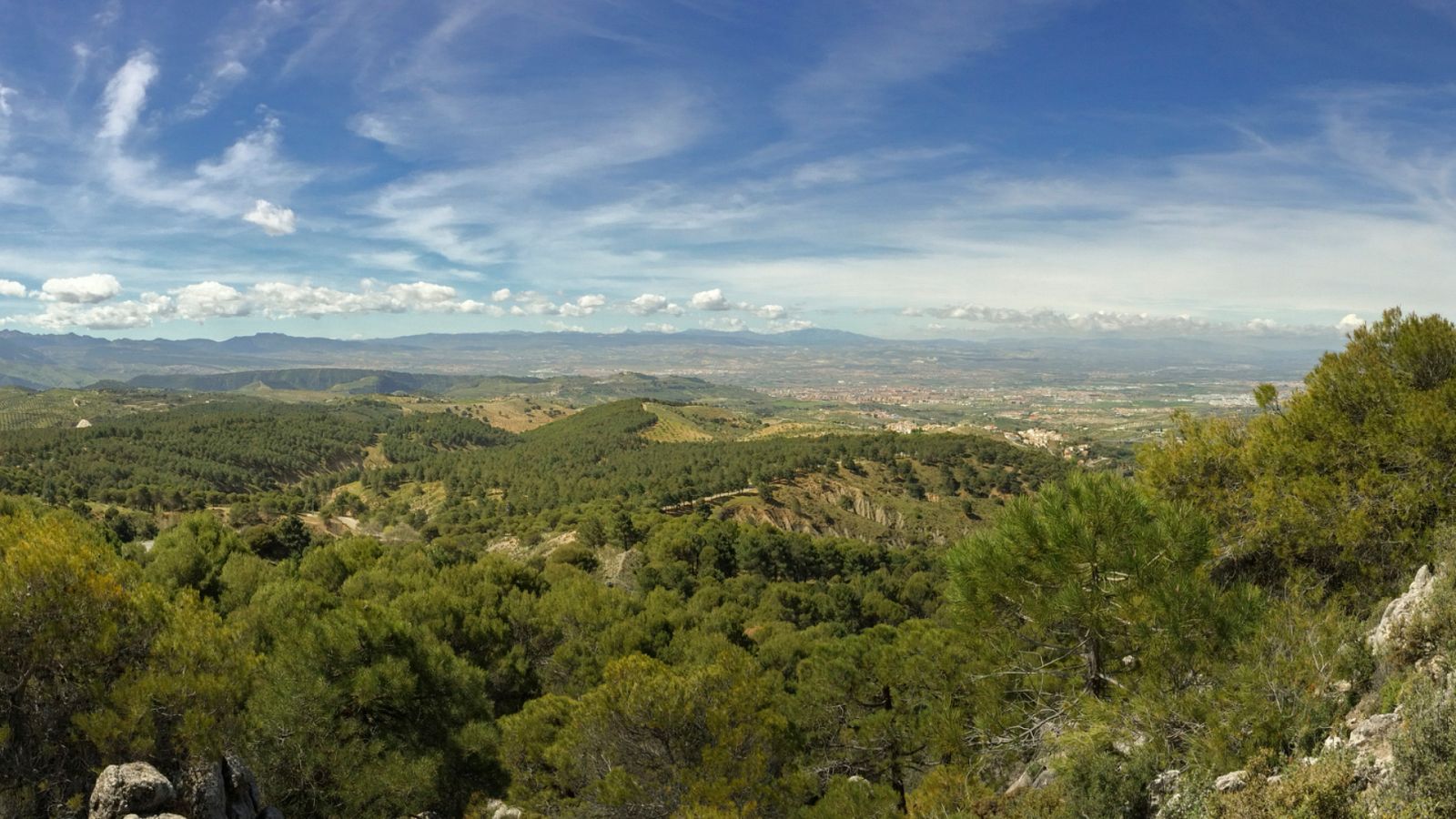
Researchers subsequently turned their attention to other nearby locations. Drawing upon new documentary research by historian Miguel Caballero Pérez, together with geophysical surveys using ground-penetrating radar and other non-invasive techniques, archaeologists investigated sites around Peñón Colorado and the Llanos de Corbera in 2014 and again in 2016. These excavations identified former pits and disturbances in the landscape but failed to recover the remains of Lorca or his three companions. Each unsuccessful search narrowed the range of possibilities without resolving the mystery. The precise burial place remains unknown. Rather than ending the search, each investigation has added to historians’ understanding of how the executions were carried out and how the landscape itself was used during the repression that followed the Nationalist capture of Granada.
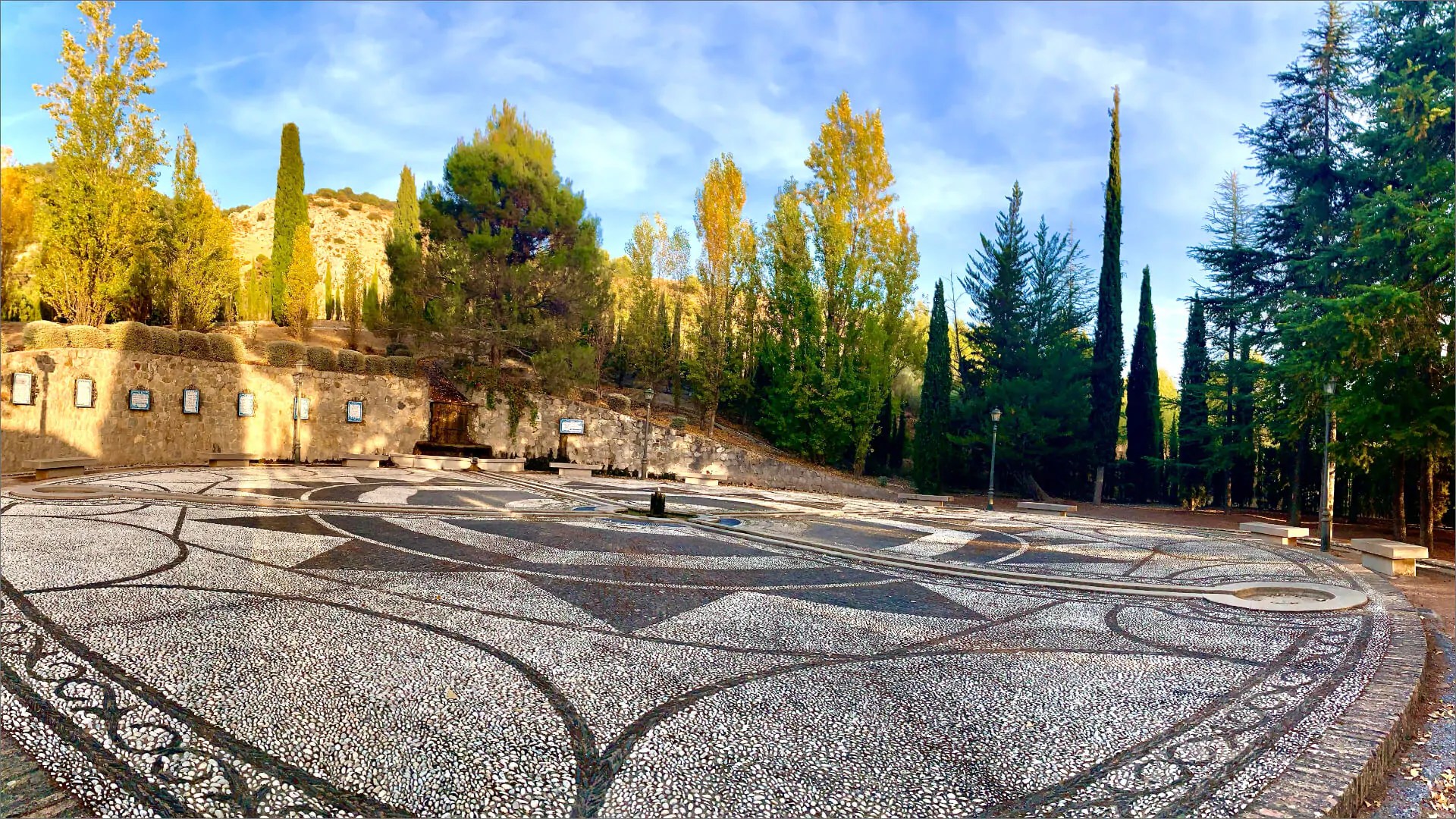
- Oliva de Plasencia, Cáceres, Extremadura
On 17 October 1979, a mass grave was exhumed at Finca El Almendral, within the municipality of Oliva de Plasencia. The grave contained the remains of victims taken from several nearby towns and executed on 19 August 1936, illustrating how isolated rural estates in Cáceres Province were used as execution sites for prisoners transported from across the district. Although the remains could not be identified scientifically, they are believed to have included Julio Durán Pérez, the Socialist mayor of Plasencia from 1931 to 1934, Pedro Mirón García, the Republican mayor of Malpartida de Plasencia, and other detainees arrested in the surrounding area. The exhumation was organised by the victims’ families with the support of the newly elected democratic council of Oliva de Plasencia, making it one of the earliest public recoveries of Civil War victims during Spain’s democratic transition.
Julio Durán Pérez (Mosaic Artist)
Joaquín Rosado Álvarez de Sotomayor (Pharmacist)
Pedro Mirón García (Merchant)
Consuelo Alonso Elizo (Merchant, Industrialist, 45 years old)
Aberlado Montero Curiel (Doctor)
Eleuterio González Tabernero (Agricultural Worker)
 CAROLINE ANGUS