*note this is not about military movements of the war, rather about how those movements affected the people living in the region around the fronts. There are many great sites dedicated to military campaigns if that is your interest
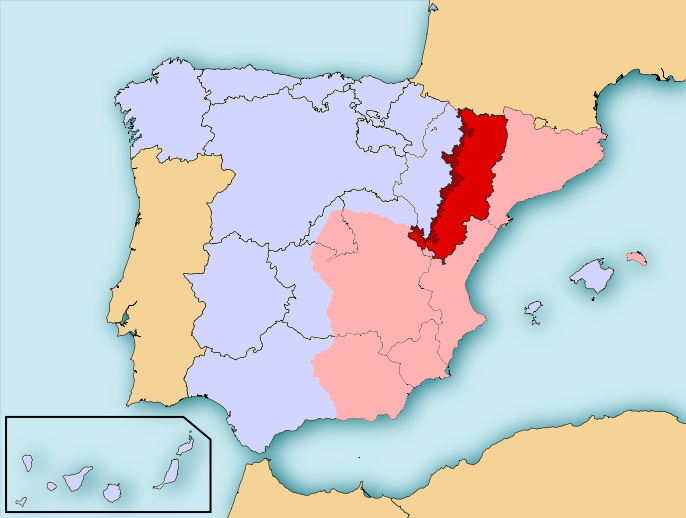
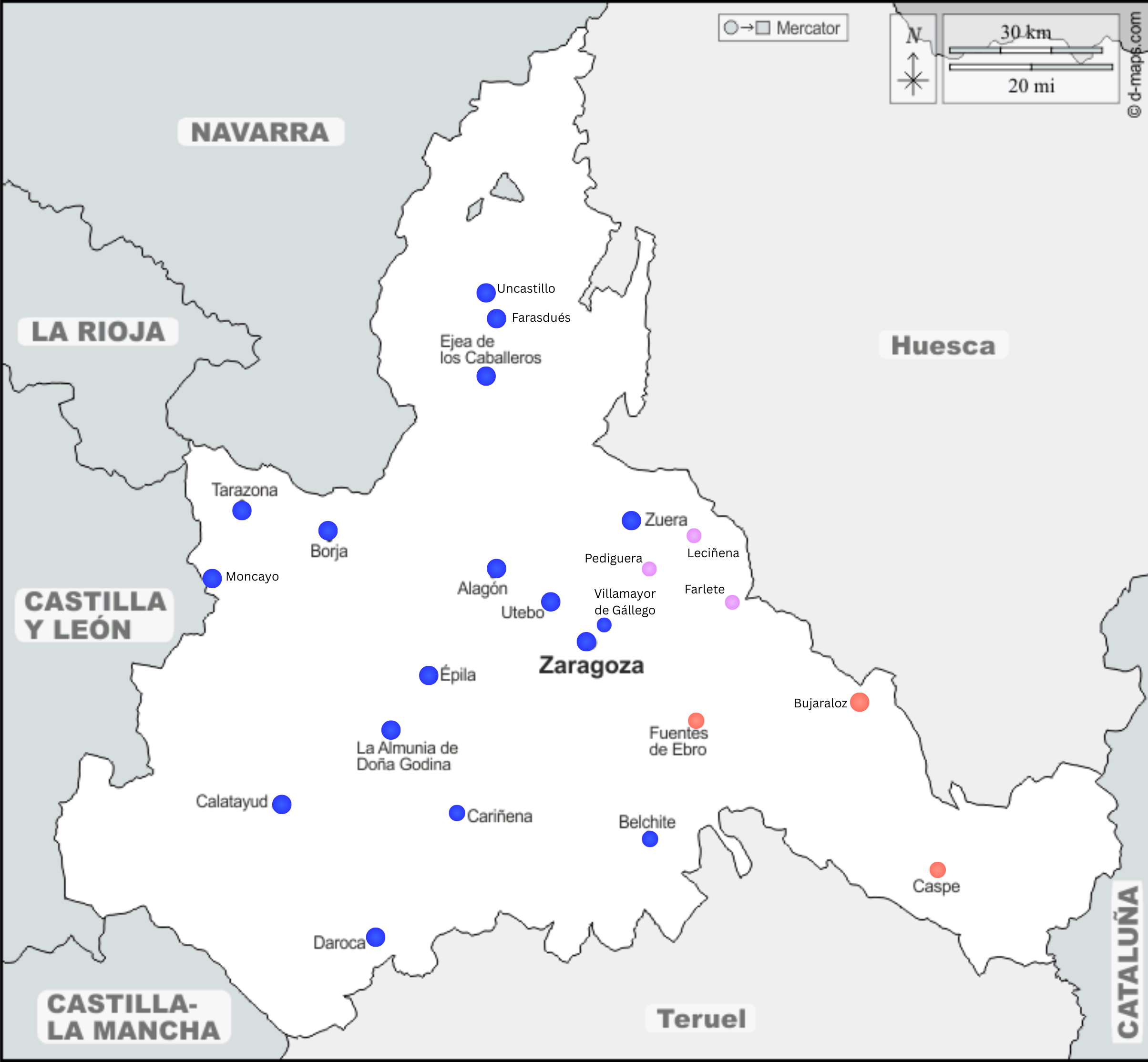
By 1 August 1936, the Aragón Front had become one of the longest and most important battlefronts of the Spanish Civil War. Stretching from the Pyrenees in the north through Huesca Province, across the approaches to Zaragoza and south into the mountains of Teruel, it separated Republican-controlled eastern Aragón from the Nationalist-held provincial capitals and western districts. Though fierce fighting had taken place during the final weeks of July, neither side had achieved the decisive breakthrough they had hoped for. Instead, the front was beginning to stabilise into a continuous line that would remain one of the defining theatres of the war for almost two years.
The military uprising had produced a divided Aragón. Nationalist forces retained control of the three provincial capitals, Zaragoza, Huesca and Teruel, as well as much of western Aragón, including important communications centres such as Calatayud, Tarazona, Daroca, Jaca and Ejea de los Caballeros. Republican militia advancing from Catalonia had secured much of the east of the region, occupying towns including Caspe, Bujaraloz, Barbastro, Sariñena, Fraga and Alcañiz. Between these territories lay a constantly shifting line of villages, roads and isolated strongpoints where both sides attempted to gain an advantage.
The failure to capture Zaragoza during the opening days of the war proved particularly significant. Republican leaders had hoped the city would fall quickly before the Nationalists could consolidate their position. Instead, the successful defence of Zaragoza provided the Nationalists with a secure political and military centre in north-eastern Spain. The city controlled major railway lines and road networks linking Navarre, Old Castile and Aragón, allowing troops, ammunition and supplies to move between the northern Nationalist territories. As long as Zaragoza remained in Nationalist hands, Republican attempts to divide the rebel zone or isolate Navarre were impossible.
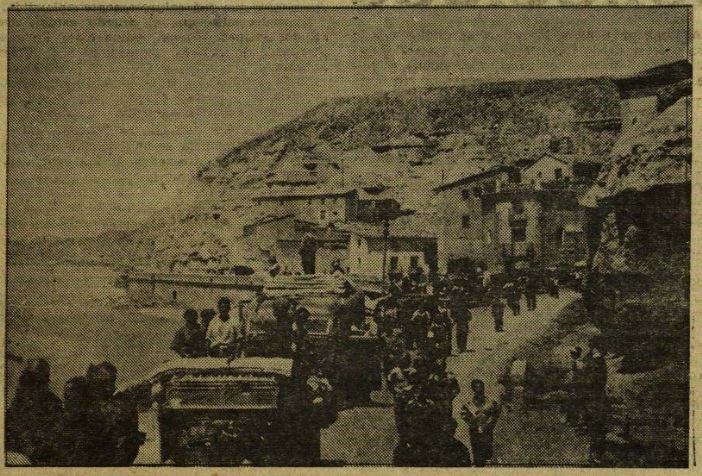
The Republic regarded Aragón as one of its principal theatres of operation. Capturing Zaragoza remained a strategic priority throughout August, while Republican commanders also hoped to seize Huesca and isolate Teruel. Success on the Aragón Front would not only remove three important Nationalist strongholds but also threaten the enemy’s communications across northern Spain and relieve pressure on other fronts. Consequently, thousands of volunteers continued to arrive from Catalonia, reinforcing the militia columns already operating in the region. On other fronts where the Nationalists increasingly relied upon regular army formations, the Republican forces in Aragón remained dominated by militia columns. Most had arrived from Barcelona following the defeat of the uprising there in July. They represented a broad political spectrum, including anarchists, socialists, communists and anti-Stalinist Marxists, each maintaining its own command structure, traditions and political identity. Though these formations possessed great enthusiasm and often considerable numerical strength, many lacked experienced officers, heavy artillery, transport and reliable supplies of ammunition. Coordination between columns was frequently difficult, and offensive operations often depended more upon local initiative than central planning.
Nationalist forces fielded fewer troops but possessed significant advantages. They occupied fortified provincial capitals, controlled many of the region’s principal roads and railway junctions, and benefited from experienced professional officers, regular infantry, Guardia Civil units that had joined the uprising and increasingly effective logistical support from neighbouring Nationalist territories. They concentrated on strengthening defensive positions around Zaragoza, Huesca and Teruel while awaiting reinforcements and exploiting the difficulties faced by the Republican militia.
By August 1936, Aragón had been split into two political worlds separated by a rapidly hardening military front. Zaragoza, Huesca, Jaca, Calatayud, Daroca, Tarazona, Ejea de los Caballeros, and most of western Aragón remained under Nationalist control. To the east, Republican militia held Barbastro, Monzón, Fraga, Caspe, Alcañiz, Calanda, Utrillas, Montalbán, and much of the countryside stretching towards Catalonia and Valencia. The military division created two very different systems of repression within the same historical region.
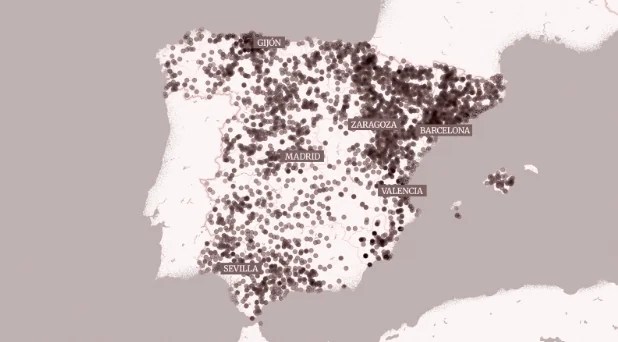
On the Nationalist side, repression developed quickly into a systematic programme directed through military authorities, Guardia Civil, Falange, local right-wing networks, prisons, and repeated sacas of detainees. During the opening weeks, many prisoners were never brought before a military court. They were arrested at home, taken to improvised detention centres or established prisons, removed during the night, and killed at cemeteries, roadsides, canals, ravines, and isolated fields. Local bureaucracies often concealed what had happened by recording prisoners as having been ‘released’ or having ‘left’ custody.
In Republican Aragón, the pattern was less centralised. The collapse of the provincial administration and the arrival of militia columns gave revolutionary committees, armed patrols, and local organisations enormous authority. Priests, landowners, Guardia Civil, Falangists, conservative politicians, and suspected supporters of the military rising were arrested across eastern Aragón. Some were imprisoned, others escaped, and substantial numbers were killed. In places such as Barbastro, Samper de Calanda, Fraga, Monzón, and Alcañiz, the repression became severe.
The two systems were never identical; their scale, organisation, and development differed significantly. Later historical syntheses identify approximately 8,888 victims of Nationalist repression in Aragón, compared with around 1,894 victims of Republican repression. The Nationalist total is usually divided into approximately 6,029 victims in Zaragoza Province, 1,519 in Huesca Province, and 1,340 in Teruel Province. Republican repression was particularly heavy in Teruel Province, where later estimates reach approximately 1,702 victims, while around 192 are recorded for Republican-controlled districts of Zaragoza Province. No comparable single figure adequately represents the complex killings in Republican-held Huesca Province.
- Zaragoza
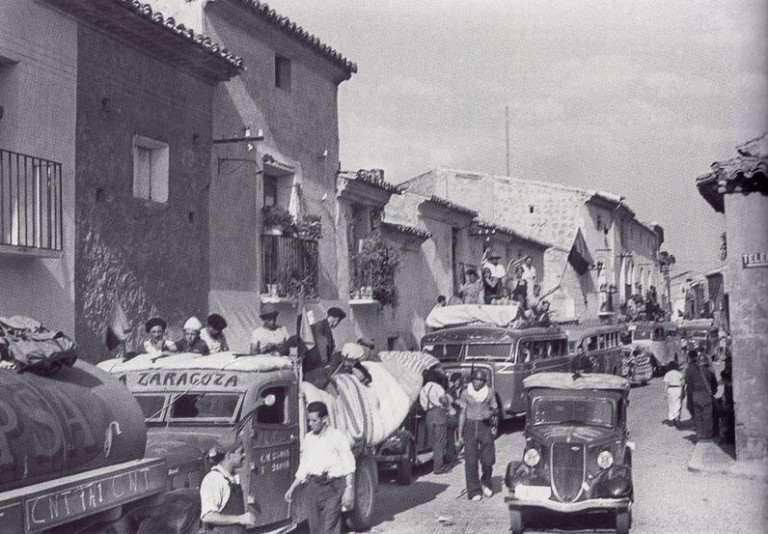
Zaragoza remained the principal Republican objective in Aragón throughout August 1936, but the campaign east of the city never developed into a single assault. The front spread across a broad arc from the Sierra de Alcubierre in the north to the Ebro valley in the south. Republican militia occupied villages, pushed patrols forward, raided roads and railway lines, and approached to within roughly thirty kilometres of the provincial capital. Yet the final Nationalist defensive belt remained intact. The Durruti Column formed the main Republican force in this sector. It had entered Bujaraloz on 25 July and established its headquarters there, turning the town into the organisational centre of the central Aragón front. The column had initially numbered around 2,500 people, and reinforcements arriving from Catalonia may have increased its nominal strength to approximately 6,000 by the middle of August, though only about 3,000 rifles were available. The column also possessed around sixteen machine guns, nine mortars, and twelve artillery pieces. Even if those totals were approximate, they reveal the central weakness of the force.
The Durruti Column dispersed across a front approximately 30km wide and divided into groups sent towards different villages, roads, and defensive positions. Men were also required to guard Bujaraloz, protect supply routes, operate workshops, drive vehicles, maintain communications, staff hospitals, cook, transport ammunition, and hold previously occupied settlements. A force that appeared massive in a headquarters report might produce only 150 or 200 armed men for a particular attack. A decuria contained roughly ten people, a section about thirty, and a centuria usually between eighty and one hundred. In practice, numbers varied according to illness, casualties, incomplete equipment, and the constant movement of volunteers between Barcelona and the front. An operation involving two centurias might place fewer than 200 armed militia in the field. If trucks broke down or ammunition failed to arrive, even that number could be reduced.
This is an amazing clip of life around Farlete, covering the military engagement and collectivisation of the region (I will cover collectivisation in a seperate post). If you don’t understand Spanish, it still gives you a very realistic image of the wartime period
Zaragoza was protected by distance, exposed terrain, and a chain of fortified settlements. To the north-east, Perdiguera blocked the route from Leciñena and Farlete. Closer to the city, Villamayor de Gállego formed part of the outer defensive zone, and along the Ebro, Quinto and Fuentes de Ebro protected the southern and south-eastern approaches. These settlements allowed the Nationalists to control the main roads without defending every kilometre of countryside with a few hundred men occupying prepared positions, supported by machine guns, artillery, aircraft, and short supply lines from Zaragoza, could delay much larger militia forces advancing across open ground. The dry plains of the Monegros offered little water and little concealment. Roads became essential because artillery, ammunition, fuel, food, and water could not move easily across the open countryside. Along the Ebro, movement depended upon bridges, ferries, roads, and irrigation channels and the river divided the southern front and complicated cooperation between the Durruti Column north of the Ebro and the Ortiz Column further south.
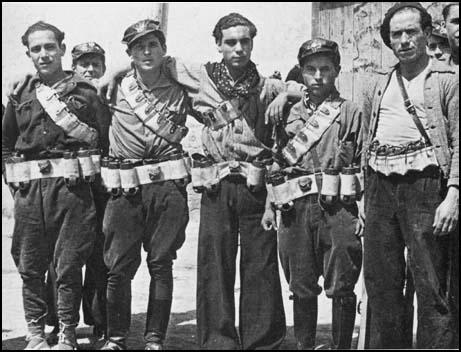
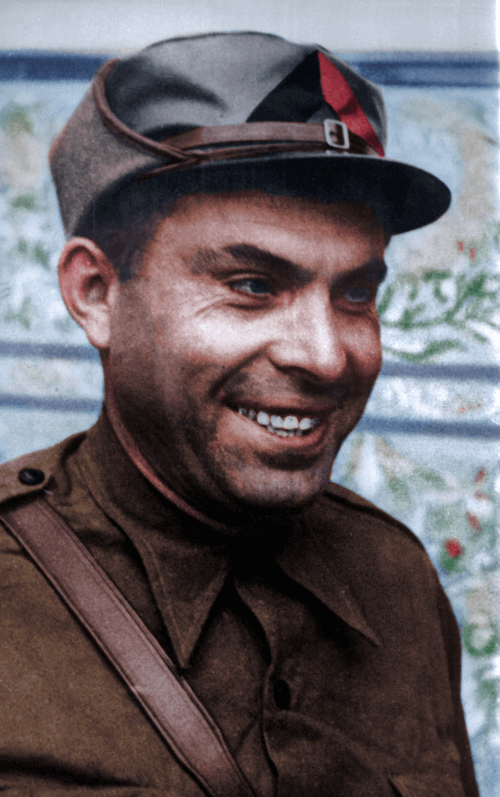
Pina de Ebro became one of the most important Republican positions in the Zaragoza sector. The town stood on the Ebro east of the capital and controlled roads leading towards Osera, Quinto, and Zaragoza. Its occupation allowed the Durruti Column to establish a major forward base much closer to the city than Bujaraloz, but their first encounters with Nationalist aircraft had shown how quickly enthusiasm could become panic. During an earlier bombing on the road beyond Bujaraloz, around twelve men were killed and twenty wounded, and some militia attempted to flee. Durruti later assembled the column, reproached the men, and asked anyone unwilling to continue to surrender his rifle. None did. Although the bombing occurred at the end of July, its effect carried into August – militia dug in, dispersed vehicles, watched the sky, and understood that courage against rifles did not prevent helplessness beneath aircraft.
Simone Weil reached the Durruti sector during the middle of the month and spent time around Pina and Osera. Her notes recorded Durruti speaking to peasants and issuing instructions intended to impose discipline upon the militia. Volunteers were not to requisition food casually or occupy villagers’ homes without permission. Her observations expose the tension at the centre of the column, and highlighted how the militia had come to Aragón as a revolutionary force committed to equality and voluntary discipline. The front demanded regular orders, rationing, property controls, and technical command. Arguments over whether men could sleep in a house or take food from a village were not minor political debates. They directly affected whether thousands of people could remain supplied without alienating the civilian population.
North of Bujaraloz, Republican forces moved through Monegrillo and Farlete towards Perdiguera. This axis followed the edge of the Sierra de Alcubierre and offered another route towards Zaragoza. Monegrillo was occupied and reinforced during the first half of August. Republican troops then advanced towards Farlete. A contemporary account dated 15 August described a combined force moving through La Almolda and Monegrillo before approaching the town. The Nationalist defenders had observed the movement and occupied hills commanding the approaches. Machine guns opened fire across the exposed ground. After approximately half an hour of fighting, the Republicans entered Farlete.
The capture of Farlete extended Republican control towards Perdiguera and Monte Oscuro. It also confirmed the pattern of the August campaign. Lightly defended villages could fall after short engagements. The advance stopped when the militia encountered a position where the Nationalists had sufficient men, machine guns, artillery, and access to reinforcements. Near the end of the month, POUM troops made another unsuccessful attempt against Perdiguera. The British communist poet John Cornford, serving with the POUM militia, was lightly wounded during the operation.
For the civilian population, nowhere in Aragón did Nationalist repression operate on a greater scale than in Zaragoza. The military uprising had succeeded quickly in the city, preventing the prolonged street fighting experienced in Barcelona or Madrid. Once military control had been secured, repression turned towards destroying the organisations that had made Zaragoza one of Spain’s strongest centres of organised labour. Socialists, anarchists, republicans, trade union organisers, municipal politicians, teachers, journalists, and other suspected opponents of the rebellion were arrested in large numbers. The surviving figures demonstrate the scale. The memorial records associated with Torrero cemetery identify 3,096 people killed in Zaragoza during the Civil War itself, followed by another 447 executions during the postwar period up to August 1946. Across Zaragoza Province as a whole, later research raises the Nationalist repression total beyond 6,000. The sheer volume of mass graves sites is overwhelming.
During the first weeks, killing was not yet concentrated entirely at the Torrero cemetery wall. Prisoners were taken from detention and transported towards the outskirts of the city. Bodies appeared beside the Canal Imperial, around Valdespartera, and across open land beyond the urban area. Some victims were buried where they fell; others were taken later to communal graves. The process depended upon arrest lists and repeated sacas. Soldiers, police, Guardia Civil, Falangists, and local informants identified political opponents. Detention could follow previous trade-union membership, service on a municipal council, participation in strikes, or simply denunciation by a neighbour or employer. The distinction between a person who had actively resisted the uprising and someone whose political history made them undesirable quickly became irrelevant.
August 1936 records show that the machinery of killing had already reached considerable intensity. On 18 August alone, 64 executions have been documented in Zaragoza. The victims included prominent political organisers but also ordinary workers whose names rarely appeared in national histories. One of the better documented was Bernardo Aladrén Monterde, born in 1891. A typographer by profession, Aladrén had become an important figure within Zaragoza socialism, serving as a councillor, president of the local PSOE organisation, and provincial leader of the UGT. He was killed on 9 August 1936 and his death illustrates an important feature of Nationalist repression. The objective was not simply to punish people caught carrying weapons during the uprising. It was to dismantle the institutional leadership of the left. Trade-union officials, councillors, teachers, journalists, and organisers represented networks capable of rebuilding political opposition if they survived. Killing them removed not merely individuals but decades of organisational knowledge.
Torrero cemetery gradually became the principal centre for these executions and burials. Large communal graves accumulated thousands of bodies. Two major pits were rediscovered in 1979, long after the dictatorship had ended. The memorial now records the names of thousands of people who disappeared into the repression system centred upon Zaragoza. Yet in August 1936 the killing remained partly dispersed. A prisoner might be removed from a cell, transported along a road outside the city, shot, and abandoned in a place that was never formally recorded as an execution site. This mobility makes the true geography of the repression considerably larger than Torrero alone.
In February 1979 the Torrero mass grave was exhumed, and among the recovered missing persons (2,700 bodies, according to some sources) there were people from Aragon and La Rioja and more than 200 Navarrese from the Tercio de Sanjurjo. Plaques now commemorate those executed there and the 3,500 people who suffered reprisals under Franco’s regime throughout the province. Among them was Alfredo Gracia. His sister, Luisa Gracia, expressed her gratitude on TVE, ‘that something has finally been done… They deserved more than this: they deserved to live.’
Only kilometres away, a large, now-vanished burial site mentioned earlier was located on the Valdespartera military grounds, on the southern outskirts of the city, where, according to various sources, around a thousand people may have been executed. Today, almost the entire area is occupied by new construction. In 2010, the Zaragoza City Council erected a monument in one of the roundabouts of the new neighbourhood to honour the memory of those murdered in the vicinity of that site.
Zaragoza demonstrates repression on an urban scale, while Ejea de los Caballeros reveals how systematically the same process operated across rural Aragón. Nationalist control of Ejea was secured without a major battle. The repression that followed cannot be explained as battlefield casualties or reprisals during street fighting. It was carried out against a population already under military control. The surviving municipal prison register shows that between 18 July and 31 December 1936, the jail recorded 501 prisoners from Ejea and surrounding communities. Of these, 137 were eventually released, while 28 were recorded as transferred towards Zaragoza. The fate of another 333 prisoners was recorded with a single word – Salida. They had ‘left,’ though in practice, they had been removed from the prison to be killed. The bureaucratic language is important because it demonstrates how repression could be recorded without being acknowledged. The ledger did not necessarily state that a prisoner had been executed. A family searching later might find only a date beside the word Salida, while the body lay in an anonymous grave somewhere outside the town.
Across the wider Cinco Villas, memorial research identifies 417 people killed, including 388 men and 29 women, drawn from around thirty communities. August was particularly severe. Historical research based on the Ejea prison registers calculates that during the month an average of approximately eight prisoners each day were taken out and killed. That figure gives a sense of the relentless nature of the repression. There was no single massacre after which violence subsided. Prisoners continued disappearing day after day.
The killings culminated in one of the most striking episodes of the month on 31 August, when 19 residents of Uncastillo were killed, including ten women. Their bodies were buried at Farasdués. The inclusion of so many women challenges the older tendency to describe female victims primarily as collateral targets punished for the activities of husbands or fathers. Some undoubtedly suffered because of family relationships, but research into the Cinco Villas has shown that women themselves participated in trade unions, Casas del Pueblo, strikes, literacy campaigns, and local political organisations. Women who challenged employers, attended political meetings, or openly identified with the left could be targeted in their own right.
The cemetery at Ejea eventually became one of the most important mass-grave sites in Aragón. Estimates for the principal fosa vary considerably, ranging from around 160 to perhaps 300 bodies, depending upon whether nearby execution and burial sites are included. Modern archaeological excavation has recovered bodies showing clear evidence of execution trauma, while traces of quicklime demonstrate attempts to accelerate decomposition or conceal the remains. The prison register, the cemetery, and the graves together make Ejea one of the clearest examples of how Nationalist repression operated in rural Aragón – arrest, detention, bureaucratic disappearance, execution, and anonymous burial.
- Calatayud and the Ravines
Calatayud became another important centre of Nationalist repression in western Aragón. Local research identifies more than 130 Republicans killed in the city, while the wider comarca may have lost around 600 people during the repression. The geography of killing differed from Zaragoza and Huesca as ravines outside Calatayud became execution and burial sites. One of the most notorious was the Barranco de la Bartolina, which received victims from Calatayud and neighbouring communities. Another was the Barranco de Cortasogas, where Dr Eradio López Táppero, the lawyer Germán Baquedano Barra, the trade unionist Eugenio Castillo Ibarra, and the priest Serafín Gimeno were thrown. Gimeno’s presence is significant because the Nationalist regime defined itself as the defender of Catholic Spain, but clerical status did not automatically protect a priest considered politically unreliable. Political loyalty could matter more than occupation or religious office.
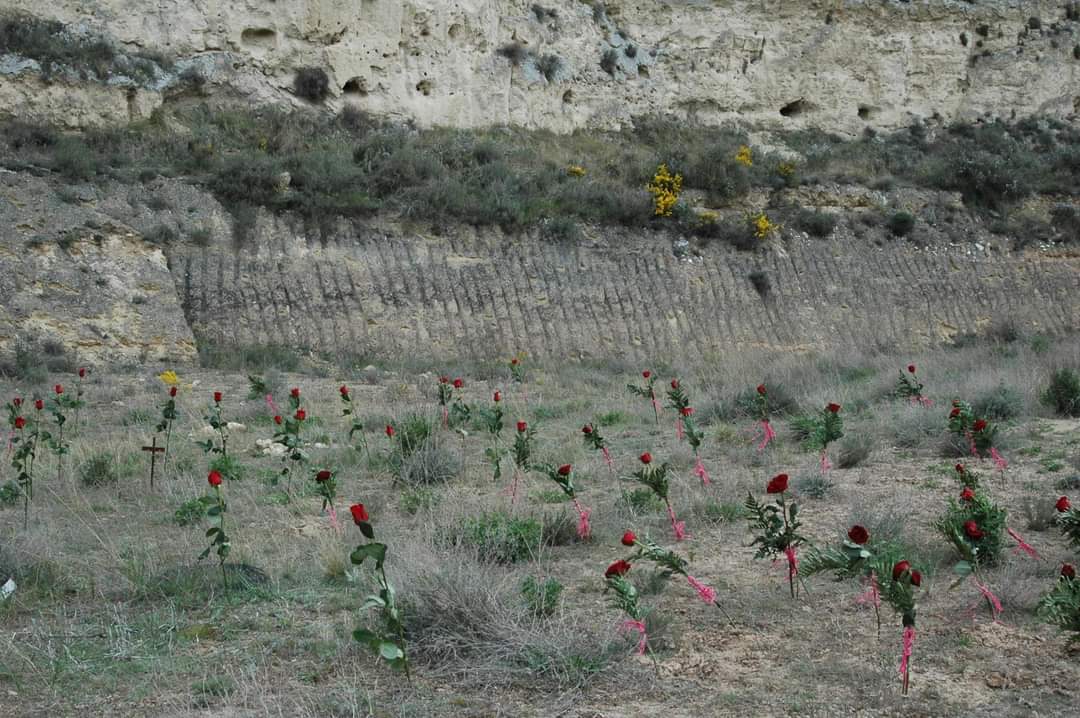
Another victim associated with the Calatayud repression was Manuel Lapeña Altabas, a municipal veterinarian and republican. He disappeared during August and was probably killed in the area of La Bartolina. Decades later his remains became part of another controversy when bodies from Republican mass graves were removed without family permission and transferred to the Valle de los Caídos.
The smaller grave at Valdearnero provides an unusually personal example. It contained Jaime Teófilo Tabuenca, a 39-year-old UGT member and Calatayud councillor, and Daniel Quintana, approximately 50 years old, who had led the CNT metalworkers. A relative witnessed their killing and burial. Such testimony remains important because many rural graves lack surviving administrative records. Where documentation was deliberately vague or absent, family memory sometimes preserved the only knowledge of where the bodies had been left.
- Huesca
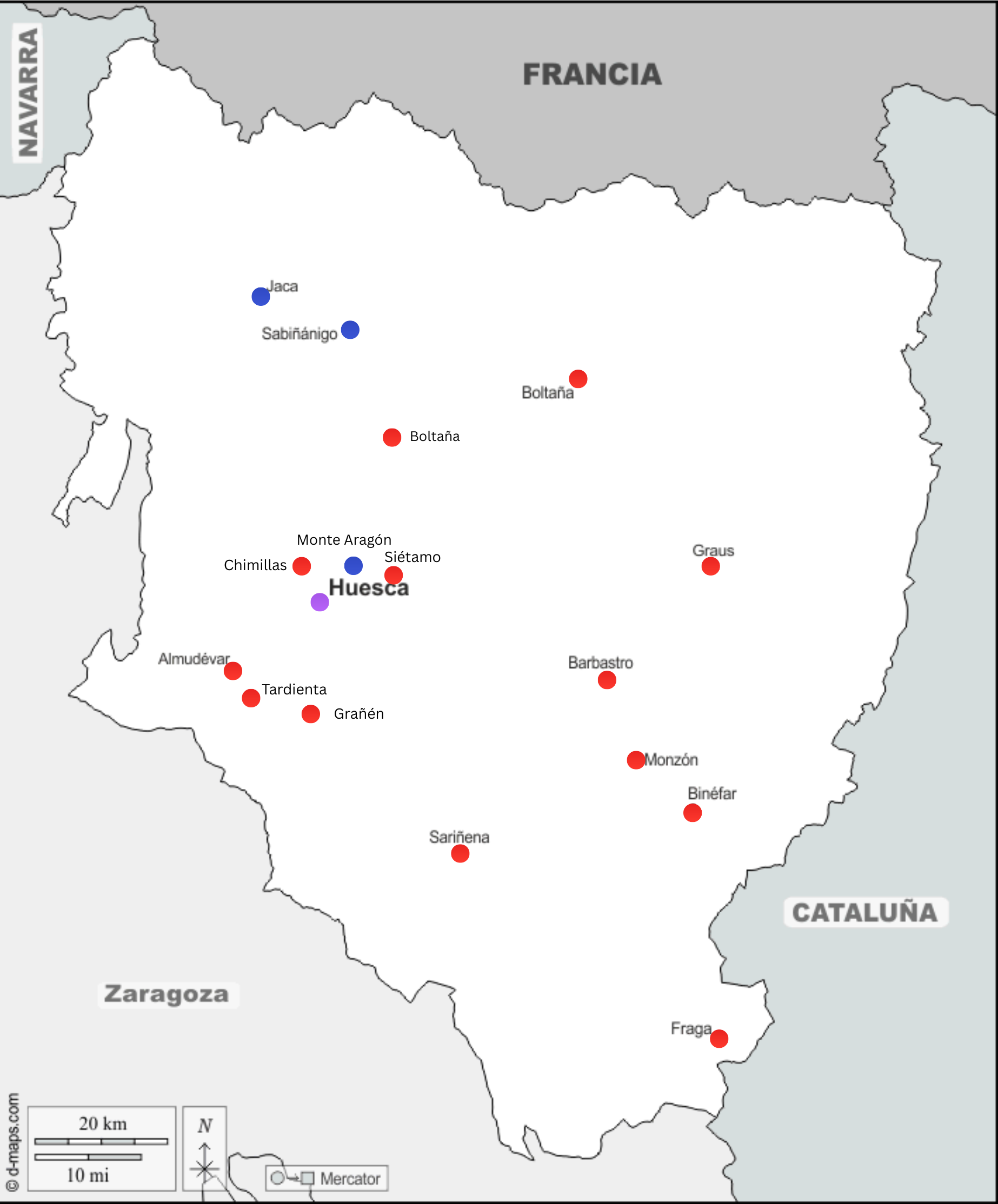
Of the three principal Nationalist strongholds in Aragón, Huesca appeared the most vulnerable at the beginning of August 1936. The city stood relatively close to Republican territory, with the militia bases at Grañén, Sariñena, Tardienta, and Barbastro connected to Catalonia by road and railway. Republican columns could approach Huesca from the east along the Barbastro road, from the south across the open plain of the Hoya de Huesca, and from the southwest through Tardienta and Almudévar. Zaragoza, Huesca lacked the protection of a large urban and industrial region. Teruel, it did not stand behind broad stretches of mountainous country.
But the isolation was misleading. Huesca remained connected to Zaragoza by the road and railway running southwest through Almudévar. Nationalist troops also retained a defensive ring of villages, hills, and fortified positions around the city. Almudévar protected the principal communications with Zaragoza. Chimillas covered the northwestern approach. Siétamo blocked the direct road from Barbastro, while Estrecho Quinto and Monte Aragón commanded the eastern approaches closer to Huesca. Together they formed an interlocking defensive system which the Republicans would have to break before they could isolate or assault the city.
Another amazing video of the front at Sariñena
Sariñena developed into a hospital and evacuation centre for the Huesca front. On 13 August, a report recorded twenty-nine wounded men arriving in Barcelona after treatment or transfer through Lleida; among them were two Nationalist soldiers from Zaragoza who had been found wounded and abandoned and were then treated by Republican militia. The movement from a forward dressing point to Sariñena or Lleida and finally to Barcelona shows how far a badly wounded man might travel before reaching a major hospital.
Personnel serving at the Republican airfield near Sariñena remembered the August heat as almost unbearable. With the Río Alcanadre about a kilometre and a half away, airmen used available cars to travel there and bathe, subject to permission from their commander. Residents of nearby Albalatillo reportedly regarded the aviators’ regular bathing as unusual. Until the camp’s tents were properly erected, personnel not required at the airfield were permitted to sleep in the village. The recollection shows that heat and access to water shaped daily routine even among aviation units based behind the immediate front.
The Republican forces approaching Huesca were numerous but divided. Colonel José Villalba increasingly acted as the senior professional officer responsible for coordinating the sector, but his authority over the political militia columns remained incomplete. The Carlos Marx Column, organised by the PSUC and UGT, operated around Grañén and Tardienta. POUM forces held neighbouring sections. Captain Mariano Medrano led troops and artillery approaching from the direction of Barbastro and Angüés. During the second half of August, the Ascaso Column and the Aguiluchos also reinforced the front. Each formation brought additional rifles, machine guns, vehicles, and volunteers, but each also arrived with its own commanders, political leadership, supply arrangements, and understanding of discipline.
The numbers could appear impressive. The force assembled in the Tardienta sector at the end of July was reported at approximately 1,000 men of around 500 militia and 500 soldiers from Mountain Battalion No. 3. The wider Carlos Marx Column had reportedly departed Catalonia with approximately 2,000 militia and three artillery batteries. The Ascaso Column brought approximately another 2,000 volunteers, while the Aguiluchos force was said to include roughly 1,500 men and 200 women. Not all these people were armed front-line infantry as the drivers, mechanics, cooks, nurses, communications personnel, political delegates, and headquarters staff travelled with the columns. Even among the combatants, shortages of rifles and ammunition could leave part of a formation waiting in the rear. By the second half of August, several thousand Republican personnel were operating across the broader Huesca sector.
The Nationalists probably had fewer troops immediately available around Huesca, but they possessed advantages that reduced the effect of Republican numerical strength. They held established barracks, magazines, artillery positions, roads, and railway facilities. Regular officers commanded soldiers, Guardia Civil, Carabineros, Falangists, and armed civilians. Defensive positions could be organised around stone buildings, church towers, hills, and village streets. Above all, Huesca remained supplied from Zaragoza. As long as the Republicans failed to hold Almudévar and cut the railway permanently, the city could receive ammunition, reinforcements, food, and medical supplies.
The August campaign became a battle for the approaches – from the east, Republican forces fought to secure Siétamo and move towards Estrecho, Quinto and Monte Aragón. From the southwest, they attempted to take Almudévar and sever the Zaragoza railway. To the north and northwest, militia pushed towards Chimillas, Lierta, and the high ground surrounding the city. Huesca could only be besieged effectively once these separate advances met. During August, they never did.
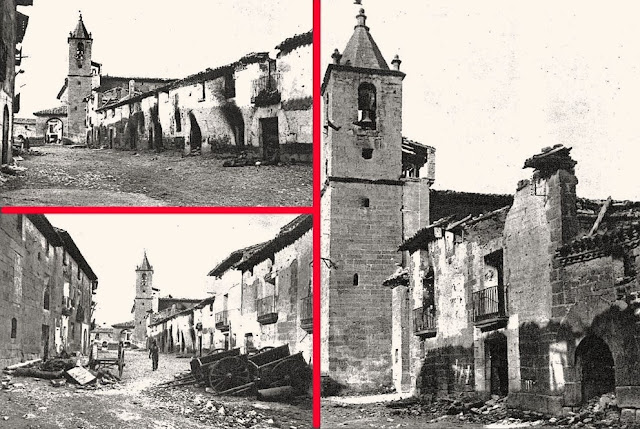
The violence against civilians inside Nationalist-held Huesca unfolded only kilometres from a Republican front that was gradually closing around the city. Artillery shells and air raids reached Huesca during August, but the victims of repression inside the city were not battlefield casualties. They were prisoners already under Nationalist control. Around 548 people are commemorated today in connection with the repression in Huesca city and its principal execution system.
One of the first prominent victims was Ramón Acín Aquilué, an artist, teacher, journalist, anarchist, and one of Huesca’s best-known cultural figures. Acín had helped finance Luis Buñuel’s documentary Las Hurdes: Tierra sin Pan after winning the lottery and had long participated in anarchist political and educational activity. He went into hiding after the uprising but was discovered and arrested. His wife, Concha Monrás, was also detained. Acín was killed on the night of 6 August 1936 at the Huesca cemetery. The new authorities later manipulated the documentation surrounding his death. Rather than openly recording that an unarmed prisoner had been taken from custody and shot, official records described circumstances designed to make his death appear connected with wartime fighting.
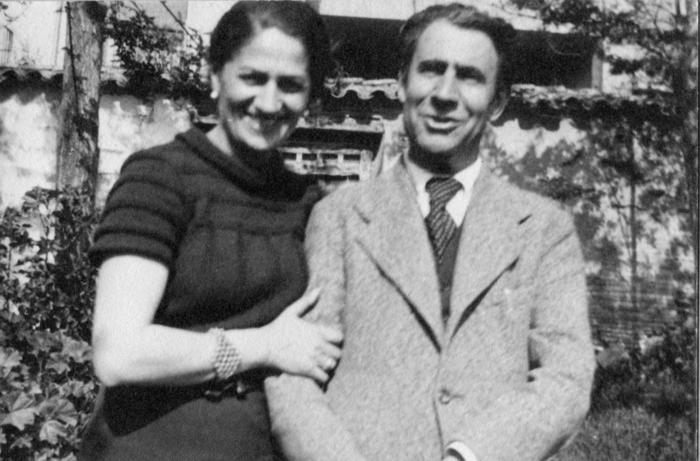
Monrás remained imprisoned and her fate became tied to the largest mass execution in Huesca during August. On 23 August, Republican aircraft bombed the city, killing two people. Nationalist authorities responded not against the pilots or artillery positions outside Huesca but against prisoners already locked inside the city. That day, 96 prisoners were removed from detention and taken to the cemetery wall for execution. The group contained people from different political and social backgrounds. Concha Monrás was one, another was Victoria Barrabés Asún, a 20-year-old dressmaker who had entered prison on 8 August. Like the other female prisoners killed that day, her administrative record did not openly say that she had been executed. The paperwork instead described the women as having been released. Red Cross ambulances subsequently collected their bodies. The language of ‘release’ concealed the operation from the official record while preserving the bureaucratic appearance of prison administration.
Another victim of the 23 August massacre was Juan Llidó Pitarch, a judge who had been removed from his position after the uprising. On 24 August, Lorenzo Bescós, a former councillor associated with Izquierda Republicana, was executed. The Huesca prison system produced a sequence rather than a single atrocity – individual arrests and killings early in August, followed by the enormous saca of 23 August, followed again by further executions. The proximity of the front provided a convenient justification. Republican bombardment could be represented as an attack requiring retaliation, yet the people taken to the cemetery were prisoners incapable of influencing the fighting outside the city. Their deaths demonstrate the distance between military retaliation and political repression.
- Daroca, Jaca and the Lesser-Documented Nationalist Districts
At Daroca, a grave in the Barranco de Carrilanga is associated with killings beginning around on 1 August 1936. Witness estimates vary dramatically anywhere from 4-12 victims, and later construction works reportedly exposed human remains in the area. Mass graves were often remembered locally without ever being formally excavated or counted. The exact location of this mass grave is unknown, and the coordinates are provided only as an estimate, but it is believed to be in the ravine spanned by the Puente de Carrilanga a few kilometres from the town. It is thought to be one of at least two mass graves within the Daroca municipality. Given the torrential nature of the water that periodically flows through the ravine after summer storms, it is doubtful that the remains of those murdered there are still in the original burial location, and approximately 83 people are missing from the ravine. The location is obviously a location well-known for being just far enough from town to execute people. Just a few kilometres away othe roadside is the site is where Inocencia Martín Asensio, known as La Curta (the short one), a well-known anarchist activist from Daroca, who was murdered along with three of her children in a particularly chilling case of brutality for ‘extremely communist and subversive activities.’ Another of her relatives, Pedro Martín Asensio, is buried in a separate grave located a few kilometres along the road. The area is littered with mass graves, with an unknown number still be be officially documented.
Jaca also remained firmly Nationalist. The city possessed particular symbolic significance because of the Republican military rising there in December 1930, later celebrated by the Second Republic. When the Civil War began, republican and socialist figures who had developed political organisations around that memory became immediate targets. The socialist mayor Julián Mur was among those caught in the repression. Research has identified 406 people shot in the Jaca judicial district. At least 24 victims were buried in two documented communal graves in the municipal cemetery, arranged in successive groups corresponding to different sacas. Just the central cemetery alone has 18 mass graves sites, with approximately 312 people buried unmarked. In the nearby village of Banaguas, 16 August 1936 saw public executions just off the town’s main square, though only Doroteo Puente Rojo has been identified in a nearby mass grave.
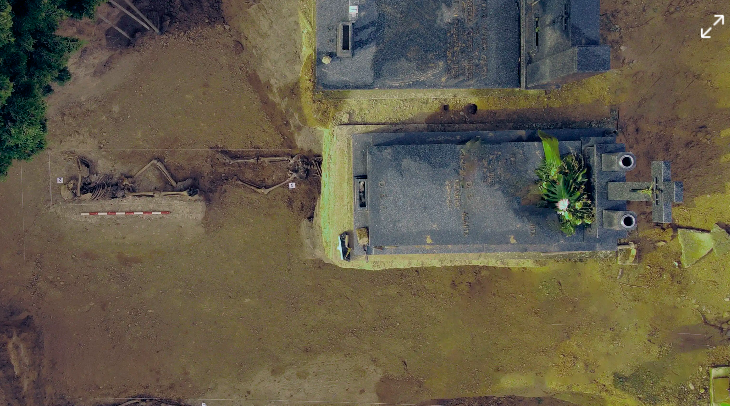
Tarazona and the Moncayo also experienced Nationalist repression, though the total remains harder to quantify. At least eight victims from the Tarazona judicial district appear among those executed or buried through the Zaragoza/Torrero system, but this represents only one part of the comarca’s losses rather than its complete death toll. Graves and memorials across Tarazona, Torrellas, Vera de Moncayo, and neighbouring villages show a wider pattern: the Torrellas cemetery alone contains at least ten identified victims, including three from Tarazona, while modern exhumations in the comarca have recovered at least twenty-one bodies. Victims from the district were also transported to execution and burial sites outside the comarca, including the wider Ejea network. The available evidence therefore confirms sustained repression across Tarazona–Moncayo, but does not yet support a single secure comarca-wide figure comparable to the 406 documented for the Jaca judicial district. In these districts, silence in the surviving record does not imply absence of repression. It means that the evidence presently allows a less detailed reconstruction.
- Teruel and Southern Aragón
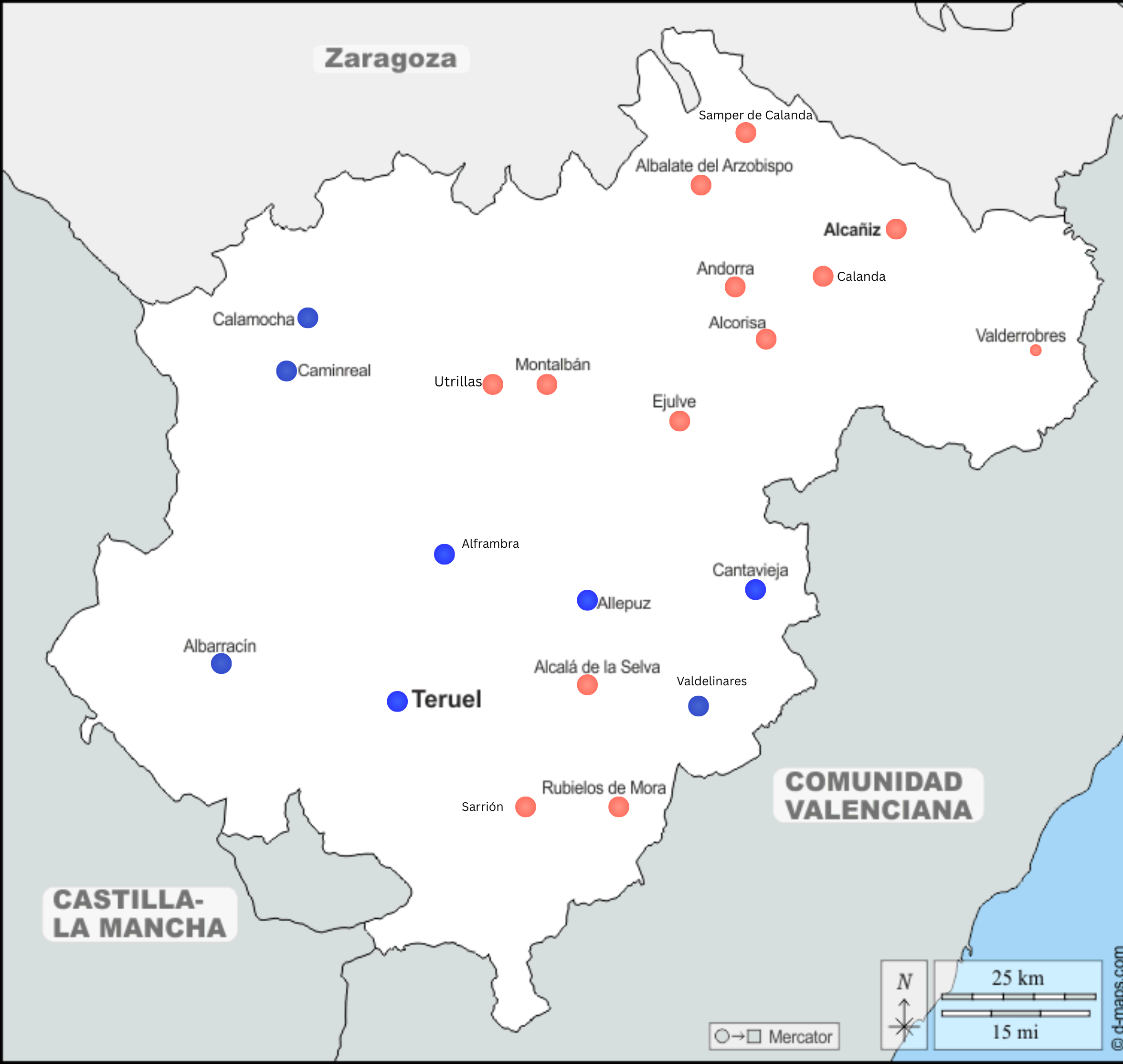
The war in southern Aragón developed very differently from the fighting around Huesca and Zaragoza. There was no single Republican formation dominating the sector, no continuous siege line. Instead, Teruel Province was broken apart by a series of separate advances arriving from Catalonia, Valencia, Castellón, Cuenca, and the mining districts. By the end of August, the provincial capital remained in Nationalist hands, but much of the surrounding province had passed under Republican control.
The central military story was not yet an assault on Teruel itself. It was the gradual formation of a Republican arc around the city; the survival of the mining centre at Utrillas, the recovery of Montalbán and the surrounding coalfield, the consolidation of Alcañiz as the principal Republican centre in Bajo Aragón, and the movement of several independent columns towards the outer positions protecting the provincial capital.
Teruel had entered the war with an exceptionally small regular garrison. The military recruitment office contained Lieutenant Colonel Mariano García Brisolara, one commander, two second lieutenants, one warrant officer, and only seven soldiers. The other organised armed forces available in the city consisted of approximately 60 Assault Guards and 50 Guardia Civil. The uprising succeeded because these security forces supported it and because the Republican authorities failed to arm local workers before the military declaration.
Once the surrounding countryside began passing into Republican hands, Teruel became increasingly dependent upon its communications with Zaragoza. Republican territory expanded across the east, south, and west of the province, while the Nationalists retained the road running north through Calamocha. The city was not completely isolated, but its survival depended upon that northern corridor. Colonel Civera organised the defence around two belts of positions placed across the principal roads leading towards Teruel. The outer line included Segura de los Baños, Vivel del Río, Corbalán, Puerto de Escandón, Aldehuela, Cubla, Villel, and Campillo. A second line closer to the city ran through San Blas, Villastar, Villaespesa, Castralvo, and Valdecebro.
The roads were blocked with barricades, fallen trees, stone obstacles, and demolitions. Bridges were destroyed or prepared for destruction, and sections of the railway from Valencia were made unusable. Republican defenders only needed to hold the roads, passes, and villages long enough to delay each column and allow reinforcements to reach the city. The forces stationed in these positions were not especially large – around 100 defenders at Segura de los Baños, 300 at Vivel del Río, 100 at Corbalán, 300 at Puerto de Escandón, and 150 at San Blas. Smaller detachments held the remaining points. Altogether, perhaps 1,200 men and one 105 mm artillery battery defended the outer and inner approaches. Republican troops approached from several directions, but each column encountered a separate defended road, pass, or town. None possessed enough artillery or unified command to break all of these positions at once.
Alcañiz was already in Republican hands before August began. Forces advancing from Catalonia, including units associated with the Tarragona-based Almansa Regiment and the Martínez Peñalver Column, had occupied the town during the final days of July. Their advance also secured Calaceite, Híjar, La Puebla de Híjar, Albalate del Arzobispo, Calanda, Alcorisa, La Zaida, Azaila, Oliete, Lécera, and eventually Montalbán. Roads connected it with Catalonia, Caspe and the Ebro valley, Calanda, Alcorisa, Montalbán, the mining districts, Valderrobres, and eastern Teruel Province. Columns moving west from Catalonia could pass through Alcañiz or receive supplies there. Food, vehicles, medical personnel, militia, political delegates, and ammunition accumulated in the town before moving towards the front. By 11 August, the municipal authority was formally operating as the Ayuntamiento–Comité de Defensa Antifascista de Alcañiz. Alcañiz could house hospitals, workshops, depots, headquarters, drivers, mechanics, and reserve units. There is little evidence of any serious Nationalist attempt to recover it during August. The front had already moved towards the west and northwest.
- Republican Aragón: Violence Behind the Militia Advance
East of the front, repression developed under very different political conditions. The Republican government remained legally sovereign, but much of the existing provincial administration had collapsed. Revolutionary committees, trade unions, militia patrols, and local defence organisations exercised practical authority. Their victims came principally from groups associated with the military uprising or the traditional social order – priests, landowners, Guardia Civil, Falangists, conservative councillors, and other suspected right-wing activists. Some arrests followed clear evidence of participation in the rebellion. Others depended upon reputation, political affiliation, denunciation, or class identity.
The violence was particularly intense against male clergy. The most extreme example was Barbastro, a diocese of around 140 diocesan priests, of whom approximately 123 were killed, close to 88 percent. Religious orders also suffered heavily with 51 Claretians, 18 Benedictines, and nine Piarists were killed. The Claretian prisoners were executed in successive groups during August – three senior priests on 2 August, six men on 12 August, twenty on 13 August, another twenty on 15 August, and the remaining members on 18 August. Bishop Florentino Asensio Barroso was killed on 9 August after imprisonment and mistreatment. The systematic killing of male clergy in Barbastro became one of the most extreme examples of anticlerical violence during the entire Civil War. Yet even there, the experience of women religious differed significantly, as communities of nuns were not subjected to the same systematic violence or execution. Churches could be burned or converted to secular use without their clergy necessarily being killed, while priests could be arrested because they were considered political opponents irrespective of what happened to church property.
- Monzón, Selgua and Fraga
The repression around Monzón began during the final days of July but continued to shape the region in August. A grave at Monzón cemetery contains 24 identified men, though some sources suggest the total may have reached 32. The victims were associated with killings carried out by militia linked to a group known as Los Tigres, connected with the POUM-affiliated Llorenç Vila Centuria. The killings themselves appear primarily to belong to around 25 July. At nearby Selgua on 10 August, Republican militia took seven or perhaps eight residents to an old gravel pit located roughly 200–300 metres from the railway station and killed there, burned with petrol and thrown in a pit.
At Fraga, the municipal cemetery contains a Republican repression grave with at least 40 victims from 1936. Twenty-eight were Fraga residents, and at least 11 of those 28 were members of the clergy. Four victims came from Torrente de Cinca, while others came from Velilla de Cinca, Osso de Cinca, Candasnos, Zaidín, and Aitona. Fraga also appears in the history of collectivisation as one of the better organised revolutionary communities. The same society could organise agricultural production, health care, food distribution, and education while simultaneously imprisoning and killing political or religious opponents.
- Alcañiz and Bajo Aragón
The cemeteries and graves around Alcañiz preserve another major concentration of Republican repression. At least 30 residents of Calanda were killed at Alcañiz on 27 July. Another two men were killed on 29 July, while a separate grave contained three victims killed on 26 July, including Inocencia Herrero Roca, aged 22, and Antonia Roca Mindán, aged 52. Women were not often victims of Republican repression, though the available evidence does not suggest a pattern numerically comparable to the female killings documented in some Nationalist districts. Eight Piarist fathers were killed in Alcañiz across July and August. Local figures sometimes state that at least 105 people associated with Alcañiz died through Republican violence or service with the rebel forces. That total must be used carefully because it combines different categories. The same caution is necessary throughout Bajo Aragón. Later memorial lists often combine civilians killed behind the lines, military personnel killed in combat, clergy, disappeared people, and residents killed outside their hometown
- Samper de Calanda
One of the clearest Republican mass killings of August occurred at Samper de Calanda. On the night of 13 August 1936, Republican forces killed approximately 21 residents of the town. Their bodies were buried in the municipal cemetery. One of the victims was a priest from Alcañiz. They formed part of the continuing elimination of people identified with the political and religious right. As of 2026, none of the bodies have been formally identified.
Calanda and the Wider Teruel Repression
Calanda eventually lost as many as 78 residents through Republican repression according to Aragón’s grave inventories, though a local memorial chapel contains only 46 names and the burial history remains complicated. At least 30 Calanda residents had already been killed at Alcañiz on 27 July. The cemetery chapel names only 46 of the 87 people who are buried in the area.
The larger context is Teruel Province, where Republican repression ultimately reached a scale much greater than elsewhere in Republican Aragón. Later research gives approximately 1,702 victims across the province. Teruel had been divided between both sides from the first days of the war, with villages experienced rapidly changing authority, Guardia Civil rebellions, mining militancy, militia arrivals from Catalonia and Valencia, and intense local conflicts between left and right. The same applies to Caspe and Republican-held Zaragoza Province. José Luis Ledesma’s research identifies around 192 victims of Republican repression in Zaragoza Province, concentrated overwhelmingly in the south-eastern districts controlled by Republican forces. That figure is dramatically lower than the approximately 6,029 victims of Nationalist repression in the province, but it still represents real and often highly localised campaigns of political killing, though for the region, the serious battle and repression was still a year or more away.