
On 5 August 1936, Los Santos de Maimona became the scene of one of the first determined Republican attempts to halt the Army of Africa as it advanced north through Badajoz Province. Colonel Ildefonso Puigdendolas assembled a mixed force of regular soldiers, Guardia de Asalto, Carabineros, local militia, and volunteers to defend the ridges of the Sierras del Castillo and San Cristóbal overlooking the town. The Nationalist assault fell principally to Lieutenant Colonel Carlos Asensio Cabanillas’ column, supported by Moroccan Regulares, Spanish Foreign Legion units, artillery, and aircraft. Although the Republican defenders resisted for several hours and inflicted enough opposition to slow the advance, they could not withstand the superior training, firepower, and coordination of the Army of Africa. By the end of the day, the Nationalists had captured the mountain positions and entered Los Santos de Maimona, reopening their route towards Mérida and Badajoz.
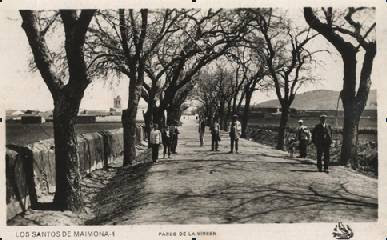
Before the Nationalists entered the town, the local Republican authorities had arrested a number of right-wing residents, but the available evidence indicates that they were not executed. The situation changed immediately after the occupation. Nationalist military authorities, assisted by Falangists and local supporters, began arresting people associated with the Republic and the labour movement. Municipal officials, trade unionists, socialist and communist activists, agricultural labourers, and others suspected of supporting the Republic became the principal targets of the repression. In May 1995, the Los Santos de Maimona City Council completed the location and exhumation of several mass graves of victims of Francoist repression in four areas of the municipal cemetery. Around that time, a mausoleum was also built to house the exhumed remains. In April 2011, the names of 116 executed were inscribed, ‘In memory of those who gave their lives for freedom.’
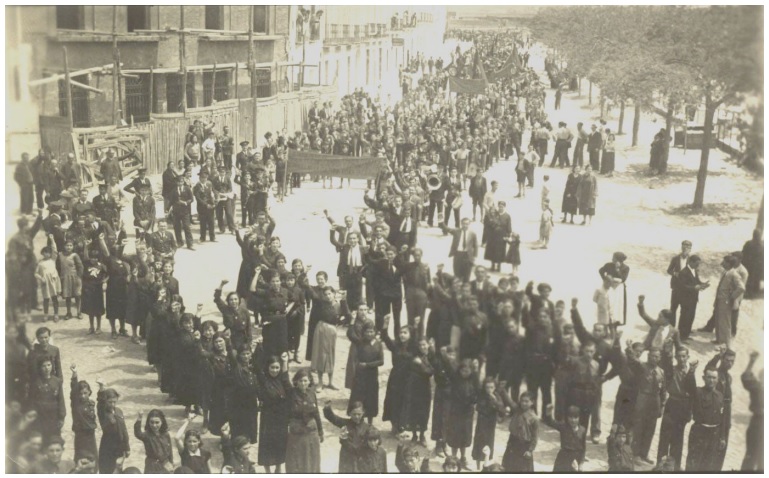
In 1936, Llerena was one of the most important towns in southern Badajoz Province. With a population of approximately 10,000, it served as the administrative centre of its judicial district and occupied a strategic position between Extremadura, Andalusia and Córdoba Province. Roads from Seville, Mérida, Azuaga and Córdoba converged on the town, while two railway lines made Llerena an important communications hub. Any Republican force based there could threaten the eastern flank of the Army of Africa as it advanced north through Extremadura.
Large estates still dominated the surrounding countryside, and hundreds of local families depended on seasonal agricultural labour, but the town also supported railway workers, textile production, distilleries, breweries, workshops and small businesses. These industries created a sizeable urban working class alongside the agricultural labourers employed on the surrounding estates. Socialist organisations, the UGT and other Republican groups attracted strong support among agricultural workers and industrial labourers, while conservative landowners, practising Catholics and right-wing political organisations retained considerable influence. The town also developed one of the strongest organisations of the Workers’ Party of Marxist Unification (POUM) outside Catalonia. When the military uprising began on 18 July 1936, Llerena remained loyal to the Republic. Local authorities quickly arrested 63 residents suspected of supporting the coup and confined them in the town. Later Nationalist accounts portrayed these arrests as the beginning of a campaign of Republican terror, but local historical research has found no evidence that any of the prisoners were killed before Nationalist troops arrived.
The town became a refuge for militia volunteers and loyal security personnel from neighbouring districts, while Republican supporters expected that any Nationalist advance from Seville would follow the main road towards Mérida and Badajoz. Instead, after capturing Monesterio, Major Antonio Castejón Espinosa turned part of his column east towards Llerena. Leaving such an important railway and road junction in Republican hands risked exposing the eastern flank of the Army of Africa as it continued its advance into Extremadura.
As Castejón approached, the Republican authorities attempted to slow his progress by destroying a bridge outside the town. Before the demolition party could reach its objective, however, the plan collapsed. Guardia Civil officers who had remained outwardly loyal to the Republic defected and led a group of approximately 28–30 Republican militiamen into a trap. Instead of blowing the bridge, the militiamen found themselves surrounded by Nationalist troops. Castejón ordered their execution. Only Rafael Maltrana Galán, Antonio Ruiz del Castillo, and Romualdo Rodríguez Beza escaped. Rodríguez Beza later described the incident in the POUM newspaper La Batalla, providing one of the few contemporary Republican accounts of the fighting.
When the first group failed to return, the Republican command in Llerena dispatched a second party of approximately 36 militiamen in a truck and accompanying vehicle to complete the demolition. Castejón’s advance guard intercepted them before they reached the bridge. Most of the men died where they were captured or shortly afterwards, depriving Llerena of a large proportion of its defenders before the battle for the town had properly begun. Among those who fought was Sebastián Franco Nisa, an agricultural labourer remembered locally by the nickname ‘Boquineto.’ According to testimony later given by his family, he fired an old shotgun at one of Castejón’s armoured vehicles before being killed during the assault. His death became one of the best-known individual stories from the battle. The Nationalist column then entered Llerena on 5 August 1936. Legionaries and Moroccan Regulares advanced through the streets while the remaining Republican defenders resisted from several positions inside the town. The strongest resistance developed around the Church of Nuestra Señora de la Granada, where a group of militiamen continued firing from the bell tower after Nationalist troops had occupied much of the surrounding streets. Local historical research maintains that Nationalist troops set fire to the church while attempting to force the defenders from the tower. By the end of 5 August, Nationalist forces controlled Llerena. The fighting had lasted only a single day, but the violence did not end with the military victory. Javier Martín Bastos documented 55 deaths resulting from Nationalist violence on the day of the occupation alone.
The capture of Llerena marked the beginning of a systematic campaign to eliminate the town’s Republican leadership. As soon as organised resistance ended, Nationalist troops and local supporters began searching homes, workplaces and public buildings for people associated with the Republic. Municipal councillors, trade union officials, railway workers, members of left-wing political parties and known militia volunteers became the first targets. Many attempted to escape into the surrounding countryside, but others remained in Llerena believing they had committed no crime or hoping their neighbours would protect them. Investigators compiled lists of Republican supporters from municipal records, political organisations and information supplied by local informants. Those lists determined who remained in custody and who would face execution in the following days.
Violence continued almost immediately after the occupation. Historian Javier Martín Bastos documented 55 deaths resulting from Nationalist violence on 5 August, followed by another 17 between 6 and 8 August. Agricultural labourers formed the largest group, but the dead also included railway workers, municipal employees, craftsmen, traders and political activists. Their occupations demonstrate that the violence extended far beyond those who had fought during the battle. Membership of a trade union, employment by the Republican municipality or public support for the Republic could prove sufficient to place a person’s name on the lists compiled after the occupation.
Republican forces did not abandon Llerena after its capture, and on 15 August, Republican aircraft bombed the town, targeting Nationalist positions and communications. The physical damage and military casualties remain poorly documented, but the Nationalist authorities responded immediately. Between 16 and 17 August, they executed ten prisoners, using the air raid as justification for another round of reprisals. On 31 August, Republican forces advanced from the direction of Azuaga in an attempt to recover Llerena before the Nationalists could consolidate their hold on south-eastern Badajoz Province. The attacking force, commonly identified as the Sediles Column, reached the outskirts of the town but failed to dislodge the Nationalist garrison. Llerena remained firmly under Nationalist control. Nationalist authorities treated the Republican offensive as evidence that suspected supporters inside the town remained a threat. On 2 September, they executed 14 prisoners, beginning another wave of killings that continued throughout September and October. The repression no longer followed military resistance. It became a sustained campaign against people already under Nationalist control.
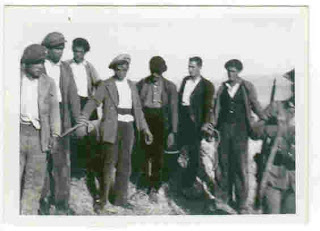
Arrests, executions and imprisonment continued for months as the Nationalist authorities eliminated people they believed had supported the Republic. Historians have identified 182 residents of Llerena who died as a result of Francoist repression between 1936 and 1941. Of these, 174 were murdered without trial, two were executed after military courts imposed death sentences, and six died in prison. 171 of the 182 deaths occurred during 1936, demonstrating that the overwhelming majority of the killing took place in the months immediately after the town fell. Women also became victims of the repression. Martín Bastos documented 11 women executed during September 1936, including five on 2 September after the failed Republican counterattack. Their deaths formed part of the same campaign that claimed the lives of dozens of male prisoners already in Nationalist custody. The documented total of 182 victims refers only to residents of Llerena. It does not include the many refugees, captured militiamen and prisoners from neighbouring towns who were brought to Llerena and killed there during the following months.
One of the principal execution sites outside Llerena lay at the Arroyo del Romanzal, where Nationalist forces shot prisoners during the first months of the occupation. Execution squads attempted to destroy the evidence by burning or partially burning some of the bodies before covering them with earth. In 2005, archaeologists excavated two mass graves at Romanzal and recovered the remains of almost 40 people. The excavation confirmed that the victims included both men and women and that the bodies had been buried hastily without individual graves. Archaeologists also found evidence consistent with attempts to burn some of the corpses before burial.
The Romanzal graves represent only part of the violence carried out around Llerena. Many other victims were buried in the municipal cemetery or killed elsewhere, while the identities of several people recovered from Romanzal remain unknown. Even so, the excavation provided some of the strongest archaeological evidence for the scale and nature of the repression that followed the Nationalist occupation of the town.
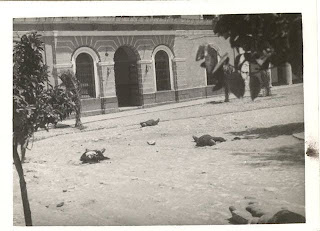
In September 1936, Llerena became one of the principal centres through which prisoners from the Column of the Eight Thousand passed after Nationalist forces trapped the refugee column in the mountains between Reina, Fuente del Arco and Monesterio. Thousands of civilians and Republican militiamen had fled eastern and southern Badajoz Province hoping to reach Republican territory, but Nationalist troops intercepted the column before it escaped.
Many of those captured were taken to Llerena. Some remained imprisoned in the town before execution, while others were shot at the municipal cemetery or at execution sites such as Arroyo del Romanzal. The exact number killed in Llerena has never been established because many prisoners came from other towns and their deaths were either omitted from the Civil Register or recorded elsewhere. Local historians and memorial groups estimate that more than 400 people may have been killed around the town. The larger figure includes refugees from the Column of the Eight Thousand, captured militiamen and prisoners brought to Llerena from neighbouring municipalities, rather than residents of Llerena.
For decades, the repression in Llerena remained largely absent from the public record. Many families knew where relatives had been shot or buried, but fear prevented them from speaking openly while the Franco dictatorship remained in power. Civil Register entries concealed many executions, and numerous victims received no individual grave.


