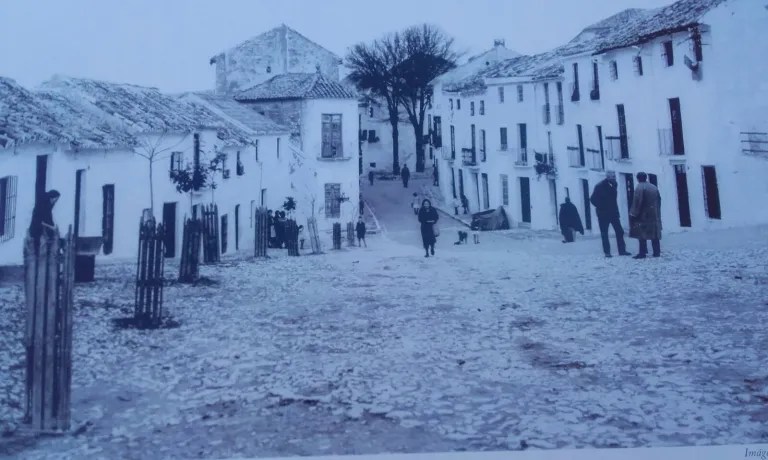
On 28 July 1936, the town of Baena, in Córdoba Province, 65km southeast of Córdoba city, became the scene of one of the bloodiest single days of the Spanish Civil War’s opening weeks. After more than a week under Republican control, Nationalist forces led by Colonel Eduardo Sáenz de Buruaga advanced from Córdoba with Legionnaires, Moroccan Regulares, Guardia Civil and regular army troops. Outnumbered and poorly armed, the local Republican militias were unable to prevent the town from falling after several hours of fighting. As Nationalist troops entered Baena, Republican militiamen holding right-wing prisoners in the former Convent of San Francisco killed many of their hostages rather than allow them to be liberated. Modern local historians generally identify 73 victims, although the precise circumstances of every death remain the subject of historical research.
The capture of the town was immediately followed by severe Nationalist reprisals. Republican supporters, trade union members, local officials and civilians accused of backing the Republic were rounded up and detained. Numerous prisoners were executed without trial during the hours and days that followed, with killings taking place in the town and its surroundings. Modern research has identified at least 445 victims of Francoist repression in Baena during the war and immediate post-war years, while some historians believe the true number of those killed in the initial wave of repression was considerably higher, anywhere between 700 and 2,000 people killed, making it one of the largest massacres in Andalucía during the first weeks of the war. Many victims were Republican officials, trade union members, socialist and anarchist activists, suspected sympathisers, and civilians denounced by neighbours. The executions became part of the broader campaign of terror used throughout Nationalist-held Andalucía to eliminate potential opposition, and became something of a model repeated elsewhere. Artillery and machine-gun fire against resisting districts, followed by rapid occupation by Army units, Civil Guards and right-wing militias, immediate arrests, and long-term political cleansing showed the Nationalists an efficient way to control Andalucía.
The only marked mass grave pit in Baena is by the cemetery on the western entrance to the town, and has 225 people inside, now covered in paintings and is a memorial site to all those murdered by Nationalist repressions, those buried here and those disposed of in unknown locations.
The events at Baena demonstrated how quickly military operations could descend into cycles of retaliation. Within a single day, both Republican and Nationalist forces carried out deadly acts of political violence, leaving deep divisions that continued to shape the town’s memory long after the fighting had ended as those who had hoped for freedom had to live alongside those who supported the rebellion, typical of locations all over Spain. Today, Baena remains one of the most intensively studied examples of the complex and often overlapping patterns of violence that marked the first weeks of the Civil War.
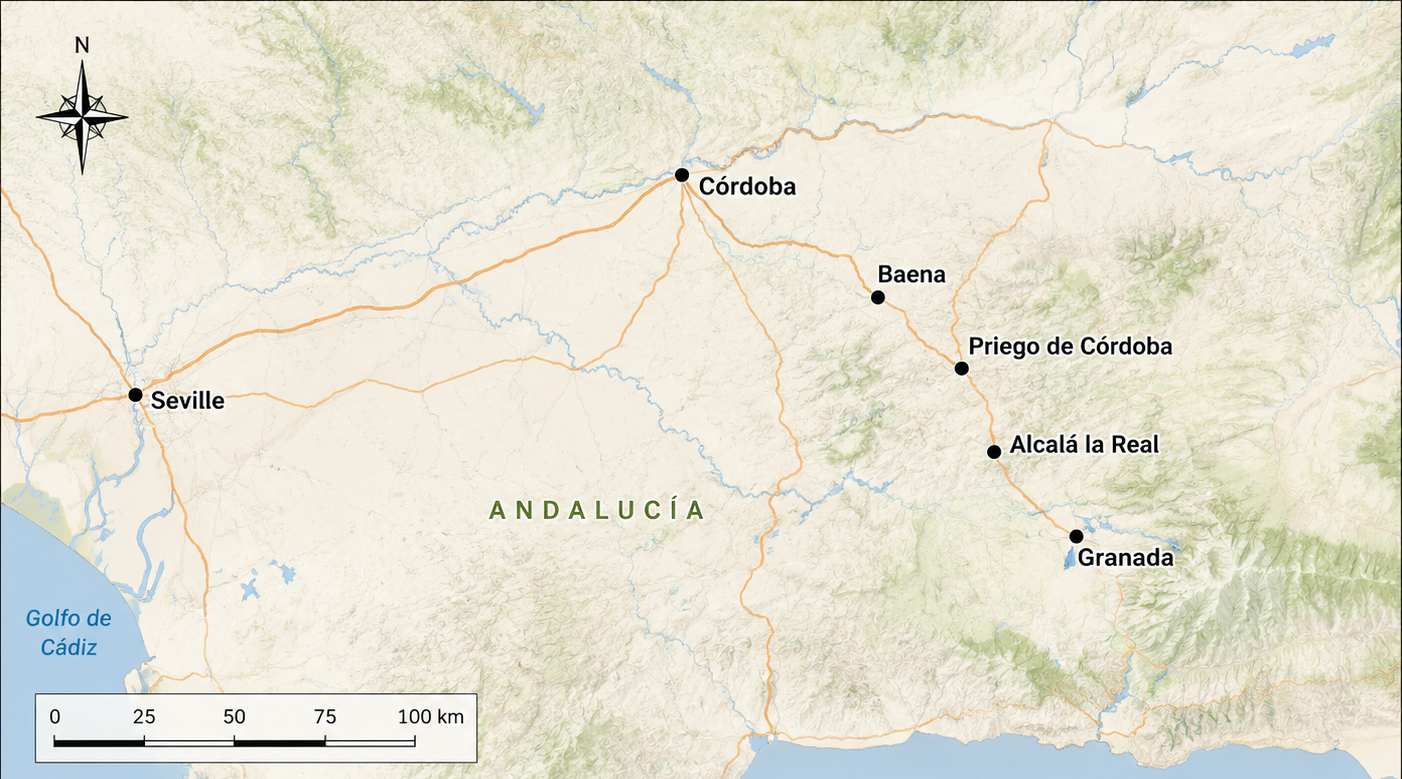
After the military uprising, Córdoba city was firmly in Nationalist hands, but much of the surrounding province remained contested. Baena was one of the largest Republican strongholds in the south-east of the province. Its capture on 28 July 1936 linked Nationalist-controlled territory around Córdoba with other occupied towns and reduced the danger of Republican counter-attacks into the region. Baena lay on an important road network connecting Córdoba with Priego de Córdoba, Alcalá la Real and ultimately Granada. Once Granada had been secured earlier in the month, controlling Baena helped create a more reliable line of communication between the isolated Nationalist enclaves of western and eastern Andalucía. This was important because in late July the Nationalists still held several disconnected pockets across southern Spain. Every town that linked those pockets together strengthened their position.
Baena had a large agricultural working-class population and strong socialist and anarchist organizations before the war. The town had resisted the uprising and became a focus for Republican militia activity and its loss had both military and political significance. It deprived the Republic of one of its strongest local bases in Córdoba province.
By 28 July 1936, the military balance of the Spanish Civil War was beginning to shift significantly. During the first days of the uprising, many supporters of the Republic believed that control of much of the Spanish navy had trapped General Francisco Franco and the Army of Africa in Spanish Morocco. The Strait of Gibraltar appeared to be a major obstacle to the rebellion. By the end of July, that assumption was beginning to unravel.
German and Italian assistance to the Nationalists was no longer limited to diplomatic support or political sympathy. Aircraft supplied by Nazi Germany and Fascist Italy were now helping transport troops, officers, weapons, ammunition, and supplies from Morocco to mainland Spain. What began as an emergency effort to overcome Republican naval control of the Strait soon developed into one of the first major military airlifts in modern history. The immediate military significance of the operation lay not simply in the number of troops being transported, which remained relatively modest during these early days, but in the fact that the Nationalists had found a solution to one of their greatest strategic problems. Every successful flight demonstrated that the rebellion could maintain a connection between Morocco and southern Spain despite Republican control of much of the sea route.
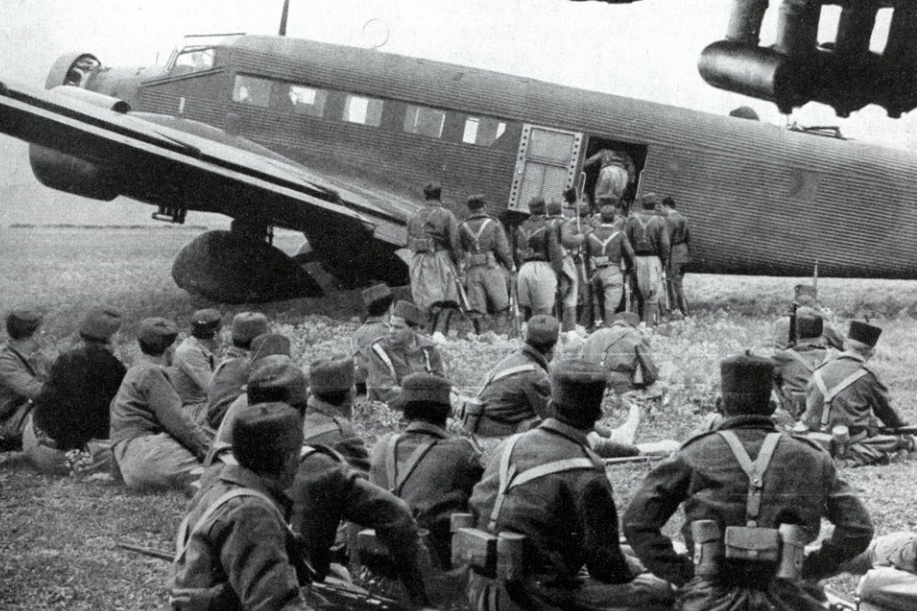
On 18 July 1936, only 220 men had sailed to Cádiz on the Churruca and Ciudad de Cádiz. On 19 July, 170 men were transported to Algeciras on the Dato and Cabo Espartel. But, Nationalist plans to transport troops by sea were blocked by Republican naval officers, including the crew of the Churruca who mutinied after only one troop lift. Republican side. Then the weather hampered plans as fog turned back small yachts carrying tiny numbers of soldiers. The lack of Moroccan troops on the mainland was hampering any chance of the rebel coup taking the country. Between July 19 to 28, the rebels sent groups 10 to 15 men in small airplanes, but now, for the first time in military history, a large army was transported by air into an active war zone. What became known by its German codename, Operation Feuerzauber (Magic Fire), began flying the battle-hardened Army of Africa from Spanish Morocco across the Strait of Gibraltar to Nationalist-held territory in southern Spain. Although overshadowed by later events of the Spanish Civil War, the airlift proved one of the most significant military operations of the entire conflict.
Franco had appealed directly to both Nazi Germany and Fascist Italy for assistance. The request reached Berlin through German intermediaries and was approved by Adolf Hitler on 25 July. Hitler authorised the immediate dispatch of transport aircraft, crews and technicians, while Benito Mussolini simultaneously agreed to send Italian aircraft of his own. Although both dictators justified their support as anti-communist solidarity, they also recognised that Spain offered an opportunity to expand their influence in the western Mediterranean while testing aircraft, logistics and military organisation under combat conditions.
The German operation was organised with remarkable speed. A special headquarters, Sonderstab W, under the direction of Hermann Göring coordinated the mission. Twenty civilian Junkers Ju 52/3m transport aircraft belonging to Deutsche Luft Hansa were rapidly repainted to conceal their origins and accompanied by six Heinkel He 51 fighter aircraft. Although officially civilian machines, the transports were crewed by German personnel operating under military direction.
The aircraft reached Spanish Morocco on 28 July. The following morning, 29 July, the first transport flights departed from airfields around Tétouan, carrying soldiers of the Army of Africa to the Nationalist-held airfield at Tablada, outside Seville. The crossing measured roughly 200 kilometres, taking the Ju 52s across the narrow but strategically vital Strait of Gibraltar.
The Ju 52s had originally been designed as seventeen-seat passenger aircraft, but for the airlift almost every internal fitting was removed. Soldiers sat shoulder-to-shoulder on the bare metal floor, rifles between their knees and packs stacked wherever space remained. Each aircraft could carry roughly thirty fully equipped troops, and crews often completed as many as four round trips in a single day. The operation quickly became a continuous shuttle between Africa and southern Spain.
The first day’s flights were modest in scale, but they demonstrated that the Nationalists had found a solution to the naval blockade. During the final days of July, German aircraft were joined by the surviving Spanish Fokker F.VII transports, Douglas DC-2 aircraft and Dornier Wal flying boats already available to Franco’s forces. Within days, Italian Savoia-Marchetti SM.81 trimotor aircraft also entered service, increasing the operation’s capacity still further.
Remarkably, the Republican Air Force made little effort to interfere with the operation during its opening phase. Republican aviation was dispersed across multiple fronts, suffered from poor organisation and uncertain command, and initially failed to appreciate the strategic importance of the crossings. This allowed the transports to fly repeatedly across the Strait with relatively little opposition, despite operating slowly and at low altitude. Historians continue to regard this as one of the Republic’s greatest missed opportunities during the opening weeks of the war.
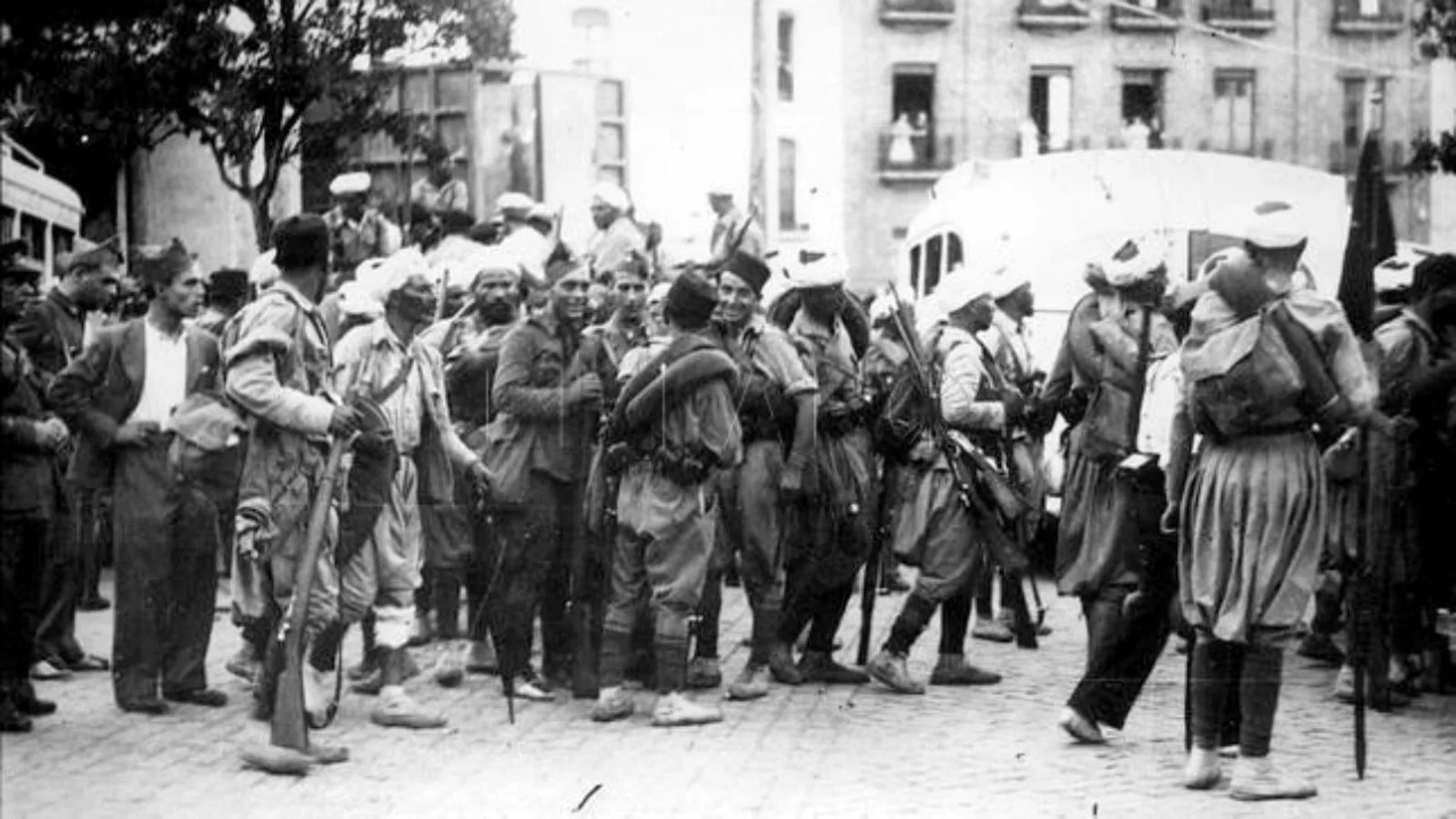
The significance of the operation became apparent almost immediately. Before the arrival of the German transports, only a few hundred Nationalist troops had managed to reach the mainland. After 29 July the numbers rose rapidly. By early August thousands of experienced legionnaires and Moroccan soldiers had reinforced the Nationalist armies advancing through Andalucía and Extremadura. During the eighty-five days that the airlift continued, estimates suggest that between 14,000 and over 20,000 troops were flown into Spain, together with hundreds of tonnes of weapons, ammunition, machine guns, artillery and supplies. The exact totals remain debated, but all serious studies agree that the operation fundamentally altered the balance of forces.
The arrival of the Army of Africa had consequences far beyond logistics. These troops were the most disciplined and effective soldiers available to the Nationalists, and their deployment transformed the military situation in southern Spain. They spearheaded the advance north from Seville through western Andalucía and Extremadura, linking isolated Nationalist territories and eventually helping to relieve pressure on rebel-held areas elsewhere. Their reputation alone generated considerable fear among Republican defenders, many of whom had little military training compared with these colonial veterans.
The airlift also marked the beginning of direct German and Italian military intervention in the Spanish Civil War. Although initially presented as limited technical assistance, it established patterns of cooperation that expanded dramatically over the following months. German aircraft, crews and advisers would eventually form the nucleus of the Condor Legion, while Italian forces grew into the Corpo Truppe Volontarie. What began on 29 July as an emergency transport mission soon evolved into one of the largest foreign military interventions of the conflict.
Looking back, historians frequently describe Operation Feuerzauber as the world’s first major military airlift. Previous armies had occasionally moved small numbers of personnel by aircraft, but never before had air transport been used systematically to transfer an entire field army into an active theatre of war. The operation demonstrated that aircraft could overcome geographical barriers that had previously made military movements impossible. In doing so, it not only helped save the Nationalist rebellion during its most vulnerable weeks but also introduced a form of warfare that would become commonplace during the Second World War.
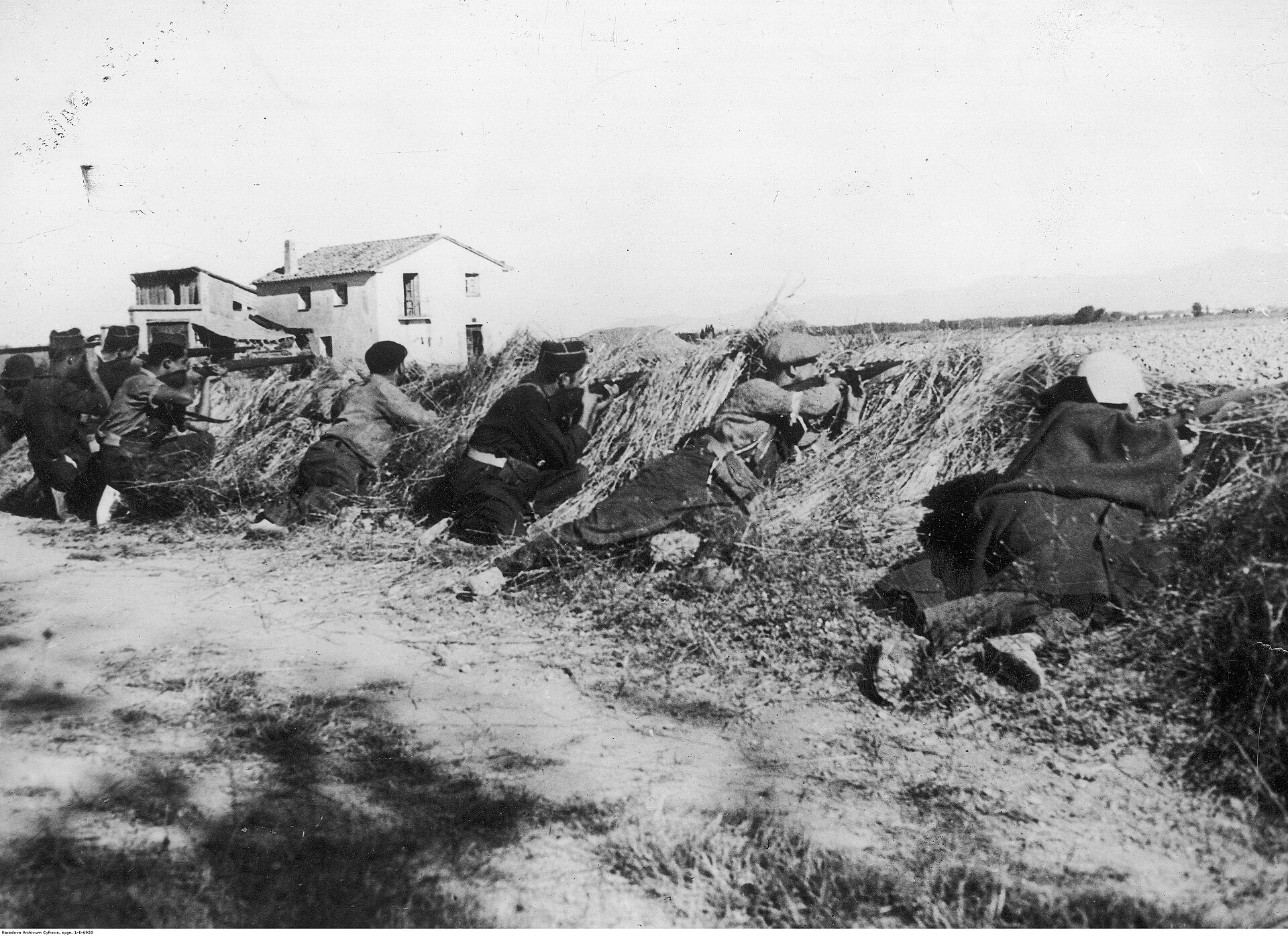
Meanwhile, in Aragón, the first militia offensives toward Zaragoza revealed the difficulties of sustained warfare. Volunteers possessed enthusiasm and commitment, but many formations lacked artillery, reliable communications, transport, maps, and experienced officers. The realities of military campaigning increasingly challenged the optimism that had followed the defeat of the uprising in Barcelona. Read all about Aragón’s uprising in depth HERE
The situation around Oviedo continued attracting attention. While much of the province remained loyal to the Republic and armed workers controlled large areas of the mining districts, Colonel Antonio Aranda was consolidating rebel forces inside the city. The result was an increasingly isolated Nationalist enclave surrounded by largely Republican territory, a situation that would soon lead to one of the war’s longest early sieges. Read all about the Siege of Oviedo in depth HERE
Some of the most important developments of late July were occurring far from the front lines. Across both Republican and Nationalist zones, arrests, executions, disappearances, and reprisals intensified rapidly. In Nationalist-controlled areas, military authorities and their supporters targeted trade unionists, socialist councillors, teachers, labour organisers, Republican officials, and suspected opponents of the rebellion. In Republican-held regions, clergy, religious figures, conservative politicians, military officers, landowners, and suspected supporters of the uprising increasingly faced violence from revolutionary groups and uncontrolled militias.
The repression was no longer confined to isolated incidents. In cities like Seville, Valladolid, Zaragoza, and Córdoba, prisons filled with political detainees while executions became increasingly common. In Republican areas, churches were attacked, religious communities dispersed, and suspected right-wing sympathisers targeted in some localities. The identities of the victims varied from place to place, but the pattern was becoming familiar throughout Spain: political affiliation, religion, union membership, social status, or even personal denunciations could become matters of life and death. Many perpetrators believed they were acting pre-emptively against enemies who would destroy them if given the opportunity. Fear, rumour, revenge, ideology, and local grievances often became impossible to separate. The result was a cycle of violence that expanded far beyond military operations. The struggle for Spain’s future was increasingly being waged both at the front and behind it.
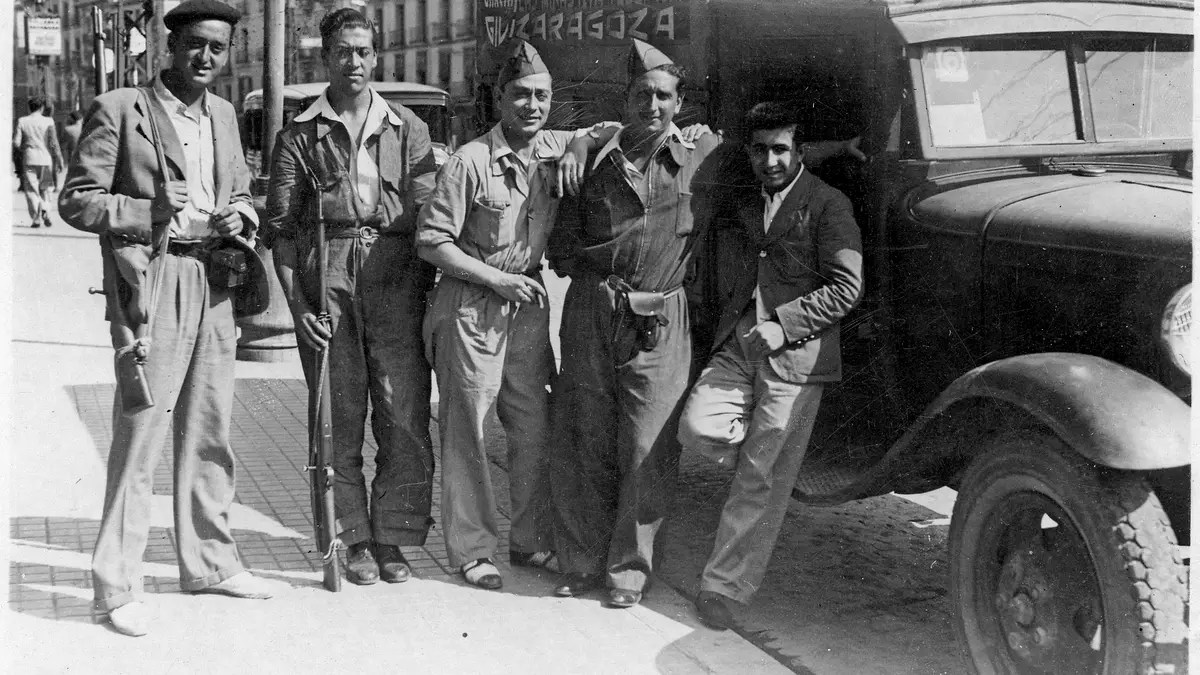
On 28 July 1936, Nationalist forces completed the capture of Vigo, bringing an end to the last significant Republican resistance in Galicia. For eight days, workers’ organisations, Republican supporters and loyal security personnel had resisted the uprising in Spain’s principal Atlantic port, erecting barricades and fighting for control of the city’s streets and strategic buildings. The military, supported by the Guardia Civil, Assault Guards who had joined the rebellion, and armed right-wing civilians, gradually tightened their grip before overwhelming the remaining defenders. With Vigo’s fall, every Galician province was now under Nationalist control. The region would thereafter serve as a secure rear area, providing troops, naval facilities, industry and agricultural production to support the Nationalist war effort for the remainder of the conflict.

