New to the topic?
In the provincial capitals, many of those arrested during the first weeks of the war were not executed immediately. Soldiers, Guardia Civil or Falangists took them to the local prison, police station, barracks or another improvised detention centre, where they could remain for days or weeks. Some hoped they would face questioning or appear before a military court, while relatives often continued bringing food or clothing, believing they would eventually be released. Instead, after dark, guards would arrive carrying a list of names. Those selected were removed in small groups during what became known as a saca (extraction). A single prison wagon or lorry might carry half a dozen prisoners, or several dozen, depending on the prison and the night. They were driven beyond the town to a cemetery, roadside ditch, quarry or wooded hillside, executed, and buried before dawn. Fellow prisoners frequently remembered hearing the names being called and knowing that those who left the prison at night would never return.
But during the earliest days of the uprising, particularly before the prison system had become organised, many victims never entered a prison at all. Armed patrols called at homes, often after dark or before dawn, searching for local officials, teachers, trade union organisers or known supporters of the Republic. Patrols worked from prepared lists, moving through a street or village collecting several people over the course of the night. Some were driven directly to isolated roadsides, gravel pits or fields on the edge of town and shot within hours of their arrest. In rural districts especially, neighbours witnessed the vehicle arriving but never saw those taken away again. For many families, there was no official record of an arrest or execution; only the knowledge that a relative had been removed during the night and had disappeared.
Across provinces such as Valladolid, Burgos, Logroño, Palencia and Ávila, armed patrols made up of soldiers, the Guardia Civil, Falangists and right-wing civilians arrested people directly from their homes, workplaces, union offices, cafés, town halls. Some detainees were indeed taken straight to the outskirts of town and shot within hours, never entering a prison. Victims included mayors, socialist councillors, UGT and CNT officials, teachers, known Republican activists, and people denounced by neighbours.
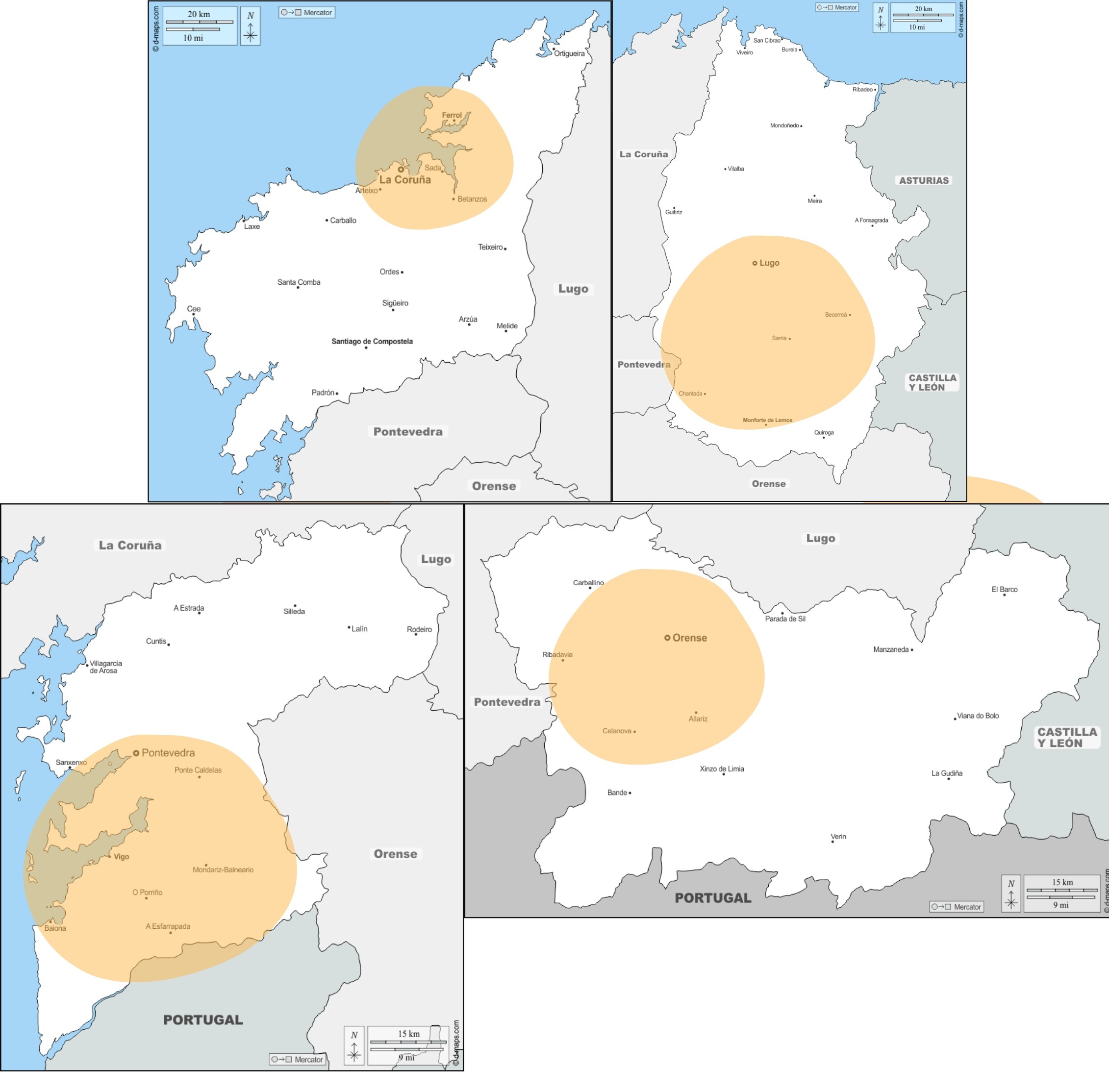
Northern Spain, especially provinces such as Soria, Zamora, Lugo and Ourense, consisted of hundreds of small villages connected by country roads. Instead of taking everyone to one execution ground, local patrols often used roadside ditches, small cemeteries, woodlands, quarries, riverbanks, or isolated fields. The result is hundreds of small burial sites instead of one enormous cemetery. That is why modern archaeological surveys keep discovering graves containing two, five or ten victims scattered across the countryside. In many northern provinces the Guardia Civil commander, mayor and Falange leader already knew exactly who the local socialist councillor, UGT organiser or schoolteacher was. Those people could simply disappear from their own village. There was often no need to transport them 30 km to a provincial capital. Smaller provinces often never developed repression on that scale because prisoners remained local. One distinction that historians have increasingly made is between terror by concentration and terror by dispersion. Whereas larger provinces in the south, terror by concentration worked because f large populations, but the northern regions suffered terror by dispersion, Across much of Old Castile, Galicia and inland León, terror was dispersed. The objective was the same—the elimination of Republican political and social leadership—but it was carried out through countless local arrests and small-scale executions. No single site dominated the landscape, yet collectively the killings reached into almost every district.
| Region | Province | Nationalist-held by end of July | Republican-held by end of July |
|---|---|---|---|
| Old Castile | Logroño (La Rioja) | Entire province | None |
| Burgos | Entire province | None | |
| Palencia | Entire province | None | |
| Soria | Entire province | None | |
| Segovia | Entire province | None | |
| Ávila | Entire province | None | |
| Valladolid | Entire province | None | |
| Santander (Cantabria) | None | Entire province | |
| León* | Salamanca | Entire province | None |
| Zamora | Entire province | None | |
| León | León city, Astorga, Ponferrada, La Bañeza, southern and central districts, and the main transport routes | Northern mining valleys, parts of the Cantabrian Mountains, and areas bordering Asturias | |
| Galicia | A Coruña | Entire province | None |
| Lugo | Entire province | None | |
| Ourense | Entire province | None | |
| Pontevedra | Entire province (including Vigo after 28 July) | None | |
| Asturias | Asturias | Oviedo city, the Oviedo–Grado corridor, Trubia, and a handful of isolated military garrisons | Gijón, Avilés, the Nalón and Caudal mining valleys, the eastern province, and the overwhelming majority of Asturias |
| Navarre | Navarre | Entire province | None |
| Basque Country | Álava | Entire province | None |
| Guipúzcoa | Eastern frontier districts adjoining Navarre, including Tolosa, Beasain and much of the inland corridor | San Sebastián, Irún, Eibar, much of the coast, and most of the western province | |
| Biscay | Small isolated military enclaves only | Bilbao and virtually the entire province |
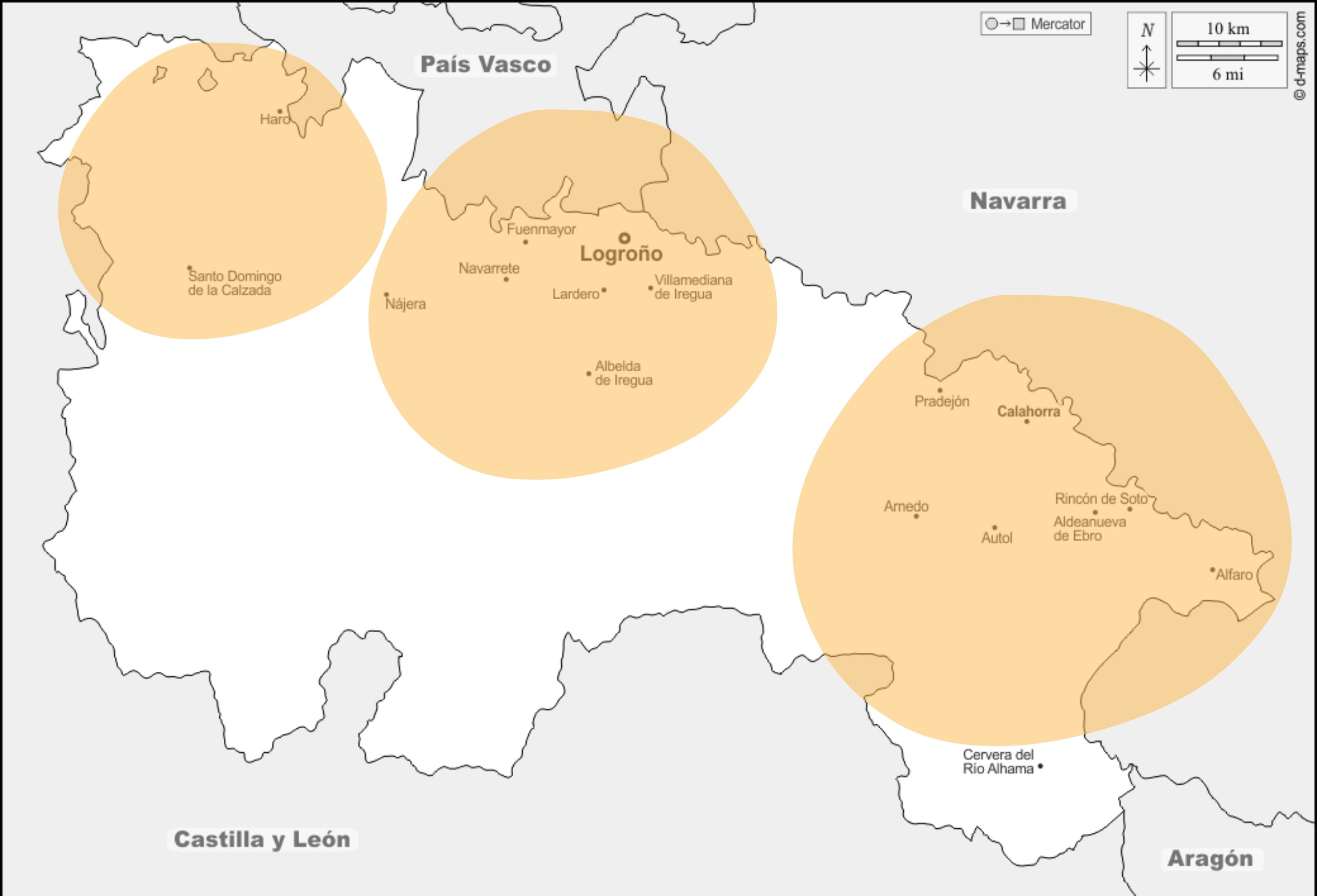
- Logroño Province (La Rioja since 1982)
- Republican-held: None
- Nationalist-held: Entire province
- Saw extensive use of roadside executions alongside later prison removals
Home to around 190,000 people in 1936, the province of Logroño fell almost immediately after the uprising began. Republican resistance was limited, allowing military and Falangist authorities to begin arrests within days of securing the province. Although little fighting occurred, Logroño experienced one of the highest rates of political repression relative to its population anywhere in Spain. Nearly 2,000 Republicans are believed to have been killed during the war, many in the first months, including approximately 700 in July. The province’s most significant memorial site is in Logroño city in the far north of the reagion, at La Barranca (Lardero), where more than 400 victims were later recovered, alongside Logroño Cemetery and numerous smaller nearby execution sites around Nájera and Villamediana de Iregua. The towns of Haro, Calahorra, and Alfaro, all along the northern border of the province also have significant execution sites.
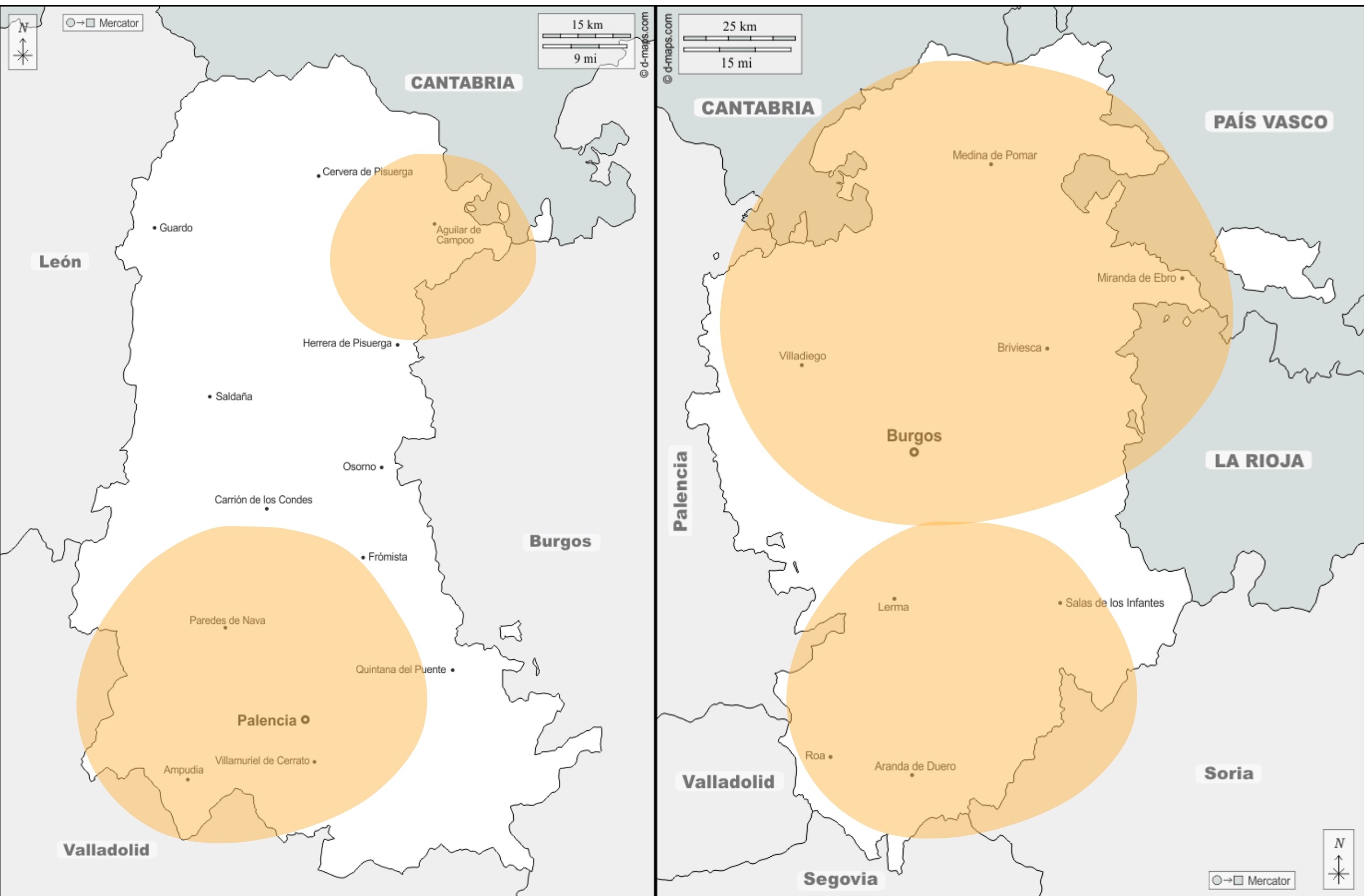
- Burgos Province, Old Castile (Castilla y León since 1982)
- Republican-held: None
- Nationalist-held: Entire province
- Became the administrative centre of the Nationalist zone, and developed a comparatively bureaucratic system centred on prisons and places like Monte de Estépar.
With a population of approximately 355,000, Burgos was one of the first provinces to fall under Nationalist control. Army officers, the Guardia Civil and right-wing civilian supporters secured the provincial capital on 18 July 1936, meeting only scattered resistance. As Burgos quickly became one of the political centres of the rebellion and later the seat of Franco’s government, repression was swift and systematic. Hundreds of Republican supporters, including trade unionists, teachers, municipal councillors and labour activists, were executed without trial during the opening months of the war. The best-known execution and burial sites are Monte de Estépar, 22km west of Burgos city, where mass graves containing hundreds of victims have been excavated, and Burgos Cemetery, alongside numerous roadside execution sites throughout the province. Despite Burgos bring a major stronghold of Nationalist power, ‘only’ upwards of 400 Republican were killed in July 1936, as the sacas to Estépar did not begin until 2 August (and will be covered separately).
- Palencia Province, Old Castile (Castilla y León since 1982)
- Republican-held: None
- Nationalist-held: Entire province
- Exceptionally severe repression relative to its population
Palencia’s population of 215,000 came under Nationalist control within the first days of the coup. Resistance from Republican supporters proved short-lived, allowing the authorities to begin a systematic campaign against political opponents almost immediately. Victims included railway workers, miners, schoolteachers, socialist councillors and members of the UGT and CNT. Several hundred people were executed during the first months of the conflict. The principal execution sites include Palencia Cemetery, as well as locations near Dueñas, Baltanás, Aguilar de Campoo and Venta de Baños, where many victims were buried in unmarked graves. July 1936 saw approximately 300 people killed.
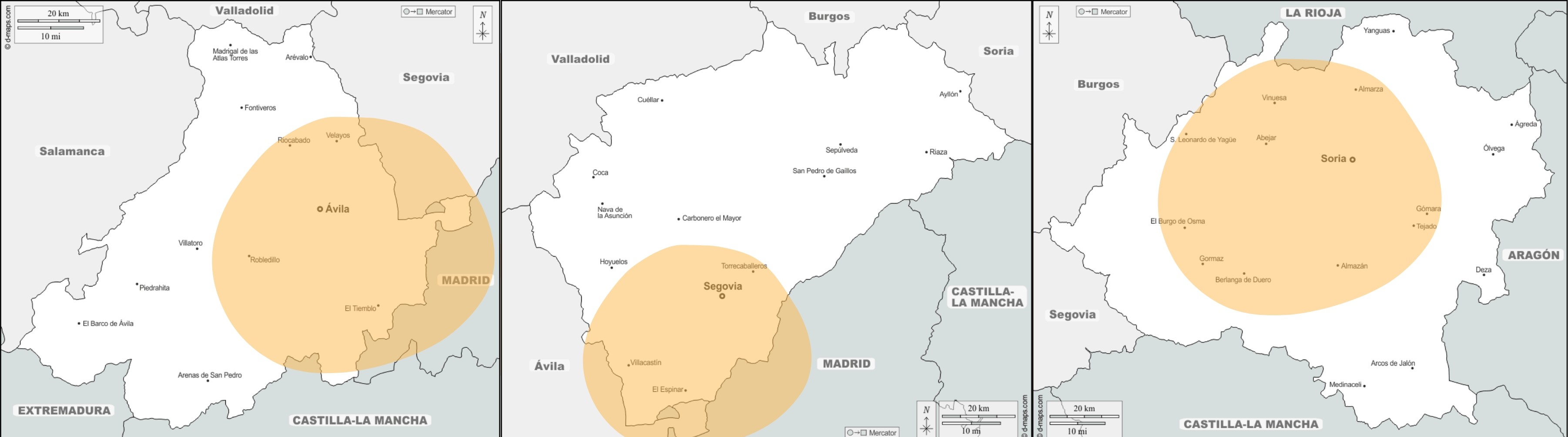
- Soria Province, Old Castile (Castilla y León since 1982)
- Republican-held: None
- Nationalist-held: Entire province
- Sparse population, dispersed rural executions
One of Spain’s least populated provinces, Soria had around 160,000 inhabitants when the Civil War began. The military uprising succeeded rapidly, encountering only isolated resistance. Although the province experienced relatively little fighting, repression against suspected Republicans was severe. Teachers, local officials, trade union members and left-wing activists were arrested and executed throughout the summer and autumn of 1936. The principal execution and burial sites are Soria Cemetery, together with sites around Almazán, El Burgo de Osma, Calatañazor, Almazán, and Medinaceli and the surrounding countryside, where many victims were buried in roadside graves, including 150 in July 1936 alone.
- Segovia Province, Old Castile (Castilla y León since 1982)
- Republican-held: None
- Nationalist-held: Entire province
- Quick victory, steady repression rather than larger massacres
Segovia’s population stood at approximately 180,000 in 1936. The uprising succeeded quickly on 18 July, with the military securing the provincial capital before organised Republican resistance could develop. Repression followed almost immediately, targeting Republican officials, railway workers, teachers, trade union members and members of left-wing political parties. Hundreds were executed during the opening months of the war. The best-known burial sites include Segovia Cemetery, together with graves near El Espinar, San Rafael and other locations along the Guadarrama foothills, including 200 executions in July 1936.
- Ávila Province, Old Castile (Castilla y León since 1982)
- Republican-held: None
- Nationalist-held: Entire province
- Swift military success, targeted elimination of local Republican leadership
The province of Ávila, with roughly 175,000 inhabitants, passed into Nationalist hands during the first days of the uprising with relatively little armed resistance. Once military control had been established, local Falangists and military authorities began arresting suspected Republican supporters across both the provincial capital and surrounding villages. Those executed included teachers, municipal councillors, trade unionists and labour activists. Major execution sites include Ávila Cemetery, together with burial grounds near Arévalo, Cebreros, Arenas de San Pedro, and several rural cemeteries where victims were interred in unmarked graves. Approximately 200 Republicans were executed in the first month of the war.
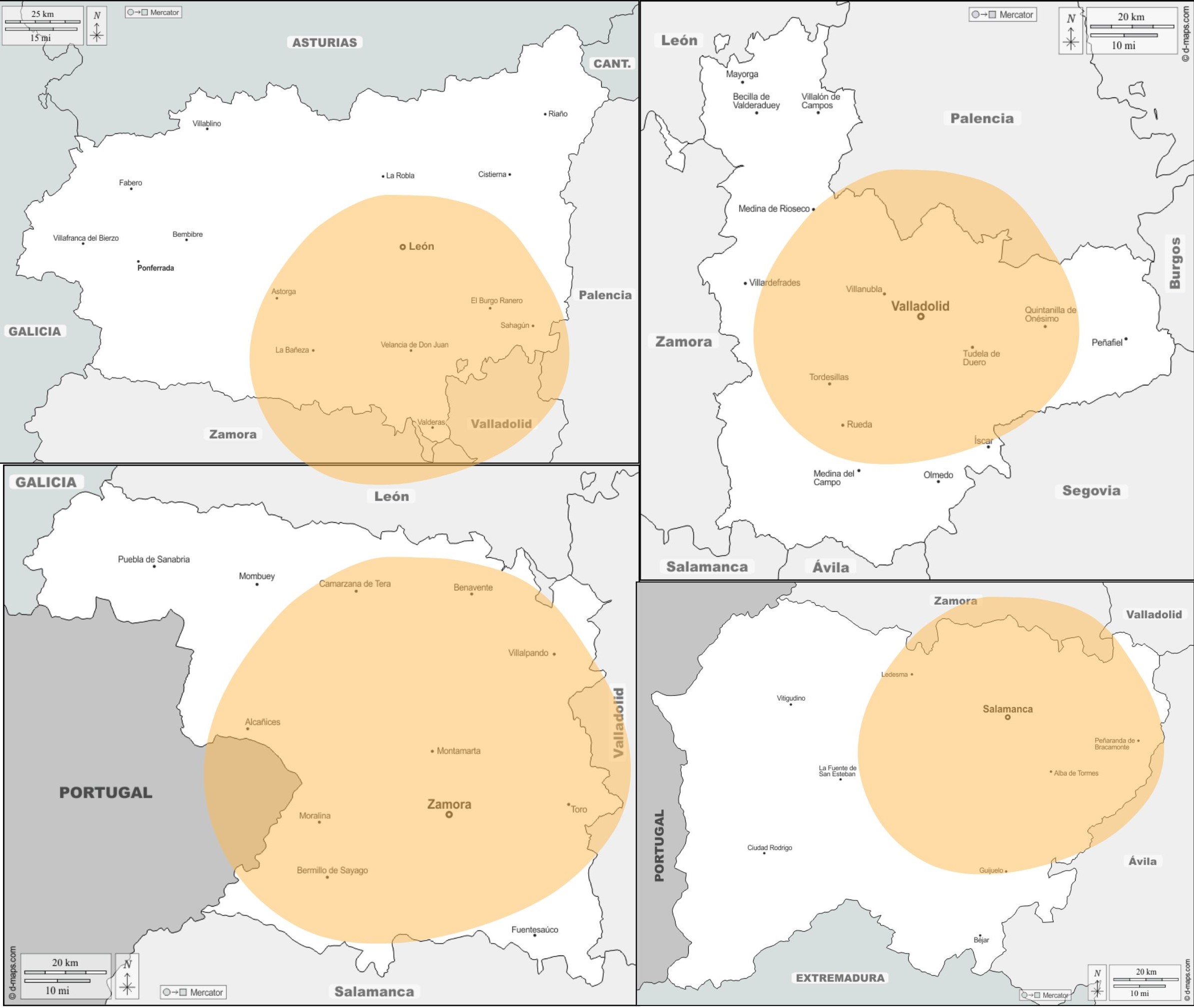
- Salamanca Province, Old Castile (Castilla y León since 1982)
- Republican-held: None
- Nationalist-held: Entire province
With a population of approximately 345,000, Salamanca fell rapidly to the military uprising on 19 July 1936. The army garrison, supported by the Guardia Civil and local right-wing organisations, secured the provincial capital with little organised resistance, while the remainder of the province passed under Nationalist control within days. As in neighbouring Zamora and Valladolid, the absence of prolonged fighting was followed by widespread political repression. Republican officials, teachers, trade unionists, railway workers, agricultural labour leaders and members of left-wing parties were arrested throughout the province, many being executed without meaningful judicial process during the following weeks and months. The principal execution and burial sites include Salamanca Cemetery, the vicinity of the provincial prison, and numerous roadside graves around Ciudad Rodrigo, Peñaranda de Bracamonte, Béjar and villages across the Campo Charro. During the autumn of 1936, Salamanca assumed increasing political importance when the Nationalist high command and later General Francisco Franco established their headquarters in the city, transforming it into one of the principal administrative centres of the Nationalist war effort. 1,000–1,300 Republican victims would die in Salamanca province during the war, most in 1936, and July saw 200-400 executed as the violence headed towards the province.
- Valladolid Province, Old Castile (Castilla y León since 1982)
- Republican-held: None
- Nationalist-held: Entire province
- Created a well-developed prison system and rapidly became one of the largest centres of systematic executions in northern Spain
Valladolid was the largest city in Old Castile, with a provincial population of approximately 430,000. The uprising succeeded on 18 July 1936, and the province quickly became one of the principal centres of Nationalist authority in northern Spain. Repression began almost immediately and continued throughout the war, with thousands of Republicans executed. Victims included socialist politicians, teachers, railway workers, trade union members, municipal officials and ordinary civilians denounced for their political sympathies. The province’s most important execution and burial site is El Carmen Cemetery, where around 2,500 victims are believed to have been buried, together with execution sites at Villanubla, the Montes Torozos, and numerous roadside graves throughout the province. The sacas were well-organised throughout the province, and approximately 400-700 Republicans were already executed by late July.
- Zamora Province, León (Castilla y León since 1982)
- Republican-held: None
- Nationalist-held: Entire Province
- With fewer large urban centres, relied much more heavily on local Civil Guards, Falangists and municipal authorities, and patterns varied from district to district
With a population of approximately 310,000, Zamora fell rapidly to the Nationalist uprising on 18–19 July 1936. The military garrison, supported by the Guardia Civil and right-wing civilian organisations, encountered only limited resistance, and the province was firmly under Nationalist control within days. Once authority had been secured, arrests spread through both the provincial capital and rural districts, targeting Republican officials, teachers, trade unionists, agricultural labour leaders and members of left-wing parties. Hundreds were executed during the opening months of the war, many without formal trial. The principal execution and burial sites include Zamora Cemetery, the grounds surrounding the provincial prison, and numerous roadside graves throughout the countryside, particularly around Toro, Benavente and Puebla de Sanabria. Like neighbouring provinces, repression quickly evolved from improvised arrests to a more organised system of imprisonment, sacas and nightly executions, particularly in rural regions, were 300 were killed less than two weeks into the war.
- León Province, León (Castilla y León since 1982)
- Republican-held: Northern mining valleys, parts of the Cantabrian Mountains, and areas bordering Asturias
- Nationalist-held: León city, Astorga, Ponferrada, La Bañeza, southern and central districts, and the main transport routes
- Combined urban prison executions with killings in isolated mining districts
León, with a population of approximately 490,000, was largely brought under Nationalist control between 20 and 22 July, although the province’s mountainous northern districts remained contested and some mining communities resisted for longer. The city of León itself fell quickly, allowing the military authorities to establish control over the provincial administration before launching widespread repression. Thousands of Republican supporters, including miners, railway workers, teachers, socialist and anarchist activists, municipal officials and ordinary civilians, were arrested during the first weeks of the war, and 600 were executed. Many passed through San Marcos Prison, from where prisoners were regularly removed in sacas for execution. The province’s best-known execution site is Puente Castro, on the outskirts of León, where large numbers of victims were buried, alongside León Cemetery and numerous rural graves across the province. By the end of July, organised resistance had largely disappeared from most of León, although fighting continued in parts of the Cantabrian Mountains.
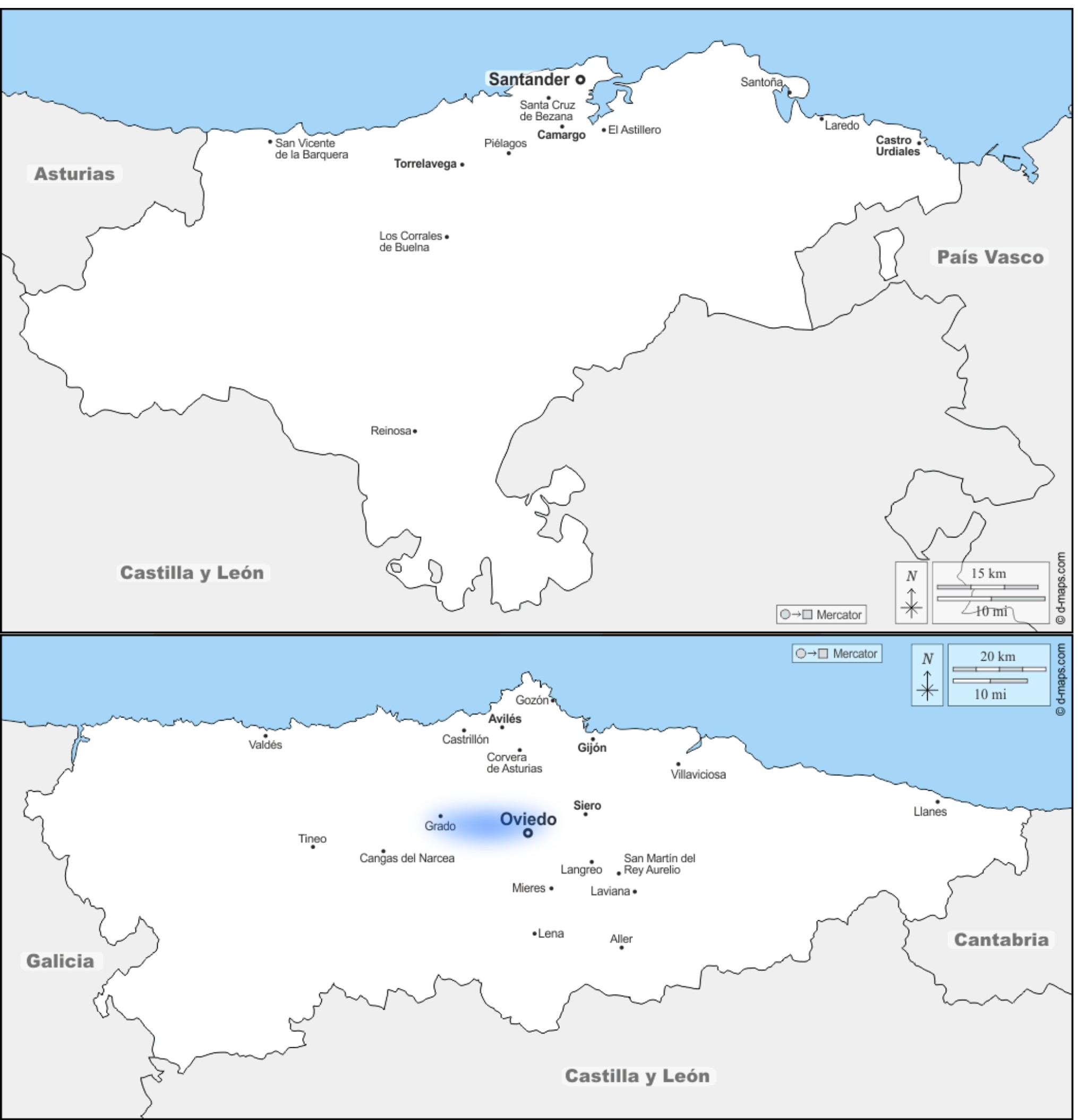
- Santander (Cantabria since 1982)
- Nationalist-held: None
- Republican-held: Entire province
The province of Santander, with a population of approximately 365,000, remained under Republican control after the July uprising. The military rebellion failed in the provincial capital, and the province became part of the isolated Republican-held Northern Zone. As a result, it did not experience the immediate Nationalist repression seen elsewhere in the region during July and August 1936. Political violence did occur, including killings of prisoners and clergy by Republican groups, but the province’s largest execution and burial sites date from after its capture by Nationalist forces in August 1937.
- Asturias Province
- Republican-held: Gijón, Avilés, the Nalón and Caudal mining valleys, the eastern province, and the overwhelming majority of Asturias
- Nationalist-held: Oviedo city, the 40km Oviedo–Grado corridor, Trubia, and a handful of isolated military garrisons
- Asturias was a battlefield shaped by an active front, the siege of Oviedo, and shifting control meant the but a province remained divided between a Nationalist enclave and a Republican-controlled countryside.
Asturias, home to approximately 690,000, presented a striking contrast to neighbouring León. Although the military uprising succeeded in Oviedo city under Colonel Antonio Aranda Mata, it failed across most of the province, where miners, workers’ organisations and loyal security forces retained control of the industrial valleys, the ports and the major cities of Gijón and Avilés. By the end of July, Oviedo had become an isolated Nationalist stronghold surrounded by Republican-controlled territory, marking the beginning of the siege that would last until October. Repression occurred on both sides of the emerging front. Within Nationalist-held Oviedo, suspected Republicans were arrested and executed, while in Republican-controlled Asturias some clergy, right-wing civilians and suspected rebel supporters were also killed, particularly during the chaotic first weeks after the uprising. Asturias remained an active battlefield rather than a secure area. The principal burial sites associated with the opening months include Oviedo Cemetery (El Salvador) and later graves connected with the siege, while many Republican victims elsewhere in the province, like Gijón, Avilés, Mieres, and Sama de Langreo were buried in local cemeteries or temporary wartime graves rather than large execution sites.
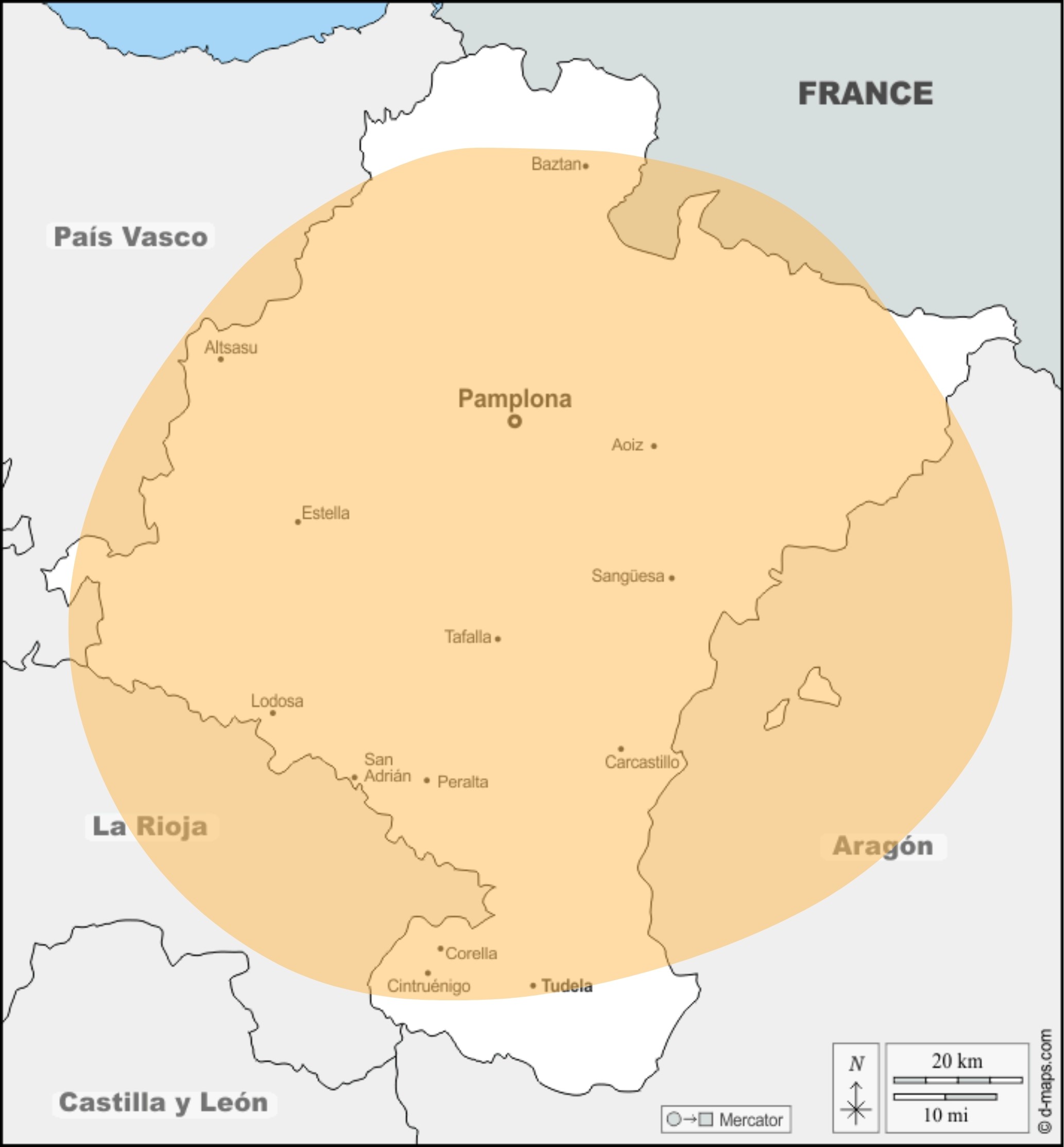
- Navarre Province
- Republican-held: None
- Nationalist-held: Entire province
With a population of approximately 345,000, Navarre was one of the few provinces where the military uprising encountered almost no organised resistance. The rebellion succeeded on 19 July 1936, aided by the province’s powerful Carlist movement, whose Requeté militias mobilised thousands of armed volunteers even before the Army had fully secured control. The absence of prolonged fighting did not prevent widespread repression. Republican councillors, teachers, trade unionists, left-wing activists and supporters of the Republic were arrested across the province, many being executed during the summer and autumn of 1936. Historians estimate that around 3,000 Republicans were killed in Navarre despite there being virtually no battlefield within the province. Major execution and burial sites include Pamplona Cemetery, the slopes of Monte Ezkaba beneath Fort San Cristóbal, and numerous roadside graves throughout the Ribera and central and south districts, including Valcaldera, Cadreita, Peralta, Funes, Sartaguda, and Milagrothe. Navarre rapidly became one of the Nationalists’ safest areas and an important source of Carlist manpower throughout the war. Despite no frontline fighting in Navarre, 1,200 Republicans were executed in the first few weeks of the war.
Standing on the summit of Monte Ezkaba a few kilometres north of Pamplona, Fort San Cristóbal was originally constructed in the late nineteenth century as a defensive fortress overlooking the city. Following the military uprising in July 1936, it was transformed into one of the Nationalists’ largest military prisons. Republican soldiers, elected officials, trade unionists, teachers and civilians from Navarre, the Basque Country and neighbouring provinces were imprisoned within its walls under harsh conditions. Although the fort is best remembered for the mass escape of prisoners in May 1938, many inmates never left alive. Prisoners who died from disease, malnutrition or mistreatment, together with others removed for execution, were buried in cemeteries and unmarked graves on the slopes of Monte Ezkaba. Today the fort stands as one of northern Spain’s most significant sites of memory, representing the imprisonment and repression that followed the rapid Nationalist conquest of Navarre.
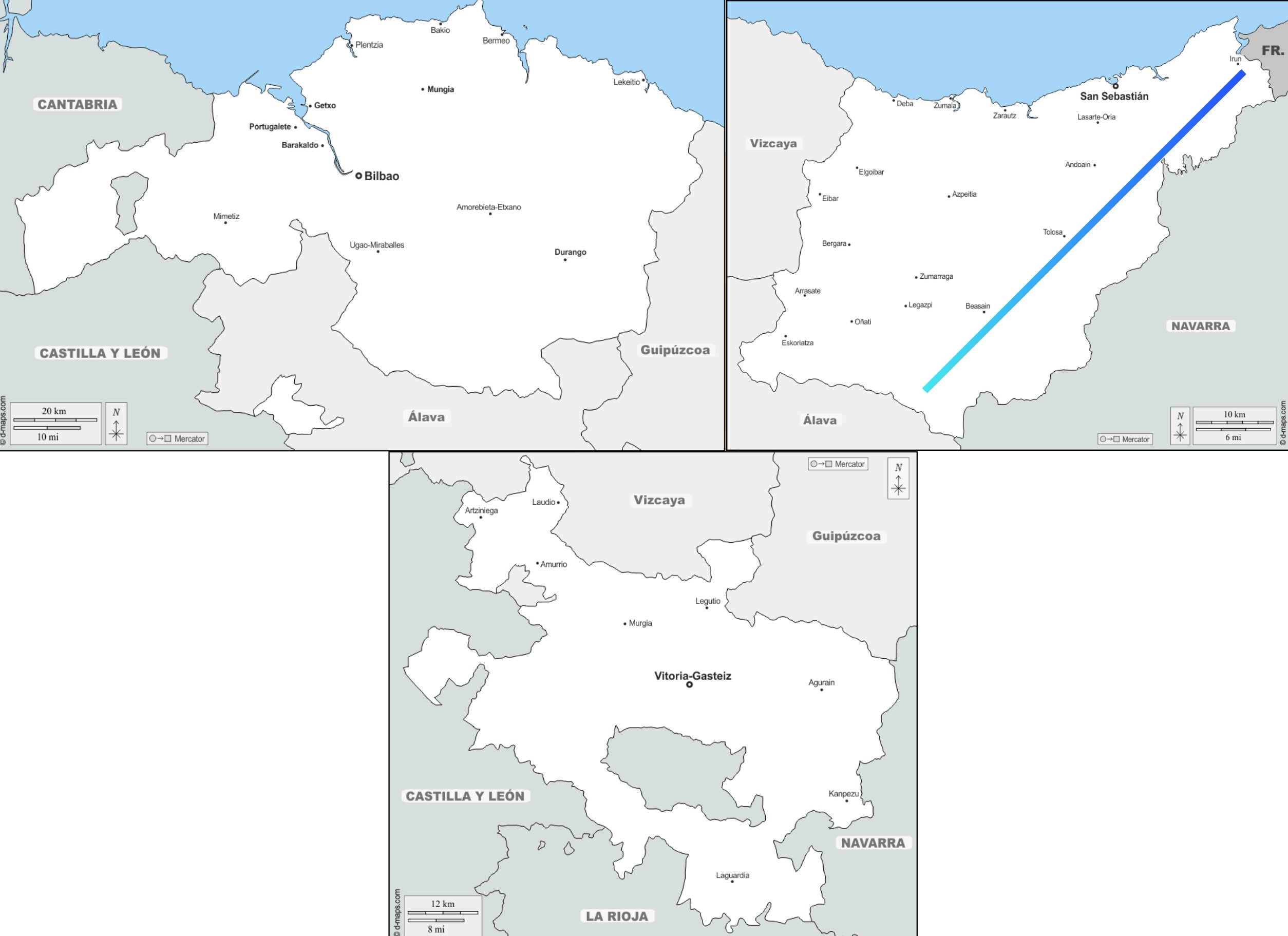
- Álava Province, Basque Country
- Republican-held: None
- Nationalist-held: Entire Province
With a population of approximately 105,000, Álava was the only Basque province to come almost entirely under Nationalist control during the opening days of the uprising. The provincial capital, Vitoria-Gasteiz, fell on 19 July, and only scattered Republican resistance developed elsewhere. Repression followed quickly, targeting Republican officials, trade unionists, socialist activists and those suspected of loyalty to the Republic. Although the scale was smaller than in neighbouring Navarre or Valladolid, several hundred people were executed during the war. The principal execution sites include Santa Isabel Cemetery in Vitoria-Gasteiz and a number of rural graves across the province. Álava also became an important logistical base for Nationalist operations directed towards Guipúzcoa and later Biscay.
- Guipúzcoa Province, Basque Country
- Republican-held: San Sebastián, Irún, Eibar, much of the coast, and most of the western province
- Nationalist-held: Eastern frontier districts adjoining Navarre, including Tolosa, Beasain and much of the inland corridor
Home to approximately 300,000 people, Guipúzcoa experienced one of the most complex military situations in northern Spain. The uprising succeeded in parts of the province, particularly around the inland garrison towns, but failed in much of the coast. San Sebastián remained in Republican hands after the initial coup, while fighting continued around towns such as Irún, Tolosa and Eibar. By the end of July, the province was divided between Republican and Nationalist forces, and repression occurred on both sides of the front. Republican authorities arrested suspected rebels, clergy and right-wing supporters, while Nationalist forces carried out executions wherever they established control. Unlike neighbouring Navarre, Guipúzcoa’s defining story in July was not rear-area repression but the emergence of an active front line that would culminate in the Nationalist capture of the province during September 1936.
Situated on the French border at the mouth of the Bidasoa River, Irún occupied one of the most strategically important positions in northern Spain. Although the military uprising failed there in July 1936, the town soon became the focus of intense fighting as Nationalist forces advanced eastwards from Navarre. Control of Irún meant control of the principal railway and road connection between the Republican-held north and France, through which volunteers, refugees, medical supplies and military equipment could pass.
- Viscaya/Biscay Province, Basque Country
- Republican-held: Bilbao and virtually the entire province
- Nationalist-held: Small isolated military enclaves only
With a population of approximately 485,000, Viscaya remained overwhelmingly loyal to the Republic throughout July 1936. The uprising failed in Bilbao, where loyal security forces, workers’ organisations and the Basque nationalist movement retained control of the province. Aside from isolated Nationalist enclaves, Viscaya became one of the principal centres of Republican authority in northern Spain. Political violence occurred during the chaotic first weeks, including the killing of some prisoners and suspected Nationalist supporters, but the province did not experience the immediate, systematic Nationalist repression seen in Navarre or Álava. Instead, Bilbao became the administrative and industrial heart of Republican northern Spain, while preparations began for the defence of the province against the Nationalist advance that would not reach the city until 1937.
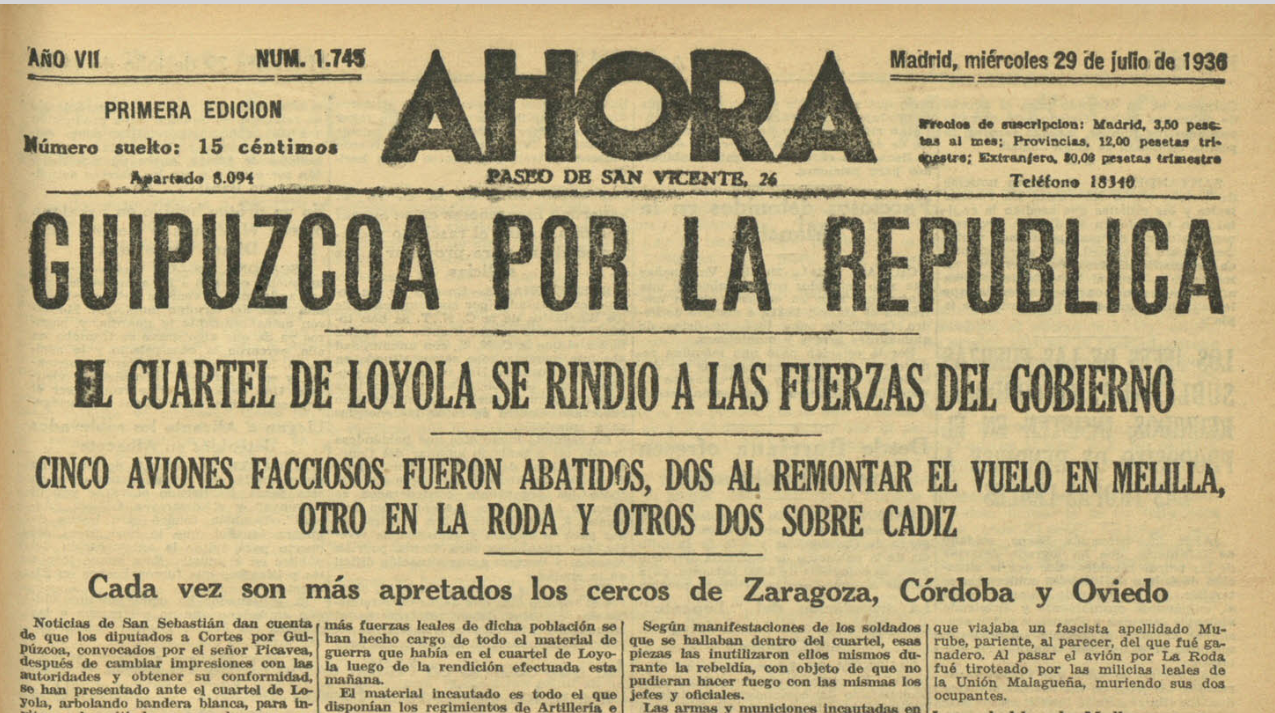
By 29 July, Republican newspapers reflected growing confidence that the military uprising was being steadily defeated. The surrender of the Loyola Barracks in San Sebastián was celebrated as the final elimination of organised rebel resistance in Guipúzcoa, with large quantities of captured weapons distributed among the Popular Militias. The victory was hailed as another step towards restoring Republican control across northern Spain.
Government communiqués also reported that the sieges of Zaragoza, Córdoba, and Oviedo were tightening, while claiming that Seville was becoming increasingly isolated and that General José Miaja’s forces were on the verge of entering Córdoba. Republican aircraft were said to have bombed Zaragoza, Seville and Córdoba, while five rebel aircraft were reportedly destroyed over Melilla, Cádiz and La Roda. Although some of these reports later proved overly optimistic, they reflected the widespread belief that the rebellion was close to collapse. Alongside the military news, Ahora warned readers against the spread of false rumours, arguing that defeatist gossip was as dangerous as enemy snipers. The editorial urged the public to rely on official information rather than sensational stories circulating in Madrid, highlighting the importance of morale during the chaotic opening weeks of the Civil War.

