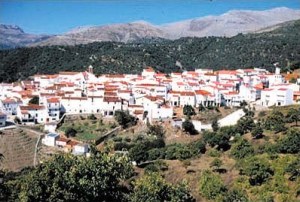
- Málaga, Andalucía
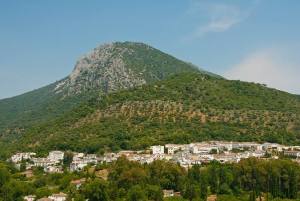
- Cadiz, Andalucía
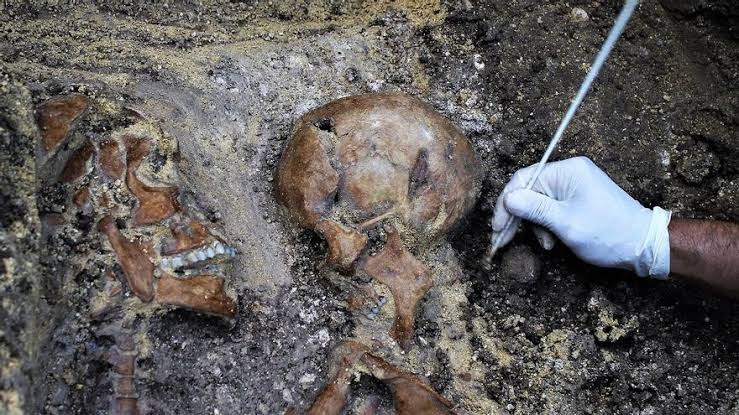
- El Casar de Escalona, Toledo, New Castile
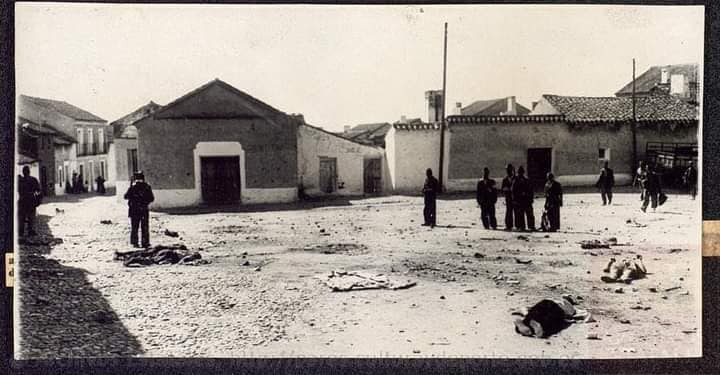
- Caceres, Extremadura
- León, Old Castile
Nationalist repression in León province eventually claimed around 3,000 lives, though the exact total remains uncertain because many extrajudicial killings were incompletely recorded or never entered accurately in civil registers. Research by Secundino Serrano identified 1,018 people killed by shootings and paseos in León city alone, while his estimate for the province as a whole approached 3,000. Extrajudicial killings outnumbered executions resulting from military court sentences, and numerous isolated places around the province became regular killing grounds.
One of the most important was the monte de Villadangos, near Villadangos del Páramo, about 20km west of León city. Beginning in early September 1936, prisoners held by the Nationalists were brought into the area, shot, and buried locally. Many had passed through San Marcos in León, the former convent that the Nationalists converted into one of the province’s principal detention centres. Victims brought to Villadangos came from communities across León, including Mansilla de las Mulas, Valencia de Don Juan, Sahagún, Benavides de Órbigo, Valderas, Villaornate, Folgoso de la Ribera, León, Alija del Infantado and Villadangos itself.
The killings can be followed through September. On 10 September, four prisoners were killed at Villadangos. Another, larger group arrived on 14 September, when eight men from Alija de los Melones, the present-day Alija del Infantado, were killed. On 20 September, another seven prisoners were killed there. These were not three isolated incidents: contemporary records and later research show that Villadangos was being used repeatedly as an execution site, with new groups of Nationalist prisoners brought there at intervals throughout the autumn.
The prisoners were overwhelmingly people associated, or believed to be associated, with the Republican political and labour movement. They included municipal officials, Socialists, trade-union members, agricultural workers and other civilians detained after the Nationalists secured most of León. Some had spent days or weeks imprisoned before being removed. A paseo normally bypassed even the summary procedures of a Nationalist military court: prisoners were taken from detention, transported to an isolated place, killed, and frequently entered in local records with little or no information explaining who they were or why they had died. Villadangos was well suited to this system. The killing area lay outside León city but remained close enough for prisoners to be transported there from San Marcos and other detention centres. Civil registers from Villadangos and neighbouring municipalities subsequently recorded unidentified bodies, while local people became aware that prisoners were being brought into the area and killed. Similar sites operated around León at Valverde del Camino, San Isidro, Puente Castro, Campo de Fresno, and elsewhere in the province.
The 20 September group included prisoners connected with Valencia de Don Juan. Six men from that town had been arrested the previous day and taken through San Marcos before being transported to the Villadangos area, where they were killed at Pozo Melgar. Their case can be followed in much greater detail and belongs in a separate account, but it shows how the Villadangos killings worked in practice: arrest in a person’s home town, transfer into the Nationalist prison system in León, removal from detention, and death at an isolated rural site. The executions continued after September and approximately 85 Republican sympathisers are now specifically associated with the Villadangos killings, with at least 71 believed to have been placed in the common grave at the cemetery of San Juan de Villadangos and another group associated with a grave at nearby Fojedo del Páramo.
Archaeological work eventually began at Villadangos cemetery in 2022. Excavators found human remains in the central part of the cemetery, though later tombs and pantheons constructed over parts of the burial area prevented the entire suspected grave from being excavated. The investigation confirmed what local testimony and documentary research had long recorded: during the autumn of 1936, Villadangos had served not as the site of a battle but as one of the principal places to which the Nationalist authorities and their supporters brought prisoners from across León to be killed.
- Salamanca, Old Castile
Nationalist repression in Salamanca province ultimately caused at least 1,124 documented deaths, though researchers regard the total as still incomplete. Of these, 154 people were executed after death sentences imposed by Nationalist military courts. This means that roughly 970 others were killed outside the formal court-martial execution system, through sacas, roadside shootings, disappearances after detention, and other extrajudicial killings.
By September, the Prisión Provincial de Salamanca was severely overcrowded. The prison had been built for only about 120 prisoners, but mass arrests after the uprising eventually pushed its population towards roughly ten times that capacity. Political prisoners included Republican municipal officials, Socialists, trade unionists, teachers, agricultural workers, police officers who were considered politically unreliable, and others accused of supporting or defending the Republic. At least eight military investigating courts were operating in Salamanca, with cases heard in the infantry and cavalry barracks. Those condemned to death were normally taken at dawn to the Campo del Marín, close to Salamanca cemetery, where they were shot. Over the entire repression, 154 people were executed in Salamanca after court-martial sentences, the first on 17 August 1936 and the last in February 1940.
Two teachers were executed on 19 September. Alberto Sánchez Lorenzo, about forty-one, was a national-school teacher from Masueco who was working at Garcihernández. Octavio Rivas García, also a teacher, was executed the same day. Their deaths formed part of a much wider repression of Salamanca’s teaching profession: later research has identified nearly 250 of the province’s approximately 1,200 teachers as suffering some form of repression, including detention, dismissal, imprisonment, fines, professional disqualification, or death.
By the end of the repression, at least 1,124 people had been killed in Salamanca province. Only 154 had gone through the process of receiving a death sentence from a military court. The much larger remainder were killed through extrajudicial repression, making the prison sacas, roadside killings, and disappearances of 1936 central to the province’s overall death toll rather than a minor counterpart to formal military justice.
By September 1936, the Nationalist takeover had substantially changed working life across rural Salamanca province. The Casas del Pueblo, Socialist agricultural societies, and other independent left-wing labour organisations that had represented agricultural workers during the Republic had been closed or suppressed. Their disappearance removed organisations through which labourers had previously negotiated wages, organised strikes, and pressed for access to land and employment.
This was particularly important in Salamanca, where agriculture dominated much of the provincial economy and disputes between landowners and landless or poorly paid agricultural labourers had been a major political issue during the Republic. Republican labour legislation and agrarian reform had strengthened workers’ ability to challenge traditional hiring practices, while Socialist rural organisations had organised strikes and campaigns over wages, working conditions, and land.
After the military uprising, power shifted decisively back towards landowners, Nationalist-controlled municipalities, the Guardia Civil, and the new provincial authorities. Independent unions could no longer operate openly, strikes were prohibited, and the organisations through which rural workers had challenged employers were dismantled. Local authorities again exercised considerable influence over hiring, wages, and access to agricultural work.
Agricultural labourers who had been prominent in strikes, Socialist societies, Casas del Pueblo, or Republican land-reform campaigns were also among those most exposed to arrest and repression. In Salamanca’s villages, the political repression and the reconstruction of rural labour relations consequently happened together: the people who had organised workers during the Republic were being removed from local life at the same time as the organisations through which they had exercised that influence were being destroyed.

- Valle de Yerri/Deierri — Fosa de Ilkai (Ibiricu), Navarra
The Fosa de Ilkai, near Ibiricu de Yerri/Ibiriku Deierri, was an execution and burial site used during the Nationalist repression in Navarra in 1936. It lies beside the NA-120 road between Estella-Lizarra and Beasain, in the area crossed by the Ilkai stream. The site is one of several documented execution graves in the Valle de Yerri. The victims were people who had been detained during the repression and subsequently taken into the countryside to be murdered. The available research indicates that the grave contained victims from outside the immediate locality. Among them was Amada Morentín Roldán, a resident of Lodosa, whose remains were buried at Ilkai.
The Ilkai grave belongs to the wider pattern of Nationalist killings around Estella-Lizarra and the Valle de Yerri during the first months of the war. Several other execution sites existed within the same area, including Montalbán, Oiantxiki, the Muga Lorca–Lácar site, Lorca Txiki, Arantzadia, and Ormaberria. This mass grave has at least 10 victims and was closed on 15 September 1936, and in 1979, relatives privately exhumed the remains.
The Fosa de Ilkai is right beside the Robledal de Yerri, an execution site Vicente Lamberto Martínez and his 14-year-old daughter, Maravillas Lamberto Yoldi, were murdered exactly one month earlier on 15 August 1936. Vicente Lamberto was a 55-year-old agricultural labourer from Larraga and a UGT member. He was arrested by armed local men and taken towards the Yerri area. His daughter Maravillas, followed him because she wanted to find out what was happening to her father. Both were taken to the local town hall, where Maravillas was repeatedly raped in front of her father before being taken to the wooded area near the twelfth kilometre of the road and murdered. Vicente’s body was subsequently buried in a nearby huerta by a resident of Lezáun who discovered it; Maravillas’s body was found about a week later. Because of its condition, it was burned at the site. The grave has never been recovered.
- Segovia, Old Castile
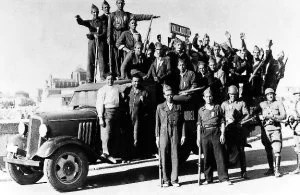
While Segovia province remained under Nationalist control, Segovians who had escaped into Republican-held territory began organising themselves in Madrid. Refugees and political activists gathered around the Centro Segoviano, which became a meeting and recruitment point for people from the province who wanted to support the Republic.
The organisation produced the Milicias Antifascistas Segovianas, with Alejandro González and Fernando Llorente involved in directing recruitment and military instruction. The volunteers included Segovians who could no longer safely return home after the Nationalist takeover, particularly men associated with Republican and left-wing organisations. By mid-September, the Segovian militia was ready to leave Madrid and entered combat on the Madrid–Talavera front, fighting on the Republican side against the Nationalist advance towards the capital.
The unit was formed and fought outside Segovia province, but its existence reflected the division created by the July uprising. Nationalist troops and militias controlled Segovia itself, while some of the province’s Republican supporters who had escaped were now regrouping in Madrid and taking up arms against them.
- Soria, Old Castile
During September 1936, the countryside around Bayubas de Abajo and Puente Ullán, south-west of Soria city, was repeatedly used for the extrajudicial killing of prisoners held by the Nationalist authorities. The victims were civilians from towns across Soria province who had already been arrested; they were transported into this rural area in groups, shot, and buried near roads and tracks. At least four separate groups were killed there between 1 and 15 September.
On 1 September, 16 prisoners were taken to the Puente Ullán area and killed. They had come from several places, including Soria city, Almazán, Muriel, Vinuesa, and El Burgo de Osma, with some having been held in the prison at El Burgo de Osma. Among the identified dead was Miguel Ruiz de Pablo, an employee at a distillery who was connected with the Casa del Pueblo in Soria, the local centre for Socialist and organised labour activity.
The killing ground was used again on 4 September. Three prisoners associated with Berlanga de Duero were taken to a site recorded as La Choza–Puente Ullán and killed. The surviving material confirms the date, number, and origin of the prisoners, though their names cannot presently be established securely from the available records. A larger group followed on 9 September, at the Caseta del Tío Romero, beside the road near Bayubas de Abajo. Nine detainees had been transferred from Berlanga, supposedly to appear before judicial authorities. During the journey another man encountered on the road was also detained. One of the prisoners managed to escape but was subsequently recaptured and killed. The grave ultimately contained nine victims.
Those identified from this group include Marcelino Antón, Fernando Miguel, Demetrio Moreno, Felipe Núñez, Simón Núñez, Juan Ortego, Ángel Valdenebro, and a man remembered as Florencio ‘El Alpargatero’. The grave was later investigated archaeologically, confirming the presence of the nine people buried there. On 15 September, another ten prisoners, all residents of El Burgo de Osma, were driven into the same general area. At about 9 a.m., they were taken to a location beside the local road between Bayubas de Abajo and Tajueco, where they were shot without having been tried by a court martial.
The identified victims included Agustín Alonso Zuloaga, Elías Alonso, Sebastián Orofino, Manuel Andrés, Julián Torre, Manuel Acebeda Acón, and Miguel Arribas, together with other residents of El Burgo de Osma recorded during later investigation of the grave. Local people continued to know where the group had been buried, and their remains were exhumed in 1971. These four documented groups account for at least thirty-eight people killed between 1 and 15 September around Puente Ullán and Bayubas de Abajo – 16 on 1 September, three on 4 September, nine on 9 September, and ten on 15 September. The repeated journeys into the same small rural area show that it was being used as an established execution and burial zone for prisoners brought from several towns in Nationalist-controlled Soria.

