- Estella, Navarra
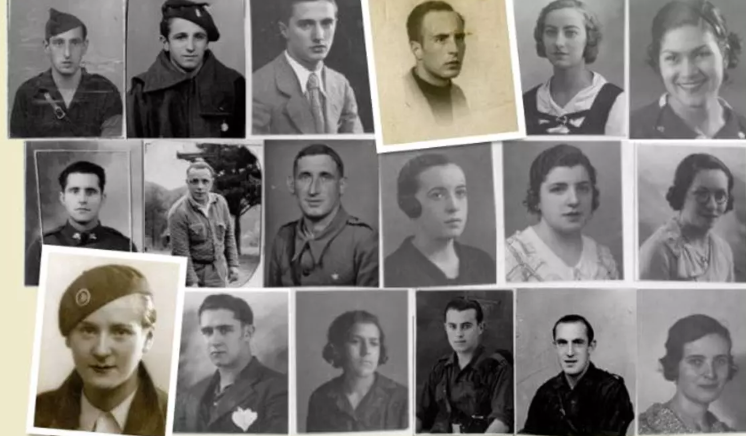
By the beginning of September, the prison at Estella held people arrested across western and central Navarra after the Nationalist takeover. In mid-August there had been 147 prisoners from 22 municipalities inside. Beginning on 5 September, groups were systematically removed from the prison and killed at different locations around the district. Over the following three weeks, the prison was almost emptied by Nationalist political militias, Requetés and Falangists, often connected with the towns from which the prisoners came. The first large removal came on 5 September, when 22 prisoners were taken away, ten from Los Arcos, seven from Dicastillo, four from Allo, and one from Villatuerta. Some of the killings that day took place in the Villatuerta area, where a modern inventory records thirteen victims at the killing site.
On 6 September, another thirteen prisoners were taken from Estella, twelve associated with Lodosa and one with Galdeano. Eugenio Sainz Martínez, a labourer from Lodosa, was among those killed during this part of the repression. A further mass killing took place around Oteiza on 6–7 September, where approximately ten or eleven people were killed, though the surviving records do not allow all of these victims to be securely identified as members of the Estella prison group. On 7 September, another seventeen prisoners were removed – seven associated with Andosilla, four with Mendavia, three with Mues, and three with Lerín. Among the identified victims was Manuel Sádaba San Gil, a weaver from Andosilla who belonged to the CNT and was killed at Oteiza. Another thirteen prisoners were removed on 8 September. Nine were associated with Alcanadre, two with Cárcar, one with Mendaza, and one with Sansol. Among the Alcanadre victims were Protasio Aguirre Espinosa and Román Aguirre Espinosa, who were killed at Lácar in the Valle de Yerri. The following day, 9 September, another seven prisoners were taken, four associated with Zúñiga, with one each from Galbarra, Iturgoyen, and Arróniz.
The pace then slowed, though on 12 September, seven prisoners from Estella itself were removed and killed. After this there was a gap of almost two weeks before the final documented September removal. On 24 September, another three prisoners, associated with Muniáin, were taken from the prison and killed. The reconstructed total is approximately eighty-one people killed, with one CNT prisoner known to have survived an attempted execution. Prisoners were transported to different locations, including Villatuerta, Oteiza, Lácar, and other killing grounds, which is why records for individual graves and the prison lists do not always correspond. Later research has found that the systematic removal of prisoners was known within the town’s military, civil, and religious authorities.
The killings highlight the removal of innocent people who were considered a threat to the new rule in Navarra because of their prtatical skills. A similar thing has happened weeks earlier at Paternáin 50km east in the municipality of Cizur, was the burial place of railway workers murdered by the Nationalist authorities during the repression of 1936. The victims were among several workers from the Pamplona railway station who disappeared in late August after being detained. They were never formally registered as prisoners and simply disappeared.
The railway was strategically important during the war, and the Nationalists regarded workers with trade-union or political affiliations as potential opponents. In late August, several employees of the Pamplona station were arrested. Their families were left without any official explanation of where they had been taken. In Paternáin, a local family witnessed something that eventually provided the clue to their fate: people were brought by truck to a rural road leading towards Ibero, where a group of prisoners was killed and buried. A witness remembered seeing between ten and twelve bodies being buried beside the road.
When investigators began searching in 2017, they initially found nothing. The problem was that the road shown on older maps was no longer in exactly the same place. Once investigators compared the historical maps with the modern landscape, they realised that the road had been moved in the intervening decades. In July 2022, the grave was finally located. Excavation uncovered the remains of ten people, confirming the testimony that a group of prisoners had been buried there. Among the objects recovered were buttons from the uniforms worn by railway employees of the Ferrocarriles del Norte, providing an important physical connection between the bodies and the missing railway workers from Pamplona. Seven of the ten victims have since been identified: Julio Peña Díez, Francisco Velaza Fernández, Gregorio Albo Urcelay, Antolín Eguiluz Moraza, Juan Bautista Sansano Labernia, Julio Butrón, and Manuel Serón Marco. All were railway workers. Another victim is known to have been a station porter, but his identity has not yet been established, while two of the remaining bodies also remain unidentified.
- Urbasa, Olazti/Olazagutía, Navarra
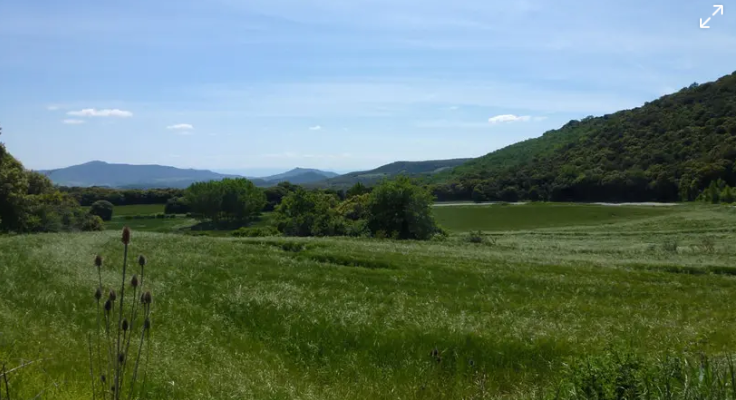
The Sima de Otsoportillo, in the Sierra de Urbasa near Olazti/Olazagutía, became one of the principal places used to conceal the bodies of people murdered during the Nationalist repression in northern Navarra in the summer of 1936. Rather than digging graves, the killers used the deep natural shafts of Urbasa to dispose of their victims. Otsoportillo became the best-known of these sites and was used particularly for victims from Altsasu, Olazti/Olazagutía, Urdiain, Ziordia, and the Améscoa area. The killings occurred during the political purge that followed the military uprising in Navarra. Victims were detained in their home towns, taken into the Sierra de Urbasa, killed, and their bodies thrown into the shaft. Among them was Melitón Aguirre Lecea, a 41-year-old cement worker from Olazti, married and the father of five children.
The victims came largely from working-class communities of the Sakana valley. Current official records associate fourteen identified victims with Otsoportillo, including railway workers, labourers, agricultural workers, construction workers, and other local residents. They include Víctor Urkijo Tobalina, José Úbeda Sánchez, Claudio Doroteo Diéguez Loza, Melitón Aguirre Lecea, Miguel Vergara Bereau, Francisco San Román Galbete, brothers Francisco and Domingo San Román Otxoa, Avelino Gil González, Sabino Lizarraga Barandiaran, Joaquín Lizarraga Martínez de Bujanda, Julián Ortiz de Lazcano González de Matauco, Emilio García Izquierdo, and Faustino Rubio Bujanda.
The precise number of people thrown into Otsoportillo has been difficult to establish. Earlier investigations referred to 16 victims, though the disturbance of the shaft and the difficulty of matching recovered remains with individual victims have made the work difficult. Archaeological work in 2016 and 2017 recovered remains belonging to 11 people, eight of whom had been genetically identified by 2021. In 1979, human remains were located inside the shaft. Families began gathering there to remember those who had been killed, and in 1980 the sculptor José Ramón Anda created a memorial at its entrance. When permission to close the shaft was not granted, relatives returned in 1982 and collected bones that they were able to recover, placing them in a metal container.
Modern archaeological investigation finally allowed some of the victims to be returned to their families. The Aranzadi Society of Sciences carried out exhumations in 2016 and 2017, followed by DNA analysis. One of those eventually identified was Claudio Doroteo Diéguez, whose daughter Concha had spent decades trying to recover him. His remains were returned to his family in December 2020. Families have gathered here on the first Sunday of September since 1980, and the site was formally recognised as a Lugar de Memoria Histórica de Navarra. The shaft, now closed, and Anda’s sculpture mark the place where the victims were concealed for decades.
The Sima del Raso, in the same Sierra de Urbasa near Olazti/Olazagutía, was used as an execution and disposal site on 6 and 7 Spetember 1936. The cave lies beside the NA-718 road between Estella-Lizarra and Olazti/Olazagutía, near the Monte Común de las Améscoas. Its isolated location made it suitable for concealing bodies after executions. In September 1936, ten people were shot and thrown into the shaft. They came from two areas: three from the Valle de Améscoa and seven from Sakana. The victims included people associated with the UGT and other Republican organisations. The surviving records give individual dates for some of them: Gregorio García Larrambebere and Balbino García de Albizu Usarbarrena were killed on 7 September, together with other victims whose remains were eventually recovered from the shaft. Among the victims was Balbino García de Albizu Usarbarrena, a forest ranger from Eulate and UGT member. His daughter later became involved in the effort to recover his remains. García de Albizu was killed on 7 September alongside Gregorio García Larrambebere, another Eulate resident and UGT member.
In 1962, Mercedes García de Albizu, Balbino’s daughter, placed a memorial plaque at the site in memory of her father and the other victims. The gesture was unusual during the dictatorship, when public commemoration of Republican victims was generally suppressed. The shaft was finally investigated and excavated by the Aranzadi Society of Sciences in 2013. Archaeologists recovered ten skeletons, confirming that the number of victims was larger than the three bodies initially expected. A live grenade was also found among the remains, which investigators considered likely to have been thrown into the shaft with the bodies. Nine of the ten victims were identified and their remains were reburied in 2015. A new memorial bearing their names was installed at the site in 2020.
- Logroño (La Rioja)
On 1 September 1936, a group of Falangists supporting the Nationalist uprising had arrested ten men in Préjano, a small town south-east of Logroño. The prisoners included Cecilio Jiménez Jiménez, the former mayor; Emilio Leciguyena Jiménez, the serving mayor; and Sebastián Sota Bobadilla, an agricultural worker and member of the UGT trade union. The other seven men were also local residents. They were taken from Préjano to the jail at nearby Arnedo. Their arrests formed part of the repression being carried out by the Nationalist side against local officials, trade unionists, members and supporters of the left-wing parties, and others associated with the Republic. There had been no battle for Préjano in September; these men were prisoners in an area already controlled by the Nationalists.
Five days later, on 6 September, the ten prisoners were taken out of the Arnedo jail and transported to Agudos de Autol, near Autol. There they were shot and killed by their Nationalist captors and their bodies buried in the area. Among the dead were both Préjano’s serving and former mayors, as well as Sebastián Sota Bobadilla and seven other men from the same community. The grave was opened in 1978, when the remains of the Préjano victims were exhumed. Their deaths were part of the wider campaign of Nationalist repression in La Rioja during the opening months of the Civil War, in which people already under arrest were taken from local prisons and killed without being released back into their communities. The area is littered with mass grave sites of locals murdered in the early months of the war.
- Puebla de Lillo, León
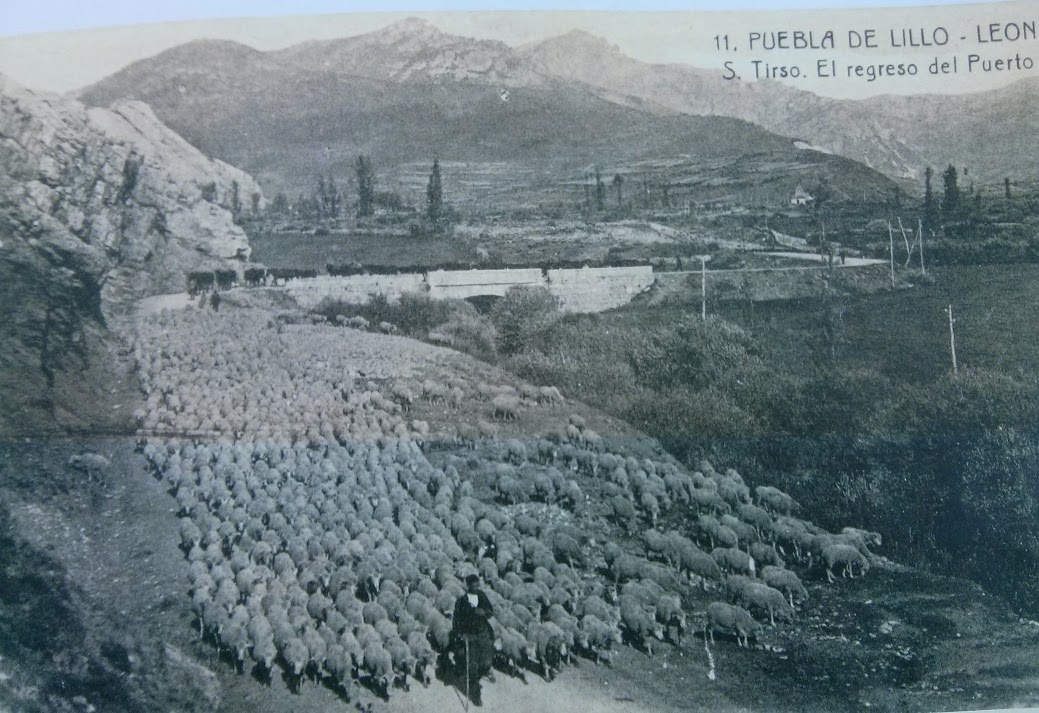
During the first week of September, fighting continued along the mountainous boundary between Republican-held northern León and the Nationalist-controlled majority of the province. Two areas appear prominently in contemporary reports: Puebla de Lillo, in the north-east, and Pola de Gordón, roughly fifty kilometres further west. They were separate engagements along the same broad front rather than parts of a single battle.
On 6 September, Republican forces attacked Puebla de Lillo, which remained in Nationalist hands. The attacking force consisted largely of Asturian miners and militia fighting for the Republic, advancing south from Republican territory. A Nationalist newspaper subsequently claimed that approximately 1,000 men participated in the attack.
The Republicans attacked during 6–7 September, but failed to take Puebla de Lillo. The town’s medieval torreón, a prominent stone tower dominating the centre of the settlement, featured in accounts of the fighting. Nationalist reports stated that three Republican attackers were captured and killed near the torreón after the fighting. The circumstances of their deaths are not sufficiently clear to describe them as combat fatalities; the account indicates that they had first fallen into Nationalist hands.
While the Republicans were attacking around Puebla de Lillo, the front further west remained active around Pola de Gordón, one of the principal centres of Republican authority in northern León. On 8 September, the Republican Boletín de Guerra del Frente Popular de León reported fighting in this sector and claimed that Republican troops had defeated a substantial Nationalist column, forcing it to withdraw.
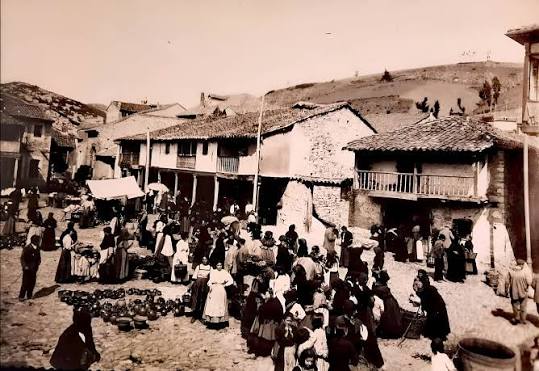
The Republican account presented the engagement as a clear success and reported Nationalist losses, but its claims came from a wartime bulletin produced by the Republican authorities themselves. Without independent confirmation, the reported scale of the Nationalist force and its losses cannot be treated as established figures. What the report does establish is that Pola de Gordón was not simply a Republican administrative centre behind the lines: armed Nationalist and Republican units were fighting in its immediate approaches while the town was simultaneously housing militia personnel, refugees, officials, and a Red Cross hospital.
The reports from 6–8 September also show that control of northern León was still actively contested. The Republicans could assemble a sizeable force for an attack on Nationalist-held Puebla de Lillo, while Nationalist columns continued to pressure Republican positions around Pola de Gordón. Neither side achieved a decisive breakthrough during these engagements, leaving the mountain front divided between Nationalist-held positions to the south and Republican-held valleys connected northwards with Asturias.
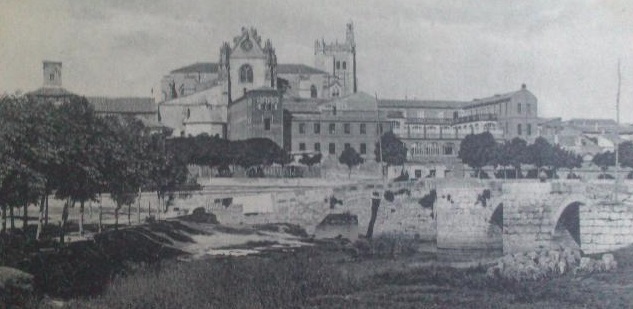
- Palencia, Old Castile
The repression in Palencia during the first days of September included several people closely connected with the province’s Republican education system. Teachers and school officials were being targeted not only for membership of left-wing organisations, but also for their part in introducing the secular education policies of the Second Republic.
On 1 September, Cirila Ubaldina García Díaz, director of Palencia’s Modesto Lafuente school and a member of the teachers’ union FETE-UGT, had attended a public ceremony honouring the poet Jorge Manrique with her daughter María Luisa. During the ceremony, Manuel González, the Catholic bishop of Palencia, publicly accused García Díaz of responsibility for the secularisation of education during the Republic. After the ceremony she was confronted outside and arrested by Falangists, members of the political militia supporting the Nationalist uprising. She was taken first to the Civil Government and then imprisoned.
Within days, García Díaz was among a group of prisoners removed from Palencia and transported east along the road towards Burgos. On 6 September, or during the 6–7 September period according to differing records, the prisoners were taken to the area around Quintana del Puente, near the Palencia–Burgos road, and killed. The probable killing site was around the finca or Monte Ramírez.
At least three teachers were among the victims – Cirila Ubaldina García Díaz, Isabel Esteban Nieto, and Consuelo Rodríguez Baranda. García Díaz’s records support 6 September as the date of her death, while Esteban Nieto’s later death certificate gives 7 September, which accounts for the uncertainty over whether all members of the group were killed on the same day. Another person being sought was Arturo Sanmartín Suñer, a primary-school inspector and the husband of teacher Sofía Polo Giménez, who had already been killed during the Nationalist repression. Sanmartín had hidden in the cellars of the Modesto Lafuente school in Palencia. He remained concealed there until early September, but was discovered or surrendered after learning that his wife had been killed. On 8 September, Sanmartín was killed and his body was never recovered.
The deaths of García Díaz, Esteban Nieto, Rodríguez Baranda, Sanmartín, and Polo were part of the destruction of the Republican educational network in Nationalist-controlled Palencia. Some had been union members or were associated with Republican politics, while others were targeted through their professional work in an education system that the new authorities regarded as secular and politically hostile. In the weeks that followed, the removal of Republican-era teachers became more organised. By 23 September, mayors across Palencia province were being formally required to report on the politics, morality, and patriotism of teachers so that those considered unacceptable could be suspended from their posts.
During the first week of September, Dueñas, south of Palencia city, became the location of several killings carried out as part of the Nationalist repression. Some of the victims were prisoners brought from Palencia; others were residents of Dueñas itself who were taken away and killed outside the town. During the night of 6–7 September, Nationalist captors removed a group of prisoners from the jail in Palencia city, transported them approximately twenty kilometres south to Dueñas, and killed them. Their bodies were buried in or around the local cemetery. Among the identified victims were the brothers Manuel Melero and Arsenio Melero. Manuel knew that he was likely to be killed and wrote a farewell letter to his family before he was taken from the prison.
The prisoners brought to Dueñas also included a group of eight men from Boadilla de Rioseco, a village about seventy kilometres north-west of Palencia. One of them was Pedro González Bartolomé, a baker, UGT member, former councillor, and former deputy mayor of Boadilla. His records give 6 September as the date of his death. The eight men were killed as a group during the Dueñas executions. Another mass killing during early September involved residents of Dueñas itself. Eleven women and two men, thirteen people in total, were taken to Fuentincho, beside the road at Villamediana, north-east of Dueñas. They were killed there and buried together in a common grave. The available records do not provide a secure day for their deaths, so they can only be dated to early September 1936.
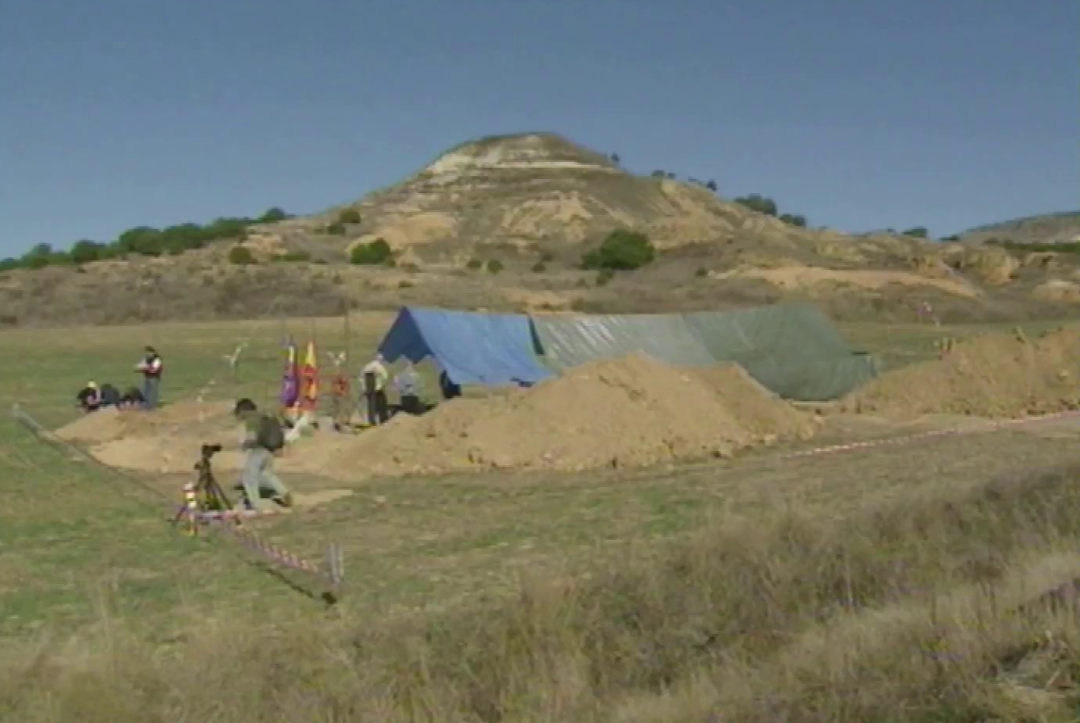
The large number of women in the Fuentincho grave was particularly unusual. Women were a substantial part of the repression in Dueñas, and later research has identified more than 100 people from the municipality who were killed, including twenty-five women. The thirteen victims buried at Fuentincho were eventually recovered when the grave was exhumed. It is known as ‘the women’s mass grave,’ because here, next to the road, eleven women and two men from Dueñas (Palencia) were buried in September 1936. This town was one of the hardest hit in the province by the repression following the coup. The mass grave was partially emptied in the early 1980s, apparently by relatives of victims from Venta de Baños. In 2009, the last three skeletons were recovered, along with more female skeletal remains. A year later, they were laid to rest in a mausoleum built by their families in the Dueñas cemetery.
For four decades, Esperanza Pérez Zamora had lived with the knowledge that her father and seven other members of her family had been murdered during the repression and buried in unmarked graves. She had been only 18 months old when her father, Juan Pérez Medina, was killed. Her mother fled Spain with her children, eventually reaching Belgium, where the family lived in exile.
After Franco’s death, Esperanza returned to Spain in 1977 with one purpose; to find her family. She began travelling from village to village across Palencia province, asking people what they knew about the killings and where the bodies had been buried. Many people were still frightened and reluctant to speak. Some shut their doors when she explained why she had come, while others eventually whispered what they remembered.
Eventually she learned the name of the Falangist who had killed her father. She went to see him herself. She told him that she knew he had shot her father and demanded that he show her where the body had been buried. The following morning, in Villamuriel de Cerrato, he appeared with the Guardia Civil and pointed out the location of the grave. Esperanza began digging and recovered her father’s remains.
Finding her father did not end her search. Esperanza knew that other members of her family were buried in different places, and as word spread about what she was doing, other families began approaching her for help. She continued travelling through the province, investigating killings, locating graves, dealing with officials, and helping relatives recover their dead.
Between 1977 and 1979, Esperanza and her husband, Luis Dehesa Mancho, helped open 15 mass graves in Palencia province: three at Villamuriel, four at Villamediana, five at Magaz de Pisuerga, two at Valdespina, and one at Valoria la Buena. Approximately 150 bodies were recovered. The work was carried out without the institutional support or archaeological methods that would be expected from modern exhumations. Families paid for equipment themselves, and Esperanza and her husband often worked directly with their own hands.
The remains were returned to families wherever they could be identified, allowing relatives to give people who had disappeared during the repression a proper burial. Esperanza also continued helping families with the bureaucratic problems that followed the exhumations. Many widows could not obtain pensions because their husbands had never been formally registered as dead, and she travelled repeatedly to courts and government offices to help them obtain the necessary documentation. Her work was extraordinary partly because it took place at a time when there were no organised historical-memory associations carrying out exhumations. The first large wave of family-led exhumations after Franco’s death was often undertaken privately, with relatives themselves identifying graves and paying for their excavation. Esperanza became one of its earliest and most determined participants.
In 2021, Esperanza received public recognition for her pioneering work recovering victims of Francoist repression. She died in 2022, having spent the final decades of her life ensuring that the people buried in those graves were no longer simply names on lists or bodies without graves.

