- Barcelona, Catalonia
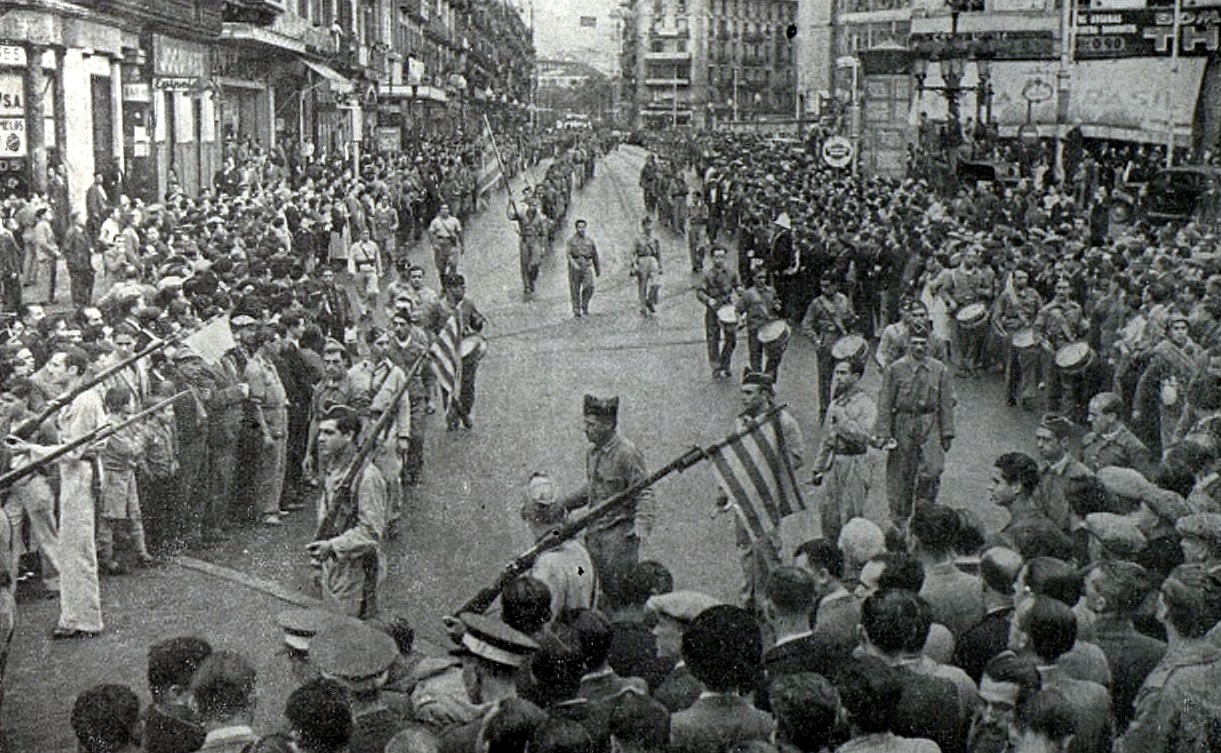
During 7–9 September 1936, a series of militia columns left Barcelona and Manresa for the fronts at a time when the Republican military situation was becoming increasingly serious. The Nationalist advance through Extremadura and Toledo was bringing the war towards Madrid, while the Republican forces were also continuing their offensive in Aragón. Catalan political parties, trade unions, and militia organisations sent new formations to both theatres. A contemporary reconstruction of the Catalan militia mobilisation records the columns and their intended destinations in this period.
On 7 September, the Sacco y Vanzetti Column departed Barcelona for the Madrid front. It was a CNT formation of approximately one centuria. The same day, the URSS Column, organised by the PSUC, left for the northern Aragón front, with three centurias. These departures reflected the different priorities of the Catalan political organisations: some formations were being sent west towards Madrid, while others reinforced the Republican armies already fighting in Aragón.
The Tierra y Libertad Column, a CNT-FAI formation recruited principally in Barcelona, Badalona, the Bages, and surrounding areas, was also organised at this time. PARES records the column’s existence from 7 September, describing it as six libertarian centurias formed principally in Barcelona, Badalona, Bages, and western Vallès. Its first contingent was sent towards Madrid in September, under Diego Abad de Santillán and Germinal de Sousa, to reinforce the threatened Toledo front. The column would ultimately number around 1,500 men and later fight both on the central and Aragón fronts.
On 8 September, the movement became much larger. The Macià-Companys Column, organised by Esquerra Republicana de Catalunya, left Barcelona for southern Aragón. It was a considerably larger formation than most of the smaller militia columns being sent out at this time, with approximately 15 centurias. Its arrival in Teruel province would become important later in September when Republican forces mounted renewed operations in the sector.
The Acero Rápido Column, organised by the PSUC, went towards northern Aragón, with two centurias on the same day. The Libertad Column, also associated with the PSUC, was sent towards Madrid, with seven centurias. The Rosa de Luxemburg Column, another PSUC formation, went towards northern Aragón, while the CNT’s Trabajo Column was sent towards the central Aragón front.
On 9 September, the Tierra y Libertad contingent also departed for the central front. Its movement was particularly significant because the column was intended to reinforce the Republican forces facing the Nationalist advance towards Madrid. It would subsequently operate in the Sierra de Gredos and the Ávila–Toledo–Madrid sector, before later being transferred to Aragón.
- Hornachuelos, Cordoba
On 7 September 1936, a Nationalist column commanded by Commander Francisco Buiza captured Hornachuelos, ending the Republican and anarchist control that had survived there since July. Buiza’s force had been assembled in Sevilla and moved north-east towards Córdoba province. It had spent the previous night at Posadas, where it joined the Nationalist column already operating there before advancing on Hornachuelos. The town stood on the railway and communications route between Sevilla and Córdoba, but the line had been broken at the Guadiato and Bembézar bridges. The Nationalists controlled both Córdoba and Sevilla, yet the damaged railway prevented them from using the direct rail connection between their two main bases. Taking Hornachuelos would secure the intervening section of the Guadalquivir valley and allow the bridges to be repaired.
The Republican defenders offered substantial resistance when Buiza’s column attacked on the morning of 7 September. They were eventually forced out of the town, and the Nationalists established permanent control. The retreat had already begun among much of the civilian population. On 6 September, as news spread that the Nationalist column was approaching, large numbers of inhabitants left Hornachuelos together with refugees who had previously arrived from Palma del Río, Posadas, and other towns in the Campiña. They fled towards Villaviciosa, taking whatever food and possessions they could carry. Many of these refugees subsequently moved farther into the Sierra and eventually settled in Villanueva de Córdoba.
The occupation was followed by the establishment of a new Nationalist administration. On the morning of 7 September, as the town passed into Nationalist hands, a new municipal governing committee was constituted under the presidency of Captain Ramón Marcos Daza, the army officer commanding the forces stationed in Hornachuelos. Luis Pérez Herrero became mayor and Republican local authorities disappeared and were replaced by an administration appointed under military authority. People who had remained in Hornachuelos and were considered politically suspect were arrested. The Nationalist authorities and Falangists searched for members and supporters of the Republican organisations that had controlled the town. At least 17 people were executed during the subsequent repression, according to the surviving civil-registration evidence, and their bodies were placed in a common grave in the municipal cemetery. The actual number associated with the repression is higher: the provincial memorial database identifies 40 victims from Hornachuelos, with 26 bodies associated with the cemetery grave.
The violence could reach people who had initially believed that remaining behind would protect them. Fernando Durán Cortés, a local postman who had not been politically or trade-union active, returned to Hornachuelos after hearing that the Nationalist column had moved on. Two Falangists came to his house, dragged him away, and beat him with rifle butts before taking him to a makeshift detention site.
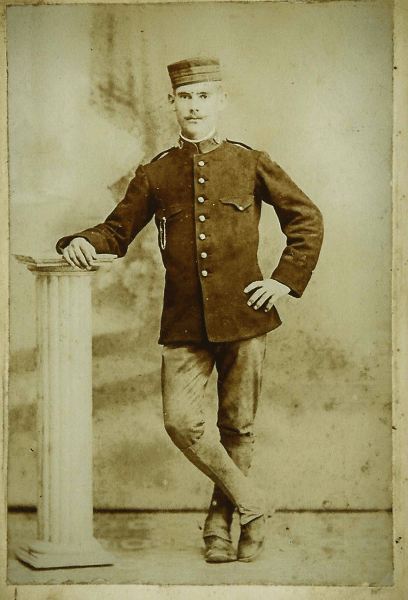
On 8 September, railway workers and engineers repaired the Guadiato and Bembézar bridges, allowing the railway between Sevilla and Córdoba to reopen. A train reached Córdoba around midday, marking the restoration of the direct rail connection. The reopened line allowed the Nationalists to move troops, ammunition, food, fuel, equipment, and wounded personnel directly between the two cities rather than relying entirely on the road network.
The Republican forces remained active north of the new position. On 9 September, Republican aircraft attacked Cerro Muriano, where Nationalist troops had established themselves after the fighting of the previous days. The bombing was sufficiently heavy to force the Nationalist troops temporarily out of the position, although they subsequently returned and re-established control.
- Zaragoza, Aragon
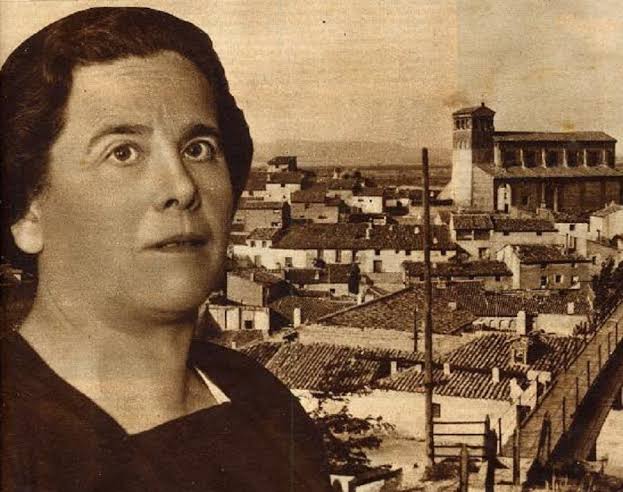
On 7 September 1936, María Domínguez Remón, aged 54, was killed by the Nationalist rebels and buried in the cemetery at Fuendejalón. Domínguez was a journalist, writer and advocate for women’s rights who had achieved national prominence in 1932 when she became mayor of Gallur, making her the first woman to serve as mayor under Spain’s democratic Republic.
After the July uprising, Domínguez returned to her home village of Pozuelo de Aragón, apparently hoping that she would be safer in the small community of just over 600 people in the village and surrounding area. She was instead arrested and imprisoned for three days before being taken away and killed. Her family knew that she had been buried in a corner of Fuendejalón cemetery, and the suspected location continued to be remembered locally.
The grave was investigated in 2021, when the remains of two people were recovered from a burial believed to have originally contained four victims. One of the recovered bodies was identified as María Domínguez. Her identification, eighty-five years after her death, provided physical confirmation of the family and local accounts that had preserved the location of her burial. Another mass grave in the Pozuelo de Aragón cemetery holds the remains of seven residents of Ainzón, five men and two women,- murdered there on September 13, 1936. It is clearly marked by a slab bearing the names of the seven victims and the date of their murder.
Another 87km east, the mass graves in the Belchite cemetery were opened 2021 and 2022, recovering a total of 95 bodies. The report published in June 2025 on these excavations, entitled The Civil War Mass Graves of the Belchite Cemetery (Zaragoza), the mayor of Belchite spoke of the first days of July 1936, before the fighting, arrests and murders of residents who had voted for the Popular Front occurred in the town. Among the victims were the mayor, his wife and brother, and several council members and their relatives. It is estimated that around 483 people were killed or disappeared in this town as victims of the repression, kept in 11 different grave sites, the majority killed between July-September 1936, separate to those who died in the famous 1937 battle.

