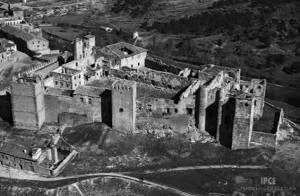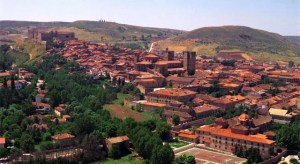
Rather than risking a bloody frontal assault against a fortified city, Mola’s commanders opted for a systematic pincer movement. They assembled a highly structured strike force of roughly 1,200 to 1,500 active combatants, drawing regular army troops, Falangist militiamen, and battle-hardened Carlist Requetés from the Nationalist military garrisons of Zaragoza and Calatayud.
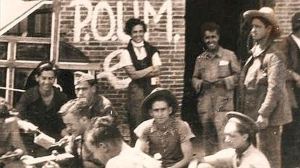
Awaiting them inside the sector was a fragmented, poorly coordinated Republican defensive force of approximately 800 people. This was a volatile mix of 500 militia fighters representing the anarchist CNT-FAI, Marxist factions, and a handful of loyalist government soldiers, alongside 300 fleeing civilians. Among them was the prominent Argentine international volunteer commander, Mika Etchebéhère. They possessed fierce ideological conviction but lacked a unified military command, heavy weaponry, and anti-aircraft defence. Etchebéhère belonged to the POUM (Workers’ Party of Marxist Unification), a dissident, anti-Stalinist communist movement. Unlike traditional armies, the POUM viewed total social revolution as inseparable from military victory. They actively embraced the concept of the miliciana, the armed woman combatant, believing that men and women must fight on entirely equal terms on the barricades. Etchebéhère had arrived in Spain alongside her husband, Hipólito, who was the initial military commander of the POUM’s motorised division. When Hipólito was shot and killed on the Aragón front in August, Etchebéhère refused to retreat to the rearguard. She strapped on his revolver, took his place in the trenches, and marched with the men toward Sigüenza. While other leaders crumbled, Etchebéhère remained remarkably stoic, rationing water, fortifying breached chapels, and maintaining iron discipline. Operating under strict revolutionary democracy, the male militia fighters held an emergency vote. They voted unanimously to elect Etchebéhère as their Captain.
The mini-offensive began in earnest on 17 September when Republican forces encountered an advancing, well-armed rebel column pushing south from the Sigüenza axis near Huérmeces del Cerro. Local Republican militias put up stubborn resistance, temporarily halting the Nationalist momentum in the rocky terrain. Capitalising on this defensive stand, the Republican command quickly organised an offensive manoeuvre. On 18 September, Republican forces launched a spirited counter-attack directly against the Nationalist lines at Huérmeces, throwing the rebels’ immediate operational plans into temporary disarray.
Though localised, this mini-operation had major strategic consequences. By counter-attacking on Sigüenza’s southern flank, the Republican militias disrupted the Nationalist schedule, buying the defenders inside the city nearly three additional weeks to fortify their positions. Had the Nationalist columns broken through unimpeded, they would have gained a clear path into the Henares River valley, the main railway and highway artery linking Madrid to Guadalajara and Zaragoza. Keeping the Nationalists bogged down in the northern highlands kept this vital supply line open for the Republic during a critical month of the war.
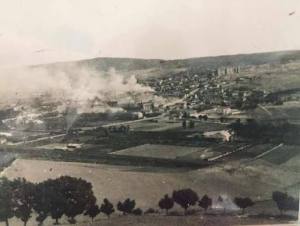
In the days immediately preceding the German bombing, the situation inside Sigüenza turned apocalyptic. The Republican defenders were completely cut off from the world. Clean water was scarce, food rations vanished, and ammunition was counted bullet by bullet. Morale disintegrated as the town was subjected to sporadic artillery fire from the surrounding hills. The defenders knew they were entirely surrounded, setting the stage for the massive 28 September German air raids to act as the final psychological and physical sledgehammer. According to historical records, including the accounts of Nationalist General Ramón Salas Larrazábal, 28 September was the official launch date of the Nationalist final offensive to conquer the city.
While sporadic Nationalist artillery had targeted the city before, the entry of Nazi Germany’s early intervention forces (the deployment that became the Condor Legion) transformed the scale of violence on 28 September. Early that morning, German Junkers Ju 52 bombers arrived from their airbase in Salamanca. Instead of targeting the trenches, they focused on urban infrastructure to destroy the defenders’ command posts and shatter civilian morale. This served as a literal warm-up raid for the even larger, catastrophic 23-plane bombing run that followed the next day on 29 September.
.
Simultaneously, the ground forces under General Emilio Mola launched a highly coordinated pincer movement. Heavily armed Nationalist columns, led by veteran Carlist Requetés and regular infantry units, breached the outer urban perimeter. Using the cover provided by the morning air raids, they overran the hasty checkpoints and barricades that Republican milicianos had set up on the outskirts of town. For the defenders, 28 September was the day they realised no help was coming from Madrid. The sheer weight of the combined aerial and ground assault forced the 700–800 surviving militias and civilians out of the city streets and forward trenches. The primary Republican commander, anarcho-syndicalist leader Feliciano Benito, began pulling his forces back toward the city’s medieval stone core, specifically the Sigüenza Cathedral and the ancient castle, setting up the famous architectural siege.
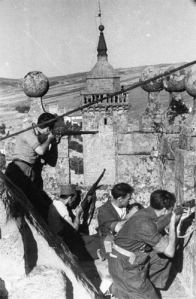
On 29 September, Sigüenza experience the most violent and catastrophic day of the siege. While the previous day marked the launch of the Nationalist ground offensive, the 29th was the day the Republican urban defence was completely broken by an unprecedented wave of modern aerial warfare. Following a small two-plane reconnaissance and strike mission the day prior, the Nationalist command unleashed total air superiority. Early on the morning of 29 September, a fleet of 23 German Junkers Ju 52 bombers took off from their primary airbase in Salamanca. The planes systematically saturated the historic city centre with high-explosive payloads, turning narrow medieval streets into impassable rivers of rubble.
The most devastating event of the day, and a major historical focal point, was a direct hit on the Hospital and Hospice of the Bishopric (Hospital del Obispado). The building was heavily packed with wounded militias, children, and sheltering civilian refugees who had fled into the city from outlying occupied villages. The bombing completely demolished the structure, killing approximately 70 people outright and wounding more than 150 others. This disaster highlighted the tactical blunders of the local Republican command. Marxist POUM militia leader Mika Etchebéhère recorded her absolute horror upon spotting the 23 planes circling the sky. The primary Republican commander, Comandante Martínez de Aragón, had stubbornly refused to evacuate the wounded from the hospital despite the clear and looming aerial threat, leaving them to be killed in their beds. The raid also claimed the life of Captain Martínez Vicente, the prominent leader of the local POUM (Workers’ Party of Marxist Unification) column, throwing the left-wing militia chain of command into further disarray.
By the afternoon of 29 September, the sheer weight of the German ordnance triggered a total psychological and structural collapse of the Republican outer lines. With communication wires severed, key infrastructure completely destroyed, and a mounting mass of civilian casualties, the barricades could no longer be reinforced. Realising that the city streets were entirely defenceless against the skies, the remaining 300+ armed combatants and hundreds of terrified civilians abandoned their positions. They began a frantic retreat into the thick, fortress-like stone walls of the Sigüenza Cathedral Complex. By the evening of 29 September, the streets of Sigüenza were virtually abandoned to the approaching Carlist requetés, and the tragic, final 16-day siege inside the dark, claustrophobic cathedral had officially begun.
.
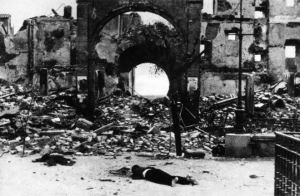
On 30 September 1936, the battle for the streets of Sigüenza ended as the Nationalist ground forces officially seized control of the city, forcing the final, total collapse of the Republican urban defence. The events of this specific day solidified the tragedy, transitioning the conflict from an open urban battle into a claustrophobic, medieval-style siege inside the city’s grandest monument. Following the devastating German aerial blitz of the previous two days, Nationalist columns led by battle-hardened Carlist requetés (right-wing Catholic monarchists) and regular infantry met little resistance as they surged into the city centre.The Nationalists systematically occupied the ruined streets, clearing out abandoned Republican barricades and setting up firing positions around the remaining pockets of resistance. By the end of the day, the Nationalists had successfully captured the historic Castle of Sigüenza (the ancient bishops’ palace), which had served as a primary Republican stronghold, leaving only one building left un-captured.
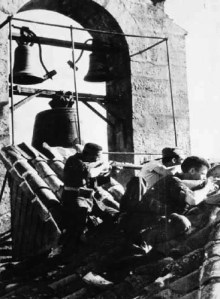
On 30 September, the isolation of the defenders became absolute. The Nationalists intentionally cut the city’s remaining water lines and electrical grids. Inside the cathedral, the trapped defenders and civilians were plunged into near-total darkness, forced to rely on a single internal well and highly restricted food rations. By nightfall, Nationalist forces had completely surrounded the cathedral complex, setting up artillery and machine-gun nests in the surrounding plazas.
During the intensive fighting of 1–9 October 1936, approximately 4,000 to 5,000 Nationalist troops flooded the area. These were highly organised, battle-hardened units led by Colonel Marzo and Colonel Jimeno, with of elite regular infantry, Moroccan Regulares, and right-wing Carlist Requetés. They held absolute air superiority, backed by early German and fascist Italian air support. They occupied the valleys, major outlying roads, and the rolling hills overlooking the city. They had successfully pushed the Republicans out of the surrounding rural villages, establishing a dominant, elevated crescent shape just outside the town’s borders. Because they successfully swept through the outer valleys and captured the surrounding high ridges in September, they held an extreme geographic advantage. They placed their heavy artillery on the flat-topped moorlands and high hills overlooking the town. This allowed them to look straight down into the valley, trapping the Republican forces in a geographical bowl where every street barricade was visible to rebel spotters and exposed to relentless downward shelling.
.
Only 1,500 to 2,000 Republican volunteers fighters initially defended the broader Sigüenza area under the command of Feliciano Benito. Rather than a cohesive army, this was a fragmented mix of loyalist civil guards, urban railway workers, and political militia volunteers (such as the anarchist Columna del Rosal and POUM militia units). By October, they were completely outgunned, nearly out of ammunition, and entirely cut off from reinforcements in Madrid. But they controlled the town’s urban streets, the medieval fortress-castle, and the sprawling, thick-walled Sigüenza Cathedral. The town itself is built onto a steep slope. The massive Sigüenza Castle sits at the very highest point, the historic Sigüenza Cathedral sits slightly lower on the incline, and the civilian residential areas roll down into the valley floor. From their base in Sigüenza, Republican militia volunteers, particularly militant railway workers and anarchists, had been launching highly disruptive guerrilla raids on nearby Nationalist army bases. The rebel command wanted to permanently eliminate this volatile pocket of resistance behind their front lines before launching their final, full-scale assault on Madrid.
On 1 October, Nationalist columns intensifies their pincer movement from the north and west. With their absolute air superiority, using German and Italian-backed aircraft to systematically bomb the outskirts. They smash the Republicans’ forward trenches and prevent them from reinforcing their outer lines. The following day, Nationalist troops were able sweep through the peripheral valleys and seize the remaining secondary roads. Crucially, they permanently cut the main railway line, Madrid’s vital northern artery. With this track severed, the Republican defenders are completely starved of incoming ammunition, food, or heavy weapons.
.
On 3 October, the Nationalists’ artillery batteries took up position on the high, rocky ridges overlooking the town. They unleash a concentrated bombardment directly into the valley floor. Under a devastating, downward artillery bombardment, holding the outer perimeter became suicidal. Feliciano Benito ordered a tactical withdrawal from the lower valley floor. Republican militias pulled back up the steep, rocky slopes into the dense, narrow medieval streets. Here, they began converting ancient stone houses into fortified firing nests.
On 4 October, autumn rains suddenly arrived. Despite freezing weather, the anarchist and POUM militias refused to stay on the defensive. Taking advantage of the rocky, uneven mountain terrain they knew well, small Republican guerrilla squads launched daring, muddy counter-raids into the crags to disrupt the Nationalist advance. They managed to temporarily slow the enemy down, but at a high price in ammunition they could not replace, and were forced to retreat as the Nationalists infantry squeezed the eastern flank. Within another day, the Nationalist artillery on the surrounding moorlands establishes a total crossfire over the town, and they could see down into virtually every major intersection of the town. Every attempt by the Republicans to shift positions or fortify a street corner is instantly met with high-explosive shelling. As the relentless shelling shatters civilian homes on the lower slopes over several days, hundreds of terrified local residents fled upward into the historic centre. The town’s narrow, steep medieval streets became choked with a chaotic mix of retreating militia fighters, wounded soldiers, and panicking families looking for cover.
With the final pathways out of the mountains cut by 7 October, the Republicans knew a breakout was impossible. Turning their focus to survival, militias completely transformed the fortress-like Sigüenza Cathedral into a massive military bunker. Up in the medieval bell towers, they positioned their last remaining machine guns, preparing to hold the line. Every single road, dirt track, and mountain footpath leading out of the valley is now firmly under Nationalist control. With the Republican pocket entirely isolated from the outside world, Nationalist commanders halted the shelling briefly to position their elite Regulares and Requetés along the town limits, preparing the final multi-pronged ground assault.
The final phase of the battle on 8-9 October transformed the rugged mountain town into a scene of claustrophobic, brutal urban warfare. Over these 48 hours, the numerical and technological superiority of the Nationalist forces collided directly with the desperate, house-by-house resistance of the Republican militias. Armed with overwhelming firepower, Nationalist troops stormed the city limits from multiple directions. They used intense, short-range artillery shelling to blow holes directly through the Republican street barricades. The Republican fighters, including the POUM militia units under Mika Etchebéhère and the anarchist squads, put up a fierce rearguard action. Standing on the steep, climbing medieval steps and firing from windows, they forced the Nationalists to fight for every single block. However, outflanked and rapidly running out of rifle cartridges, the Republican defensive lines began to shatter.
.
Recognising that total annihilation was minutes away, Republican commander Feliciano Benito ordered a fighting retreat up the hill. Hundreds of exhausted militia fighters, wounded soldiers, and roughly 200 terrified local civilians flooded through the doors of the massive, fortress-like Sigüenza Cathedral. As the last defenders dragged themselves inside, they slammed the heavy oak doors shut. They piled up massive church benches, heavy altarpieces, and loose masonry to seal the entryways against the approaching enemy, converting the medieval sanctuary into their final redoubt.
.
By midday on 9 October, Nationalist troops successfully cleared the remaining pockets of street resistance and secured the town’s high castle. Colonel Marzo officially sent a victory telegram to General Francisco Franco, declaring that the city of Sigüenza had been successfully captured by the Nationalist uprising. While the town was firmly in Nationalist hands, the battle was not over. It transformed into a literal medieval-style siege, with approximately 500 Republican fighters and 200 civilians trapped inside the cathedral’s stone walls. Refusing to surrender, the trapped Republicans positioned their remaining machine guns in the high, narrow slits of the cathedral’s medieval bell towers, trading sniper fire with the Nationalist troops occupying the surrounding plazas. As night fell on 9 October, the defenders themselves in the dark, tending to dozens of wounded people with virtually no medical supplies, clinging to a desperate hope that a relief column from Madrid would break through the mountains to save them, and began five days of relentless bombardment, breaking down the cathedral piece by piece as the interior filled with smoke.
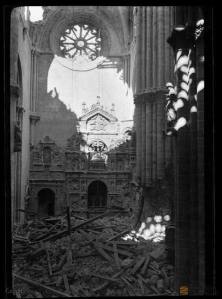
Realising that no Republican relief column from Madrid would arrive in time to lift the siege, the leadership of the defence decided to split the garrison. On the night of 10 October 1936, a vanguard of approximately 150 battle-hardened defenders launched a daring, high-stakes breakout under the cover of total darkness. Recognising that a prolonged siege meant execution for everyone inside, Captain Mika Etchebéhère masterfully organised a high-risk midnight breakout. Slipping through a breach in the cathedral perimeter, the 150 militia members stealthily bypassed the Nationalist forward trenches and sentries encircling the plaza. Utilising their intimate knowledge of the rugged local terrain, this contingent successfully cut through the rebel encirclement, marching through the freezing night toward the distant Republican lines in the Guadalajara mountains. The escape, however, was only a partial success. The noise of the breakout quickly alerted the Nationalist command, who instantly sealed the perimeter. Around 500 to 600 remaining defenders, many of them wounded, exhausted, or civilian non-combatants, remained trapped inside the smoke-filled ruins of the cathedral.
Two days later, on 12 October 1936, the conditions inside the sanctuary crossed the threshold of human endurance. With Nationalist infantry beginning to breach the outer chapels, the remaining leadership attempted to replicate the success of the 10 October escape. Driven by sheer desperation, the defenders organised two separate, back-to-back breakout attempts over the course of the day. Unlike the midnight run two nights prior, the Nationalist forces were fully prepared. Machine-gun nests covering the cathedral exits opened fire the moment the militia members rushed into the open plazas. Both breakout attempts failed catastrophically. Dozens of Republican volunteers were cut down on the steps of the cathedral, forcing the survivors to retreat back into the pitch-black, battered interior of the church. For the 500 to 600 exhausted or wounded defenders left behind in the ruins, the escape windows slammed shut.
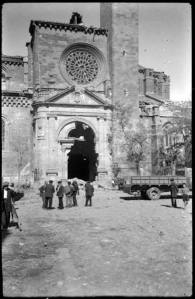
For weeks, a mix of Republican loyalists, local militias, and desperate civilians had been holed up inside the city’s fortified cathedral, surrounded by advancing Nationalist forces. Over three pivotal days, 14 to 16 October 1936, the siege collapsed, giving way to a frantic underground breakout, an unconditional surrender, and the initiation of a systematic administrative purge that altered the lives of its 5,000 residents. The physical cost of the siege was catastrophic. The Nationalist assault deployed total air superiority, using fascist Italian air detachments and the German Condor Legion to relentlessly bombard the urban core. The Sigüenza Cathedral, constructed like a massive medieval stone fortress, took direct artillery and aerial hits that shattered its roof, damaged its iconic belfries, and gutted interior vaults. Nearby, the Episcopal Palace and Castle were heavily ruined. The defence had already been scarred by early internal violence; the city’s Bishop, Eustaquio Nieto y Martín, along with the cathedral’s Dean and Chancellor, had been executed by leftist militias back in August under the initial chaotic Republican control.
By 14 October, the situation inside the Sigüenza Cathedral had become completely untenable. Battered by heavy artillery fire and running entirely out of food, water, and ammunition, the Republican command realised that a conventional breakout was impossible. In a final, desperate bid for survival, the remaining defenders attempted to exploit the city’s ancient topography. Under the cover of darkness, groups of combatants and civilians plunged into the network of underground passages and historical sewage tunnels snaking beneath the cathedral and out into the surrounding countryside. While some managed to successfully breach the Nationalist encirclement and escape into the dark hills, the relief was short-lived. Nationalist cavalry and motorised patrols immediately fanned out across the rough terrain, launching a relentless pursuit that successfully tracked down and recaptured the vast majority of the escapees before they could reach friendly lines.
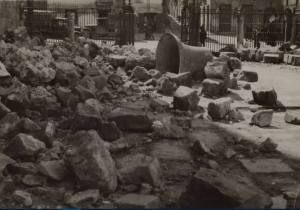
By 15 October 1936, the makeshift fortress within the Sigüenza Cathedral had become an inescapable tomb. Starving, depleted of ammunition, and choking on the dust of pulverised medieval stone, the remaining defenders faced a grim choice: unconditional surrender to the Nationalist forces or a suicidal breakout attempt. As night fell, a desperate plan was set in motion. Leading the vanguard was the Argentine commander Mika Etchebéhère. Under the cover of pitch darkness, she led a column of roughly 100 combatants out through a breach in the cathedral’s shattered walls. Moving like ghosts through the rubble-strewn alleys of the city centre, they managed to slip past the immediate Nationalist picket lines. Their objective was a harrowing, cross-country trek toward the safety of the Republican lines at Atanzón, miles away through territory heavily patrolled by rebel cavalry.
Behind them, the retreat rapidly dissolved into pure chaos. The rigid discipline that had held the diverse militia factions together over weeks of bombardment shattered in an instant. Word of the secret evacuation leaked to the remaining civilians and wounded soldiers trapped in the nave. Panic rippled through the dark cathedral. Hundreds of terrified people rushed into the courtyard, trying to follow the vanguard into the night.
The sudden commotion alerted the Nationalist troops ringing the perimeter. Nationalist machine guns, positioned on the high ridges overlooking the cathedral, opened fire. Heavy tracer rounds ripped into the disorganised mass of people spilling from the doors. In the narrow, debris-choked streets, the retreat became a slaughter. Militiamen fired blindly into the dark to cover their retreat, while others threw down their rifles, realising the exits were entirely sealed. Families were separated in the dark, and the screams of the wounded echoed against the stone façade of the cathedral. Only a small, fortunate fraction of the vanguard managed to break past the outer ring of steel and escape into the surrounding hills. For the rest, because the Nationalist military command viewed POUM and anarchist fighters as Marxist criminals, they denied them standard prisoner-of-war protections. A brutal, immediate purge began – officers, political delegates, and any milicianas found with powder burns on their hands were dragged into the adjacent Plaza Mayor or pushed against the stone walls of the cathedral and shot on the spot. Waves of extrajudicial executions followed at local cemetery walls, and very few captured on 15 October survived to see the end of the war.
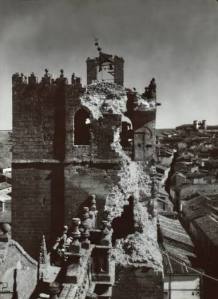
By the dawn of 16 October, the fighting was over. A heavy, smoke-stained silence fell over Sigüenza. The loss of the city severed the Republic’s north-eastern artery and permanently anchored a hostile, dagger-like front line aimed directly at the capital. Nationalist authorities rounded up the hundreds of surviving volunteers and local civilians, systematically registering 738 individuals as prisoners of war. A large contingent of these captives was immediately transferred northward to the nearby province of Soria for processing and internment. However, the official registries masked a much darker administrative reality. Among those caught in this pipeline was an innocent young woman named Clara Contreras Peña. She was arrested, transported north, and logged into the Soria Provincial Prison. While her family attempted to bring her fresh clothing, she was executed by a Nationalist firing squad. Clara’s fate was shared by many; historical records from the Soria repression track a collective group of 30 male prisoners from Sigüenza who were taken from their cells and executed together at the Matas de Lubia woodland fields around 18–19 November 1936. Soria did an excellent job if hiding their wartime crimes, making it near impossible to tell who suffered execution on which date, but within a month, most were in mass graves.
The Battle of Sigüenza was a foundational turning point for the Guadalajara front. Its outcome reshaped the military geography northeast of Madrid, setting the strategic parameters for the massive, set-piece battles that would occur in the region later in the war. Before October, Sigüenza acted as a vital strongpoint on the northeast sector of the Republican defence line. By reducing this pocket, the Nationalists successfully closed a major gap in their lines. The victory allowed them to tighten a C-shaped partial encirclement around the capital, stabilising their northern flank so General Franco could confidently redirect his main, heavy resources toward the direct frontal assault on Madrid from the south and west. Prior to the battle, the Guadalajara front was fluid, with Republican guerrillas launching disruptive raids on nearby rebel-held territories from Sigüenza. Following the collapse of the cathedral siege, the frontline was pushed drastically southward, deeper into the Guadalajara province. The Republic lost its geographical high ground, forcing its remaining regional forces into a defensive posture closer to Guadalajara city.
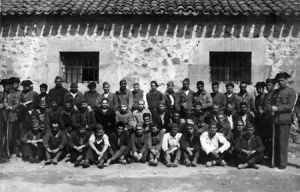
While the men of the POUM met a tragic end in the ruins of Sigüenza, the legacy of their unique unit remains an enduring testament to revolutionary equality. Even after her daring escape, the regular Republican government honoured Etchebéhère’s battlefield promotion, officially recognising her as a Captain in the 14th Division. In the absolute crucible of survival, the men of the POUM proved that competency and courage mattered far more than gender, cementing Mika Etchebéhère and her fallen comrades as timeless icons of the anti-fascist struggle.
Though the loss of the city was a psychological blow to the Republic, the stubborn defence bought the central government in Madrid something far more precious than territory – time. By bogging down General Mola’s forces in the northern highlands for nearly six weeks, the defenders successfully insulated the vital Henares River valley during a highly vulnerable window. Had Nationalist forces captured Sigüenza in early September as originally planned, they would have possessed a clear, unimpeded gateway to advance down the main railway line and highway linking Madrid to Zaragoza. By delaying this advance, the Republic kept this critical supply artery open, allowing the capital to fortify its northern approaches and prepare for the massive onslaught that would arrive later that winter.
The positions established at the end of the Sigüenza campaign directly laid the groundwork for the famous Battle of Guadalajara in March 1937. The Nationalist victory secured a strategic staging ground and a vital logistical node northeast of the capital. When the Italian Expeditionary Corps (Corpo Truppe Volontarie) later launched their massive offensive toward Guadalajara, they used the very transportation networks and territory seized during the autumn of 1936 as their primary launchpad. The trenches dug in the wake of Sigüenza’s fall became the literal starting lines for one of the most significant mechanised battles of the entire war.