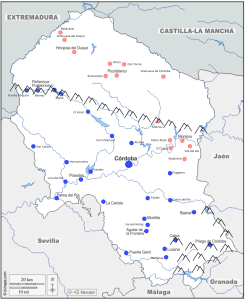
In October 1936, the focus of the Spanish Civil War in Andalucía shifted to the rugged, industrial Guadiato Valley north of Córdoba. Having already captured surrounding strongholds, Nationalist forces launched a brutal and swift offensive designed to shatter the Republican defensive lines protecting the region’s lucrative coal mining basins and key towns of El Vacar, Villaharta, Espiel, and Belmez. The area had remained in Republican hands throughout the war, and the defence of the region was organised under the wider Southern Army (Ejército del Sur), commanded by General José Miaja. In the Guadiato Valley specifically, the force consisted of approximately 4,000 to 5,000 combatants. This force was overwhelmingly composed of volunteer trade union militias, the Miners’ Battalions of the UGT and CNT, alongside scattered remnants of loyal Guardia Civil detachments and Assault Guards. They possessed immense bravery and fighting spirit but were desperately short of heavy artillery, automatic weapons, and air support.
The offensive was orchestrated by the Southern Army under the cruel General Gonzalo Queipo de Llano out of Seville. The immediate columns striking the valley were commanded by Lieutenant Colonel Baturone and Major Gómez Cobián, fielding roughly 3,000 to 3,500 highly trained troops. Crucially, their numbers included elite, veteran units of the regular infantry from the Córdoba garrison, regular cavalry squads, and shock troops of the Army of Africa and the Moroccan Regulares. They were backed by superior Italian-supplied aviation and heavy field artillery aimed to devastate the Republican stronghold.
The Guadiato mining basin was one of the most densely populated industrial zones in rural Andalusia, heavily altering the nature of the warfare. Before the war, Belmez had a permanent population of around 9,000 to 10,000 residents, while neighbouring Peñarroya-Pueblonuevo housed over 25,000. However, by October 1936, these numbers had artificially doubled. The basin had become a magnet for thousands of left-wing agrarian refugees fleeing the previous Nationalist advances through Seville, Badajoz, and western Córdoba. Espiel, Villaharta, and El Vacar were rural outposts in comparison, smaller agrarian hubs had populations ranging from a few hundred (El Vacar) to roughly 4,500 (Espiel). By the time Nationalist forces arrived on 11 October, these villages were virtually ghost towns; the populations had already evacuated into the hills or packed onto trains heading north.
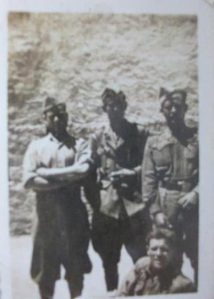
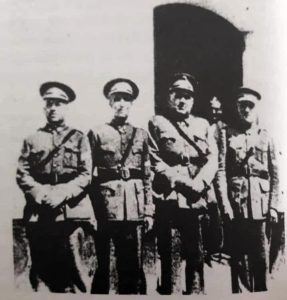
Falangists in Peñarroya, via unknown
The Nationalist drive into the valley gathered momentum at the start of October, steadily exposing the flanks of the main Republican lines. By 10 October 1936, the Republican defensive perimeter cracked completely under coordinated pressure. Nationalist columns advanced rapidly to occupy the strategic crossroads of El Vacar, home to a historic fortress commanding the mountain pass, and the neighbouring village of Villaharta. The capture of these two towns effectively unhinged the Republican right flank, leaving the highway leading deeper into the Guadiato Valley wide open to cavalry and motorised units.
.
With the forward defences compromised, Nationalist forces pressed their advantage the following day. On 11 October, troops marched into Espiel, as the town was nearly deserted. A subsequent Republican attempt to counter-attack and reclaim Espiel was fiercely repulsed by Nationalist forces under Lieutenant Colonel Baturone, cementing control over the central valley corridor.
.
As Nationalist forces reached the gates of the crucial mining town of Belmez, a state of absolute panic gripped the civilian population. For weeks, Belmez and neighbouring Peñarroya-Pueblonuevo had been overwhelmed by thousands of refugees. Knowing that a Nationalist occupation would bring severe political reprisal and mass executions, local authorities orchestrated a large-scale civilian evacuation. Led by the Mayor of Belmez, Manuel Robledo, alongside regional republican leaders, a massive railway rescue operation was organised over the nights of 11 and 12 October. Utilising every available locomotive parked in the local stations, eleven packed trains were dispatched from Belmez. Upwards of 10,000 miners and civilian refugees were successfully evacuated along two main escape routes, via the narrow-gauge line toward Almorchón in Extremadura and through the mountain passes toward Puertollano in the Republican stronghold of Ciudad Real. This mass exodus, carried out under the cover of darkness, was one of the largest and most concentrated humanitarian evacuations witnessed in the southern theatre up to that point in the war.
.
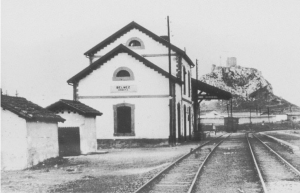
The empty Belmez station after the trains cleared, via Memoria Democratica de Peñarroya-Pueblonuevo
By 12 October, the evacuation trains had cleared, and Belmez fell completely to Nationalist forces. The loss of the town was a staggering economic and structural catastrophe for the Spanish Republic. By capturing Belmez and soon after Peñarroya, the Nationalists seized a sprawling industrial empire of coal mines, foundries, and metal shops. With the local workforce scattered across neighbouring provinces or hiding in the mountains, the Nationalists quickly established strict martial law. The vital mineral wealth of the Guadiato Valley was immediately repurposed to fuel the Francoist war machine for the remainder of the conflict, while the frontline in northern Córdoba stabilised into a bitter war of positions.
.
Because the majority of the population evacuated on the 11 trainloads to Puertollano and Almorchón, the Nationalist forces focused their initial rage on those who remained behind, the elderly, the sick, and miners trapped by the rapid advance. Hundreds of summary executions were carried out in the local cemeteries of Espiel and Belmez. Once control was consolidated, Falangist paramilitary squads and military judges set up tribunals. Anyone associated with a trade union, the Popular Front, or local municipal governments was systematically hunted down. Republican women who did not escape were subjected to public humiliation, having their heads shaved and being forced to ingest castor oil before being paraded through the streets, and the Army of Africa units were ones most known for aggressive pack-rapes of local women. Surviving miners were forced back into the pits under gunpoint, their wages slashed, effectively turning the mines into penal work complexes to supply the Francoist war effort.
.
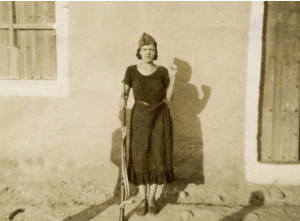
A lone Republican in Cordoba, exact location unknown, in early October 1936, via Ahora, Biblioteca Nacional de España
The Peñarroya-Belmez basin was the powerhouse of southern Spain, rich in high-grade coal, lead foundries, and chemical manufacturing plants. By conquering this sector, the Nationalists deprived the Republic of its primary metallurgical and energy hub in the south, immediately weaponising the valley’s mineral assets to power trains, factories, and munition plants. For the Nationalists, capturing Espiel and El Vacar pushed the Republican artillery out of striking range of Córdoba capital, creating a secure northern buffer zone.
.
Following the fall of Belmez, Nationalist columns pushed just a few kilometres further to capture the primary administrative hub of Peñarroya-Pueblonuevo on 13 October. By midday on 13 October, the exodus of the local population reached its conclusion. Accompanying Mayor Fernando Carrión Caballer, more than 20,000 citizens entirely abandoned the city. They fled in terror of the approaching Moroccan Regulares and the violent threats broadcast over the radio by Nationalist General Queipo de Llano. The Nationalist forces took immediate control of the town’s massive metallurgical infrastructure. The strategic lead foundries and the chemical Oleum factory, which had been ground to a halt by general strikes, were forced back into operation by the Nationalists to manufacture munitions and fuel the Francoist war machine.
.
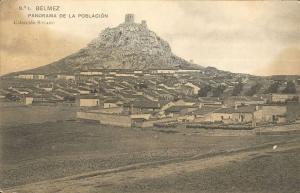
Belmez, via Museos de Andalucia
However, immediately after securing Peñarroya, the offensive ground to a halt. The thousands of evacuated Republican miners and soldiers successfully dug into the rugged Sierra de Sierra Morena mountains, establishing fortified lines just north of the basin near the borders of Extremadura and Ciudad Real. Having achieved their primary goal of seizing the industrial assets, the Nationalists shifted their elite colonial troops toward the Siege of Madrid. As a result, the northern Córdoba front stabilised into a frozen, heavily fortified war of positions that remained virtually unchanged for the next two and a half years, until the final collapse of the Republic in 1939.
.
The mass exodus on the nights of 11–13 October 1936 was a massive, highly coordinated railway evacuation that scattered more than 30,000 refugees across the Republican-held territory of central and eastern Spain. Because the entire industrial infrastructure of the Guadiato Valley vanished into Nationalist hands, these families, laborers, and union activists were distributed along three major routes. Eleven completely packed trainloads carrying thousands of evacuees from Belmez first travelled west along the narrow-gauge railway line to the strategic rail junction of Almorchón in the province of Badajoz. Almorchón was a small transit hub completely overwhelmed by the influx and served as a massive sorting station. Militias and local Republican committees processed the refugees, providing basic rations before loading them onto broader rail lines heading deeper into Spain’s secure interior. The secondary branch of the railway evacuation pushed northeast through the mountain passes toward Puertollano, a major Republican industrial and coal mining stronghold in New Castile (Castile-La Mancha). Puertollano was the logical destination for the displaced mining families because of its matching industry. The local mining syndicates and the civilian population mobilised heavily to integrate the Andalusian refugees. Fellow miners shared housing, and many evacuated Guadiato workers were immediately put to work in the Puertollano bitumic coal pits to maximise fuel production for the Republican war effort.
.
During this phase of the Spanish Civil War in October 1936, navigating central and western Spain was a harrowing experience due to the rapid movement of the front lines, but as the weeks progressed, neither Almorchón nor Puertollano could permanently sustain tens of thousands of displaced families, causing the refugees to scatter further. Ciudad Real remained firmly under Republican control, making it a relatively secure staging ground for refugees. However, the journey north to Madrid required careful routing due to the advancing Nationalist columns to the west. Refugees arriving from the south (such as the Guadiato Valley) were processed at the main Ciudad Real Capital station.From the capital, trains moved directly north through Manzanares and Alcázar de San Juan. From there, the tracks ran safely through the eastern corridor of the Toledo province, avoiding the western frontline where the Nationalists had just captured Toledo city, and terminated directly at Madrid’s Delicias Station. Thousands of able-bodied miners and younger men travelled straight up to Madrid, where they immediately volunteered for the Popular Militias. Their specific expertise with dynamite and structural engineering became critical during the defensive trench warfare of the upcoming Siege of Madrid. If the main arteries faced delays, an eastern narrow-gauge loop took refugees from Puertollano through Calzada de Calatrava to Valdepeñas, where they could connect to major lines heading to either Madrid or further east toward the safe rearguard in Valencia.
.
Women, children, and elderly refugees who could not fight were systematically relocated eastward away from the battle lines. They were sent via train to Republican rearguard cities along the Mediterranean coast, particularly Valencia, Alicante, and Elche, where local municipal governments repurposed schoolhouses, seized estates, and private homes to house the displaced populations.
.
By mid-October 1936, Extremadura was exceptionally dangerous and largely unviable for Republican refugees. The region had become a highly volatile and blood-soaked war zone. The Army of Africa, led by Lieutenant Colonel Juan Yagüe, had swept north through the region during August and September. By 1 October 1936, the war of columns in western Spain effectively ended as the Nationalists had wiped out the remaining Republican pockets in western Extremadura. The only part of Extremadura that offered temporary refuge was the easternmost tip of the Badajoz province, specifically around the rail junction of Almorchón. Because it bordered the Republican stronghold of Córdoba’s Los Pedroches valley, it remained an active processing station where fleeing miners could briefly rest before being redirected onto trains away from the advancing Nationalist armies to Ciudad Real and east towards safety like Valencia.
.
Nationalists arrive in Peñarroya-Pueblonuevo to begin repression, via unknown
The sudden and massive evacuation of the Guadiato Valley between 11 and 13 October 1936 completely upended the social fabric of towns like Belmez and Peñarroya-Pueblonuevo. The sudden transition from a left-wing mining stronghold to a Nationalist-controlled industrial hub left a complex legacy of those who stayed, those who emerged, and the property left behind. Despite the departure of over 30,000 refugees via train and on foot, thousands of people remained trapped in the valley, the elderly, the sick, pregnant women, and young children who physically could not endure a chaotic, midnight train evacuation were left behind in large numbers. Many families simply could not secure a spot on the packed trains or were cut off by the rapid advance of the Nationalist columns before they could reach the stations. For those left behind who had any ties to the socialist or communist mining unions, the outcome was devastating. Nationalist forces conducted immediate cleansing operations. Those associated with the Popular Front were rounded up, detained in improvised camps (such as the industrial workshops of Pueblonuevo), and hundreds were subjected to executions and buried in mass graves.
.
Sexual violence and rape were systematically used as weapons of war and political repression across the southern front, specifically in the Córdoba region and the Guadiato Valley. The use of sexual assault during the Nationalist offensive in Andalucía was not a deliberate strategy of psychological warfare explicitly designed and encouraged by the military high command to terrorise left-wing populations. From his nightly broadcasts on Unión Radio Sevilla, which were heard clearly throughout the villages of Córdoba, Queipo de Llano openly incited his troops to rape Republican women. As he had earlier broadcast: ‘Our brave legionnaires and Regulares have shown the cowardly Reds what it means to be a man. And, by the way, to the wives of the Reds too… After all, these communists and anarchists deserve it, haven’t they been playing at free love? Now at least they will know what real men are, and not f****t militiamen. They won’t get away, no matter how much they struggle and kick.’
.
The Nationalist command strategically deployed these elite colonial shock troops to spark panic. The systematic rape of women in newly captured villages was used to smash the morale of the remaining population, forcing them into submission or provoking mass flight. The specific terror of these documented sexual atrocities was a primary driver behind the massive railway evacuation of October 11–13. More than 30,000 citizens chose to completely abandon their homes, possessions, and livelihood because local union leaders and families knew that staying meant exposing women and girls to mass sexual violence and execution.
.
For the women who could not escape on the trains and were left behind in the Guadiato Valley, sexual violence extended far past the immediate capture of the towns. It became a structured method of fascist policing, with Falangist paramilitaries and local guards routinely using sexual torture against female prisoners held in improvised lockups and the local cemetery walls. Women were frequently forced to trade sexual acts for the lives of their imprisoned husbands or sons, or were subjected to gang rapes before being executed.Sexual violence was accompanied by public rituals designed to strip Republican women of their dignity. Quantifying the exact number of rape victims in the Belmez and Peñarroya-Pueblonuevo sector remains historically impossible. The Francoist regime strictly censored any legal or medical mention of wartime sexual misconduct by Nationalist troops. Due to the intense social stigma, trauma, and fear of further execution under the dictatorship, the vast majority of surviving women took these secrets to their graves. It is only through modern exhumations of mass graves in southern Spain and oral histories collected by memorialist groups that the full structural scale of this gender-based warfare has come to light.
.
Despite the valley being a fiercely left-wing industrial basin before July 1936, a distinct right-wing population existed and underwent its own trials during the first three months of the war. The conservative segment of the population consisted of mine engineers, company managers from the Sociedad Minera y Metalúrgica de Peñarroya (SMMP), wealthy landowners, Catholic priests, and small business owners.Between July and October 1936, these individuals were forced into hiding or kept under strict surveillance by the Republican Batallón del Terrible and local militia committees. Many local right-wingers had their homes searched or were imprisoned by the militias.When the Nationalist troops marched into the towns on 12 and 13 October, these hidden right-wingers emerged to welcome the Nationalist army. They immediately formed local Falangist units and traditionalist Requeté militias. Crucially, they acted as informants, providing the incoming military authorities with blacklists of their left-wing neighbours, which fuelled the subsequent executions.
.
With tens of thousands of citizens abandoning their residences overnight, the towns became ghost landscapes of open doors and abandoned lives. The Nationalist authorities handled the empty properties through systematic, state-sanctioned plunder. The best-appointed homes belonging to fled union leaders, republican officials, or engineers were immediately seized by the Nationalist command. They were repurposed as military headquarters, officer quarters, and barracks for the Moroccan Regulares and foreign mercenaries. Falangist paramilitaries and regular troops systematically stripped abandoned working-class homes. Furniture, clothing, sewing machines, and radios were confiscated. Legally, the Francoist state created the Tribunal de Responsabilidades Políticas to formally seize the bank accounts, real estate, and physical assets of anyone who had fled to the Republican zone, cataloguing them as Marxists or fugitives.
.
Because the Nationalists desperately needed the coal mines and lead foundries to operationalise their war machine, they could not leave the towns empty. They brought in right-wing families, conservative laborers from other parts of Andalusia, and forced remaining locals back into the workforce. These replacement workers and military personnel were assigned to live in the newly vacant houses. When the war ended in 1939, many surviving refugees who attempted to return to the Guadiato Valley found their homes permanently occupied by Francoist supporters, leading to decades of legal dispossession and silence.
.
Back on 2 October 1936, just as the Nationalist offensive was approaching the valley, anarchist milicianos in Belmez had panicked. They rounded up 25 local conservative/right-wing prisoners, including the town priest and prominent landowners, drove them to a ditch along the country road between Bélmez and Doña Rama, executed them, and burned their bodies. Following the capture of the town on 12 October, the Nationalists exhumed this specific grave, gave the victims a state funeral with full military honours, and used the event to justify their subsequent, much larger reprisal campaigns against the left-wing population.
.
In Peñarroya-Pueblonuevo, the immediate repression was severe, with approximately 300 to 400 executions carried out in the immediate aftermath of the town’s fall and over the ensuing weeks. In locations like Espiel, total numbers can be difficult to tally, and known graves have been unable to be fully uncovered. Across the captured municipalities of northern Córdoba in October 1936 alone, historians estimate between 600 and 800 people were murdered by the invading columns and the local right-wing rearguard authorities who took control. In October 1936, thousands of working-class families and miners fled the advancing troops into the surrounding rural mountains and large cortijos. The Army of Africa systematically combed these rural zones. Dozens of undocumented murders occurred in the fields, where victims were buried in unmarked graves alongside country roads. Towns like Bélmez have several mass graves sites, but remained either unexhumed, or only have two or three victims each, as most who suffered have been scattered or hidden. This specific total forms part of the much larger figure of 11,581 total victims of the White Terror across Córdoba province during the war, a campaign characterised by the brutal deployment of Moroccan troops to deliberately terrorise and subjugate the local population.
.
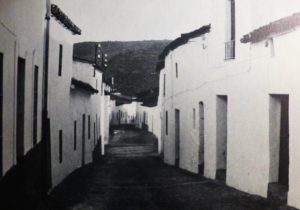
The silent town of Espiel, via unknown
Related
Got a comment, question or suggestion? Know who took a photo? Have questions about a particular date or event? Cancel reply