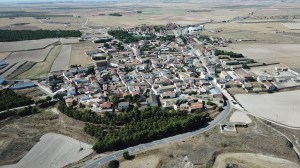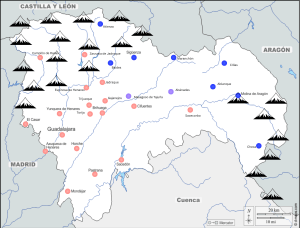
By mid-October 1936, the strategic focus of the Spanish Civil War was tightening around Madrid. Yet, northeast of the capital, a brutal and deeply symbolic siege was drawing to its tragic conclusion in the historic episcopal city of Sigüenza. For weeks, a mix of Republican loyalists, local militias, and desperate civilians had been holed up inside the city’s fortified cathedral, surrounded by advancing Nationalist forces. Over three pivotal days, 14 to 16 October 1936, the siege collapsed, giving way to a frantic underground breakout, an unconditional surrender, and the initiation of a systematic administrative purge that altered the lives of its 5,000 residents.
The physical cost of the siege was catastrophic. The Nationalist assault deployed total air superiority, using fascist Italian air detachments and the German Condor Legion to relentlessly bombard the urban core. The Sigüenza Cathedral, constructed like a massive medieval stone fortress, took direct artillery and aerial hits that shattered its roof, damaged its iconic belfries, and gutted interior vaults. Nearby, the Episcopal Palace and Castle were heavily ruined. The most devastating single strike had occurred earlier on 29 September, when a German bombing run completely levelled the city’s main hospital and the bishop’s hospice, instantly killing an estimated 70 people and wounding 150 others inside.
The defence had already been scarred by early internal violence; the city’s Bishop, Eustaquio Nieto y Martín, along with the cathedral’s Dean and Chancellor, had been executed by leftist militias back in August under the initial chaotic Republican control. By October, leadership fell to figures like anarcho-syndicalist militia leader Feliciano Benito Anaya and lawyer Jesús Martínez de Aragón, who desperately tried to hold the line as a core group of over 300 combatants and hundreds of family members retreated exclusively into the cathedral’s nave.
By 14 October, the situation inside the Sigüenza Cathedral had become completely untenable. Battered by heavy artillery fire and running entirely out of food, water, and ammunition, the Republican command realised that a conventional breakout was impossible. In a final, desperate bid for survival, the remaining defenders attempted to exploit the city’s ancient topography. Under the cover of darkness, groups of combatants and civilians plunged into the network of underground passages and historical sewage tunnels snaking beneath the cathedral and out into the surrounding countryside. While some managed to successfully breach the Nationalist encirclement and escape into the dark hills, the relief was short-lived. Nationalist cavalry and motorised patrols immediately fanned out across the rough terrain, launching a relentless pursuit that successfully tracked down and recaptured the vast majority of the escapees before they could reach friendly lines.
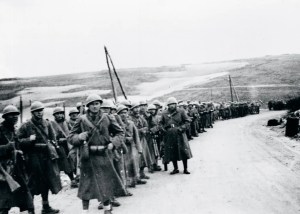
The following day, 15 October, marked the absolute end of military resistance. With their underground escape routes compromised and no hope of external relief from Madrid, the remaining defenders inside the cathedral layout laid down their weapons and surrendered unconditionally. With the lowering of the Republican flag, the battle of Sigüenza officially ended. General Franco’s Nationalist forces established absolute military and administrative control over the city. The capture of this strategic railway hub effectively secured the Nationalist northern flank, allowing them to consolidate their supply lines for the impending frontal assault on Madrid.
The true tragedy of Sigüenza’s fall began to manifest on 16 October, a date that modern historians recognize as a critical marker in the chronology of wartime repression. Nationalist authorities rounded up the hundreds of captured Republican fighters, militia volunteers, and local civilians, systematically registering 738 individuals as prisoners of war. A large contingent of these captives was immediately transferred northward to the nearby province of Soria for processing and internment. However, the official registries masked a much darker administrative reality. Among those caught in this pipeline was a young woman named Clara Contreras Peña. She was arrested, transported north, and logged into the Soria Provincial Prison. While her family attempted to bring her fresh clothing, she was executed by a Nationalist firing squad. Clara’s fate was shared by many; historical records from the Soria repression track a collective group of 30 male prisoners from Sigüenza who were taken from their cells and executed together at the Matas de Lubia woodland fields around 18–19 November 1936.
The Battle of Sigüenza was a foundational turning point for the Guadalajara front. Its outcome reshaped the military geography northeast of Madrid, setting the strategic parameters for the massive, set-piece battles that would occur in the region later in the war. Before October, Sigüenza acted as a vital strongpoint on the northeast sector of the Republican defence line. By reducing this pocket, the Nationalists successfully closed a major gap in their lines. The victory allowed them to tighten a C-shaped partial encirclement around the capital, stabilising their northern flank so General Franco could confidently redirect his main, heavy resources toward the direct frontal assault on Madrid from the south and west.
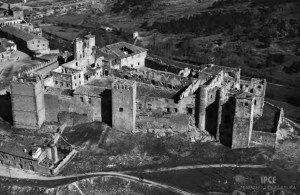
Prior to the battle, the Guadalajara front was fluid, with Republican guerrillas launching disruptive raids on nearby rebel-held territories from Sigüenza. Following the collapse of the cathedral siege, the frontline was pushed drastically southward, deeper into the Guadalajara province. The Republic lost its geographical high ground, forcing its remaining regional forces into an entirely defensive posture closer to Guadalajara city.
- Málaga, Andalucia
The steamship Marqués de Chávarri (originally a cargo ship belonging to Altos Hornos de Vizcaya) was repurposed into one of these high-security prison ships starting in August 1936. It was used primarily to hold high-profile right-wing political figures, wealthy landowners, military officers, and members of the Catholic clergy who had been rounded up across the province. Historians note that conditions aboard the Marqués de Chávarri were directly tied to the external air war. Every time Nationalist aviation or Italian bombers carried out air raids over the city of Málaga, local militia groups would select groups of prisoners from the ship’s hold to be executed on land as a direct act of bloody reprisal.
On and leading up to mid-October, Nationalist aircraft subjected the strategic port infrastructure of Málaga to intense aerial bombardments. According to surviving eyewitness journals from fellow prisoners aboard the Marqués de Chávarri, the guards dragged the five priests out of the holds, marched them past the remaining inmates, and forced the entire ship to collectively scream, ‘Mueran los fascistas!’ (Death to the fascists!) before taking the men ashore to be shot at Arroyo de las Cañas.
On the night of 13 October five religious prisoners were selected, removed from the dark holds of the Marqués de Chávarri juts before midnight, and driven out to Arroyo de las Cañas, a dry riverbed/ravine area located on the outskirts of Málaga city that was used by the militias as a discrete execution and dumping site. All five victims were Catholic priests belonging to the Diocese of Málaga who had been targeted strictly due to their religious status during the anticlerical purges. Mariano García Rodríguez was a secular priest of the Diocese of Málaga, born in Ojeda (León) in 1880.Modesto García Rodríguez, was secular priest of the diocese, born in Abelgas (León) in 1887. Some martyrdom records log his death on the eve of the 13th, marking the transition of the midnight saca. Faustino Tejero Luelmo was senior secular priest, born in Pontejos (Zamora) in 1874. José Gabarrón Pérez was a local diocesan priest caught in the urban sweeps, and Antonio Jiménez Blázquez was another member of the local secular clergy held aboard the steamer.
Following the fall of Málaga to Nationalist and Italian forces in February 1937, the Marqués de Chávarri ceased operations as a prison ship. The Francoist regime prioritized locating the remains of the ‘martyrs’ executed along the riverbeds. The bodies of these five priests were eventually recovered from the Arroyo de las Cañas mass pits, identified by remnants of their clothing or personal items, and re-interred with full religious honours. Decades later, their histories were integrated into the global Catholic Church’s massive beatification investigations into the victims of the Spanish religious persecution.
The connection between air raids and executions was so strong that it actually saved lives later. During a subsequent heavy bombing run, shrapnel hit the Marqués de Chávarri directly, killing a militia guard on duty. When an angry mob arrived at the dock to pull more prisoners off the ship for another reprisal, the ship’s remaining guards actually blocked them. They argued that because their own ship had been damaged worse than the city, they had already paid their toll, sparing the remaining prisoners from a similar fate.
During the autumn and winter of 1936, Málaga was bombed almost continuously, averaging multiple air raids every single week, which frequently escalated to several attacks per day.
Because Málaga was a strategic Republican-controlled deep-water port, it became a prime target for General Franco’s forces and his Axis allies. By October and November 1936, the presence of the Italian Regia Aeronautica and German aircraft transformed life in Málaga into a permanent race for survival.
Contemporary accounts and witness journals note that whenever the church bells in the city began to ring, it meant enemy aircraft had crossed the coastline. It was common for the aircraft to come over two to three times a day, targeting the port, the railway networks, and factories. Because the city centre was small, densely packed, and completely exposed to the sea, civilian casualties from these daily runs were incredibly high. The torment of the city was not restricted to aircraft. By late 1936, Nationalist rebel naval cruisers, the Canarias, Baleares, and Almirante Cervera, established a tight blockade just off the coast. They subjected Málaga to unceasing naval shelling alongside the aerial attacks, destroying large swathes of housing and forcing thousands of rural refugees flowing into the city to sleep in overcrowded churches and inside the Málaga Cathedral for shelter.
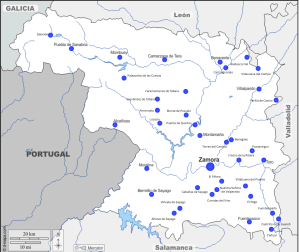
- Zamora
While the frontline battles of the Spanish Civil War raged across Madrid and the mountains of Guadalajara in autumn 1936, a silent, highly organised war of attrition was unfolding deep in the nationalist rearguard. In the northern agricultural province of Zamora, where the July 1936 military coup succeeded almost immediately, there were no active trenches or artillery barrages. Instead, the province became a testing ground for systemic, extrajudicial executions designed to permanently purge left-wing political entities, labour unionists, and Republican loyalists. Between July and December 1936, the machinery of the White Terror operated with chilling efficiency across Zamora, leaving behind an entrenched legacy of mass graves and unhealed historical wounds.
Because the Nationalist forces established absolute administrative control over Zamora early in the conflict, they did not face armed partisan resistance within the provincial borders. This allowed the regime to weaponise the existing municipal architecture for mass coercion. The Nationalists repurposed the building of the Subdelegación del Gobierno (Government Sub-delegation) into a high-density transit prison in Zamora city. Built to hold a modest number of inmates, it was crammed with over 1,400 Republican prisoners swept up from local villages and nearby provinces. Further east along the Duero River, the medieval fortress walls of the Alcázar de Toro were transformed into a dark regional detention centre. Inside these makeshift camps, a systematic filtering process occurred. Paramilitary groups, chiefly the fascist Falange, entered the detention blocks armed with targeted lists of teachers, mayors, railroad workers, and trade unionists.
The executions in Zamora were an institutionalised method of erasure. Over 800 people were executed from the central Zamora transit jail alone between 1936 and 1940. In the dead of night, prisoners would be pulled from their cells under the bureaucratic ruse of a prisoner transfer or sudden release. The captives were loaded into commercial cargo trucks and driven to designated execution nodes. The primary execution site for the capital was the outer brick walls of the San Atilano Cemetery. Following the firing squad volleys, the bodies were immediately discarded into large, common mass graves dug in the rear sections of the cemetery and covered directly in cal viva (quicklime) to accelerate decomposition and mask the scale of the murders. Local memory organisations, including the Foro por la Memoria de Zamora, have successfully compiled a database of 1,507 – 1,600 individual victims fully identified by name. These records track regular citizens, including working-class labourers, mayors, railway workers, and teachers, who were systematically systematically targeted across the entire province, both from the prison system deaths and roadside killings.
The repression was heavily tied to areas with higher urbanisation and union density. While Zamora city and the industrial pockets took the heaviest hit, rural districts like Faramontanos de Tábara, Bermillo de Sayago, and Alcañices experienced deep ideological purges that accounted for hundreds of the casualties hidden across the rural countryside. While the province has only 58 registered gravesites, it is largely because the province has worked hard to make sure no one ever spoke up.
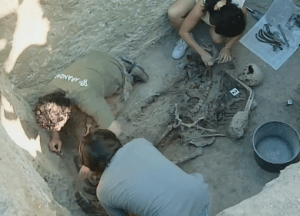
The Benegiles Cemetery Exhumation (Santo Tomás) was systematically excavated a plot inside the Santo Tomás Municipal Cemetery in Benegiles in 2004. They successfully exhumed the skeletons of 3 individuals who were murdered on 14 October 1936. Three local residents were arrested and taken to the mayor’s house; they were subsequently driven to a site known as El Refoyo, located one kilometre from the village in the direction of Zamora, where they were executed. Their bodies were left out in the open overnight, and the following day they were transported by cart to the cemetery for burial in a grave (Grave No. 8, Row 13, Section 1 of the Santo Tomás Municipal Cemetery). Found were Tomás Martín Castro and Restituto Santos Vara, both local day labourers, and Salvador Villar Torio, age 38, the local tavern keeper and farmer.
Unlike smaller rural graves across the region, San Atilano was the primary urban repository used by the Nationalist forces following the July 1936 military coup. The cemetery walls and nearby fields were used as execution grounds. Official historical archives indicate that 875 people who fell victim to the repression of the uprising forces were buried within this specific cemetery. To mask the nature of their deaths, many victims were logged in municipal and cemetery registers under highly bureaucratic or deceptive euphemisms, most commonly recorded as hallado muerto (found dead) or ejecutado por sentencia (executed by sentencing). These individuals included socialist militants, union organisers, and average citizens who stood up to defend the legal Republic and the mass grave is registered as unexhumed.
Because San Atilano remains the active municipal cemetery for the city of Zamora, the physical terrain has been subject to standard cemetery expansions, remodeling, and modern plot restructuring over the last century. The original collective burial ground has long since been built over or absorbed into the general cemetery infrastructure, making a traditional archaeological excavation and physical recovery of individuals highly complicated or unlikely. Because the remains cannot be cleanly separated and individually returned to their families, grassroots movements and the local government have focused on changing the site into an place of remembrance.
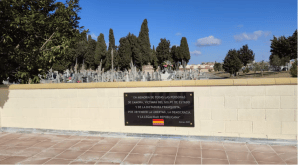
In March 2023, the Ayuntamiento de Zamora took advantage of structural rehabilitation works on the cemetery’s ossuary to install an official commemorative plaque. The monument honours the citizens who lost their lives defending democracy, freedom, and the Republic. However, reflecting the deep ‘polarisation’ that still exists around historical memory in Spain, and an attack took place under the cover of darkness during the early morning hours of 14 April 2023, a date intentionally chosen by the perpetrators because it marks the anniversary of the proclamation of the Second Spanish Republic. The government of Zamora, which condemned the act as a violent, intolerant, and ideologically motivated crime, handed the case over to local police authorities, which as always, yielded nothing. The local reaction in Zamora to the destruction of the San Atilano memorial plaque was marked by widespread shock, institutional condemnation, and an immediate mobilisation by historical memory advocates. Because the attack occurred on the symbolic date of 14 April, which since 2019, commemorating the anniversary of the Second Spanish Republic, the site had been a place where anti-fascist groups, family associations, and historical memory groups could gather directly inside the cemetery gates. The ceremonies typically incorporate live poetry readings, the placement of portraits of known victims, and a symbolic floral offering of thirteen roses to preserve their memory. For the families of those buried in the unmarked mass graves, the attack felt like a personal violation. The ossuary was the only physical place inside the cemetery where they could lay flowers to honour their executed relatives. Local groups described the destruction as a vile and cowardly act that sought to re-impose the historical silence forced upon them during the dictatorship.
The municipal government, led by Mayor Francisco Guarido (Izquierda Unida), immediately released a harsh statement branding the perpetrators as violent, intolerant energumens. They emphasised that attacking a cemetery, traditionally treated as a sacred, neutral ground of rest, crossed a dangerous line into ideological hatred. While left-wing parties (IU and PSOE) united to condemn the acts as a direct assault on democratic memory laws, more conservative political factions in the region kept a lower profile, focusing their statements on the destruction of public property rather than the ideological nature of the monument. Instead of backing down, the community used the act of vandalism as a catalyst to strengthen their remembrance efforts. During subsequent 14 April gatherings, locals turned up in larger numbers, bringing flowers and hand-made signs to place over the fractured stone.
Two groups of victims were buried in this mass grave in the village of Santa Marta de Tera (part of the municipality of Camarzana de Tera) on different dates in 1936. One group consisted of three victims from Destriana (León) who had been arrested on August 22, 1936, the other group of four victims from Benavente (Zamora) who, following their arrest, were taken to the Puebla de Sanabria prison and transported by to Santa Marta on 22 October 1936. The grave was located next to the church, at the foot of the cemetery gate. The second grave was exhumed in 2009, where eight people were identified.
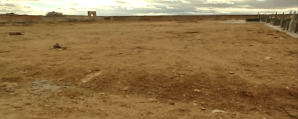
Long before official historical memory laws were enacted, a significant portion of one of the main mass graves in the Toro cemetery was ‘accidentally’ destroyed due to municipal niche expansions and internal construction works in the 1980s. This has made full quantification and forensic extraction impossible. In 1988, long before institutional funding or standardised archaeological protocols existed, a group of families took matters into their own hands. Fernando Martín, the gravedigger at the Toro cemetery, re-opened the mass graves in 1988 and saw the remains of approximately 36 people, all with gunshot wound to the skull, some still with bullets, They independently financed and organised a small-scale intervention that successfully exhumed four unnamed bodies to give them private, dignified burials.
Between 2004-2007, a formal, scientific intervention was carried out during this window with the help of specialised groups like the Sociedad de Ciencias Aranzadi. Archaeologists and forensic experts targeted a preserved sector of the graves, using the historical testimonies of the cemetery’s former gravedigger, but the 2004 investigations were only able to successfully recovered the remains of another three victims.
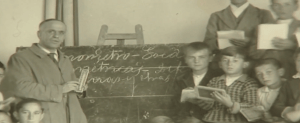
Many of the victims were local left-leaning figures, trade unionists, and notably, republican schoolteachers. A prominent historical account involves Bernardo Pérez, whose daughter survived to tell the tale of her father. Covadonga Pérez Sánchez said they could hear sometimes up to 60 shots at a time coming from the nearby firing squad taking place at the Zamora cemetery. Her father, Bernardo Pérez was a schoolteacher in Fuentesaúco, as were her brothers, Arquímides and Arístides. Her father and Arquímides, aged 26, were both executed by firing squad at the Zamora cemetery in August 1936. The younger son, Arístides, aged 23, was executed a month later. The pair had returned home from where they worked in Asturias during the summer holidays when the coup happened and local Falange members arrested the whole family. They paid a 5,000-peseta ransom, only to be re-arrested for being in the UGT teachers’ union, and Bernardo was a local Republican. It is believed Arístides may have been one of the bodies first found in 1988.
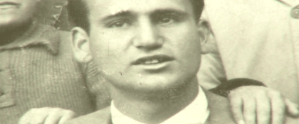
The burial site of at least 65 people is located inside or immediately adjacent to the walls of the Pozoantiguo Municipal Cemetery. True to the grim operational patterns of the Nationalist repression in the region, the bodies belong to civilians executed during sacas from multiple prisoners, and, the grave contains victims from neighbouring towns Pozoantiguo itself. None of the victims have been recovered. Fresno del la Ribera shares a similar fate, with 10 victims, and possible many more unable to be recovered outside the cemetery walls.
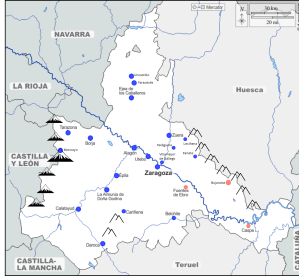
- Perdiguera, Zaragoza, Aragon
By 12 October, the momentum of the Nationalist rebel advance carried them to the very foot of the Puerto de Alcubierre, the vital mountain pass cutting through the range that controlled the primary terrestrial link between rebel-held Zaragoza and the frontline. Outgunned and facing encirclement on the flat plains, the Republican militias, primarily drawn from the anarchist Durruti Column and the Marxist POUM (Partido Obrero de Unificación Marxista), executed a hasty tactical retreat. They fell back up into the steep, rocky ridges of the Sierra de Alcubierre, establishing a new, elevated frontline trace along the commanding peaks.
This battlefield terrain was intensely unforgiving. The Sierra de Alcubierre is a parched, semi-arid, and highly eroded spine of limestone and clay, dominated by barren gorges, sparse pine scrub, and blinding white dust. At an elevation exceeding 800 metres, water was non-existent, forcing soldiers on both sides to endure acute thirst under the biting October sun. On these flat plains below, rural farming communities like Perdiguera and Alcubierre (with pre-war populations hovering under 1,000 residents each) were abruptly transformed from quiet agrarian hubs into fortified military operational bases.
Refusing to concede the high pass and the road to the eastern rearguard leading toward Catalonia, the Republican command rapidly reinforced the sector with fresh Catalan militia units and newly arrived international volunteers. This included the French-dominated International Group of the Durruti Column, featuring roughly 40 highly idealistic foreign anti-fascists led by Louis Berthomieu. On 14 October 1936, the Republic unleashed a massive, multi-column counter-offensive designed to roll back the Nationalist gains, mobilising roughly 3,000 to 4,000 militia fighters along the front.
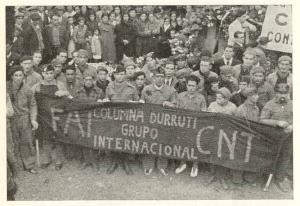 With revolutionary slogans and supported by tiznaos, makeshift and improvised armoured trucks constructed by plating civilian commercial vehicles with boilerplate steel, the Republican infantry surged down from their mountain redoubts. They launched a brutal frontal assault against the newly dug Nationalist trenches between Perdiguera and Alcubierre. Facing them was a disciplined Nationalist contingent of roughly 2,500 men, comprising regular army garrison troops from Zaragoza, battle-hardened Regulares, and fanatical Falangist paramilitary bands who used the local stone structures to build interlocking machine-gun nests.
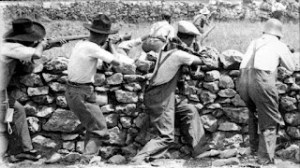
Between 14 and 15 October, the parched hills were consumed by savage, close-quarters infantry fighting. Due to the rocky terrain making deep trench excavation impossible, the fighting evolved into a primitive war of positions. Men fought behind crudely stacked parapets of loose limestone, throwing dynamite charges wrapped in nails across short distances. Hand-to-hand bayonet combat erupted as the Republic successfully reclaimed several forward ridges, pinning the Nationalist vanguard back toward their staging hubs. The Republican counter-stroke reached its absolute peak on 16 October 1936, targeting the operational nerve center of the Nationalist offensive: the village of Perdiguera. In a display of immense raw bravery, Republican militia detachments, spearheaded by Berthomieu’s International Group, managed to pierce the outer perimeter of Perdiguera. For a few frantic hours, intense house-to-house urban warfare erupted along the western outskirts of the village. Militiamen shattered adobe walls with pickaxes to bypass open, swept streets, clearing homes room-by-room with pistols and hand grenades.
The militia columns lacked the centralised tactical radio communication and heavy artillery depth required to hold the town. The Nationalists rapidly deployed mobile motorised reserves out of nearby Zaragoza, just 25 kilometers to the southwest. Utilising concentrated machine-gun crossfire from dominant church towers and unleashing heavy field artillery barrages onto the exposed approaches, they blunted the spearhead. By nightfall on 16 October, the Republican forces were driven completely out of the outskirts, retreating back up into the safety of the mountain heights, leaving the front permanently stabilised into a gridlocked trench war.
The human cost of the three-day clash was catastrophic for the early months of the war. Combined casualties exceeded 600 dead and wounded, with the Republican militias bearing the brunt of the losses; Berthomieu’s International Group alone was virtually annihilated during the retreat from Perdiguera. The group formed part of the Durruti Column, a French-organised 50-person sub-unit called the Sébastien Faure Centuria (named after a prominent French anarchist philosopher), led by Louis Berthomieu, who died alongside all of his shock troops, part of the 300-400 international fighters killed.
In the immediate aftermath of the Nationalist victory, rearguard killings was unleashed upon the local populace. Fascist Falangist squads conducted systematic purges of individuals suspected of harbouring leftist or secular republican sympathies. Just 48 hours after the fighting subsided, on 18 October, a group of local citizens, including women and agrarian workers, were summarily executed against the cemetery walls of Perdiguera, their bodies dumped into an un-marked common trench, cementing a legacy of terror that would silence the region for decades. Perdiguera has four mass grave sites, one of which has been exhumed, containing 21 men and 10 women murdered in the aftermath of the fighting, from a town of only 800 people. Another, with an unknown number, also includes Republicans killed in the siege.