*there is mountain named Monte Pelado in Navarre, which not the location of this article, rather the mountain of the battle is Torre Lierta, unfortunately given an Italian nickname ‘Monte Pelato’ making the location seem confusing if you are new
- Huescar, Aragón
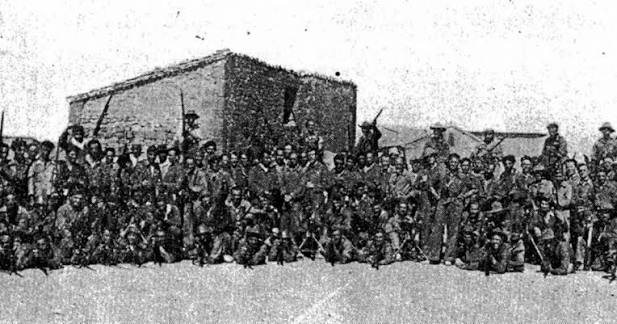
The Italians who would fight at Monte Pelado had reached Barcelona independently during the first weeks after the military uprising, travelling from France and other European countries through political networks built during years of exile from Benito Mussolini’s dictatorship. Many had already spent a decade moving between Paris, Brussels, Switzerland, and southern France, organising newspapers, raising money for political prisoners, and helping other opponents of Fascism escape Italy. Spain offered something that exile had rarely provided: an opportunity to confront fascism openly and with weapons. Most were anarchists associated with the Italian anarchist movement or the Unione Sindacale Italiana, while others came from Carlo Rosselli’s liberal-socialist movement Giustizia e Libertà, the Italian Republican Party, socialist organisations, or no formal party at all. Some had fought Fascist squads in Italy during the early 1920s; others had experienced prison, police surveillance, internal exile, or forced emigration. They included workers, artisans, miners, railwaymen, journalists, lawyers, teachers, and artists. What united them was opposition to Mussolini and the conviction that the Spanish conflict formed part of the same European struggle.
The organisers had approached the Central Committee of Antifascist Militias in Barcelona and offered to create an Italian unit within the Catalan militia system, intended to hold together anarchists, republicans, socialists, and members of Giustizia e Libertà. The founding document, signed in Barcelona on 17 August 1936. The Italians gathered at the former Pedralbes barracks in Barcelona. The complex had become one of the centres where the anarchist militias housed, armed, and organised volunteers before sending them to Aragón. The men received only brief military preparation in handling rifles, machine guns, and grenades, but there was not enough time to turn political exiles and civilian workers into trained soldiers. Some had previous military service, while others had never fired a weapon before arriving in Spain. The formation that left Pedralbes on 19 August contained approximately 130 men, of whom roughly two-thirds were anarchists and included a small number of volunteers from Italian-speaking Switzerland and men whose political affiliations were less clearly defined.
The Italians travelled west as part of the Ascaso Column, the anarchist formation named after Francisco Ascaso, who had been killed during the fighting in Barcelona on 20 July. The journey took them from the densely populated Catalan capital into the dry interior, along roads crowded with militia vehicles, requisitioned lorries, ambulances, civilian cars, and supply trucks. Their destination was not Zaragoza, the original objective of the Catalan columns, but the front forming around Nationalist-held Huesca. On 21 August, the Italian contingent had reached Bizién, the Aragonese village officially known in Spanish as Vicién, several kilometres south of Huesca. Bizién had become one of the bases from which the Ascaso Column operated against the city. The arrival placed the Italians among Spanish anarchist militiamen who had already spent weeks occupying villages, erecting roadblocks, digging positions, and attempting to bring the front closer to Huesca.
In Bizién, the Italians met Domingo Ascaso, who directed operations in that part of the front. He proposed that they occupy the height associated with Torre Lierta, lying between Huesca and Almudévar. The position overlooked the plain and the communications running through it, but it stood forward of the more secure Republican line. Angeloni called the barren height *Monte Pelato, (Bald Mountain), a name that the Italians subsequently used in their letters, memoirs, and commemorations. On 25 August, only four days after reaching Bizién, riflemen under the anarchist Giuseppe Bifolchi and a machine-gun detachment moved onto the hill. They carried weapons, ammunition, grenades, food, and tools with them and began turning the exposed height into a defensible outpost.
For three days the volunteers dug trenches, prepared machine-gun positions, and excavated shelters on the reverse slope. The work introduced them to the physical reality of the Aragón Front: heat during the day, cold after nightfall, dust, poor water supplies, irregular meals, and the constant need to carry equipment by hand or mule. Their rear base, known to the Italians as the Castillo, remained below the ridge, and supplies had to be brought along the track connecting it to the forward positions.
The men occupying Monte Pelado represented several generations of Italian anti-fascism. Among them were Angeloni, Rosselli, Berneri, Bifolchi, Garosci, Umberto Calosso, the anarchist organiser Alberto Meschi, and the artist known as Giandante X. Some had been prominent figures in exile politics; others left little more than a name in surviving records. The older volunteers remembered the violence of the Fascist rise to power, while younger men had grown up under Mussolini and known no legal political life in Italy. Rosselli believed that the struggle in Spain could become the beginning of a broader revolutionary war against European fascism. Berneri supported the Spanish social revolution but remained deeply suspicious of centralised political and military control. Republican and anarchist volunteers disagreed over discipline, rank, and the future organisation of the column. During August, however, the immediate need to defend the Spanish Republic temporarily outweighed those disputes.
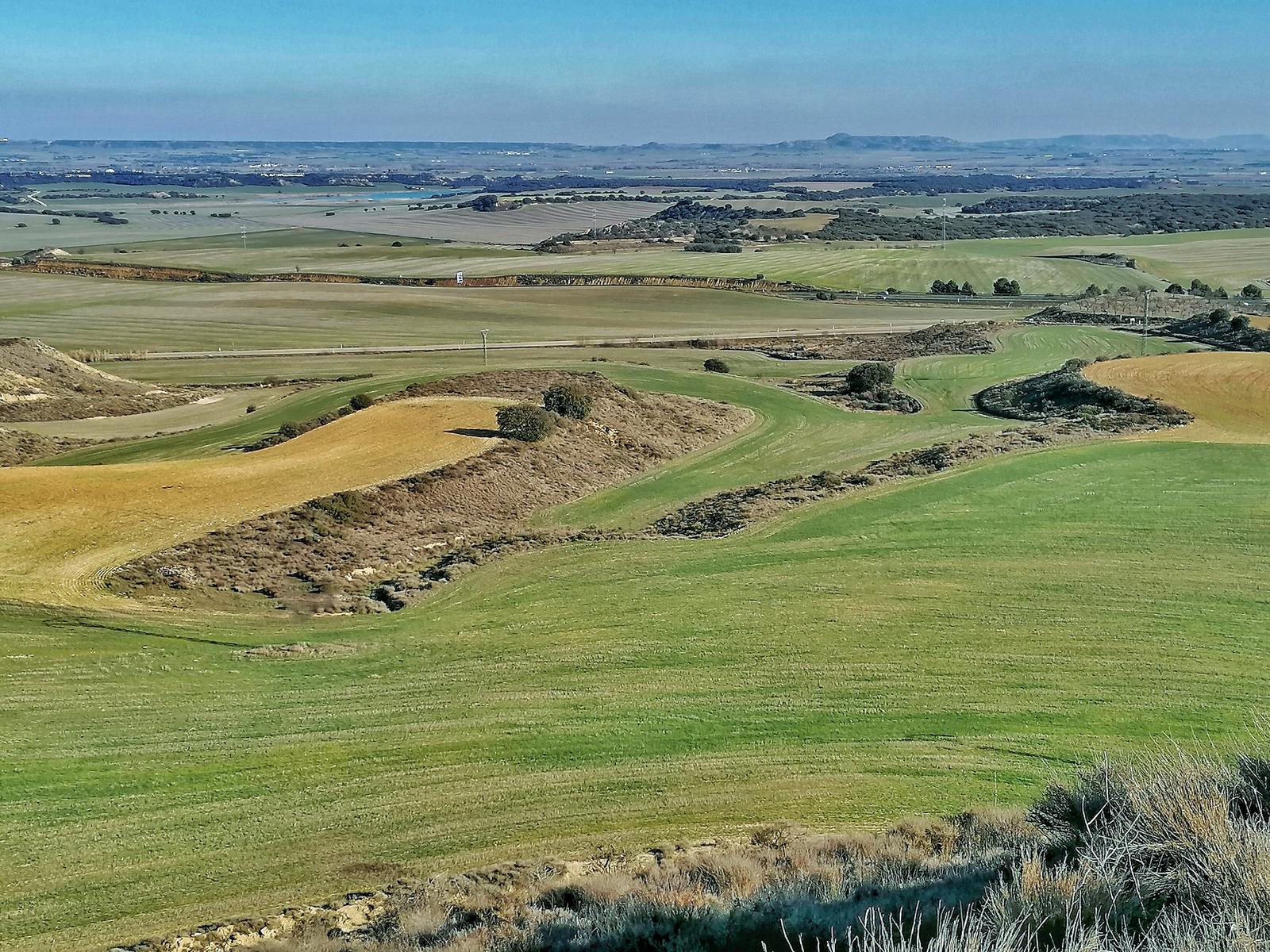
Monte Pelado lies southwest of Huesca, in the open country between the Nationalist-held city and Almudévar, within the sector occupied by the Republican militia columns operating around Vicién and Sangarrén. It was not a mountain but a low, exposed area, rising above the broad agricultural plain of the Galocha Plateau, and was nicknamed ‘bald mountain’ because of the complete absence of trees or substantial vegetation, with the exception Torre Lierta a hillside 588m high, which sat between the Nationalist-held city of Huesca and the town of Almudévar. Rising above the surrounding plain, it overlooked the roads and tracks leading towards Huesca and offered clear views across the Republican and Nationalist front lines. The position offered excellent visibility across the plain, but very little natural cover from rifle, machine-gun, or artillery fire. The surrounding landscape consisted of dry cultivated fields, isolated ridges, sparse vegetation, and long, unobstructed lines of sight, so troops moving along the roads and tracks between Huesca, Almudévar, Vicién, Sangarrén, and the neighbouring villages could often be observed from considerable distances.
During the days before the battle, the volunteers had worked to make the position defensible. They dug trenches into the ridge, prepared machine-gun emplacements, and excavated shelters or caves on the reverse slope where men could rest beyond direct Nationalist observation. They carried rifles, grenades, ammunition, and four machine guns onto the height. Behind the forward position, the Italian Section maintained a supply and rest base at the Castillo de Orús a large estate built around an internal courtyard. It contained kitchens used by Italian and Spanish militia units, a well worked by a wheel, livestock kept as a mobile food supply, eighteen Pyrenean mules, and the unit’s only motor vehicle, a Ford car. (Today Castillo de Orús is a private farmhouse, and not to be confused with Castillo de Ordás on the other side of Huesca city.)
Monte Pelado mattered because it overlooked the important approach to Huesca. A Republican force established there could watch the road and surrounding tracks, identify Nationalist troop movements, and threaten soldiers or vehicles crossing the exposed plain. Its occupation also formed part of the broader Republican effort to restrict the communications of Huesca and tighten pressure on the city from the south and southwest. Monte Pelado was valuable as an observation point and forward outpost, but its importance remained local and its greatest weakness was its isolation. The Italian Section had moved beyond the main Republican line into the space between two Nationalist-held centres. The men on the height depended upon a narrow supply route running back towards the Castillo, while the open terrain offered little protection against an enemy approaching in strength. If the Nationalists destroyed the outpost, they could remove the threat to the road, secure the ground southwest of Huesca, and prevent the Republican militia from pushing its line closer to the city.
By late August 1936, the Aragón Front had stabilised after the failed Republican attempt to capture Zaragoza. Instead of sweeping advances, both sides fought for villages, crossroads, and isolated hills that dominated the surrounding countryside. Huesca had remained in Nationalist hands since the military uprising in July and formed one of the principal strongholds blocking the Republican advance from Catalonia. Republican militia columns hoped to isolate the city by occupying the surrounding high ground and cutting its communications with Almudévar and Zaragoza. Monte Pelado was one of several positions that formed part of this wider effort to tighten the pressure on Huesca rather than an objective of importance in its own right.
Before dawn on 28 August 1936, Nationalist forces launched a determined counterattack to drive the Italians from the newly occupied position. The attacking force has generally been estimated at between 600 and 650 soldiers, supported by artillery and armoured vehicles, although the exact composition remains uncertain. Facing them were only around 100 to 130 Italian volunteers, reinforced by Spanish anarchist militiamen from the Ascaso Column. For the Italians, it was their first experience of combat in Spain and the first organised battle fought by Italian anti-fascists since the destruction of the Arditi del Popolo by Mussolini’s Fascist movement in the early 1920s.
The Nationalist attack began at approximately 4.00am with a frontal assault against the Republican trenches. Despite being heavily outnumbered, the defenders held their positions, repelling repeated attacks before the Nationalists attempted to outflank both sides of the ridge. The fighting quickly became fierce and costly. Advancing across exposed ground under rifle, machine-gun and artillery fire, the attackers suffered heavy casualties before reaching the opposing positions. Fighting continued for several hours as both sides struggled for control of the ridge. Trenches changed hands, grenades were thrown at close range and repeated assaults were launched against the defenders’ positions before the Republican forces finally secured the hill.
Michele Centrone, an elderly Italian anarchist, was among the first defenders killed. Fosco Falaschi and Giuseppe Zuddas also fell during the fighting, while Mario Angeloni was mortally wounded as he crossed open ground carrying grenades towards an advancing armoured vehicle. After nearly four hours of continuous combat, the defenders counterattacked shortly after 8.00am, forcing the Nationalists to withdraw from the hill. During the pursuit, Attilio Papperotto and Andrea Colliva were killed after exposing themselves to enemy fire. But records of how many killed on either side remain undefinable, with some stating the Nationalists lost up to 650 men, almost their entire unit sent to the otherwise pointless battle.
The Republicans retained control of Monte Pelado but more importantly, the battle received widespread attention because of the participation of the Italian Column. Mario Angeloni later died of his wounds, Giuseppe Bifolchi assumed command of the unit, and survivors including Carlo Rosselli and Camillo Berneri became some of the best-known foreign volunteers fighting for the Republic. Long before the International Brigades were formally organised in October 1936, Monte Pelado demonstrated that the Spanish Civil War had already become an international anti-fascist struggle, attracting volunteers from across Europe who believed that the defence of the Spanish Republic was inseparable from the fight against fascism in their own countries. The deaths of Mario Angeloni and his comrades were widely reported within European anti-fascist circles, while survivors such as Carlo Rosselli continued to argue that Spain had become the first battlefield in a wider struggle against fascism. Rosselli later expressed this belief in the slogan ‘Today in Spain, tomorrow in Italy,’ a phrase that became one of the defining expressions of the international anti-fascist movement. On a barren ridge outside Huesca, Spanish militiamen and foreign volunteers fought together against the Nationalists only six weeks after the military uprising, foreshadowing the arrival of tens of thousands of volunteers from more than fifty countries who would later serve in the International Brigades.
- Madrid
The bombing of Madrid on 28 August 1936 marked one of the earliest deliberate aerial attacks on the Spanish capital during the Civil War. Although small compared with the sustained bombing campaigns that followed in 1937–1939, it demonstrated that the city was no longer beyond the reach of Nationalist aircraft and introduced civilians to a new form of warfare that would become increasingly common over the following months.
Though fighting raged across much of Spain, the front lines were still hundreds of kilometres from the capital. Government ministries continued to operate, refugees poured into the city from Nationalist-held areas, and thousands of volunteers were organising for the defence of the Republic. Despite this apparent security, Madrid had become an important strategic target. The city served as the political centre of Republican Spain, a major railway hub, and a centre for military mobilisation. Destroying infrastructure, disrupting administration, and undermining civilian morale all became objectives of the Nationalist high command.
On the morning of 28 August 1936, Nationalist aircraft reached Madrid and dropped a number of bombs over the city. The raid was relatively small by later standards but represented one of the first direct aerial attacks against the capital. Contemporary reports describe bombs falling in several districts rather than against a single military objective. Railway facilities and communications were potential targets, but residential neighbourhoods were also struck. As was common during the early months of the war, bombing accuracy remained poor, meaning many explosives landed far from their intended objectives. The physical damage was limited compared with later raids, but buildings were destroyed or damaged, streets were littered with debris, and civilians were among the casualties.
The exact number of casualties remains uncertain, as contemporary newspapers, Republican authorities, and Nationalist sources all reported different figures. Several civilians were killed and many more were injured. Among the victims were ordinary residents who had little warning before the bombs exploded. Emergency services, police, firefighters, and volunteers quickly arrived to rescue survivors from damaged buildings and extinguish fires. The attack reinforced a grim reality that would characterise the remainder of the war: civilians were no longer simply witnesses to military operations but had become targets of modern aerial warfare.
From a military perspective, the raid achieved little immediate tactical effect. It neither disrupted Republican command nor seriously damaged transport infrastructure. Nevertheless, it demonstrated that Nationalist aviation possessed the range to strike Madrid long before ground forces approached the city. The attack also formed part of a broader Nationalist effort to use air power for both military and psychological purposes. Throughout September and October 1936, raids became increasingly frequent as Nationalist columns advanced through Extremadura and the Tagus valley towards the capital.
The bombing of 28 August 1936 has often been overshadowed by the much larger air raids that devastated Madrid during the siege of 1936–1939. Yet it marked an important turning point. It was among the first occasions on which the Spanish capital experienced modern aerial bombardment, foreshadowing the sustained attacks that would kill thousands of civilians over the following two and a half years. Madrid would become one of Europe’s earliest cities to endure prolonged strategic bombing, providing a grim preview of the air wars that later engulfed many cities during the Second World War.

