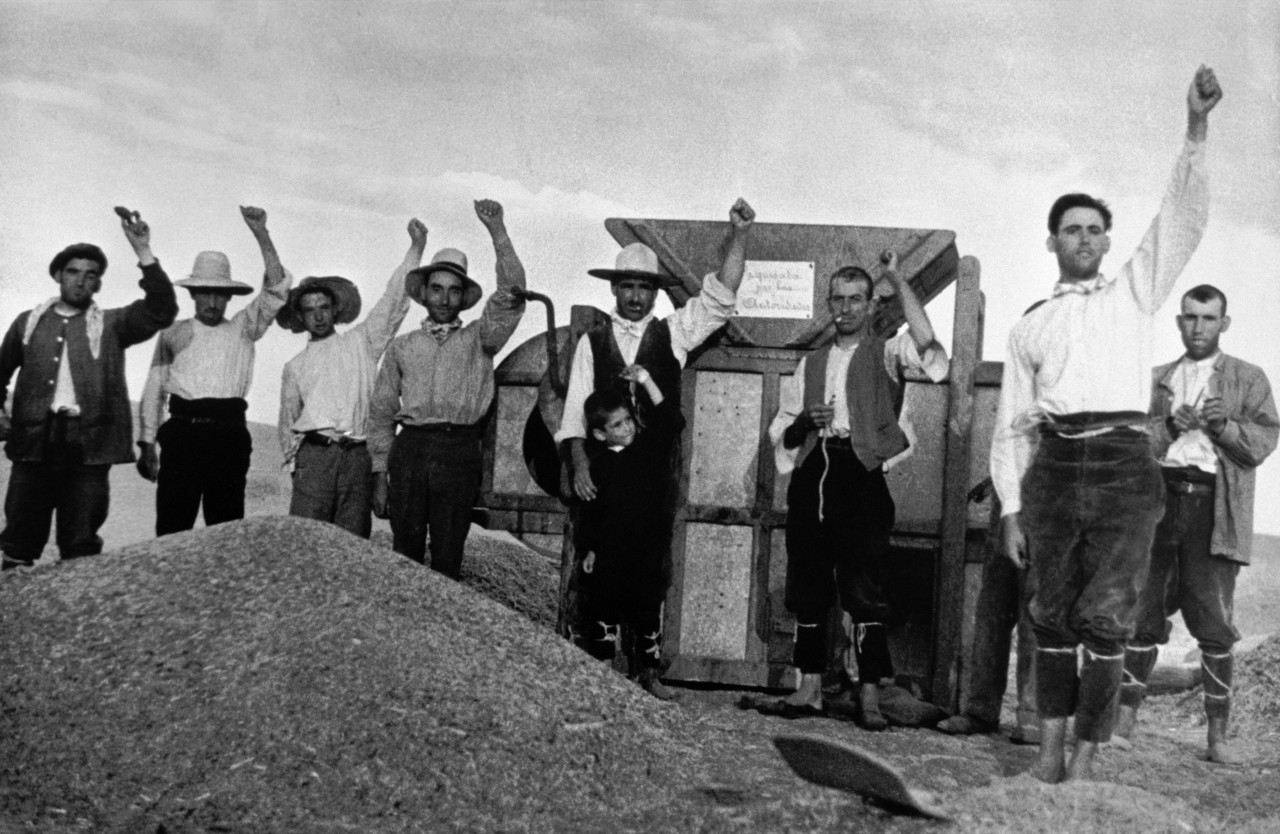
The Aragón Front entered August 1936 in a very different state from the rapidly changing battlefields of July. During the opening weeks of the Civil War, militia columns from Barcelona had advanced westward across much of eastern Aragón, occupying dozens of towns and villages while Nationalist forces withdrew towards the provincial capitals of Zaragoza, Huesca, and Teruel. By the beginning of August, these advances had slowed when the Republican columns had reached the limits of what they could achieve without heavy artillery, trained infantry, and unified command. Instead of continuing to advance rapidly, they began consolidating the territory they already controlled.
This military pause created the conditions for one of the most remarkable social experiments of the twentieth century. Unlike many other Republican regions, Aragón had experienced the collapse of much of the existing state without its immediate replacement by a strong central government. Civil governors had fled or lost authority, many mayors had disappeared, Guardia Civil barracks had been abandoned or captured, and communications with Madrid were slow and uncertain. Outside the front lines, political power often rested with whichever militia column had liberated a town and the local workers’ organisations that supported it.
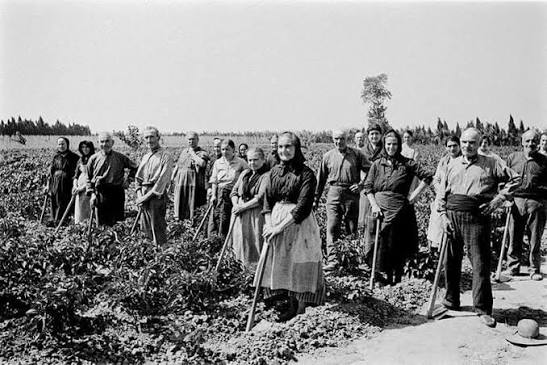
For the anarchist movement, this represented an opportunity that had rarely existed in modern Europe. The Confederación Nacional del Trabajo (CNT) and the Federación Anarquista Ibérica (FAI) had long argued that society could function without landlords, large private estates, or central government. They believed villages could organise themselves through assemblies, voluntary cooperation, and workers’ committees. The sudden collapse of state authority across much of eastern Aragón allowed these ideas to be tested on an unprecedented scale. The transformation locally occur most places when militia columns arrived, defeated or dispersed Nationalist resistance, and continued towards the front. Behind them, villagers, agricultural labourers, miners, and local trade union members began deciding how land, workshops, livestock, harvests, and public buildings should be managed. Some communities collectivised almost immediately, while others retained a mixed economy or delayed major changes for weeks. The pace and character of the revolution varied considerably from one district to another.
The military columns themselves became important agents of change. The Durruti Column, Ortiz Column, Ascaso Column, Jover Column, Karl Marx Column, POUM militias, and other formations did more than establish military positions. They introduced political delegates, encouraged the formation of revolutionary committees, redistributed abandoned property, and often helped organise new local administrations. Their influence differed according to political affiliation. CNT columns generally encouraged anarchist forms of organisation, while socialist, communist, and POUM units promoted different models of local government and economic management.
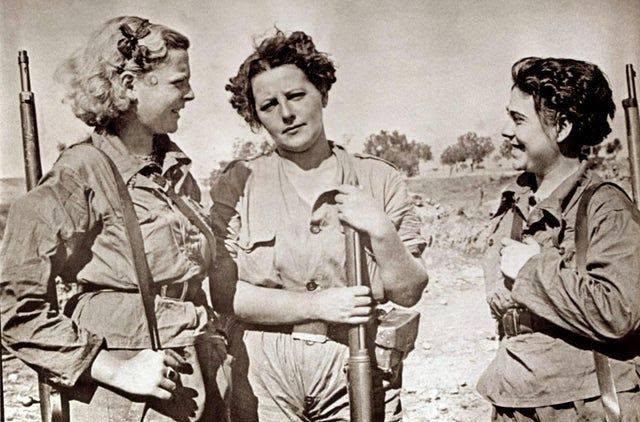
By August, the military front and the social revolution had become inseparable. Every successful advance created new territory in which local political structures had to be rebuilt. Every village supplying food to the militias faced decisions about ownership, labour, distribution, and production. The war accelerated changes that might otherwise have taken years to develop.
Agriculture lay at the centre of these changes. Aragón remained overwhelmingly rural, with much of its population dependent upon farming, olive cultivation, vineyards, sheep, and cereal production. The harvest coincided with the outbreak of war, making control of land and agricultural labour an immediate practical concern rather than an abstract political question. Fields still had to be harvested, livestock fed, irrigation maintained, and grain distributed, even while hundreds of local men served at the front. In many villages, collectivisation emerged as much from economic necessity as from ideological commitment.
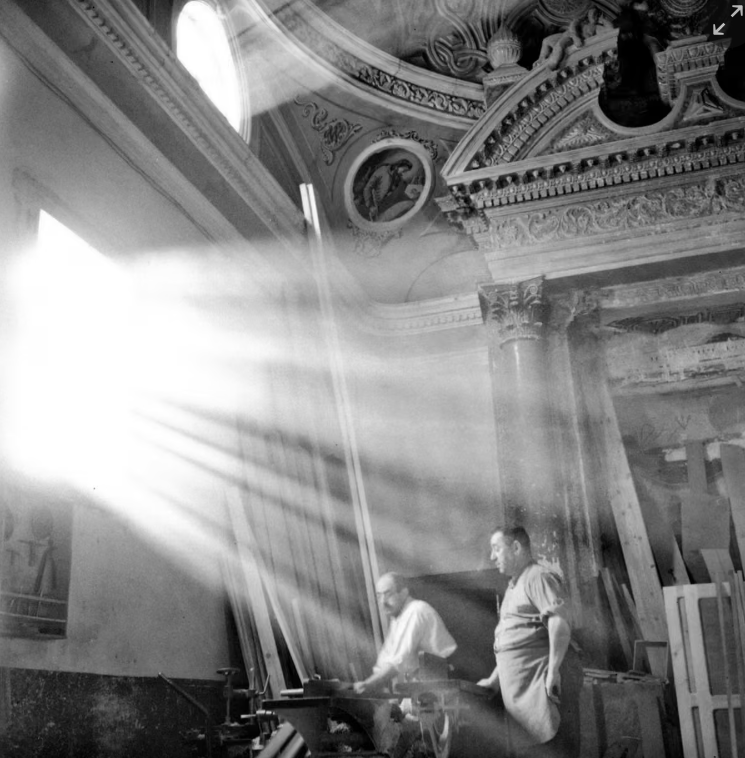
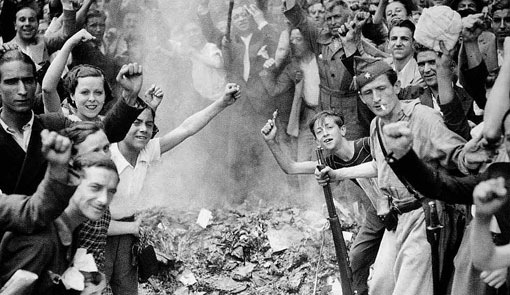
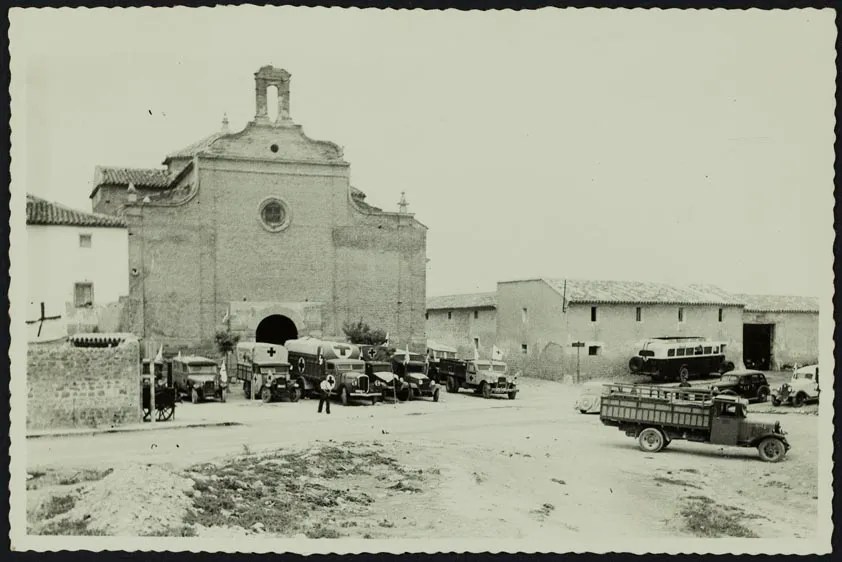
The revolution was not confined to agriculture. Workshops, mills, transport services, bakeries, medical facilities, and schools were reorganised under varying forms of collective management. Churches frequently ceased functioning as places of worship and were converted into warehouses, garages, hospitals, assembly halls, or stores. New committees assumed responsibility for food distribution, policing, sanitation, education, and relations with neighbouring communities.
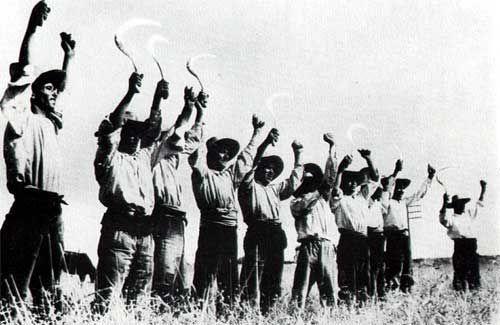
The scale of the transformation was extraordinary. Within only a few weeks, hundreds of communities across Republican Aragón had abandoned or radically altered traditional systems of land ownership and local government. Historians generally regard Aragón as the largest and most extensive experiment in anarchist collectivisation ever attempted, encompassing several hundred rural collectives and affecting tens of thousands of people. Precise figures vary because new collectives continued to form during the following months, but by the end of August the process was already well established across much of eastern Aragón.
This rapid transformation was neither uniform nor universally accepted. Participation differed from village to village, political organisations frequently disagreed over priorities, and military necessity imposed constant limits upon revolutionary ambitions. Even in areas where collectivisation proved successful, shortages of machinery, fuel, transport, fertiliser, and labour presented immediate challenges. The front consumed food, animals, vehicles, and manpower at the very moment that villages were attempting to reorganise their economies.
Aragón represented two revolutions unfolding simultaneously. Along the front, militia columns attempted to halt the Nationalist advance towards Catalonia and Valencia. Behind the lines, workers and peasants sought to build an entirely new society while fighting a civil war. Supporters viewed the region as proof that anarchist principles could function in practice. Critics argued that the changes were improvised, uneven, and sometimes imposed under wartime conditions. Whatever the interpretation, by the end of August 1936 Aragón had become one of the most politically and socially distinctive regions in Republican Spain, its military front matched by a revolution unlike any other taking place in Europe.
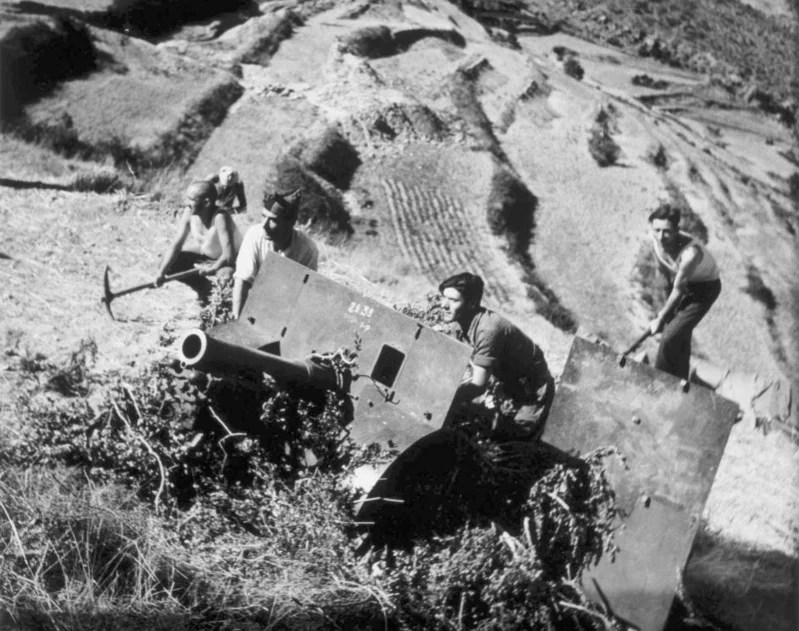
When Republican militia columns crossed from Catalonia into Aragón during the final week of July 1936, they entered a region where the machinery of government had already begun to disintegrate. The military uprising had divided the province almost overnight. Zaragoza, Huesca, and Teruel, the three provincial capitals from which civil governors, courts, military headquarters, and provincial administration normally exercised authority, remained firmly in Nationalist hands. East of those cities, dozens of towns and villages fell under Republican control in rapid succession. The result was an administrative vacuum unlike that found in many other parts of Republican Spain.
This distinction is important because it explains why Aragón followed a different path from regions such as Catalonia or Valencia. Barcelona retained the Generalitat, and Valencia continued to possess functioning provincial institutions. The Republican government in Madrid remained the legal authority of Aragón, but its representatives no longer controlled the provincial capitals through which they normally governed the region. Orders could still be issued, but there were few officials capable of enforcing them in the countryside. Communications were unreliable, roads were increasingly dominated by militia columns, and every passing day pushed the villages further towards governing themselves.
The physical geography of Aragón made matters worse. Eastern Aragón consisted largely of scattered agricultural communities separated by considerable distances. Roads were often poor, railway connections limited, and telephone or telegraph lines had been damaged during the fighting or deliberately cut by retreating forces. Villages that had previously looked towards Zaragoza for administration now found themselves isolated from the provincial capital by a front line. Barcelona, although outside Aragón, suddenly became a more practical source of supplies, weapons, and political influence than the Republican ministries hundreds of kilometres away in Madrid. Some municipalities had resisted the uprising successfully, while others had watched their existing authorities simply disappear. Across much of eastern Aragón, however, the result was remarkably similar. Republican militia frequently arrived to discover that the institutions they expected to support them had ceased to function.
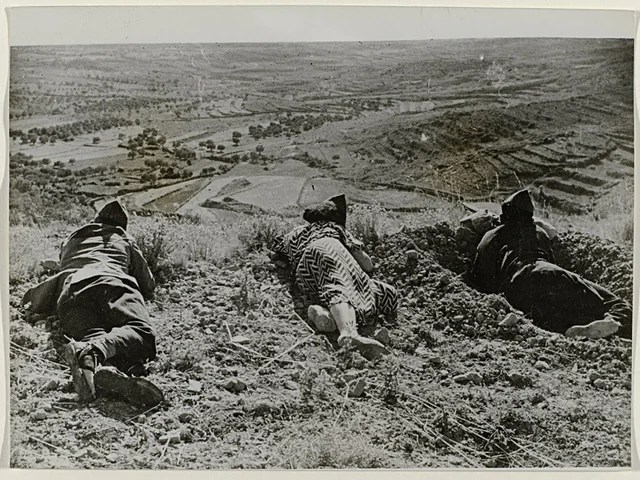
The first casualty was often the municipal council and some mayors fled with other conservative officials as Republican columns approached. Others were arrested because of their political affiliations or suspected support for the military uprising. Some remained physically present but quickly discovered that their authority meant little once armed militia and local workers’ organisations assumed control of the streets. Municipal councillors vanished for similar reasons. Those associated with conservative parties, landowners, monarchist organisations, or the Falange frequently fled towards Nationalist territory if escape remained possible. Others simply withdrew from public life, hoping to avoid attention until events became clearer.
The disappearance of experienced administrators created immediate practical problems. A village still required someone to maintain records, organise irrigation, supervise markets, issue permits, and account for property. In some places the municipal secretary remained at work because his technical knowledge was indispensable regardless of politics. Elsewhere even the municipal offices were abandoned, leaving no one who understood the community’s finances or legal responsibilities. The revolutionary organisations inherited not only political power but also the burden of running everyday civil administration. Courts ceased functioning in many districts because judges fled, could no longer communicate with higher authorities, or simply found themselves unable to enforce their decisions. Tax collection effectively collapsed and provincial departments responsible for roads, education, agriculture, and public works disappeared from daily life. Telegraph offices that had once connected villages with Zaragoza now linked them only to neighbouring Republican communities, if they functioned at all.
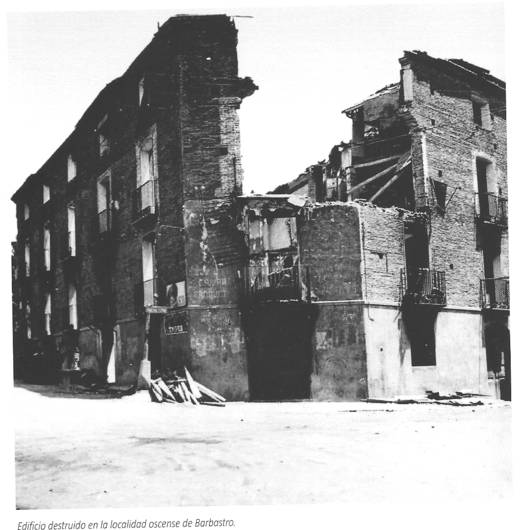
The most visible symbol of state collapse was the disappearance of the Guardia Civil from much of Republican Aragón. Before the Civil War the Guardia Civil represented the permanent presence of the Spanish state in rural communities. Its members investigated crime, patrolled roads, protected government property, and enforced public order across the countryside. During the uprising many barracks joined the military rebellion and withdrew towards Zaragoza, Huesca, or Teruel. Others were besieged, surrendered, or abandoned and while a minority of guards remained loyal to the Republic and later served with militia formations, across large areas of eastern Aragón, the familiar green uniforms simply disappeared.
The Republican militia columns had little desire to become permanent local governments. Their primary objective remained military. The Durruti Column, Ortiz Column, Ascaso Column, Karl Marx Column, POUM militias, and numerous smaller formations were advancing towards Zaragoza, Huesca, or Teruel, not administering villages. Their commanders understood that every man left behind reduced the strength available at the front. As a result, a recognisable pattern emerged across much of eastern Aragón. A militia column would enter a town, disarm any remaining hostile forces, arrest prominent supporters of the uprising where they could be identified, leave behind a small detachment or liaison group if necessary, and continue its advance. Before departing, however, it usually encouraged local trade unionists, workers, and trusted residents to organise an antifascist committee capable of maintaining order in its absence. This approach was born as much from necessity as ideology. The columns simply lacked the manpower to administer every settlement they liberated. Even the largest formations numbered only a few thousand volunteers spread across fronts extending for tens of kilometres. Their transport, food, ammunition, medical services, and workshops already stretched available resources. Occupying dozens of villages with permanent military administrations was impossible.
The Austrian writer Franz Borkenau, who travelled through Republican Aragón during August, repeatedly encountered this new political landscape. He found that the formal institutions of the Republic often continued to exist alongside revolutionary organisations, but that real authority increasingly rested elsewhere. In towns behind the front, committees rather than traditional officials decided who could travel, who received supplies, and who possessed the authority to speak on behalf of the community. The outward appearance of government sometimes remained unchanged, but power had shifted decisively. The French philosopher Simone Weil, arriving at Pina de Ebro in the middle of August with the Durruti Column, observed the same process from a different perspective. When she asked local peasants how decisions about cultivation would be made, they did not refer her to a mayor or municipal council. Their response was simple, ‘we shall do what the committee says.’ It was an answer that revealed how quickly the revolutionary committees had become accepted as the practical centres of authority within many villages.
The anarchist organiser Gaston Leval, who later travelled extensively through Aragón documenting the revolution, argued that the collapse of the old administration left communities with little alternative. In his view, villages did not first decide to build an anarchist society; they first needed someone to organise food, transport, policing, irrigation, and the harvest. Public meetings were called, delegates elected, and committees established because ordinary life could not continue without them. Whether or not one accepts Leval’s sympathetic interpretation, his central observation is difficult to dispute that before Aragón could become a land of collectives, it first had to become a land capable of governing itself.
By the middle of August, eastern Aragón presented a striking contrast. Along the front, Republican militia faced increasingly organised Nationalist resistance outside Zaragoza, Huesca, and Teruel. Behind the lines, another struggle was unfolding. Villages that had lost their traditional authorities were attempting to reconstruct government from the ground up. Some retained elements of the old municipal administration. Others swept them away almost entirely. Some embraced revolutionary change enthusiastically, while others accepted it simply because there was no functioning alternative. In only a few weeks, authority across much of Republican Aragón had moved away from provincial governors, judges, and municipal councils towards locally elected committees, trade unions, and militia delegates. It was an extraordinary transformation. The state had not formally disappeared, but in much of eastern Aragón it no longer governed. Into that vacuum stepped hundreds of ordinary villagers, workers, miners, teachers, and trade unionists, many of whom had never before exercised political power. From the outside, particularly through later political propaganda, eastern Aragón was an anarchist territory administered exclusively by the CNT and FAI. The reality was considerably more complicated. Power was shared, negotiated, and occasionally contested between anarchists, socialists, republicans, Marxists, and local figures who belonged to no political organisation at all. Their cooperation during August was often remarkably successful, although beneath the surface lay disagreements that would grow into major political conflicts over the following year.
The largest and most influential organisation was undoubtedly the Confederación Nacional del Trabajo (CNT). By the outbreak of the Civil War, it had established deep roots across much of eastern Aragón, particularly among agricultural labourers, railway workers, transport employees, and sections of the rural working class. Its influence expanded dramatically after the arrival of the Catalan militia columns. Many of the volunteers who liberated Aragón’s villages belonged to the CNT, and their prestige after defeating the military uprising gave local anarchists considerable authority. In many villages the organisation already possessed functioning syndicates before July 1936. Members understood how to organise assemblies, elect delegates, keep accounts, distribute resources, and coordinate collective work. These skills, developed through years of trade union activity, proved invaluable once municipal government collapsed.
Gaston Leval repeatedly argued that this experience explained why CNT members so frequently emerged as local organisers. Unlike many political parties, the syndicates already possessed practical administrative structures. When villages needed someone to organise harvest labour, allocate food, maintain irrigation systems, or supervise workshops, experienced union members were often the obvious choice. In Leval’s view, the revolution succeeded not because anarchists had prepared a detailed blueprint for governing Aragón, but because they had spent decades learning how to organise working communities through voluntary cooperation.
Alongside the CNT stood the Federación Anarquista Ibérica (FAI), although the relationship between the two organisations has often been misunderstood. They worked closely together and many prominent anarchists belonged to both, but they were not the same organisation. The CNT functioned primarily as a trade union federation with hundreds of thousands of members across Spain. The FAI was considerably smaller and consisted of committed anarchist groups dedicated to preserving revolutionary principles within the wider labour movement. While the CNT included workers whose primary concerns were wages, employment, or local organisation, the FAI provided much of the ideological leadership driving the revolutionary programme. Many of the political delegates accompanying the militia columns belonged to the FAI. They encouraged villages to establish assemblies, replace traditional municipal politics with direct democracy, abolish inherited social hierarchies, and begin discussing collective ownership of land and industry. In some communities they also advocated replacing money with vouchers or communal distribution systems, although such measures developed unevenly and generally became more widespread later in the year. Even where FAI militants were present, they rarely possessed sufficient numbers to impose a complete programme upon an unwilling population. Much depended upon local circumstances, existing political traditions, and the willingness of villagers themselves to participate in revolutionary change.
Meanwhile, he Unión General de Trabajadores (UGT) retained substantial influence throughout the region, particularly in the mining districts around Utrillas and Montalbán, among railway workers, and within many agricultural communities where socialist organisations had developed before the war. The UGT’s objectives frequently overlapped with those of the CNT. Both supported land reform, workers’ control of production, and resistance to the military rebellion. During August, members of the two organisations often served together on local committees and worked side by side organising harvests, distributing food, and supplying the front. Where anarchists generally viewed the collapse of the old state as an opportunity to replace government with federations of self-governing communities, many socialists believed that revolutionary change should ultimately remain coordinated through the Republican state. They accepted collectivisation but usually favoured greater planning, stronger administrative structures, and continued cooperation with Madrid. These differences rarely prevented practical cooperation during August, when immediate military necessity overshadowed ideological disputes, but they foreshadowed arguments that would become increasingly important during the following year.
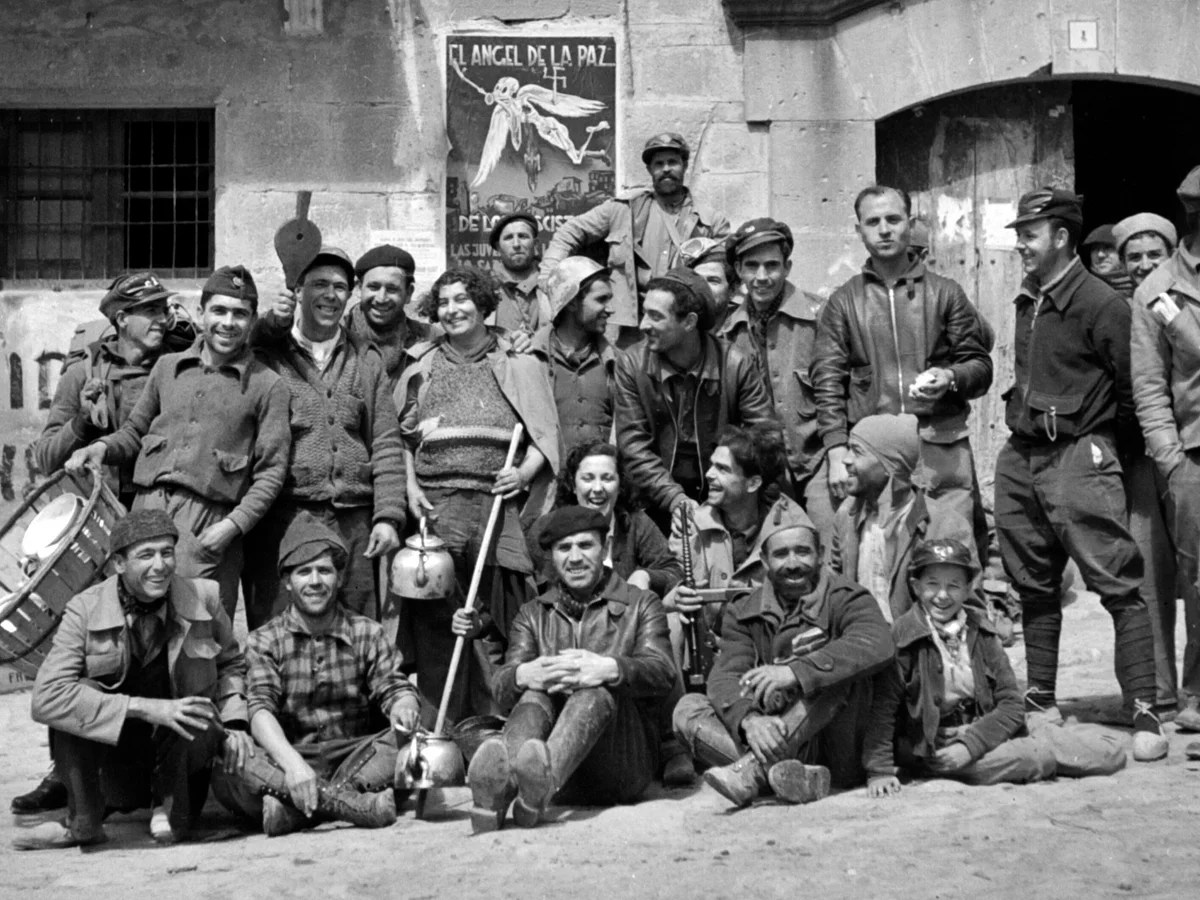
The Partido Obrero de Unificación Marxista (POUM) occupied a smaller but still significant position within Republican Aragón. Its militia operated principally in the northern sectors of the front around Leciñena, Alcubierre, and the approaches to Huesca. Unlike the CNT, the POUM combined revolutionary socialism with a commitment to organised political leadership. It rejected both the anti-state philosophy of anarchism and the increasingly centralised communist model developing under Soviet influence. Where POUM influence existed, its members generally supported revolutionary committees, workers’ control, and collectivisation while advocating greater military coordination than many anarchist leaders considered necessary. During August, relations between POUM and CNT units remained broadly cooperative. Volunteers shared trenches, exchanged supplies, and faced the same military problems. The political hostility that later divided the two organisations had not yet emerged openly on the Aragón Front.
The communist movement occupied a more complicated position. The newly created Partit Socialista Unificat de Catalunya (PSUC), together with the Communist Party, supported militia formations such as the Karl Marx Column operating around Huesca. Communist organisers generally accepted the need for revolutionary reforms but placed increasing emphasis upon military discipline, central coordination, and preserving the authority of the Republican government. At this early stage those differences remained secondary. Communist, socialist, anarchist, and POUM volunteers all recognised that Zaragoza, Huesca, and Teruel remained in Nationalist hands. The military emergency encouraged cooperation that became increasingly difficult to sustain once the front stabilised.
The Republican political parties also retained a presence in many communities, although they are sometimes overlooked in accounts focusing solely upon the revolutionary organisations. Members of Izquierda Republicana, Unión Republicana, and other Popular Front parties frequently continued serving within local administrations, particularly where they possessed technical knowledge that the new committees required. Engineers supervised roads, teachers organised schools, municipal secretaries maintained records and experienced accountants helped manage communal finances.
Fraga provides an excellent example. When Gaston Leval later examined its communal administration, he found that responsibility for food supplies rested not with an anarchist militant but with a member of Izquierda Republicana*. Other departments similarly included individuals chosen because they possessed administrative experience rather than because they belonged to a particular political organisation. This practical approach characterised much of Aragón during August. Revolutionary enthusiasm did not eliminate the need for competence. Running hospitals, repairing irrigation channels, maintaining transport services, and distributing grain required knowledge that ideological commitment alone could not provide.
Franz Borkenau observed these political arrangements with considerable scepticism. A former communist who had become increasingly critical of revolutionary movements, he admired the enthusiasm of many volunteers but questioned whether committee government could sustain a prolonged war. Travelling through Aragón, he repeatedly encountered situations in which political committees rather than military officers exercised final authority. One incident particularly impressed him near Huesca, when a French journalist accompanying him received permission from an officer to take photographs. Shortly afterwards members of the political committee intervened, arguing that only they possessed authority to approve such activities. The visitors were required to leave the position despite the officer’s consent. For Borkenau, the episode demonstrated the weakness of divided authority. For the committee, it demonstrated that political oversight extended even to apparently routine military matters. Neither interpretation can be dismissed entirely. The incident illustrated both the revolutionary determination to subordinate military power to political control and the practical difficulties this sometimes created.
French writer Simone Weil, living among the Durruti Column rather than observing it as a visitor, saw endless discussions over equipment, accommodation, patrols, and relations with civilians. Decisions that might have required only minutes within a conventional army could consume hours while volunteers debated alternatives. She found the process frustrating at times. Military necessity often demanded quick decisions, yet revolutionary principles encouraged discussion and participation. Nevertheless, Weil believed this represented one of the defining characteristics of Republican Aragón. Authority no longer belonged automatically to officers or politicians. It had passed, however imperfectly, into the hands of ordinary workers and volunteers. Perhaps her most famous observation was written shortly after reaching revolutionary Spain, where she remarked that almost nothing appeared outwardly different except one decisive fact, ‘power is with the people.’ It was a simple sentence, yet it captured the profound political transformation taking place across Aragón during August.
But large militia columns inevitably exercised enormous influence over nearby communities. Villages liberated by the Durruti Column naturally looked towards its organisers for guidance. Communities behind the Karl Marx Column developed different political relationships. Elsewhere, long-established socialist organisations remained dominant. Some committees genuinely reflected broad local participation, while others operated under the obvious influence of whichever armed formation controlled the district. But for the first time in modern Spanish history, large areas of the countryside were attempting to govern themselves through institutions created by the communities themselves. Whether this represented the birth of a new democratic society or the beginning of administrative fragmentation depended largely upon the observer. Either way, the experiment was only just beginning.
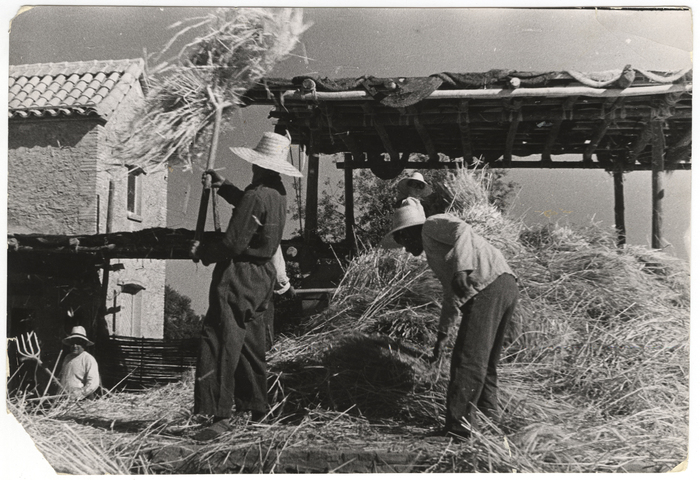
During the first weeks of August, the revolutionary committees had been created largely out of necessity. Their immediate priorities were practical rather than ideological. Throughout much of eastern Aragón, large landowners, priests, Falangists, conservative politicians, and many wealthier families had either fled into Nationalist territory, been arrested, or gone into hiding. Some expected to return within days once the rebellion succeeded. Others abandoned estates permanently. Wheat fields could not simply remain unharvested because their owner had disappeared, livestock still required feeding, olive groves needed tending, irrigation canals demanded maintenance, and flour mills continued to supply entire districts. July and August were among the busiest months of the agricultural calendar, as wheat had to be gathered, transported, and stored before autumn. Labour shortages created by mobilisation threatened the harvest across Republican Spain. Thousands of young men who normally worked the fields now served with militia columns outside Zaragoza, Huesca, and Teruel. Others had fled, been imprisoned, or crossed the front lines.
Committees responded pragmatically, and labourers moved from field to field according to need rather than ownership. Teams harvested crops belonging to several different families in succession. Agricultural machinery, draft animals, and carts were shared because there were no longer enough men to operate them independently. These arrangements frequently preceded formal collectivisation but once tractors, threshing machines, seed stores, irrigation pumps, and animals were already being shared, many villages began asking whether separate ownership continued to make practical sense during wartime. Some villages embraced collective organisation almost immediately. Others retained private ownership while cooperating only over harvesting. Many developed mixed systems in which small family plots continued alongside collectively cultivated land.
One of the most persistent myths surrounding Aragón is that collectivisation simply meant abolishing private property. Many collectives permitted families to retain personal possessions, furniture, clothing, poultry, kitchen gardens, or small livestock. In numerous villages, individuals unwilling to join the collective continued farming privately, though sometimes under restrictions regarding hired labour or land ownership. Participation differed from district to district and remains one of the most debated questions among historians. Some communities abolished money almost immediately, replacing it with locally printed vouchers or family coupons issued according to household size. Others continued using Republican currency alongside communal distribution. Some established collective dining halls. Others allowed families to continue cooking independently while obtaining supplies from communal stores. Visitors travelling only a few kilometres might encounter remarkably different systems of organisation. How many communities had collectivised by the end of August remains impossible to establish, though 400 and 500 collectives throughout Spain nearly belonged to Aragón, generally during late 1936 or the first half of 1937 after the movement had matured considerably.
One of the clearest examples emerged at Bujaraloz, a town of around 1,700 inhabitants that had become the headquarters of the Durruti Column and evolved under the immediate influence of one of the Republic’s largest militia formations. On 8 August 1936, the local collective was formally established through cooperation between the CNT and UGT. The speed of its transformation reflected both the military importance of the town and the urgent need to support thousands of militia concentrated there. Houses, commercial premises, timber stocks, flour, agricultural tools, and food reserves quickly came under collective administration. Only three days later, on 11 August, Buenaventura Durruti issued a proclamation extending collective ownership to property belonging to supporters of the military uprising. Large estates, storehouses, agricultural equipment, and even the town’s petrol station passed into communal management. Despite the radical nature of these measures, contemporary evidence suggests that small proprietors who wished to continue cultivating their own land were generally permitted to do so, provided they worked it themselves rather than employing hired labour. This distinction would become central to later debates over whether Aragón’s collectives were genuinely voluntary or imposed through political pressure.
Pedro Aguilar Genique, secretary of the local UGT, assumed responsibility for organising the wheat harvest. Grain from the surrounding countryside was gathered into communal warehouses established above the town hall, where it could be distributed according to local needs rather than private ownership. Supply committees organised food for civilians and the thousands of militia passing through the town, while ration cards ensured that families received provisions according to household size. Electricity, rent, medical treatment, and pharmaceutical services were increasingly provided without direct payment, while toys and other basic goods were distributed through communal stores.
On 12 August, the anarchist journalist Jaime Balius published an account in Solidaridad Obrera describing Bujaraloz as a functioning collective in which production and distribution had already begun operating on communal lines. His report naturally celebrated the achievements of the revolution and cannot be regarded as politically neutral, but it remains valuable because it demonstrates that these changes were already visible during the second week of August rather than appearing only in later recollections.
About 40km away at Fraga, with a population of approximately 8,000 inhabitants, collectivisation developed through cooperation rather than dramatic proclamation. During the first days of August, the revolutionary committee gradually expanded its authority beyond policing and public order to include agriculture, transport, industry, education, health care, and food distribution. Communal administration included not only committed anarchists but also middle-class republicans and experienced municipal officials whose technical knowledge remained essential to running a town of that size. Rather than selecting an anarchist simply because of his political beliefs, the assembly entrusted the position to a member of Izquierda Republican whose administrative experience made him particularly suited to organising supplies. Fraga showed that many collectives sought competence as much as ideological purity. Running hospitals, schools, workshops, and transport services required practical knowledge as well as revolutionary enthusiasm.
Anarchist participants such as Gaston Leval and Augustin Souchy consistently maintained that collectivisation remained voluntary. According to their accounts, families unwilling to join generally retained their homes, personal possessions, and enough land to cultivate themselves, provided they did not employ hired labour. They pointed to villages where individual farmers continued working independently beside collective fields as evidence that coercion was not the guiding principle of the revolution. Julián Casanova, among others, argues that the question cannot be reduced to a simple choice between voluntary participation and outright force. Even where committees formally permitted individual farming, the surrounding circumstances exerted considerable pressure. Armed militia occupied many districts. Wealthier landowners had often fled or been arrested. Collective machinery, transport, and labour offered obvious economic advantages that isolated individuals struggled to match. In some villages, remaining outside the collective may have been legally possible while becoming increasingly difficult in practice.
Money presented perhaps the greatest practical dilemma facing the collectives. Anarchist theory had long criticised money as a source of inequality and exploitation. In practice, villages still needed to purchase goods from neighbouring communities, trade with Republican towns that had not collectivised, and acquire supplies from outside Aragón. Many villages continued using the peseta exactly as before, but others retained official currency for external trade while replacing it internally with locally printed vouchers, coupons, or family cards. Some communities experimented with labour credits based upon hours worked. A small number attempted to abolish money for transactions within the village.
Education also became an immediate priority. Many revolutionary committees regarded illiteracy as one of the principal legacies of rural poverty. Existing schools remained open wherever possible, while adults were encouraged to attend literacy classes after work. Teachers who had remained loyal to the Republic often found themselves working more closely with village committees than with distant educational authorities whose administrative structures had largely disappeared.
Church buildings needed the same overhaul. Across Republican Aragón, churches were converted into warehouses, garages, communal dining halls, schools, workshops, hospitals, grain stores, or committee offices. Some had already suffered damage during the violence accompanying the military uprising. Others remained structurally intact but ceased functioning as places of worship. The extent of these changes varied enormously. Some communities stripped churches of religious symbols before adapting them for secular use. Elsewhere buildings simply became convenient public spaces large enough to accommodate meetings, food stores, or medical facilities. A few churches continued operating with relatively little interference where local circumstances permitted.
Medical care likewise entered communal administration wherever possible. Doctors, nurses, pharmacists, and volunteers increasingly worked under the supervision of local committees rather than private practice. Villages improvised clinics, organised first aid for wounded militia, distributed medicines according to need, and coordinated evacuations towards larger hospitals behind the front.
Transport presented another constant obstacle. Roads damaged during military operations slowed the movement of grain and supplies. Railway lines remained vulnerable to sabotage and air attack. Every journey towards the front risked artillery fire or aerial bombardment. The committees operated under conditions that combined social revolution with continuous military emergency, and historians have debated how successful these economic experiments actually proved. Gaston Leval argued that collectivisation increased efficiency by eliminating duplicated machinery, reducing competition, and allowing resources to be allocated where they were most needed. Critics questioned whether wartime conditions make meaningful comparison with pre-war agriculture possible. But within only a few weeks, villages whose traditional governments had collapsed, whose labour force had been depleted by war, and whose economy had been thrown into chaos had reorganised agriculture, workshops, distribution, education, healthcare, and public services through entirely new institutions serving 500,000 people.
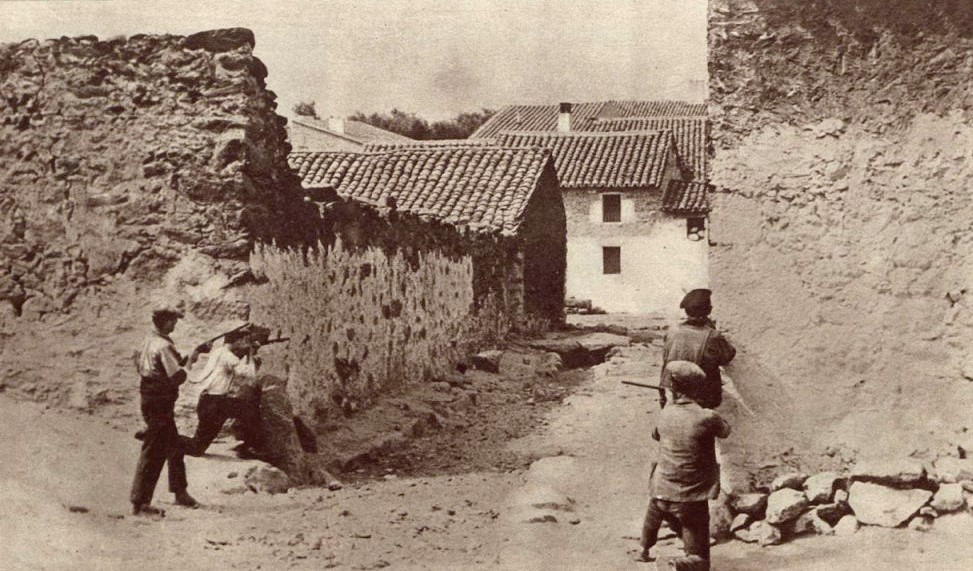
By the closing days of August, revolutionary committees had become the normal form of local government across much of Republican Aragón. Collectivisation was spreading rapidly, but villages remained at very different stages of development. Some had only begun pooling agricultural labour. Others had already reorganised production, food distribution, transport, and public services. Several communities still debated whether private farming should continue, while others had embraced communal ownership with remarkable speed.
One of the clearest examples of this gradual development comes from Binéfar, a market town of around 5,000 inhabitants in Huesca Province. Binéfar already possessed a substantial anarchist movement before the Civil War. By 1931, the local CNT syndicate had approximately 600 members, the majority of them agricultural workers. Following the military uprising, a revolutionary committee was established on 18 July, including representatives of both the CNT and the Popular Front. During the following months, Binéfar developed into one of the strongest centres of collectivisation in Aragón. Eventually, approximately 700 of the town’s 800 families joined the collective, while 28 of the 32 villages within its district became wholly or partly collectivised.
A similar pattern emerged at Calanda, a town of roughly 4,500 inhabitants south of Alcañiz. Calanda later became one of Aragón’s best-known collectivist communities, with around 3,500 members belonging to the CNT. Internal money largely disappeared, communal services expanded, and local industries operated under collective administration. These developments, however, matured during the months following August. At the end of that month the town remained in the early stages of its transformation, illustrating once again that the Aragón revolution should be understood as a process rather than a single revolutionary event.

The experience of Graus demonstrates the same point from another perspective. Located in the foothills of the Pyrenees, Graus eventually developed one of the most successful agricultural collectives documented by Gaston Leval. The collective purchased modern tractors, threshing machinery, seed drills, and mechanical equipment, expanded potato cultivation by around 50 percent, improved livestock breeding, and introduced more efficient farming methods than had existed before the war. (These achievements belonged primarily to the autumn of 1936 and beyond. The statutes governing the collective were not formally approved until 16 October 1936, making Graus an example of where the revolution was heading rather than a description of conditions already achieved by August.)
Most communities spent the weeks of August 1936 establishing committees, organising the harvest, securing abandoned property, maintaining essential services, and deciding whether or how collectivisation should proceed. The more sophisticated administrative systems described by later visitors, including specialised departments, modern machinery, communal accounting systems, and extensive welfare services, generally emerged only after these urgent tasks had been completed. Observations described a society still experimenting with new forms of organisation rather than one following a fixed revolutionary programme. He admired the enthusiasm of many participants but questioned whether such decentralised structures could sustain a prolonged war requiring coordinated military and economic planning.
The military front remained only a few kilometres away in many districts, yet behind those trenches another revolution was unfolding. By 31 August, Aragón had not yet become the fully developed network of collectives described in later memoirs and studies. Much remained unfinished. Administrative systems continued evolving, economic experiments remained incomplete, and political disagreements had only begun to emerge. Nevertheless, the essential foundations had been laid. The collapse of the old provincial administration had produced the conditions for a social revolution whose effects would shape Republican Aragón throughout the following year. Whether viewed as the greatest achievement of Spanish anarchism or as a wartime experiment marked by profound contradictions, the transformation of Aragón during August 1936 remains one of the most extraordinary episodes of the Spanish Civil War. Few regions anywhere in Europe attempted such sweeping changes in so short a period, and fewer still did so while fighting for their survival on an active battlefield. The months that followed would test whether these revolutionary institutions could survive military defeat, political division, and the increasing demands of a long and brutal war.