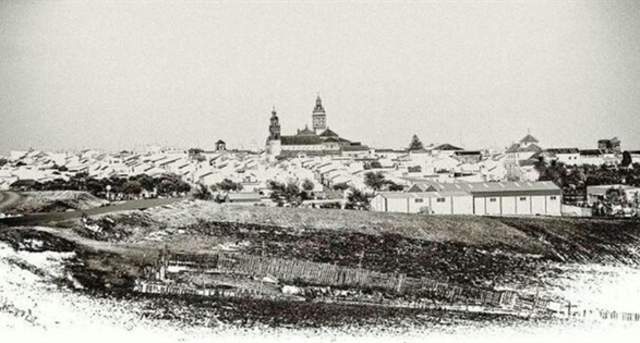
- Fuentes de Andalucía, Seville
Fuentes de Andalucía fell to Nationalist forces on 19 July 1936, one day after the military uprising began in Seville. The Guardia Civil secured the town with little organised resistance and arrested many of the leading Republican officials, trade unionists and left-wing activists. Repression began almost immediately. Prisoners were removed from the town in successive groups and executed over the following weeks, while others were shot locally. Modern memorial research carried out by the Junta de Andalucía has identified 116 victims buried in the municipal mass graves between 24 July and 29 September 1936, although only 103 deaths were officially registered. The killings formed part of the systematic campaign of political repression that followed the Nationalist occupation of much of Seville Province.
One of the most notorious crimes associated with the repression occurred in late August 1936 at the estate of El Aguaucho. According to survivor testimony and later historical investigations, a group of young women from Fuentes de Andalucía were taken from the town by armed Nationalist supporters, forced to prepare and serve food for their captors, then raped and murdered, before being thrown in a well. After returning to Fuentes de Andalucía, the killers reportedly paraded through the streets displaying the victims’ underwear on their rifles. The atrocity became one of the best-documented cases of sexual violence committed during the Nationalist repression in Andalucía and has since been officially recognised by the Junta de Andalucía through the designation of El Aguaucho as a Lugar de Memoria Democrática.
Contemporary oral testimony maintained that the women were thrown into the well at El Aguaucho after being raped and murdered. Archaeologists excavated the well in 2017 but found no human remains, suggesting the story of the well may have been deliberately spread by the killers to conceal the true burial site. In 2024, excavations at the former cemetery in nearby Cañada Rosal uncovered a group of female victims believed to include the women from El Aguaucho.
In El Aguaucho, the small, rural Sevillian cortijo situated in the neighbouring municipality of La Campana, a short distance from Fuentes de Andalucía on the old road linking the two towns. Part of the larger Cortijo de las Monjas estate, it stood in an isolated area of cultivated farmland with a farmhouse, courtyard and water well. Its secluded location made it an ideal place to carry out crimes away from public view while remaining close enough to the town to reach quickly by vehicle. According to survivor testimony and later historical investigations, armed Nationalist supporters brought a group of young women from Fuentes de Andalucía to the estate in late August 1936, forcing them to prepare and serve food before raping and murdering them. The atrocity at El Aguaucho became one of the most infamous episodes of gender-based violence during the Nationalist repression in Seville Province and has since been recognised by the Junta de Andalucía through the site’s designation as a Lugar de Memoria Democrática.
Among the victims was a group of women whose anthropological characteristics are consistent with those of the ‘Girls of El Aguaucho.’ These five young women from the nearby town of Fuentes de Andalucía (María Jesús Caro, Coral García, Josefa García, María León, and Joaquina Lora), the youngest 16 and the oldest 22, were kidnapped, abused, raped, and finally executed by Falangists in August 1936. The perpetrators returned to Fuentes and paraded around wearing the women’s underwear. The events took place on an estate known as El Aguaucho, and it was believed that the bodies had been thrown into a well. Genetic analysis will now confirm whether they were actually in the old cemetery of Cañada Rosal.
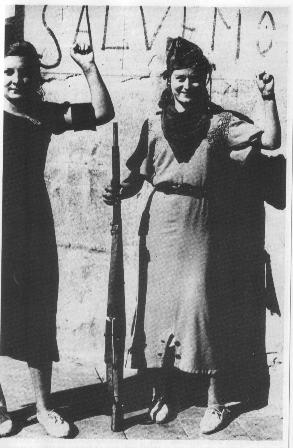
- Navalmoral de la Mata, Extramadura
Following the relief of Guadalupe, Republican resistance in eastern Cáceres collapsed into a series of rearguard actions. Rather than attempting another major stand, General Riquelme withdrew his surviving forces towards Talavera de la Reina, where a new defensive line was being assembled along the Tagus. The Army of Africa encountered only scattered opposition as it advanced north-east, and by 27 August its three columns had concentrated at Navalmoral de la Mata, bringing the Sierra de Guadalupe campaign to an end and opening the route into the Tagus valley.
As the Army of Africa advanced towards Navalmoral de la Mata, its veteran assault units rarely remained in the towns they had captured. Instead, smaller garrisons of Guardia Civil, Falangists, and supporting military detachments assumed responsibility for maintaining order while the Legion and Regulares continued the offensive. Their first tasks were to reopen roads, repair damaged bridges, establish checkpoints, and restore communications between the newly occupied settlements and the Nationalist rear.
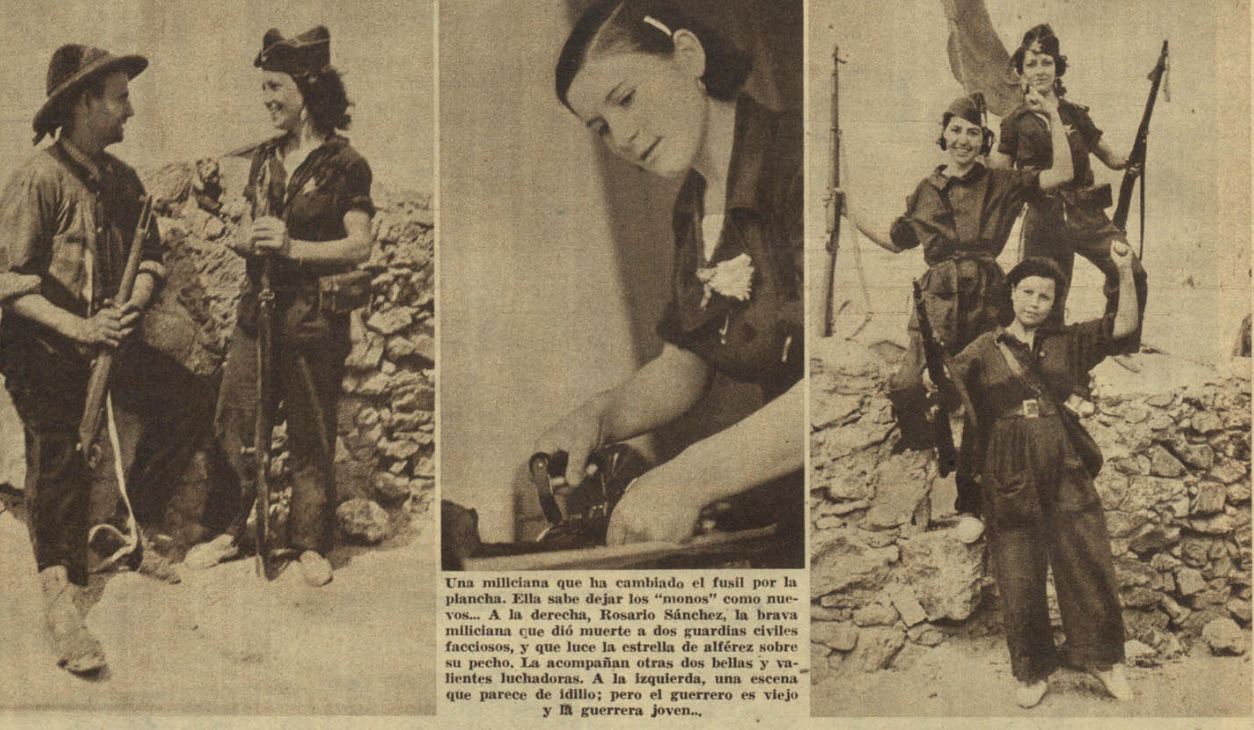
Military occupation was quickly followed by political control. Republican mayors and councillors were removed from office, trade union premises and left-wing political headquarters were closed, and lists of suspected Republican supporters were compiled with the assistance of local right-wing sympathisers. Arrests became commonplace as military authorities sought to eliminate any possibility of organised resistance behind the advancing front.
Many civilians who had fled the fighting began returning to their homes, only to find their towns under military occupation. Others remained in hiding in the surrounding hills or continued eastwards with the retreating Republican forces, fearing arrest if they returned. The uncertainty of the previous weeks gave way to a new reality in which martial law, military patrols, and political repression became permanent features of daily life across much of eastern Cáceres.
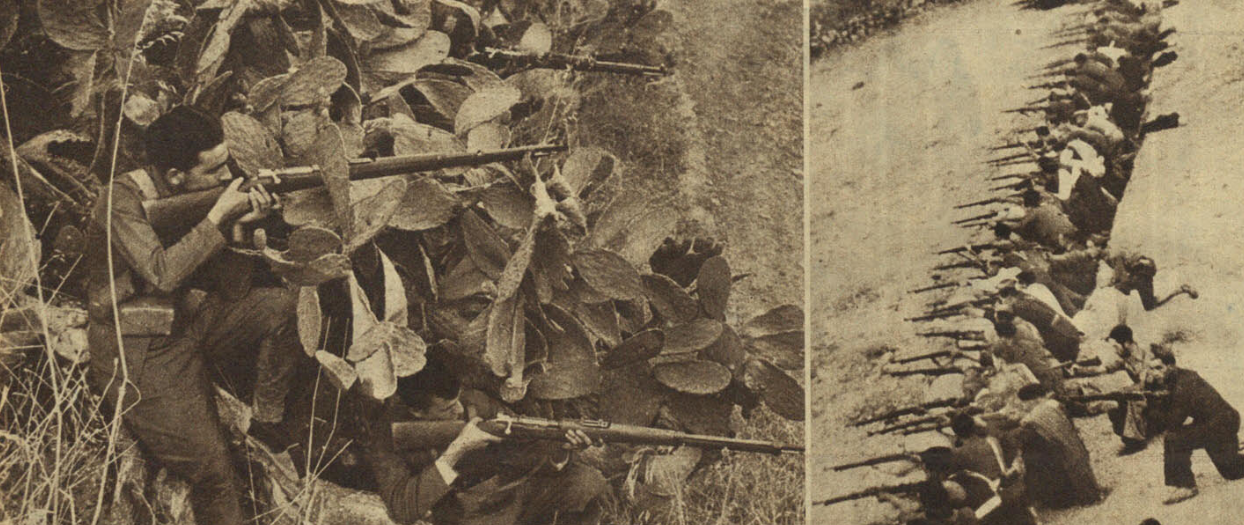
While occupation authorities consolidated Nationalist control, the Army of Africa maintained its rapid pace of advance. Leaving security duties to those following behind allowed Yagüe’s experienced combat units to continue north-east with minimal delay, preserving the momentum that had characterised the campaign since crossing from Andalusia into Extremadura.
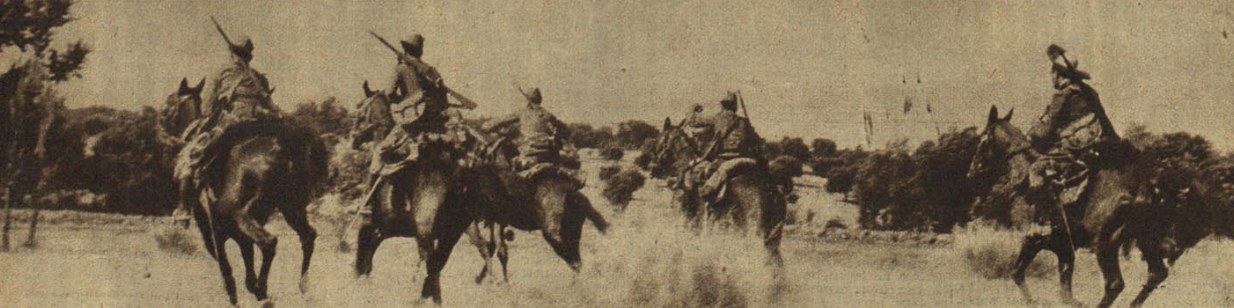
While the Army of Africa fought through the Sierra de Guadalupe, another battle was unfolding around Navalmoral de la Mata. The town, which controlled the principal road and railway linking Extremadura with the Tagus valley, had already become a Republican objective. Between 21 and 23 August 1936, Republican forces launched a determined attempt to recapture Navalmoral before the main Nationalist columns could arrive. Supported by aircraft and artillery, militia advanced from the direction of Oropesa and attacked the Nationalist defenders holding the town.
The assault was substantial. Contemporary Nationalist reports described approximately 500 Republican infantry attempting an outflanking movement while Republican artillery deployed on Cerro Cincho, near
, bombarded the town. During the fighting, Republican guns fired more than 300 shells from four field guns and four heavy mortars, while aircraft dropped around 50 bombs, destroying or damaging several buildings. The defenders relied on machine-gun positions and the town’s improvised defences as fighting continued for almost ten hours on the first day before resuming the following morning.
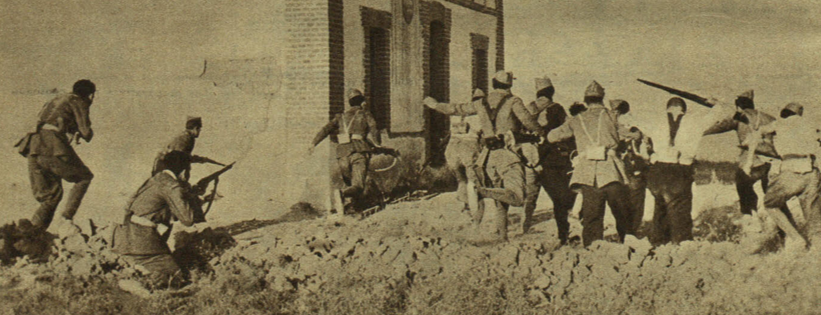
The situation changed on 22 August, when advance elements of Lieutenant Colonel Heliodoro Rolando de Tella’s column reached Navalmoral. His reinforcements included one Bandera of the Spanish Legion and a Legion artillery battery, strengthening the exhausted garrison. Fighting continued throughout 22 and into 23 August, but the arrival of these veteran troops shifted the balance decisively in favour of the Nationalists. Facing fresh Legion units and fearing encirclement as the Army of Africa closed in from the west, the Republican militia abandoned the attack, retreating towards Oropesa and Talavera while leaving behind part of their equipment. Both sides suffered casualties and numerous wounded, although no reliable figures survive.
With the Republican offensive defeated, Navalmoral became the principal concentration point for the Army of Africa. Tella occupied the town on 23 August, while the columns of Asensio and Castejón arrived over the following days after completing the operations around Guadalupe. By 27 August, Yagüe’s three columns had assembled at Navalmoral de la Mata, bringing the Sierra de Guadalupe campaign to a close. The roads and railway were secured, supplies replenished, and plans made for the next phase of the offensive towards Oropesa and Talavera de la Reina, where the Republicans were preparing their next major defensive stand.
Republican forces probably committed between 800 and 1,500 men to the attack on Navalmoral de la Mata, although contemporary Nationalist reports specifically identify an assault group of around 500 infantry, supported by four field guns, four heavy mortars, and three aircraft. The town was initially defended by a comparatively small Nationalist garrison before being reinforced on 22 August by one Bandera of the Spanish Legion and a Legion artillery battery under Lieutenant Colonel Heliodoro Rolando de Tella, bringing the defending force to approximately 1,000–1,300 men.
By the end of August, the Republicans had assembled **approximately 10,000 men**, making Talavera the strongest defensive position the Army of Africa had encountered since leaving Seville. The garrison consisted of regular infantry, Assault Guards, loyal Guardia Civil and Carabineros, together with militia from socialist, communist, anarchist, and republican organisations. Unlike the scattered columns defeated in Extremadura, these forces were concentrated around a single objective and could be supplied through the road and railway connections linking Talavera with Madrid.
The defenders also possessed considerably heavier equipment than had been available during the fighting in Extremadura. Republican commanders deployed artillery batteries to cover the western approaches to the town, supported by five Renault FT-17 light tanks, an armoured train guarding the railway, and aircraft operating from nearby airfields. Engineers strengthened defensive positions around the outskirts of Talavera while troops prepared trenches, machine-gun posts, and artillery emplacements overlooking the principal roads from Navalmoral de la Mata.
Although many of the Republican soldiers remained inexperienced, the concentration of men, weapons, and supplies gave the Republic its first genuine opportunity to halt the Army of Africa in a prepared defensive battle. Rather than reacting to each Nationalist advance, Republican commanders had selected the battlefield, established defensive positions in advance, and assembled a force that substantially outnumbered Yagüe’s approximately 3,500 to 5,000 Legionnaires, Regulares, and supporting troops. The defence of Talavera would therefore become the first major test of whether the Republic could translate numerical superiority into a decisive battlefield success.
On 28 August 1936, the Army of Africa crossed from Extremadura into Toledo province, entering through Calzada de Oropesa and Las Ventas de San Julián. For the Nationalists, this marked a significant milestone. After advancing more than 300 kilometres from Seville in less than a month, the offensive had left Andalucía and Extremadura behind. Ahead lay the Tagus valley and the direct road to Madrid.
The force entering Toledo remained the experienced Madrid Column, composed of the African columns of Carlos Asensio, Antonio Castejón, and Heliodoro Rolando de Tella. Together they fielded approximately 3,500–5,000 veteran troops, principally Legionnaires and Regulares, supported by artillery, engineers, transport units, and aircraft. Their objective was to advance rapidly along the*Extremadura Highway (N-V), capture Oropesa, Calera y Chozas, Gamonal, and the surrounding villages, before reaching Talavera de la Reina, only seventy kilometres away.
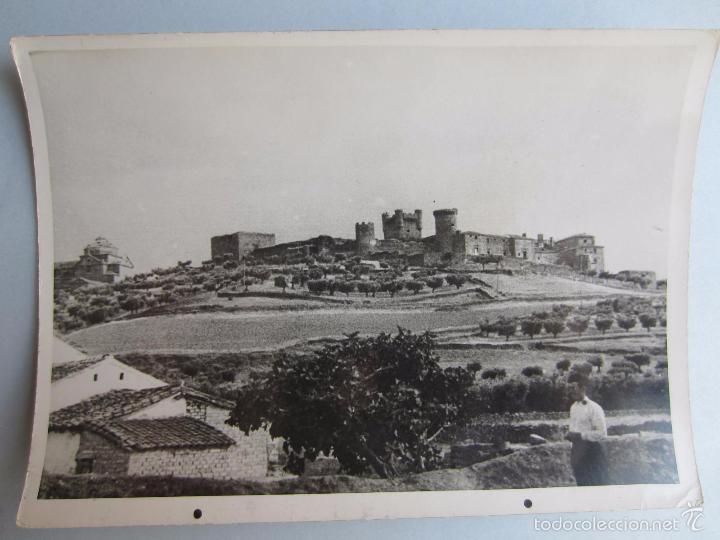
Unlike the prolonged fighting around Guadalupe, resistance in western Toledo was uneven. Republican rearguards defended positions at Calzada de Oropesa, Oropesa, Calera y Chozas, and Velada, but these actions were intended to delay the Nationalists rather than stop them outright. The strongest fighting occurred around Oropesa Castle, where militia defended the medieval fortress before being overwhelmed in close-quarters combat. Once these positions fell, the road to Talavera lay largely open, with only Republican aircraft continuing to harass the advancing columns.
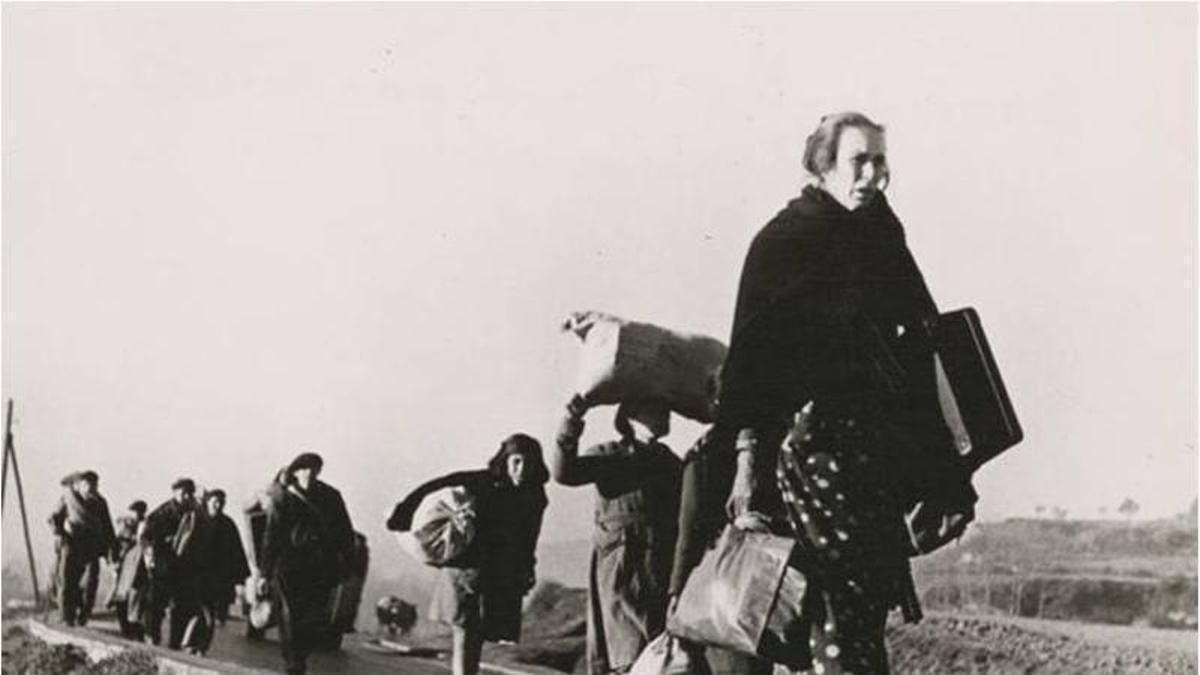
The Nationalist advance triggered another humanitarian crisis. News of the Army of Africa’s approach spread rapidly through western Toledo, accompanied by reports of the massacres that had followed its advance through Andalucía and Extremadura. Entire communities fled before the front arrived. Families abandoned their homes carrying only what they could load onto carts, mules, or their own backs. Many travelled on foot towards Talavera de la Reina and then Madrid, joining an estimated 70,000 refugees from Extremadura and Andalucía who had already sought shelter in the province and now found themselves forced to flee for a second time. Villages emptied almost overnight as fear travelled faster than the advancing columns.
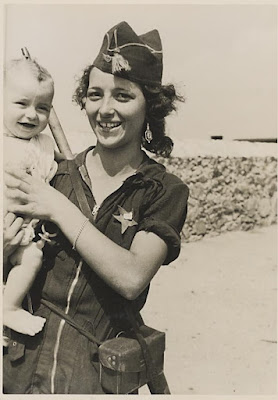
Behind the front, Nationalist occupation authorities established military control as each locality fell. Republican municipal councils were dissolved, political organisations closed, and suspected supporters of the Republic arrested. While the Legion and Regulares pressed eastwards without delay, Guardia Civil, Falangists, and newly established military authorities remained behind to secure the conquered territory and begin consolidating Nationalist rule. During the march from Calzada de Oropesa to Talavera, a total of 116 municipalities across northern Toledo would ultimately pass into Nationalist hands.

