- Mallorca, Balearic Islands
Click here to catch up on part two of the Balearic Campaign if needed
Another Republican push developed over 24-26 August developed over inland Mallorca, as groups advanced from one finca, wall and height to another while their artillery fired over them. Nationalist troops occupied corresponding positions around the approaches to Son Carrió. One of these was Rafal Sec, only about 500 metres north-west of the village, held by a Nationalist column commanded by Captain Gaim. By 25 August his men were being heavily shelled from Republican-held Ses Talaies. The pressure was sufficient for Bayo himself to report that his own forces were simultaneously receiving substantial fire from Nationalist artillery, mortars and machine guns.
Some of the hardest fighting of the entire Mallorca campaign occurred during 25 and 26 August around Sant Llorenç, particularly at positions identified in the records as Los Molinos and Caina. Men were killed, wounded and disappeared there. One documented example is Manuel Gómez Aguilar, a seventeen-year-old PSUC volunteer who had left for the front on 3 August and disappeared during the 26 August attack around Los Molinos–Son Carrió. The fighting involved substantial bodies of men spread over several neighbouring positions.
On 26 August, that defensive system finally gave way. Republican forces captured Puig de Son Manxo, overlooking the area, while pressure elsewhere made the Nationalist position at Rafal Sec untenable. Captain Gaim’s column abandoned the finca and retreated westwards. Other Nationalist groups also withdrew towards Sant Llorenç. With the positions around it collapsing, Son Carrió could no longer be held. For the inhabitants, this was the end of several days during which the fighting had steadily moved towards their homes. Many families had already fled. Some had taken refuge in caves outside Son Carrió as artillery and aircraft operated over the district. When Republican militiamen reached one such group after taking the village, surviving witnesses remembered them bringing food. One fighter was carrying a child’s doll taken from an abandoned house. A girl sheltering in the cave recognised it as hers, and when her parents explained, the militiaman returned it.
Among the Republicans wounded during the fighting was Jack Contray, the Black Puerto Rican boxer who had been living in Barcelona before joining the PSUC’s Carlos Marx Column. He survived and was eventually evacuated to Barcelona. Others did not. The fighting of 25–26 August was among the most severe experienced by Bayo’s expedition, and Republican dead were subsequently found or buried around the positions through which the attack had passed. But the men who had taken the village had been fighting through the surrounding positions for several days, units had become dispersed and Bayo was complaining about shortages of equipment. He was still waiting for promised aircraft, tanks and additional artillery. The Republicans occupied the village and surrounding ground rather than turning the Nationalist withdrawal into an immediate advance on Sant Llorenç. That pause gave the defenders time to regroup.
By 27 August, neither side was approaching Son Servera fresh. Men had been fighting over these few kilometres for more than a week. Nationalist losses in the sector were already substantial, while the Republicans had suffered their own dead and wounded in repeated attempts to move through the surrounding hills. For the approximately 1,000 Republicans in the sector, Son Servera was close enough that from some of their positions the town was visible below them. While roughly 1,000 Republicans and 800 Nationalists were exhausting themselves around Son Servera, assistance requested from Fascist Italy was reaching Mallorca. On 27 August, the flamboyant Italian Fascist Arconovaldo Bonaccorsi, soon notorious on the island as the self-styled Conte Rossi, arrived in Palma. More consequential were the modern Italian aircraft and military equipment arriving with Italian intervention.
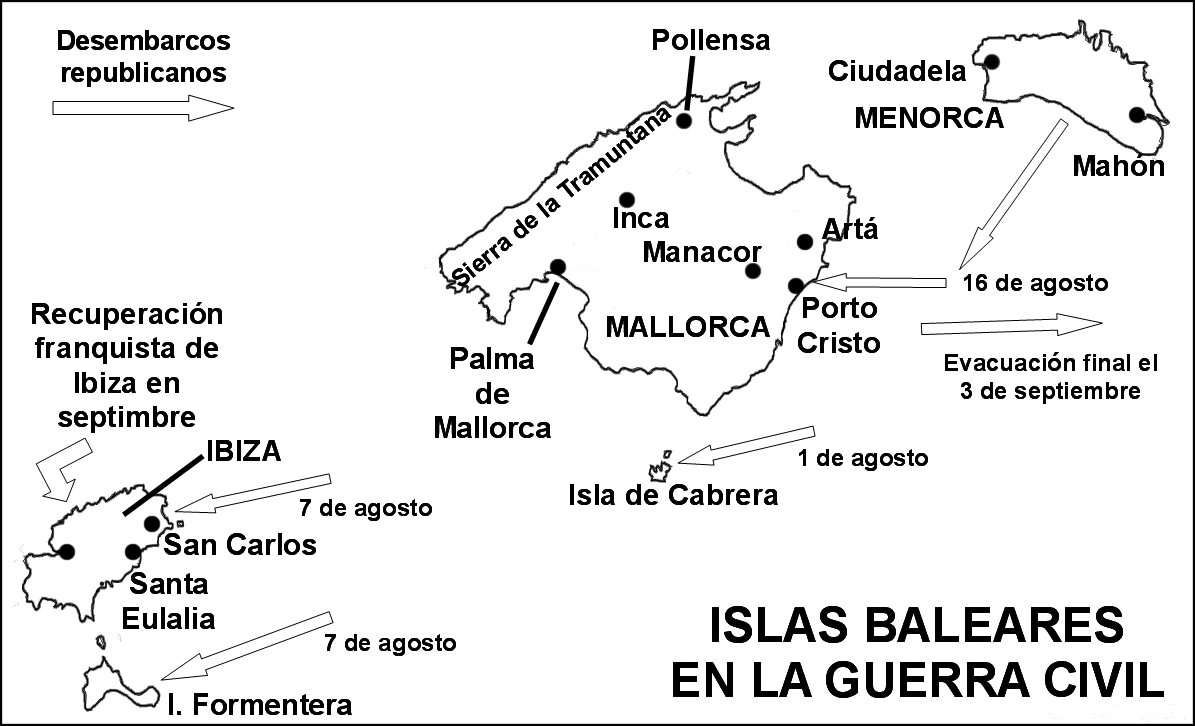
On the morning of 28 August, Bayo’s expedition still held essentially the same 12km front it had fought to establish during the previous twelve days. Around 4,000 Republican personnel were distributed across three separate areas – the northern positions facing Son Servera, the central area around Republican-held Son Carrió and the approaches to Sant Llorenç, and the southern positions facing Porto Cristo. The Nationalists had approximately 2,900 personnel distributed across the same eastern front. Around Son Servera, Captain Enrique Puig’s 4th Grouping numbered 801 men, facing roughly 1,000 Republicans in that northern sector.
The previous day the Italian merchant ship Morandi had entered Palma carrying three Fiat CR.32 fighters and three Macchi M.41 flying boats, together with Italian technicians required to assemble and maintain them. The aircraft were taken to Son Sant Joan airfield, east of Palma and operational within a day. Republican aircraft were driven away or destroyed, and Italian aircraft began attacking Bayo’s positions every day. Men who had spent nearly two weeks worrying about artillery and rifle fire now had aircraft operating above their trenches, farmhouses, roads and supply areas. The Republican beachhead was particularly vulnerable because so much of its life was concentrated in a narrow coastal strip.
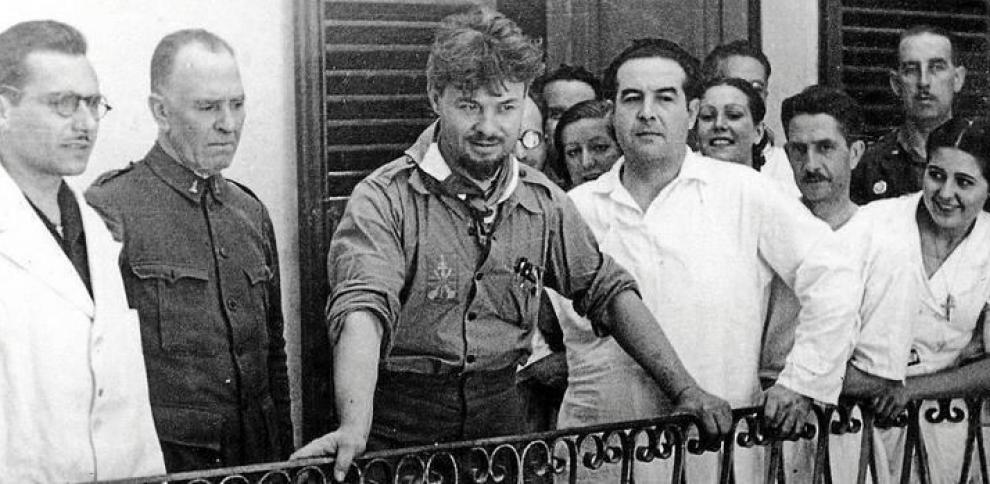
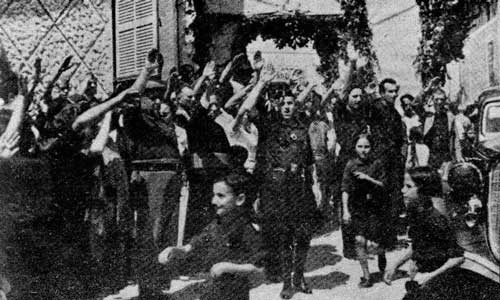
Arconovaldo Bonaccorsi arrived with a small group of Italian Fascists on 26 August. He called himself the Conte Rossi, though he possessed no such title, and rapidly made himself one of the most visible figures on Nationalist Mallorca. Dressed conspicuously, delivering theatrical Fascist speeches and surrounding himself with armed followers, Bonaccorsi presented himself as the representative of a much larger Fascist power now standing behind the island’s defenders. His military importance during these first days was considerably less than that of the Italian pilots and aircraft, but his political and personal influence would become closely associated with the repression taking place behind the front.
The pressure increased on 29 August as Italian aircraft continued attacking Republican positions and communications. The Republicans could still use artillery and naval guns, and several thousand expeditionaries remained firmly ashore, but the conditions under which they operated were changing. Moving vehicles and supplies during daylight became more dangerous. Men working around the beaches could be attacked from the air. Republican aircraft were increasingly unable to provide the protection to which the expedition had become accustomed. This was particularly serious for the wounded. Republican casualties from positions around Son Servera, Son Carrió and Porto Cristo had to move eastwards through the beachhead before they could reach the coast and, when necessary, be evacuated by ship. The Nationalists could move their wounded inland through Sant Llorenç and Manacor towards established hospitals. Modern research has found that the two sides suffered broadly comparable numbers of total casualties during the campaign, but the number of Republican dead was ultimately more than three times higher, partly because their medical evacuation system was less effective and partly because Republican prisoners were subsequently executed.
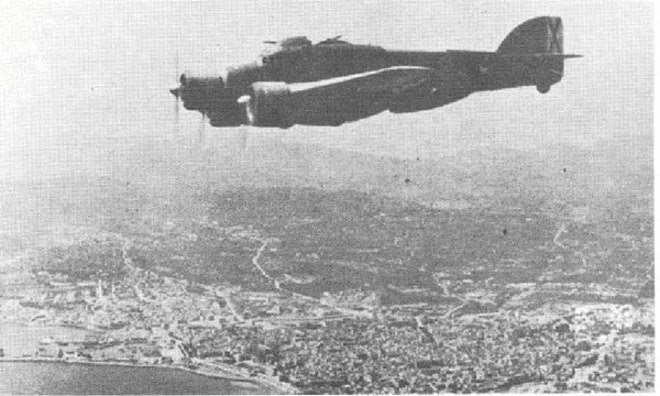
The air war escalated again on 30 and 31 August, when three Italian Savoia-Marchetti SM.81 bombers arrived from Sardinia. The Nationalists now possessed modern bombers capable of repeatedly attacking the beachhead. Italian aircraft began daily operations against Republican positions, producing what contemporary accounts described as a serious decline in morale among the militia.
The conditions among Bayo’s expedition were deteriorating. The men and women ashore had now been living on Mallorca for more than two weeks during the hottest part of the year. Many slept outdoors, in captured farmhouses or in improvised positions. Dust, inadequate sanitation and the difficulty of supplying several thousand people across beaches added to exhaustion from repeated fighting. Water had to be obtained and distributed continuously. Food and ammunition still arrived by sea, but everything unloaded at Sa Coma had to be moved forward to groups scattered kms inland. The wounded presented a growing burden because militia hit around Son Servera or Son Carrió first had to be carried or driven back towards the coast. Serious cases could then be transferred to ships, including the hospital ship, for evacuation. Men with lesser wounds remained within an expedition whose medical resources were already stretched.
Madrid had never shared Barcelona’s enthusiasm for the Mallorca expedition, and the operation competed for ships and aircraft urgently required elsewhere. Indalecio Prieto in Madrid, whose influence over Republican naval affairs was growing, regarded Bayo’s expedition as strategically questionable at a moment when the war on the mainland was becoming increasingly dangerous. The Army of Africa was advancing through western Spain, while Republican naval forces were needed to control the Strait of Gibraltar and protect Mediterranean communications. On the island, Manacor, the principal objective behind the landing area, had never been reached. Sant Llorenç remained Nationalist. Porto Cristo and its harbour remained Nationalist. The Republicans held Son Carrió, several hills and a strip of countryside connected to their beaches, but after more than two weeks this represented only a small part of Mallorca. It almost almost time to retreat.
The political situation behind Nationalist lines continued to worsen for suspected Republicans. In Manacor and the surrounding municipalities, the invasion had strengthened the argument that political opponents represented an immediate fifth-column threat. People accused of supporting the Republic could now be described not as leftists but as potential collaborators with an enemy force physically present only kilometres away. Arrests, imprisonment and killings continued while the fighting remained close enough to be heard from the town.
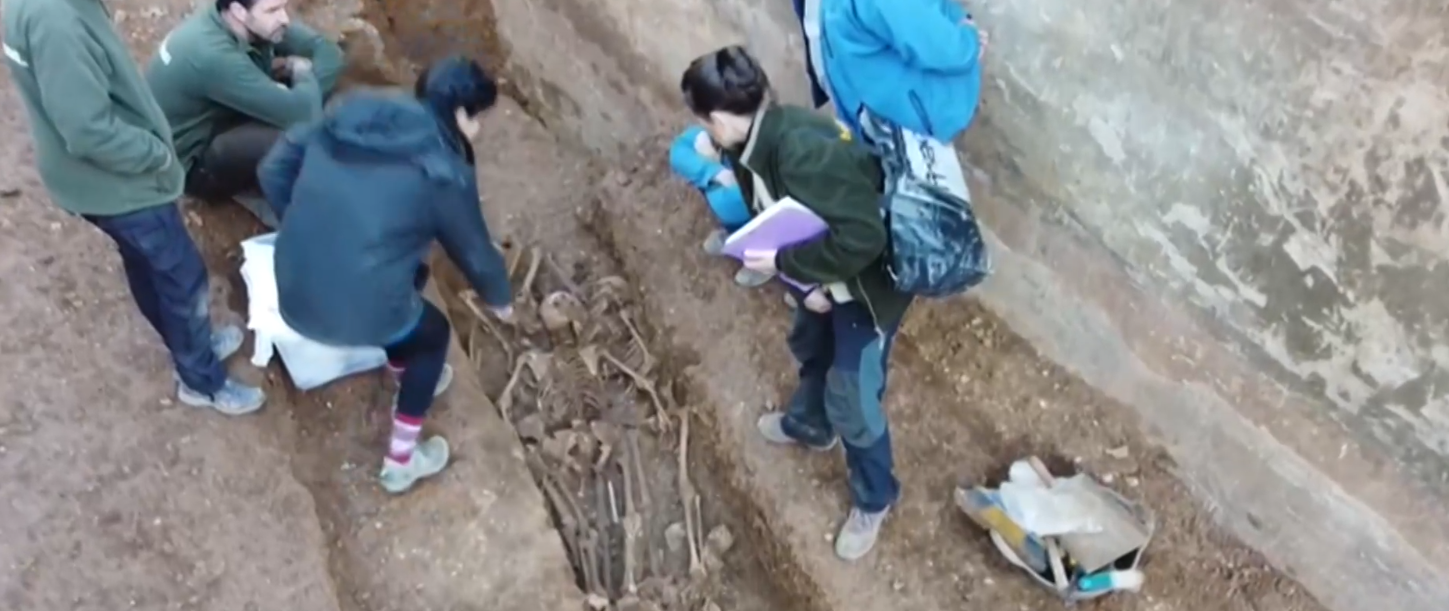
At Sant Llorenç des Cardassar, a dig in 2023 identified a site with approximately 500 bodies, who remain unidentified. Inland at Son Carrió, the area has a number of mass grave sites with identified numbers buried. Nearby finca Son Mor dels llanterners, contains a well with an unknown numbers of bodies dumped in a well on the private land; a 13 year-old boy witnessed the bodies being dumped but they have no been rescued. The Son Servera area also has number of mass grave sites near roadsides where bodies remain undignified.
The Palma municipal cemetery was the site where the most executions were carried out following summary trials by Francoist Nationalists. It became a crucial area of investigation for the families of the victims, who came from every town on the island to search for their missing relatives. Their search typically began at the prisons, the Falange headquarters, military installations, the Civil Governor’s office, and the police station, often ending at the Palma municipal cemetery. We have recorded numerous testimonies confirming the fear, pain, and humiliation they endured while searching for their loved ones. The victims were taken to the cemetery’s morgue, where autopsies were performed, then buried naked, with their clothing publicly displayed with information on the physical characteristics of the body. In the cemetery, the victims’ families searched among piles of blood-soaked clothes for their loved ones to identify them and obtain proof of death. Then they were forced to testify before a judge to ask for a homicide investigation. This investigation was limited to the statements of the victim’s family and a report written by the perpetrators of the crimes – the Civil Government, the City Council, the Falange, the Police, and the Guardia Civil. It always ended with the dismissal of the case due to lack of evidence and the court returned the victim’s personal belongings to them.
Some of the bodies were transferred to the cemetery, marked with a white stone cross. This would be a series of several mass pits, where the bodies of murder victims found in different parts of the municipality or those shot against the cemetery walls. A total of 445 people were buried there, with 366 identified, and the area was remodelled over in the 1960s, but in 2023, the Catalan government acquired a chapel in the cemetery to build a memorial in remembrance of the victims of the repression.
In Son Coletes, in Manacor, the bodies of 132 victims have been recovered, one of them being that of Aurora Picornell Femenias, a communist militant nicknamed the Mallorcan Pasionaria, was a well-known social and feminist activist. She founded the Tailors’ Union of Mallorca and organized the first May 8th celebrations. ‘She was a very prominent woman for her time, very progressive, very young, self-taught, who wrote extensively for the press, very prominent and very well-known throughout the island of Mallorca and beyond,’ – Maria Antonia Oliver, president of the Memòria de Mallorca association.
She was executed by firing squad along with four other women, known as ‘Las Rojas del Molinar’ (The Reds of Molinar) after the Palma neighbourhood they came from. It was not until 2021 that Picornell’s body was identified by the father and brother through DNA, though beside her body was the fountain pen she used to write for left-wing publications. Alongside Picornell was Antoni Alomar Mas, Francesca Llull Font, Francesca Salas Llull, Pere Llull Fullana, Miquel Palmer Durán, Belarmina González Rodríguez, Antònia Pascual Flaquer, Maria Pascual Flaquer, Catalina Flaquer Pascual, Andreu Blanch Bauçà, Emilio García-Peñuela Orgaz, and Antonio Montserrat Parets. Of the approximately 50 mass grave pits currently formally identified, few have had the success of Son Coletes in reuniting families. It is estimated between 2,000-2,500 people were executed on the island of Mallorca throughout the war.
- Huelva
On 23 or 24 August, aircraft dropped leaflets over the mining district demanding surrender. The population was instructed to hand over weapons, and hostages were to be provided as guarantees that the terms would be obeyed. The leaflets promised that the hostages would subsequently be released once the weapons had been collected. Many already knew what had happened to people elsewhere who had surrendered, returned from hiding, or remained behind after their towns were occupied.
By 25 August, Zalamea la Real stood directly between the Nationalist forces at Valverde del Camino and the mining towns of Salvochea, Minas de Riotinto, and Nerva. The municipality had approximately 11,400 inhabitants in 1930 and lay only about fifteen kilometres south of Riotinto. After nearly a week of bombing and the loss of the approaches through the Sierra, the remaining Republican territory in the Cuenca Minera was being compressed into an increasingly narrow area. The force advancing from Valverde had grown substantially to more than 1,000 men would be available for the final movement into the mining basin on 26 August, including troops already operating in Huelva and reinforcements sent from Seville. Around 100 Falangists arrived from Seville in buses before the operation. The force also had machine guns, artillery, and aircraft available to support its advance.
Armed miners and local militia remained in and around Zalamea la Real, though their weapons were considerably more limited. One machine gun was positioned in the church tower, while other men were armed principally with rifles, shotguns, and dynamite. Mines had also been placed on the road northeast from Zalamea la Real towards Salvochea. On 25 August, the Nationalist army advancing from Valverde approached Zalamea la Real in several groups. Fighting developed around the approaches to the town and the Republican positions where artillery was used against the defenders, and the miners were eventually forced out of Zalamea le Real.
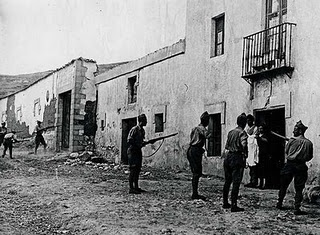
News reached Salvochea, only a few kilometres further into the mining district, and a sizeable group of miners moved towards Zalamea la Real in an attempt to recover the position. Several hundred men had participated in the fighting and the counterattack initially succeeded in pushing back some of the Nationalist positions around the exits from Zalamea la Real. For a short period, the miners threatened to reverse the day’s advance but aircraft were then used against the miners advancing towards Zalamea la Real. Without protection from air attack and with little heavy weaponry of their own, the counterattacking force withdrew towards Salvochea. The loss of Zalamea la Real was one of the last occasions on which the mining communities were able to assemble a sizeable force and attempt to recover an occupied town. The municipality included the town but a number of small settlements scattered through the mining and agricultural countryside. Las Delgadas, El Villar, El Pozuelo, El Buitrón, and the settlements of El Membrillo were among the communities subsequently affected by repression.
Zalamea la Real became one of the important execution and burial areas of the Cuenca Minera. Victims were buried both in the cemetery and at smaller sites across the surrounding countryside. The smaller settlements were also affected, with 20 people killed in connection with the El Membrillo settlements. Other killings were associated with Las Delgadas, El Villar, El Pozuelo, and El Buitrón.
During the night of 25–26 August, people began leaving the Cuenca Minera in much larger numbers. Some militia members withdrew from the positions around Zalamea le Real and Salvochea. Political officials and union activists prepared to leave with them while families moved into the hills or sought shelter in the mining workings. In Nerva, Mayor José Rodríguez González was among a group of roughly 200 people who left during the night. The departure included political activists and people associated with the local administration as well as other residents. After the bombing of the previous six days and the loss of Zalamea le Real, there was little expectation that the remaining towns could be held for long.
At approximately 7:00am on 26 August, more than 1,000 Nationalists left Zalamea la Real and advanced towards Salvochea. The distance between the two towns was only about six kilometres. At around 8:00am, aircraft bombed Salvochea again as the ground forces approached. The occupation was followed by deliberate destruction. Bernabé Copado, the military chaplain accompanying the force approaching through the Sierra, later described entering an almost deserted settlement. Part of Salvochea was ordered burned. The destruction was presented by the occupying forces as retaliation for the earlier killing of right-wing prisoners held in the town during the period of Republican control.
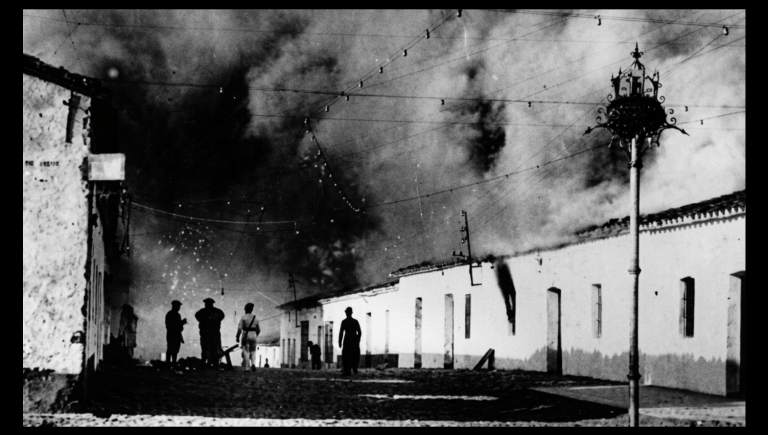
The municipality had adopted the name Salvochea after Fermín Salvochea, the nineteenth-century Cádiz anarchist. The new authorities abolished the name and restored El Campillo, by which the municipality has subsequently been known. From El Campillo the distance to Minas de Riotinto was only a few kilometres. The company also introduced another population into the conflict. British managers, engineers, employees, and their families lived around the mines, particularly at Bellavista. During the bombing and occupation, company officials attempted to protect personnel and property while maintaining contact with both local authorities and the approaching forces. Their surviving correspondence and diaries provide some of the most detailed accounts of the final days of Republican control. By 26 August, large numbers of residents were sheltering in mine workings or leaving the district. Tunnel No. 5 and other underground spaces had already been used during the air raids. The movement of people increased as the ground forces approached.
Nerva presented the largest remaining problem. With approximately 16,700 inhabitants, it was considerably larger than Riotinto and had been one of the strongest centres of organised labour in the province. Its miners had participated in the events of July, while CNT, UGT, socialist, and communist organisations had maintained a substantial presence in the town. Six days of bombing and the departure of armed groups had radically changed the situation by the morning of 26 August and at Nationalists from El Madroño entered on 26 August without having to fight through the streets. Other Nationalists troops arriving through the mining basin completed the occupation of the surrounding district.
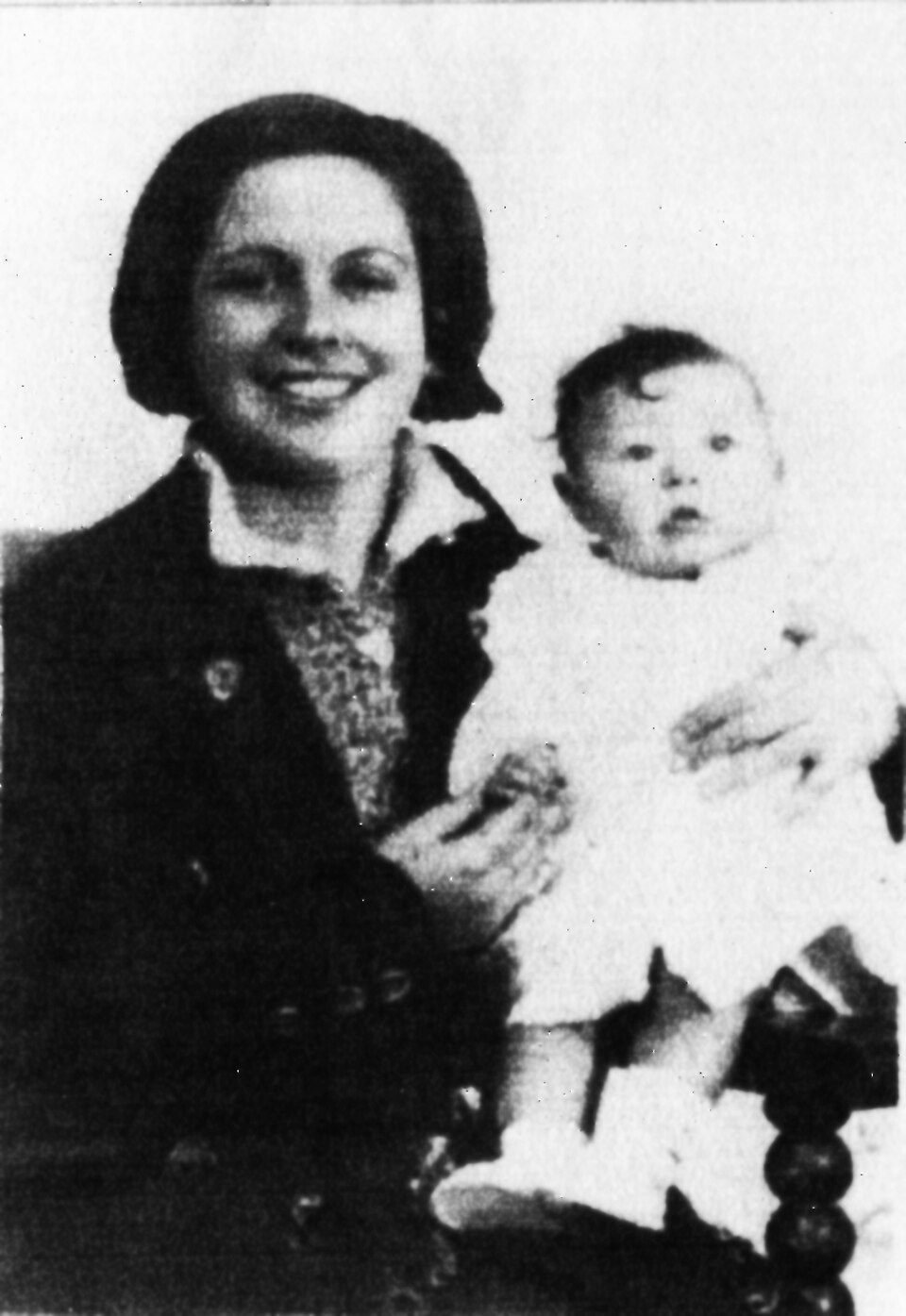
Among those arrested on 26 August was eighteen-year-old Catalina Pacheco. She was staying at her aunt’s house when she was taken. Her mother, Ana Pacheco, learned that Catalina had been placed aboard a lorry and sought the assistance of a relative serving in the Guardia Civil. By the time he reached the barracks, Catalina had already been taken to the cemetery and killed. Executions continued through the night and into 27 August. Manuel Vázquez Getrero was among those killed at the Nerva cemetery under the bando de Guerra (a kind of declaration of war). The cemetery quickly became the principal execution and burial site for the town and, eventually, one of the largest mass-grave complexes associated with the repression in Huelva province. Archaeological investigations have recovered hundreds of remains, while estimates for the number eventually buried in the wider Nerva grave complex range considerably higher, with at least 266 bodies dumped at Nerva cemetery, and another 211 in nearby Riotinto cemetery. The broader repression across the Riotinto mining district is estimated to have killed around 1,500 people. Research has identified around 200 local victims, and by 1937 the town reportedly contained 246 widows and 570 children whose fathers had been killed in the repression. Those figures give some indication of the impact on a community that had contained fewer than 17,000 inhabitants before the war.
Repression also extended across the neighbouring mining communities. Minas de Riotinto, with approximately 10,300 inhabitants, Salvochea, Zalamea la Real, and the smaller settlements around the mines all experienced arrests and executions after their occupation. In Zalamea la Real, approximately 200–300 people were killed over the course of the repression. Killings also reached the municipality’s smaller settlements, including Las Delgadas, El Villar, El Pozuelo, El Buitrón, and El Membrillo, where at least twenty people were killed.
The repression continued behind the advance. At Alosno, a town of approximately 4,000 inhabitants, the first documented executions began on 31 August. Four men were killed on the road between the two communities and their bodies were left beside the road to be found by miners travelling to work. Alosno became the centre of several execution and burial sites. At least twenty-six residents of the town were killed over the course of the repression, together with people brought from Tharsis, San Bartolomé de la Torre, Puebla de Guzmán, and surrounding communities. A group of approximately 21 people from Puebla de Guzmán was also killed around the end of August.
Elsewhere, arrests continued in towns occupied earlier in the summer. Prisoners were held locally or transferred between municipalities and larger detention centres, while people who had escaped the initial arrests remained hidden in the countryside. By the end of August, the number of huidos (refugees being labelled fugitives) from the mining basin joined people already hiding after the occupation of other towns. Several communities in the northern Sierra remained beyond effective Nationalist control, and the final occupations continued during September.