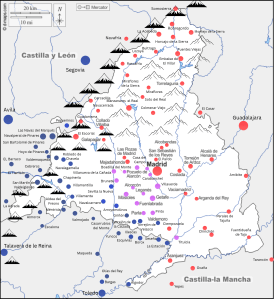
The events of 29 October 1936 marked the official arrival of modern Soviet armour on the battlefield and the collapse of the Republic’s outer western defensive perimeter, setting the stage for the multi-year Siege of Madrid. In a desperate bid to halt the rebel vanguard, the Republic unleashed its secret weapon: newly arrived Soviet T-26 tanks, and introduced massive tank warfare to the conflict and featured several historical firsts in modern military history.
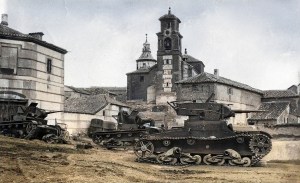
The Nationalist force at Seseña centred around Colonel Félix Monasterio’s cavalry column, combat-hardened Moroccan Regulares and naval marines. They were supported by a battery of 105mm Schneider howitzers and at least 11 Italian L3/33 tankettes (which were small, lightly armoured, and only carried machine guns). At dawn on 29 October, the newly formed Republican Popular Army launched a major counter-attack targeting the Nationalist right flank. Advancing from Aranjuez toward the towns of Seseña and Esquivias, the assault was spearheaded by a company of 15 Soviet T-26 tanks. Because local Spanish crews were still baffled by the technical complexity of the T-26s, the tanks were driven and commanded by Soviet personnel under the leadership of Red Army Captain Paul Arman. The Battle of Seseña was much more than a routine skirmish; it was an aggressive, 10-hour armoured raid that fundamentally changed the nature of the Spanish Civil War.
Around 3,800 Republican infantrymen belonging to Enrique Líster’s newly established 1st Mixed Brigade. The crews consisted of roughly 30 Soviet military personnel (acting as drivers and commanders) and 15 Spanish recruits acting as gunners. Captain Arman massed his 15 T-26 tanks into a single shock fist. They rolled straight past a Nationalist roadblock by tricking the defenders into thinking they were Italian allies. The tanks successfully rampaged through Seseña, pushed all the way south to Esquivias, and circled back. Along the way, the T-26s utterly outclassed the Italian tankettes. This day even recorded the first tank-on-tank ramming in history when Soviet Lieutenant Semyon Osadchy used his T-26 to physically smash and flip an Italian L3/33 into a ditch. Despite the tanks clearing the way, Líster’s Republican infantry was too exhausted and untrained to follow. Soviet journalist Mikhail Koltsov reported that the infantry collapsed and stopped advancing after just 1,500 metres. Because the infantry never occupied Seseña, the tanks were left completely isolated without support. Arman was forced to retreat, and the Nationalists easily reoccupied the territory.
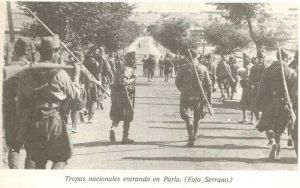
The Republican command had intended for Parla and Seseña to be two halves of a massive, synchronized pincer movement designed to halt the Nationalist advance on Madrid. While Captain Arman’s tanks struck the Nationalist right flank at Seseña, Enrique Líster’s elite Communist 5th Regiment (operating as the 1st Mixed Brigade) was ordered to launch a direct frontal assault to recapture Parla, which had recently fallen into Nationalist hands. Recapturing Parla would have allowed the Republicans to cut off the main road advancing toward Madrid, trapping the Nationalist vanguard.
The battle at Parla quickly turned into a slaughter due to a catastrophic disparity in tactical discipline and heavy weaponry. Republican militias, fired up by political ideology, charged the town with immense bravery but minimal tactical coordination. General Varela’s forces had heavily fortified Parla. They dug in with machine-gun nests and medium artillery, waiting for the Republicans to advance across the flat, open terrain surrounding the town. As soon as the Republican infantry entered the open fields, they were chewed to pieces by crossfire. Unlike at Seseña, there were no Soviet tanks at Parla to provide cover. When Varela ordered a counter-charge by the Moroccan cavalry, the Republican lines panicked.
The failure at Parla was immediate and psychologically devastating for the defenders of Madrid. The 5th Regiment suffered catastrophic losses. Hundreds of Republican militia fighters were killed or wounded in the fields outside the town within a matter of hours. The disorganized remnants of the Republican forces fled northward toward Getafe, abandoning their weapons and equipment. By crushing the counter-attack at Parla, the Nationalists secured their centre. They were able to use Parla as a primary staging ground and logistics hub to launch their final assault on Getafe and the inner suburbs of Madrid just days later.
- Peguerinos, Ávila, Old Castile
The capture of Peguerinos between 28 and 29 October 1936 marked a destructive episode of the Sierra de Guadarrama campaign during the Nationalist drive toward Madrid. Following the hard-fought Las Navas del Marqués operation, this engagement highlighted the transition to a scorched-earth reality and exposed severe technical gaps in the Republican air defence.
The battle for this rugged mountain pass pitted a mobile Nationalist vanguard against heavily dug-in Republican defenders. Between 2,500 and 3,500 Nationalist forces were spearheaded by columns under the overall command of Colonel Monasterio and Colonel Rada, operating under General Mola’s Army of the North. These forces comprised elite regular African Regulares, seasoned Spanish Foreign Legionnaires, and highly motivated Carlist Requeté militias, heavily supported by German-supplied artillery and Italian-supplied air cover. The Republicans were defending the sector with 3,000 – 4,000 loyalist troops and militias, including the El Escorial Columns, the steelworkers’ unions, and local anti-fascist peasant militias. They were plagued by severe coordination issues and lacked anti-aircraft weaponry or integrated radio communications.
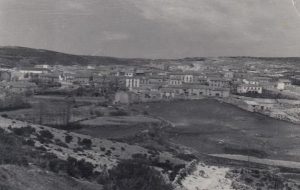
Peguerinos sat in a densely forested, high-altitude alpine zone of the Sierra de Guadarrama, acting as a crucial defensive barrier protecting the northwest approaches to Madrid and the monastery town of San Lorenzo de El Escorial. A strategic mountain town located in the province of Ávila, right on the border with the Madrid region originally only had around 900 people in the immediate area. By 28 October, virtually the entire civilian population had fled into the mountains or toward El Escorial to escape the relentless shelling.
The rocky, pine-covered hills surrounding the town offered excellent natural defensive cover but also trapped the combatants in brutal, close-quarters infantry bottlenecks. •The Nationalists wanted to secure Peguerinos to lock down the mountain pass, flatten the Republican salient, and secure the flank of the main armies advancing on Madrid from the north and west, and Republicans were desperate to prevent this and maintain their active choke point in the mountains to block the Nationalists from spilling down toward El Escorial and cutting the key regional roads. The defensive positions collapsed under sustained artillery and air attacks. An attempt to disrupt the Nationalist advance using unescorted tactical bombers resulted in an absolute air disaster.
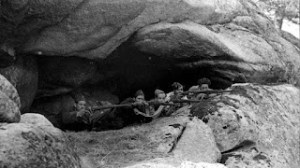
The multi-day assault reduced Peguerinos to a wasteland. When Nationalist troops crossed the town perimeter between 28 and 29 October, they found it completely abandoned and engulfed in flames. Constant artillery bombardment had ignited the wooden-roofed stone houses, and retreating militias systematically torched remaining supply depots to prevent their capture. Ground attrition during the final two days was high, with an estimated 200 to 350 deaths. Republican militias suffered disproportionately during the chaotic retreat along the exposed mountain roads, where they were repeatedly strafed by Nationalist aircraft.
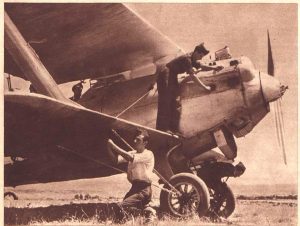
Desperate to stall the final Nationalist occupation, the Republican command sent a squadron of five outdated Breguet XIX light bombers to attack the columns. Flying without a fighter escort, they were intercepted directly over the burning ruins of Peguerinos by a patrol of nimble, Italian-built Fiat CR.32 fighters (vulgarly known as Chirris). The faster, heavily armed Nationalist biplanes completely shredded the Republican formation, shooting down four out of the five bombers within minutes and killing the majority of their aircrews.
Because the town was entirely depopulated of civilians by the time it was effectively occupied, the immediate wave of political repression was focused on captured combatants and the surrounding mountain hamlets. Following the victory, Colonel Monasterio’s columns conducted sweeping operations through the surrounding pine forests. Under the martial laws governing the Nationalist zone, captured militia members were denied prisoner-of-war status. Dozens of wounded or trapped Republicans found in the woods were executed on the spot. In nearby newly secured villages, Falangist squads used local records to round up and execute any left-leaning figures who had not fled.
News of the catastrophic loss of Peguerinos and the destruction of the bomber squadron triggered absolute panic in the nearby Republican rearguard at El Escorial. Believing internal saboteurs or fifth columnists had tipped off the Nationalist fighter pilots, local revolutionary committees intensified arbitrary arrests of wealthy landowners, local conservative families, and Catholic sympathisers, leading to swift shootings along the roads to Madrid. The complete abandonment and total destruction of Peguerinos are documented in the war diaries of the Republican forces (specifically the memoirs of commander Juan Modesto and fighter Juan Tagueña) and matching Nationalist press bulletins from late October 1936.
The Posición Los Quemados (Position of the Burnt Ones) on the ridges overlooking Peguerinos remains a preserved historical site. Because the town was completely burned down, the post-war reconstruction records (Regiones Devastadas) explicitly track the fiscal cost of rebuilding a totally razed municipality from scratch. Captured militiamen executed in the pine woods were logged in the military field court records of Colonel Monasterio’s column.
- Henares and Tajuña valleys, Guadalajara
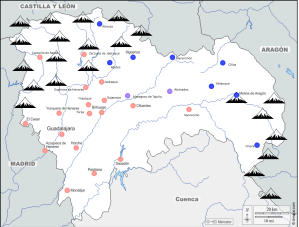
In the northern sector of the Guadalajara front, a period of fierce fighting erupted between 24 and 28 October following a prior Republican advance. Despite heavy engagements, the Republican forces were unable to secure a decisive breakthrough to shatter the Nationalist lines. By 29 October, under immense pressure, Republican commanders executed a strategic withdrawal. Forces pulled back to a newly established defensive line cutting through key regional hubs – Congostrina, Cendejas de la Torre, Matillas, Castejón de Henares, Almadrones, and Cifuentes. While minor skirmishing persisted, it produced no significant territorial changes. This defensive line effectively stabilised the Guadalajara front, remaining broadly unchanged as the war transitioned into 1937.
The Republicans had approximately 6,000 – 8,000 militia members in the area, a mixture of regular army loyalists, the newly forming 12th Division under Colonel Lacalle, and various political militias (including the Marxist POUM, anarchist CNT-FAI columns, and Communist Quinto Regimiento units). They suffered from a severe lack of heavy weaponry, cohesive command structures, and unified training. Meanwhile, the Nationalists had 8,000 – 10,000 men, commanded primarily by General José Moscardó under the broader direction of General Emilio Mola’s Army of the North. These units consisted of regular Spanish army rebel garrisons, Carlist Requetés, Falangist militias, and Moroccan Regulares, superior artillery coordination and air support.
The defensive line established by the Republicans on 29 October ran through a string of agrarian villages in the rugged upper Henares and Tajuña valleys. Their 1930s-era estimated civilian populations were small, clustered, and highly vulnerable. Congostrina was a tiny, isolated mountain village of 150 people, and Cendejas de la Torre was rural farming area of only 300. Matillas was strategic because of its railway station linking Madrid and Zaragoza, but still only had arouns 200 people, while Castejón de Henares, on the heights overlooking the Henares River valley had less than 400 people. Almadrones was positioned right along the critical sector of the main Zaragoza-Madrid highway but only had around 250 people Estimated population, while Cifuentes was the largest urban and administrative hub in the defensive sector, serving as a key tactical strongpoint for Republican logistical coordination, but was still a small town of 1,500 people. These were not brave battles, but terrorising for small populations for low no real gains.
Following the loss of Sigüenza, the main Republican objective was containment. Commanders sought to launch counter-advances to keep the Nationalists off-balance, before retreating to a natural geographical bottleneck (the Congostrina–Cifuentes line) to block the Nationalist vanguard from pushing down the main highway toward Guadalajara city and, ultimately, surrounding Madrid from the northeast. To consolidate their massive gains from the capture of Sigüenza, Nationalists wished to push the Republican forces completely out of the upper Henares basin, and establish fortified high-ground outposts to observe and pin down Republican forces until a larger strategic offensive on Madrid could be prepared.
The minor skirmishes in the area saw the Republicans successfully execute an orderly tactical withdrawal on 29 October and managed to dig in, creating a stable front that successfully held firm against Nationalist pressure until the spring of 1937, but the counter-offensives between 24 and 28 October failed to yield any territorial breakthroughs or recapture lost high ground, and cost 150-250 lives. While the Nationalists had successfully repulsed the initial Republican advance, forced a enemy retreat, and captured key geographical terrain without losing significant manpower, they lacked the immediate logistical strength or troop density in late October to exploit the Republican retreat and achieve a total collapse of the new defensive line.
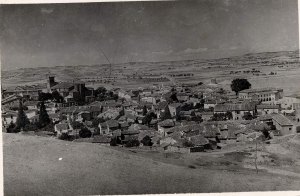
Despite these ongoing battles, the area is void of any mass burials sites, though repression certainly occurred, with Republicans either tossed in small groups, or singularly along main roads, or send back towards Sigüenza to be executed. Between 24 and 31 October, executions were carried out along the road to Soria and on the Altos de Barahona (the high plateaus just north of the frontline). The victims included rail workers from the strategic Matillas station, municipal socialist leaders, and captured members of the POUM and CNT militias. In smaller frontline hamlets like Cendejas de la Torre and Almadrones, Falangist squads and Moroccan Regulares carried out targeted searches. Because these populations were minuscule, individuals were targeted by name using prior electoral registries. Anyone who had served on a agrarian committee or voted for the Republic was taken. In Congostrina, rather than mass shootings, the repression during this week took the form of immediate economic devastation. The military command ordered the absolute expropriation of livestock, grain stores, and olive oil mills belonging to anyone who had fled to the Republican lines. This effectively forced remaining family members into starvation or displacement.
Behind the newly established Republican defensive line at Cifuentes, panic peaked during late October. The proximity of the nationalist forces sparked an intense fear of the fifth column. Cifuentes acted as the logistical nerve centre for the Republican 12th Division. Violence here was orchestrated by a combined revolutionary committee made up of CNT members and socialists. Between 24 and 31 October, the committee conducted arbitrary roundups of landowners, conservative town merchants, and practicing Catholics who had not fled.
Victims taken by militias in Cifuentes and executed along the muddy secondary roads heading toward Brihuega or Guadalajara capital. Their bodies were dumped in roadside ditches, but have all since been recovered and dignified. Those not executed on the roads were sent down the main highway to the central provincial prison in Guadalajara capital. Records show a surge of rural detainees from the Cifuentes and Brihuega sectors arriving during the final days of October. This rapid overcrowding created a highly volatile environment.
- Tardienta, Huesca, Aragon
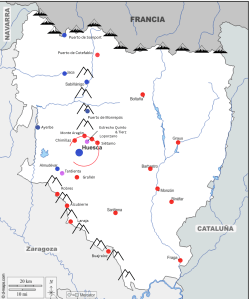
The Aragon front in late October 1936 was still not yet a regularised military zone. It was defined by fragmented militias confronting an entrenched, defensively superior Nationalist garrison. The Republican Forces had 12,000-14,000 militia active in the wider Huesca/Monegros sector, mostly an alliance of Catalan and Aragonese militias. These included the Carlos Marx Column (PSUC/Communists), the Ascaso Column and Durruti Column elements (CNT-FAI/Anarchists), and the Lenin Column (POUM/Marxists).
While the Republicans biggest threat was severe ammunition shortages, the Nationalist Forces of up to 9,000 still held Huesca city with regular army mutineers, Guardia Civil, and local Falangist/Carlist militias. However, the outer lifeline, stretching to the southwest toward Almudévar, was reinforced by the highly mobile Tercio San Jurjo and specialised columns dispatched from Zaragoza, which possessed superior German-supplied artillery.
The fighting occurred along a parched, flattened agricultural basin and rocky ridges where the dry limestone earth made deep trench excavation nearly impossible. Soldiers fought behind primitive, stacked rock parapets. The provincial capital was entirely encircled but structurally intact, but had 16,000 citizens trapped inside alongside the military garrison. Tardienta remained a vital strategic town situated southwest of Huesca, directly overlooking the Zaragoza–Huesca railway line and housed the critical regional water aqueduct. The Posición de Santa Quiteria, a high-ground ridge and hermitage just outside Tardienta was still a main source of conflict with its commanding visual and ballistic control over the entire valley floor and the railway approaches. The small rural hamlets Tierz and Quicena on the immediate eastern and north-eastern flanks of Huesca, formed the inner rim of the Republican siege belt, but had only 400 inhabitants combined and could not offer much in the way of support.
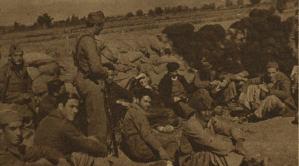
Following the bloody repulse of the Republican offensive earlier in the week, the objectives for 25–31 October shifted dramatically as the Republican attempted to maintain the outer siege blockade of Huesca, launch counter-assaults to dislodge the Nationalists from the newly captured heights of Santa Quiteria, and secure Tardienta. The infantry and newly deployed Soviet armoured vehicles needed to repeatedly charge across wide-open, coverless agricultural fields. They were systematically broken by Nationalist machine-gun crossfire and artillery airbursts, and failed to alter the map. As the Nationalists held their ground, it ended all immediate threats of a Republican breakthrough and forced the Aragon front into a frozen winter stalemate.
The primary tactical success of the T-26 was its technical superiority over Nationalist armour. At this stage of the war, Nationalist forces on the Aragon front relied on German Panzer I (Model A) tanks and Italian L3/33 or L3/35 tankettes. The German and Italian vehicles were armed purely with dual or single machine guns. The T-26 was equipped with a 45mm 20-K main gun. This allowed Republican armour to function as highly lethal, mobile artillery pieces. They could systematically dismantle Nationalist machine-gun nests and stone breastworks from well beyond the effective range of the enemy’s retaliatory machine-gun fire. Despite their staggering technical advantage, the T-26s failed to secure an operational breakthrough around Huesca or Tardienta due to a near-total absence of combined-arms coordination. Republican forces on the Aragon front were primarily un-regularised militias (CNT-FAI, POUM, and PSUC). These militias lacked any training in how to advance alongside tanks. Tactically, the T-26s were used to spearhead charges across the wide, flattened agrarian plains surrounding Huesca. The tanks easily breached the outer Nationalist perimeter. However, because the militia infantry routinely panicked or failed to follow the armour to secure the newly won ground, the T-26s were forced to repeatedly withdraw after running out of ammunition.
The early T-26 models delivered in October also lacked reliable two-way radios. Tank commanders had to communicate with each other and the infantry using primitive hand signals or fabric flags draped out of the hatches. Once the hatches were buttoned down under fire, the crew’s visibility dropped to near zero through narrow periscopic slits. Nationalist infantry quickly learned to exploit these blind spots, waiting in agricultural ditches for the unsupported tanks to pass before disabling them up close with improvised explosives or early Molotov cocktails.
While the peak of the offensive of 21–22 October cost the Republican militias roughly 300 to 400 casualties in a matter of hours, the subsequent positional fighting between 25 and 31 October saw a lower, yet continuous rate of attrition of 200 to 350 total combat deaths across both factions during this final seven-day window. The majority of these losses were Republican militia members killed by shrapnel while stuck behind inadequate stone breastworks during failed local counter-attacks near Tardienta.
The transition to a static, frustrating siege in late October directly triggered a wave of paranoia and structural political violence in the rearguard of both zones. To prevent an internal civilian uprising from assisting the besieging Republicans, the Nationalist military authorities instituted absolute martial law over the 16,000 local civilians of Huesca city. Every time Republican artillery shelled the urban centre or Republican aircraft dropped bombs, Nationalist death squads extracted matching quotas of local political or union prisoners. Prisoners were trucked to the walls of the Huesca Civil Cemetery and shot.
Behind the Republican siege lines in the small villages of the Monegros and Barbastro sectors, the complete failure of the late-October offensives bred intense paranoia regarding internal betrayal and fifth column spies. Local revolutionary committees (dominated by the FAI and POUM) rounded up suspected right-wing sympathisers, rural landowners, and Catholic figures. Many were subjected to extrajudicial night-time shootings along the isolated mountain tracks of the Sierra de Alcubierre. Yet all have since bee recovered. The mass grave sin Monegros hold Republican victims left in mass sites, like the 40 people at Monegros cemetery, 30 of them from the 5 October truck massacre committed by Nationalists, and another 10 in the autumn. Only 17 of the those buried have been identified. Nearby is another single local, Sebastián Franco Ciprés, who was dumped at the cemetery and remains unmarked to this day.
- Albarracín, Teruel, Aragon
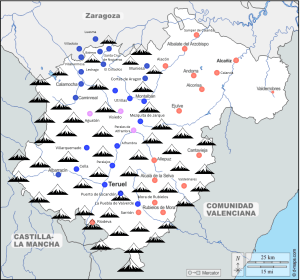
The actions along the southern sector of the Aragon front (Teruel province) between 26 and 31 October 1936 highlights a highly fractured, high-altitude mountain war. Unlike the larger urban sieges, this sector was defined by rugged terrain, isolated villages, and sudden commando-style raids across vast, underpopulated spaces. The southern Aragon front had extremely low troop density relative to the massive geographic space. The Republicans had 4,000 – 5,500 active in the sector, pressured predominantly by columns advancing from the Valencia and Levante regions . The primary actor here was Torres-Benedito Column, alongside elements of the Macas-Broto Column and local anti-fascist village committees. They possessed minimal heavy artillery and no armoured support, with the Nationalist Forces, with up to 4,500 men mostly under the command of the Teruel Garrison and Colonel Domingo Rey d’Harcourt. These forces were a mix of local Guardia Civil, Carlist Requetés from the lower Aragon region, Falangist volunteer groups, and regular army infantry detachments. They relied heavily on defensive high-ground outposts.
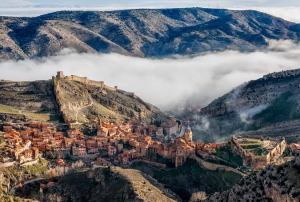
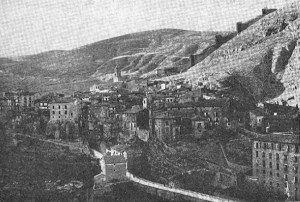
The theatre of operations sat within the high-altitude, bitterly cold mountain ranges of Teruel. The civilian population was sparse, impoverished, and deeply conservative. Calamocha was strategic hub of 2,500 people situated in the Jiloca river valley, acting as a crucial staging area for Nationalist communications between Zaragoza and Teruel, Portalrubio de Pastores sat on the barren plains just east of Calamocha, a hamlet of less than 200 people. Torre los Negros was mountain village occupying a highly strategic choke point commanding the mountain passes between the Jiloca valley and the interior highlands and while double the size of Portalurbio, was an isolated location with little more than the opportunity to hold the valley below. But Albarracín was a historically fortified medieval town built into the sheer pink cliffs overlooking the Guadalaviar River. Its geography made it a natural mountain fortress. of the civilian population of 1,800 that had already been suffering repression. Nearby was Montes Universales, a massive, densely forested, and rugged mountain range averaging over 1,400 metres in altitude, with virtually zero permanent civilian population outside of scattered logging huts and the toughest of battlefield locations.
On 26 October, the Nationalists conducted armed reconnaissance eastward to ensure Republican columns from the Levant were not trying to outflank the Jiloca valley supply lines. They mapped the sector, encountered minimal resistance, and immediately identified Torre los Negros as the key tactical high ground needed to lock down the eastern approaches, heavily reinforcing it with machine-gun nests and light field pieces.
On 29 October, Republicans launched a surprise, vertical infantry assault to capture Albarracín, to break the Nationalist outer ring around Teruel city, and establish a staging post deep in the mountains. While anarchist militia elements successfully breached the rocky perimeter and briefly fought their way into the outer streets, they lacked a secondary wave to clear the town. A rapid Nationalist counter-attack by garrison reserves trapped the raiders in the narrow medieval alleyways, forcing a chaotic Republican retreat back into the pine forests.
On 30 and 31 October, both sides scrambled to secure the high mountain passes before the heavy winter snows blocked them completely without an outcome. Both sides settled for minor skirmishing and establishing isolated, high-altitude observation posts.
Due to the low troop numbers and reliance on hit-and-run tactics rather than massed infantry charges, casualties during this week were relatively light compared to the Guadalajara or Huesca fronts. Modern estimates place total combat casualties across this entire southern sector between 26 and 31 October at roughly 80 to 120 total deaths. The majority of these casualties occurred during the fierce, close-quarters street fighting inside Albarracín on 29 October, where the retreating Republican militias suffered heavily from Nationalist sniper fire. Following the Republican breach of Albarracín on 29 October, the victorious Nationalist garrison and local Falangists turned brutally on the civilian population. Any local townspeople suspected of having cheered the entering militias, guiding them through the streets, or failing to report their approach were immediately rounded up. Over the final two days of October, suspect civilians were taken to local ravines outside the town walls or to the cemetery of nearby Teruel and executed. In Calamocha, the permanent military tribunal under the rebel authorities systematically executed individuals identified by local right-wing informants as union sympathisers to guarantee the safety of their vital rail and road supply lines.
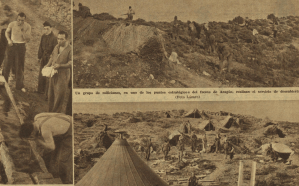
Following the failed Republican assault on Albarracín on 29 October and the heavy reinforcement of Torre los Negros by Nationalist forces, both sides realised that massive territorial breakthroughs were no longer achievable with the limited, exhausted forces available in the sector. Teruel is historically one of the coldest, highest, and most rugged provincial capitals in Spain. Sitting at over 900 metres above sea level, with the surrounding Montes Universales peaking well over 1,400 metres, the final days of October brought biting winds, frost, and early mountain snow flurries. Neither the poorly equipped anarchist militias (often wearing thin canvas alpargatas sandals and cotton overalls) nor the Nationalist garrisons possessed winter warfare gear. Movement through the mountain passes became impossible. Troops on both sides stopped launching mobile manoeuvres and instead dug into primitive, stone-walled outposts. They focused entirely on surviving the elements rather than fighting the enemy.
By the end of October 1936, the focus of both the Republican and Nationalist high commands shifted completely away from secondary fronts like Teruel. General Franco’s columns were rapidly closing in on Madrid from the south and west, forcing the Republic to divert every available regular soldier, weapon, and piece of ammunition to defend the capital. Teruel became a low-priority theatre left to local forces. For over a year, the lines drawn during the final week of October 1936 remained virtually unchanged. This created a quiet stalemate of low-level sniper fire and artillery duels.