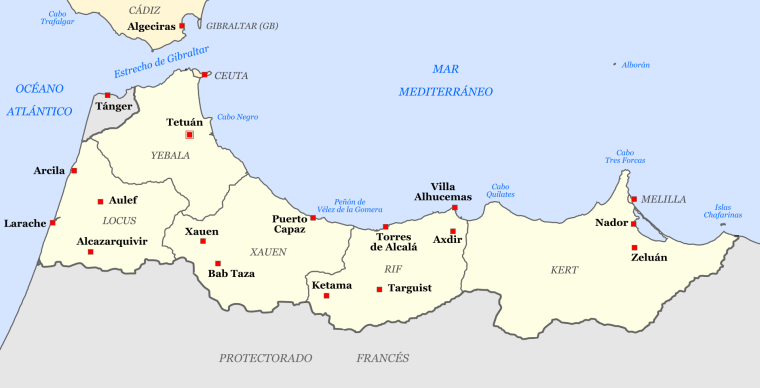
When Spaniards awoke on the morning of 17 July 1936, few realised that the country was only hours away from civil war. Newspapers carried reports of political violence and labour unrest, but such news had become commonplace during the turbulent years of the Second Republic. The decisive events of the day would not hurt anyone in Spain, but across the Mediterranean in Spanish Morocco, a force that was soon to annihilate countless lives had been awakened.
The military conspiracy that erupted into open rebellion on 17 July 1936 had been developing for months. Following the Popular Front’s narrow electoral victory in February, a growing number of conservative officers concluded that the Republic could no longer be trusted to maintain order. The driving force behind the conspiracy was General Emilio Mola, stationed in Pamplona, who became known among the plotters simply as El Director. From his headquarters in Navarre, Mola coordinated a network of sympathetic officers across Spain. Among those drawn into the conspiracy were General Francisco Franco in the Canary Islands, General Gonzalo Queipo de Llano in Seville, General Manuel Goded in the Balearic Islands, General José Sanjurjo in exile in Portugal, and numerous officers serving in Spanish Morocco, including Colonels Juan Yagüe and José Enrique Varela. Sadly, these men were more than happy to band together to commit evil.
The Army of Africa, stationed in Spanish Morocco, was expected to provide the rebellion’s most experienced troops, and the conspirators needed time to ensure that key commanders were committed to the uprising. A Saturday offered practical advantages, as many government offices would be operating on reduced schedules, while officers travelling between garrisons could do so without attracting unusual attention. Most importantly, the conspirators needed a fixed date so that uprisings in Morocco, Seville, Zaragoza, Pamplona, Valladolid, Burgos and other military centres would occur almost simultaneously. If one garrison rose too early, the government might arrest officers elsewhere before they could act. Saturday 18 July was selected.
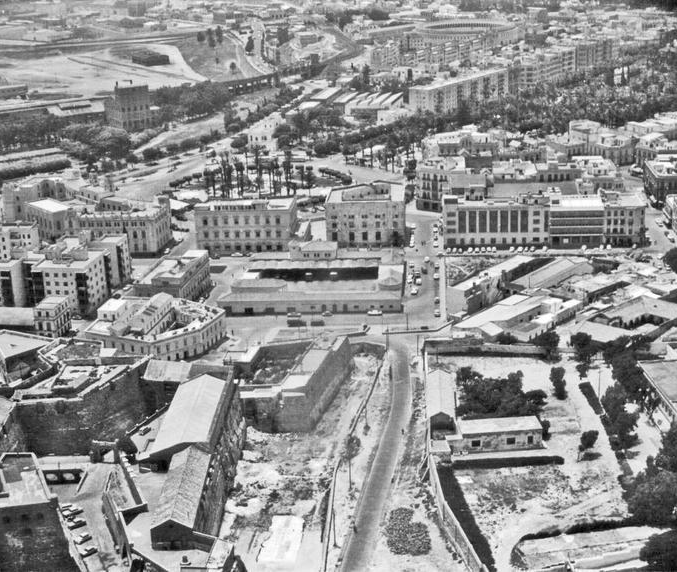
Melilla, the easternmost of Spain’s North African possessions and one of the principal military centres of the protectorate, contained several thousand soldiers, including units of the Spanish Foreign Legion and Moroccan Regulares, along with a large officer corps. By July 1936 a significant proportion of those officers were involved in the military conspiracy organised by General Emilio Mola. Meetings had been taking place for weeks, often disguised as routine military gatherings, while messages passed between Melilla, Tetuán, Ceuta and sympathetic commanders on the Spanish mainland.
Responsibility for maintaining Republican authority in the city rested with a small group of civilian and military officials. The most important military figure was General Manuel Romerales Quintero, commander of the Eastern Circumscription of Morocco and a loyal supporter of the Republic. Alongside him were civilian officials appointed by Madrid, including government delegates, police commanders and officers of the Assault Guards. The February election had sharpened political divisions throughout Spanish Morocco, and rumours of a military uprising had circulated for months. Madrid had already received intelligence suggesting that senior officers were plotting against the government, although it remained unclear who could be trusted and how extensive the conspiracy really was.
The immediate crisis centred on the Comisión Geográfica, a military mapping office in Melilla. During the afternoon of 17 July reports reached local authorities that unusual meetings were taking place inside the building. Inside the Comisión Geográfica were a number of conspirators who had gathered to coordinate the following day’s uprising. Precise numbers are uncertain, but most historians estimate that between a dozen and several dozen officers were directly involved in the meetings taking place that afternoon. The documents, communications and contact lists inside the building threatened to expose a much larger network stretching across Spanish Morocco and mainland Spain. When news arrived that police were approaching, the officers feared that the conspiracy might be uncovered before it could be launched. Rather than wait for arrests, they decided to act immediately. These men were part of General Emilio Mola’s wider military conspiracy, which stretched from Pamplona to the Canary Islands and across Spanish Morocco. The core group in Melilla consisted of several dozen officers drawn from the local garrison, the Regulares and other military units. Together they could rely upon the support of hundreds of armed troops and, once the rebellion began, thousands more throughout the protectorate. At 4:10 pm, acting on instructions from Madrid, an eleven-man Guardia Civil patrol arrived at the Comisión Geográfica. Their search was intended to uncover evidence of a possible conspiracy. One of the officers inside the building managed to telephone a nearby Foreign Legion post and request immediate assistance. Within minutes, the rebels had taken the initiative. At approximately 4:20 pm, a nine-man detachment of legionnaires arrived and confronted the Guardia Civil patrol and rifles were levelled at close range. Lieutenant La Torre openly declared the rebellion and invited the Guardia Civil to join it. For several tense moments both sides faced each other, armed and uncertain. Lieutenant Zaro, commanding the Guardia Civil patrol, ultimately chose not to resist. No shots were fired, but the government had lost control of the building.
Ten minutes later, at 4:30 pm, retired Lieutenant Colonel Juan Seguí assumed command of the conspirators gathered inside the Comisión Geográfica. He immediately ordered officers to seize key military installations throughout Melilla and to prevent anyone from leaving the harbour. Officers hurried away to change from civilian clothes into uniform before taking command of their assigned units. The coup had begun.
Madrid was still struggling to understand what was happening. At 4:45 pm, Prime Minister Casares Quiroga telephoned Tetuán seeking information. Officials there reported that everything remained calm. The government still believed that whatever was happening in Melilla might be a localised disturbance rather than the beginning of a nationwide military revolt. But the rebels were already targeting individuals already known to the military authorities. Local leaders of the Spanish Socialist Workers’ Party (PSOE), members of the General Workers’ Union (UGT), Republican municipal councillors, left-wing journalists, Freemasons and prominent supporters of the Popular Front were among those detained. Precise figures for the first day vary considerably between sources, but it is clear that dozens of arrests were carried out during the afternoon and evening of 17 July, with many more following over the next several days. Some detainees were held in military facilities, while others were confined in improvised detention centres established by the rebels.
Before 5:00 pm, the rebels in Melilla began telephoning military units stationed outside the city, ordering them to move toward the centre. At almost the same time, General Manuel Romerales Quintero, the military commander in Melilla and a loyal supporter of the Republic, was acting on instructions received from Madrid. Unaware that the conspiracy had already broken into the open, he ordered the arrest of several officers suspected of involvement, including Lieutenant Colonel Gazapo and Commanders Zanón and Rodrigo. He also called nearby units and ordered them into the city.
The government’s confusion deepened. At 5:00 pm, Interior Minister Sebastián Moles attempted to gather information from the Spanish High Commissioner in Morocco, Arturo Álvarez-Buylla. The High Commissioner could provide no clear picture of events. Ten minutes later Casares Quiroga again telephoned Morocco and learned that General Gómez Morato, commander of Spanish forces in Morocco, was inspecting positions near Larache. The Prime Minister ordered him to fly immediately toward the troubled area. Airfields were placed on alert and military communications were placed under observation.
Meanwhile, the situation inside Melilla headquarters was collapsing. Shortly after 5:00 pm, news of the seizure of the Comisión Geográfica finally reached General Romerales. He summoned his senior officers, some of whom had been resting during the afternoon siesta. Several of those officers were themselves conspirators. After a brief discussion, the pretence ended. Colonel Solans openly demanded that Romerales surrender command. Lieutenant Colonel Seguí entered Romerales’s office accompanied by armed men. Pointing a pistol at the general, he ended any remaining negotiations. Romerales was forced to telephone the government’s civilian representative in Melilla, Delegado Gubernativo Enrique Fernández Gil, and inform him that authority had passed to the rebels. Romerales and his loyal officers were then placed under arrest. At almost the same moment, Casares Quiroga finally managed to reach Gómez Morato in Larache. The Prime Minister informed him that unrest was taking place in Melilla and ordered him to intervene immediately. Gómez Morato began making arrangements to fly east, unaware that the rebellion was spreading faster than any loyalist response could match.
By 5:30 p.m. the coup had become public. Colonel Solans sent patrols into the streets to proclaim a state of war. The proclamation carried the name of General Francisco Franco, even though Franco himself was still in Las Palmas and had no knowledge that the uprising had begun ahead of schedule. The conspirators had decided to proceed without waiting for his arrival in Morocco. That same half-hour brought the first reliable confirmation to Madrid. Fernández Gil managed to contact Interior Minister Moles. For the first time the government knew with certainty that a military rebellion was underway in Melilla.
The Prime Minister reacted at 5:40pm, ordering troops in Madrid confined to barracks under alert conditions. Three destroyers were dispatched from Cartagena to patrol the Strait of Gibraltar and prevent rebel forces crossing from Morocco into mainland Spain. The destroyer Churruca was ordered toward Ceuta. Aircraft were concentrated at Getafe and orders were issued for the arrest of officers found outside their assigned commands.
Yet events on the ground continued to favour the rebels. At 5:45 p.m., a company of Cazadores troops that Romerales had earlier summoned arrived at military headquarters. Their officers unexpectedly declared support for the uprising. In another blow to the Republic, Fernández Gil managed to communicate with Tetuán and was urged to resist, but possessed almost no means of doing so.
At 6:00 p.m. President Manuel Azaña was informed of the situation. He immediately summoned advisers and senior officials. In Melilla itself, groups of workers began appearing in the streets. Some carried weapons. Demonstrators attempted to reach the artillery park in the hope of obtaining more arms. Soldiers dispersed them. Several people were wounded and scattered gunfire echoed through parts of the city. No fatalities were recorded, but armed resistance had begun.
The news from Melilla also transformed events elsewhere in Morocco. At 6:00 p.m., conspirators in Tetuán learned that the rebellion had already begun. Their original plan had been to wait for Franco’s arrival before acting. Instead, they hurriedly issued orders and moved officers toward their units. The uprising was no longer proceeding according to anyone’s timetable. At 6:15 p.m., Nador became the second city to join the rebellion when the state of war was proclaimed and local forces declared their support. Almost simultaneously in Melilla, rebel Guardia Civil and Carabineros units seized the town hall and arrested the mayor and councillors. Government offices were occupied and Fernández Gil was effectively deposed.
Madrid remained divided between alarm and denial. When the cabinet met at 6:25pm, Casares Quiroga privately discussed events with Indalecio Prieto but did not fully inform the ministers. He described Melilla as a local mutiny rather than the beginning of a coordinated military uprising, but by 6:30pm, the first true battle of the Civil War erupted near Nador. Rebel forces seized Tauima airfield without resistance and then attempted to occupy the seaplane base at Atalayón. Loyal troops resisted and for approximately 45 minutes, the two sides exchanged fire. Two Moroccan soldiers serving with the rebels were killed.
The news was now escaping official channels. At 6:45 pm, Prieto informed Socialist deputies and journalists gathered at the Cortes that a coup was underway in Melilla. Within minutes journalists were telephoning politicians across Spain. At 7:00 pm, one such call reached Diego Martínez Barrio. Another reached Diario de Navarra in Pamplona, whose editor immediately informed General Emilio Mola, the chief architect of the conspiracy, who learned that the uprising had begun from a journalist rather than his own rebels.
Throughout the evening, rebel troops continued to occupy strategic positions across eastern Morocco. Workers’ districts in Melilla saw sporadic exchanges of fire. In Ceuta, Communist mayor Antonio López Sánchez-Prado unsuccessfully demanded arms to defend the Republic. Government officials increasingly realised that events were slipping beyond their control. By sunset, General Gómez Morato had landed at Tauima airfield near Nador, only to be arrested immediately by rebel officers. One of the Republic’s most senior commanders in Morocco had been neutralised before he could act.
At 7:40pm, the Prime Minister finally informed the cabinet of the rebellion. The ministers were shocked. Minutes later, journalists were told only that routine government business had been conducted and that the next cabinet meeting would occur on Monday. No mention was made of the military revolt.
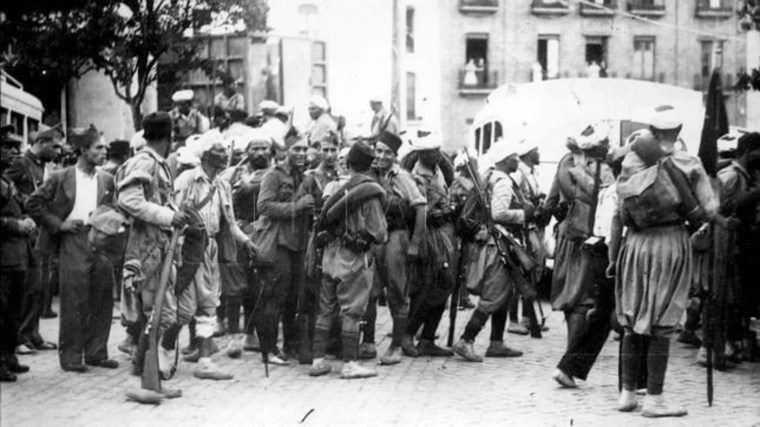
As darkness fell, both sides prepared for a wider conflict. Rebel headquarters were established in Melilla. Loyal officers who refused to join the uprising were transported to imprisonment in Fuerte María Cristina. In Tetuán and Ceuta, conspirators assembled troops, distributed ammunition and prepared detailed operational orders.
At 9:00 pm, Casares Quiroga began telephoning authorities across Spain, ordering military and civil officials to adopt a state of alert. In Madrid, rebel officers concluded that events had overtaken their original timetable and agreed to launch their own uprising on 18 July rather than wait until the 19th or 20th.
The rebellion continued to spread during the night. At 10:00 pm, troops in Tetuán declared a state of war and occupied key buildings. At 10:30 pm, Larache followed. During the seizure of the post office, several soldiers refused to obey rebel officers and a firefight broke out and two rebel lieutenants were killed. By 11:00 p.m., Tetuán and Ceuta were largely in rebel hands. Government officials sought loyal troops but discovered that many officers entrusted with defending the Republic were themselves conspirators.
In Cartagena, destroyers finally began sailing toward Morocco, but they were already racing events that had largely been decided. Before midnight the government understood that the rebellion had spread beyond Melilla to Tetuán and Larache, and probably Ceuta as well. Across mainland Spain, military conspirators received the news with surprise. Many had expected the coup to begin days later.
At the centre of the crisis stood General Manuel Romerales Quintero. Earlier in the day he had received warnings that officers were plotting against the Republic, and Madrid had instructed him to act against the conspirators. Yet the scale of the conspiracy was greater than he realised. When Lieutenant Colonel Seguí entered Romerales’ office, pistol in hand according to later accounts, the general discovered that many of the officers upon whom he relied had already joined the rebellion. Unable to count on the loyalty of enough troops, he was forced to surrender. The commander of eastern Morocco had been overthrown by his own subordinates within a matter of hours. (After a summary military trial conducted by the rebels, Romerales was executed by firing squad on 29 July 1936)
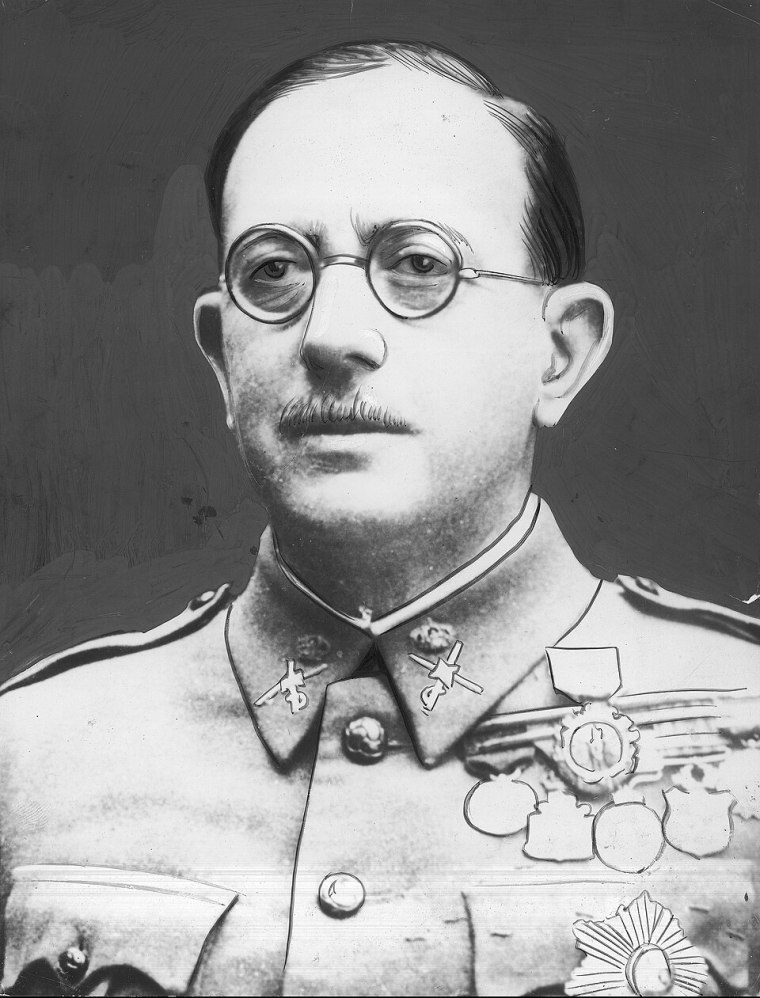
Meanwhile, as the uprising began in Melilla, General Manuel Gómez Morato wasn’t in Tetuán, travelling as Inspector-General of Spanish forces in Morocco and the Republic’s senior military commander in the protectorate. Reports soon reached him that something serious was happening in Melilla, with initial reports suggesting that troops had occupied government buildings and arrested officials. Unlike many officers who joined the rebellion, Gómez Morato remained loyal to the Republic. He attempted to restore control and travelled toward Tetuán, intending to reassert his authority over the protectorate’s garrisons. Had he succeeded, the Republic might have retained at least part of the Army of Africa, which was by far Spain’s most experienced military force. But by the time Gómez Morato reached Tetuán, the situation had already slipped from his hands. Officers sympathetic to General Mola’s conspiracy had been preparing for months. The rebels understood that control of Tetuán meant control of the protectorate’s administration. They therefore moved quickly to occupy the High Commissioner’s offices, military headquarters, communications centres and strategic government buildings. Telephone and telegraph communications became particularly important. Whoever controlled them could coordinate the uprising throughout Morocco and communicate with conspirators in mainland Spain. Gómez Morato soon discovered that many of the officers who should have obeyed his orders had already chosen the rebellion. Several later accounts describe him attempting to issue commands and finding that they were either ignored or actively obstructed. Like Romerales in Melilla, he discovered that formal rank meant little once much of the officer corps had defected.
The exact circumstances of his arrest differ slightly between sources. Nationalist accounts often portray it as a relatively orderly transfer of authority. Republican and later anti-Franco sources tend to emphasise the degree to which Gómez Morato was betrayed by his own subordinates. What appears certain is that he was arrested by rebel officers before he could organise meaningful resistance. Once in custody, the Republic effectively lost its highest-ranking commander in Morocco. Unlike Romerales, Gómez Morato was not executed. He remained a prisoner throughout much of the war before eventually being exchanged. His survival meant that he later provided an important Republican perspective on the collapse of authority in Morocco. Within a matter of hours the Republic had lost both Romerales in Melilla and Gómez Morato in Tetuán. The two most important loyalist commanders in Spanish Morocco were now prisoners. Today Gómez Morato remains one of the least remembered senior generals of the Spanish Civil War. Yet on the evening of 17 July 1936, few men held a more important position. Had he managed to keep even part of the Army of Africa loyal to the Republic, the balance of military power at the outbreak of the war might have been dramatically different. His arrest in Tetuán was therefore not simply the downfall of one officer, but one of the first major victories of the rebellion.
As the afternoon wore on, the last realistic chance of preserving Republican authority in Melilla disappeared. The officers gathered in the Comisión Geográfica had successfully escaped arrest and now moved openly. Lieutenant Colonel Juan Seguí Almuzara, the local Falange chief and principal organiser of the conspiracy in eastern Morocco, assumed a leading role. Supported by officers such as Lieutenant Colonel Darío Gazapo Valdés and by troops from the Foreign Legion, the rebels began taking control of the city’s strategic infrastructure.
Ceuta’s role is often overshadowed by Melilla, but its capture was strategically vital. Situated on the African side of the Strait of Gibraltar, the city controlled one of the key gateways between Morocco and mainland Spain. The leading rebel figure in Ceuta was Colonel José Enrique Varela, one of the most respected officers in the Spanish Army and already deeply involved in the conspiracy. A veteran of the Rif Wars and a committed monarchist, Varela had spent years opposing the Republic and was regarded as one of the movement’s most capable military leaders. Rebel officers moved against the city’s Republican authorities. Military headquarters were occupied, communications centres secured, and strategic positions throughout the city placed under military control. The harbour received particular attention because it would later play a critical role in transporting troops across the Strait of Gibraltar. Republican officials were arrested, although the surviving documentation is less complete than for Melilla. Civil servants, police officers regarded as unreliable, left-wing activists and trade union leaders were among those targeted. As elsewhere in Morocco, the first arrests had occurred before any major fighting had taken place. One revealing feature of events in Ceuta was the speed with which civilian Falangists appeared alongside the military. Although the army remained firmly in command, Falangist activists assisted in identifying political opponents and consolidating control. Their appearance mirrored developments in Melilla and provided further evidence that preparations for repression had begun before the uprising itself.
For the Republic, the consequences were disastrous. Within a single afternoon and evening, most of Spanish Morocco had slipped from government control. By nightfall the rebels had effectively secured control of the Army of Africa, the most experienced military force available to Spain. Its ranks included approximately 30,000 to 40,000 troops, among them the battle-hardened soldiers of the Spanish Foreign Legion and the Moroccan Regulares. Many of their officers had spent years fighting in the Rif Wars and possessed a level of combat experience rare in the Spanish Army. Although the wider conflict had barely begun, the insurgents had already gained possession of what would become one of their greatest military advantages.
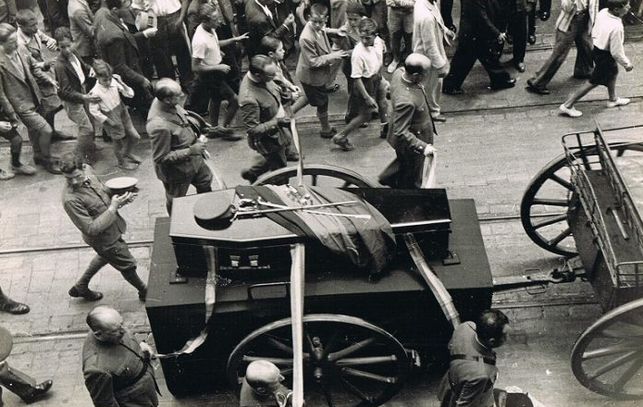
Hundreds of kilometres away in Las Palmas, General Francisco Franco monitored developments closely. He was staying at Hotel Madrid in Las Palmas after attending the funeral of General Amado Balmes earlier that day. Contrary to the image later promoted by Francoist propaganda, he had not initiated the uprising in Melilla and played no direct role in the first seizures of power in Morocco, and the rebellion had begun without him. During the evening, however, between 9:00pm-10:00pm Franco had publicly committed himself to the movement. In a manifesto broadcast by radio, he argued that Spain had fallen victim to anarchy which reigned across the country, authority had collapsed, revolutionary forces threatened Spain, and the armed forces were acting to restore order and national unity. Presenting the army as the defender of the nation, he called upon Spaniards to support military intervention in order to restore order and save the country from what he portrayed as impending collapse. The language was carefully chosen. Rather than announcing a dictatorship or civil war, Franco presented the false narrative that the uprising as a patriotic act of national salvation from all who felt a sacred love for Spain. The reality was that the rich and powerful were frightened that the general population were gaining control over their own lives.
Prime Minister Santiago Casares Quiroga had spent much of the evening receiving reports and attempting to determine how widespread the rebellion was. The problem was uncertainty, as they had no idea which mainland garrisons would join. When the first public reports appeared in the evening of 17 July, government radio broadcasts and press agencies acknowledged disturbances in Morocco, but often downplayed them. One official communication famously assured Spaniards that, ‘nobody, absolutely nobody, has joined this absurd undertaking in the Peninsula.’

