The assassination of José Calvo Sotelo on 13 July 1936 was one of the most consequential political murders in modern Spanish history. Not because political violence was unusual, but that appeared to become the final straw which saw a months-long coup plan finally get launched.
By the summer of 1936, Calvo Sotelo had become the most prominent voice of the monarchist right. A former finance minister under the dictatorship of Miguel Primo de Rivera, he had returned from exile after the fall of the monarchy and emerged as leader of the Bloque Nacional (National Bloc), a right-wing monarchist coalition. Calvo Sotelo regarded the parliamentary system as a failure and increasingly argued that Spain required a strong state capable of restoring order. To supporters he represented authority, patriotism and resistance to revolution, but was actually a representative of radical reactionary movement that was preparing to destroy the Republic. He openly advocated for the end of parliaments and democracy, to end giving people the opportunity to vote, and make Spain an authoritarian state.

His speeches in the Cortes became increasingly confrontational during the first half of 1936. Following the Popular Front’s electoral victory in February, Spain experienced an escalating wave of political violence. Churches were attacked, Falangists and left-wing activists exchanged gunfire in the streets, strikes spread across the country, and political funerals often became demonstrations. Calvo Sotelo used these developments relentlessly against the government. In parliamentary debates he recited lists of attacks, murders and disturbances, arguing that the Republic had lost control of the country. The most famous of these exchanges occurred on 16 June 1936. During a stormy session of the Cortes, Calvo Sotelo accused the government of presiding over disorder and allowing revolutionary forces to operate with impunity. The debate descended into furious argument. Prime Minister Santiago Casares Quiroga rejected the accusations and blamed the right for encouraging conspiracy. Other deputies joined the confrontation. Calvo Sotelo’s defended his authoritarian corporative ideal and announced, ‘If that is the fascist State, I declare myself a fascist,’ and called for military action the government and the people. Prime Minister Santiago Casares Quiroga announced he would hold Calvo Sotelo responsible if any military coup harmed Spain and her democracy, and Calvo Sotelo declared it was better ‘to die with glory than to live with vilification.’ Calvo Sotelo was threatened with violence even in parliament sittings, and seemed to relish stirring up hatred, and happily announced he knew he was on leftist kill lists.
At the same time, military officers across Spain were conspiring against the Republic. General Emilio Mola had spent months organising a military uprising. Monarchist groups were providing money and political support to anti-Republican movements. Although Calvo Sotelo was not directing the conspiracy, many on the left viewed him as a civilian ally of those preparing to overthrow the government. His prominence ensured that he occupied a unique position in Spanish politics as one of the most recognisable opponents of the Republic.
The immediate chain of events that led to his death began on the evening of 12 July. Lieutenant José Castillo, an Cuerpo de Seguridad y Asalto, Assault Guard officer and socialist activist, was shot and killed in Madrid. Castillo was a member of the anti-fascist military organisation UMRA, he had been involved in suppressing right-wing unrest and had acquired numerous enemies among Falangists and monarchists. News of his death spread quickly through socialist circles and among fellow Assault Guards, and friends, colleagues and political allies gathered during the evening and night. They knew right-wing extremists had murdered Castillo and demanded retaliation. Among those present was Captain Fernando Condés Romero, a close friend of the dead officer. Also present were other members of the socialist militia La Motorizada, including Luis Cuenca Estevas, a bodyguard attached to the socialist leader Indalecio Prieto.
Exactly what was decided during those hours remains one of the most contested questions in the history of the Second Republic. Testimony collected later was often contradictory, and the outbreak of civil war prevented a full investigation. What is known is that a mixed group of Assault Guards, police officers and socialist militants left Pontejos Barracks in official vehicles during the early hours of 13 July. Several later accounts suggested that the original objective may have been José María Gil-Robles, leader of the conservative CEDA. Whether or not this was true, the expedition eventually focused on Calvo Sotelo.
Between 2am and 3am, police van no. 17, which could seat up to sixteen people in five rows, arrived at Calvo Sotelo home on Calle de Velázquez , and Calvo Sotelo opened the door himself, believing it safe for his family and staff, given the officials present including Captain Condés. His house was given a quick, rough search and Calvo Sotelo tried to use parliamentary immunity to avoid arrest, but went quietly, warning his wife he suspected he would die.
The van was driven by Assault Guard Orencio Bayo Cambrenero, with Captain Condés in the middle, and José del Rey Hernández in civilian clothing. The second row sat Ricardo Cruz Cousillos and two unknown men, and Calvo Sotelo was placed in the third row between Aniceto Castro Piñeiro and an unknown man. In the fourth row, which was supposed to have men facing those in row five, was four socialists – Santiago Carcés Arroyo, Luis Cuenca Estevas, Federico Coello, and Francisco Ordéñez Peña. The back seat had three more Assault Guards, Esteban Seco and Bienvenido Perez Rojo, and an unknown man.
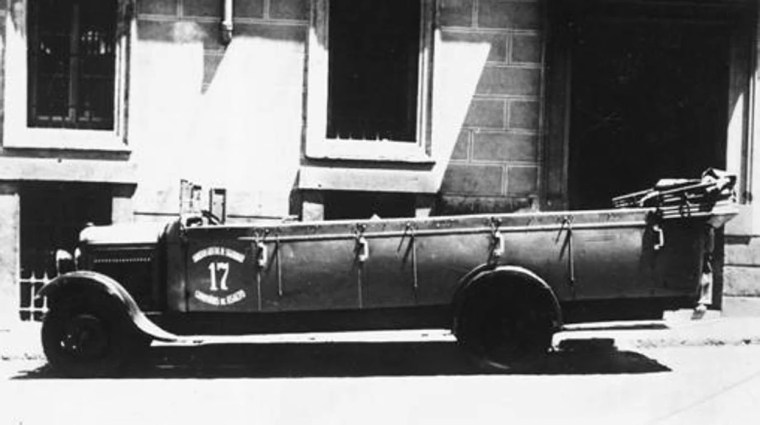
Soon after leaving Velázquez Street, they headed down Alcalá Street and turned onto Ayala Street when Luis Cuenca turned around and drew a pistol, and shot Calvo Sotelo twice in the back of the head. They then allegedly stopped by a parked car which had two of Jose del Castillo’s friends inside, Alfonso Barbeta and Máximo Moreno, and three others (including possibly including León Lupión and Antonio Moreno), and they paused to chat. Then, just after 4am, Esteban Fernández Sánchez and Daniel Tejero Cabello, two gravediggers at Cemetario del Este opened the gates to an official vehicle asking to drop off the undocumented corpse of a night-watchman, which was left on the mortuary floor. Neither men knew it was Calvo Sotelo, and were suspicious as the man was well dressed. Multiple claims and theories have been shared on what came after, though what is known for sure was all the men involved were told to stay silent back at the barracks, and the van was cleaned out.
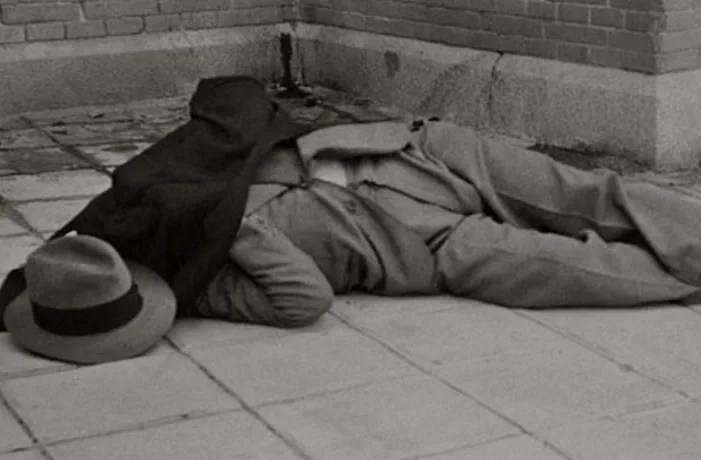
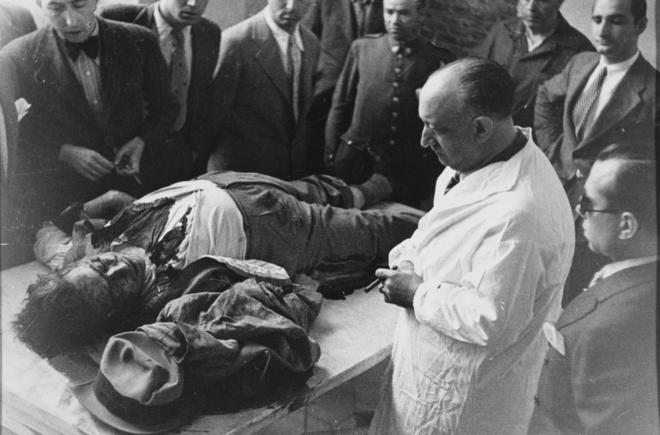
Calvo Sotelo’s wife had raised the alarm as soon as he disappeared, calling on family and friends to find out what was happening. By dawn various groups and their leaders had swung into action, but knew how dire the situation was. By 9am, the morgue called about the unidentified body, and soon Calvo Sotelo was identified and his family arrived at the cemetery along with a media contingent.
At 8am, Socialist leader and editor of the PSOE newspaper El Socialista Julián Zugazagoitia, received a visitor, whom he never named. The man, now believed but never identified as Luis Cuenca, told Zugazagoitia that he had killed Calvo Sotelo. ‘In the street, still silent and dark at night, a van of Assault Guards was waiting. They got the conspirators into the car and forced Calvo Sotelo to get in. The van started up. Calvo Sotelo did not utter a word of complaint or protest. Was he praying? In the seat behind him, two men carried their guns. One of them nudged his companion, the latter raised his gun, placed it at Calvo Sotelo’s head and fired twice. Death must have been instantaneous. The dead man’s head bent over his chest and the body, in a swerve of the vehicle, leaned against the guard on the right (likely Piñeiro). As everything was foreseen, the driver took the direction of the cemetery and there, in the morgue, they left the body of the victim, where a few hours later it had to be discovered by his friends, disturbed with the loss that deprived them, at the same time, of an esteemed person and of a leader. As impressive as the story my interlocutor had told me was, I was even more impressed, without knowing why, by the clarification with which he ended the interview. “Before deciding to execute the reprisal we were hesitating whether to go to Gil-Robles’ or Calvo Sotelo’s house. We decided on the latter with the purpose of returning for Gil-Robles if we ended up soon at Calvo Sotelo’s house.” After my confidant had left, a feeling of disgust and uneasiness came over my body’ – Zugazagoitia, Julián (2007) [1940]. Guerra y vicisitudes de los españoles.
It was Captain Fernando Condés of the Guardia Civil who was more likely to blow open the whole assassination, when he arrived at PSOE headquarters and tearfully confessed to what had happened in the night. He had not believed it was going to be a killing, he claimed, only a kidnapping, though he didn’t think Calvo Sotelo was worth saving either. Now he knew the death would be blamed on the entire government, the entire Republican movement.
The government attempted to respond. Investigations began and some participants were identified and interrogated, and an autopsy was performed. The hastily cleaned van still had blood in its floorboards, and logbooks of the vans were missing. News and hysteria had taken over and Luis Cuenca was seen in a restaurant getting upset that the truth of the night was not being reported, accidentally implicating himself in public. Captain Condés was reported as hiding in the home of PSOE politician Margarita Nelken, as one of her bodyguards, del Rey, was also in the van that night. Whether Nelken ever harboured Condés has never been proven, and he was ready to kill himself over what he had done, only to be restrained by others.
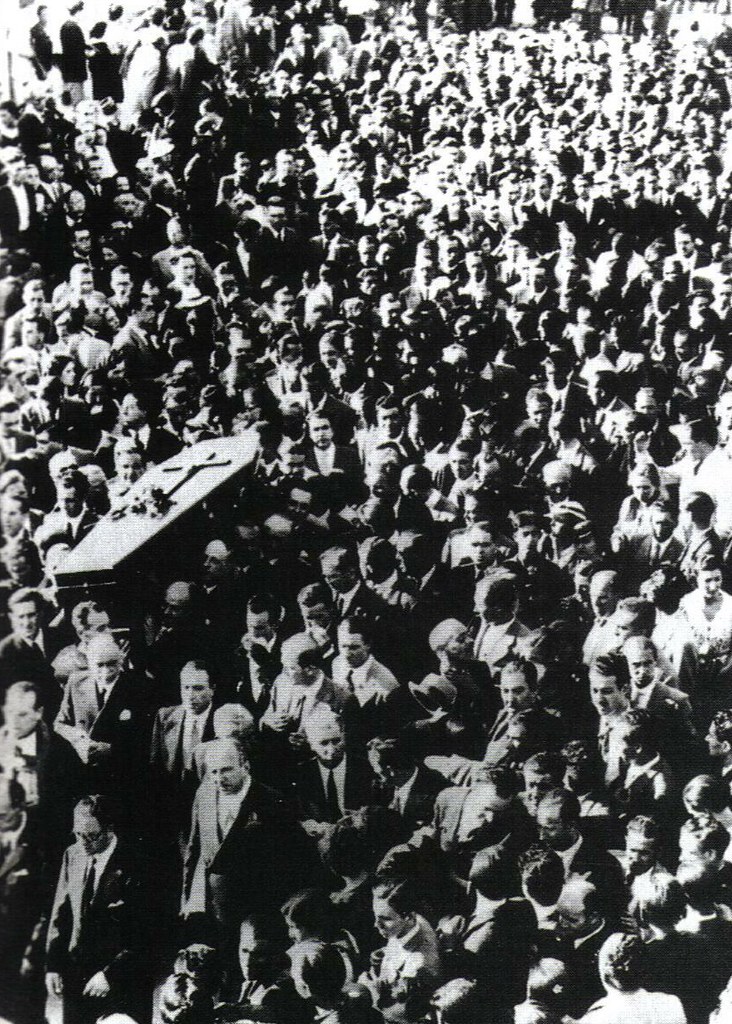
Public vigils and memorials for Calvo Sotelo were banned that night, furthering angering right-wing crowds, though the government claimed it was to prevent what would have been inevitable street violence. The investigation into the death was slow and haphazard given the breakdown of society, and the outbreak of war a few days later meant everything came to a halt. The funeral held on 14 July drew massive crowds, which were fired up on by left-wing groups. There had been five dozen such killings within just the last month, and while Calvo Sotelo was the most high profile killing, the outpouring of support at the funeral was not new; both sides had seen huge turnouts and inevitable violence.
As war broke out, Fernando Condés and Luis Cuenca both joined the Battle of Guadarrama just north of Madrid. Cuenca died on July 22 while attempting to take Somosierra mountains. Condés was wounded nearby on July 23 and died three days later in Madrid, receiving a huge funeral and eulogies lamenting his loss. The others involved in the assassination were promoted within the Republican forces, with Santiago Garcés Arroyo the head of Military Intelligence Service, Francisco Ordóñez Peña became leader of the State Information Service, and Federico Coello became a Military Health commander. Lieutenant Máximo Moreno died on September 22 when his plane crashed, a suspected suicide. Van driver Orencio Bayo was released after arrest on July 25 and returned to his post driving for the Assault Guards. José del Rey Hernández began command of Republican units during the Siege of the Alcázar in Toledo. Several others who were arrested and suspected of knowing or being part of the van operation were all released by August 1936.
On 25 July, a group of militiamen stormed the Supreme Court and stole and destroyed all the files related to the Calvo Sotelo case. All attempts to recreate the paperwork from memory were futile. Everyone involved was now at war, and finding a jury or judge to be impartial on the case would have been impossible. All crimes committed prior to 15 July were cleared under an amnesty in 1937.
After the war, several member of the van were arrested as the Franco dictatorship began their decades of retribution. Aniceto Castro Piñeiro, Bienvenido Pérez Rojo, driver Orencio Bayo Cambronero, and José del Rey Hernández were all rounded up. Del Rey was executed by garrotte in 1943, and in his statement, said the others in the van were innocent, unaware of the mission that they had been sent on that night. Commander Ricardo Burillo, head of the Assault Guard who had ordered everyone to be silent and cover up the death was also executed despite lac of evidence. Van driver Bayo’s death sentence was commuted to thirty years, serving eight years before release. All those who had been promoted to high-ranking diplomatic posts were not arrested. Neither Ricardo Cruz Cousillos, Estaban Secos, or the four unknown guards were ever found, and likely died in the war or were in exile. Neither side of Spanish politics really did a full investigation into the death of Calvo Sotelo, but the flashpoint served its purpose for the right giving them a perfect excuse to launch their plan to overthrow Spain.

