On This Day in the Spanish Civil War: 30 September 1936, including the Fall of Alcalá la Real

See 21 September 1936 for info on Nuestra Señora de la Cabeza
  • Alcalá la Real, Jaén
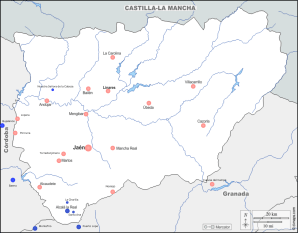
As autumn prepared to arrive in 1936, the province of Jaén and its borders with Córdoba became a critical crucible of the Spanish Civil War. While the military fronts shifted through brutal combat and mass civilian displacements, a radical social revolution was transforming the rural economy in the Republican rear. By the end of September, the region was defined by two starkly contrasting realities – the utopian promise of agricultural collectivisation and the terrifying arrival of Nationalist repression.
.
During the second half of September, a profound socioeconomic transformation swept across the Jaén countryside. As wealthy landowners abandoned their properties or had them seized due to their ties to the military rebellion, the local peasantry stepped into the vacuum.
Driven primarily by the UGT’s Federación Española de Trabajadores de la Tierra (FETT), agricultural workers rapidly organised the collective exploitation of these confiscated estates. The anarcho-syndicalist CNT also saw its participation surge during this period. In a province dominated by massive olive-growing estates (latifundios), securing agrarian control was not just a political victory, it was a vital economic lifeline for the survival of the Republican rear guard. While the seizure of Jaén’s massive latifundios was a unified response to the flight of right-wing landowners, the two dominant unions held radically different visions for the future of the countryside. The tension between the socialist UGT (through the Federación Española de Trabajadores de la Tierra) and the anarchist CNT turned the province into an ideological laboratory.
.

.

For the UGT, collectivisation was a structured, transitional step. They favoured a regulated system that respected small-scale private property owners who did not support the rebellion. The UGT worked closely with the official Republican government, utilising state credits and maintaining a traditional wage system, albeit managed democratically by worker councils. Their focus was on maximising production to sustain the wartime economy through official channels.

.

The CNT viewed the vacuum of power as an opportunity for immediate social revolution. In the villages where they held sway, the anarchists pushed for the complete abolition of private property, capitalism, and sometimes even currency, replacing money with local vouchers. They established libertarian communism, where everything was held in common, and distribution was based on need rather than hours worked. Despite these fierce ideological debates, the material reality of the olive harvest forced compromise. Olive cultivation required a massive, coordinated seasonal labour force. Ultimately, the two unions were forced to form joint committees in many Jaén villages to manage the complex logistics of pressing, storage, and transporting olive oil to the hungry cities of the Republican zone.

.
Meanwhile, as the month drew to a close, the physical frontline began to violently press against the borders of Jaén, triggered by Nationalist advances in eastern Córdoba. In late September, the town of Bujalance, population 11,000-12,000, became a crucial staging ground. Republican forces and predominantly CNT militias retreating from fallen positions in Espejo, Castro del Río, and Baena began concentrating here, but the town was still 100km away from Jaén la Real.
.
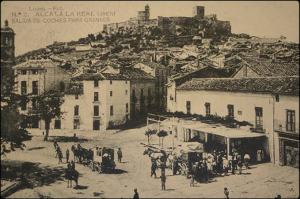
Cabs waiting to head to Granada in Jaén la Real, via unknown
.
In late September, Jaén’s defence relied heavily on trade union militias rather than a regular army. The UGT and CNT quickly formed volunteer battalions from local olive workers and miners. Additionally, the fleeing remnants of the Córdoba militias were actively regrouping just across the border to form the famous Columna Andalucía-Extremadura. These militias were highly motivated and capable of brutal ambush tactics in the rugged olive groves, which explains why the Nationalists could not easily capture the entire Alcalá la Real area, but they completely lacked heavy artillery, tactical communication, and air support. When faced with the professional, motorised manoeuvres of the Nationalist Legionnaires, the civilian militias could not hold linear, fixed positions like the town centre of Alcalá la Real. Their response was primarily defensive: they slowed down the Nationalist advance, secured the rural perimeter, and focused heavily on managing the massive humanitarian crisis of the fleeing refugees.
.
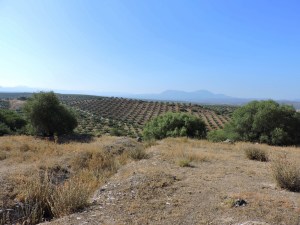
Thousands of terrified civilians fled the Nationalist advance in Córdoba, pouring across the provincial border into Jaén. Refugees choked the 100km of roads from Bujalance, Porcuna, Lopera, and Torredonjimeno towards Alcalá la Real. The population of these towns swelled overnight. Church squares, schools, and olive warehouses were converted into makeshift camps. Clean water and basic foodstuffs ran dangerously low as local Republican committees found themselves completely overwhelmed by the sheer volume of displaced persons. This sudden, overwhelming influx created severe accommodation and supply shortages for the local Republican committees, who struggled to feed and house the displaced families. For those fleeing, the horizon behind them flickered with the flashes of artillery. The psychological toll was immense, with refugees arriving in Torredonjimeno and Lopera shell-shocked, sharing harrowing accounts of Nationalist cavalry hunting down fleeing workers in the fields. This massive influx transformed Jaén from a distant rear guard into an immediate, strained humanitarian frontline (of which, of course, no photographic evidence survives, likewise the attack of Alcalá la Real).
.
The now weed-filled trenches outside Torredonjimen, looking back towards Porcuna, via Miguel Caballero. Torredonjimen dates back to the Paleolithic era.
.
The shifting front culminated in a major disaster for the Republic in southern Jaén on 30 September 1936, when 1,500-2,000 Nationalist forces successfully captured the strategic town of Alcalá la Real. As Nationalist troops breached the defences, panic gripped the local population. An estimated 5,000 residents from Alcalá la Real’s population of 22,000 and its outlying hamlets abandoned their homes, fleeing toward the Republican-held interior of Jaén. This mass civilian evacuation was a chaotic scene of desperation that bled into the first days of October.
.
The end of September saw Nationalist control in the main town of Alcalá la Real and its immediate western districts, establishing a dangerous new bridgehead inside southern Jaén. Nearby settlements like La Charilla and Santa Ana were quickly occupied as the Nationalists extended their reach. The eastern and northern rural areas of the municipality remained firmly in Republican hands. Remarkably, a loyalist Republican municipal administration continued to operate dynamically from these uncaptured rural settlements.
.
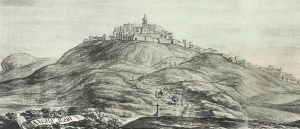
Alcalá la Real has been occupied since the Paleolithic era because of its location, though was built into a larger city after Muslim s arrived in 713AD. Here is sketched in 1668, long after its Christian invasion/takeover. The Fortress of La Mota and the Alcazaba Tower were built in the 13-1th centuries.
.
The arrival of Nationalist rule in Alcalá la Real was accompanied by immediate, systematic violence. On 30 September, a brutal wave of political repression began that would scar the community for days to come. Arrests and summary executions started hours after the occupation. During this initial phase of the takeover, at least 36 people were killed. Nationalist execution squads chose prominent public sites outside the town, carrying out many of the killings along the Priego road. Among the first identified victims slaughtered on 30 September was Feliciano Ramírez Aguilera, a local UGT agricultural worker. His death underscored the primary target of the incoming regime – the very union workers and peasants who had spent the weeks prior dreaming of agrarian reform and collective freedom in the fields of Jaén.
.
The fall of Alcalá la Real on 30 September was also a catastrophic tactical loss dictated by the town’s formidable geography. Known historically as a gateway between Upper Andalucia and the Kingdom of Granada, Alcalá la Real was the linchpin of regional defence. The town is dominated by the Fortaleza de la Mota, a massive medieval hilltop fortress perched over 1,000 metres above sea level. For centuries, this site dictated military movements across the region. By capturing the town, the Nationalists gained a supreme artillery vantage point that allowed them to look down upon and shell the surrounding valleys and Republican communication lines.
.
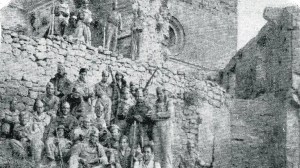
Rare photo of Nationalist men at fortress after taking the town, via Fran Pareja
.
Alcalá la Real also sits directly on the natural transit corridor connecting Granada and Córdoba. Prior to its fall, the Republic could use this position to pressure Nationalist-held Granada. Once the Nationalists secured the town, they effectively plugged a major defensive gap, anchored their southern flank, and created a secure launching pad for future incursions deeper into the wealthy agricultural basin of Jaén. The geography also explains why the municipality was split in two after 30 September. While the Nationalists captured the mountain stronghold and the urban centre, the rugged, broken terrain of the surrounding valleys allowed Republican militias to anchor themselves in the olive groves and isolated hamlets, turning the rural outskirts into a jagged, bloody trench line that would persist for months.

.

  • Valladolid, Old Castile

On 30 September, Republican pilot Julio Alegría Caamaño took off from Getafe with mechanic Facundo Gumiel Garrazosa in a Hispano E-30, officially bound for Los Alcázares in Murcia. Instead, Alegría changed course and flew north into Nationalist territory, landing at Medina de Rioseco in Valladolid province. The landing was  a deliberate defection by the aircraft’s crew rather than a Republican operational flight unexpectedly forced down behind Nationalist lines. Alegría was already an experienced civilian pilot who had joined Republican aviation after the uprising and had flown a series of missions during the opening months of the war. His subsequent career confirms that the flight to Medina de Rioseco represented a change of sides: he entered Nationalist aviation, qualified as a military pilot and later served with several Nationalist flying units. The incident delivered an intact Hispano E-30 and its mechanic into Nationalist hands.

.
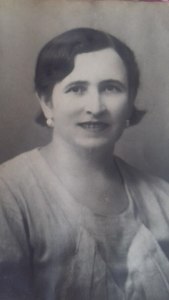
Erundina Álvarez Pérez, via Wikimedia Commons
  • Ourense, Galicia

On the morning of 30 September 1936, five soldiers formed a firing squad at the Campo de Aragón, beside the former San Francisco barracks in Ourense, and shot Erundina Álvarez Pérez. She was thirty-seven years old, a waitress, mother of three daughters, and a politically active woman from Ferreiros, in the municipality of Entrimo. the Nationalist authorities accused her of hiding Francisco Cofán Eiriz, a Republican supporter being sought for his involvement in resistance to the July military uprising.

.

Erundina had been born in Santos, Brazil, in 1899, where her parents, Rosa Pérez and Benito Álvarez, had emigrated from Ferreiros. The family returned to Galicia in 1910, and she grew up in Entrimo before moving to Ourense to work as a waitress. She could read and write and became politically active; accounts of her life describe her as libertarian or anarchist in sympathies, though the surviving official documentation is much less precise about a formal organisational affiliation. She was also an unmarried mother for much of her adult life, raising three daughters, María, Justa and Encarnación, before marrying the considerably older farmer Constante Álvarez González in May 1935.

.

By 1936, Erundina and her daughters were living in Rúa da Liberdade in Ourense. The man she was accused of sheltering, Francisco Cofán Eiriz, had been involved in one of the few attempts to impede the fascist seizure of Ourense in July. Cofán was wanted for participation in the cutting of telegraph lines near the petrol station at the Xardín do Posío, close to the Casa del Pueblo, an attempt to disrupt communications while supporters of the Republic tried to resist the military rebellion. Giving him refuge consequently placed Erundina directly in danger once the Nationalists controlled the city.

.

She was arrested on 23 September, only a week before her death. Accounts based on family testimony state that she was initially imprisoned at Bande, where she suffered beatings, humiliation, and psychological abuse, before being transferred to the San Francisco barracks in Ourense. Her three daughters were left without their mother. A neighbour named Miguel, described by the family as an anarchist, subsequently took the girls on foot from Ourense back to their grandparents at Ferreiros.

.

Seven days after her arrest, Erundina was taken to the Campo de Aragón. The site had been used for executions since 11 August, and would eventually see 133 people shot by firing squad between 1936 and 1939. Erundina was the only woman among those 133 victims. She was killed by the five-man military firing squad on the morning of 30 September and buried the following day in niche 923 of San Francisco cemetery. Five men were also recorded as executed at the Campo de Aragón that morning, on unrelated charges – Francisco Domínguez, Juan Salgado López, Antolín Martínez Basalo, José Ramón Barja García and Juan González de Jesús. Contemporary reporting places their executions at approximately 6.30 am after being condemned by a Consejo de Guerra.

.

Erundina left behind three daughters, aged sixteen, twelve and ten. The youngest, Encarnación, later remembered being taken away with her sisters after their mother’s arrest and never seeing her again. Among the hundreds killed during the repression in Ourense province, Erundina’s case preserves something that aggregate figures cannot: within seven days, a working mother accused of sheltering a Republican could go from arrest to a firing squad.

.

  • Salamanca, Old Castile

On 30 September 1936, the Bishop of Salamanca, Enrique Pla y Deniel, published the pastoral letter Las dos ciudades (The Two Cities). Written little more than two months after the military uprising, it provided one of the clearest early statements of Catholic support for the Nationalist rebellion and presented the Civil War as a struggle in defence of Christianity rather than simply a contest for political power. The title came from St Augustine’s City of God and its division between the City of God and the earthly city. Pla y Deniel applied that religious framework directly to Spain. On one side he placed those fighting for what he described as religion, the patria, and Christian civilisation; on the other he placed forces associated with atheism, revolution, and communism. The Republic itself contained Catholics and parties far removed from revolutionary communism, but this distinction largely disappeared within the bishop’s description of the conflict.

.

Pla y Deniel explicitly defended the military uprising. He argued that the rebellion had become justified because Spain faced revolutionary disorder and the destruction of religion. The severe anti-clerical violence in Republican territory after July 1936. including the killing of priests and members of religious orders and the burning or seizure of churches, gave the Church hierarchy powerful evidence with which to present a Nationalist victory as necessary for the survival of Spanish Catholicism. Most importantly, Las dos ciudades described the conflict as a ‘Crusade’. The word gave the Nationalist war effort a religious meaning: fighting for the rebellion could be presented not merely as service to an army or political movement, but as participation in a struggle for Catholic Spain. This language became increasingly prominent in Nationalist propaganda and in Catholic explanations of the war.

.
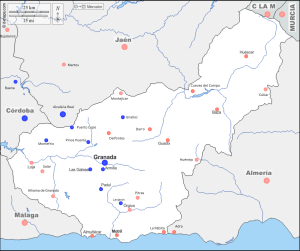
  • Granada, Andalucía
By late September 1936, Granada province was deeply fractured, plagued by active military gridlock, and experiencing a brutal campaign of political repression. The province was physically split between a isolated Nationalist urban pocket and a vast Republican hinterland. Under the command of Military Governor José Valdés Guzmán, the Nationalists held Granada city, the immediate fertile valley surrounding it (the Vega), the critical Armilla airfield, and a narrow territorial corridor extending west toward Seville. They also managed to push south to capture towns like Lanjarón, creating a bridgehead.
.
The Spanish Republic controlled the vast majority of the province’s geography. They held the rugged southern Alpujarras mountains, the eastern territories including Guadix and Baza, and critical towns such as Iznalloz, Loja, Alhama, and Vélez de Benaudalla. There was heavy, active fighting in the weeks leading up to late September, though it was transitioning into a static gridlock. Between 15 and 20 September 1936, the Republicans launched a massive counter-offensive to recapture Granada city and relieve the pressure on the isolated capital but the push failed. Following this defeat, the Republican militias and troops abandoned their offensive strategies and dug into defensive trenches, creating a permanent arc around the Nationalist enclave. While major territorial shifts paused, artillery skirmishes, aerial strafing from the Armilla airfield, and localised mountain raids remained a daily reality.
.
Repression in late September 1936 was severe, highly organised, and actively expanding under Nationalist authority. By late September, Nationalist repression had transitioned from chaotic post-coup street violence into a bureaucratic routine. Overcrowded detention centres in Granada city were systematically cleared via sacas, mass operations where prisoners were driven out to the foothills of the Sierra Nevada to be executed. Between 15 and 20 September alone, at least 77 documented executions occurred across the province as Nationalists secured their lines. Thousands of people were arrested through arbitrary civilian denunciations, and many mass grave sites cannot identify the number of bodies buried or what date the bodies were placed in their hiding places. The ravines between Víznar and Alfacar (where the world-renowned poet Federico García Lorca had been murdered just weeks prior in August) and the San José Cemetery remained the primary killing fields. Entire groups of left-leaning citizens, municipal leaders, and union members captured in nearby towns (such as Lanjarón) were integrated into Granada city’s execution pipelines.
.
Consensus among leading historians of the Spanish Civil War indicates that between 2,000 and 3,000 people had been executed or disappeared in the Nationalist-controlled areas of Granada by the end of September 1936. The period between August and October 1936 was the bloodiest phase of the White Terror in Granada. Nationalist death squads (like the infamous Escuadras Negras or Black Squads) operated with complete impunity, pulling people from their homes nightly. Historical records from the San José Cemetery and the ravines of Víznar and Alfacar show that dozens of people were shot every single day. For instance, documented figures show 42 people executed on a single day (4 September) and at least 77 documented executions over a five-day span later that month (15–20 September). By the end of the war and the immediate post-war years, total Nationalist executions in Granada province reached roughly 4,000 to 5,000 people. This means that more than half of the total repression for the entire conflict occurred during the chaotic, brutal summer and early autumn of 1936.
.
Republican-held areas also saw anti-fascist purges against local landowners, conservatives, and clergy during the early chaotic months of the war, though by late autumn, the centralised Republican government was actively trying to restore formal legal tribunals. These burials are not included in the most mass grave calculations, as the bodies were buried properly in cemeteries, or collected after death to be moved to respected gravesites either after their deaths or after the war ended. As a result, names and figures can be equally obscure as Republican deaths, though the Francoist dictatorship spent nearly 40 years aggressively investigating and documenting Nationalist deaths. Local magistrates, parish priests, and Falangist officials in every Republican-held town in Granada (such as Guadix, Baza, and Huéscar) compiled granular lists of names, dates, and manners of death for every conservative, property owner, or member of the clergy killed during the war.  Because it was designed as a massive propaganda tool to legitimise the military coup in July 1936, early numbers were highly inflated. Modern historians must painstakingly cross-reference these lists with municipal death registries to filter out duplicates, soldiers killed in actual combat, and individuals who simply fled the zone. Total Republican rearguard executions for the entirety of the war in Granada province are calculated at approximately 800 to 1,000 victims.
.
  • Huelva, Andalucía
By late September, Huelva, which had been a massive bastion of working-class Republican resistance during the summer due to its mining basins like Riotinto, was completely broken.

The definitive turning point occurred just before the final week of September. On 19 September 1936, Nationalist columns completed the occupation of the rugged northern Sierra by capturing the absolute final Republican-held municipalities in the province: Hinojales, Cumbres de Enmedio, Cumbres Mayores, and Cumbres de San Bartolomé.  With zero organized Republican military or administrative presence left by September 24–30, Huelva transitioned entirely into a Nationalist rear area. The military authority under General Gonzalo Queipo de Llano shifted from frontline warfare to imposing total civil subjugation through strict military governance, heavy economic confiscations, and harsh censorship. The final week of the month was defined by highly decentralised, systematic executions. To obscure the numbers, Nationalist squads routinely rounded up victims in one town and drove them to neighbouring municipal cemeteries to be shot without death certificates, leaving thousands buried anonymously in roadside trenches.

.

Historians place the final number of victims executed by the Nationalists in Huelva at between 5,000 and 6,000 people. By 30 September 1936, it is estimated that at least 3,500 to 4,000 of these individuals had already been murdered. Because Huelva was home to a highly organized left-wing mining community (the Rio Tinto basin), the Nationalist columns under command of General Queipo de Llano acted with exceptional ferocity. Massive, systematic executions took place in Huelva city itself, as well as along the walls of regional municipal cemeteries.

.

  • Cadiz, Andalucía
Unlike Huelva, most of Cádiz’s urban centres and naval bases (like Jerez and Algeciras) had fallen instantly in July 1936. However, by mid-September, its towering mountain range, the Sierra de Cádiz, was still acting as a fierce fortress for thousands of fleeing Republicans. The final week of September saw the final, bloody crushing of these mountain pockets. Rebel columns, heavily aided by the Tercio Mora-Figueroa and highly trained Moroccan Regulares, successfully squeezed the last resistance points bordering the Serranía de Ronda. Towns like Grazalema, which had stood as a natural fortress blocking the Nationalists, were definitively conquered. September 30, the fighting had evolved into a sweeping paramilitary “cleaning operation” in the dense valleys and hills. Terrified leftist civilians from across the province had fled to remote woodland refuges like La Sauceda. During the last days of September, these pockets were systematically encircled by land and targeted by Nationalist airstrikes.
.
The final week of September in Cádiz was marked by unchecked paramilitary terror. Ruthless Falangist squadrons, such as the infamous Los Leones de Rota (Lions of Rota) commanded by Fernando Zamacola, operated with complete impunity alongside the Civil Guard. They moved through newly captured villages (like Benamahoma) conducting mass looting, public humiliations, and systemic executions of suspected sympathisers. They were commanded by Fernando Zamacola Abrisqueta, a fanatical Falangist street fighter with a pre-war criminal record. The commander of the local Civil Guard post, Cabo (Corporal) Juan Vadillo Cano, who acted as the town’s de facto military ruler. Together, Vadillo and Zamacola’s squad transformed the area into a regional processing centre for political murder. They did not just kill residents of Benamahoma; their squad used a single transport truck to raid nearby towns like El Bosque, Prado del Rey, Villamartín, and Benaocaz, dragging prisoners back to Benamahoma to be shot.
.
The executions reached an industrial pace throughout August and September 1936. The killings were arbitrary, driven by denunciation, greed, and political cleansing. Left-wing sympathisers, municipal workers, trade unionists, and even their families were murdered, among the victims was a local carter, Manuel Salguero, along with his son and his teenage grandson.To deliberately conceal the scope of their actions from the local populations, Zamacola and his sub-chiefs rarely executed prisoners in their home villages. They transported them under the cover of night, shot them, and threw them into roadside ditches or mass pits inside Benamahoma’s old cemetery.  
.
The violence, extortion, and rapes committed by Cabo Vadillo and the Lions of Rota were so extreme that they alienated even local conservative landowners, who complained that if this is the Falange, we prefer the Reds to return. In 1937, the Nationalist military hierarchy launched an internal judicial inquiry (Procedimiento Sumarísimo Nº 1098) against Cabo Vadillo. While the military court explicitly ruled that the mass executions were completely legal and justified by the Bando de Guerra (Martial Law), Vadillo was sentenced to 17 years in prison. Crucially, he was not convicted for the political slaughter, but rather for a non-sanctioned crime: the rape and murder of a local woman. This trial created a formal paper trail that modern historians used to piece together the mechanics of the massacre.
.
For decades under the dictatorship, the mass graves were ignored. However, extensive archaeological and forensic campaigns completely transformed the site. Between 2017 and recent years, state-backed teams excavated 19 separate mass graves within the old cemetery of Benamahoma. The forensic evidence matched historical records perfectly, revealing skeletal remains of adult working-class men, several young adults, and teenagers. Following the completion of the exhumations, the site was officially inaugurated as the Parque de la Memoria de Benamahoma (Benamahoma Memory Park), where the 68 victims were reburied with full names, honours, and dignified markers.
.
The memorial site at Benamahoma, via Todolosnombres

.

The baseline historical consensus for Nationalist repression across the 41 municipalities of Cádiz is between 3,000 and 4,000 documented executions. By 30 September 1936, nearly 2,500 to 3,000 of these deaths occurred in the frantic first ten weeks of the war. Cádiz fell almost instantly to the rebel forces arriving from North Africa. Rather than combat deaths, the toll here was almost exclusively political cleansing of the civilian population. Mayors, union workers, teachers, and freemasons were systematically rounded up by paramilitary groups like the Zamacola squadrons. The final week of September saw these numbers spike as the Nationalists overran the refugee strongholds in the Sierra de Cádiz and executed those who had fled into the mountains. Together with Seville, Córdoba, and Badajoz, Huelva and Cádiz formed a block of five southwestern provinces that bore the absolute brunt of the early Francoist sweep, combining for more than 25,000 extrajudicial executions in the opening months of the war alone.

Got a comment, question or suggestion? Know who took a photo? Have questions about a particular date or event?