- Madrid
On 4 September 1936, José Giral resigned as Prime Minister after the Republican military situation deteriorated sharply following the Nationalist capture of Talavera de la Reina. He was replaced by Francisco Largo Caballero, who became both Prime Minister and Minister of War.
Largo Caballero formed a broader government intended to bring the Republic’s divided political forces into a more effective wartime administration. Jesús Hernández and Vicente Uribe became the first Communist ministers to enter a Republican government, while Indalecio Prieto took responsibility for the Navy and Air Ministry. Juan Negrín became Minister of Finance and Ángel Galarza became Minister of the Interior. The new government brought together representatives of the Socialist, Communist, Republican, and other forces supporting the Republic at a moment when the Nationalist advance was approaching Madrid. Largo Caballero’s government therefore faced two immediate problems: maintaining political unity while reorganising the Republic’s increasingly fragmented military and administrative machinery.
The change of government was also a response to the military crisis. Republican forces had suffered a series of defeats during the Nationalist advance through Extremadura and Toledo, culminating in the loss of Talavera on the previous day. Largo Caballero’s appointment marked the beginning of a determined attempt to place the war effort under stronger central direction.
After taking office on 4 September, Largo Caballero began the difficult process of rebuilding a central military command capable of directing the Republican war effort. The July collapse had left much of the Republican military system divided between regular army units, workers’ and political militias, regional authorities, and competing political organisations. The new government sought to bring these forces increasingly under the authority of the central state. Military commands, recruitment, supplies, training, and the organisation of militia units were progressively placed under central direction, while the government worked towards creating a more unified Republican army. The Republican government was attempting to transform the improvised armed forces that had emerged during the July uprising into a coordinated military structure capable of defending Madrid and conducting a sustained war. The eventual creation of the Popular Army would be one of the principal results of this process.
- Betxí, Castellón, Valencia
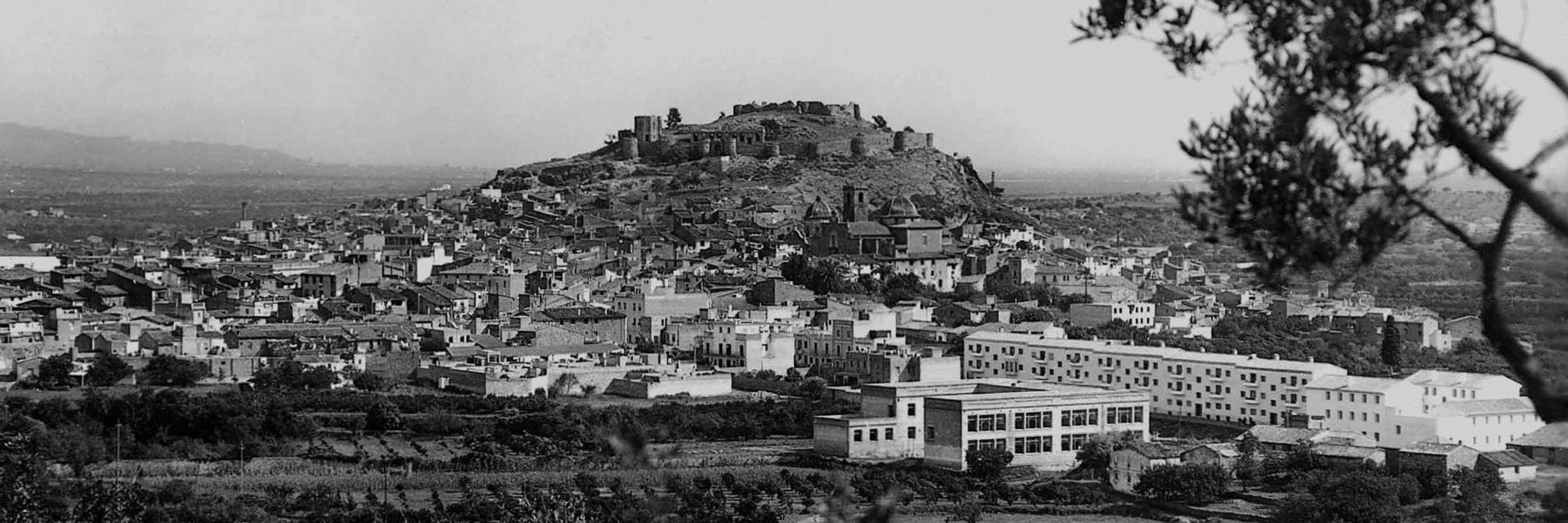
On 4 September 1936, approximately 26 people from Onda were killed at Betxí, in Castellón province. The victims had been taken from Onda during the Republican repression that followed the outbreak of the Civil War and were subsequently killed at Betxí.
The group represents one of the largest clearly identifiable mass killings recorded in Castellón province during September 1936. The concentration of victims from Onda at an execution site outside their home municipality also illustrates how prisoners and detainees were sometimes moved between towns before being killed. The mass grave site at Betxí had 76 victims over the course of the war, all unidentified and moved to the Valle de Cuelgamuros in 1959.
- Barcelona, Catalonia
During the first days of September 1936, the CNT organised a further mobilisation of militia forces in Barcelona and the surrounding industrial towns for the Aragón front. The mobilisation involved several groups being formed or dispatched during the same week, including the 4 de Septiembre Column in Barcelona, the Malatesta Column in Mataró, and a contingent of 120 CNT militiamen who left Terrassa for the front.
In Barcelona, the 4 de Septiembre Column was formed to reinforce the Republican forces fighting in Aragón. Its creation reflected the continuing effort by the CNT to organise its own military formations rather than rely solely on the existing Republican Army structure. The column joined the stream of anarchist militia units leaving Catalonia for the Aragón front, where CNT forces already held extensive sections of the front east of Zaragoza.
At Mataró, the Malatesta Column was organised during the same mobilisation period. Named after the Italian anarchist Errico Malatesta, the column was associated with the local CNT movement and was intended for service on the Aragón front. Its formation demonstrated that the mobilisation was not confined to Barcelona itself: CNT organisations in the industrial towns along the Catalan coast and in the surrounding region were raising men and sending them towards the front. From Terrassa, a further 120 CNT militiamen departed for Aragón during the same period. Terrassa was one of the major industrial centres of inland Catalonia, with a strong organised labour movement, and its CNT organisation contributed men to the expanding militia forces.
The three mobilisations formed part of the same wider movement of Catalan CNT forces towards Aragón during the first week of September. Men were being recruited, organised into locally based columns, equipped, and sent eastward towards the front as the Republican and anarchist forces continued to hold positions across Aragón. The mobilisation strengthened the CNT’s military presence at a time when the organisation was still maintaining considerable control over the Republican war effort in Catalonia while fighting continued along the Aragón front.
Museum of the Asturian People, Constantino Suárez (FF)
- Oviedo, Asturias
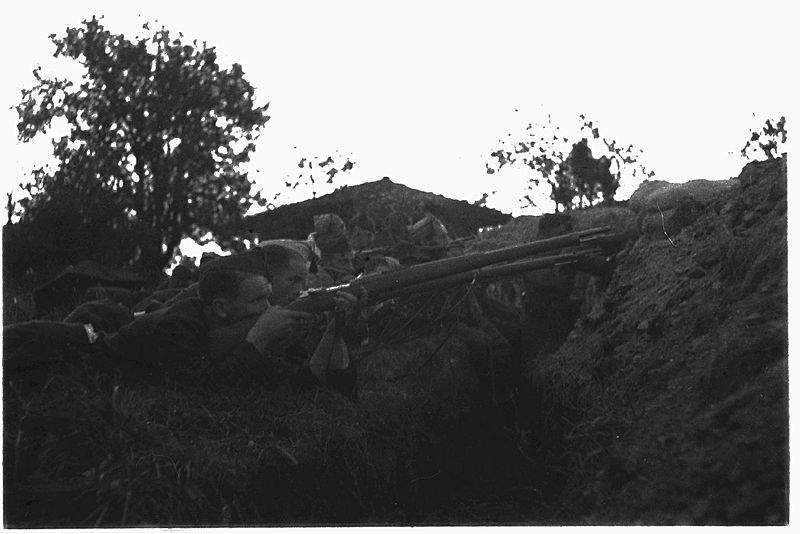
September opened with the Republican forces surrounding Oviedo still trying to reduce the Nationalist-held perimeter before relief could arrive from Galicia. Colonel Antonio Aranda commanded several thousand soldiers, Guardia Civil, Assault Guards and armed volunteers inside the enclave, while the substantially larger Republican force occupied positions around the city.
On 1 September, fighting had concentrated around El Mercadín, on the eastern side of the perimeter. Republican troops were pressing towards Oviedo when Aranda ordered a counterattack that captured the position. El Mercadín remained exposed to further Republican attacks, but its occupation pushed the Nationalist line outwards and gave the garrison a stronger eastern position.
The character of the siege changed noticeably from 4 September, when Republican aircraft and artillery began several days of particularly heavy bombardment. Aircraft repeatedly crossed the city while batteries around Oviedo fired into both the defensive perimeter and urban area. Republican government communiqués recorded continuing attacks on 5, 6, 7 and 8 September, alongside ground operations around the city.
For Oviedo’s civilian population, the bombardment meant increasingly long periods in cellars, basements and improvised shelters. Fires broke out in damaged buildings, while interruptions to water, electricity and other services added to conditions inside the surrounded city. The bombardment did not force Aranda to surrender, and the Republican command was already preparing a much larger ground attack for 8 September.
- Seville
By the beginning of September 1936, most of Sevilla province was already in Nationalist hands, but a group of Republican-held municipalities remained in the Sierra Sur, along the mountainous frontier with Málaga province. These towns formed the last Republican enclave inside the province and were increasingly isolated as Nationalist forces advanced from Osuna and Estepa towards the Málaga frontier.
The operation was led by Commander Luis Redondo, whose Requeté column had become one of the principal Nationalist formations operating in southern Sevilla. Redondo’s forces moved systematically through the remaining Republican-held towns, combining artillery and infantry attacks with the rapid occupation of each position. The advance was not simply a military operation against isolated villages: the capture of each town was followed by arrests, executions, and the flight of civilians towards the remaining Republican territory around Campillos and Málaga.
On 4 September, Redondo’s column attacked El Saucejo, one of the largest remaining Republican-held communities in the Sierra Sur. The town had a population of more than 6,000 people and had remained outside Nationalist control after the initial fighting in July. The Republican militia defending the area withdrew as the Nationalist forces approached, moving towards Málaga province. By the end of the day El Saucejo was in Nationalist hands.
The occupation was followed immediately by repression. Arrests began as Nationalist forces established themselves in the town, and people associated with Republican organisations, trade unions, or the local left were taken into custody. The scale of the subsequent killing was enormous for a community of this size. The cemetery contains a mass grave estimated to hold between 150 and 300 people, while 104 identified victims belong to the initial period of repression between 1936 and early 1937. The surviving documentation records a much larger total of victims associated with El Saucejo across the war and post-war periods.
The Republican forces did not immediately abandon the area. On 5 September, they counter-attacked Nationalist troops outside El Saucejo. Redondo’s Requeté column responded by moving towards the Cortijo de Gobantes. Contemporary Nationalist accounts claimed that the counter-attack left 22 Republican dead and five prisoners, although figures reported by the victorious side should be treated as contemporary claims rather than independently verified casualty totals.
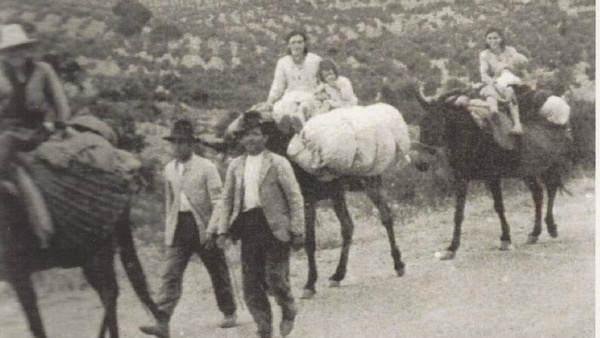
Redondo then continued eastwards and north-eastwards through the remaining Republican-held communities. On 7 September, his column attacked Los Corrales. Artillery was brought forward and fired on the town before the Nationalists occupied it. The bombardment caused widespread panic, and hundreds of civilians and Republican supporters fled from the town towards the surrounding cortijos and, particularly, towards Campillos and Málaga province. Los Corrales had a population of about 3,600 in the period, so the sudden flight represented a substantial disruption to the community. Nationalist repression began after the occupation. Seventy-nine local victims have been identified, most of them agricultural workers, and the cemetery contains three graves associated with the killings. The number is especially significant because the occupation itself had involved little prolonged fighting inside the town; much of the subsequent violence was directed against civilians and people identified with the Republican side.
Martín de la Jara fell during the following stage of the advance. Sources differ by a day, placing the Nationalist occupation on 8 or 9 September. The town was one of the remaining Republican positions between Los Corrales and the Sierra Sur frontier. Its capture further reduced the territory available to Republican forces and pushed the retreating population towards the Málaga side of the provincial boundary.
- Granada
On 4 September 1936, forty-two people were executed in Granada under Nationalist authority. The killings took place as the city’s detention system continued to supply prisoners for execution, with the San José cemetery and associated execution sites serving as major locations for the repression. Among those killed was a group of eleven prisoners from Lanjarón. They had been detained in the town after Nationalist forces established control and were subsequently transferred to Granada, where they were executed with other prisoners. The killings formed part of the continuing Nationalist repression in Granada province. Large groups of prisoners were being removed from overcrowded detention facilities and taken to execution sites around the provincial capital, where hundreds of people were killed during the first months of Nationalist rule.
A mass grave was located inside the Lanjarón cemetery, right where the wall enclosing the grounds stood. When the cemetery was expanded, the grave ended up inside the grounds, beneath a block of niches. The original grave was opened before the cemetery expansion, and the remaining loose bones were placed in a drum to prevent their complete loss. The drum was then reburied, and the current block of niches was built on top of it. The original number of bodies was quite large, no fewer than 50-60, but it is unknown how many were preserved in the drum, as not many skulls were recovered.
On 6 September 1936, 15 prisoners were executed in Granada city under Nationalist authority. The killings formed part of the continuing executions carried out at the San José cemetery and associated sites as Nationalist forces consolidated their control of the city and surrounding province. On the same day, 17 residents of nearby Güéjar Sierra were executed in Granada after being detained during the Nationalist consolidation of the area. Güéjar Sierra lies east of Granada, close to the mountain approaches to the city. Its population had been caught up in the struggle for control of the surrounding area during the opening weeks of the war. Those detained were subsequently taken into Nationalist custody and brought into the system of imprisonment and execution centred on Granada.
Órgiva, in the area in the Alpujarra region became an extermination site for Republicans. The massacre was so brutal that it was considered the second cemetery of Órgiva and one of the largest mass graves of the Civil War. The various mass graves are in the relatively good condition that any ravine can be. Years ago, some were covered with rubble, some were covered by the road, others were altered and desecrated by the construction of dams, and some are now located in an area cultivated with fruit trees. Finally, the one on private property was altered a few years ago when they tried to remove earth for some construction work and the machinery unearthed human bones. The machinery stopped working, and the owner planted olive trees. More than 5,000 people remained hidden in the region. In September 2006, a monolith was inaugurated in homage to the victims.
- León
By September 1936, most of León province was controlled by the Nationalists, but the mountainous northern edge remained connected to Republican-held Asturias. Towns including Pola de Gordón, Villamanín and Busdongo, together with neighbouring mining and mountain communities, formed a narrow Republican-held zone immediately behind the front. This was not simply an area occupied by Republican militia. It contained established local residents alongside political activists and civilians who had escaped from Nationalist-controlled parts of León, creating a population that had to be fed, housed, policed and administered while fighting continued only a short distance away.
The concentration of refugees also changed the political character of the area. Socialists, anarchists, Communists and Republicans who could no longer remain safely in Nationalist-held towns gathered in the northern valleys, while militia units passed through on their way to positions along the mountain front. Local committees initially carried much of the responsibility for maintaining order and obtaining supplies, but Republican organisations increasingly attempted to coordinate these separate communities from Villamanín and the Pola de Gordón area.
One of the clearest signs that a functioning administration had developed was the Boletín de Guerra del Frente Popular de León, printed at Busdongo by the Audelita press. Issue no. 4 appeared on 4 September. Despite its title, the bulletin contained considerably more than reports from the front. It published military communiqués, regulations governing food and supplies, instructions from the public-order authorities, political and trade-union notices, donations, transport information and administrative decisions. For people living in Republican northern León, it effectively served as an official gazette for a provincial administration that had lost access to León city.
Food was one of its most immediate problems. Committees supervised grain, flour, bread, livestock and other agricultural produce, while farmers were instructed to continue sowing despite the disruption of the war. Movement of livestock and food between communities could be controlled, communal stores were established, and goods could be requisitioned when required for civilians, hospitals or the front. Traders who sold above authorised limits faced fines of between 100 and 1,000 pesetas, while wheat and rye could not be milled for animal feed when grain suitable for bread was scarce. The authorities also prohibited the sale of alcoholic drinks.
Initially, officials attempted to pay farmers for produce taken for public use, but by mid-September the Republican administration was running short of cash. The Comité para la Defensa de la República admitted that it no longer had sufficient money to continue paying for all the food it needed. Local committees holding proceeds from food sales were instructed to hand over available funds, while private individuals with cash were asked to contribute. As the financial position deteriorated, the distinction between purchasing supplies and compulsory requisition became increasingly difficult to maintain.
The authorities were equally concerned about information reaching the population. Private radio sets were ordered confiscated because residents could listen to Nationalist broadcasts and repeat what they heard. Rather than prohibit radio altogether, officials wanted each settlement to have a single publicly controlled receiver, allowing news to be heard while restricting access to broadcasts coming from the opposing side. In isolated mountain communities, where radio provided one of the quickest ways of learning what was happening elsewhere in Spain, control of the receiver also meant considerable control over wartime information.
Housing presented another practical problem. Militia units moving through the Republican zone needed somewhere to sleep, while political and administrative committees required offices from which to work. During September, residents could be required to make houses and other private buildings available for militia accommodation or official use when the authorities considered it necessary. Civilians were consequently supporting a front not only through food and donations but sometimes through the temporary loss of rooms or buildings to the war effort.
The danger of the front remained very real. Republican authorities circulated air-raid instructions for villages and small settlements, advising residents how to respond when Nationalist aircraft appeared overhead. These were not merely precautionary regulations. Nationalist aircraft were operating above the northern León front during September, and on 25 September bombs dropped on Llombera killed five civilians and wounded three, giving the surrounding communities a clear demonstration of what an air raid could mean.
Despite these pressures, civilian life had not stopped. Food was distributed, agricultural work continued, hospitals treated the wounded, buses and trains still carried passengers through parts of the Republican corridor, and local authorities attempted to maintain health, transport and public order. What had emerged in northern León by September was an improvised Republican rear area squeezed between the Nationalist-controlled majority of the province and Republican Asturias. Its administration had to deal simultaneously with refugees, militia units, shortages, agricultural production, propaganda, accommodation and the threat of air attack, while trying to keep ordinary communities functioning behind an active mountain front.

