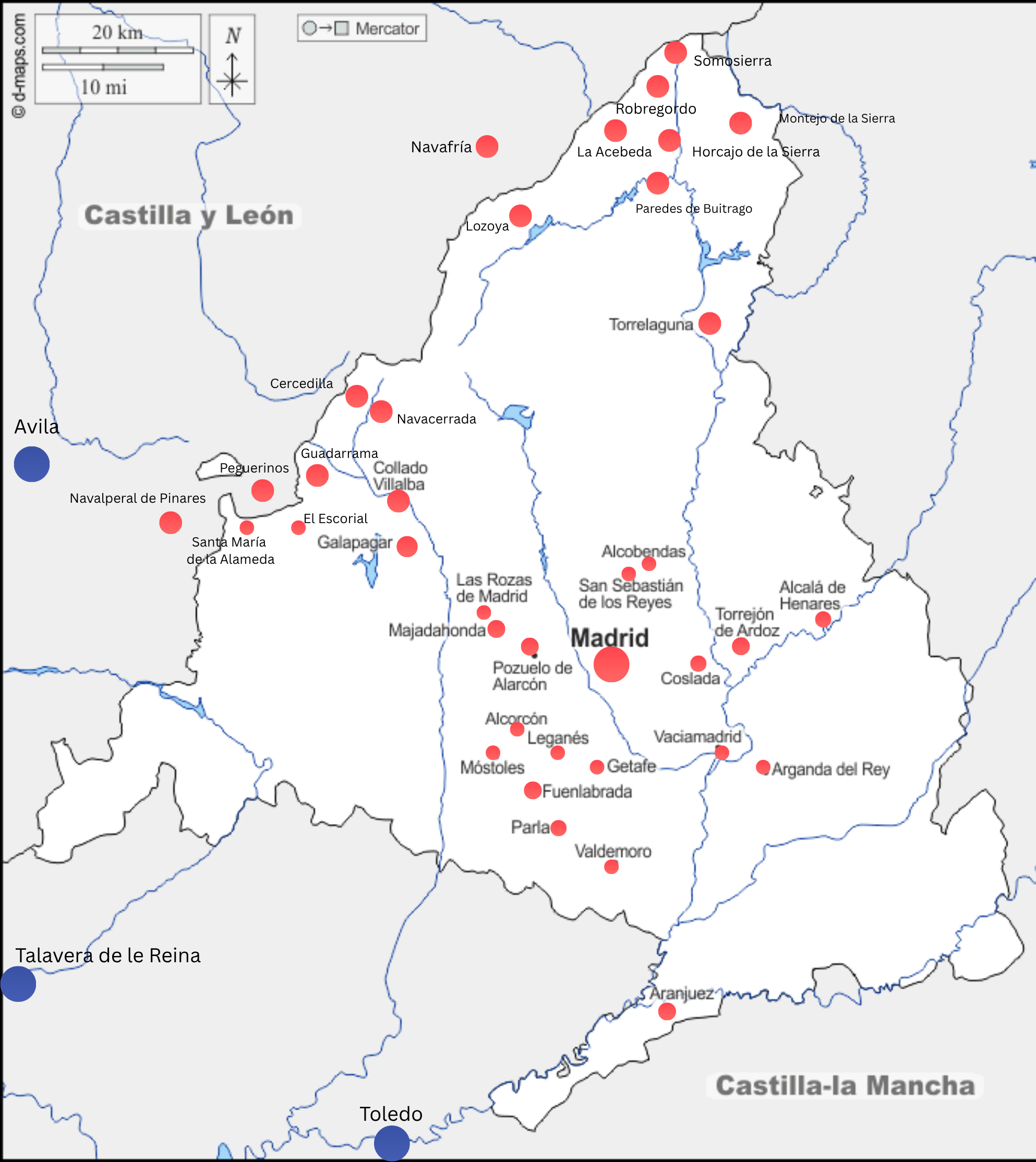
- Talavera de la Reina, Toledo, New Castile
Talavera de la Reina, a city of about 15,000 inhabitants, stood at an important junction of the roads and railway lines connecting Madrid with Toledo, Ávila and western Spain. Its position on the Tagus and at the meeting of the Tagus and Alberche made it the most important remaining obstacle on the Nationalist route towards Madrid after the rapid advance through Extremadura.
The Republican government had recognised the importance of the town and spent much of August turning it into the main defensive position covering the approaches to Madrid. General José Riquelme established his headquarters at Talavera on 22 August, while the actual defence was organised by Colonel Mariano Salafranca. Republican forces gathered around 10,000 men, including militia and regular infantry, together with artillery and an armoured train. The force was considerably larger than the Nationalist column approaching the town, which numbered only about 3,500–5,000 men under Lieutenant Colonel Juan Yagüe.
The Republican numerical advantage did not translate into an effective defence. Many of the Republican troops were militia with limited military training and experience, while Yagüe’s force consisted largely of the professional units of the Army of Africa, including the Spanish Foreign Legion and Moroccan troops. The Nationalists had also advanced rapidly from Badajoz through Extremadura and had developed a method of attacking Republican positions by moving around their flanks rather than simply assaulting them frontally.
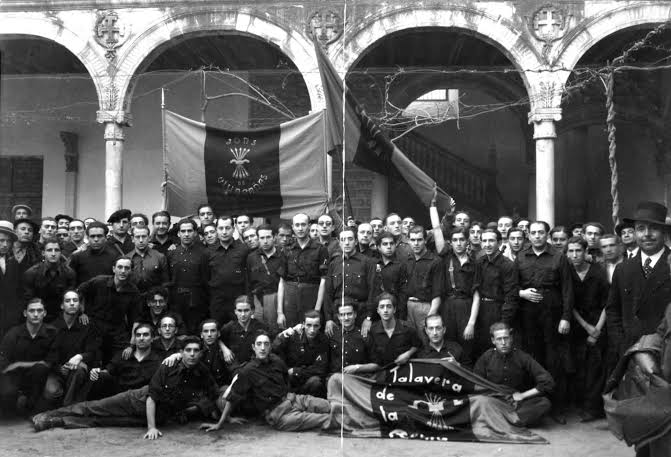
On 2 September, Yagüe’s troops reached the approaches to Talavera. The following morning, 3 September, the Nationalist attack began. Yagüe divided his force between columns commanded by Major Antonio Castejón and Lieutenant Colonel Carlos Asensio, which moved against the Republican positions while Nationalist aviation provided substantial support. Rather than concentrating solely on the main Republican defensive line, the attacking columns moved around the town, threatening the Republican flanks and cutting the roads and railway through which the defenders might withdraw. The first major positions to fall were the railway station and aerodrome. Once these were taken, the Republican defensive system began to unravel. The armoured train that had been sent to support the defence proved ineffective, partly because of poor coordination. Republican troops began withdrawing, and some units broke into a general retreat as the Nationalist attack developed.
The Nationalists entered the city at about 2:20pm on 3 September. There was still fighting in parts of Talavera, but organised Republican resistance was collapsing. Some militiamen resisted in the streets while others fled towards the east. Colonel Salafranca attempted to organise a new defensive position beyond the Alberche, but the retreat had become too disordered to establish an effective line. Republican attempts to destroy the railway bridge over the Alberche also failed.
The losses were heavy. Estimates differ, but the Nationalists suffered roughly 1,000 killed and wounded, while Republican losses have been put at approximately 1,500 killed, wounded, and prisoners, in addition to the loss of artillery and other equipment. One contemporary account records more than 100 Moroccan soldiers killed and over 300 wounded on the Nationalist side, illustrating the intensity of the fighting even though the Republican defence ultimately collapsed.
The fall of Talavera removed the Republic’s principal defensive position on the direct route from Extremadura towards Madrid. The Nationalist Army of Africa had now reached the last major obstacle before the capital, and the Republican forces were forced to retreat towards Toledo and Madrid and prepare a new defensive line farther east. For the civilian population, the capture brought an abrupt transformation. Talavera’s population had been about 15,000 before the war, but the city was emptied of a substantial part of its civilian population during and immediately after the battle. Contemporary reporting suggested that only about 5,000 civilians remained, alongside more than 2,000 military personnel, while other research indicates that the population subsequently recovered as people from Republican-held areas arrived in the city.
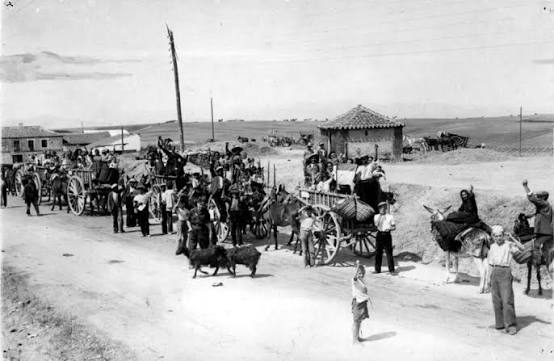
Refugees fled eastwards in trains, cars, lorries, carts, and on foot, joining the movement of civilians already escaping the fighting in Toledo province. The roads towards Madrid were consequently filled with retreating Republican troops and displaced civilians. The capture of Talavera was therefore both a military breakthrough and the beginning of a major new refugee movement towards the capital.
The Nationalist occupation was followed by arrests and repression in Talavera and the surrounding district. People associated with the Republic, the left, trade unions, and the Popular Front were taken into custody as the new authorities established control. The city’s capture therefore marked not only the advance of the Nationalist army towards Madrid but the establishment of Nationalist political and military authority in one of the most important towns on the road to the capital. Moroccan Regulares and Spanish Legion units moved into Talavera while Republican soldiers and civilians were fleeing towards the Tagus and the road to Madrid.People crowded onto the bridges and roads leading east, while others attempted to escape across the river by the railway bridge, the Alberche crossing, or the more difficult routes through the countryside.
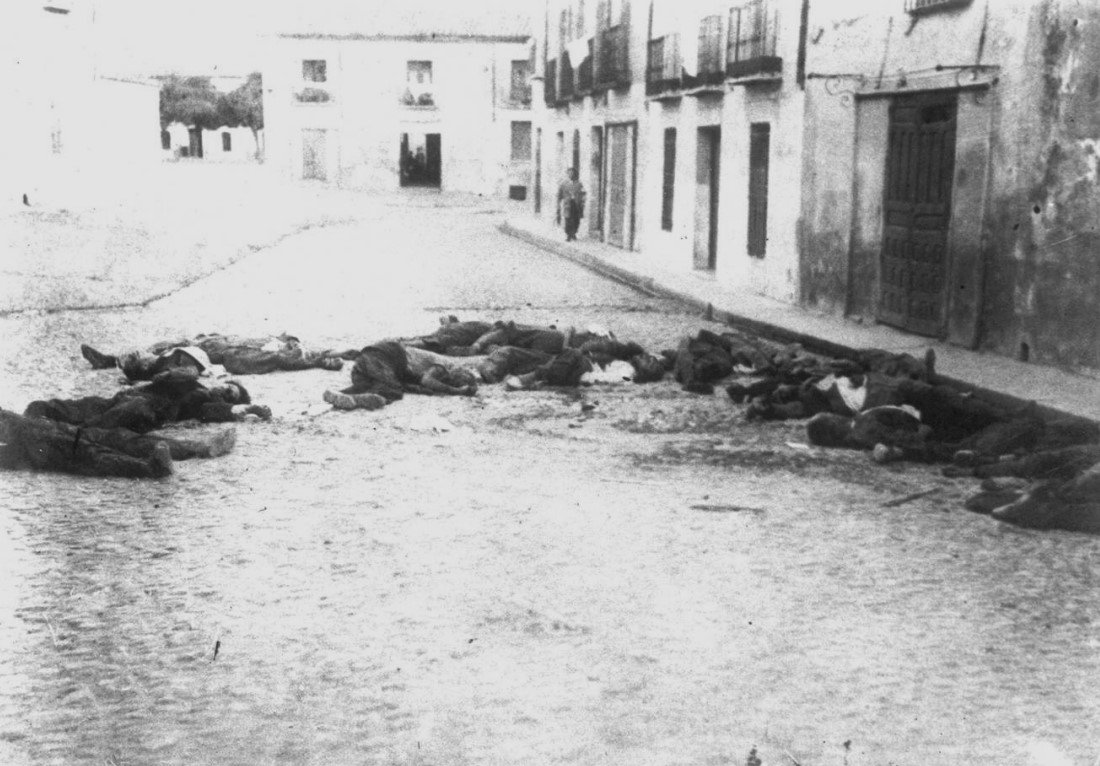
The Moroccan troops were among the first Nationalist forces to enter parts of the city. Units of the 2nd Tabor of Tetuán advanced through the northern side of Talavera, reached the convent of Santo Domingo, and occupied the railway station from the west. As the Republican defenders abandoned their positions, the Moroccan troops spread into the town. Houses and businesses were searched and valuables were taken, while soldiers stripped bodies and prisoners of possessions. Later testimony from the Talavera area describes Moroccan troops carrying away watches, jewellery, money, and other valuables, while other accounts describe the widespread looting that accompanied the first hours of occupation. The disorder was not confined to people identified with the Republic: civilians who had remained in the town were caught up in the violence as the troops moved through the streets. Civilians and Republican prisoners were shot in the streets after the occupation, and later historical research has identified residents of Talavera and agricultural workers who were killed by Army of Africa and Legion forces on 3 September. Photographs taken after the occupation recorded bodies lying in the streets, providing unusually direct evidence of the violence that accompanied the Nationalist seizure of the town.
Women were subjected to sexual violence as well. Rape by Moroccan troops was not merely a rumour attached to the Nationalist advance. Testimony collected from the Toledo area records sexual assaults committed during the advance, while historians studying the Moroccan units have documented multiple cases of rape and other sexual violence against women. John T. Whitaker, the American journalist who accompanied the Nationalist advance, later gave testimony concerning collective sexual assaults committed by rebel forces, particularly Moroccan soldiers under the command of El Mizzian.
In the villages along the routes taken by the Nationalist columns, Moroccan troops were reported committing killings, looting, and sexual violence as they moved through communities whose Republican defenders had either withdrawn or been defeated. Accounts from the Velada and Mejorada area, for example, describe Moroccan troops entering the villages in the aftermath of the Talavera operation and attacking civilians. These incidents became part of the reason why news of the advancing Army of Africa produced such intense fear among populations farther east.
- Pozo del Tío Raimundo, Madrid
On the afternoon of 3 September 1936, three cloistered members of the Daughters of Charity of Saint Vincent de Paul, Sister Dolores Úrsula Caro Martín (43), Sister Concepción Pérez Giral (49), and Sister Andrea Calle González (34), were intercepted by a leftist crowd and anarcho-syndicalist militiamen in the Madrid suburb of Vallecas. Their extrajudicial execution hours later at the Pozo del Tío Raimundo serves as a highly specific microhistory of the anticlerical terror that gripped the capital during the opening autumn of the Spanish Civil War.
- Tierz, Huesca, Aragon
Republican forces tightened their positions around Huesca during the opening days of September 1936. On 2 September, POUM militia advancing from the Sariñena–Novales direction occupied Tierz, a village immediately east of Huesca. Its capture brought Republican forces closer to the Nationalist defensive positions at Estrecho Quinto and Montearagón, increasing pressure on the eastern approaches to the city.
The loss of Tierz caused concern among the Nationalist defenders in Huesca. On 3 September, a Nationalist military communication requested an air attack against the village so destructive that its complete destruction was considered acceptable. The request demonstrates the importance attached to the position as the Republican forces gradually tightened their hold around Huesca.
Republican aviation was also active. Republican reports from Barcelona claimed on 2 September that an aircraft had landed on the Huesca airfield and taken off again, although this claim comes from contemporary Republican reporting and cannot be independently established from the surviving evidence. At Sariñena, meanwhile, Lieutenant Reyes flew alone over Zaragoza on 3 September before returning to the Republican airfield.
Elsewhere on the Aragón front, Nationalist commanders attempted to use the Sotonera reservoir system against Tardienta, which was held by the Republic. On 3 September they opened the reservoir in an attempt to send water through unfinished irrigation works towards the town. The resulting flooding caused difficulties but did not force the Republican defenders to abandon Tardienta.
- L’Espluga Calba, Lleida, Catalonia
Executions of political prisoners took place in Lleida and the surrounding area during the first days of September 1936. Several prisoners from Lleida were killed on 1 September, while another group from L’Espluga Calba was also executed during this period. Accounts place the deaths on 31 August, 1 September, or 3 September, reflecting differences in the surviving documentation. The victims were prisoners who had been detained after the Republican takeover and were associated with the political right and Catholic organisations. The executions formed part of the repression that accompanied the consolidation of Republican control in Lleida province during the first weeks of the war.
- Bailén, Jaén, Andalucía
On 3 September 1936, seven prisoners from Bailén were taken to the Linares area and shot beside the quarries near the cemetery. The men had been detained as political prisoners and were regarded by their captors as supporters of the political right.
Among the victims were men associated with Acción Católica and other organisations of the local right. Their bodies were left at the execution site near the cemetery, where the quarries became one of the places associated with the killings carried out in the Linares area during the opening months of the war.
During the night of 2–3 September 1936, thirty-one prisoners were taken from the prison at nearby Baeza and transported to the Los Capones estate in the municipality of Ibros. There they were shot by Republican militiamen. The group consisted of twelve priests and nineteen laymen. The priests were targeted in the wider wave of anti-clerical violence that followed the collapse of Republican authority in much of Jaén province, while the lay prisoners were associated with the political and social right. The killings took place away from Baeza, where the men had been imprisoned, reflecting the practice of removing prisoners from local detention centres and taking them to rural locations where they could be executed.
During the night of 3–4 September 1936, eleven prisoners were removed from the municipal detention centre at Porcuna, 70km from Linares, and taken to the Barranquillo, in the municipality of Torredonjimeno. They were killed there during the night. The prisoners had been detained in Porcuna after Republican forces consolidated control of the town. Their removal to the Barranquillo placed the execution outside the prison and outside Porcuna itself, leaving the site in Torredonjimeno associated with the deaths of the eleven men.
During September 1936, thirty-one prisoners were removed from Jaén Provincial Prison, 40km east of Poruna, and killed. Later Guardia Civil documentation recorded the group among the sacas carried out from the provincial prison during the month. The prisoners had been detained as political opponents of the Republic and were taken from the prison in a coordinated removal before being executed. The surviving documentation does not establish the precise day on which this particular group was killed but identifies the incident as one of the September sacas from Jaén Provincial Prison. They are not included among the figures of the thousands of Republicans buried in mass graves in the city.
- Zaragoza, Aragon
By September 1936, Zaragoza had become one of the principal centres of Nationalist repression in Spain. The military uprising had succeeded in the city in July, leaving thousands of Republicans, socialists, anarchists, trade unionists and others associated with the left trapped behind Nationalist lines. During September the killing was continuous: surviving records show deaths on virtually every day of the month, with particularly large groups recorded on 3, 13, 21, 25, 27, 28 and 30 September.
The exact number killed during the month remains uncertain because surviving reconstructions use different records. One calculation based on deaths registered in the Civil Registry gives 523 for September alone. Even these figures may not include everyone who disappeared during the period of extrajudicial killing. Zaragoza’s municipal memorial records 3,096 victims of Francoist repression during the Civil War itself, with further executions continuing after the war.
Prisoners were removed from detention and killed on the outskirts of Zaragoza, particularly beside the Canal Imperial and around Valdespartera and the rural margins of the city. Their bodies were subsequently taken to the Cementerio de Torrero or left in improvised burial places. As military judicial procedures became established, executions increasingly took place against the rear wall of Torrero cemetery itself. The nearby Torrero prison was severely overcrowded and became one of the centres from which prisoners were removed for execution. The repression extended well beyond Zaragoza city. Cinco Villas suffered particularly heavily, with Ejea de los Caballeros functioning as a detention centre for prisoners collected from surrounding towns and villages. Hundreds passed through Ejea prison during the second half of 1936, many of whom were killed. The existence of a mass grave outside Torrero was first confirmed in February 1979 when the mass grave was exhumed, and among the recovered remains of 2,700 bodies were people from Aragon and La Rioja, as well as more than 200 Navarrese from the Tercio de Sanjurjo. The Torerro cemetery has two sites, one which was dug up between 1959 and 196 and placed at the Valle de Cuelgamuros (former Valle de los Caídos) against the wishes of the families and were used to line the walls of Francisco’s Franco crypt. At least 1,171 of these victims are named and identified, though as of 2025, only a few have been returned to their families as the ongoing process continues. The Torrero site has a plaque of 3,500 innocent people dumped at the site, those it got be 4,015 people in the area as works on identification remains ongoing.
One of the first large groups recorded during September was killed on 3 September, when surviving reconstructions indicate approximately 34 deaths in Zaragoza. Outside the capital, Farasdués became one of the principal execution and burial sites associated with Ejea. On 8 September, eleven prisoners were removed from Ejea prison, taken to Farasdués and shot, and even larger concentration occurred on 13 September, with approximately 44 deaths Another group was killed there on or around 16 September, including Cándida Bueno Iso, Manuel Bueno Iso, José Tenas Lana and Miguel Bailo Paradís. The series of major sacas from Ejea continued until about 23 September, with dozens of victims ultimately buried around Farasdués. By this point killing had been taking place almost every day for several weeks, and 23 September saw a pit of 48 bodies closed up. Individual days with twenty, thirty or more deaths were no longer isolated massacres separated by periods of calm, as there was an almost continuous process of arrests, imprisonment, sacas, and executions.
The repression reached another peak at the end of September. On 30 September, the surviving records give particularly divergent figures, ranging from about 61 deaths, making it one of the largest recorded killing days of the month whichever reconstruction is used. Among the victims were the brothers Miguel and Moisés Alcrudo, members of a prominent Zaragoza Republican family, who were killed at Valdespartera. Torrero cemetery records also show a very large number of bodies being received for burial immediately afterwards. The discrepancy in the totals reflects differences between registers and methods of reconstruction rather than doubt that a major episode of killing occurred. The number of people buried in the mass graves of the Ejea de los Caballeros cemetery could reach 300, though establishing exact figures is extremely difficult, as it is sometimes impossible to know whether those murdered in the area were buried there or in other large mass graves nearby. The victims came from all over the Cinco Villas region, as well as from towns along the Ebro River, the Tarazona-Moncayo area, and even from towns outside of Aragon. A monument was erected in 1980 to commemorate the site, and in 2009 it was replaced with a new monument more in keeping with the circumstances surrounding the deaths of those buried there. As of 2025, the remains of only 24 victims of Francoist repression have been exhumed.
Other killings occurred throughout Zaragoza province. At Salillas de Jalón, seven prisoners, six from Épila and one from La Almunia de Doña Godina, were killed near the Acequia de Mareca at approximately the beginning of September. At Calatayud, José Antonio Marco Viedma was arrested at his home by police, Falangists and Guardia Civil before being shot at the cemetery. Mass killing had become part of everyday life.
- Ourense, Galicia
The Nationalist repression in Ourense province eventually killed roughly 650–800 people, depending on the period and categories included. Julio Prada’s detailed research originally documented 626 victims between 1936 and 1939, while the provincial database subsequently recorded 665 executions between July 1936 and December 1940. Broader research extending to 1945 and including deaths in prison raises the number of victims to 789: 202 people executed after military death sentences, more than 500 killed extrajudicially, and the remainder dying in custody or other circumstances directly connected with the repression. More than 7,000 additional people were detained without being subjected to military proceedings, while thousands more passed through the military courts. These figures are particularly striking in a province where the military rebellion succeeded rapidly in July and there was no sustained battlefront.
By September, the violence had developed into an established system. Military authorities controlled the prisons and courts, while the Guardia Civil, Falange and other Nationalist organisations participated in arrests, investigations and extrajudicial killings. Some prisoners were prosecuted by military courts and shot following death sentences; others were removed and killed without trial. At the same time, Republican and left-wing municipal officials were dismissed, political parties and unions were suppressed, and workers could lose their employment because of their political record or reports made against them.
The occupations of September’s victims show how far this reached into ordinary working life. Eustaquio Barrio Díaz, a miller, was killed on 3 September, while municipal employee Recesvinto Sierra Vázquez was killed on the 5th. Agricultural labourers appear repeatedly: José Pato Fernández and Ricardo García Moral were killed on 6 September, José Álvarez Fernández on the 14th, and Francisco Delgado Prada on the 19th. Manuel Laso Vázquez, a painter, was among those killed on 14 September, while Manuel Martínez Martínez and Manuel Martínez Vázquez, identified as employees or municipal workers, were killed on the 27th.
This concentration of agricultural and manual workers reflected the political conflicts of rural Ourense before the war. Agricultural societies and trade unions had organised labourers around wages, hiring, working conditions and access to land, while Republican and Socialist organisations had established themselves in towns and villages that had previously been dominated by local conservative interests. Once the Nationalists controlled the province, political repression and the destruction of these labour organisations went together. Being a mayor or union organiser made someone conspicuous, but political vulnerability extended much further down through the membership of workers’ societies and local Republican networks.
On 15 September, at least five identified men — Gumersindo Araújo Sousa, José Doallo Méndez, José Varela Bouza, José Vilachá Rouco and Ricardo Rodríguez — were executed. Two days later the Nationalists executed Gonzalo Martín March, the former Civil Governor who had attempted to oppose the July military rebellion, alongside other prisoners. The combination of local workers and senior representatives of the Republican state illustrates the breadth of the purge: the new authorities were dismantling both the political leadership of the Republic and the organisations through which working people had participated in it.
In Ourense city, the principal detention centre was the Provincial Prison, but the expanding number of prisoners forced the Nationalists to use additional buildings and improvised detention facilities. Elsewhere in the province, Celanova developed into an especially important prison centre. Prisoners could remain incarcerated, be transferred into military proceedings, or be released on paper only to be handed to groups who killed them outside formal judicial procedures. The provincial repression eventually produced thousands of prisoners and more than 2,000 people subjected to military proceedings.
For prisoners formally condemned to death in the capital, one of the principal execution sites was the Campo de Aragón, beside the former San Francisco barracks. Executions began there on 11 August 1936. Over the following years 133 people — 132 men and one woman — were shot there by firing squad. Another important execution site was O Cumial, on the outskirts of Ourense, which became particularly important later in the repression. Common graves and roadside locations elsewhere in the province received people killed without the formalities that produced the records associated with military executions.
The final day of September demonstrates that the killing had not begun to subside. At least six identified people were killed on 30 September: Erundina Álvarez Pérez, Antolín Martínez Basalo, Francisco Domínguez, José Ramón Barja García, Juan González de Jesús and Manuel Jiménez Montoya. Álvarez’s circumstances warrant a separate account, but her death at the Campo de Aragón also places an individual life within the larger execution system operating in the provincial capital.
Ourense’s experience is important precisely because there was no prolonged military struggle for control of the province. By September, the people being imprisoned and killed were living in territory securely behind the Nationalist lines. The military courts, prison system, Falangist and Guardia Civil investigations, extrajudicial killings, municipal dismissals and employment purges were being used to remove the political and labour networks of the Republic and replace them with institutions loyal to the rebellion. By the end of the repression, hundreds were dead and thousands had experienced imprisonment or military prosecution in a province where the fighting itself had been brief.
- A Coruña, Galicia
The repression in Ferrol and its surrounding district was among the most severe in Galicia. One detailed study of the twenty-two municipalities making up the Ferrol district identified 710 people killed between 1936 and 1939: 254 after military-court sentences and 456 without trial. A slightly later reconstruction raises the total to 714, including 461 extrajudicial killings. For A Coruña province as a whole, research based on civil registers, military proceedings and other records identified at least 1,053 deaths from Nationalist repression between 1936 and 1939, of which Ferrol and its district accounted for roughly two-thirds.
Ferrol was particularly exposed because this was not simply another Galician town seized by the military uprising. It contained one of Spain’s principal naval bases, the Arsenal, warships and naval barracks, alongside a large population of sailors, shipyard employees, industrial workers and organised trade unionists. When the uprising began in July, sections of the Navy and civilian workforce resisted the rebels or attempted to keep ships and installations loyal to the Republican government. Once the Nationalists secured Ferrol, they had large numbers of identifiable opponents already concentrated inside a military and industrial community.
The scale of the subsequent repression reflects this. Of the approximately 714 people identified as killed in Ferrol and its district, 186 were serving military personnel and another eleven were retired military personnel. Among the active servicemen killed were 75 sailors and stokers, 42 corporals, 28 naval auxiliaries and NCOs, twelve naval machinists, six officers and five technical Arsenal workers, alongside senior officers and personnel from other services. Another 141 victims were manual workers, 88 were crew members of Republican merchant vessels, 74 were officials or employees, 38 agricultural workers, and 22 fishermen.
The method used against military personnel differed noticeably from that used against civilians. Of the 186 active servicemen killed, 148 were executed following military-court sentences and 38 without trial. Among civilians, the balance was almost reversed: the Ferrol research records approximately 101 judicial executions against 417 extrajudicial killings. Military courts were particularly useful for prosecuting sailors and officers who had resisted the uprising, because the Nationalists could charge men who had remained loyal to the Republican government with offences such as rebellion or sedition.
September saw this repression operating at extraordinary intensity. The month began with individual executions, including Cristóbal Carrillo Velillo on 1 September and labourer Avelino Casteleiro Fontán on 3 September. On 5 September, seven members of the crew of the cruiser Almirante Cervera were executed at Punta del Martelo inside the Ferrol Arsenal: corporals Ramiro Isidro Carrodeguas Castro, Gerardo Picallo Rodríguez, Paulino Rodríguez Gilabert, Eugenio Salgado López and Ángel Sanz Serantes, and sailors Pedro Rodríguez Morelló and Bernardino Vila Fraguela. They had been prosecuted for their part in the attempt to keep the Cervera loyal to the Republic.
From the middle of the month, the surviving execution records show repeated large groups rather than occasional individual deaths. Sixteen people were killed on 16 September, fourteen on the 17th, twenty on the 20th and thirty-six on the 22nd. Another twenty-two were killed on 25 September, ten on the 26th and thirteen on the 27th. Those seven dated groups alone account for 131 deaths. They do not include the executions earlier in September, other individually recorded victims during the month, or the naval prisoners killed at its end.
The machinery behind these killings centred on the prisons controlled by the Navy and Army. Prisoners were held inside military installations in the Arsenal, Castillo de San Felipe and on ships being used as floating prisons. Responsibility for them lay with military authorities, who could release prisoners into the custody of personnel authorised by the police chief, artillery captain José María Pagola Biribén, or the Delegate for Public Order, Guardia Civil officer Victoriano Suanzes. Both operated beneath the military governor of Ferrol, General Ricardo Morales.
Those removed without a court sentence were frequently taken to the cemetery at Canido or other nearby killing and burial sites. Research into Ferrol has identified 282 victims buried at Canido alone, many of whom were also killed there. Others were buried in common graves around Serantes. Official explanations could claim that prisoners had been shot while attempting to escape, masking what were organised removals and executions of people already securely in Nationalist custody.
The final days of September continued to claim men from the Navy. Prisoners connected with the Almirante Cervera were removed from the Escollera and Plus Ultra prisons and killed at Canido around 29–30 September. They included corporals Isidro Grandal Velo, Nicanor Martínez Fernández and Luis Martínez García; stokers Eusebio Faramiñán Conde, Cástor Portas Beltrán, Pío Rodríguez Bouza and Daniel Varela Corral; and sailor Secundino Iglesias Tenreiro. Nicanor Martínez Fernández, a thirty-seven-year-old married father of five from Valón, is recorded as having been killed by the Nationalist public forces on 30 September.
Ferrol’s repression was so extensive because several groups targeted elsewhere in Nationalist Spain overlapped there. Republican political activists and CNT and UGT organisers were vulnerable, but so were industrial and dock workers, merchant seamen and the enormous naval workforce. Added to them were officers, NCOs and sailors whose actions during the July uprising had demonstrated loyalty to the Republic. In a district where more than 700 people were eventually killed, September was one of the months in which that repression operated at its greatest intensity, with the prisons, military courts, Arsenal and nearby cemeteries forming parts of the same system.
- Ávila, Old Castile
On 31 August 1936, Republican aircraft bombed Ávila, a city firmly controlled by the Nationalists and serving as an important military centre behind the fighting in the Sierra de Guadarrama. The raid killed three people. What followed was far more lethal; on 1 September, approximately thirty political prisoners held by the Nationalists were taken from the provincial prison and killed at the cemetery.
The prisoners were Republicans and other people regarded as opponents of the military uprising who had already been arrested and were in Nationalist custody. They were not Republican troops captured during the air raid. Contemporary and later accounts connect their removal from prison directly with the bombing of the previous day, presenting the killings as reprisal executions for the three deaths caused by the Republican aircraft. The prisoners themselves had no responsibility for the bombing.
The killings were carried out after the prisoners were handed over to Falangists and other Nationalist personnel and taken to the Cementerio de Ávila, where they were shot. The available material establishes the approximate number, the prison removal, and the role of Nationalist personnel, but does not securely identify the individual who gave the order for the entire group to be killed. It is safer not to attribute the decision to a particular governor, military commander, or Falange leader without stronger documentation.
Among those killed was Francisco Agustín Rodríguez, an inspector of education. His case produced an extraordinary scene two days later. Despite Rodríguez having been killed by the Nationalist side on 1 September, a funeral Mass was held for him on 3 September. The religious ceremony publicly mourned a man whom the authorities controlling the city had just allowed to be taken from prison and executed.
Meanwhile, Republican aviation returned to the province. On 1 September, a Republican aircraft bombed Arévalo, about fifty kilometres north of Ávila city. The bombing killed one civilian and wounded three others. Nationalist aircraft pursued the Republican aeroplane after the raid and reportedly shot it down near Adanero, between Arévalo and Madrid. The following day, 2 September, El Diario de Ávila reported what it described as Arévalo’s patriotic response to the bombing. The Nationalist newspaper presented the population’s reaction as an example of courage and loyalty to the uprising and encouraged similar public behaviour elsewhere.
The sequence between 31 August and 3 September combined two different forms of violence. Republican aircraft struck Nationalist-held Ávila and Arévalo, killing four people and wounding three in the two raids. In Ávila, the first bombing was followed by the killing of around thirty Republican and other political prisoners already held by the Nationalists, in what contemporary and later accounts describe as retaliation for the air raid.

