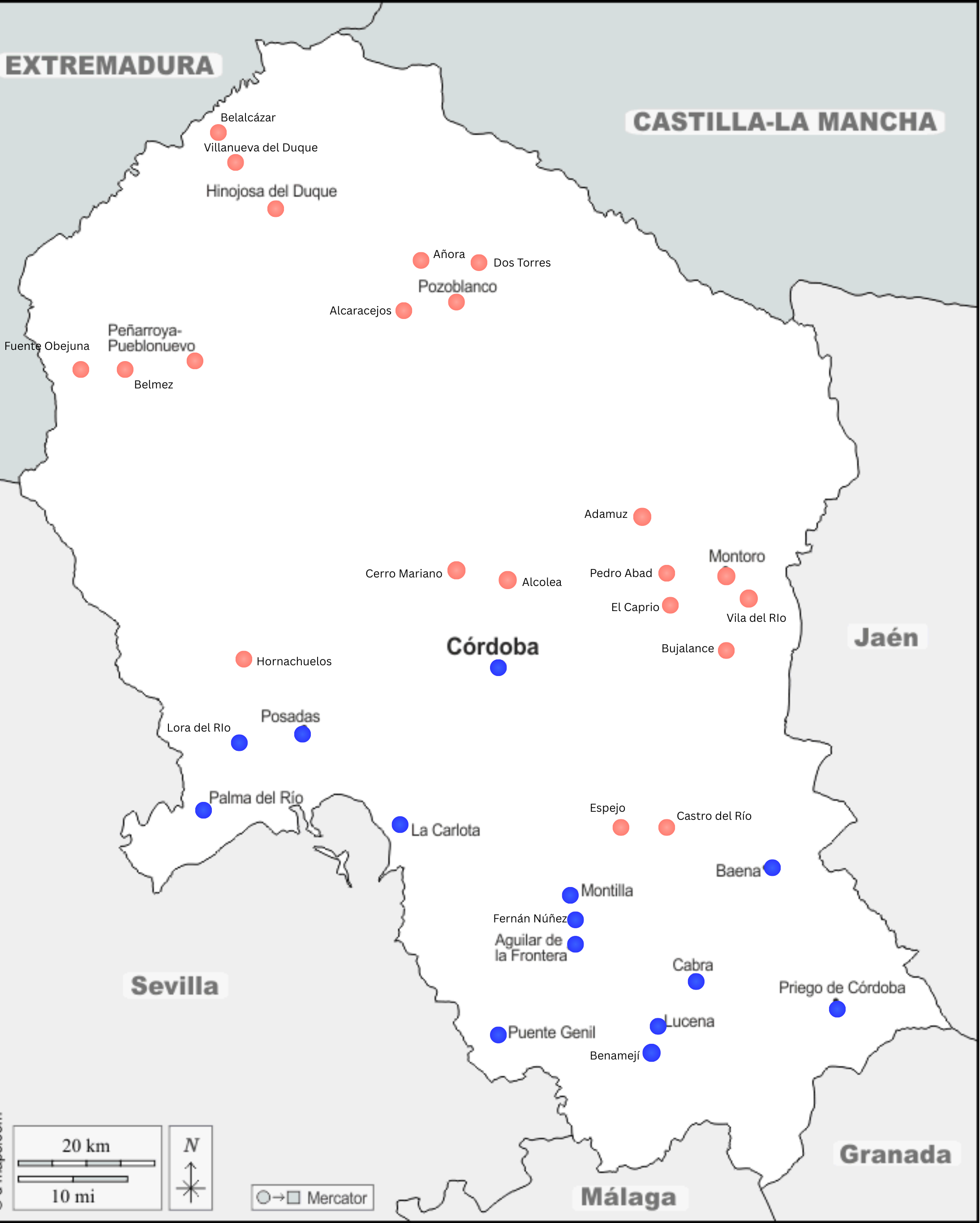
By the beginning of August 1936, neither the Nationalists nor the Republic controlled the whole of Córdoba province. The military uprising had secured Córdoba city and many of the larger towns south of the Guadalquivir, large areas of the province remained beyond Nationalist control. Rather than a single front stretching across the province, Córdoba had become a patchwork of isolated garrisons, contested roads and rival zones of authority. Throughout August, both sides sought to strengthen their positions before attempting decisive military operations.
For the Nationalists, Córdoba city remained the key to the province. Situated at the junction of the principal roads and railways linking Seville with Jaén, Granada and central Spain, the city served as the main military headquarters for operations in eastern Andalusia. Colonel Ciriaco Cascajo retained overall command of the garrison, but during August its strength increased significantly as experienced units of the Army of Africa arrived following operations in western Andalusia. These reinforcements, together with artillery and growing air support operating from Seville, transformed Córdoba from an isolated stronghold that had survived the July uprising into one of the Nationalists’ most important military bases in southern Spain.
While the Nationalists consolidated their hold on the provincial capital, the Republic adopted a different strategy. Rather than launching an immediate assault on Córdoba, General José Miaja first concentrated on securing northern Córdoba, where Republican militias and loyal security forces gradually recovered towns that had initially fallen during the confusion of the uprising. Throughout the first half of August, Republican columns reoccupied much of Los Pedroches, including Pozoblanco, Hinojosa del Duque, Belalcázar and several neighbouring communities. These successes created a secure base from which men, weapons and supplies could be assembled before any attempt was made to retake the provincial capital.
Much of the Southern Campiña had already fallen under Nationalist control during the final days of July, but military occupation was still being consolidated as local authorities were replaced, new garrisons established and communications restored. In western Córdoba, Republican forces continued to hold important towns along the lower Guadalquivir, including Palma del Río and Hornachuelos, preventing the Nationalists from establishing uninterrupted communications between Córdoba and Seville. To the east, Republican-controlled towns around Montoro, Bujalance, Castro del Río and Espejo became important assembly areas as preparations for the offensive against Córdoba gathered pace.
The province entered August divided into three distinct military zones. The Nationalists controlled Córdoba city and much of the south, where they worked to strengthen their rear areas and prepare for further operations. The Republic dominated much of the north, where the recovery of Los Pedroches provided both strategic depth and a base for future offensives. Between them lay a broad belt of contested territory stretching across central Córdoba, where roads, villages and river crossings would become the focus of the month’s decisive fighting. By the middle of August, both sides had completed their preparations. The outcome of the campaign would depend not on isolated skirmishes, but on whether the Republic could recapture Córdoba before the Nationalists secured the remainder of the province.
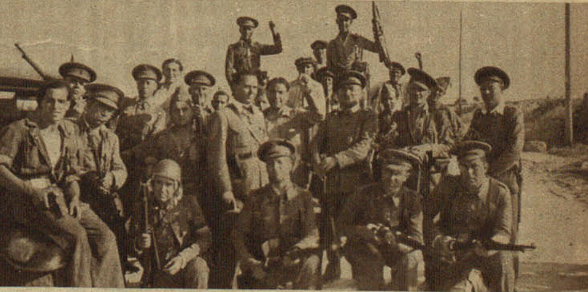
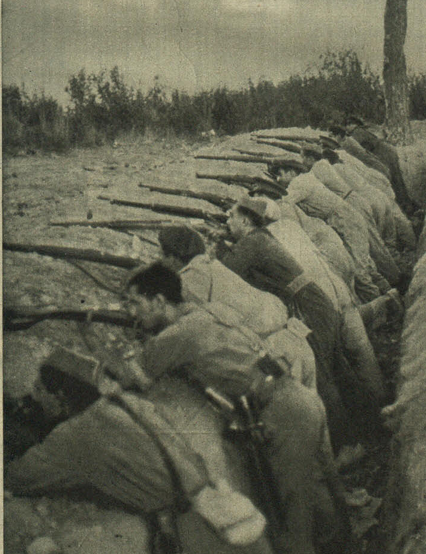
By the end of July, Republican General José Miaja had reached Montoro with a mixed force of regular troops, Guardia Civil, Assault Guards and militia volunteers drawn from Albacete, Murcia, Alicante, Castellón and Madrid. Although Córdoba city appeared vulnerable, Miaja chose not to launch an immediate assault. Instead, he turned his attention northwards towards Los Pedroches, where scattered Nationalist garrisons still occupied isolated towns and villages. Any direct advance on Córdoba would have left hostile garrisons in Miaja’s area threatening his communications with Jaén and the Republican interior. By securing northern Córdoba first, he hoped to create a stable base from which a larger offensive against the provincial capital could later be launched. At the same time, recovering the mining district and the roads leading towards Ciudad Real strengthened Republican control over the northern approaches to Andalucía.
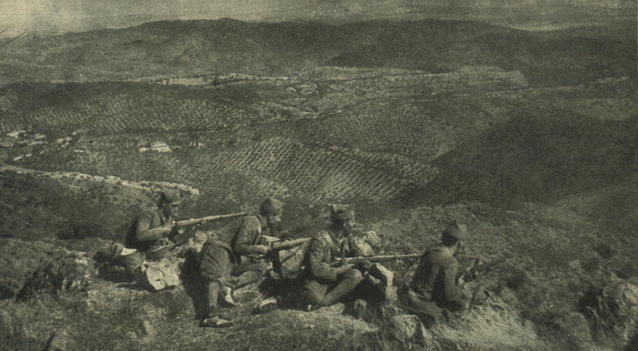
The first success came on 5 August, when Republican columns entered Añora. Five days later, on 10 August, they occupied Adamuz, extending Republican control closer to the Sierra Morena. On 14 August, Belalcázar fell, followed on 15 August by Alcaracejos, Villanueva del Duque, Hinojosa del Duque and Pozoblanco. In many of these towns the Nationalist defenders were small groups of Guardia Civil and local right-wing supporters who found themselves isolated as Republican forces advanced. Some surrendered after brief resistance, while others withdrew before being surrounded.
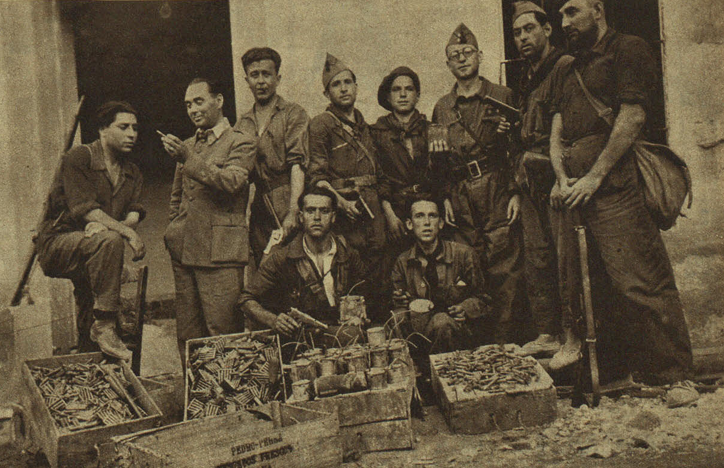
Pozoblanco emerged as the principal Republican stronghold in northern Córdoba during August 1936. Together with neighbouring towns including Hinojosa del Duque, Belalcázar and Villanueva del Duque, it formed the centre of the Republican-controlled zone that Miaja sought to secure before launching his offensive against Córdoba. Its position on the road network linking Los Pedroches with Ciudad Real and the mining district of Peñarroya-Pueblonuevo made it an important centre for moving men, ammunition and supplies throughout the northern front. Republican militia units were reorganised in the area, while volunteers from the surrounding mining communities reinforced the defence of the region.
The Republican advance continued throughout the second half of August. On 25 August, the capture of Dos Torres eliminated the last significant Nationalist enclave in Los Pedroches, leaving almost the entire northern district under Republican control. Although these operations were overshadowed by the failed assault on Córdoba city, they represented one of the Republic’s few clear territorial successes in Andalusia during the opening months of the Civil War.
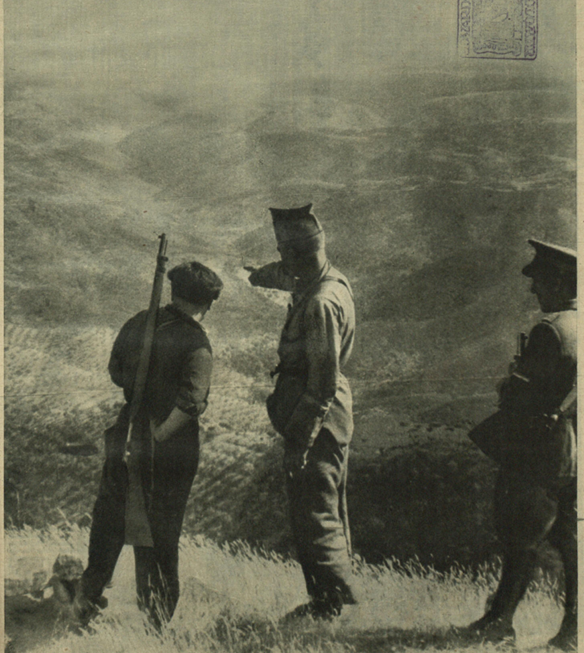
Despite these gains, the campaign exposed important weaknesses. Recovering the northern towns required time, manpower and supplies, delaying the assault on Córdoba until 20 August. By then, Nationalist Colonel Ciriaco Cascajo’s garrison had been reinforced by Colonel José Enrique Varela’s experienced Army of Africa troops and supported by Italian aircraft operating from Seville. What had appeared in early August to be an isolated Nationalist stronghold had become a much stronger defensive position by the time Miaja finally turned south. Historians continue to debate whether the decision to prioritise Los Pedroches was strategically sound or whether it sacrificed the Republic’s best opportunity to recapture Córdoba before substantial reinforcements arrived.
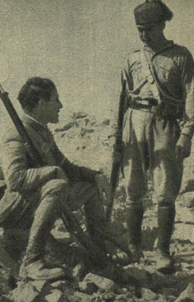
While Republican carved out small victories in the north, Nationalist repression swept through the other regions. As Republican resistance collapsed in individual towns, the army moved quickly to replace the institutions of the Republic with a system of military government supported by the Guardia Civil, Falangist organisations and trusted local supporters. Throughout August 1936, the establishment of Nationalist authority followed a recognisable pattern. Military columns entered a town, public buildings were occupied, Republican officials were removed from office, weapons were confiscated, and arrests began almost immediately. Republican mayors and councillors, trade union officials, teachers, members of left-wing political parties, labour organisers and anyone suspected of supporting the Popular Front were liable to arrest. In many communities, local landowners, employers and political opponents supplied names to the new authorities, while pre-existing political rivalries and personal grievances often influenced who was denounced. Detainees were commonly held in town halls, schools, Guardia Civil barracks or improvised detention centres before being transferred to larger prisons and then transported to cemeteries, roadsides or isolated rural locations, and shot. Their bodies were frequently buried in municipal cemeteries, unmarked graves or nearby estates. While some of the largest execution sites developed in Córdoba city, almost every occupied municipality experienced arrests and political violence. The intensity of the repression varied considerably from one district to another, but the objective remained the same: to eliminate real or perceived opposition before it could reorganise.
Women experienced the occupation in ways that often differed from men. Some were imprisoned or executed because of their own political activity, while others were punished because they were wives, daughters or relatives of Republican supporters. Public humiliation became a common weapon of repression. Across many towns in the province, women had their heads shaved, were forced to drink castor oil and were paraded through the streets under guard. These acts were intended not only to punish individuals but also to intimidate entire communities by demonstrating the consequences of supporting the Republic. Women were subject to widespread rape that had been endorsed by the highest military ranks, suffered forced labour and the confiscation of family property.
Municipal councils were then dissolved and replaced by administrators loyal to the military authorities. Public employees considered politically unreliable were dismissed from their posts, while Republican organisations, trade unions and workers’ societies were closed. Property belonging to political opponents was frequently seized, and many families lost their homes, businesses or agricultural land. Churches that had been closed during the fighting reopened under military protection, religious ceremonies resumed, and Republican symbols disappeared from public buildings as the new authorities sought to demonstrate that political as well as military power had changed hands.
The consequences were felt long after the fighting moved elsewhere. Thousands of people fled towards Republican-held territory in northern Córdoba, Jaén and neighbouring provinces, abandoning homes, crops and possessions to avoid arrest. Others remained, living under constant surveillance as denunciations, arrests and executions continued. By the end of August, large areas of southern and western Córdoba had been brought under firm Nationalist control, not only through military conquest but through a systematic campaign designed to remove political opposition and reshape local society. The scale of the violence differed from town to town, but throughout the province occupation and repression became inseparable parts of the Nationalist advance.
Studies and the provincial totals compiled indicate that approximately 5,500 to 7,500 people may have been killed through political repression in Córdoba province between the uprising of July and the end of September 1936. Most were Republicans and trade unionists executed in Nationalist-held territory, although Republican militias and committees also killed more than a thousand soldiers, clergy, landowners, political opponents, and suspected supporters of the uprising. These figures exclude deaths in combat and remain provisional because many victims were never registered and several municipal lists continue to be revised.
Before the Civil War, San Rafael Cemetery lay on the northern outskirts of Córdoba and served as one of the city’s principal burial grounds. After Nationalist forces secured Córdoba in July 1936, the cemetery became the main destination for thousands of people executed by firing squad. Prisoners were transported there from prisons, police headquarters, military detention centres, and improvised holding facilities, usually during the night or before dawn. Many had been arrested only days earlier, accused of supporting the Republic, belonging to trade unions, or simply being denounced by neighbours or political rivals. Few received any meaningful legal process before they were killed.
The executions continued for months and, in many cases, for years after the fighting had moved elsewhere. Victims included elected officials, teachers, labourers, railway workers, peasants, trade unionists, intellectuals, women accused of aiding the Republic, and others targeted as part of the new authorities’ campaign to eliminate political opposition. Relatives were frequently denied the opportunity to recover bodies or even informed where their family members had been buried. The dead were placed in large communal graves within the cemetery, often without coffins, identification, or permanent markers. Burial registers, where they existed, were frequently incomplete or deliberately vague, making it difficult for families to establish what had happened.
Modern archaeological investigations have shown the extraordinary scale of the killings. Excavations and historical research have identified numerous mass graves distributed across the cemetery, making San Rafael one of the largest known Civil War execution sites in Spain. Investigators estimate that more than 5,000 people were buried there, the overwhelming majority victims of Nationalist repression during the Civil War and the immediate post-war period, of which, only 2,300 have been discovered. The discovery of layered burials, with bodies placed one above another in long trenches, has demonstrated that executions were carried out repeatedly over an extended period rather than as a single massacre.
Since the beginning of the twenty-first century, extensive exhumation and identification projects have transformed San Rafael into one of Spain’s most significant sites of historical memory. Archaeologists, forensic specialists, and historians have recovered thousands of human remains, documenting evidence of execution while attempting to restore names to victims buried anonymously for decades. For many families, the excavations represented the first opportunity in ninety years to discover the fate of missing relatives. Today, the cemetery stands not only as the largest mass grave in Córdoba province, but also as one of the clearest physical reminders of the systematic repression that followed the Nationalist seizure of the city.
While San Rafael became synonymous with mass executions, the nearby Cementerio de Nuestra Señora de la Salud also bears the legacy of the Civil War. Opened in the nineteenth century as Córdoba’s principal municipal cemetery, it continued operating throughout the conflict, receiving civilians and soldiers who died from natural causes, disease, bombing, and combat, as well as some victims of political repression. Unlike San Rafael, however, it was not the primary destination for the thousands executed during the Nationalist repression. Historical and archaeological investigations have instead identified San Rafael as the city’s principal execution and burial site, while Nuestra Señora de la Salud served largely as a conventional cemetery. Today both cemeteries form part of Córdoba’s landscape of historical memory, preserving the graves of people who died during one of the darkest periods in the city’s history.
Nearby Nuestra Señora de la Salud Cemeteryhas another 894 odies, only of which 150 have so far been exhumed. In 2019, the body of Renée Lafont was found. A Hispanist and translator, she wrote for French newspapers and magazines and when the war began, she started reporting from the front lines. She was wounded and later executed by the Nationalists, making her the first female journalist killed in a conflict.

In July 1936, Lora del Río was one of the largest agricultural towns in eastern Seville Province, with a population of approximately 12,000 to 13,000. Situated on the north bank of the Guadalquivir River, 57 km northeast of Seville, it occupied a strategically important position on the railway, the main road east, and the river crossings. After the military uprising began on 18 July, Nationalist forces quickly secured Seville and spread north and east through the province, capturing town after town along the road to Lora del Rio, with Alcalá de Guadaíra (which saw 137 arrested and execution when first captured, and another 350 tortured, executed and deumped), Mairena del Alcor and El Viso del Alcor all quickly falling unto Nationalists hands suffering mass killings near their local cemeteries (all three towns have mass graves). One the town closest to Lora del Rio along this road was Carmona, which was captured on 22 July, losing their 12 Republican militia who tried to defend the town. Around 200 people had managed to flee, but another 200 men, women, and children were executed. Local accounts said Republican women were dragged form the homes, shaved, poisoned and paraded, before being subjected to rape, some taken back to farmhouse by wealthy landowners for their own use.
Lora del Río, however, remained under Republican control for almost three weeks, making it one of the last significant Republican-held municipalities east of the provincial capital. The Republican authorities organised a local defence committee drawn from the town’s left-wing parties and trade unions. Armed civilians and militia occupied public buildings, controlled access to the town and prepared for an attack from Seville. As Nationalist columns advanced through neighbouring municipalities, refugees arrived with reports of executions, arrests and the destruction of Republican organisations. Their accounts convinced many residents that surrender offered little chance of survival. Others chose to remain, hoping the Republican government would organise a counter-offensive before Nationalist troops reached the town.
The nearby town of Alcolea del Río, 15km west, was not so lucky, quickly overthrown by the Nationalists and 81 locals were soon executed. Falangists then blackmailed families into signing death certificates stating their loved ones died of natural causes in exchange for revealing the location of the bodies so they could identify them. After these exhumations resulting from blackmail, the site of the mass grave in the back of the local cemetery remained undisturbed until 1979, when it was given a pyramid bearing the names of those who suffered repression. It is still unknown how many were placed in this specific mass grave, as Seville province alone has 151 sites, and a number of small towns surround Alcolea del Rio, and prisoners may have been moved between the areas, or placed in the river.
In nearby Lora del Rio, several right-wing prisoners had been executed during the first week of August, particularly on the nights of 1–3 August, after armed men arrived from neighbouring Constantina. Later Francoist investigations attempted to attribute all of these deaths to the Constantina group, examination of witness statements and contemporary evidence demonstrates that the killings occurred over several nights and involved more than one group. Many of the testimonies collected during the dictatorship were obtained under interrogation, and several defendants later stated that Guardia Civil officers beat them until they signed prepared statements. The precise responsibility for individual killings therefore remains difficult to establish.
By the first week of August, the defenders expected an assault at any moment. They prepared to destroy the railway bridge over the Azanaque stream with approximately 150kg of dynamite and also planned to demolish the bridge on the road to La Campana to slow the Nationalist advance. On the morning of 7 August, they damaged one of the railway tracks, believing the attackers would arrive by train. Instead, Lieutenant Colonel Heliodoro Rolando Tella Cantos left Seville before dawn with a column of approximately 600 Legionnaires, cavalrymen, Guardia Civil and engineers, supported by artillery. As the column approached Lora del Río from the west, the carefully prepared demolitions failed to stop the advance. Within hours, one of the last Republican strongholds in eastern Seville Province stood on the verge of collapse.
Lieutenant Colonel Heliodoro Rolando Tella Cantos assembled his column in Seville during the early hours of 7 August 1936. The force left the city at approximately 4:00am and numbered around 600 men. It consisted of the First Bandera of the Spanish Foreign Legion, a dismounted squadron from the Taxdir Cavalry Regiment, detachments of the Guardia Civil, military engineers, two 105 mm artillery pieces, and an ambulance. Among the officers accompanying the expedition were Captain Juan Ramón Benítez Tatay, Captain Rafael Coronel Torres, and Captain Carlos Mencos López. Benítez Tatay and Coronel Torres were both natives of Lora del Río and knew the town well.
The column followed the main road through La Algaba, Alcalá del Río, Villaverde del Río and Cantillana before turning towards Lora del Río. Republican defenders had expected an attack by rail and had concentrated much of their effort on preparing the railway bridges for demolition. Although they damaged part of the railway line on the morning of 7 August, Tella’s force advanced by road, rendering much of the preparation ineffective, and Tella established his artillery on the Cerro de León, a hillside approximately two kilometres from the town. The guns opened fire on Lora del Río for several hours. Shells struck residential buildings and the Santa Catalina Hospital, while explosions echoed across the town. The bombardment served not only to weaken resistance but also to spread panic among the civilian population before the troops entered.
Families needed to abandon their homes as the bombardment intensified. Some parents gathered children and whatever possessions they could carry before fleeing towards the surrounding countryside and the hills north of the town, while others sheltered inside their homes, uncertain whether to flee or remain. By the time the Nationalist column approached the outskirts of Lora del Río, much of the civilian population had already begun to disperse.
Republican defenders possessed rifles, a small quantity of explosives and determination, but they lacked artillery, professional soldiers and the ammunition needed to oppose a well-equipped military column. As the Legion advanced into Lora del Río, the remaining defenders withdrew or attempted to escape before they could be surrounded. The Nationalists entered the town later that day, occupied the Ayuntamiento and other strategic buildings, and released the right-wing prisoners who had remained in custody during the weeks of Republican control. The capture of Lora del Río ended almost three weeks of Republican administration and the beginning of a systematic campaign of arrests and reprisals. Right-wing prisoners released by Tella’s column, together with local conservatives and Falangists who had remained in hiding during the Republican period, immediately began identifying people who had supported the Republic. Some accompanied patrols through the streets, pointing out homes where councillors, trade union leaders or militia members had lived. Others supplied lists of names or denounced neighbours they believed had participated in arrests, searches or political activity during the previous three weeks.
One of the most revealing episodes shows a collection of photographs taken during a May Day demonstration before the Civil War. Falangist Rafael Dana Aranda later recalled that Judge Eugenio Fernando Picón Martín asked him for the photographs shortly after the Nationalist occupation. Dana believed they would be used simply to establish what had happened during the Republican period and handed them over willingly. Instead, the photographs were enlarged, identified men and women marching beneath Republican banners or raising clenched fists, and used them to locate and arrest many of the people who appeared in them. Participation in a legal demonstration held before the war could now become evidence leading to imprisonment or execution.
By 9:00am on 8 August, fewer than 24 hours after the occupation, the authorities already held more than 60 prisoners. Temporary detention centres filled with councillors, labourers, railway workers, farm workers, teachers, members of socialist and anarchist organisations, and anyone denounced as having collaborated with the Republic. Families often received no explanation for the arrests. Relatives watched soldiers remove fathers, brothers or sons from their homes, never to see them again.
Lieutenant Colonel Heliodoro Rolando Tella Cantos returned to Seville on 8 August, leaving part of his force behind to secure the town. Command passed to Captain Carlos Mencos López, who supervised the occupation during its most violent phase. Two days later, on 10 August, Mencos ordered the creation of a new municipal commission to replace the elected Republican council. Isaías Benítez Tatay became its president, while Judge Eugenio Fernando Picón Martín served as vice-president. The remaining members came largely from conservative professions and landowning families, signalling that political power had passed completely into the hands of those who had supported the military uprising.
Alongside the new municipal commission, an informal purge committee emerged to decide the fate of prisoners. Montero identifies Captain Juan Ramón Benítez Tatay, Isaías Benítez Tatay, Judge Picón, military commander Manuel Calderón Horrillo, Falange leader José María Leyva Montoto and Falange militia commander Miguel Campos Cabrera among those who participated in questioning detainees and determining the punishments imposed upon them. Their decisions shaped the repression that followed. Some prisoners entered military prisons or concentration camps, but many others disappeared from custody and were executed without judicial process. The new authorities also moved quickly against Republican property, as houses belonging to people who had fled were searched, businesses were seized, and farms stood vulnerable to confiscation.
As prisoners accumulated in temporary detention centres, military authorities and local collaborators separated those considered most closely associated with the Republic from those who would remain in custody. Armed parties removed prisoners in small groups, drove or marched them to isolated locations outside Lora del Río for execution, or against the walls of the local cemetery. Families learned of their relatives’ deaths only through rumour or by recognising clothing on bodies recovered from the roadside or local cemeteries. Arrests continued as neighbours denounced neighbours, fugitives were captured, and military investigators examined records left behind by the Republican authorities. Anyone who had served on the town council, belonged to a trade union, held office in a left-wing political party, or assisted the Republican administration risked execution or long imprisonment. The Nationalists also relied heavily on information supplied by local supporters. Men and women who had remained loyal to the military uprising identified houses, workplaces and family members of Republican activists. The May Day photographs examined by Judge Eugenio Fernando Picón Martín accompanied lists of trade union members, municipal records, electoral rolls and personal denunciations all contributed to the expanding campaign of arrests. The repression therefore became increasingly systematic as military occupation gave way to organised political persecution. At the same time, soldiers and local collaborators searched homes belonging to prisoners and fugitives, removing livestock, furniture, clothing, agricultural tools and household possessions.
Municipal records demonstrate that homes and items seized during Nationalist looting formed part of an organised process rather than isolated acts of theft. In 1937, the authorities auctioned property accumulated by the military command since the occupation. The inventory included horses, mules, donkeys, beds, wardrobes, sewing machines, bicycles, tables, chairs, radios, farming equipment and children’s furniture taken from Republican families. The commission also transferred crops from land abandoned by fugitives to politically reliable landowners and confiscated livestock and poultry from families identified with the Republic. On 13 August, the new authorities further proposed employing prisoners on municipal works in return for food rather than wages, revealing how quickly repression extended beyond executions into the economic exploitation of surviving prisoners. Military victory also became a transfer of wealth, employment and influence to those who had supported the uprising.
The artillery bombardment on 7 August had seen entire families abandon their homes before the Nationalists entered the town, taking only what they could carry. Some fled into the hills north of Lora del Rio, hoping to hide until the fighting ended, while others attempted the much longer journey into Republican-held territory. The exodus included farm workers, railway employees, craftsmen, councillors, trade union members, women, children and elderly relatives. For many, leaving meant abandoning everything they owned. Whole households disappeared from Lora within hours of the occupation. Antonio Caballero Dávila fled with his wife Dolores Fernández Fernández and their three daughters. The family of Agustín Cabello Solís also escaped on 7 August, while José García de la Cruz, the father of eight children, left with most of his household before the Nationalists secured the town. Hundreds of similar cases appear throughout research, demonstrating that the occupation displaced complete families rather than only armed Republican supporters.
Many refugees spent days hiding in the countryside before attempting to reach Republican territory, and some were captured while travelling and returned to military custody, but many were killed in the countryside by Nationalists and Falangist supporters who shot and bombed refugees groups, on foot, on horseback, and in one case, by hiring a plan to identify and hunt refugee families. Those who successfully crossed the front often enlisted in Republican military units because they could not safely return home. Juan Gandía Ramírez, an agricultural labourer from Lora, escaped on the day of the occupation, reached Madrid and enlisted in the Ángel Pestaña Battalion. Thousands of Andalucian refugees followed similar paths, because Nationalist occupation had made return impossible.
The Nationalist authorities treated flight itself as evidence of guilt and referred to these people as fugitives instead of refugees. Families who escaped had their homes searched, their property inventoried and their land placed under official control. Crops standing in the fields no longer belonged to those who had planted them. Livestock, tools, carts and household furniture passed into military hands before being redistributed or sold. Those who remained faced equally difficult choices. Wives whose husbands had fled came under suspicion and frequently endured repeated searches, torture, and rape. Parents often concealed the whereabouts of sons serving with the Republican Army despite the risk of imprisonment. Children learned not to discuss missing relatives in public, while neighbours became reluctant to offer assistance for fear of attracting attention themselves. The disappearance of hundreds of men from the workforce transformed daily life as women, elderly parents and older children attempted to cultivate farms, harvest crops and support households that had suddenly lost their principal wage earners.
For many refugees, exile lasted years, including those who survived the Civil War only to return to imprisonment, concentration camps, or forced labour after 1939. Many never returned to Lora del Río at all. For decades, the full extent of the repression in Lora del Río remained largely hidden. Families knew where relatives had disappeared and remembered the arrests that followed the occupation, but fear prevented many from speaking publicly. Under the Franco dictatorship, those whose fathers, husbands or brothers had been executed often avoided discussing what had happened, while official records frequently concealed the true circumstances of death behind military formulas or incomplete documentation. Families never received a body, a death certificate or even confirmation of where their relatives had been buried.
The transition to democracy allowed survivors to begin recording their experiences, but it was not until much later that systematic historical research reconstructed the scale of the repression. Equally important, he interviewed surviving witnesses and relatives before their memories disappeared. Studies now can identify those executed immediately after the occupation, those imprisoned following military trials, prisoners who died in jails and concentration camps, Republican soldiers who never returned from the front, fugitives who disappeared after fleeing the town, and civilians whose property was confiscated because they had escaped Nationalist rule. The surviving municipal documentation also revealed how completely the new authorities reorganised the town after the occupation. Records preserved the appointment of the new municipal commission, the confiscation and redistribution of property, auctions of goods seized from Republican families, the transfer of agricultural land and crops, and the use of prisoners as a source of labour.
Today, Lora del Río stands as one of the best documented examples of Nationalist repression in Andalucía. The combination of archival research, municipal records and hundreds of family testimonies has produced a detailed reconstruction of the occupation and its aftermath. Although some victims can never be identified and many questions remain unanswered, the work of local historians and families has ensured that the events of 7 August 1936 and the months that followed are preserved as part of the town’s historical record rather than surviving only as fragments of memory.
The families of those long recorded as dead or missing began the process of digging in the Lora del Rio cemetery in 1977, taking on themselves to clean the area and erect a memorial, those any number of found people in their efforts is uncertain. As of 2025, a new mas graves of 45 people was found and identified and added to the town’s memorial. There are 615 recorded deaths, though the true number is approximately 1,000 killed in Lora del Rio, with whole families wiped out.
The month started with extreme violence in southern Córdoba. Puente Genil was one of the largest and most economically important towns in the south of Córdoba province. Situated on the River Genil near the border with Seville and Málaga, it occupied a strategic position on the railway linking Córdoba, Málaga and the wider Andalusian network. Its flour mills, olive oil production, wineries, metalworking industries and surrounding farmland made it an important commercial centre whose prosperity depended on both industry and agriculture. By 1936, the town’s population exceeded 25,000, making it one of the province’s principal urban centres outside the capital, with very powerful bourgeoisie tempered by strong socialist and communist support in government.

Like many industrial towns in southern Spain, Puente Genil had developed a strong labour movement during the Second Republic, while the UGT and CNT represented many agricultural labourers, railway workers and industrial employees. Elections, strikes and disputes over wages, land ownership and working conditions had sharpened political divisions throughout the early 1930s. Conservative landowners, industrialists and Catholics increasingly viewed the Republic as a threat to the existing social order, while many workers believed meaningful reform had still not gone far enough.
When the military uprising began on 18 July, workers’ organisations, Republican authorities and loyal security forces prevented the local coup from succeeding, leaving the town under Republican control. A pact was instituted between the Captain and the Mayor, ordering that the workers would surrender their weapons at the Town Hall, but Republican forces from the three barracks joined together rand the Guardia Civil declared a state of war, and 200 leftwing workers were soon killed in sporadic fighting. The town was divided into the workers in the upper part and the area around the train station, and the lower part the area of the upper bourgeoisie, which sided with the rebels. Reinforcements soon arrived to protect the Guardia Civil, leading to days on ongoing violence between the two sides, including when militia stopped rebel reinforcements at Los Reinas estate and killed and burned their bodies. An assault from Republican militia form Malaga tried to storm the Guardia Civil barracks, so the guards killed 50 Republican prisoners in retaliation.
Militiamen began to take to the streets, going house to house, and many bourgeois homes fell, killing many of their defenders. The Las Pitas farmhouse witnessed the deaths of many right-wingers. The Guardia Civil were forced to abandon their barracks but 25 were killed while fleeing. On 28 July, Republic militia manged to shoot down a rebel plane over their town, and daily violence brought e right wing death total to 115. But during the final days of July, Nationalist forces advancing north through Andalusia rapidly overran one Republican town after another. Better armed, professionally trained and supported by artillery, they steadily dismantled organised resistance across the region. As neighbouring towns fell, it became increasingly clear that Puente Genil could not remain isolated for long.
On 1 August, the murderous Lieutenant Colonel Castejón and his column of 1200 men, formed by a Company of the 5th Battalion of the Legion and reinforced by other smaller columns, entered the town over the Genil River bridge with a brutality and artillery that eclipsed the local violence. Most towns had seen one-sided violence and repression, bit Puente Genil had put up a fight. The Nationalist propaganda machine had worked overtime, sending word countrywide that leftist had killed 700 ‘innocents,’ burned down homes, mutilated corpses, destroyed churches and killed the clergy, and worn ecclesiastical robes while playing football with the Virgin Mary’s head. While approximately 155 Nationalist were dead, the rest had no occurred, and more than double that number of Republicans had already been slain. Still, Castejón demanded 100 leftists killed for every lost Nationalist life, happy to claim the false number of 700 already dead.
The occupation of Puente Genil brought an immediate campaign of arrests and executions at Venta Flores near the cemetery, a place on the outskirts of town. Republican councillors, trade union leaders, members of left-wing political parties, municipal employees and people identified with the Republic became the principal targets. Armed patrols detained many in their homes or workplaces, while others surrendered believing they would be imprisoned rather than killed. Later records shows 501 people killed almost immediately, some killed in their homes or on the streets, and another 500 would also soon share the same fate. The women of Puente Genil were not spared, and are included in the executed, along with the now familiar story of being shaven, poisoned and raped by soldiers and local sympathisers.
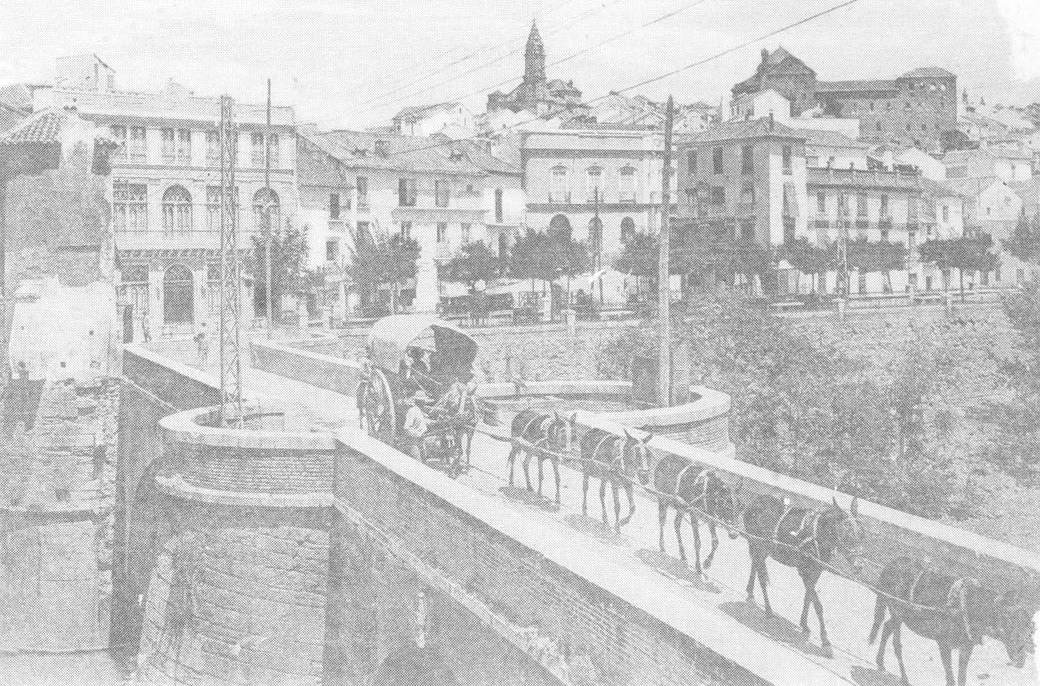
Establishing the true scale of the killings has proved difficult. The Civil Registry records 334 violent deaths in Puente Genil during 1936, but modern historians have shown that these official records capture only part of what occurred. Research by Diego Igeño Luque has identified numerous victims whose executions were never entered into the register, demonstrating that the official figures significantly understate the number of people killed during the occupation and its immediate aftermath. The victims represented every part of the town’s Republican community. Labourers, railway workers, factory employees, craftsmen, municipal officials and political activists all appeared among the dead. Their common characteristic was not military service but their perceived loyalty to the Republic or their association with trade unions and left-wing organisations. For many families, the executions ended any hope that the occupation would bring only a change of government. Fathers, sons and brothers disappeared within days, while relatives were left to discover their fate through rumour, cemetery workers or neighbours willing to speak in secret.
Among the known victims was Concepción Cáceres Jurado, a respected local midwife. Women who represented Republican civic life or who were associated with the Republic could also become targets. Although men made up the overwhelming majority of those killed, her death remains one of the clearest examples of the occupation reaching beyond the political leadership and into the wider fabric of the community. Wives, parents and children were left to cope with the sudden disappearance of husbands, sons and fathers, often without being told where they had been buried. Many learned of a relative’s death only through rumours, cemetery workers or neighbours willing to speak in private. Public mourning was dangerous, and families quickly understood that asking questions could bring unwanted attention from the new authorities.
The occupation also transformed everyday life. Families identified with the Republic lost not only relatives but also their place within the community. Widows frequently became the sole providers for their households after the execution or imprisonment of their husbands. Children grew up without fathers, while many families faced poverty after losing their principal wage earner. Those associated with Republican organisations found it difficult to obtain work, and political loyalty became an important consideration in public employment and local administration.
The Republicans who managed to escape trekked to Málaga over 120km away, only to be caught up in the infamous massacre a year later. Many who were arrested at home were taken to Córdoba to be executed. Local right-wing groups continued their reprisals in the postwar period, arresting all those returning from Republican territory and carried out further executions.
Approximately 334 people died in Puente Genil, according known, or acknowledged deaths up until 1986, and only 111 victims were buried in unknown pits in the town’s cemetery, with the rest given ‘no identified location.’ The first excavation in 2019 around 25 meters from the west wall of the cemetery, two sets of niches, San Agustín and Santa Gema, which were demolished due to their poor structural condition in May 2022, and at the end of 2023, a team focused its work on the Patio de La Purísima of the municipal cemetery. These three pits are thought to hold the 111 recorded victims, though the initial 25-metres long pits have only discovered eight people, all found to have suffered violent deaths. Puente Genil had dared to fight back, and four percent of their little town was killed for it.
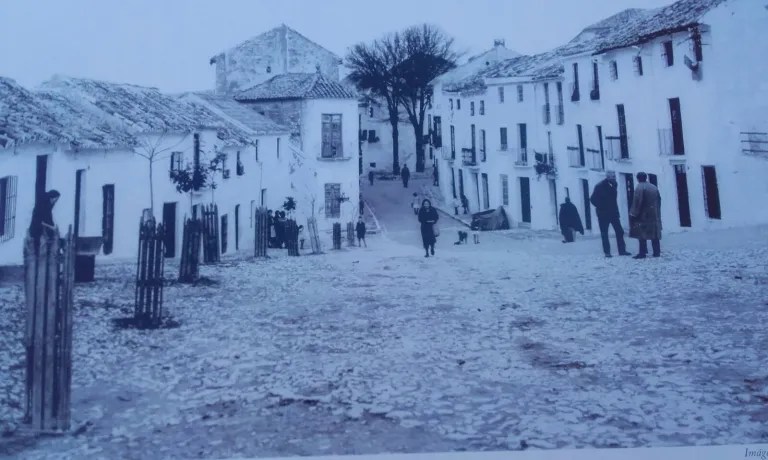
The town of Baena, in Córdoba Province, 65km southeast of Córdoba city, became the scene of one of the bloodiest single days of the Spanish Civil War’s opening weeks. After more than a week under Republican control, Nationalist forces led by Colonel Eduardo Sáenz de Buruaga advanced from Córdoba with Legionnaires, Moroccan Regulares, Guardia Civil and regular army troops. Outnumbered and poorly armed, the local Republican militias were unable to prevent the town from falling after several hours of fighting. As Nationalist troops entered Baena, Republican militiamen holding right-wing prisoners in the former Convent of San Francisco killed many of their hostages rather than allow them to be liberated. Modern local historians generally identify 73 victims, although the precise circumstances of every death remain the subject of historical research.
The capture of the town was immediately followed by severe Nationalist reprisals. Republican supporters, trade union members, local officials and civilians accused of backing the Republic were rounded up and detained. Numerous prisoners were executed without trial during the hours and days that followed, with killings taking place in the town and its surroundings. Modern research has identified at least 445 victims of Francoist repression in Baena during the war and immediate post-war years, while some historians believe the true number of those killed in the initial wave of repression was considerably higher, anywhere between 700 and 2,000 people killed, making it one of the largest massacres in Andalucía during the first weeks of the war. Many victims were Republican officials, trade union members, socialist and anarchist activists, suspected sympathisers, and civilians denounced by neighbours. The executions became part of the broader campaign of terror used throughout Nationalist-held Andalucía to eliminate potential opposition, and became something of a model repeated elsewhere. Artillery and machine-gun fire against resisting districts, followed by rapid occupation by Army units, Civil Guards and right-wing militias, immediate arrests, and long-term political cleansing showed the Nationalists an efficient way to control Andalucía.
The only marked mass grave pit in Baena is by the cemetery on the western entrance to the town, and has 225 people inside, now covered in paintings and is a memorial site to all those murdered by Nationalist repressions, those buried here and those disposed of in unknown locations. The events at Baena demonstrated how quickly military operations could descend into cycles of retaliation. Within a single day, both Republican and Nationalist forces carried out deadly acts of political violence, leaving deep divisions that continued to shape the town’s memory long after the fighting had ended as those who had hoped for freedom had to live alongside those who supported the rebellion, typical of locations all over Spain. Today, Baena remains one of the most intensively studied examples of the complex and often overlapping patterns of violence that marked the first weeks of the Civil War. Baena had a large agricultural working-class population and strong socialist and anarchist organizations before the war. The town had resisted the uprising and became a focus for Republican militia activity and its loss had both military and political significance. It deprived the Republic of one of its strongest local bases in Córdoba province.

