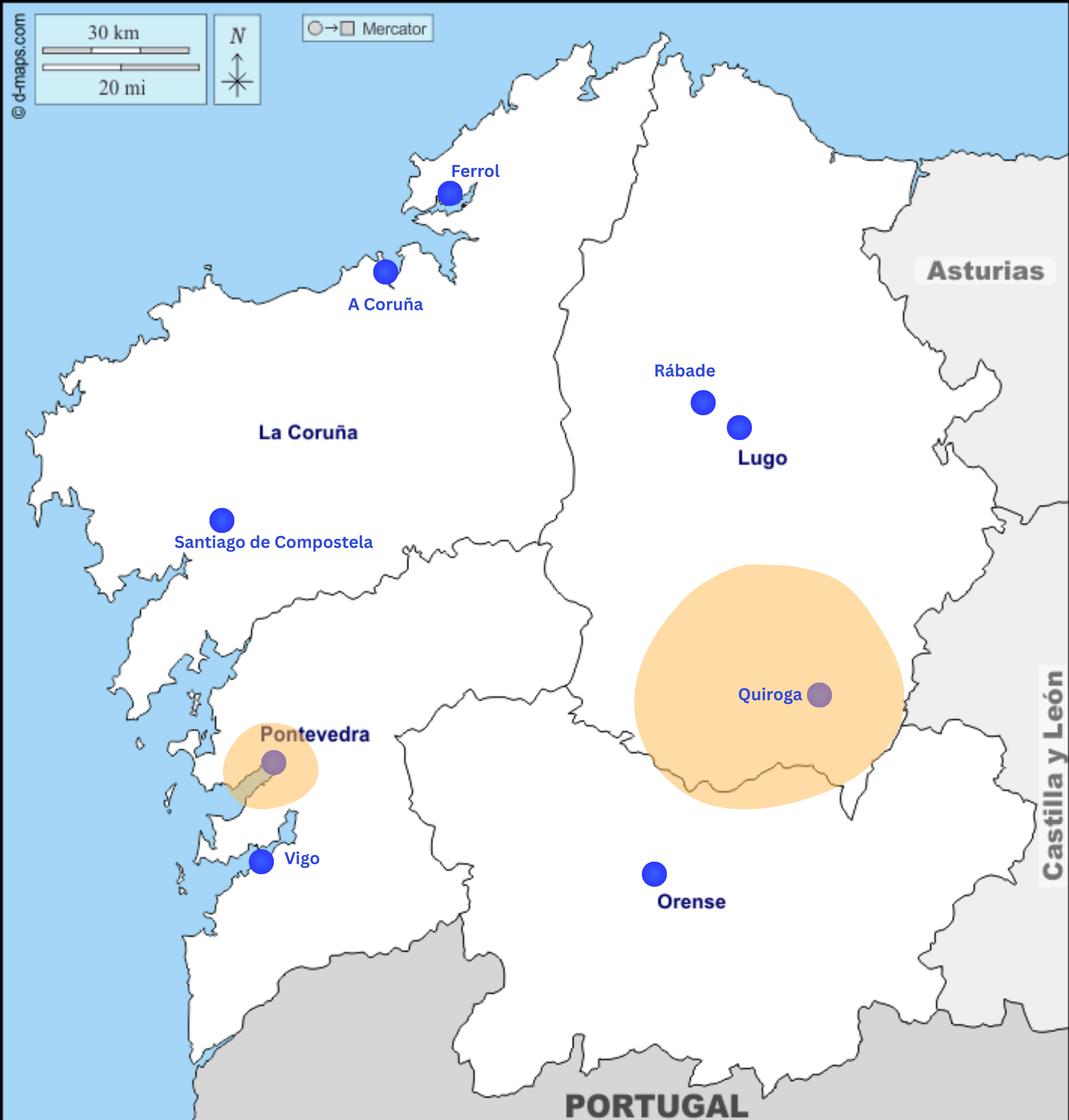
By 1 August 1936, the fighting for control of Galicia was effectively over. Rebel officers controlled the four provincial capitals, A Coruña, Lugo, Ourense, and Pontevedra, as well as Vigo, Santiago de Compostela, Ferrol, and the other major urban centres. The resistance mounted by workers, Republican supporters, and loyal members of the security forces in places including A Coruña, Ferrol, Vigo, Tui, and several smaller towns had been defeated during the second half of July. No substantial Republican-controlled territory remained from which another attempt to recover the region could be organised. This placed Galicia in an unusual position less than two weeks into the Civil War. Its population of approximately 2.7 million was living almost entirely behind rebel lines. There was no front inside the region, and the Nationalists did not need to maintain a large field army to prevent an immediate Republican counterattack. No neighbouring provinces were going to create a front or attack. Ferrol’s naval base and arsenal remained intact, the ports of A Coruña and Vigo could operate behind Nationalist lines, and the principal railway connections, roads, farms, industries, and administrative institutions had escaped the prolonged destruction already beginning elsewhere in Spain. For supporters of the rebellion, the military outcome was decisive enough that attention could move from winning Galicia to controlling it.
The first task was dealing with the thousands of people associated with the political order that had existed before 18 July. Military and civilian prisons, barracks, police facilities, and improvised detention centres were already holding Republican politicians, municipal officials, trade-union organisers, sailors, soldiers, teachers, workers, and civilians arrested during and after the fighting. By 10 August, the military authorities had opened at least 217 proceedings connected with opposition to the uprising, with particularly heavy concentrations in Ferrol, Vigo, and A Coruña. Arrests continued as Guardia Civil posts, Falangists, military patrols, and local supporters searched for people who had escaped the initial round-ups.
Ferrol was one of the principal centres of repression because the July rebellion had divided personnel at one of Spain’s most important naval bases. Officers and sailors who had attempted to maintain the Arsenal and ships for the Republican government were now prisoners of the officers who had joined the uprising. Among the most senior was Rear Admiral Antonio Azarola Gresillón, second-in-command of the naval base and head of the Ferrol Arsenal. Azarola had refused to support the rebellion and had attempted to prevent the Arsenal from joining it. He was court-martialled for his loyalty to the government, sentenced to death for military rebellion, and shot on 4 August. His execution demonstrated the inversion on which the new military justice rested: officers who had refused to rebel against the government could themselves be condemned as rebels.
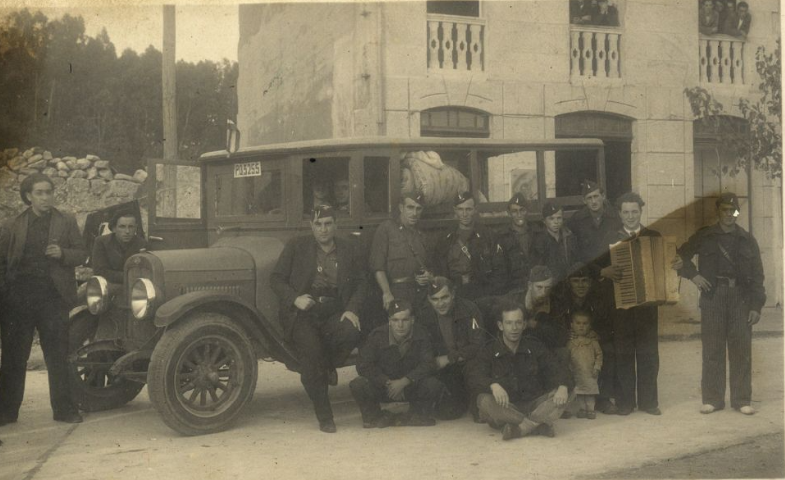
The military courts accounted for only one part of the violence. Galicia was also experiencing paseos, in which detainees were removed from prisons or seized directly at home or even just on the street, driven to another location, and executed. This distinction is essential to understanding the scale of the repression. Across the entire period of Francoist wartime repression in Galicia, approximately 4,591 people have been identified as killed. Around 1,326 were executed following military death sentences, while approximately 3,265, more than 70 percent, were killed extrajudicially.
The arrests extended into the political and social organisations that had existed before the uprising: PSOE, CNT, UGT, Republican parties, communist organisations, the Partido Galeguista, agrarian societies, elected municipal governments, and other associations. Mayors and councillors were obvious targets, but so were people whose importance was entirely local, a union delegate in a workshop, an organiser of agricultural labourers, a teacher identified with Republican education, or someone known to have helped organise resistance during the first days of the uprising. Removing these people served a purpose beyond punishing the events of July. Galicia still contained the human infrastructure of the Republic even though the Republican state itself had disappeared from the region. Trade unions had members and organisers; political parties had local committees; agrarian societies connected villages; elected councillors still possessed standing within their communities. The new authorities could prohibit those organisations immediately, but their members and personal networks remained. Arresting, imprisoning, dismissing, or killing the people around whom those networks had been built made their reconstruction far more difficult.
Men who had escaped the July fighting began hiding in rural areas, creating the first groups and individuals commonly described as fuxidos. At this stage they were ‘fugitives’ not an organised guerrilla movement. Some slept in forests or mountain shelters; others remained much closer to home, concealed in barns, farm buildings, relatives’ houses, or isolated properties where trusted people could bring them food. One documented case from the first week of August occurred around A Pobra do Brollón in Lugo province. Jesús Casas González, known as O Inverno, was a CNT militant and municipal figure from O Incio who had participated in resistance to the uprising before going into hiding. On 6 August, information about his whereabouts led local Nationalist supporters to Covadelas, in the parish of Saa, where he was found while working in the countryside. He was captured and subjected to severe violence during his detention, from which he died.
During the first week of August, Guardia Civil personnel, Falangists, right-wing activists, employers, landowners, local officials, and other supporters could provide names and information on who was considered a Republican enemy. Some participated in searches or joined the armed civilian organisations being established behind the lines. In Ourense, enrolment in the Caballeros de Santiago began on 7 August under military supervision, with plans to organise eight companies in the provincial capital and additional groups across the province’s judicial districts. Similar second-line organisations would expand elsewhere during August.
For people who had supported the rebellion, the first week could consequently feel like a victory. Republican councils were being removed, labour organisations suppressed, and political opponents arrested. Catholic and conservative organisations could continue public life, while people previously excluded from local government (by not winning elections) were beginning to replace elected Republican officials. Employers no longer had to negotiate with same union organisations, and conservative landowners saw the political protection previously available to agrarian movements disappear, driving down wages, safety, and dignity. Before the uprising, conservatives and Catholics had been free to worship, own property and businesses, publish newspapers, organise political parties, stand for election, vote, and participate in public life. Right-wing parties had governed both nationally and locally during the Republic. What changed after July was that political competition was removed.
For opponents of the rebellion, arrest could now come without the possibility that Republican forces would retake the town and protect them. A prisoner in Ferrol, A Coruña, Vigo, or Pontevedra was hundreds of kilometres from the nearest substantial Republican territory. A ‘fugitive’ in rural Lugo or Ourense could survive only while other people continued to hide and feed him. Families whose relatives had been detained were dealing with military courts on one side and extrajudicial violence on the other.
On 8 August, less than three weeks after the rebellion began, the Nationalist authorities started drawing directly on one of the greatest advantages their rapid conquest of Galicia had given them: tens of thousands of men who could now be incorporated into the rebel army. Orders called up the 1933 and 1934 military classes, together with men of the 1935 class who were available for service. Notices were displayed at town halls, churches, and other prominent public places, and by 10 August men across Galicia were reporting to barracks and recruiting centres. Research into the mobilisation estimates that approximately 69,000-75,000 Galicians were brought under military authority in this first major call-up.
The numbers are important because they show the difference between Galicia supporting the Nationalists and Galicia being controlled by them. There were committed volunteers for Falange, the Requeté, and other Nationalist formations, particularly among conservative and Catholic sections of society, but the enormous body of men now entering the army had been ordered to do so. Many had little previous political involvement, while others came from families or workplaces that had supported the Republic. Between July and December 1936, at least 1,453 Galician men aged 18-30 were themselves subjected to sanctions, military proceedings, execution, or paseos. Military-age Galicians could be regarded as politically suspect while simultaneously being required to fight in the army of the new regime.
Failure to answer a mobilisation order exposed a man and potentially his family to investigation, while the repression of the previous three weeks had already demonstrated the consequences of being identified as an opponent. Some men attempted to hide or escape, adding another group to the fuxidos already avoiding arrest because of their political activity. Others eventually presented themselves after concluding that remaining absent was too dangerous. Galicia’s early Nationalist victory produced an unusual situation in which a man could leave a household already affected by arrest or political persecution and be sent to fight for the same authorities responsible for it.
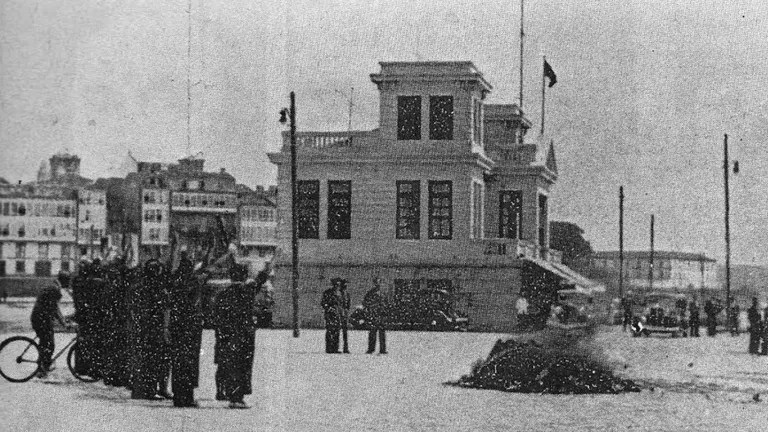
There is also evidence that the spectacular displays of Nationalist enthusiasm did not produce enough volunteers. On 15 August, La Voz de Galicia contrasted the response in A Coruña with the much greater enthusiasm it claimed was visible in Navarre. Nationalist commentary also criticised supporters who proclaimed their willingness to fight while remaining in offices, administrative jobs, or rear-area duties. The need to mobilise entire military classes so early in the war makes the point more clearly than the propaganda, that Galicia was an enormous source of Nationalist manpower because the rebels controlled its population, not because tens of thousands of men had spontaneously volunteered.
For families, the mobilisation meant another abrupt disruption only weeks after the July fighting. Men in their early twenties who had expected to spend the summer working on farms, docks, railways, fishing boats, workshops, or in local businesses were required to leave. Parents and wives had no certainty about where they would be sent or how long the war would last. Farms and businesses lost workers, while the military gained a pool of men that could be trained, organised, and dispatched beyond Galicia. Some would be sent eastwards as Nationalist forces attempted to push from Galicia into Republican Asturias; others would eventually serve much farther from home. The mobilisation occurred while arrests and prosecutions were still expanding. By 10 August, at least 217 military proceedings connected with resistance to the uprising had already been opened in Galicia, with particularly important concentrations at Vigo, Ferrol, and A Coruña. The same railway network that could carry recruits out of Galicia also connected cities in which prisons and military courts were processing the defeated political and military opposition. Ferrol remained especially important. The struggle for the naval base in July had left the Nationalists with prisoners from the navy, the Arsenal, and the city’s heavily organised industrial workforce. During August alone, sixteen people would be formally executed in Ferrol following military proceedings, with another eleven executed there during September.
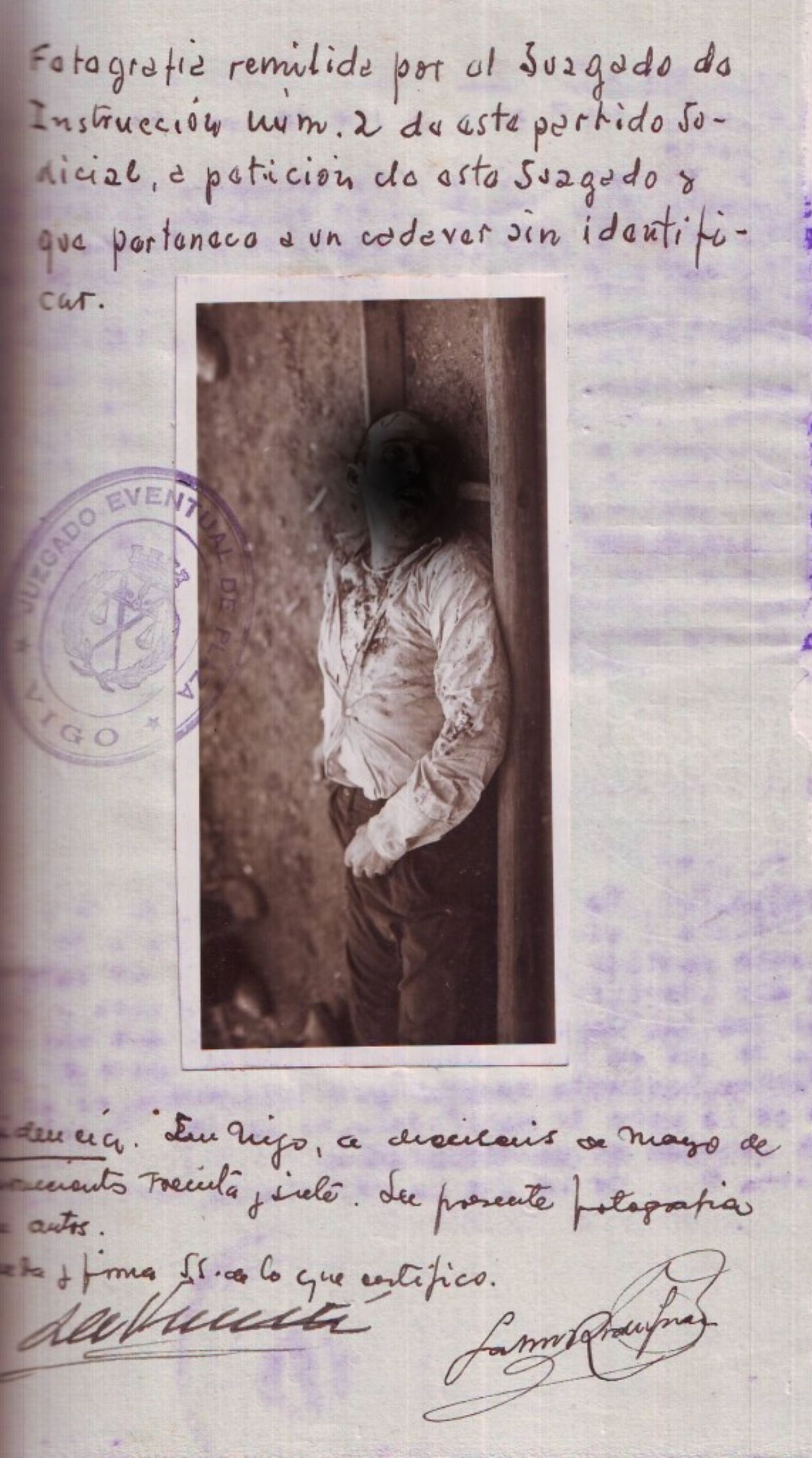
The repression was also beginning to change employment and local government. Republican and left-wing councillors were removed from municipal institutions, while officials and employees were investigated for their political records. In Pontevedra, the process had become sufficiently organised that on 16 August El Pueblo Gallego published the names of municipal employees suspended from the city council. The consequences extended well beyond the individuals dismissed. Losing a municipal salary could remove a household’s principal income at the same time that relatives might already be imprisoned, hiding, or called into military service.
Nationalist civilian organisations were expanding at the same time. The Caballeros de Santiago, which had begun enrolment in Ourense on 7 August, was planned on a substantial scale, with eight companies in the provincial capital and additional organisation across the province’s judicial districts. Comparable civilian forces developed in Pontevedra and Vigo. Their members could guard public buildings, railway lines, bridges, roads, communications, and other infrastructure, reducing the number of regular soldiers needed for security inside Galicia. These organisations also gave civilian supporters of the rebellion a direct role in the new order. Members wore uniforms, carried weapons, accompanied searches, watched suspected opponents, and supplied information about their communities. In Pontevedra, the Guardia Cívica became associated with Víctor Lis Quibén, the former Renovación Española deputy whose organisation worked closely with the Guardia Civil and became deeply implicated in the repression that followed the coup.
Joining such an organisation could bring immediate status. A shopkeeper, professional, landowner, or older civilian volunteer might suddenly possess a weapon and official authority in the same town where socialist councillors and union organisers were being arrested. Nationalist supporters also appeared publicly at religious services, patriotic ceremonies, collections, and demonstrations of support for the military. Catholicism, restricted in parts of public life under the Republic, returned rapidly to civic ceremonies, and conservative organisations could operate openly. Yet the authorities themselves were cautious about interpreting every new supporter as politically reliable. Applicants to civilian militias could be investigated for previous political activity, union membership, attendance at demonstrations, friendships, religious behaviour, employment, and reputation. Some men with Republican backgrounds attempted to enter Nationalist organisations after the coup, whether because their politics had genuinely changed or because membership offered protection. This problem became serious enough that military authorities would tighten scrutiny of militia membership during September.
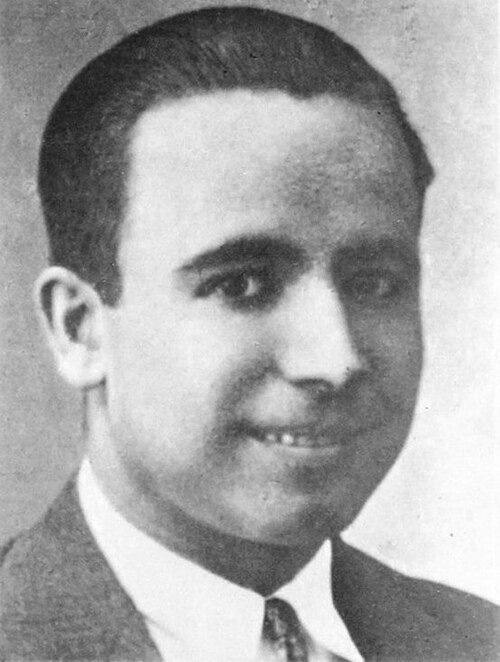
By the middle of August, the contrast with provinces still divided by battle lines was becoming pronounced. Galicia’s ports, railway system, farms, workshops, and major cities had suffered relatively little physical destruction. On 17 August, Alexandre Bóveda was taken to A Caeira, on the outskirts of Pontevedra, and shot. Bóveda was 33 years old, a civil servant and one of the principal organisers of the Partido Galeguista. He had played a central role in preparing Galicia’s Statute of Autonomy, approved by referendum on 28 June 1936 with overwhelming support among the votes cast. Less than two months later, the institutions through which that autonomy was supposed to operate had disappeared from Galicia, and one of the men most closely associated with creating them was dead. Bóveda had been arrested in Pontevedra after the uprising and imprisoned before being brought before a military court. He was accused and convicted of military rebellion, the same legal inversion being used against other politicians, civilians, sailors, and officers who had opposed the illegal military uprising. His political importance made the purpose of the prosecution particularly clear. Bóveda represented an established political organisation, possessed extensive contacts across Galicia, and had helped construct an alternative democratic political future for the region. Killing him permanently removed one of the people best equipped to rebuild that movement.
The same day, repression continued in Ferrol. Manuel Luaces Besteiro, who was being held while awaiting military proceedings, was killed on 17 August. On the following day, 18 August, Evaristo López Alvedro, associated with the cruiser Canarias, was executed without trial. These deaths formed part of the wider purge of Ferrol’s naval and industrial population following the struggle for the Arsenal in July. Sixteen people were formally executed in Ferrol during August alone, and another eleven would follow in September. By early March 1937, at least 112 people had been executed there following military proceedings. The rebels had inherited a major arsenal and warships and thousands of sailors, naval workers, soldiers, technicians, and industrial employees whose conduct during the uprising could be examined individually. Officers who had remained loyal to the government could be prosecuted alongside sailors who had resisted their rebellious commanders. Workers from the Arsenal and surrounding industries faced scrutiny for both their actions in July and their previous political and union activity. The Nationalists gained one of Spain’s most valuable naval installations, but they also inherited a population in which organised labour and Republican loyalties had been substantial.
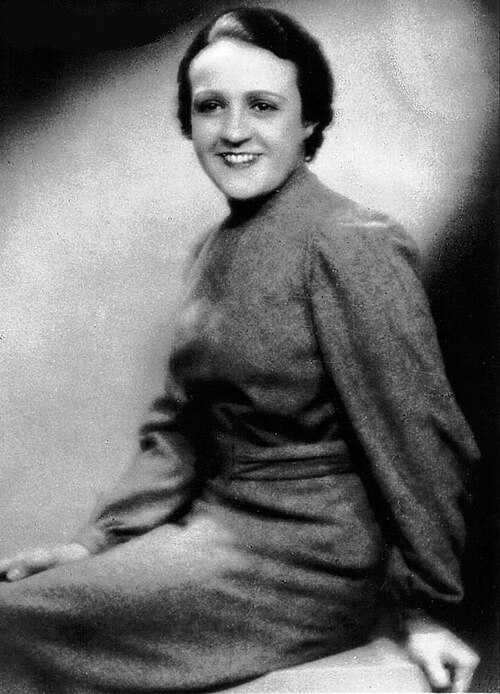
On 18 August, violence in A Coruña province produced one of the best-known female victims of the Galician repression. Juana Capdevielle San Martín was a 30-year-old librarian and intellectual who had worked at the Universidad Central in Madrid before moving to Galicia with her husband, Francisco Pérez Carballo, the civil governor of A Coruña. Pérez Carballo had been captured after the uprising and shot in late July. Capdevielle was arrested shortly afterwards, and was was pregnant when she was executed. Her body was found near Rábade, in Lugo province, on 18 August. Her own professional and intellectual identity placed her within the Republican cultural world, while her marriage connected her directly to one of the most senior representatives of the Republican government in Galicia. Within weeks, both husband and wife had been eliminated.
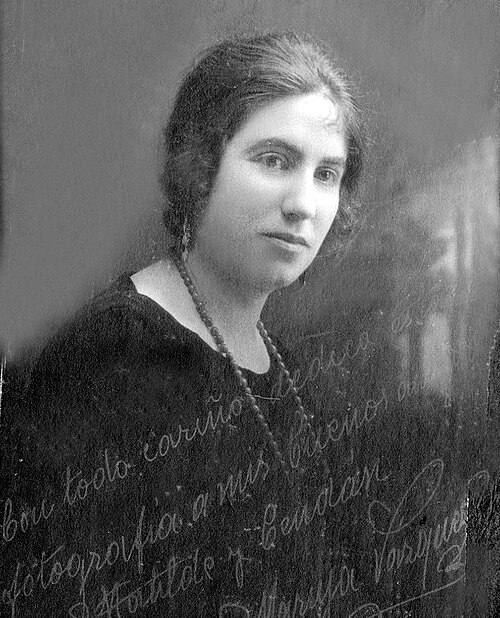
The following day, 19 August, teacher María Vázquez Suárez was executed in A Coruña province. Teachers were repeatedly exposed during the repression because they occupied unusually visible positions in local society. Republican governments had invested heavily in public education and secular schooling, and teachers could become associated in conservative eyes with the social and cultural changes of the previous five years. A rural teacher might also be a union member, Republican activist, councillor, or simply a publicly known supporter of the government. When political investigations began after the coup, there was little anonymity available to them. Teachers across Galicia were subjected to investigations and professional purges that examined political affiliations, behaviour during the Republic, participation in unions or political organisations, and attitudes toward religion. Removal from a school did not merely punish an individual teacher. In a small village it replaced one of the few state employees with daily contact with almost every family.
While these individual killings were taking place, Vigo’s military authorities were preparing a much larger attack on the political leadership of the province’s largest city. On 20 August, a military court tried a group of men who had occupied important positions in Vigo’s Republican government, socialist movement, unions, education, and professional life. Among those sentenced to death were Mayor Emilio Martínez Garrido; Enrique Heraclio Botana, one of the city’s principal socialist and UGT leaders; doctor Waldo Gil Santostegui; teacher and journalist Apolinar Torres López; Antonio Bilbatúa Zubeldia; José Antela Conde; Ramón González Brunet; and Ignacio Seoane Fernández. The Nationalists were removing the people who had administered the city, organised its workers, represented political parties, taught in its schools, and occupied respected professional positions. Vigo had possessed one of the strongest labour movements in Galicia, with substantial socialist, anarchist, communist, and Republican organisations and a working population concentrated around its port and industries. The condemned prisoners remained alive for another week. In the early morning of 27 August they were taken to the area around Pereiró cemetery. At approximately 5:30am, the sentences were carried out by firing squad.
Emilio Martínez Garrido had been the city’s elected mayor. Enrique Heraclio Botana had spent years organising socialist workers and the UGT. Apolinar Torres combined teaching, journalism, and trade-union activity. Waldo Gil was a well-known doctor. Their deaths removed people whose influence came from different parts of urban society but whose combined networks had connected municipal government, organised labour, education, and professional life. Military executions such as those at Pereiró were only the documented part of the killing. Throughout the same period, men were being removed from detention or seized locally and killed. The surviving figures for August record approximately 46 formal military executions across Galicia: around 23 in A Coruña province, 19 in Pontevedra, three in Ourense, and one in Lugo. Those figures do not include the paseos and other extrajudicial killings that constituted the majority of the approximately 4,591 documented Francoist repression deaths in Galicia during the wider 1936–39 period.
The difference is especially important outside the major cities. Formal execution statistics can make Lugo and Ourense appear comparatively quiet, while local studies identify men being killed beside roads, in isolated rural places, and around small cemeteries. A group of armed men taking a prisoner from a cell at night and shooting him 20km away could barely leave death registration, a grave, or the memories of the people who saw him taken. A paseado could simply disappear. Relatives might hear rumours about where a body had been found or travel between prisons asking whether someone was still being held. In small communities, knowledge often circulated unofficially long before anything appeared in a civil register. If there was a witness, they might be able to tell a relative, who could go and bury the body where it was found.
Rural life in Galicia before war
Surviving military records for September show increased killing – at least 65 people were formally executed following military proceedings across Galicia during the month, compared with approximately 46 in August. Pontevedra province accounted for around 31 of the September executions, A Coruña province for 22, and Lugo and Ourense for approximately six each, not accounting for those being killed on the roadsides. The largest cities remained centres of military justice and imprisonment, but killings continued in smaller towns and rural districts where no significant fighting had occurred for weeks, if at all. In these places, the victims were often people whose importance was primarily local: teachers, doctors, municipal officials, union members, agricultural organisers, and workers known to have supported the Republic.
Lugo province provides several documented examples during the first half of the month. On 3 September, schoolteacher Juan Abramo Dios was taken with carpenter Odilo Rodríguez and another prisoner along the road linking A Pobra do Brollón with Quiroga. The men were killed there rather than brought through a completed military proceeding. Their deaths belonged to the extrajudicial repression that formal execution statistics for Lugo, only six judicial executions during the whole of September, fail to capture. Six days later, on 9 September, Idelfonso Fernández and Gervasio González were killed at Fornelas their bodies left there. On 11 September, another killing struck O Incio. Dr Manuel Díaz González, widely known as O Pequeniño do Incio, was killed on the road between Laiosa and O Incio. Díaz was a physician and political figure with a strong local reputation, and his death illustrates the importance of looking beyond provincial capitals. In a rural district, removing a doctor meant killing someone who had entered homes, treated families, and accumulated personal relationships throughout the surrounding parishes. His absence was immediately visible in a way that the disappearance of an unknown prisoner in a large city might not have been.
The killings around A Pobra do Brollón, Quiroga, Fornelas, and O Incio also demonstrate the importance of roads in the repression. Prisoners could be removed from the place where they were detained, transported just beyond the town in which they were known, and shot at an isolated point between communities. Such locations provided privacy for the killers without needing concealing the result. Bodies might be discovered by local residents, buried on the spot or dumped by nearby cemeteries, or become the subject of information passed between families.
The countryside was also where the continuing search for fuxidos increasingly affected people who had not themselves taken part in resistance. A ‘fugitive’ required somewhere to sleep and people willing to supply food, clothing, and information. As weeks passed, survival became progressively more dependent upon these networks. Guardia Civil patrols and local Nationalist organisations therefore looked not only for the wanted men but for the households supporting them. This brought women particularly close to the search. A wife who knew where her husband was hiding, a mother carrying food to a son, or a woman allowing a relative to sleep in an outbuilding could become part of the investigation. The authorities could question relatives, search houses, watch movements, or arrest people suspected of providing assistance. Helping someone evade capture increasingly became an offence in its own right rather than simply an extension of the original fugitive’s political activity. If someone had fled for their life, the woman left behind would be subjected to arrests, beatings, rape, theft of money or property, threats against her children, and public humiliation.
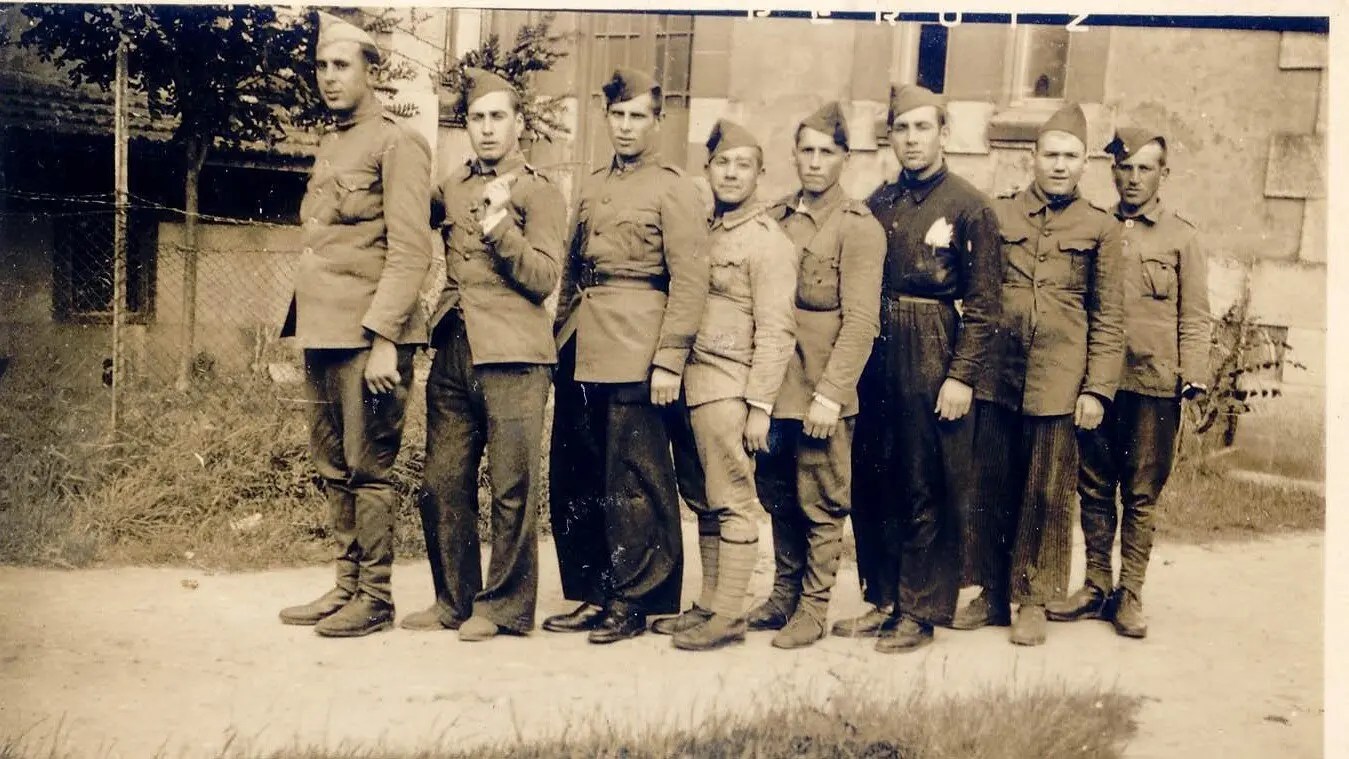
By the second half of September, concern about such infiltration, those who had been left-wing supporters entering the new Nationalist army groups, would produce orders for closer scrutiny across all four Galician provinces. The investigations reveal how quickly political biography had become a practical concern. Actions that had been entirely legal before 18 July, belonging to a union, attending a political meeting, supporting a Republican candidate, or participating in a demonstration, could now become evidence when officials decided whether a person was trustworthy. The same scrutiny extended increasingly into employment, particularly public employment and education. Teachers were investigated for their conduct under the Republic, involvement in unions, political opinions, and attitudes toward religion. Municipal employees and other public servants faced comparable investigations. September therefore brought a widening distinction between lethal repression and the larger purge surrounding it: most people investigated would not be shot, but an adverse political report could still remove a person permanently from a profession or public position.
Pontevedra province remained the most active centre of formal executions during the month, with approximately 31 people executed following military proceedings. Vigo itself recorded only one formal execution in September, while Pontevedra city and the smaller municipalities of the province accounted for most of the remainder. This shift is significant. The destruction of Vigo’s senior political and labour leadership had produced the highly visible Pereiró executions on 27 August; September’s judicial repression was dispersed more widely through the province rather than concentrated in a single spectacular execution of the city’s leaders. The repression was becoming part of government rather than an accompaniment to conquest.
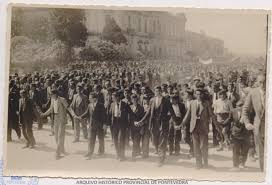
The economic consequences of repression continued to accumulate, as political fines could remove savings or place additional pressure on households already affected by imprisonment or dismissal. At the same time, collections for the Nationalist war effort sought money and material from a population now expected to demonstrate support for the rebellion. Contributions included cash, food, clothing, and other supplies for troops. Newspapers published subscriptions and donations, making participation publicly visible and giving businesses, institutions, and individuals an opportunity to demonstrate their alignment with the new authorities.
For families associated with the defeated political organisations, the most immediate danger could still come from a relative who had escaped arrest. By late September, some fuxidos had been hiding for more than two months. Survival for that length of time required continuing assistance, and their food had to come from somewhere, clothing wore out as they hid outdoors. A fugitive might have to move between hiding places as suspicion fell upon particular households. The danger is illustrated by the case of Erundina Álvarez Pérez in Ourense. Álvarez had provided assistance to a fugitive sought by the new authorities. She was arrested and subjected to military proceedings, which ended with a death sentence. On 30 September, she was executed in Ourense, more than ten weeks after the uprising and after Nationalist authority had become uncontested throughout Galicia. She was also one of the comparatively small number of women formally executed by the Nationalist authorities in Galicia. Across the whole period of wartime repression, research has identified at least 85 women among approximately 4,591 people killed. Only eight of those women were executed following formal military death sentences; another 77 were killed extrajudicially.
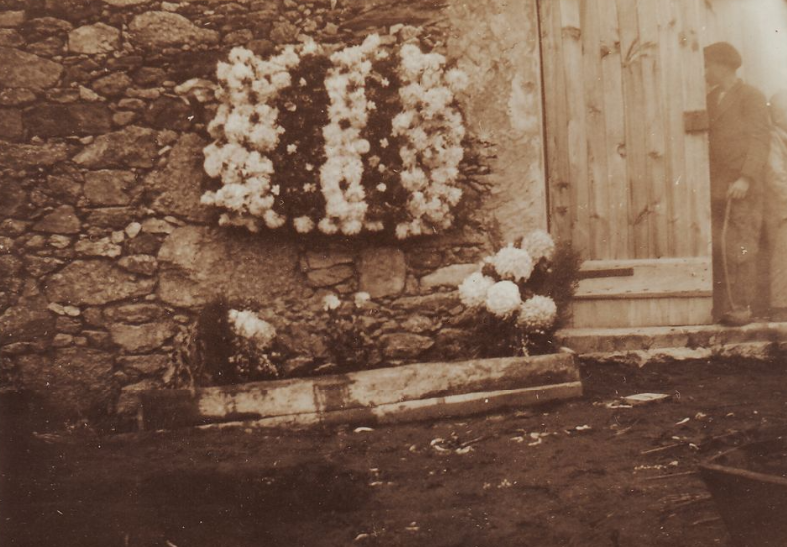
By the end of September, the physical condition of Galicia remained markedly different from that of the active war zones. There had been no artillery campaign through its cities, no e aerial destruction, and no moving front displacing hundreds of thousands of civilians. Ferrol’s Arsenal remained intact; Vigo and A Coruña continued functioning as ports; railways connected Galicia with Nationalist territory; farms continued producing; and most factories, shops, houses, and municipal infrastructure survived. Commercial life could continue, and food production did not have to operate behind a battlefield. Galicia would consequently avoid much of the physical destruction inflicted upon Asturias, the Basque Country, Madrid, Aragón, and other contested regions and the Nationalist war effort the principal beneficiary. Galicia’s ports could receive and move supplies, Ferrol provided naval infrastructure, and its railways transported men and material. By 30 September, Nationalist victory had given Galicia something rare in Spain, a military security without political peace. The major cities remained standing, transport functioned, farms produced food, and there was no battlefront within the region. At the same time, September had produced more formal executions than August, rural paseos continued, fugitives remained hidden, people who assisted them faced lethal punishment, and investigations of political reliability were reaching into employment, local administration, militia membership, and private reputation.

