No single account can describe what happened to every church in Republican Spain during the opening months of the Civil War. The experience varied enormously from one community to another. Some churches suffered only minor damage before being occupied for new purposes. Others were stripped of their interiors, while a relatively small number were completely destroyed. In some towns, local committees protected historic buildings or works of art; in others, centuries of religious heritage disappeared within hours. The examples that follow illustrate the range of experiences rather than every incident that occurred. The church burnings of July 1936 were remarkably similar across Republican Spain, yet they were not remarkably coordinated.
This article approaches the anti-clerical violence of 1936 from a neutral position. Churches were attacked, religious buildings were looted and burned, and thousands of clergy and religious figures were murdered in Republican-held Spain. These events were real, violent and indefensible. At the same time, they must be separated from the later Nationalist propaganda that inflated some claims, repeated unverified atrocity stories and used the killings to portray the entire Republic as a criminal conspiracy. A serious history must do both things at once: acknowledge the crimes without softening them, and examine the evidence without surrendering the narrative to those who used the victims for political justification.
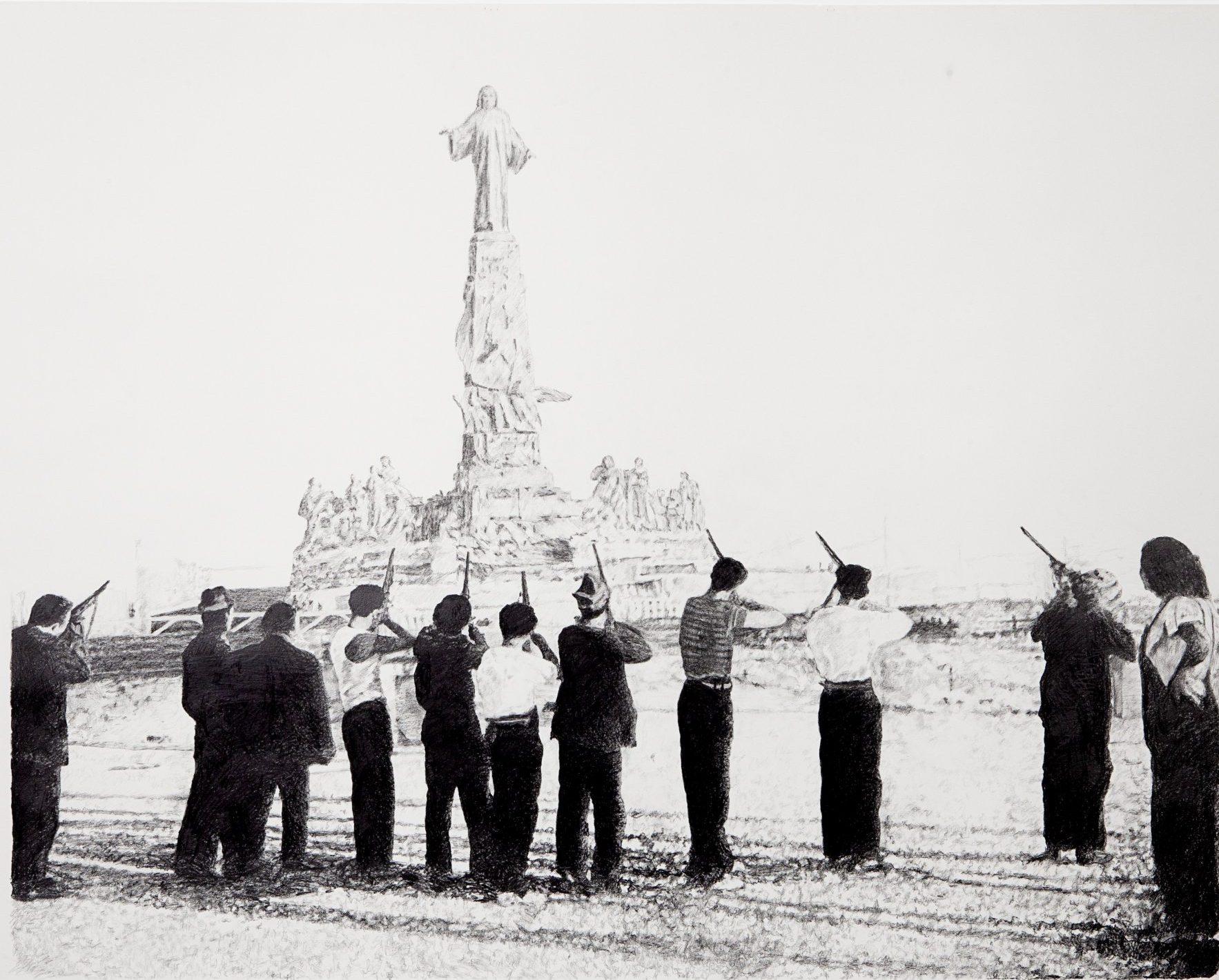
The military uprising that began on 17 July 1936 did not simply divide Spain between Republican and Nationalist territory. In many Republican cities, it also removed the institutions that had maintained public order. Military garrisons had rebelled, police forces were divided, and in many places revolutionary committees and armed workers found themselves exercising authority long before new Republican administrations could be organised. Within this atmosphere of uncertainty, the Catholic Church rapidly became one of the most visible symbols of the old order.
The speed with which churches were attacked was extraordinary. In Seville, where General Gonzalo Queipo de Llano secured control of the city for the Nationalists, Hugh Thomas records that eleven churches were attacked on 18 July alone before Nationalist forces restored order. In Republican-held Madrid, approximately fifty churches were attacked during the night of 19–20 July. In Valencia, eleven churches together with the Archbishop’s Palace were attacked on 20 July, while in Barcelona virtually every parish church in the city, with the notable exception of the Cathedral, suffered attack within the opening days after the defeat of the military uprising, and 279 priests would be dead by the end of the war.
These figures illustrate not a centrally directed campaign but the remarkable speed with which anti-clerical violence spread once state authority collapsed. In each city the attacks followed their own course. Sometimes crowds gathered immediately after news of the uprising. Elsewhere, churches were entered only after local revolutionary committees, or militia groups had established themselves. In some neighbourhoods, buildings were damaged within hours; in others they remained untouched for days or escaped serious harm altogether.
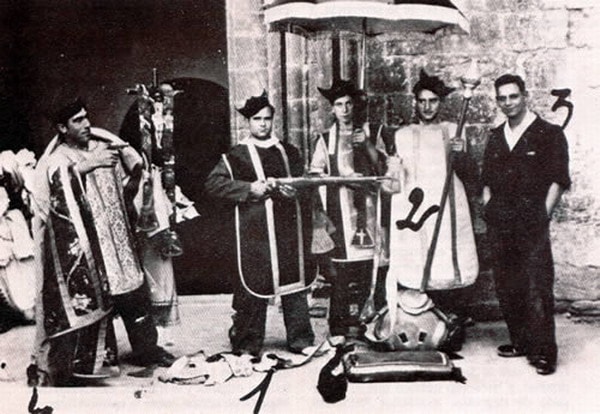
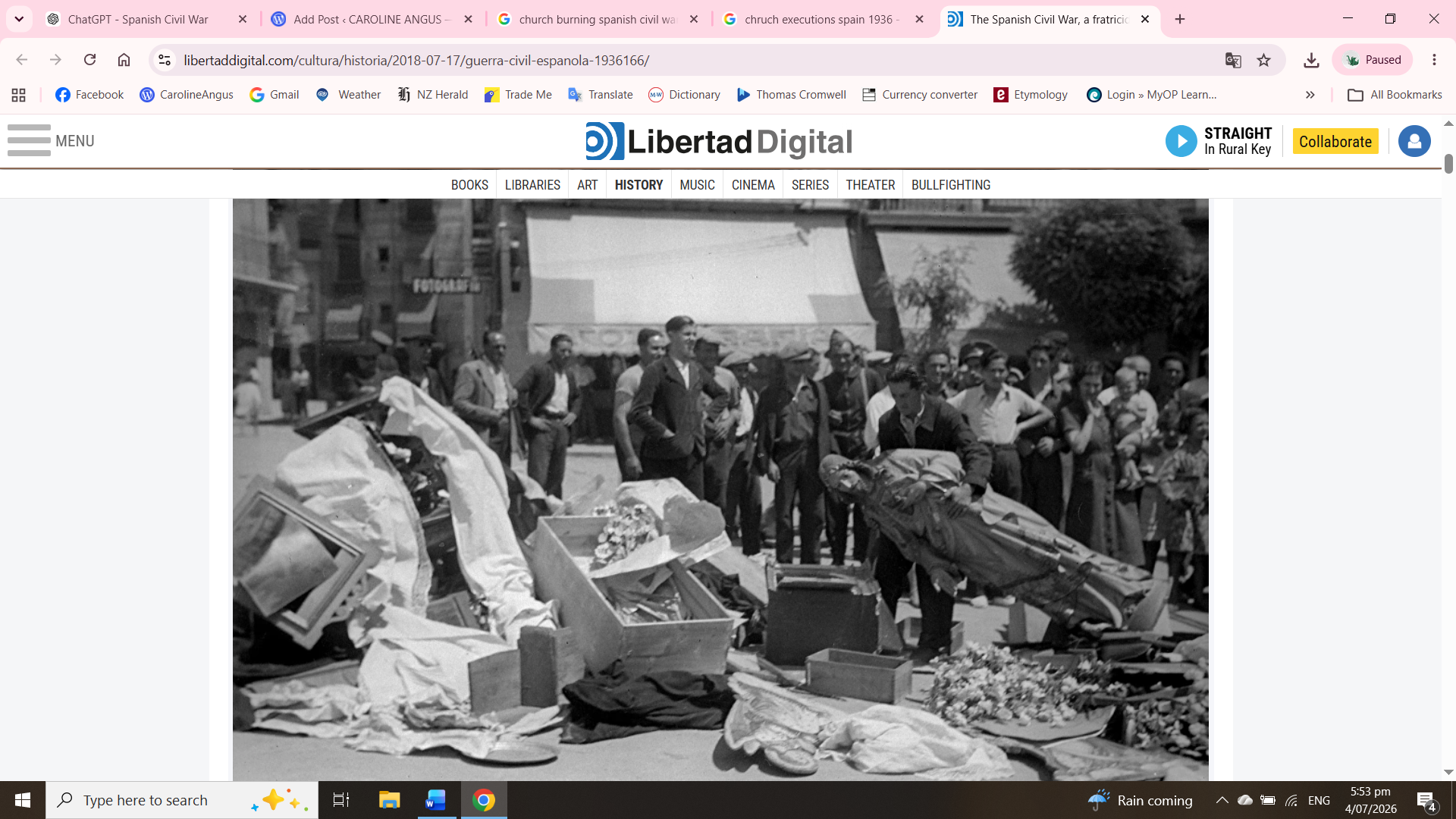
The first attacks were directed overwhelmingly against the buildings themselves. Doors were forced open, altars dismantled, religious statues smashed or dragged into the streets, vestments burned and parish archives thrown onto bonfires. Church bells were silenced, crucifixes pulled down and centuries of accumulated religious furnishings destroyed in a matter of hours. Yet despite the dramatic images of churches in flames that circulated around the world, comparatively few church buildings were completely destroyed. According to Hugh Thomas, only around 150 churches were ultimately destroyed during the entire Civil War, while approximately 4,850 suffered partial damage, including around 1,850 that were classified as half-destroyed. In many cases, fires gutted interiors but left the stone structures standing, allowing them to be repaired after the war.
The Church represented centuries of political influence, economic privilege and social authority. To revolutionaries who believed that the military uprising threatened to restore the old order by force, attacking churches became both an act of political defiance and a declaration that the traditional relationship between Church and society had come to an end. The destruction was often spontaneous, sometimes encouraged by local revolutionary organisations, but rarely exhibited the characteristics of a single coordinated national campaign. Instead, remarkably similar scenes unfolded independently across Republican Spain, shaped by local grievances, local leadership and the revolutionary atmosphere of July 1936.
Although no two attacks unfolded in exactly the same way, remarkable similarities appeared across Republican Spain during the first weeks of the Civil War. Once a church had been entered, the initial target was usually the objects that represented its religious and social authority. High altars were dismantled, statues of saints dragged from their niches, confessionals smashed apart and crucifixes pulled down. Vestments, missals and liturgical furnishings were piled together and burned, while parish archives, records and devotional images were frequently destroyed. In many places, bells were rung one final time before being silenced, and church towers that had dominated local skylines for centuries became symbols of a disappearing social order.
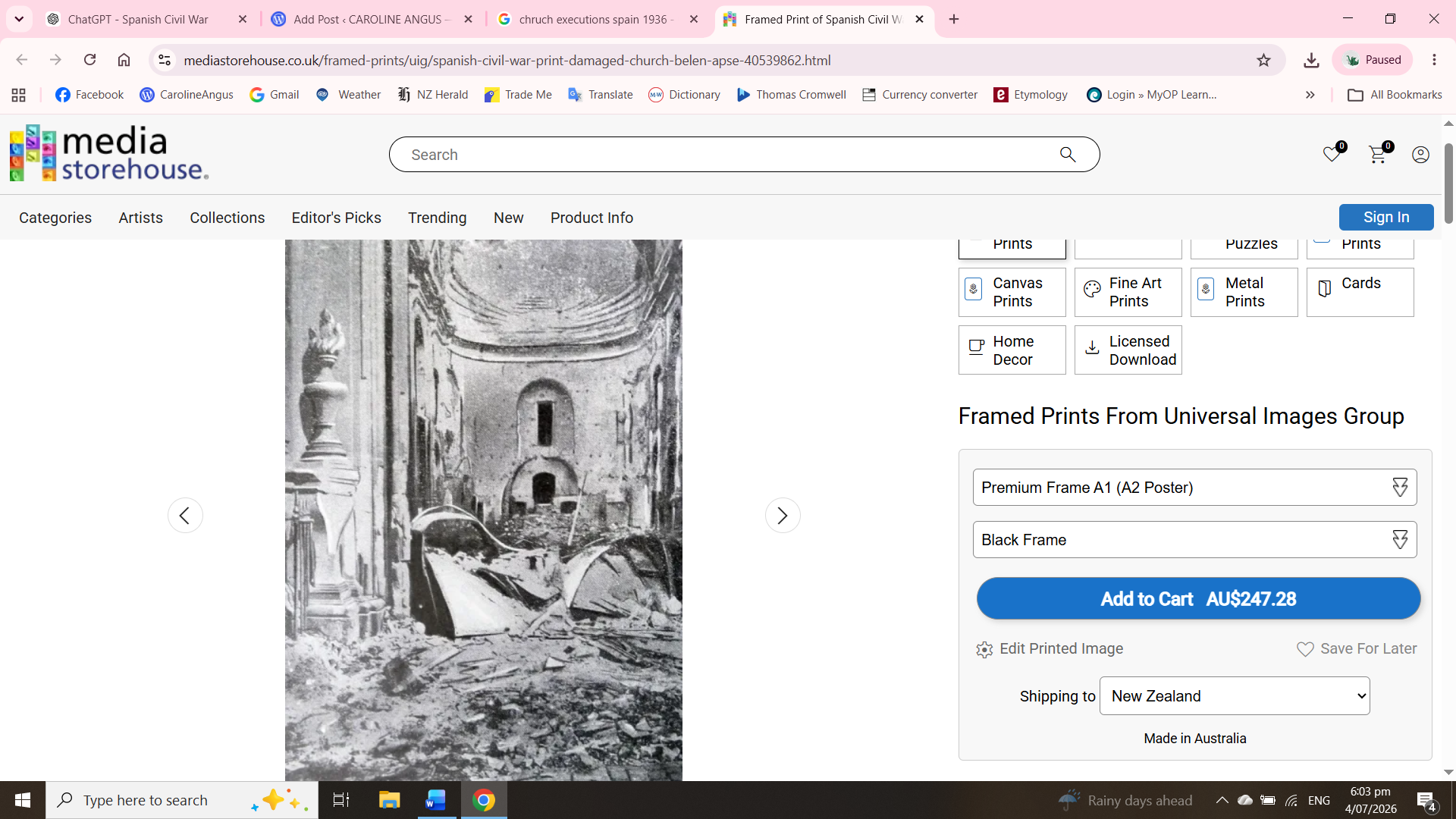
The destruction was intensely symbolic. Religious images were carried through the streets before being burned in public squares, while altarpieces that had survived for centuries were reduced to ash within hours. To those participating in the attacks, these were not merely works of art but representations of an institution they believed had accumulated wealth and influence while generations of workers and peasants remained poor. Destroying them was seen by many as an act of liberation rather than one of theft.
This distinction mattered to many revolutionaries. Contemporary accounts describe individuals being criticised for removing church furniture or valuables for private use. Destroying the symbols of the Church could be defended as a revolutionary act; taking a chair home, pocketing valuables or enriching oneself from the chaos was viewed by many as simple looting. In some towns, militia members and revolutionary committees intervened to prevent private theft, insisting that any property seized from the Church belonged to the revolution or to the community rather than to individuals. In practice, however, these principles were not always observed. Valuable objects disappeared from churches throughout the war, whether through opportunistic theft, black-market trading or later wartime disruption.
Not every church was burned, and not every attack ended in destruction. Many buildings were stripped of their religious identity before being assigned entirely new purposes. Churches became food stores, vehicle garages, hospitals, workshops, schools, warehouses, union headquarters and meeting halls. Some remained standing largely intact after their interiors had been destroyed, while others escaped significant damage because local residents, municipal officials or revolutionary committees argued for their preservation. Historic works of art were occasionally hidden or transferred to museums for safekeeping, demonstrating that even amid revolutionary fervour there was no universal attitude towards Spain’s religious and artistic heritage.
The scenes repeated across Republican Spain therefore reflected both unity and diversity. Similar acts occurred in Barcelona, Madrid, Valencia and countless smaller towns, yet each community shaped events according to its own political culture, local leadership and history. The revolution shared common symbols, but it did not produce identical outcomes. That diversity would become even more apparent as the violence increasingly shifted away from church buildings and towards the people associated with them.
For many communities, the destruction of churches marked only the beginning of the anti-clerical violence. During the first days after the military uprising, the principal targets had been buildings and religious symbols. Priests often escaped because they had fled before crowds arrived, been warned by neighbours, or gone into hiding as fighting engulfed their towns and cities. As the final week of July unfolded, however, the character of the violence began to change.
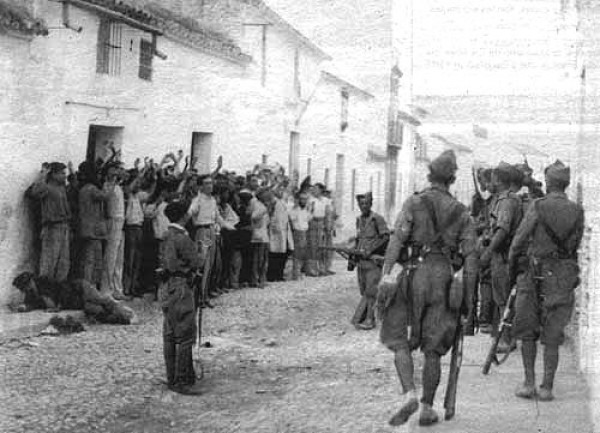
With the immediate military threat defeated in many Republican cities, revolutionary committees and militia patrols increasingly turned their attention towards identifying those regarded as enemies of the revolution. Priests, monks, nuns and other members of religious orders were arrested alongside landowners, conservative politicians, Falangists and others suspected of supporting the military rebellion. Some were imprisoned while local committees decided their fate. Others were removed from homes, convents or places of refuge and executed without trial.
The escalation was rapid. Before the military uprising, only a small number of clergy had been killed during 1936. By contrast, Church records indicate that approximately 861 priests and religious figures were killed during the final two weeks of July, followed by a further 2,077 during August alone. By the middle of September, almost 3,400 members of the clergy and religious orders had lost their lives. Although historians differ over the final wartime totals depending on which categories of religious personnel are included, there is broad agreement that the overwhelming majority of these deaths occurred during the chaotic opening months of the Civil War, before Republican authorities gradually re-established greater control over many areas.
The manner of these killings also varied considerably. Most clergy were not killed during attacks upon churches themselves. Instead, they were arrested, identified by local residents or militia patrols, taken from improvised prisons or detention centres and shot, often on the outskirts of towns or beside country roads. Some communities experienced only isolated killings. Others witnessed the near destruction of their local clergy. A much smaller number of cases involved acts of exceptional brutality, including public mutilation, desecration of bodies or killings intended to humiliate as well as execute. These incidents became some of the most widely remembered atrocities of the war, yet they should not obscure the fact that the majority of clerical victims appear to have been killed by shooting rather than by prolonged torture.
Understanding this distinction is important. The anti-clerical violence of 1936 was not a single, uniform event but a process that evolved with remarkable speed. In many places, attacks on churches preceded attacks on clergy by days rather than weeks. Elsewhere, both occurred almost simultaneously. The experience of one province could differ dramatically from that of another, shaped by local politics, revolutionary leadership, personal relationships and the degree to which civil authority had collapsed. What united these diverse experiences was the scale of the escalation. By the end of July, violence that had initially been directed largely against buildings had, in many parts of Republican Spain, become a deadly campaign against the people who represented the institutional Church.
Different Revolutions, Different Outcomes
Although anti-clerical violence spread across much of Republican Spain during the opening weeks of the Civil War, its scale and character differed dramatically from one region to another. Some cities witnessed dozens of churches attacked within a single night, while elsewhere damage was limited or prevented altogether. The following examples illustrate the remarkable diversity of events.
Barcelona experienced one of the largest outbreaks of anti-clerical destruction in Spain. Following the defeat of the military uprising on 19 July, virtually every parish church in the city, with the notable exception of the Cathedral, was attacked within the following days. Convents, monasteries and religious schools were also entered, their interiors stripped and many set alight. Religious images, altars, confessionals, vestments and parish archives were destroyed in huge quantities. Despite the extraordinary scale of the attacks, comparatively few clergy were killed during the opening days. Many priests had already fled or gone into hiding while the fighting against the military rebels was still underway. Numerous church buildings survived structurally and were later converted into hospitals, warehouses, garages, schools and the headquarters of revolutionary organisations.
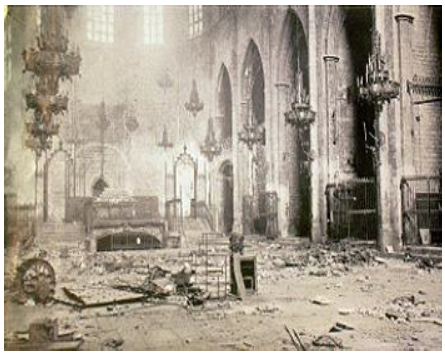
Spanish churches are famous for their retablos, enormous gilded wooden altarpieces. When people described a church as burned, they often meant that the retablo, sometimes a masterpiece of 16th or 17th century craftsmanship had been consumed by fire. Those losses were among the greatest artistic casualties of the Civil War, even when the church building itself survived. The Sanctuary were usually the first things targeted, the high altar, side altars dedicated to saints, tabernacles, altar rails, the pulpits, and lecterns. Quickly destroyed were statues of Christ, the Virgin Mary, saints, and crucifixes, along with Stations of the Cross (14 framed scenes around the walls) and processional statues used in Holy Week. Many were carved wood and burned easily. All furniture was easy to move and burn – pews, choir stalls, confessionals, alongside sacristy cupboards and their vestments and other garments worn by priests. Beautiful fabrics used for chalice veils, corporals and altar cloths were easy to burn, as well as books and documents, parish registers, baptism registers, marriage registers, burial registers, missals, prayer and choir books, music manuscripts and parish archives. Churches were lost their arts; oil paintings, frescoes, gilded carvings, and reliquaries, and some stained glass did not survive. Silver and gold objects could be melted down or handed to committees, including candlesticks, chalices, thuribles, while bells were melted down are being silenced and removed. Because medieval Spanish churches were built of masonry, interiors could be completely gutted while the structure remained standing. Stone, including walls, columns, vaulting and bell towers often remained standing unless dynamite managed to destroy them. . In many churches the masonry walls survived almost untouched, but centuries of accumulated religious art, furniture and records disappeared within hours.
The speed of events in Madrid was remarkable after the revel uprising. Hugh Thomas records that approximately fifty churches were attacked during the night of 19–20 July 1936 alone. As crowds moved through the capital, churches were entered, religious furnishings destroyed and fires set. Most of the buildings themselves survived, although many interiors were completely devastated. During the following days the violence increasingly shifted towards members of the clergy as arrests and executions became more frequent throughout the capital.
el ministerio público
Valencia experienced a substantial but more selective wave of destruction. On 20 July, 11 churches together with the Archbishop’s Palace were attacked. Yet the city’s two most important religious buildings, the Cathedral and the Basilica of Our Lady of the Forsaken, escaped the level of destruction seen elsewhere, despite standing immediately beside the Archbishop’s Palace, as the valuables were left alone while locations of power, like that of the Archbishop, were targeted instead. Many other churches lost their interiors while their stone structures survived, and a number were subsequently converted to secular uses, reflecting the varied decisions of local revolutionary committees rather than a single uniform policy. The region lost 327 priests to execution over the course of the war.
Although Seville quickly fell under Nationalist control, the brief period before military authority was fully established still witnessed significant anti-clerical violence. Hugh Thomas records that 11 churches were attacked on 18 July alone. The rapid restoration of Nationalist control prevented the widespread destruction seen in Republican-held cities such as Barcelona and Madrid, making Seville an example of how quickly events could diverge depending upon which side secured the city.
Barbastro in Huesca, Aragón became one of the most extreme examples of violence directed against the clergy rather than church buildings. Religious communities were systematically arrested during the summer of 1936, including the Claretian missionaries, many of whom were executed after periods of imprisonment. While churches themselves also suffered damage, Barbastro entered history principally because of the scale of the persecution directed towards religious personnel, with 87.8% of the clergy killed during the war.
Asturias represented another distinct experience. The region already carried the memory of the anti-clerical violence of the 1934 miners’ uprising, during which 58 religious buildings had been destroyed across Asturias and 34 clergy and religious figures killed. Two years later, the Civil War again brought attacks upon churches and clergy to parts of the region. Some of the most notorious incidents associated with Republican anti-clerical violence occurred in Asturias, although the majority of clergy killed there, as elsewhere in Spain, were executed by shooting rather than subjected to the exceptionally brutal acts that later dominated wartime propaganda.
The Basque Country demonstrated that anti-clerical violence was not an inevitable consequence of Republican rule. Governed by the deeply Catholic Basque Nationalist Party, the region remained loyal to the Republic while largely preserving normal religious life. Churches remained open, Mass continued to be celebrated and widespread attacks upon religious buildings were largely prevented, other than a few isolated property attacks in San Sebastian on the opening days of the uprising. The Basque experience remains one of the clearest demonstrations that local political leadership and community attitudes could influence how the revolution unfolded.
For many of those who participated in the first attacks upon churches, the destruction of religious buildings represented an assault upon an institution rather than upon individuals. Churches symbolised centuries of political influence, wealth and social control. Burning an altar or pulling down a crucifix was seen by many revolutionaries as striking at the power of the institutional Church itself. During the opening days after the military uprising, this distinction remained important. The first wave of anti-clerical violence was directed overwhelmingly against buildings, religious objects and symbols of authority. But within days, events began to change. As revolutionary committees consolidated their authority across much of Republican Spain, attention increasingly turned towards the clergy themselves. Priests who had escaped the initial attacks by hiding in private homes, seeking refuge with neighbours or abandoning their parishes were gradually identified, arrested and detained. Monasteries and convents were searched, while local residents, political opponents or informants sometimes identified members of religious communities attempting to remain unnoticed.
The escalation was rapid. Before the outbreak of the Civil War, only seventeen members of the clergy and religious orders are generally recorded as having been killed during 1936. By contrast, Church records indicate that approximately 861 clergy and religious figures were killed during the final two weeks of July, followed by a further 2,077 during August alone. By the middle of September, almost 3,400 had lost their lives. Although historians continue to debate the precise wartime totals depending upon which categories of religious personnel are included, there is broad agreement that the overwhelming majority of clerical deaths occurred during these first chaotic months before Republican governments gradually regained greater control over many areas.
The methods of repression also differed from the destruction of church property. Most members of the clergy were not killed during attacks upon churches themselves. A priest would be identified, arrested by a local militia or committee, taken to a town hall, school, prison or improvised detention centre, held for hours or days, then removed, often at night and shot outside the town. This pattern appears repeatedly in Madrid, Toledo province, Aragón, Catalonia, Valencia, and New Castile. Religious communities arrested together, and entire communities were detained, like in monasteries, convents, seminaries, religious colleges. The community might remain together for several days before execution and showed how whole religious orders disappear from places like Barbastro.
A much smaller number of cases involved acts of exceptional brutality. Contemporary accounts describe mutilation, desecration of bodies and other forms of violence that became some of the most enduring images of Republican anti-clerical repression. Many of these incidents are supported by contemporary accounts, while others rely primarily upon individual eyewitness testimony or post-war investigations whose details cannot always be independently verified. The parish priest of Navalmoral, Ávila, was put through a mock crucifixion ritual, though simple shot before being nailed to a crucifix. A priest in Cuidad Real was castrated., while a priest of Ciempozuelos in Madrid was gored by fighting bulls. The Bishop of Jaén and his sister were by a woman in front of a cheering crowd. The Bishop of Almeria was murdered while working on a history of Toledo, and his thousands of pages of work instantly destroyed, and a nun in Madrid was shot when she refused a proposition of marriage from a militiaman. These kinds of acts have little to no proof of happening, yet were exaggerated and blown into huge ‘Red Terror’ propaganda campaigns, making it near impossible to determine what actually occurred. Four nuns were reported as raped by a small group of militia, though the victims, the time and date of this event, the location, and those who committed the crime have never been identified. Given the mass killings, this event cannot be discounted, though seemingly extremely rare. The Nationalists used rape as a weapon of war, and it was even encouraged via radio broadcasts, however accounts of rape occurring in Republican-held locations are incredibly rare, and very surprising, given the breakdown of authority. Even Nationalist propaganda against Republicans largely wasn’t suggesting rape, because Republican revolutionaries viewed nuns differently from priests, who represented institutional authority. Nuns were often viewed as women who had themselves been controlled by the Church, and by storming a convent, women are being set free, as justified by stories of women who were forced into convents by their families. One tale tells of a nuns who fled a Catalonian convent, and were forced to wear whatever they could find. One young nun could only find a sequined dress, and when she managed to trek home to her village, her family assumed she had become a prostitute and they stoned her to death. Acts like this are not counted among the 283 deaths of nuns throughout the war.
Like many aspects of the Spanish Civil War, they require careful examination of the available evidence while recognising that memories, trauma and wartime propaganda shaped how such events were recorded and remembered. But the overwhelming majority of clerical victims appear simply to have been executed by shooting. That fact does not lessen the enormity of the persecution. Rather, it reminds us that the scale of the killings did not depend upon spectacular acts of cruelty. Thousands of priests, monks, nuns and other religious figures lost their lives during the opening months of the Civil War, often after little more than a brief arrest and an accusation that they represented an institution now regarded by many revolutionaries as inseparable from the forces seeking to destroy the Republic.
Local denunciations were another issue. Many arrests began because somebody said where they knew a priest was hiding and that person was sought out. Sometimes denunciations were ideological, sometimes it was personal, or old grievances resurfaced. These were less common though, as were immediate reprisals. There were occasional armed resistance from a church, even if this was not done by priests, rather locals who had come in to use a church as a vantage point to attack others (shooting happening from churches has long been disputed, though eyewitness accounts from those shot on the ground are hard to deny). If there was a belief someone had fired from a bell tower, these accusations sometimes led to immediate killings, especially in the first weeks of the war. Some priests were also accused of informing, supporting the rebellion, helping landowners, political activism, and their own involvement in earlier repression. But many appear simply to have been killed because they represented the institutional Church.
Where Republican government remained stronger, particularly through Valencia and Catalonia, there were more arrests, more detentions, and slightly more procedure (though still illegal). But where authority collapsed completely, killings were swift, spontaneous and had little to no documentation, making tracing these events difficult (though not impossible. Even the smallest parishes that lost a handful of people have been able to trace the bodies and identities, something Republican lay people still cannot do. This author has spent time tracing mass graves in the hills north of Valencia city in previous decades, where all clergy are accounted for, and yet left-wing victims are still struggling to be even found, let alone identified).
By the closing days of July 1936, the anti-clerical violence that had accompanied the collapse of state authority in Republican Spain was becoming something far more systematic. During the first days after the military uprising, churches had been entered, their interiors destroyed and their religious symbols publicly dismantled. Within little more than a week, the persecution increasingly extended to the clergy themselves as priests, monks, nuns and members of religious orders were identified, arrested and, in many areas, executed without trial. Yet even at this stage, the experience differed dramatically across Spain. Some provinces witnessed widespread destruction of church property but comparatively few deaths. Others experienced severe persecution of religious communities while many church buildings remained standing. In the Basque Country, where a deeply Catholic Republican government retained authority, churches generally remained open and large-scale anti-clerical violence was largely prevented. Elsewhere, local revolutionary committees exercised almost complete control, producing entirely different outcomes. There was no single Republican experience. The same could be said of the wider Civil War. While Republican-held Spain struggled to contain revolutionary violence, Nationalist authorities were already conducting their own campaigns of repression against Republicans, trade unionists, teachers, elected officials and civilians suspected of supporting the Republic. Across both zones, arrests increasingly replaced battlefield fighting as thousands of people disappeared into prisons, improvised detention centres or execution sites. The nature of the repression differed, as did its targets and organisation, but by the end of July both sides had embarked upon cycles of violence that would expand dramatically during the months ahead.
The figures alone reveal the speed of the escalation. Church records indicate that approximately 861 members of the clergy and religious orders were killed during the final two weeks of July, followed by more than 2,000 during August. At the same time, Nationalist repression intensified across territories already under military control, particularly in regions such as Old Castile, Navarre, Galicia and western Andalucía, where executions of Republicans and suspected opponents rapidly increased well beyond any total of dead the Church suffered. What had begun as an attempted military coup had become a civil war in which repression was no longer a by-product of the fighting but an integral feature of it.
To many of those who participated in the attacks upon churches, convents and other religious institutions, the destruction was intended to communicate far more than anger. It formed part of a revolutionary rejection of the Catholic Church’s authority over Spanish society. Altars were dismantled because they represented religious power. Statues were pulled down because saints were no longer regarded as figures deserving public veneration. Vestments, liturgical books and devotional objects were burned because they symbolised an institution that many believed had allied itself with monarchy, wealth and conservative political power for generations. The same symbolic language extended to the buildings themselves. Churches were not always destroyed. Many were deliberately stripped of their religious identity before being converted into warehouses, garages, hospitals, schools, workshops or the headquarters of revolutionary organisations. These new uses were themselves symbolic. Spaces once reserved for religious worship were transformed into places intended to serve the wider community or the revolutionary movement, reflecting the belief that the Church’s privileged position within Spanish society had come to an end.
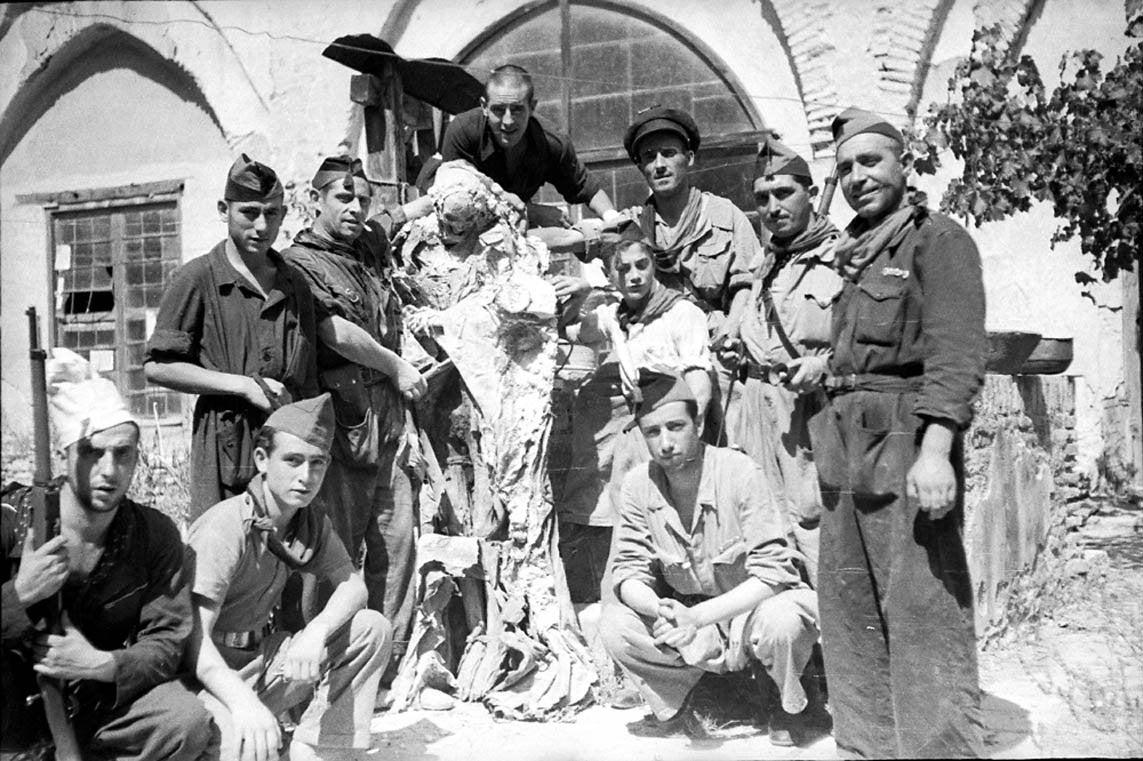
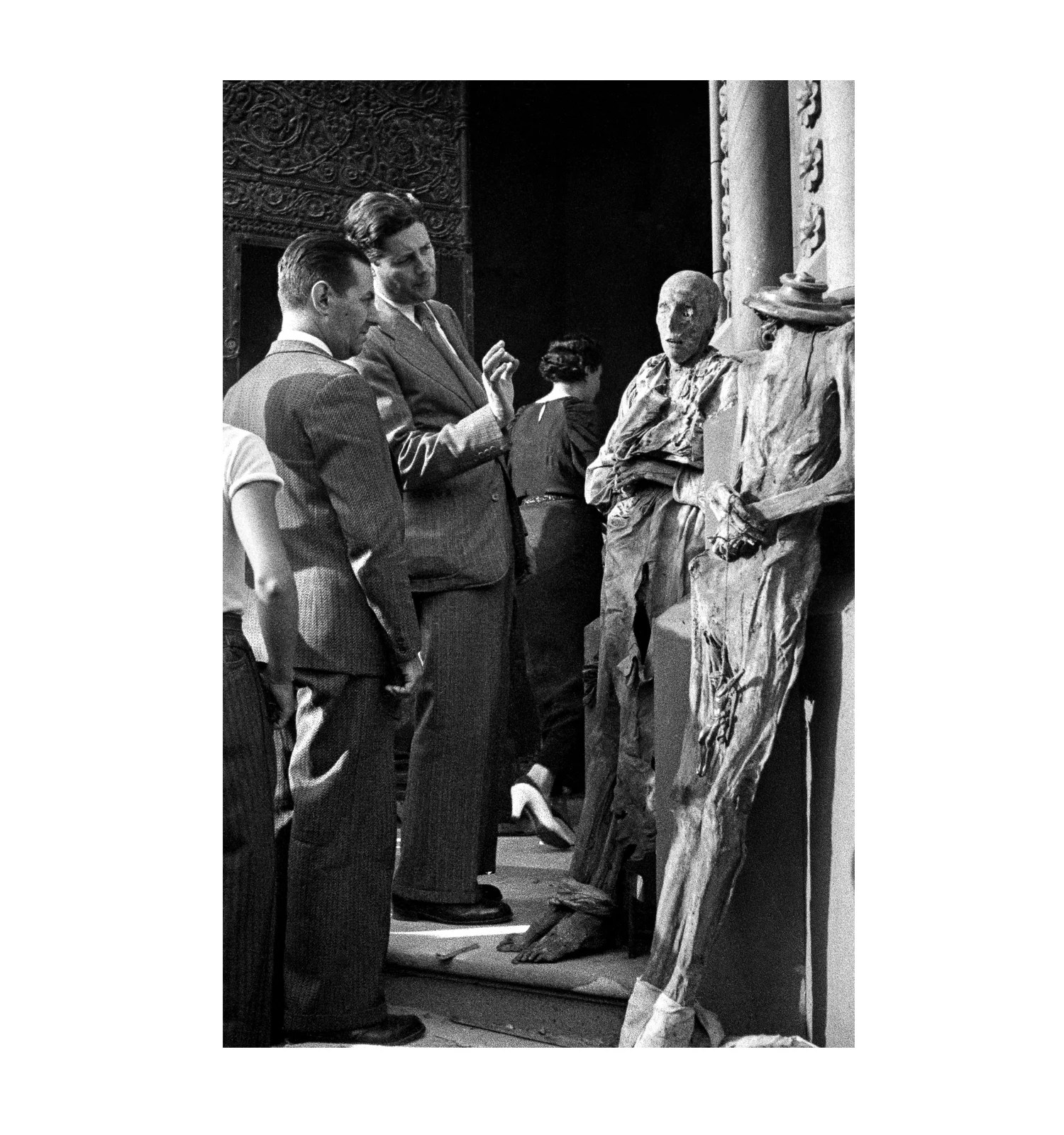
Perhaps the most striking expression of this symbolic revolution was the phenomenon that historians have termed revolutionary exhumations (exhumaciones revolucionarias). In a relatively small number of towns and cities, graves inside churches, convents and religious institutions were opened, and the remains of clergy or other prominent Catholics were removed and displayed publicly. These incidents became some of the most enduring images of anti-clerical violence because they were widely photographed and later reproduced in Nationalist propaganda. Numerically, however, they represented only a small fraction of the attacks carried out against religious institutions. Historians such as Bruce Lincoln have argued that these exhumations should be understood as political rituals rather than acts of random vandalism. By exposing bodies that had been buried in privileged religious spaces, participants sought to demonstrate that members of the clergy were subject to the same physical decay as every other human being. In doing so, they rejected the idea that the Church or its representatives possessed any inherent sacred authority or privileged status. The act became, in Lincoln’s words, a form of ‘reverse liturgy,’ a deliberate inversion of Catholic ritual intended to dismantle the symbolic foundations of ecclesiastical power.
Other participants believed they were exposing what they regarded as the moral corruption of the Church itself. Long-standing anti-clerical rumours concerning hidden crimes within convents and monasteries, however unfounded many proved to be, shaped how some crowds interpreted what they found during searches and exhumations. These beliefs formed part of a wider culture of anti-clericalism that had developed over decades and influenced revolutionary behaviour during the Civil War, regardless of whether individual allegations could be substantiated. Nuns’ bodies were dug up to show that women had been harmed, that some were pregnant, or had their hands tied, showing they had been tortured, that the Church had failed these women. Dr Maria Thomas has an excellent paper on the topic.
Understanding these actions does not lessen their violence or excuse the suffering they caused. Rather, it helps explain why similar acts occurred across widely separated parts of Republican Spain without requiring central coordination. The attacks were driven not simply by anger, but by a shared revolutionary belief that the Catholic Church represented an institution whose political, social and spiritual authority had to be publicly dismantled. The destruction of churches, the removal of religious symbols, the conversion of sacred buildings to secular purposes and, in a much smaller number of cases, the exhumation of the dead all formed part of that wider symbolic revolution.