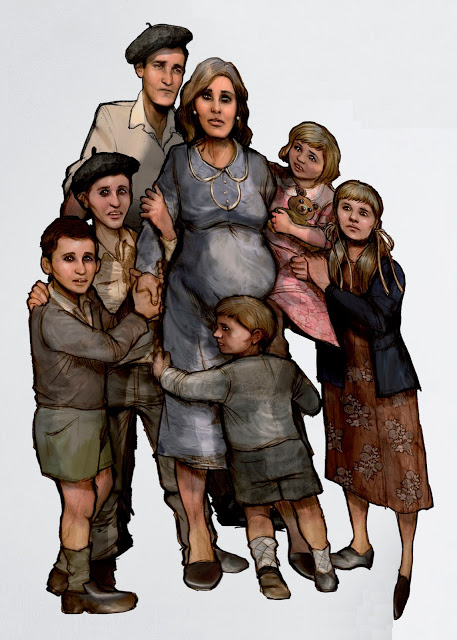
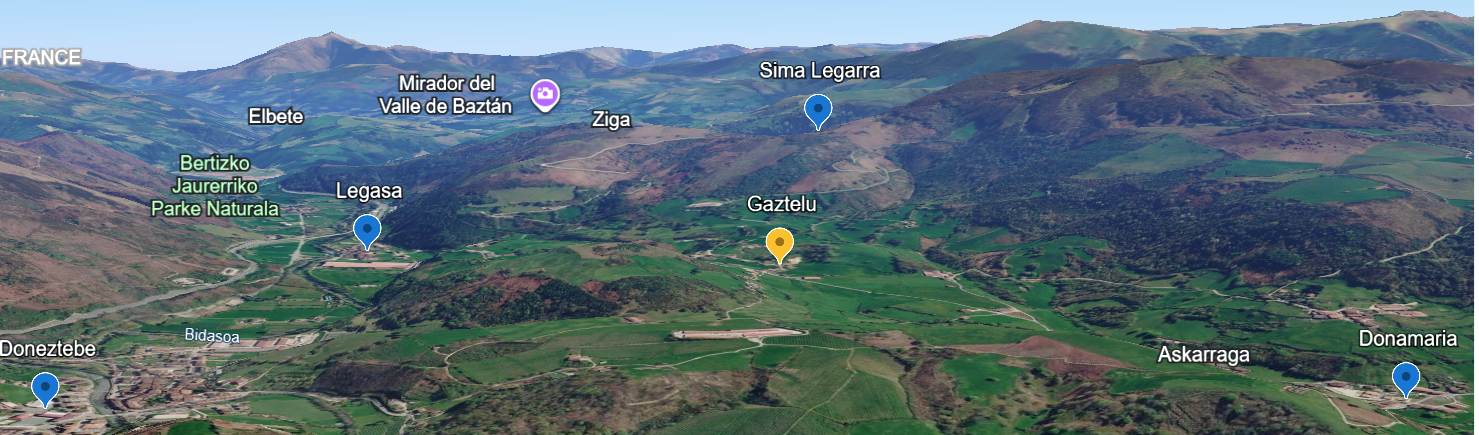
Gaztelu was a tiny mountain village in northern Navarra bordering the Basque Country, lying in the green, wooded country of the Malerreka valley, and approximately 40km from the French border. An inland mountainous area, it sat isolated in a rugged landscape, maintaining a fierce identity of its own centred upon its church, its houses, and the families who had occupied them across generations. By 1930, it had a population of only around 120 inhabitants, surrounded by the nearby villages of Doneztebe (Santesteban, Donamaria and Legasa, each about 2km away, with the whole area having less than 500 people. In a community of this scale, anonymity was impossible; everyone knew everyone else by name, lineage, marriage, labour, and the specifically named house to which they belonged. Euskara was the everyday language of life and intimacy. Spanish was merely the tongue of official administration but many in the village could not speak it. These little villages had been inhabited for up to 1000 years and for centuries, the same families had total control. (Today the villages are roughly the same size).
For an outsider, or someone who failed to conform, this insular life could become suffocating. Gaztelu belonged to an old rural world in which the etxea (the house) and the household’s traditional name served as the primary means of identifying individuals, carrying more weight than a surname. Land, livestock, access to communal resources, marriage, and kinship bound these households together in a delicate equilibrium. Small plots, orchards, and livestock contributed directly to day-to-day survival; potatoes, apples, chickens, and other modest possessions carried genuine economic value. An accusation that someone was taking food from another household was deeply personal and dangerous, particularly when families possessed razor-thin food reserves and war erupted in the summer of 1936.
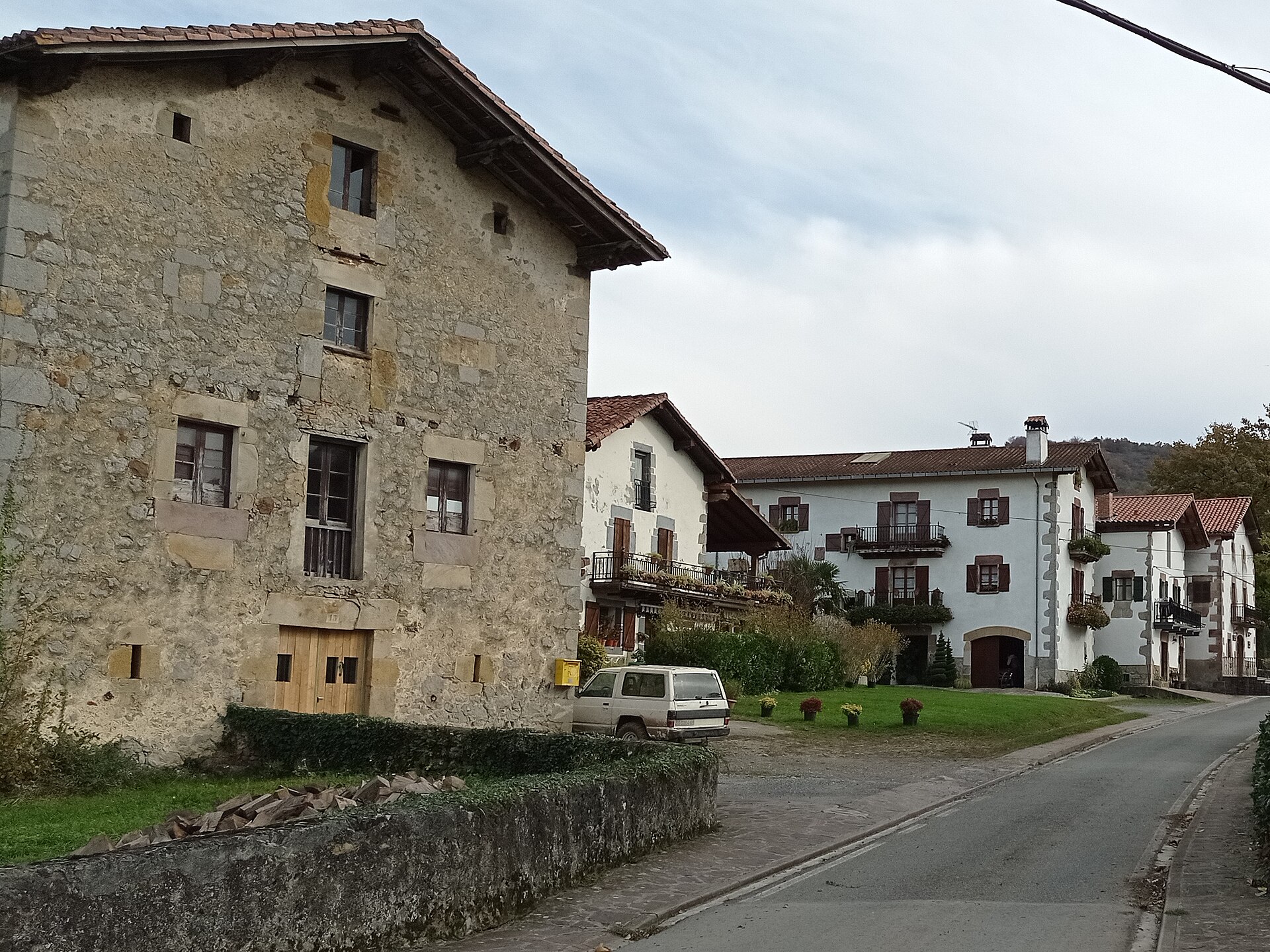
The village was also deeply Catholic, with the parish church operating at the absolute centre of community life. Regular religious observance was woven tightly into the calendar of births, marriages, deaths, feast days, and Sundays. In a community this small, empty pews were highly visible. Any family that ignored religious practice became instantly conspicuous without ever technically committing an offense. Throughout rural Navarra, Catholicism was both a spiritual requirement and the currency of a person’s, particularly a woman’s, public respectability and communal identity.
Alongside the church and the household stood another ancient institution, the batzarre (village assembly), a well-established form of communal government in the small rural settlements of northern Navarra, closely related to the concejo abierto (open councils) of the wider region. Residents met to govern the ordinary business of living together, of communal pastures, woodland usage, roads, water rights, local expenditure, shared labour, and internal disputes. Traditionally, participation centred upon recognized vecinos (neighbours) representing established households, all of which were overseen the same few men that owned everything.
Yet, Gaztelu’s domestic traditions were older and far more complicated than Catholic orthodoxy. Northern Navarra retained a rich, hidden world of folk medicine, protective rituals, beliefs surrounding luck, domestic charms, and superstitions passed quietly within families. The region also carried a dark, historical memory of sorginkeria (witchcraft). Women from the locality had been swept up in the brutal witchcraft investigations of the early seventeenth century, when inquisitorial male authorities attempted to suppress women’s local pagan and domestic healing practices, which exploded into the killing of ‘witches’ in nearby Zugarramurdi. By the twentieth century, these traditions had morphed into family folklore, remedies, and old sayings used to explain sudden misfortune. Crucially, some families retained more of these superstitions than others, and some cared considerably less about maintaining a veneer of conventional Catholic piety.
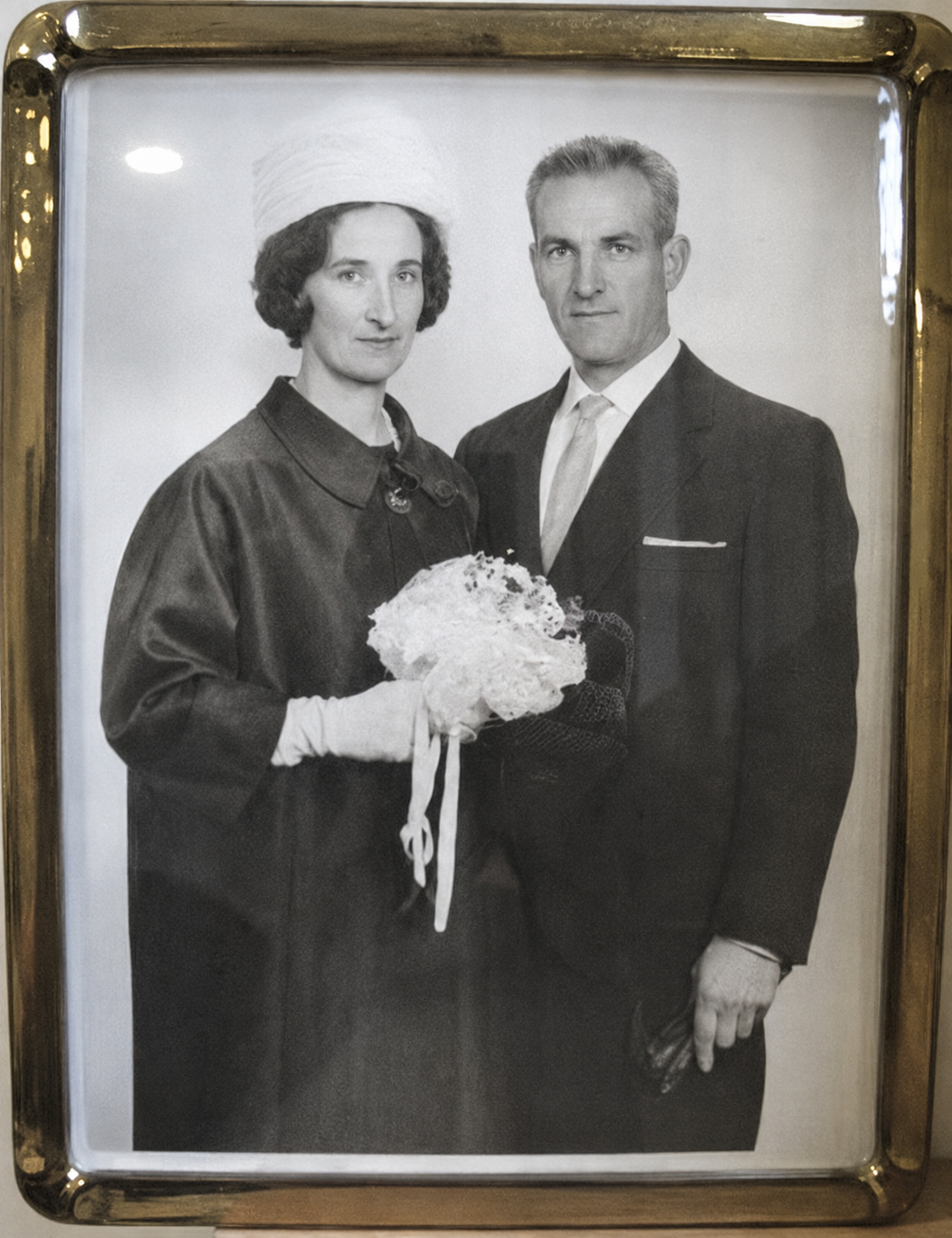
This was the social landscape into which the Sagardía Goñi family attempted to integrate. The village was organised around household reputations that were impossible to erase. For generations, these tight social structures allowed neighbours to survive a harsh environment. But they also meant that if a household acquired a poor reputation, there was nowhere to hide. By the summer of 1936, the target of this collective friction was Arretxea, the home of Pedro Sagardía and Juana Josefa Goñi, which they rented from a powerful merchant based in Doneztebe, Miguel Taberna Crespo, who while owned land in Gaztelu, was removed from the daily affairs of the village.
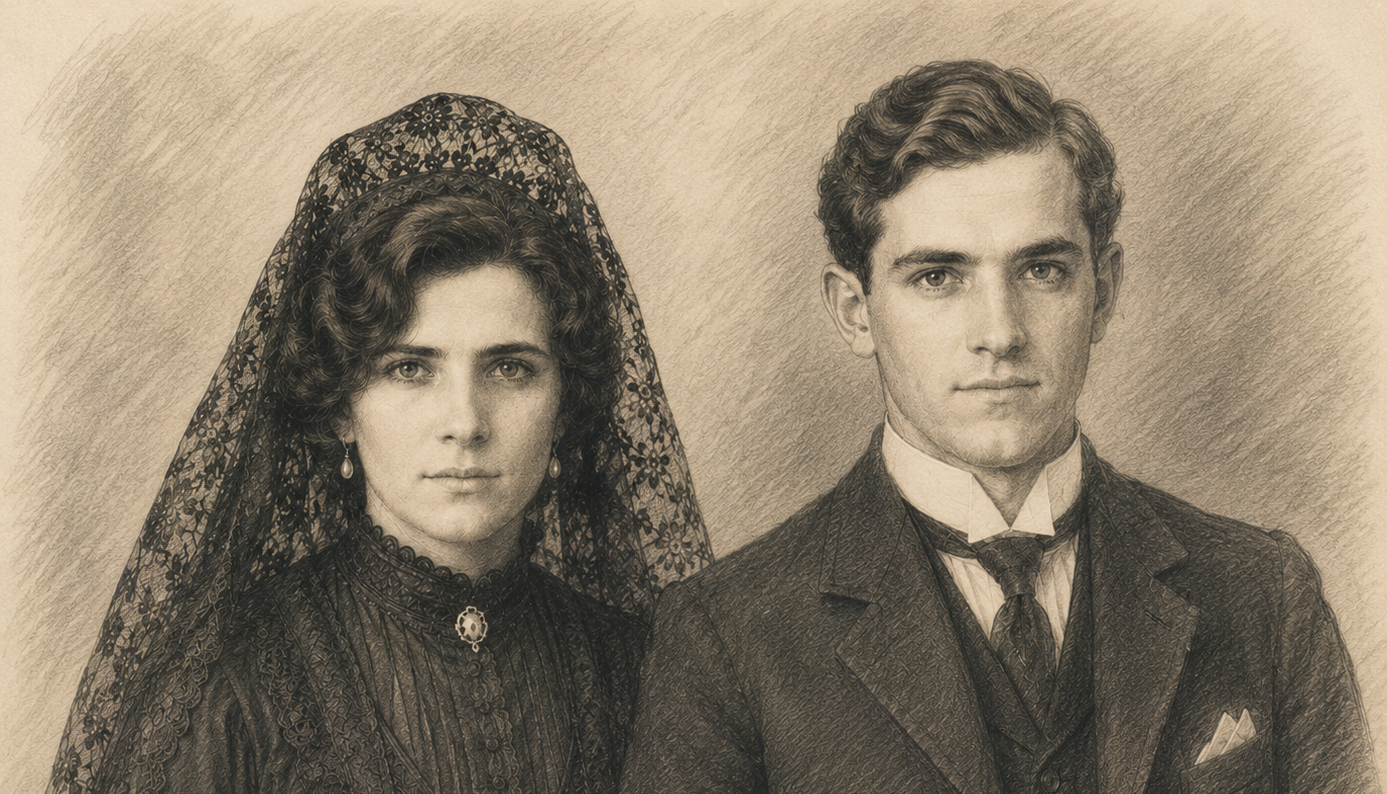
Juana Josefa Goñi Sagardía was born in nearby Donamaria (home of her father) in 1897, and her family line was deeply tied to the old ways; her mother Maria (hometown of Gaztelu) was known for her witchcraft ‘sorginkeria,’ her knowledge of herbs and traditional treatments, making little effort to conceal her inheritance. When she wished to discourage her husband Juan from straying to other women, she practiced a domestic ritual involving a pot of hot embers, an open pair of scissors covered with a cross-shaped cloth, salt, and a short invocation spoken in Euskara. She was equally stubborn regarding the church. The community remembered her as gaizki ikusia (poorly regarded) because she flatly refused to attend Mass. The local priest grew so concerned by Maria’s defiance that he allegedly offered her money simply to show her face in church, an offer she proudly refused. This streak of non-conformity ran through the siblings. Juana Josefa’s sister Epifanía Petra, known as Petra, who lived to a remarkable old age, credited her longevity to once surviving the bite of a viper. Another sister Francisca had been struck and killed by lightning as rumour goes, providing the local gossips with a cruel opportunity to whisper that God had finally handed down His judgment upon the family.
Judgement accumulated quickly in the valley. Like roughly 30 percent of marriages, both sisters were already pregnant when they wed. Juana Josefa, tracking her mother’s footsteps, was known for irregular attendance at Mass. Compounding the village friction, she was remembered throughout Gaztelu as an extraordinarily attractive woman. Descriptions like oso ederra, panpoxa, ikusteko ona (very beautiful, striking, doll-like, pretty, good to look at), even considered ‘too beautiful’ and her attractiveness was repeatedly mentioned in later testimonies. In an isolated, tense environment, her striking appearance fuelled toxic undercurrents of jealousy and suspicion, despite a total lack of evidence that she ever quarrelled with or wronged anyone. She had married Pedro Antonio Sagardía Agesta, an independent-minded local from Oiz (Oitz), an even tinier village 2km from Donamaria, who held his own unorthodox views on village customs, and considered a bit xelebre (eccentric). Pedro worked as a charcoal burner, a gruelling trade that took him deep into the mountains of Eugi, a difficult 40km hike away, for weeks at a time, and their eldest son José Martín, who turned 18 in 1936, had started working with his father.
The couple had endured the loss of their then 8-year-old son Francesco Javier to meningitis in 1930, and by 1936 had six young children at home, while Juana Josefa was heavily pregnant with their ninth, and Pedro and José Martín worked in Eugi. Living in the Arretxea house in central Gaztelu while Pedro and José Martín were away, Juana Josefa and her young children faced severe poverty. As hunger tightened its grip, rumours of small-scale thefts began to circulate through the village’s fragmented agricultural plots. Neighbours quickly blamed the Sagardía boys for stealing cabbages from gardens or an odd chicken to feed themselves. Gossip curdled into genuine malice. Pedro was bitterly criticised for his prolonged absences and his failure to provide, while Juana Josefa’s beauty, her avoidance of the church, and her family’s historical eccentricities became central talking points. Eventually, the village branded them with the ultimate mark of exclusion, and they were deemed entirely ‘undesirables,’ outcasts.
Living at Arretxea, Pedro and Juana Josefa had incredibly powerful neighbours. Alongside them in central Gaztelu was the Grajirena, owned by Agustín Grajirena Urroz, whose property was apparently being stolen. Nearby was Alzugaray, headed by the mayor Melchor Alzugaray, so powerful he did not even need a full name, and the Alzugaray had the right to rule the village through inheritance rather than by vote. There was also Irurita, headed by Agustín Irurita Indart in 1936, and through marriage connected the Indart house outside Legasa, their property known today as the Indart ‘Falcon Crest,’ a spawling abeltegi (ganadería, cattle estate) associated with livestock, mansions, violence, smuggling, and corruption. There was also Sarratea, José María Sarratea Arregui, who was front and centre alongside the mayor, heading up the local guard who were blocking movement in and around the village, alongside the Irigoyen, with Lorenzo Irigoyen Alzugaray married to one of the mayor’s relatives, also keen to hand out their own brand of justice under the guise of war.
Another powerful house was Mitxeorena, headed by Vicente Micheo Ochandorena, conservative, traditionalist household tightly aligned with the ultra-Catholic Carlist movement who were now in power throughout Navarra, and the Gamio, headed by Jesús Gamio Azcona, ancestral household holding grazing and timber rights on the mountain foothills leading toward the Legarrea ridge outside Gaztelu village. While the ‘mystery’ of Juana Josefa and her children has swirled for 90 years, the men determined to harm her have never been out of sight. There is an exception – the Subizar. Their ancestral seat, Subizar-Etxea, was a grand, historic homestead. In traditional Navarra, families who owned estates of this calibre held infanzonía, a historical status of rural nobility linked directly to the land. The Subizar family was deeply intermarried and allied with the other dominant agrarian dynasties of the region for over 600 years, notably the Irurita and Indart clans. Rich enough that they controlled the church and Guard Civil police in the area, had palaces around northern Navarra, their own town, and the family was so deeply connected to the ultra-conservative regional elite and the local Requeté militia , the men did not even go by their first names, using simply Subizar with everyone. The Subizar family could do literally anything they wanted, not just in Gaztelu, but anywhere in the Navarra region, completely untouchable even in the highest levels of power. Of equal power was the Etxepare family, and also so powerful no one would dare call them by a first name. In 1936, one of the Subizar sisters was married to one of the most powerful Etxepare men, and still today none of these people are not recorded under individual names. Both the Subizar and Etxepare families had houses in Gaztelu in the same cluster as Juana Josefa’s family.
Desperate to rid Gaztelu of the Sagardía Goñi family, Agustín Irurita Indart and Agustín Grajirena Urroz approached Sargento Gregorio Zubizarreta Gastesi of the Guardia Civil in Donamaria. Rumours later swirled that the sargento callously told the neighbours they could ‘do whatever they wanted’ with the family and the petty neighbourhood disputes. History would later show that Zubizarreta had a genuine hatred of Pedro and an intense interest in Juana Josefa and denied what he said; the reality was Zubizarreta, like all the Basque Guardia Civil in the region were bought and paid for by the men who made the complaints. The local guards ‘protecting’ the town in the opening weeks of the war were these same men, the mayor, the Subizar brothers and their brother-in-law Etxepare.
By August 1936, Navarra had been transformed by the outbreak of the Spanish Civil War. The region was firmly under the control of the right-wing, ultranationalist military coup. General Emilio Mola, directing the conspiracy from Pamplona, had openly called for a campaign of terror to cleanse the rearguard of anyone considered dangerous, subversive, or ‘undesirable.’ Though Gaztelu was overwhelmingly conservative and Catholic, having recorded zero votes for the leftist Popular Front government in the February 1936 election, the wartime atmosphere of total lawlessness and political ‘cleansing’ provided the perfect cover. The village boundaries closed in on Arretxea, transforming a petty local grievance into a license for an unspeakable atrocity. The area itself only had a few left-wing supporters living on its outskirts around Legasa, and those who were to be rounded up and executed by the Guardia Civil quickly left for the ‘safety’ of Pamplona about 50km south, or could hide behind their own powerful house, such as the Miquelarenarena, headed by José María Miquelarena Inda, who was openly anti-fascist, anti-Franco, and aided a large smuggling operation called the Alava Network, which smuggled refugees into France and anti-Francoist intel behind enemy lines, who continue to evade capture and punishment for decades.
On 13 or 14 August 1936, the escalating dispute surrounding the Sagardía Goñi family reached a boiling point. The local batzarre accused Juana Josefa and her children of stealing from the neighbouring Grajirena property, officially branding her gaizki ikusia (undesirable), a decree steeped in hypocrisy, considering that the same men of the valley had spent years leering at her. The assembly reached a chilling verdict, that the family was to be permanently banished from Gaztelu, with only Miquelarena Inda refusing to vote for her banishment. At that moment, Pedro was 40km away at Eugi, with their eldest son José Martín. Left entirely exposed, Juana Josefa was served the expulsion order from a community group usually only dealing with basic agrarian matters. Desperate, she begged the village men for time until her husband could return and immediately sent a frantic message down the valley to find him.
Upon receiving the news, Pedro abandoned his charcoal kilns in Eugi and rushed back to Gaztelu. Following the military uprising in July, the village had established an armed local militia. On duty that day were Melchor Alzugaray, alcalde de barrio (local mayor), Agustín Irurita Indart, and several other armed village men Pedro did not name. They intercepted Pedro at the boundary, weapons in hand, flatly refusing to let him enter the village or see his desperate wife and children. Instead, Alzugaray and Indart marched him under armed escort to nearby Doneztebe, handing him over to the local Guardia Civil Zubizarreta. Pedro was locked away by Zubizarreta without explanation, never questioned, and held in a cell for six days. Upon his release, Zubizarreta issued a terrifying ultimatum, that if he ever set foot in Gaztelu again, he would be permanently imprisoned or worse. Forced to retreat, Pedro returned to his mountain camp in Eugi, where Juana Josefa’s smuggled letters could to reach him.
While her husband was held in custody, Juana Josefa and her children were evicted from Arretxea. Dragging what meagre possessions they could carry, she led her six terrified children out of the village centre and into the dense, rugged wilderness. A few kilometres away, she managed to find together a crude txabola (shack) hidden beneath thick bushes and overhanging branches, usually used by seasonal timber or herding workers. The txabola was only about 1.5km from Gaztelu, but straight up the ridge line, making an arduous hike better suited to today’s experienced walkers. For a heavily pregnant woman sheltering six children, ranging from 16 years old down to an 18-month-old infant, there were no other options. The makeshift shelter at least offered a temporary sanctuary where they could stay together while she awaited Pedro’s return.
A few days after Pedro arrived back in Eugi, a letter from Juana Josefa reached him begging for financial help. Unable to cross the armed village perimeter himself, Pedro entrusted his savings to Martín Gubia, a fellow villager from Gaztelu whom he could trust to act as a courier. Gubia journeyed back to the valley but returned to the mountains around 26 August with the news the house was empty, Juana Josefa and the children were gone, and the entire village of Gaztelu had entered a wall of absolute silence (Gubia would soon die in the war and thus never repeat what he knew). Terrified, Pedro attempted to slip back into the area once more to investigate, staying outside the Gaztelu border, travelling between the towns of Oitz where his extended family lived, Donamaria, Doneztebe, and Legasa to get news. Pedro could not know the Juana Josefa and the children were in the forest just kilometres away, and on publicly accessible land overseen by the mayor.
The reality was that the isolation of the forest had become unendurable. On 28 August, a desperate Juana Josefa hiked her hungry children about 3km along the ridge to the home of her sister, Petra, in Doneztabe. For a brief moment, the cousins played together, eating small scraps of bread and chocolate. But Petra’s own life was unravelling; her husband Francisco Ramon Zozaya y Huici, known as Ramón, was in Doneztebe prison for being a socialist UGT member, leaving her alone to feed six young children of her own. She simply could not take in seven more mouths. Six-year-old Martina, paralysed with fear, begged her aunt to let her stay behind rather than return to the exposed txabola in the woods. Tearfully, and to her lifelong regret, Petra had to turn the children away.
Juana Josefa’s final contact was with Teodora Larraburu Alusa, her closest friend in Gaztelu, who lived in the cluster of Gaztelu homes. Teodora saw her for the last time on Sunday 30 August and they spoke of how Juana Josefa intended to hold out at the txabola until Pedro could find a way to rescue them. They had nowhere else to flee; the batzarre’s banishment was effectively a death sentence. Teodora was part of the Alusa family, with deep ancestral ties to the Alzugaray mayoral family, but still could not help her friend.
Since the town was under lockdown by the local guard, a curfew was strictly enforced in Gaztelu; once darkness fell, the villagers retreated behind locked doors, some later recalling that people were too terrified to even open their windows to the sight of the ‘untouchable’ men of the valley. Yet at least one unnamed local living along the isolated road out of town witnessed an unforgettable sight; a small, grim procession carrying blazing teas (traditional pine-wood torches carried by the local guards) marching out into the pitch-black night up the hillside in the direction of the txabola, with the faces of the Subizar brothers and Etxepare visible, followed by a small group.
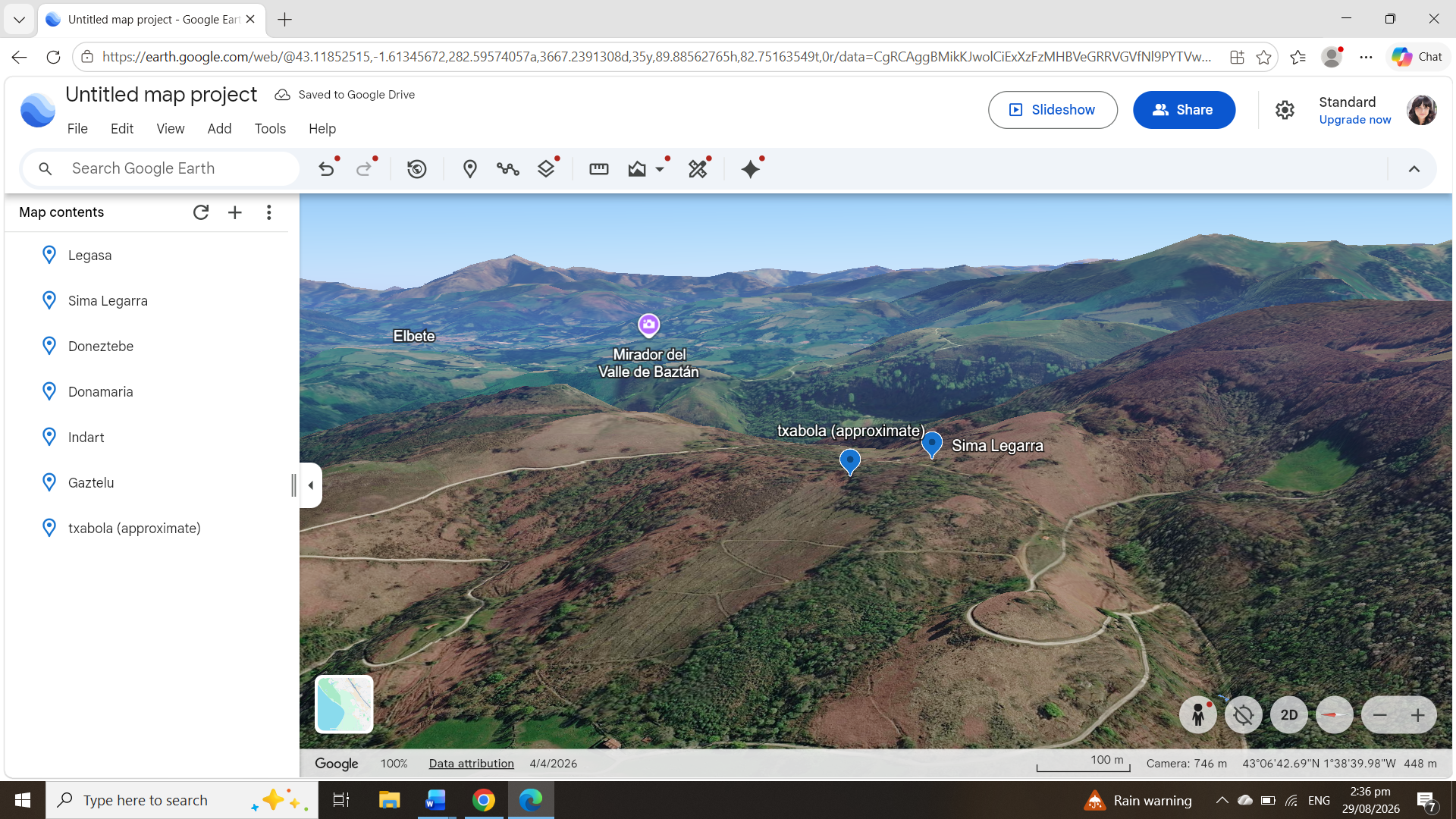
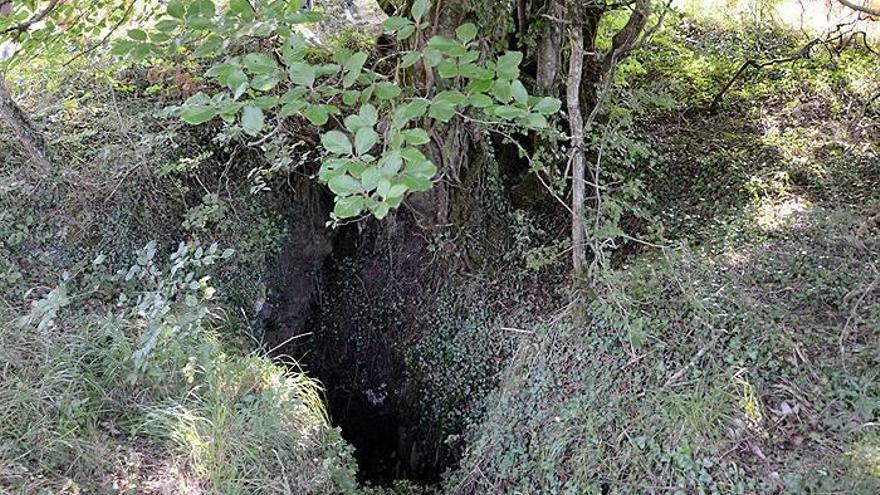
Even today, the terrain east of Gaztelu heading toward Legasa remains a labyrinth of single-lane tracks swallowed by dense, choking undergrowth only broken by the few sprawling country homes of the families. The hillside where the family’s hidden txabola stood is still accessible only on foot. Just 50 metres from that shack lay Legarrea – a natural limestone sima, a vertical chasm sinkhole whose narrow surface opening was easily masked by ferns and briars. Beneath its lip, the mountain dropped violently into a cavernous, pitch-black void roughly 50 metres deep. Every local knew of its existence. Under the cover of the wartime curfew, the torches moved through the brush toward the hidden txabola, visible on the otherwise dark ridge. The guards headed by the Subizar sand Etxepare, likely Melchor Alzugaray, and another three or four men (possibly Agustín Irurita Indart, Agustín Grajirena Urroz, José María Sarratea Arregui, and Lorenzo Irigoyen Alzugaray).
What these men wanted or demanded from the vulnerable and beautiful Juana Josefa can never be known. What was done to her by the leering and evil men of the town can barely be considered, and there is the possibility she was no longer pregnant when she died, despite her still being about two months from her due date in August. Alongside her were her sons Joaquín aged 16, Antonio aged 12, Pedro Julián aged 9, José María (Txomin) aged 3, and her daughters Martina (Martinaztxo) aged 6, and Asunción aged 18 months.
On the ridge line, their movements were visible to those watching from the valley below under the full moon. As the lights converged on Legarrea, Teodora Larraburu Alusa and several distant neighbours heard four gunshots tearing through the night, followed later by the glow of a fire. By dawn, the txabola and every modest possession the family owned had been burned to ash. Juana Josefa and her six children had been forced over the edge into the limestone sima. While local rumours later whispered that maybe the younger children were shot to silence their crying before being thrown in the chasm, the gunshots were likely fired into the air to herd the terrified family directly into the mouth of the 50-metre drop.
On the morning of 31 August, a few unnamed local villagers crept out to the lip of the sima. They stood at the edge, listening intently for any cries or groans filtering up from the darkness below. A pregnant mother and six children had been erased from the earth for the crime of being impoverished, starving, and attractive. Not a single soul raised the alarm. No one walked the few kilometres to Zubizarreta’s Guardia Civil post in Doneztebe. Instead, the sima slowly started to become a dumpsite where timber, dead animals, and rubbish would be thrown in, starting a fruitless process to fill the sinkhole.
News of the purge rippled through the valley like wildfire. In Legasa, people whispered of the family driven into the earth by gunfire and flame. In Gaztelu, the names of the men on guard duty that night were passed around in fearful murmurs. In a community so small, the sudden disappearance of seven neighbours could not be ignored, almost almost six percent of the town itself, and guilt quickly began to rot the village from the inside. A local man named Ascen later recalled his father, the local cheesemaker, returning to the tragedy decades later, lamenting, ‘we should have helped those people.’ It was a devastating admission of collective cowardice. The Sagardía Goñi family had been methodically isolated, hunted, and destroyed, leaving an entire village complicit. And in the ultimate twist of bitter irony, after the imagined ‘thieves’ lay dead at the bottom of the chasm, chickens and produce continued to vanish from the local plots of Gaztelu.
Pedro remained outside Gaztelu, but in a valley where secrets were currency, rumours travelled fast, and word of the village’s sudden, eerie emptiness reached him almost immediately. Meanwhile, the Guardia Civil began fabricating false reports, claiming have sightings Juana Josefa and the children walking along the roads toward the French border, attempting to paint them as voluntary refugees. But trusted local contacts quietly pointed Pedro and his son José Martín toward the true horizon, the yawning mouth of Legarrea.
With Navarra swallowed by the opening months of the Spanish Civil War, a conflict that would eventually see over 3,500 locals in the province executed and dumped into mass graves across the region, the authorities had zero interest in investigating the disappearance of a poor family. For two months, Pedro searched in vain. Sensing his persistence was becoming dangerous, the same Guardia Civil officer, Gregorio Zubizarreta, who had previously detained him, delivered a threat disguised as advice: leave the valley, join the war effort, and accept that his family would never be found. Realising that asking questions would get him killed, Pedro took the only path to survival. He enlisted in the Requetés, the ultra-conservative, staunchly Catholic and monarchist Carlist paramilitary militia fighting for Franco’s fascist Nationalist faction, and his surviving son soon followed his father into the crucible of the front lines. For both men, donning the Carlist uniform was far safer to march into battle than to remain behind as a target of the village militia.
On August 2, 1937, while serving at the front, Pedro secured a rare military leave to pursue the disappearance of his family. Armed with the status of a Nationalist soldier, he marched into the territorial court in Pamplona and filed a formal, blistering complaint detailing the events leading up to the tragedy. Within 24 hours, alarmed investigators opened the judicial file that became historically known as Causa 167. The judge ordered a group of Gaztelu residents to appear for mandatory questioning on 11 August. To bypass immediate military censorship, Pedro’s complaint was strategically framed around the crimes of incendio y coacciones (arson and coercion), but he had already compiled a definitive list of the local guards on duty that fateful night.
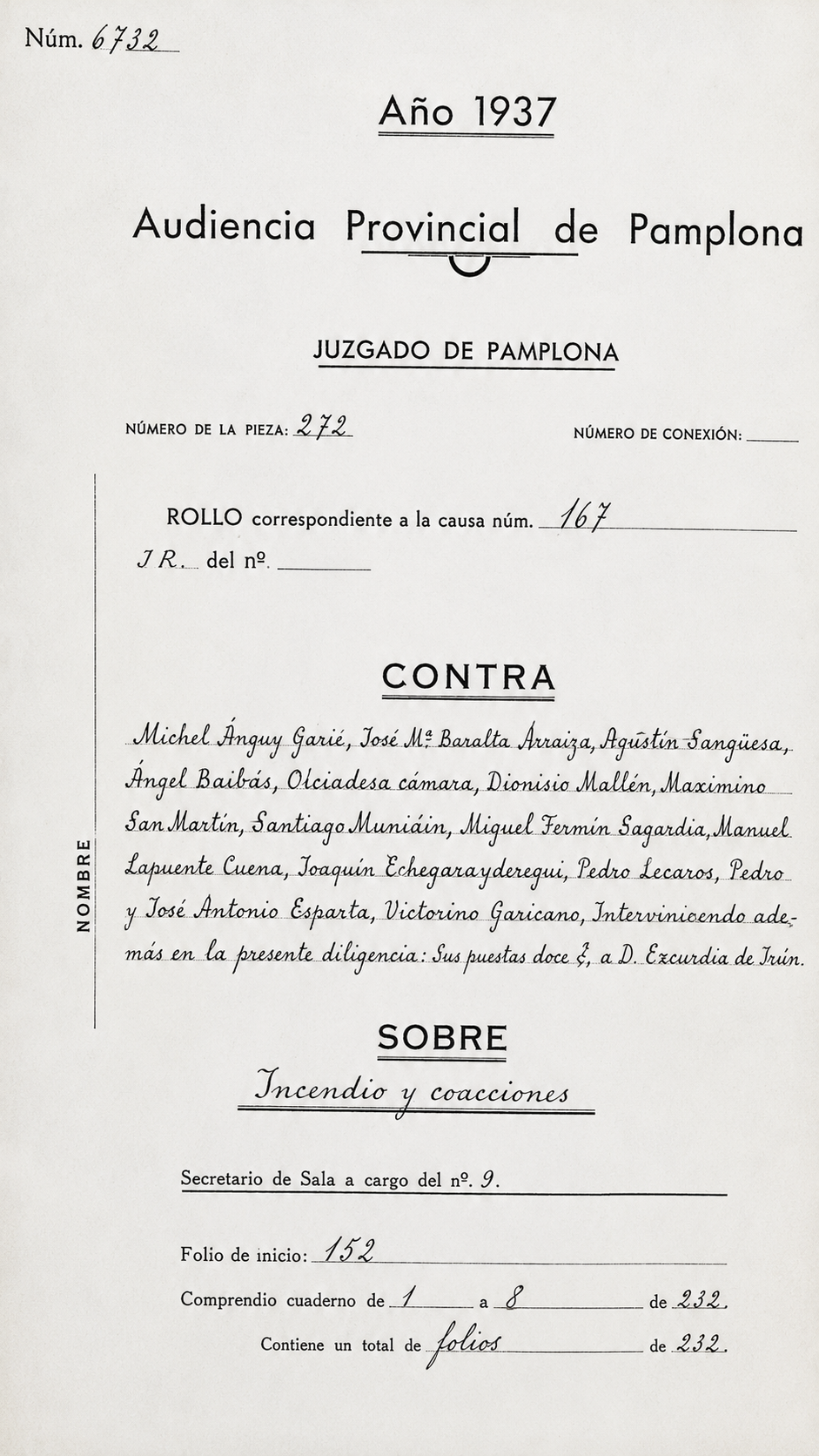
The local mayor Melchor Alzugaray, alongside Agustín Irurita Indart, Agustín Grajirena Urroz, José María Sarratea Arregui, Jesús Gamio Azcona, Lorenzo Irigoyen Alzugaray, and Vicente Micheo Ochandorena, the men of the powerful houses in Gaztelu were dragged before the court. Pedro identified them by the ancient names of their respective households, the very structures that dictated village status. Under interrogation, their testimonies exposed the raw, systemic hostility that had targeted Juana Josefa’s home. The villagers spoke openly of the petty theft accusations and the batzarre’s decree of banishment, but when pressed on the events of 30 August, they retreated behind a coordinated script; the family, they claimed, had simply vanished into thin air. The village priest, Padre Justo Ariztia, and Sargento Gregorio Zubizarreta Gastesi were drawn into the escalating inquiry. Both men possessed intimate knowledge of the valley’s dark whispers, yet both flatly denied any knowledge of the family’s whereabouts. What none of the accused could explain was how a pregnant woman and six children could seamlessly disappear into the wilderness the exact same night their only shelter mysteriously burned to the ground.
Sargento Zubizarreta’s testimony was particularly venomous. He insisted to the judge that he had heard no local rumours regarding a massacre, instead weaponising his platform to slander the victim, labelling Juana Josefa a dissolute thief who had been abandoned by her husband. In a calculated effort to deflect guilt, Zubizarreta claimed Pedro had told him that he wanted nothing to do with his family and lied that Pedro had been heard saying the children were not his own and he had repudiated them. The sargento admitted to imprisoning Pedro a year earlier when Juana Josefa was in trouble but offered no explanation as to why. He maintained he only learned of the potential murders a full year later, even though everyone else in the valley knew the story. Zubizarreta was deeply embedded in the local wartime purges, having frequently assisted Mayor Alzugaray in ‘cleansing undesirables.’ He was the exact man that locals feared in the area since the outbreak of war. To reward his silence around the murders in the sinkhole on 30 August 1936, Zubizarreta was quickly moved out of Doneztebe, and given a plum role in Altsasu (Alsasua) 80km south-west, tucked deep within the Sakana valley, and was Comandante by 1940, never again called on to discuss the case.
While the territorial court in Pamplona systematically catalogued the full identities of high-status men, the judicial machinery ground to a halt when it reached the true architects of the terror. The Subizar brothers and their brother-in-law, Etxapare, held a level of social and economic dominance in the valley that effectively rendered them untouchable by the legal system. Protected by an unassailable shield of immense landowning wealth, strategic marriages, and fierce Carlist orthodoxy, these men were never subpoenaed, never even required to present their full civil names to the registry, and never once called to the stand to testify. By leaving them completely undefined as a loose collective entity, magistrates granted them absolute, functional anonymity in the pages of Causa 167. This deliberate judicial blindness ensured the vanguard who carried the blazing torches on the night of 30 August were insulated from the paper trail entirely, their names legally erased to protect the untarnished reputation of the valley’s ruling class.
Yet, the valley’s wall of silence suffered a critical fracture. Tomás Alcaine Expósito, a fellow ‘xelebre’ like Pedro, was an elderly resident of neighbouring Legasa, and he courageously agreed to tell the court everything he knew. Having already fled to Pamplona due to his known Republican leanings and previous arrests in the area, the septuagenarian had nothing left to lose, and his contacts were the ones to give Pedro a safe place to stay Pamplona. Alcaine, alongside his friend Mariano Rodríguez Zubiría (the brother-in-law of Pedro and Juana Josefa’s landlord Miguel Taberna Crespo, who also came to speak), stood firm before the magistrates. They detailed the widespread local account of Juana Josefa and her children being systematically hunted into the sinkhole, a narrative they had verified through multiple local sources, including Pedro’s sister. But in the conservative, ultra-Catholic stronghold of wartime Pamplona, the court viewed these men with immense prejudice. They were leftists and associates of José María Miquelarena Inda, who worked for the left-wing smuggling network. Inda was Alcaine’s local neighbour in Legasa, notably had been one of the few local men who refused to participate in the batzarre’s vote of Juana Josefa’s banishment. Because these whistle-blowers lacked the social currency of good Catholic families like the men who carried the torches that fateful night, the court heavily favoured the polished denials of the Gaztelu elite.
Juana Josefa’s loyal friend, Teodora Larraburu Alusa, also defied the village code and her ancestral lines, taking the stand to corroborate the terrifying timeline of the gunshots and the midnight flames. Her standing up against the village’s monolithic wall of silence was viewed by the landowning aristocracy as an unforgivable act of familial and communal betrayal. The Subizars, Iruritas, and Sarrateas turned on her and she was subjected to intense hostility, social isolation, and intimidation. Her access to community spaces and rural support networks was systematically cut off. Realising that her physical safety could no longer be guaranteed within the borders of Donamaria and Gaztelu, Teodora was forced to permanently abandon her home, Larraburua, and flee the valley altogether, and never returned.
Juana Josefa’s sister Petra was in no position to speak for her sister, especially with her socialist husband Ramón still in Doneztebe prison. That did not stop the intimidation of the locals of Gaztelu. Despite the horrifying acts committed against Juana Josefa and her children, the valley itself did not have a reputation for killing its left-wing ‘conspirators.’ All that were caught were sent to Doneztebe prison, and by January 1937 were all released on the condition that went into exile and left the valley. Petra and Ramón settled in San Sebastian (Donostia) in the Basque Country despite the war with their six children, all old enough to remember their relatives and their disappearance, who continued the search after their mother died in 1986.
Without physical evidence from the bottom of the pit, the 1937 judicial machinery ground to a halt. The case was quietly shelved, swallowed by the thousands of wartime executions, which were busy in the stages of having their files destroyed so even today we continue to search for the locations. The perpetrators of Juana Josefa’s horrific murder alongside her children, all sons of deeply rooted, affluent dynasties who held centuries of traditional inheritance rights, remained entirely above the law.
However, Pedro possessed one volatile asset the village did not anticipate; a cousin named General Antonio Sagardía Ramos, a feared and prominent fascist commander in the Nationalist army. Enraged by the horrific slaughter of his kin, the general reportedly threatened to march his troops into the Malerreka valley and burn the entire village of Gaztelu to ash. Under pressure from the military hierarchy, the judicial authorities were forced to repeatedly reopen the case over the next decade, meaning the official files on the case survived judicial purge. Between 1937 and 1946, the dossier was resurrected three times. Judges closed new investigations; tenacious lawyers fought the closures. (The General went on to murder many people in many places, was part of a Nazi delegation in Germany in WWII and lived to an old age in total comfort).
Yet the primary obstruction remained physical. To convict the men, the court needed the bodies, which lay just a few kilometres away at the bottom of Legarrea. The local Guardia Civil authorities like Zubizarreta, implicated in the cover-up, fiercely resisted any recovery efforts, exaggerating the structural danger of descending the 50-metre vertical shaft. Meanwhile, the complicit community actively worked to erase the grave, continuously dumping heavy timber, rotting animal carcasses, and household refuse down the opening to seal the vault. Early military search teams and a deployment by the Pamplona fire brigade failed; standard rescue ladders could not reach the floor of the cavern.
Though the Francoist courts refused to hand down a sentence, a different kind of justice began to rot the conspirators from within. In the years following the war, a heavy, psychological sickness settled over the valley. One of the unnamed perpetrators became violently tormented by auditory and visual hallucinations, a phenomenon later documented among civilian killers across Spain. In the quiet of his rural home, the man would scream and point frantically at his front door, weeping that Juana Josefa and her six children were standing on the threshold, silently waiting to come in. In a deeply superstitious, traditional community, his descent into madness was viewed by neighbours as divine retribution. The curse of Legarrea seemed to follow the men; between judicial reinvestigations, another suspect committed suicide, and two more died under highly suspicious, violent circumstances that the local Guardia Civil conspicuously chose never to investigate.
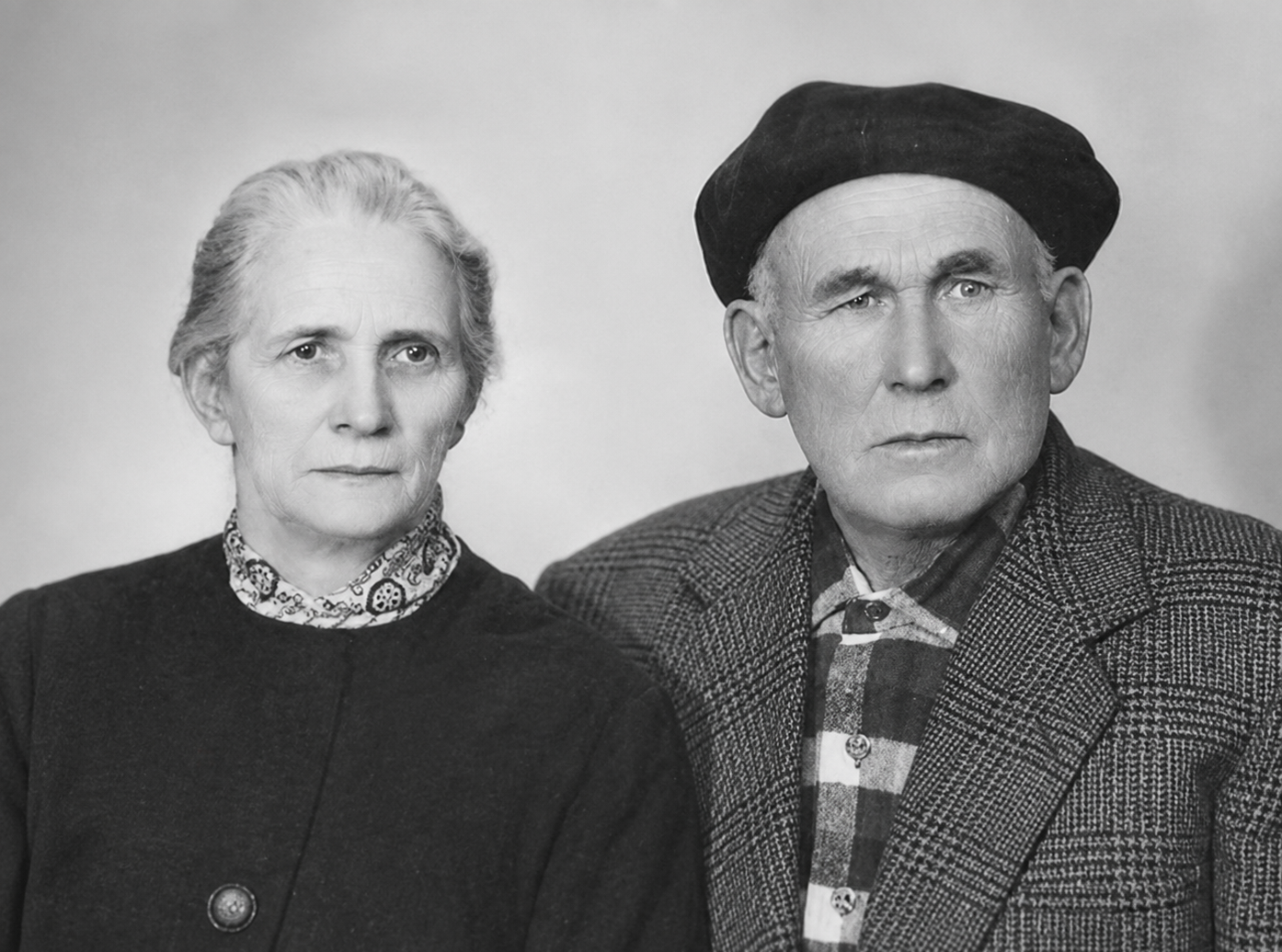
Pedro himself could not outlive the shadow of the investigations. By 1942, he was living back in the nearby village of Oiz with his father and his sister María, just 5km from the borders of Gaztelu, tucked on the far side of Donamaria. It was there that he suddenly fell violently ill with agonising stomach pains. Rushed to a hospital in Pamplona, he died shortly after at the age of 52. The official cause of death was recorded as illness, but a chilling whisper immediately rippled through the mountain passes that Pedro had been poisoned to permanently silence the legal threat of Causa 167. Decades later, in 2016, a witness named Dori Zugarramendi Zozoya formally reconfirmed the long-held quiet knowledge of the 1942 local poison (in a twist of historical coincidence, her surname directly tied her lineage to Zugarramurdi, the infamous epicentre of the 1609 Basque witchcraft trials). This left only one Sagardía Goñi family member behind, eldest son José Martín, who point-blank refused to speak of what happened to his family. His aunt Petra had slapped him across the face at their last meeting, angry at him for seeking refuge in the military instead of finding his mother and siblings, and the pair never spoke again.
Even without Pedro, in 1945, the Francoist territorial court forced a physical inspection of the Sima Legarrea. It was an operation designed not to uncover the truth, but to legally manufacture its erasure. An investigator was brought to the mouth of the limestone ravine, rigged with ropes, and lowered past the rocky lips. The entire descent was a calculated farce. The local bricklayer was lowered inside the vertical vault for a total of barely ten minutes, descending only metres into the narrow throat of the shaft, he peeked down into the gloom and claimed he saw absolutely nothing of interest. He reported back to the magistrates that the pit contained nothing but discarded chunks of timber and layers of sheared sheep’s wool. The investigation ignored the massive structural plug of logs, boulders, and animal skeletons that the complicit community had spent the last nine years systematically hurling into the opening. But the court had the hollow alibi it needed and backed by this ten-minute assessment, and three judges of the Audience of Navarra officially issued a decree of permanent dismissal for Causa 167 in 1946, ruling that there was no physical evidence a crime had ever taken place. The killers returned to their village, their legal safety guaranteed by the state.
With Pedro’s death, the village’s wall of silence calcified. For almost 80 years, the name Sagardía Goñi was scrubbed from the official history of Gaztelu. Killers and civilians lived alongside each other. Children and grandchildren of the perpetrators grew up playing in fields just metres from Legarrea, the village aware of the tomb beneath their feet. The silence seemed absolute, destined to outlast memory itself.
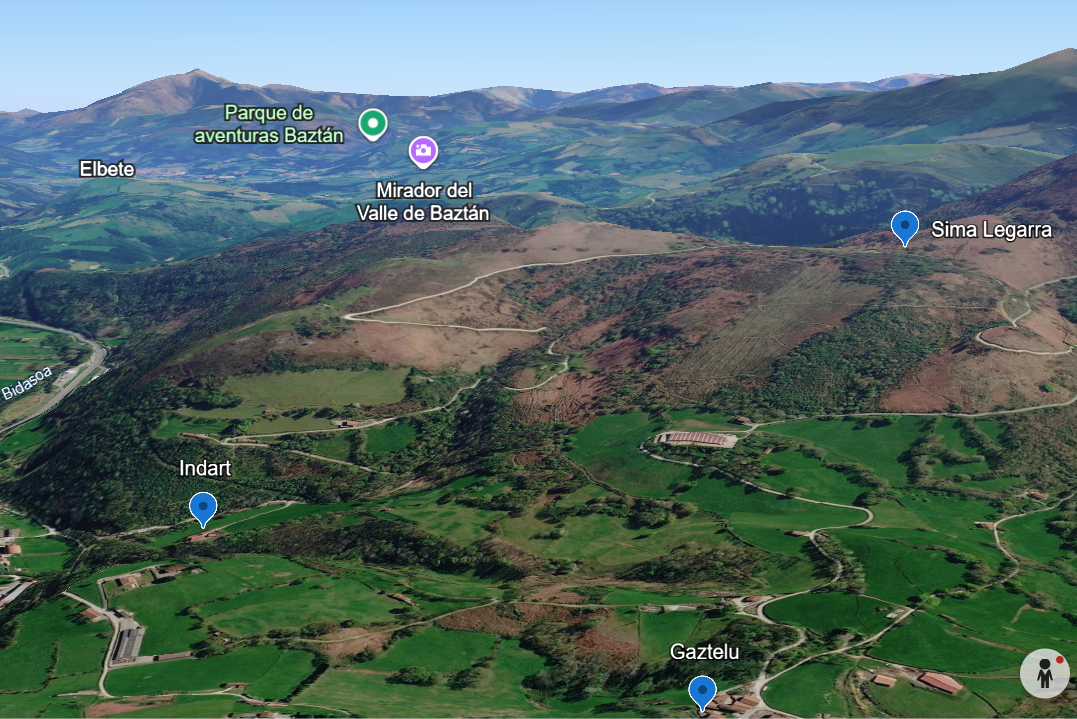
Then came the spring of 2008, and the mouth of Legarrea opened again. On 9 March 2008, a 24-year-old man from the neighbouring village of Legasa named José Ignacio (Iñaki) Indart Ariztegi mysteriously vanished. He was the only son of José Antonio Indart Sarretea, one of the descendants of two of the men who went after Juana Josefa and her children; Agustín Irurita Indart, who owned the prestigious Indart ‘Falcon Crest’ property and a female relative of José María Sarratea Arregui, of the nearby Sarratea house, who had headed up the local guard during the war. These two powerful families had again intermarried, producing José Antonio Indart Sarretea in 1945, and he had married Isabel Ariztegi, a social equal from Etxalar region (near Elbete on the above map) about 12km east of the Indart dynasty property and the Legarrea sinkhole.
Just like the case of Juana Josefa and her children in 1936, from the outset, the case of Iñaki’s disappearance appeared obvious to the community while the Guardia Civil instantly put up a wall to protect the Indart family patriarch, just as they had over 70 years earlier. Iñaki had been out late with friends at Doneztebe and decided to head home the few kilometres to the family property at around 3:00am on the morning of 9 March. It was a drive of only a few kilometres, but he did not directly go home, and came up against a alcohol breath-testing site set up by Navarra police and so Iñaki tried to flee. He was chased around the narrow one lane roads until two of his tyres blew out, and he was caught and breath-treated at around 5:00am, but was not over the limit and was simply given a citation despite causing police chase. The car, which was his father’s, had to be towed away from the site and Iñaki tried getting a taxi at 6:00am, without luck. Police dropped him in Legasa, leaving him with a walk of just over 1km home. A local baker saw him walking on the narrow roads out of town just after 6:15am, and then he vanished forever.
For more than six years, his disappearance remained an agonising local mystery and subjected to an appallingly weak Guardia Civil investigation. Locals joined the search of the valley, but the truth was already whispered of; that his father José Antonio Indart Sarretea was capable of murder. It seemed that the family was living inside the walls of the ‘Falcon Crest’ compound under the absolute authority of an irascible, abusive patriarch. The property has won numerous prizes around the country in dozens of competitions and contests for their cattle and horses, but competitors tried to have Indart removed because it was only wealth that won the awards, allowing the family to simply buy other people’s top animals to display. Indart would go on safari and hunt everything including elephants and bring them home to be stuffed. He is a strong, violent, and aggressive man of total entitlement to do as he pleased, and linked to smuggling and human trafficking. He was close friends with Enrique Rodríguez Galindo, a top-ranking Guardia Civil leader in the Basque Country, who would fly into Falcon Crest by helicopter. Galindo was eventually unmasked as a leading figure in the GAL (Grupos Antiterroristas de Liberación), a secret, state-sponsored death squad setup to illegally execute suspected ETA members, and was directly linked to the murders of José Antonio Lasa and José Ignacio Zabala, who were brutally tortured and then flown to Alicante, shot and buried in quicklime (if you are new, Franco died in 1975, but the fascist snakes continued to rule Spain until losing the election in 2004, but even then, the Guardia Civil was still riddled with corruption. The fascists were in power again between 2011-2018 but have been out of power since). Galindo served just four years of his 71-year sentences and died warm his own bed, of old age.
Because the Indart family compound still operated like an insulated, private fiefdom in the tiny village of Legasa in 2008, wife Isabel and her daughter, Beatriz, were caught directly in the crosshairs. The judge noted that their initial statements regarding the Iñaki’s disappearance regarding timelines and family dynamics contradicted the father’s, but still nothing was done. Iñaki’s friends knew he was terrified of his father and had faked an abduction to get away from his violence in 2006, but the Guardia Civil just sent him home.
In December 2014, despite the right-wing government attempts at blocking funding, momentum grew to finally excavate the Civil War graves of Navarra. The Satorrak Speleological Group rigged ropes to descend into the 50-metre depth of Legarrea sinkhole to prepare the shaft for historical recovery. They hoped to find the weathered, 80-year-old bones of Juana Josefa and her children, and their cousins, the children of Juana Josefa’s sister Petra, were ready to await their families’ reunion. Instead, dangling on a rock shelf 45 meters down, they found the fully clothed corpse of Iñaki Indart Ariztegi. The discovery shattered the peace of the valley and sent shockwaves through the Policía Foral (Navarra Regional Police). But the true horror of the discovery was linguistic and ancestral, and confirmed what locals around Gaztelu and Legasa already knew, that José Antonio Indart Sarretea, furious that his son had come home after getting in trouble, beat him so severely he decided to throw his own son into the sinkhole, just like the murderous men of his family just one generation earlier. He then travelled 180km to the Valderejoko Natural Park in Avala, despite having no plans instead of helping to look for his missing son. The whole family covered up the crime, and the local Guardia Civil helped by telling Indart which vehicles they were looking for in regards to the situation, and to harass his brother’s wife, who lived nearby, and was the only person who openly pointing the finger at her brother-in-law and next door neighbour.
Where the 1945 investigator took ten minutes to see nothing in the sinkhole, modern forensic recovery teams required more than three hours of highly technical, heavily equipped labour just to breach the treacherous debris of the shaft. Forensic autopsies revealed a horrifying truth that Iñaki had been brutally beaten around the head, left unconscious, and cast down the pitch-black vertical shaft while still breathing. Following a rigorous investigation that forced local residents to confront the grim, repeating legacy of the pit, a judge found clear evidence indicting Iñaki’s father for the murder. In less than a century, the dark history of the valley had folded in on itself; the exact same family lineage once complicit in herding a starving family to their doom had now seen one of its own sons cast into the mouth of the very same grave. In 2015, a judge dismissed all charges against José Antonio Indart Sarretea, citing lack of evidence. The judge gave permission for anyone to privately prosecute Indart for his son’s death, but his wife and daughter chose to say nothing. Iñaki’s aunt again stepped in, having had close relationship with her nephew, and sought a 20-year sentence for Indart. The case was again rejected a year later, so Iñaki’s aunt asked that Indart be banished from the area, akin to the batzarre meetings of 1936. This was also denied, the pair have lived as neighbours on the Indart lands outside Legasa ever since, and as of 2026, no one has been prosecuted for the murder.
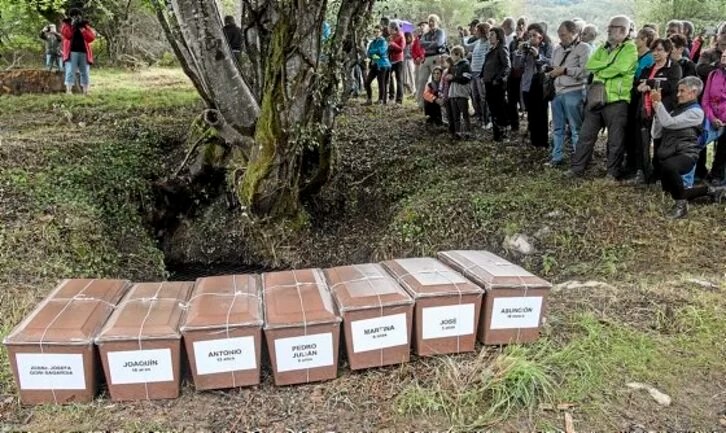
But the resolution for Juana Josefa and her children finally had a clear path from the spirits of 1936. In September and October of 2016, the Aranzadi Science Society, led by Spain’s premier forensic anthropologist, Dr. Paco Etxeberria, commenced the definitive excavation of Legarrea. Descending into the cold, damp dark of the cave floor, the forensic team faced a monumental task, painstakingly digging through the exact layers of heavy timber, stone, and animal carcasses that had been used to blind the 1945 court. One by one over several descent attempts, the team recovered the fragile, small skeletons of the children: 16-year-old Joaquín, 12-year-old Antonio, 9-year-old Pedro Julián, 6-year-old Martina, 3 year-old José María, and 18-month-old baby Asunción, still accompanied by the remains of their tiny leather shoes. Deep within the matrix, a delicate piece of an adult skull and a solitary mother-of-pearl clothing button also confirmed the presence of Juana Josefa. Forensic analysis of the skull fragments disproved the lingering, cruel rumours of execution; there were no bullet entry wounds visible. The bones confirmed the terrifying reality that the family had been driven off the edge, falling through the darkness to their deaths. Only parts of each person were found, and nothing to suggest Juana Josefa was pregnant, which could have been the baby being born before/as she went in, or that the delicate bones had been crushed and broken down by the limestone.
In 2017, 81 years after the midnight torches marched out of Gaztelu, the spell of silence was broken for good. In a deeply emotional ceremony, the descendants of Juana Josefa and Pedro’s only surviving child, José Martín, and the children and grandchildren of Petra Sagardía, including her daughter Nati Zozaia, gathered alongside current residents of Gaztelu, who wept openly and embraced the family, begging for collective forgiveness at the local cemetery. José Martín had died back in 2007, but his widow Gloria had his body removed from Pamplona to be placed with his family. Gloria said José Martín carried the heavy, lifelong trauma of knowing he only survived the massacre because he was swinging an axe in Eugi alongside his father while his siblings were targeted. As of 2026, Pedro Sagardía is still buried with his extended family in nearby Oiz cemetery.
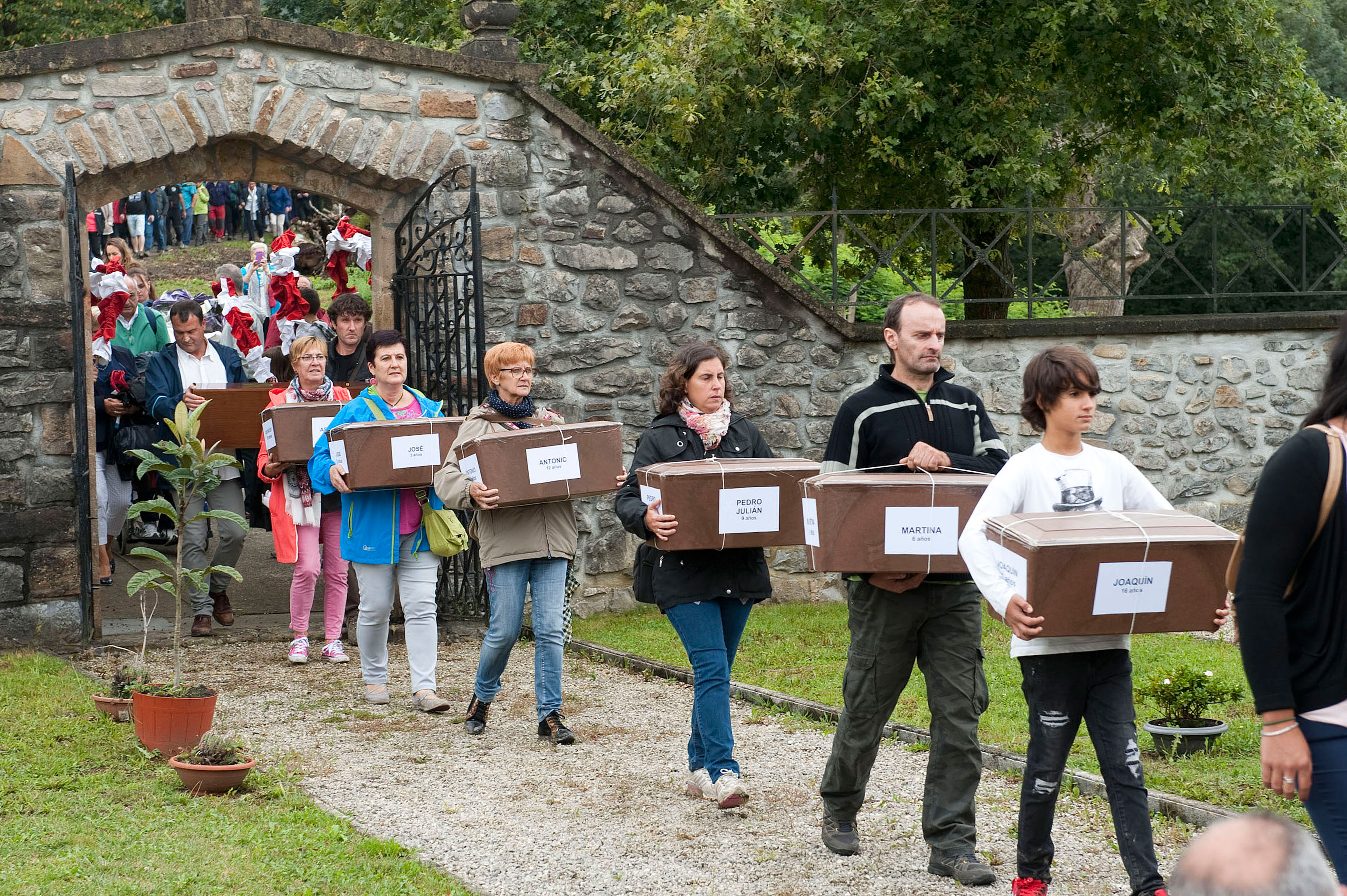
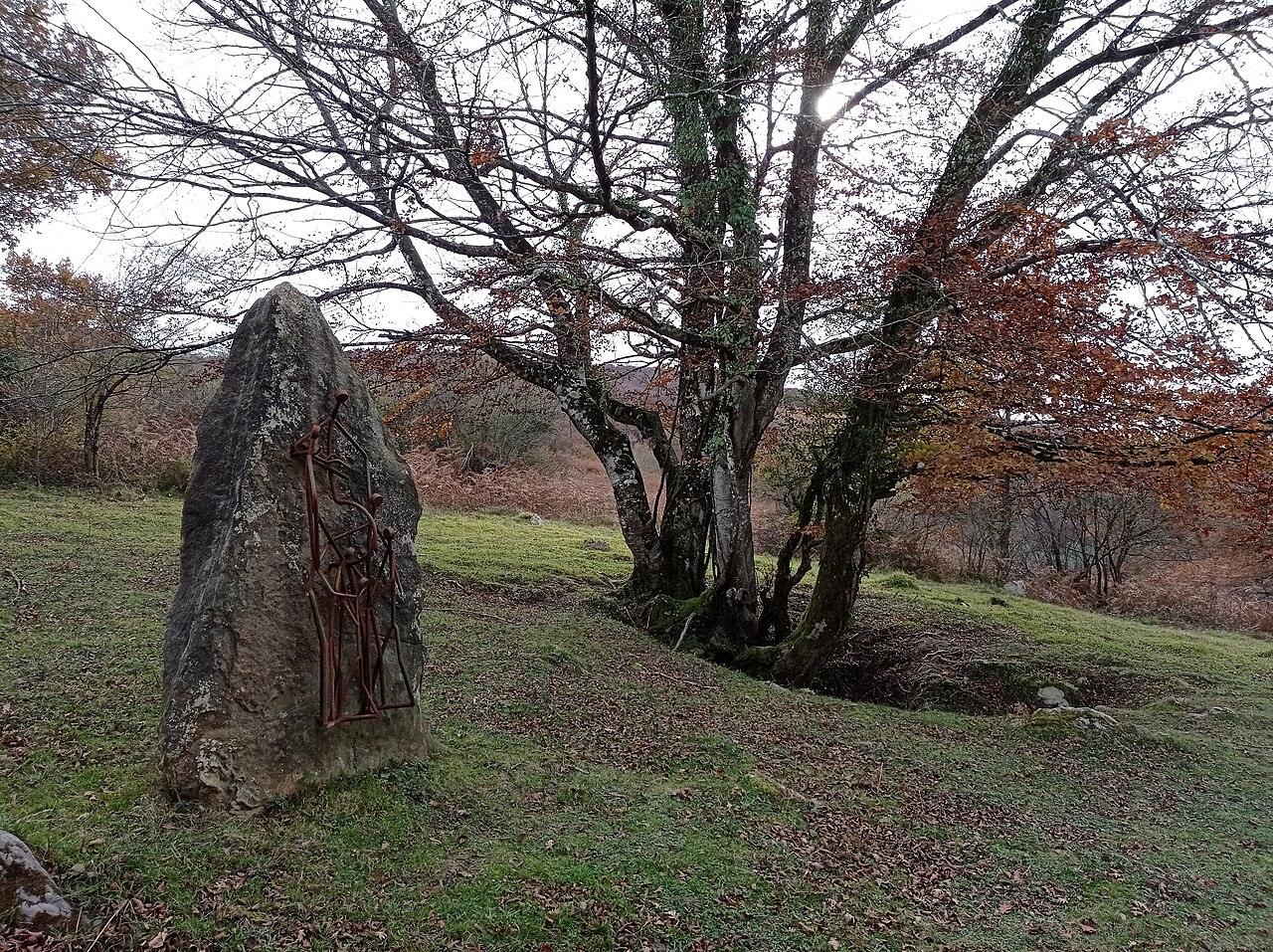
The remains of Juana Josefa and her children are now at rest in a dignified, consecrated grave in the village cemetery with a plaque in their honour. Today, a memorial stands near the mouth of the Legarrea sinkhole, now officially declared a Site of Historical Memory by the Government of Navarra, ensuring that the valley can never again hide its secrets in the dark. As with all atrocities committed under Franco between 1936 – 1975, no one will ever be accused or charged with a crime.
The book detailing the entire story of the Sagardía family can be read in – La sima ¿Qué fue de la familia Sagardía? by José Mari Esparza Zabalegi, available through Txalaparta, currently only available in Spanish
You can learn more about current excavation projects and find ways to volunteer and donate to opening new Spanish Civil War mass graves at Association for the Recovery of Historical Memory (site is in Spanish but translates well through any browser)

