


By August 1936, around 40,000 militia had been organised into columns in Madrid, with the early columns containing only about 300 men and women ready to fight, and some expanded into battalions and eventually several-thousand-person formations. They carried names such as Asturias, Aida Lafuente, Largo Caballero, Capitán Condés, Sargento Vázquez, Cataluña, Fermín Galán, Comuna de París, Primero de Octubre, and Batallón de Acero. Different groups had come together in Madrid during the days after the coup and were now being sent to whichever mountain road appeared most threatened.
One of the largest concentrations formed around Lieutenant Colonel Julio Mangada. On 19 July, the Republican government gave Mangada 1,000 rifles and instructed him to organise a volunteer battalion. Among his first militia were Asturian miners who had arrived in Madrid in July. They formed the nucleus of the Asturias No. 1 Battalion, which would fight against the Nationalist rebels at Campamento before leaving Madrid for the western front. Mangada’s force grew rapidly as other units joined to make approximately 6,000 militia. This was the force operating west of El Escorial and across the Ávila approaches. Battalions occupied different villages, roads, and heights, and individual formations could be detached as the situation changed.
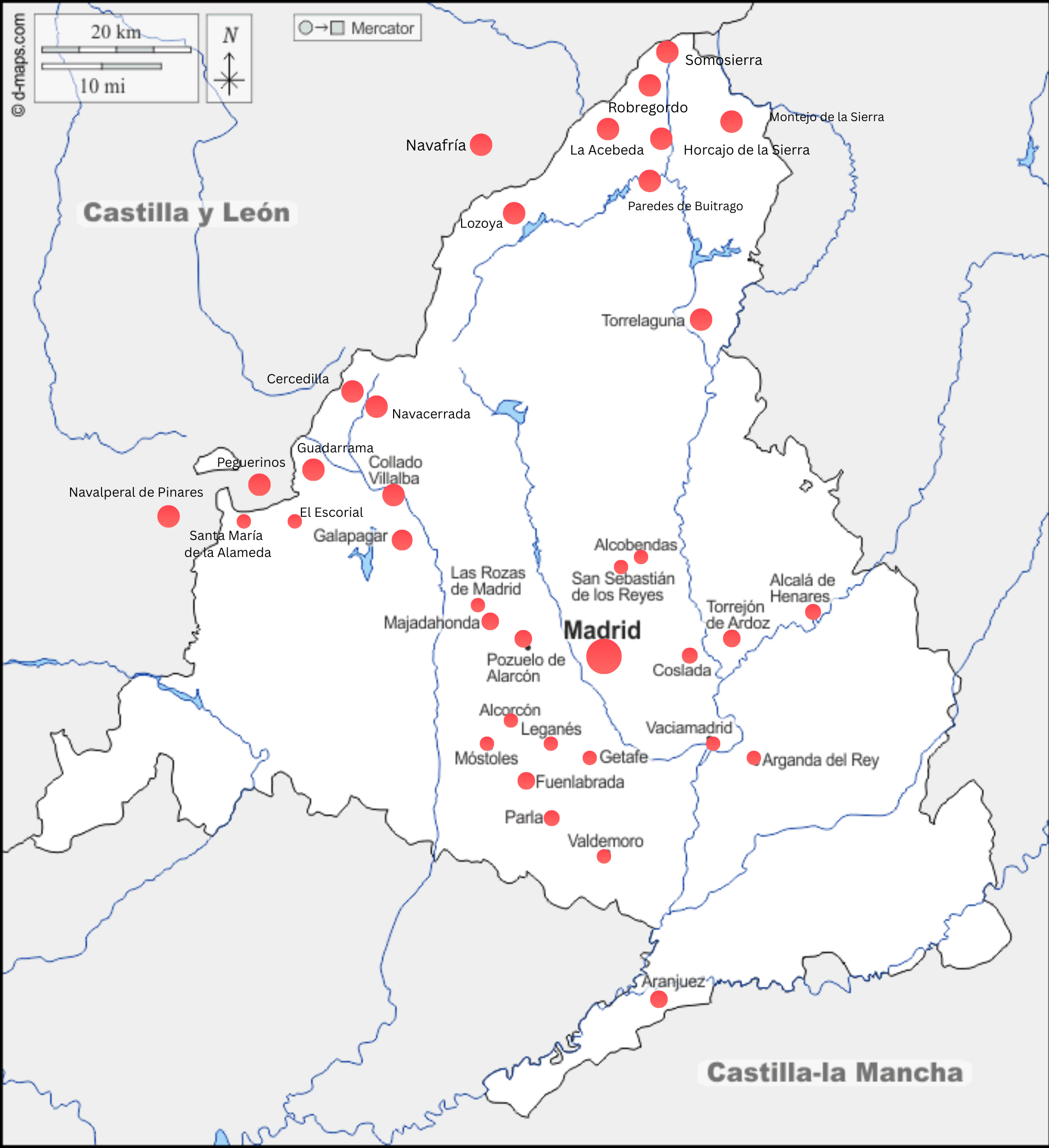
Further east, another group of Madrid civilians was being organised by the CNT., approximately 4,000 people. Many obtained rifles captured when the military rebellion was defeated at Alcalá de Henares. Construction worker and CNT organiser Cipriano Mera had already taken part in fighting against the rebellion at Madrid, Alcalá, and Guadalajara. On 27 July, the CNT sent its first organised column towards Somosierra and Paredes de Buitrago. The organisation selected retired Lieutenant Colonel Francisco del Rosal Rico as its military commander. By August, the Columna del Rosal contained approximately 835 fighters, divided between two battalions. It even contained an international group: approximately 30 Italians, 10 Germans, two Swiss, and one French volunteer. They were sent north because the reservoirs at Puentes Viejas and El Villar, together with the road through Buitrago, had to be protected. They fought around Somosierra and Paredes de Buitrago until the front began stabilising in early August. In the middle of the month, the column was ordered away again. The Army of Africa was advancing through Extremadura, so Del Rosal and Mera’s militia were sent south to help protect the Tagus valley.
Another identifiable group around Buitrago was commanded by Francisco Galán, a retired lieutenant of the Guardia Civil, the brother of Fermín Galán, the officer executed after the Republican rising at Jaca in 1930, and before the coup had worked as a military instructor for the communist Milicias Antifascistas Obreras y Campesinas, the MAOC. After the rebellion was defeated in Madrid, he was given command of a militia column that left for Somosierra on 21 July. Buitrago became Galán’s headquarters and militia arriving from Madrid joined the defence there, and the column fought García-Escámez’s rebels attempting to descend from Somosierra. Cuban volunteers already living in Spain also joined Galán’s force. One contemporary notebook places Cuban Pedro Vizcaíno with the Galán Column at Somosierra. Women were present as well. Consuelo Martín, a communist miliciana serving with the Galán Battalion, was wounded at Somosierra. Contemporary photographs and reports also record women serving in other Madrid militia formations as fighters, medical personnel, drivers, messengers, and support workers. Margarita Fuente, who worked with the militia command without belonging to a political party, initially went to the front at Cercedilla.
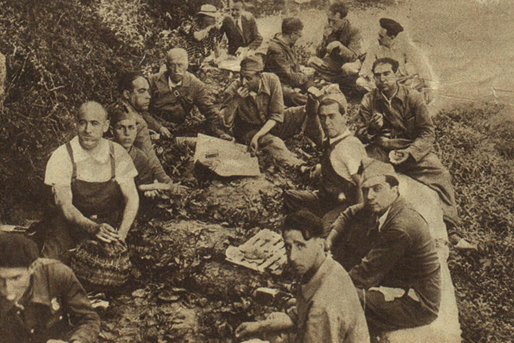
At Navafría, the Republic placed another substantial formation under Francisco Perea. Their job was to protect the pass from the Segovia side and prevent another rebel force descending into the Lozoya valley. These formations were only part of the northern defence. Republican forces also occupied Guadarrama, Cercedilla, Navacerrada, Lozoya, Buitrago, Paredes de Buitrago, Gandullas, and Piñuécar. Columns continually appeared and disappeared from the northern front, groups moving where they were needed, and able to return the 50-80km back to Madrid for rest and medical care.
General Emilio Mola’s plan, after the failed in Madrid, ordered columns from the rebel-held northern provinces in Navarre and Old Castile towards the capital. They came from different garrisons and converged on the passes through the Sistema Central, initially with around 15,000 Requetés and Falangists to take Madrid province from the north and west. August began with fighting in the northeast, García-Escámez’s Nationalist rebel forces held the Puerto de Somosierra and positions south of the pass, but they had been stopped before Buitrago del Lozoya. Galán’s militia held Buitrago and the approaches immediately north of it, while Del Rosal and Mera’s CNT column, around 835 strong, occupied positions around Paredes de Buitrago and the reservoir sector. Other Republican groups held Piñuécar and Gandullas.
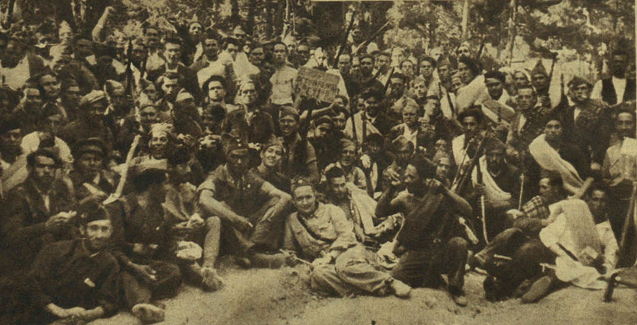
Before the war, the Sierra west and north of Madrid contained farming communities, railway settlements, mountain roads, holiday destinations, and villages whose populations were measured in hundreds or a few thousand. Cercedilla, at the foot of the mountains, became a Republican military centre because it controlled the approaches to Navacerrada. Trains and vehicles brought men and supplies from Madrid. Buildings accommodated militia who had no barracks of their own and wounded men travelled back in the opposite direction. At Guadarrama, the road north simply climbed towards rebel positions at the Alto del León. The rebels had seized the pass during July but had been unable to descend further towards Madrid. Republican fighters now occupied the southern slopes, but only a few kilometres separated the two sides. Men watched one another across mountain ground that civilians had crossed freely weeks earlier. Artillery fire periodically travelled across the heights. Patrols went forward at night. Trenches and stone positions appeared beside roads and across hillsides.
A pattern was quickly forming; that a Nationalist force would reach the top of the range, and then not be able to move any further down towards Madrid. The border of the province became a constant source of small outbreaks of fighting covering precious little ground The same thing happened at nearby Navacerrada. Rebel-held Segovia lay beyond the mountains, but Republican forces controlled the pass and the road south through Cercedilla. Further east, Francisco Perea had 1,187 men at Navafría by 23 August, blocking another possible Nationalist descent from Segovia into the Lozoya valley. Madrid could not leave any of these roads open. And any quiet pass required hundreds of armed people because the rebels could reinforce the opposite side.
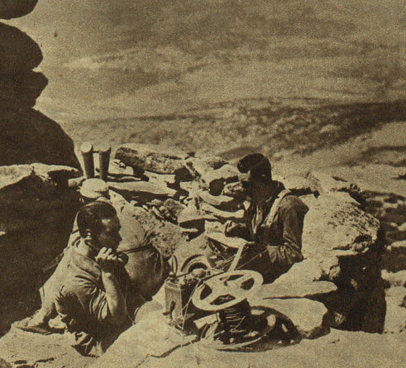
Militia needed beds, food, water, storage space, transport, kitchens, workshops, and places for wounded volunteers. Houses and public buildings acquired military uses while cars and trucks crowded roads built for small communities. Farmers could find fields lying between opposing positions. Travelling to a neighbouring village now meant crossing a military line and sharing your life with thousands of strangers to your area.
The situation was even more fluid west of Madrid. Republican forces had crossed the provincial boundary during July and occupied territory 25km inside Ávila. The largest formation there was commanded by Lieutenant Colonel Julio Mangada. By August, Mangada had approximately 5,000–6,000 men distributed across the western sector. His force included civilian militia battalions, two regular infantry battalions, seven loyal Guardia Civil companies, and two artillery batteries. Their positions extended through Navalperal de Pinares, Santa María de la Alameda, Peguerinos, and the country leading back towards El Escorial. For the small communities involved, the scale was extraordinary. Peguerinos had fewer than a thousand inhabitants, yet formations containing hundreds or thousands of armed men were now moving through the surrounding country.
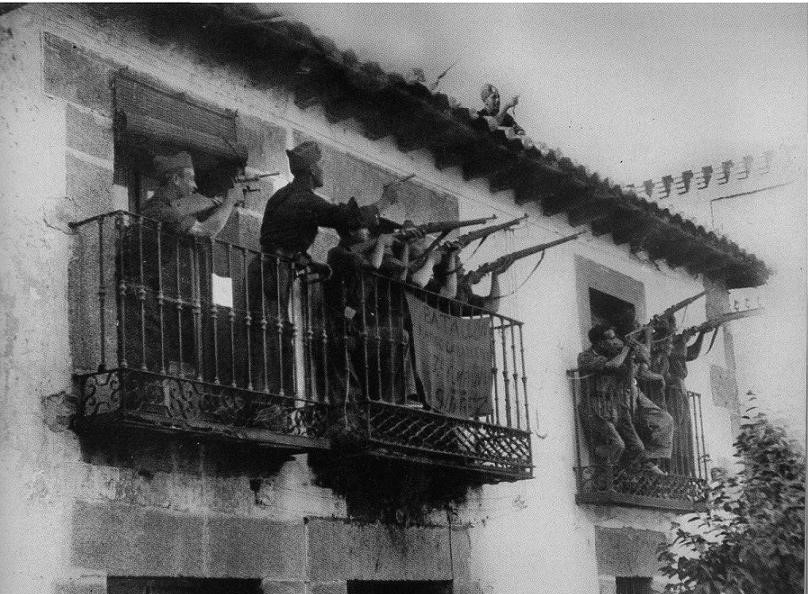
Across the line, rebel commanders in Ávila assembled regular soldiers, Guardia Civil who had joined the coup, Falangists, and Requetés. They could draw supplies and reinforcements from an extensive rebel-held rear stretching through Ávila and Old Castile. For much of August neither side could clear the other from the area, until 30 August, when approximately 3,000 Nationalist troops were concentrated against Peguerinos while around 1,000–1,500 Republican defenders were in the sector. Artillery struck Republican positions before rebel infantry moved forward. Fighting continued for hours around the approaches and surrounding heights. Republican groups were forced backwards as the attackers closed on Peguerinos, and fighting reached the streets and buildings. By the end of the action, Nationalist troops had entered the town, with casualties on both sides, the town damaged, and not a single road into Madrid opened. Republican forces remained around Santa María de la Alameda, Navalperal, and the approaches to El Escorial. Mangada still had several thousand men distributed across the western sector. The rebel force that entered Peguerinos could not simply continue towards the capital.
During August, the Army of Africa was advancing north through Extremadura. Mérida fell on 10 August and Badajoz on 14 August. Madrid now faced the possibility that another rebel army would approach from the southwest. By the final days of August, perhaps 40,000–50,000 armed people were serving in Madrid and across the fronts surrounding it, and now had to also move to the Tagus River past the southern border in case the Army of Africa struck. Opposing them around the wider region were perhaps 10,000–15,000 rebel troops, with additional forces approaching from the southwest. While photos flooded in every day with scenes of happy volunteers saving Madrid, the reality was quite different. Madrid would soon be under attack.


