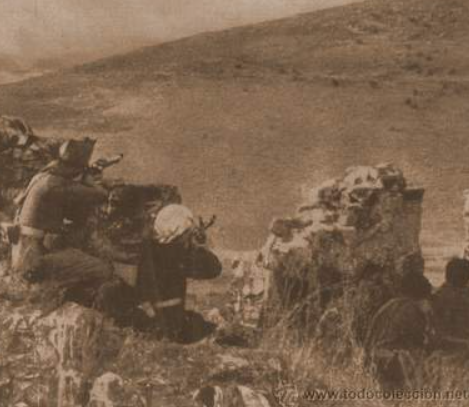
By the third week of August 1936, the Republican position in Extremadura had deteriorated rapidly. Badajoz had fallen on 14 August, Mérida and Trujillo had been lost, and the Army of Africa was preparing to continue its advance towards the Tagus valley. Rather than defending any remaining towns in western Extremadura, Republican commanders concentrated on positions where the terrain could slow the Nationalist advance and where isolated Nationalist garrisons might be destroyed.
Guadalupe presented such an opportunity. Although the town itself had been held by Nationalist forces since July, it remained an isolated enclave surrounded by territory where Republican militias still operated. Eliminating the garrison would remove a Nationalist stronghold from the mountains, secure the Republican rear in eastern Cáceres, and deny the Army of Africa a base from which to threaten communications between Extremadura and the Toledo front.
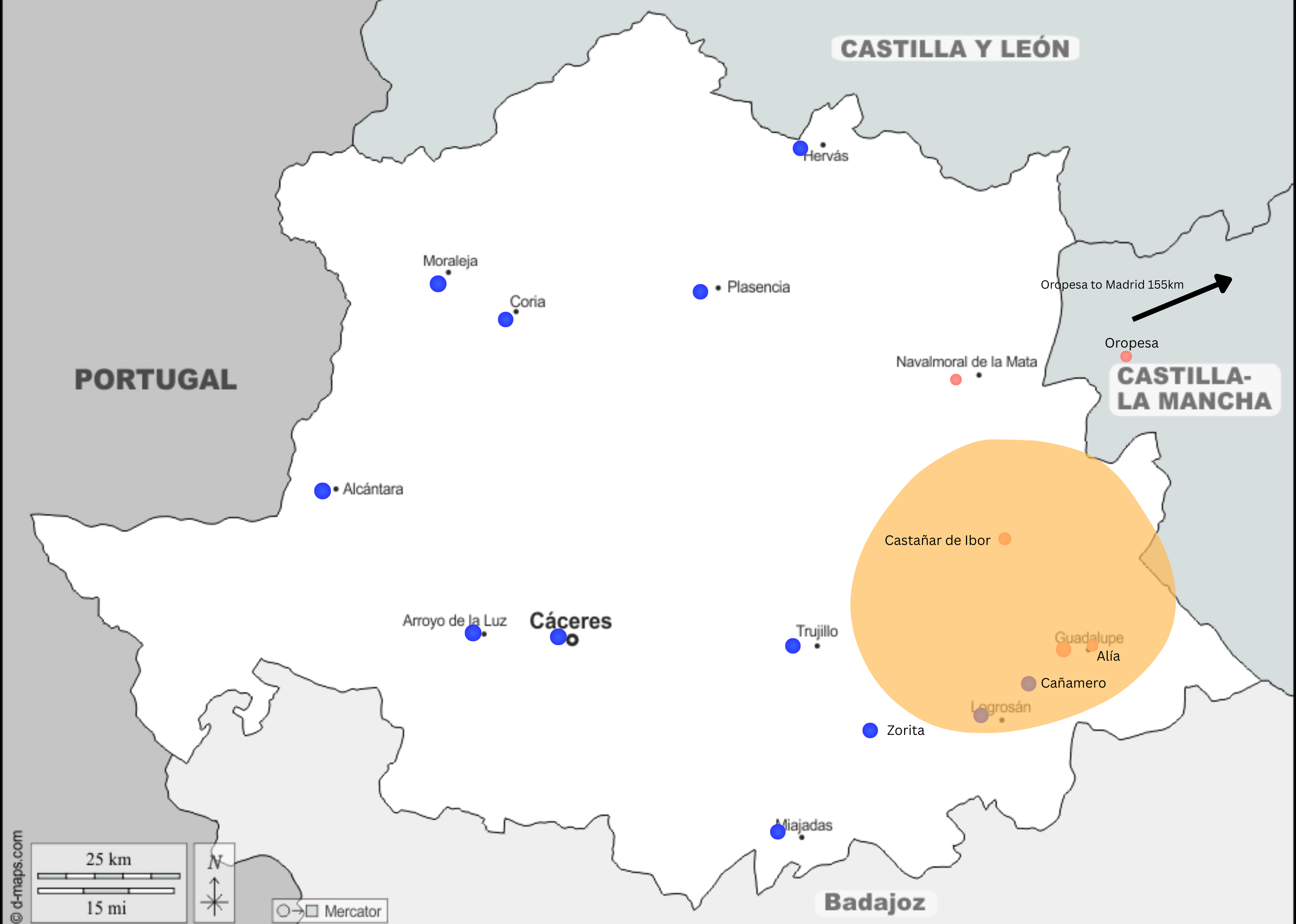
The geography made Guadalupe especially important. The town lay beneath the rugged Sierra de Guadalupe (part of the Villuercas massif), where steep ridges, narrow valleys, and winding roads naturally favoured defenders. Several roads converged on the town: west towards Logrosán and Trujillo, east towards Alía and the Toledo frontier, north into the Ibor valley, and south towards Castilblanco and the La Siberia region. Whoever controlled Guadalupe controlled one of the principal crossing points through this section of the mountains. Although it was not on the Army of Africa’s main road to Madrid, it dominated an important flank and the routes linking eastern Extremadura with western Toledo.
Guadalupe was one of Spain’s most important religious centres, attracting pilgrims from across the country and holding immense prestige among conservatives and Catholics. Capturing the town would have deprived the Nationalists of an important propaganda victory while demonstrating that isolated rebel positions could still be overcome despite the recent Nationalist successes elsewhere. The objective was to destroy the isolated Nationalist enclave, secure the mountain communications of eastern Extremadura, and prevent the Army of Africa from using Guadalupe as a secure base while its main offensive continued towards the Tagus.
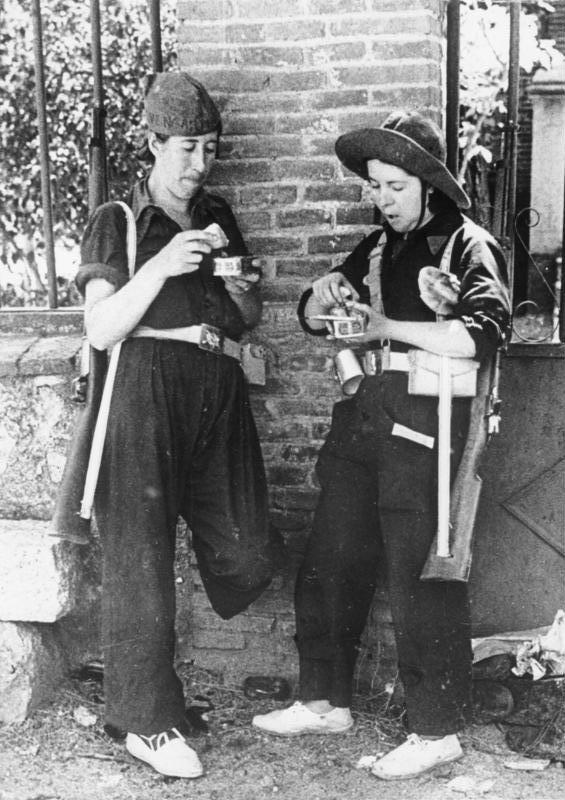
Republican General José Riquelme was placed in command of the improvised Army of Extremadura, a force of roughly 9,000 men composed of surviving army units, Assault Guards, Guardia Civil who had remained loyal, and large numbers of militia from socialist, communist, and anarchist organisations. Reinforcements also arrived from outside the region, including Captain Manuel Uribarri’s Columna Fantasma, which had travelled from Valencia to strengthen the threatened front. Rather than attempt to defend the open plains west of Trujillo, Republican commanders sought to use the rugged terrain of the Sierra de Guadalupe to offset the Army of Africa’s superiority in training and mobility. The mountains offered narrow roads, steep ridges, wooded slopes, and limited avenues of approach, making them one of the few places in Extremadura where advancing motorised columns could be delayed. Guadalupe itself, together with the surrounding high ground, formed a natural defensive position from which the Republicans hoped to block the Nationalist advance or at least force it into a costly battle.
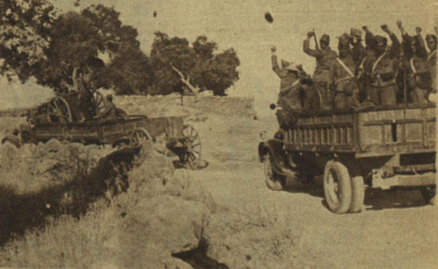
The Republican plan had two objectives. The first was to destroy the isolated Nationalist garrison already holding Guadalupe, removing a dangerous enclave behind Republican lines. The second was to establish a defensive line across the mountain approaches before Yagüe’s columns reached the area. If successful, the defenders hoped to delay the Army of Africa long enough for additional reinforcements to arrive from central Spain and for stronger defensive positions to be organised along the Tagus. Despite these intentions, the Republican forces suffered from serious weaknesses. Most of the militia had received little military training and possessed only basic infantry weapons, with many volunteers armed with rifles of mixed calibres that complicated ammunition supply. Machine guns were available in limited numbers, and some field artillery was deployed, but neither was sufficient to match the concentrated firepower of the Army of Africa. Republican aircraft, including André Malraux’s Escuadrilla España, operated over the wider Extremadura front and attacked Nationalist columns where possible, although air support remained sporadic and could not be relied upon to influence events on the ground.
Coordination proved an even greater problem. Riquelme commanded a collection of independent militia columns, and some anarchist formations resisted taking orders from the regular military command. Contemporary accounts describe attacks being launched without coordination, defensive positions being abandoned prematurely through fear of encirclement, and opportunities to concentrate forces being missed. These organisational weaknesses meant that, although the Republicans had selected favourable terrain, they struggled to exploit its defensive advantages against the disciplined and highly mobile columns of the Army of Africa.
The approaching Nationalist force was a part of the wider Army of Africa, which resumed its advance eastwards after the capture of Badajoz and Trujillo. Commanded overall by Juan Yagüe, the force available for operations in eastern Extremadura numbered roughly 3,000–4,000 frontline troops. The force advancing into the Sierra de Guadalupe consisted primarily of veteran formations from the Army of Africa. Units of the Spanish Legion provided the assault infantry, while the Regulares supplied highly mobile infantry experienced in mountain warfare. Moroccan cavalry screened the advance, conducting reconnaissance, maintaining contact with Republican positions, and pursuing withdrawing forces where the terrain allowed. The columns were supported by field artillery capable of engaging defensive positions on the surrounding ridges, together with engineers responsible for clearing roadblocks and repairing damaged routes. Nationalist aircraft also operated over the area, carrying out reconnaissance and bombing attacks against Republican troop concentrations and lines of communication. Their immediate objective around Guadalupe was to relieve the isolated garrison and force the Republican columns to abandon the surrounding mountains. Once that had been achieved, the Army of Africa intended to continue its advance eastwards without becoming tied down in a prolonged mountain campaign, preserving its momentum for the drive towards the Tagus and, ultimately, Madrid.
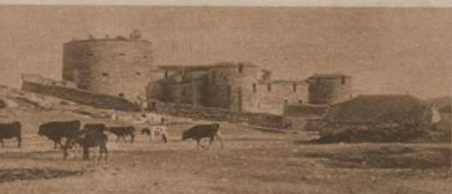
The battle for Guadalupe began on 20 August 1936, when Republican forces launched an offensive against the Nationalist-held town before the main Army of Africa columns could reach the Sierra de Guadalupe. The opening attacks came from the surrounding high ground overlooking the town. Republican militia advanced along the roads from Alía, Cañamero, and neighbouring villages, occupying ridges and wooded slopes around Guadalupe. They first sought to isolate the town by cutting its road connections and surrounding the defenders. Machine guns were positioned on commanding ground overlooking the approaches, while artillery opened fire against Nationalist positions within the town. Much of the bombardment was directed towards the Royal Monastery of Santa María de Guadalupe, where many civilians and part of the garrison had taken refuge behind its thick stone walls.
Inside Guadalupe, the Nationalist defenders were heavily outnumbered but occupied strong defensive positions. The monastery dominated the centre of the town and served as both a refuge and a fortified strongpoint. The garrison established firing positions overlooking the surrounding streets and roads while awaiting relief from the advancing Army of Africa. Despite repeated Republican attacks and shelling, the defenders maintained control of the monastery and the town centre, preventing the attackers from achieving a decisive breakthrough.
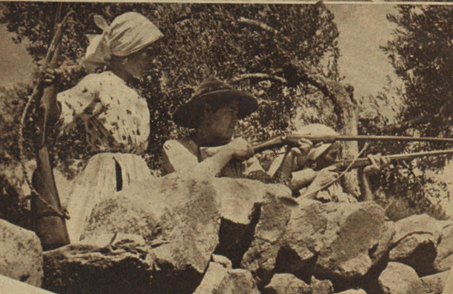
As the siege developed during 20 and 21 August, the fighting spread across the surrounding mountains. Republican forces attempted to tighten the encirclement by occupying additional ridges and road junctions, while Nationalist patrols fought to maintain communication with the relief columns approaching from the west. The broken terrain prevented either side from deploying in large formations. Instead, the battle became a series of engagements between small groups of infantry fighting over hilltops, roadblocks, and rocky slopes overlooking the narrow valleys leading into Guadalupe.
Meanwhile, the Army of Africa had continued its advance eastwards from Trujillo. Veteran formations of the Spanish Legion and Regulares, supported by artillery and aircraft, pushed steadily towards the besieged town. Rather than attacking every Republican position directly, the Nationalists concentrated on reopening the road to Guadalupe. Artillery bombarded Republican positions on the surrounding heights while aircraft carried out reconnaissance and bombing attacks against troop concentrations and lines of communication. As pressure increased, Republican commanders found themselves threatened not only from the front but also by the possibility of being cut off in the mountains.
The relief of Guadalupe on 22 August 1936 brought an immediate end to the fighting in the Sierra de Guadalupe. Republican columns withdrew eastwards through the surrounding mountains towards Alía and the Toledo frontier, abandoning attempts to destroy the isolated Nationalist garrison. The Army of Africa did not remain in the town in large numbers. After ensuring that the roads were secure and the Republican forces had retreated, its columns continued their advance towards the Tagus valley, leaving smaller garrison forces to hold Guadalupe and maintain communications through the Villuercas.
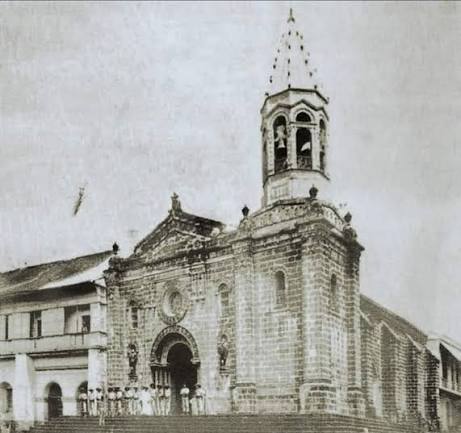
For the people of Guadalupe, the end of the battle marked the beginning of a difficult recovery. Hundreds of residents who had spent several days sheltering inside the Royal Monastery of Santa María de Guadalupe emerged to find damaged buildings, shattered windows, and roads littered with abandoned equipment, dead animals, and the remains of hastily constructed barricades. The monastery resumed caring for civilians and wounded combatants, while local authorities worked to restore essential services and reopen the roads connecting the town with Logrosán and Trujillo. The best documented victim connected directly with the fighting is Manuel Vicente Alonso Castrillo, a member of Izquierda Republicana. He was arrested in Guadalupe on 18 July, wounded after being shot, taken to Cáceres Hospital for interrogation, and murdered during the night of 20–21 August 1936, while the battle for Guadalupe was still underway.
Military victory was quickly followed by political repression, even though arrests had already begun after the Nationalist occupation of the town in July, the defeat of the Republican offensive strengthened Nationalist control over the district. Soldiers, Guardia Civil, and Falangists arrested men suspected of supporting the Republic or assisting the attacking forces. Some detainees were imprisoned locally before being transferred to Cáceres, where they were later executed.
Among those executed were the Republican mayor, Adolfo Díaz Cañada, together with Juan José Rodríguez Ruiz, Francisco Cuadrado Abril, and José Rodríguez Ramiro, who were shot after military proceedings. Others, including councillors and local political activists, received lengthy prison sentences or were removed from public life. The repression extended beyond those who had taken part in the fighting, affecting families associated with Republican organisations and permanently altering the town’s political and social leadership.
The Nationalist victory also secured the southern flank of the Army of Africa’s advance through Extremadura. With Guadalupe firmly under their control and the Republican forces dispersed, the threat to Nationalist communications in the Villuercas disappeared. The battle therefore marked the end of organised Republican attempts to challenge Nationalist control in this part of eastern Cáceres, allowing the offensive to continue towards Navalmoral de la Mata, Talavera de la Reina, and ultimately the approaches to Madrid.
The relief of Guadalupe ended the fighting in the Sierra de Guadalupe, it was only a brief pause in the Army of Africa’s offensive. After securing the town and leaving a garrison to hold the monastery and surrounding roads, the Legion and Regulares resumed their advance almost immediately. Their objective remained unchanged; to reach the Tagus valley, capture Navalmoral de la Mata, and continue the rapid march towards Madrid before the Republicans could establish another defensive line. The immediate Republican reaction was essentially one of controlled withdrawal rather than counter-attack. By 22 August, General José Riquelme recognised that he could no longer hold the Villuercas and eastern Cáceres against the Army of Africa. Once the Nationalists relieved Guadalupe and threatened to turn the Republican flank, his priority shifted from holding ground to preserving what remained of his force for another defensive line farther east.
The retreat from the Sierra de Guadalupe gave the Republican command something it had lacked throughout the Extremadura campaign – time. Previous attempts to halt the Army of Africa had relied on improvised militia columns hastily assembled to defend individual towns or mountain passes. At Talavera de la Reina, General José Riquelme intended to fight a planned defensive battle using a concentrated force rather than a series of isolated detachments. Riquelme established his headquarters in Talavera on 22 August 1936 where work immediately began on organising the town’s defences. During the following week, surviving units from Extremadura were joined by reinforcements arriving from Madrid and central Spain. Colonel Mariano Salafranca assumed responsibility for directing much of the defence, transforming the growing collection of militia and regular soldiers into a more coordinated fighting force. The sweep through the south had ended; now the Republicans were ready to battle the Army of Africa for Madrid.