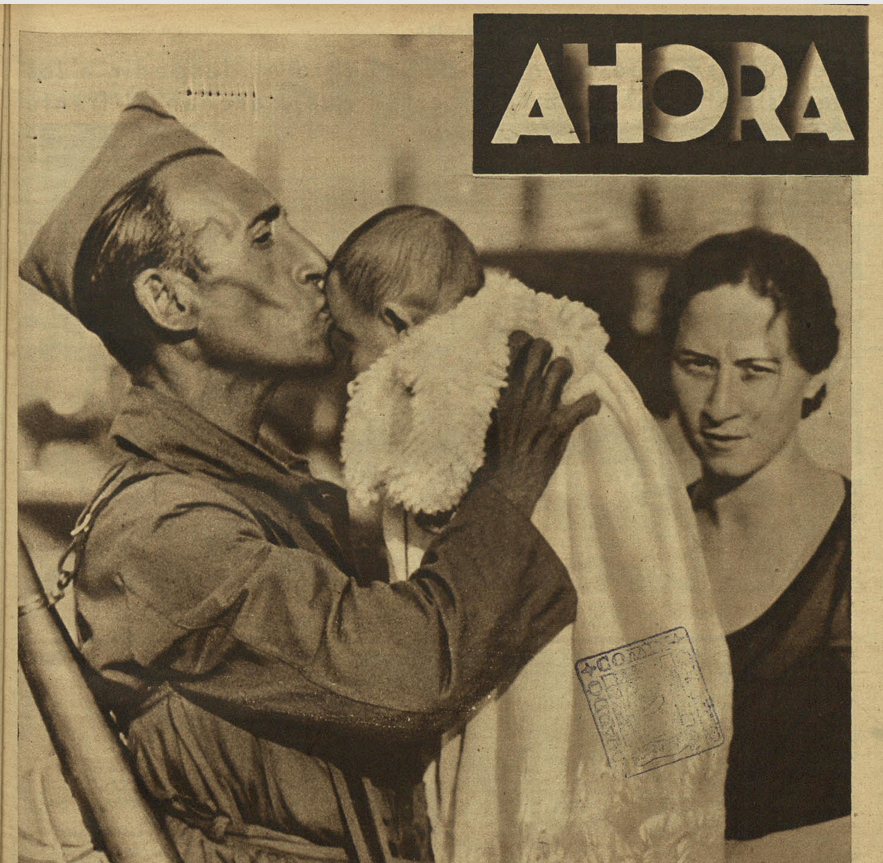
When the military uprising began in July 1936, a number of senior officers in Valencia sympathised with the rebellion and considered joining it, but hesitation, conflicting orders, and the rapid mobilisation of workers’ organisations prevented the conspirators from taking decisive action. Within a matter of days, the Republic had retained one of Spain’s largest cities and one of its most important ports. As the immediate danger passed, authority shifted towards an uneasy partnership between the Republican state and the revolutionary organisations that had played such a prominent role in defending the city. Government offices continued to function, but trade unions, political parties, and newly formed committees exercised growing influence over policing, transport, recruitment, supplies, and public order. The most important of these bodies was the Comité Ejecutivo Popular (Popular Executive Committee), which rapidly became the driving force behind Valencia’s mobilisation during the summer of 1936.
Trade union headquarters remained open around the clock. Offices belonging to the CNT, UGT, socialist parties, republican organisations, and smaller political groups became recruitment centres where volunteers arrived throughout the day and night. Many came directly from factories, workshops, farms, or the docks, still wearing their working clothes. Others carried small suitcases, blankets, or food wrapped in paper, expecting to leave for the front within hours. Few knew exactly where they would be sent. Fewer still had any military experience. What united them was a determination to prevent the rebellion from spreading.
The flood of volunteers quickly created problems of its own because there were far more people willing to fight than there were rifles available to arm them. On 21 July the Republican government appointed Captain José Uribarri to organise Valencia’s anti-fascist militias while simultaneously dispatching a Delegated Government Junta to restore central control over Valencia, Alicante, Castellón, Murcia, Albacete, and Cuenca. The government’s intervention reflected an increasingly familiar problem across Republican Spain. Enthusiasm alone could not create an army. Volunteers had to be organised, armed, trained, transported, and supplied before they could be sent into battle.
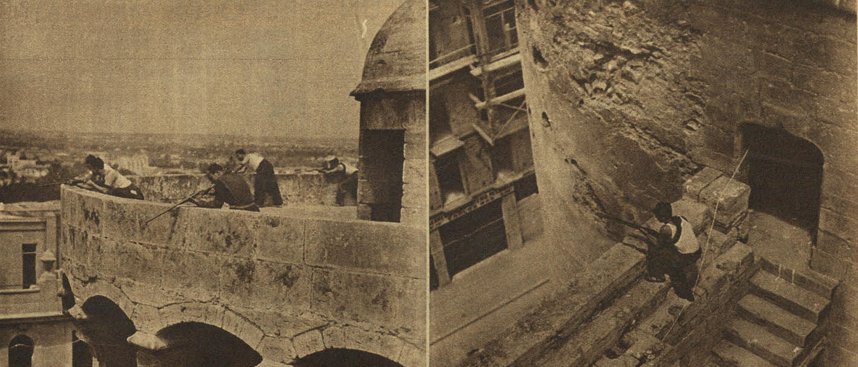
Valencia began building an army almost from nothing, with the first formations from political militia columns and every major organisation sought to raise its own force. The CNT recruited heavily among dock workers, builders, metalworkers, and other industrial labourers. Socialist, communist, republican, the UGT, and Valencian political organisations established additional columns, while professional officers who had remained loyal to the Republic frequently found themselves serving as advisers or instructors rather than exercising traditional military command. Some had completed compulsory military service years earlier, but many had never handled a rifle before reporting for duty. Retired officers, loyal army personnel, and veterans of previous military service suddenly found themselves responsible for teaching thousands of civilians the basics of soldiering. Drill, rifle handling, fieldcraft, map reading, elementary tactics, and first aid all had to be taught within days rather than months.
The number of available rifles fell far short of the number of volunteers. Machine guns, mortars, artillery pieces, transport vehicles, radios, and modern military equipment were even scarcer. People frequently completed their training only to discover that no rifle was available for them. Others waited while weapons were gathered from barracks, police armouries, civilian shooting clubs, or factories capable of producing ammunition. Every shipment of rifles arriving in the city allowed another group of volunteers to leave for the front.
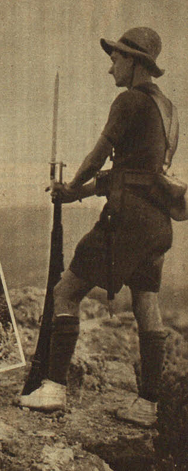
With no uniforms, blue overalls worn by industrial workers became one of the defining images of the early militia. Others wore ordinary jackets, work trousers, leather boots, espadrilles, scarves, or political armbands identifying their organisation. Steel helmets were uncommon, packs varied enormously, and very few columns displayed anything approaching a standard military appearance.
Transport presented another enormous challenge as buses, commercial lorries, private trucks, delivery vehicles, taxis, motorcycles, and private cars needed to be requisitioned wherever they could be found. Civilian mechanics accompanied many of the expeditions because breakdowns were expected on the difficult roads leading towards Aragón. Workshops across Valencia worked continuously repairing engines, replacing tyres, adapting civilian vehicles for military use, and improvising whatever equipment the columns required before departure.
Throughout August, newspapers frequently published photographs showing women learning to handle rifles, practising military drill, and receiving instruction from militia instructors in parks, squares, and open spaces throughout Valencia. These scenes became some of the most recognisable images of the city’s revolutionary atmosphere. For many observers, the sight of women carrying rifles represented a dramatic departure from pre-war Spanish society, symbolising the belief that defending the Republic had become the responsibility of the entire population. Women could also join columns as nurses, in communications, organise ammunition and food supplies, repair and manufacture clothing, assist transport services, staff offices, and support the growing logistical network required to maintain the Republican war effort. The public display of women preparing for war reflected the profound social changes taking place inside Republican Valencia during the opening weeks of the conflict.
The Nationalists still held the provincial capital of Teruel, whose garrison overlooked the mountain roads connecting Aragón with the Valencian coast. If the city remained securely linked to Nationalist territory further north, it posed a continuing threat to Valencia and its communications. At the same time, intelligence suggested that much of eastern Teruel was only lightly defended. Outside a handful of towns occupied by the Guardia Civil, small military detachments, and right-wing civilian groups, there was no continuous front. Large areas of countryside remained virtually undefended, creating the possibility that fast-moving militia columns could occupy villages, secure mountain passes, and isolate Teruel before the Nationalists had time to organise an effective defence.
The first Republican columns left Valencia as part of a coordinated approach to provide backup as needed in Teruel. New intelligence, military setbacks, and political decisions repeatedly altered Republican plans, meaning that every column departed for different reasons, travelled by different routes, and expected to face different conditions once it reached Aragón. The first substantial expedition left before many of the better-known militia formations had even been created. On 25 July 1936, the Casas Sala Column departed Castellón under the command of Lieutenant Colonel Fernando Casas Sala, reinforced near Sagunto by Colonel Hilario Fernández Bujanda and additional volunteers from Valencia. As the convoy assembled and moved inland through Segorbe, it grew into a force of approximately 1,182 people, transported in 45 vehicles. Around 382 Guardia Civil accompanied roughly 677 militia volunteers, together with engineers, medical personnel and support staff.
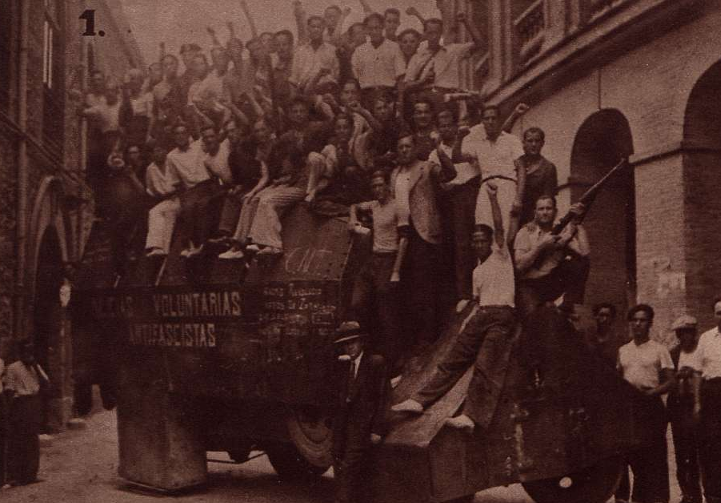
Twelve large buses carried the Guardia Civil, while additional buses transported the militia. Supply lorries followed carrying food, fuel, engineering equipment, ammunition, medical supplies and spare parts. An ambulance accompanied the convoy together with a CAMPSA fuel tanker to keep the vehicles moving across the mountains. Orders instructed drivers to maintain a speed of around 40km per hour, an indication that considerable planning had gone into the operation despite the chaos of the previous week.
Republican intelligence suggested that Teruel remained only lightly defended. Reports indicated that the garrison possessed little artillery, few machine guns, and limited manpower. If the city could be reached quickly, Republican commanders believed it might fall before the Nationalists had time to reinforce it. The expedition therefore aimed to seize the roads leading to Teruel, occupy the surrounding villages, and capture the provincial capital in a rapid advance before organised resistance could develop.
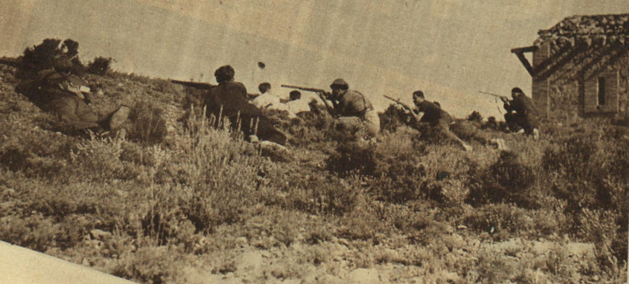
The optimism lasted only a few days, as near La Puebla de Valverde, part of the Guardia Civil contingent unexpectedly turned their weapons against the Republican militia. The betrayal shattered the expedition. Dozens of volunteers were killed, around fifty were captured, and many of the best-trained troops joined the Nationalist defenders of Teruel. What had begun as an offensive intended to seize the city instead ended in one of the Republic’s earliest disasters on the Teruel front. News of the defeat spread rapidly back to Valencia, fundamentally altering Republican plans.
Rather than waiting to organise another large expedition, anarchist organisations in Valencia hurriedly dispatched the first contingent of what would become the Iron Column. According to participants, the defeat at La Puebla convinced them that every day lost strengthened the Nationalist position around Teruel. The first detachment therefore left during the opening days of August, numbering only around 150 volunteers. Unlike the Casas Sala Column, this was not a large military convoy. The militia travelled by train as far as Barracas, using transport secured through sympathetic railway workers, before continuing towards Sarrión, in some cases on foot after transport became unavailable. Their immediate objective was to stabilise the front around Sarrión, secure the roads leading through Mora de Rubielos and La Puebla de Valverde, and prevent further Nationalist advances while reinforcements assembled behind them.
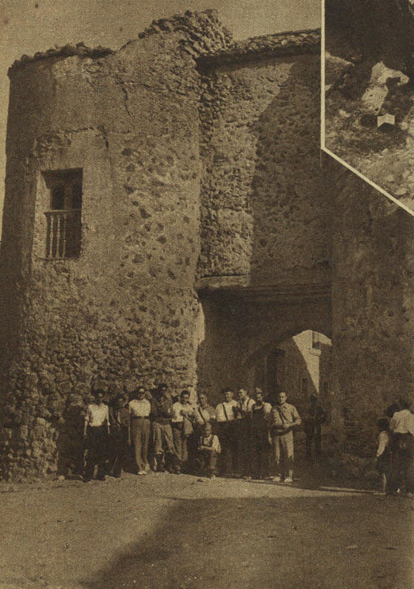
Those reinforcements arrived steadily throughout August. What had begun as an emergency detachment developed into one of the Republic’s largest militia formations. Professional soldiers, Carabineros, artillerymen and additional volunteers joined the original anarchist nucleus, allowing the Iron Column to advance towards Puerto Escandón and the southern approaches to Teruel. By the end of August it numbered around 2,200 people, including approximately 1,600 militia volunteers supported by 600 loyal regular soldiers.
While the Iron Column expanded around Sarrión, new Republican formations continued leaving Valencia for different sectors of the front. On 9 August, the first contingent of the Peyré–Uribes Column departed the city. Unlike the emergency force sent to Sarrión, this expedition consisted initially of around 200 Communist volunteers, reinforced two days later by another 300. Their destination lay further west. Travelling through Aras de Alpuente, they aimed to establish a new approach towards Teruel from the south-west, eventually linking with forces advancing by the Utiel route. Local authorities arranged accommodation, meals and supplies for the volunteers as they passed through Republican-controlled villages, while officers instructed the members to respect civilian homes and property. Rather than rushing headlong towards the front, the column advanced methodically, consolidating villages, protecting communications and preparing another axis of advance against Teruel.
The largest and best-equipped Valencian formation did not leave until the second half of August, the Torres-Benedito Column, who had spent the previous weeks assembling volunteers and loyal soldiers before concentrating around Castellón. By the time it departed on 18 August, it had grown into a force of approximately 3,180, including 842 professional soldiers and 2,335 militia volunteers drawn from the CNT, UGT, POUM, the Syndicalist Party and Esquerra Valenciana.
Its equipment reflected the increasing military organisation of the Republican war effort. The column possessed one artillery battery, sixteen machine guns, two 81-millimetre mortars, two 50-millimetre mortars and three armoured vehicles, making it considerably stronger than the improvised expeditions that had left only weeks earlier. Before departure, the volunteers carried out military exercises around Benicàssim, learning basic manoeuvres and weapon handling before entering combat.
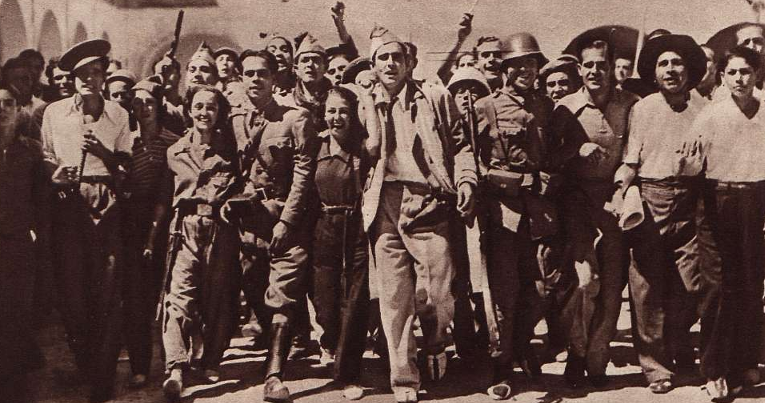
Its route also differed from those of the earlier columns. Instead of travelling directly towards Sarrión, the force advanced through Albocàsser, Vilafranca del Cid, Cantavieja, Fortanete, Villarroya de los Pinares, Allepuz, Monteagudo del Castillo, Cedrillas, and Corbalán. The objective was to approach Teruel from the east and north-east, joining with other Republican formations in a coordinated attempt to isolate the city. The threat became sufficiently serious that the Nationalists rushed additional infantry, machine guns and artillery into Teruel during the final week of August.
As the summer progressed, the nature of the Valencian expeditions changed, and those leaving in late August and September found themselves reinforcing an established front rather than creating one. Larger formations such as the Eixea–Uribes Column, which eventually numbered around 3,000 volunteers, were organised to strengthen Republican positions already won, while the Peire Column, formed during September, represented the growing transition from improvised militia expeditions towards more conventional military formations.
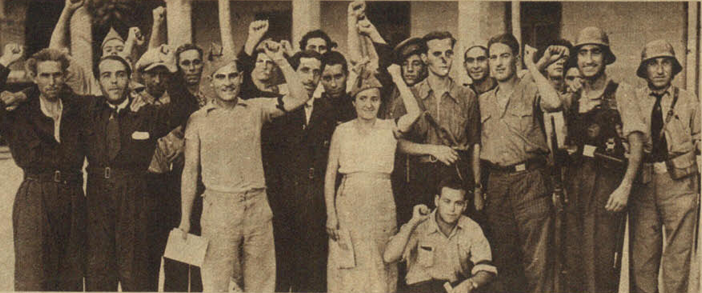
For the thousands of volunteers who left Valencia during the summer of 1936, joining a militia column meant each group developed its own character according to the political movement that had created it, yet all faced the same practical problems. They had to transform enthusiastic civilians into functioning military units while living in some of the most isolated country in eastern Spain. Most volunteers had never served in combat. They were construction workers, dock labourers, railway workers, metalworkers, printers, agricultural labourers from the Valencian huerta, clerks, students and unemployed workers. The Iron Column also included former prisoners released from San Miguel de los Reyes after the defeat of the military uprising. Later propaganda portrayed the formation as little more than a collection of criminals, but contemporary evidence shows that its core consisted overwhelmingly of organised CNT and FAI militants from Valencia’s working-class districts, with the released prisoners forming only one part of a much broader membership.
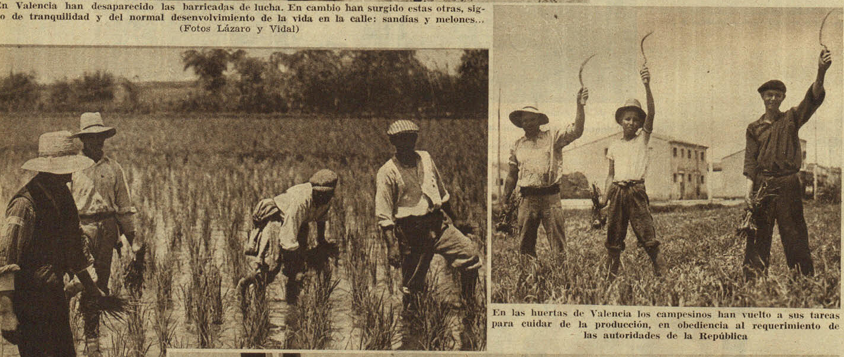
Accommodation rarely resembled military barracks. Schools, town halls, monasteries, warehouses and abandoned houses became temporary headquarters, while barns and farm buildings often sheltered newly arrived militia. Early members of the Iron Column later recalled sleeping on the floor of a dilapidated farmhouse outside Sarrión because nothing else was available. Even after the front stabilised, permanent accommodation remained uncommon. Volunteers frequently moved between villages as new positions were occupied or fresh reinforcements arrived.
Food depended as much upon organisation as supply. Every column established sections responsible for obtaining provisions from Valencia or from local revolutionary committees. Bread, beans, stews, preserved food, wine and coffee formed the basis of the militia diet whenever they could be obtained, although shortages became increasingly common as more men reached the front. Villages supporting the Republic often shared their own limited supplies with the columns passing through, creating close relationships between local communities and the Valencian volunteers.
The organisation of the columns varied considerably. The Iron Column deliberately rejected the traditional hierarchy of the Spanish Army. Authority rested with elected delegates rather than a permanent officer corps, and committees supervised transport, food, administration, medical care and military operations. The column even produced its own newspaper, Línea de Fuego, printed on mobile presses and distributed along the Teruel front. It published news from the front, political essays, literary pieces and debates over the future of the revolution, reflecting the belief that the militia was both an army and a revolutionary community.
Other formations developed very differently. The Torres-Benedito Column combined more than eight hundred professional soldiers with over two thousand militia volunteers, giving it a much more recognisable military structure. Training exercises were conducted before the column reached the front, while artillerymen, machine-gun crews and specialist troops operated alongside civilian volunteers. Communist-led formations likewise placed greater emphasis on discipline and centralised command.

Women formed part of this experience from the beginning. The photographs published in Valencian newspapers showing women learning to use rifles were not propaganda. Some women travelled with the columns themselves, serving as militiawomen, nurses, cooks, clerks and support staff. The best-known was María Pérez Lacruz, remembered as María la Jabalina,’ who served first as an armed militiawoman before becoming a nurse with the Iron Column. Contemporary reports identified women serving in front-line groups as well as in medical and logistical roles. Their presence remained controversial within some political organisations, but they were an established feature of several Valencian columns during the first months of the war.
Medical services expanded almost as rapidly as the columns themselves. The Iron Column established its own medical section under Dr Ramón Sanchis, creating emergency aid posts close behind the front and organising the evacuation of casualties by mule, ambulance and truck. Wounded volunteers passed through a chain of dressing stations before reaching hospitals at La Puebla de Valverde, Cedrillas or Viver. The Hospital of Viver, established in August 1936 on the road between Valencia and Teruel, contained 40 beds and treated 187 militia during its first months of operation. Most remained only a few days before returning to their units. Many volunteers were treated instead for respiratory illnesses, gastritis, skin diseases, accidents involving firearms or vehicles, and ordinary medical complaints. At the Sarrión hospital, over a third of the wounded admitted before October had been injured through vehicle accidents or the accidental handling of weapons rather than enemy fire.
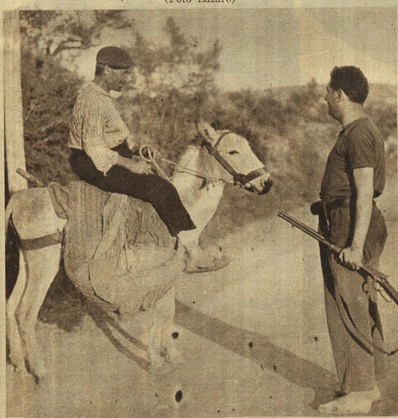
By September 1936, the principal Valencian columns had become distinct political cultures and strong internal identities, while the villages behind the Teruel front increasingly depended upon them for protection, labour and organisation. Many volunteers had expected to spend only a few weeks away from Valencia before returning home, yet found themselves helping to build an entirely new front and living within temporary communities that combined military necessity with revolutionary ambition. Their experience reflected both the extraordinary improvisation of the Republican war effort and the determination of thousands of Valencians who believed the defence of Aragón began in the streets of their own city.