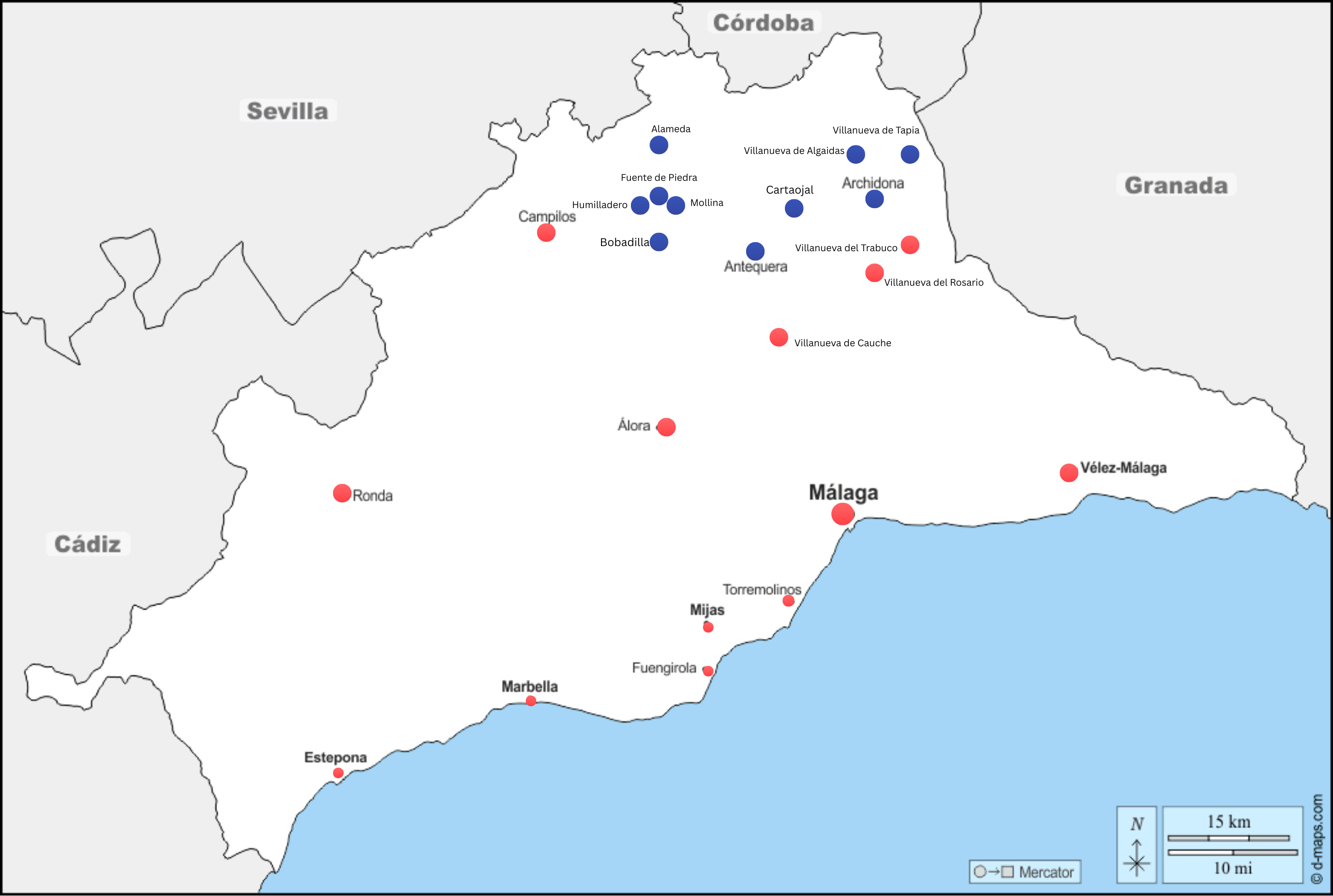
At the beginning of August 1936, the Republic still controlled the great majority of Málaga province in eastern Andalucia. The military rising had failed in Málaga city, but the significance of that failure extended from the Mediterranean coast to the agricultural plain around Antequera, the mountains of the Serranía de Ronda and the towns of the Axarquía, most of the province remained on the Republican side.
To the south lay the Mediterranean Sea, while on land the province bordered Cádiz to the west, Seville and Córdoba to the north, and Granada to the east. Each of those neighbouring provinces was experiencing the uprising at a different speed. Much of Cádiz and Seville had fallen rapidly to the Nationalists, Córdoba was divided between the two sides, and Granada city, roughly 90km northeast of Málaga, had been held by the rebels since July, though large areas of Granada province remained Republican and fighting continued around the isolated Nationalist capital while substantial parts of Granada province remained Republican in early August. Málaga, meanwhile, remained overwhelmingly Republican during July, with Nationalist forces only beginning to break into its northern districts in August. The result was an unusually complicated frontier as refugees crossed into Málaga from neighbouring Nationalist-held districts, Republican militia crossed provincial boundaries to fight, and stories of arrests, executions and reprisals travelled with people moving in both directions. For inhabitants of Málaga, therefore, the violence occurring in the neighbouring provinces was not distant news; in many cases the people describing it were arriving in their towns on foot, by cart or in commandeered vehicles.
Málaga was a substantial territory containing more than 600,000 people. The 1930 census recorded approximately 189,000 inhabitants in Málaga municipality and tens of thousands more in the larger provincial centres. Antequera had about 32,000 inhabitants, Ronda about 30,000, Vélez-Málaga around 24,000, and Marbella approximately 9,000. Estepona had about 10,500, while smaller towns containing several thousand people were scattered densely across the Guadalhorce valley, the Axarquía, the Antequera district and the Serranía. During the first days of August, hundreds of thousands of people were living inside a Republican-held province extending roughly 100 kilometres from east to west and more than 70kms inland at its deepest points.
Málaga province was squeezed between areas in which the military rebellion had succeeded and others where control remained contested. To the northwest lay Seville province, where General Gonzalo Queipo de Llano had established the principal Nationalist centre in southern Spain. Cádiz and much of the western approaches had passed into Nationalist repression. There were several separate areas in which Republican-held towns faced Nationalist advances from different directions.
Between Málaga city, Antequera and the western districts lay the Guadalhorce valley, containing towns Álora, Coín, Cártama and Alhaurín el Grande. This was one of the province’s most important agricultural and communications areas. Roads and the railway running through the valley connected the capital with the interior. During August and September, its importance would increase as the loss of territory further north and west pushed the effective front towards the mountains surrounding the valley. This meant that the war experienced by someone in Antequera was already very different from that experienced by someone in Vélez-Málaga or Nerja. In the north, people could see the Nationalist advance approaching. In the Serranía, towns were organising themselves while rebel-controlled territory expanded towards them from the west. Along the eastern coast, the immediate threat of occupation remained much more distant. In Málaga city, meanwhile, the principal concerns in August were political control, militia organisation, arrests, shortages and the consequences of the failed July rising rather than an enemy army immediately outside the city.
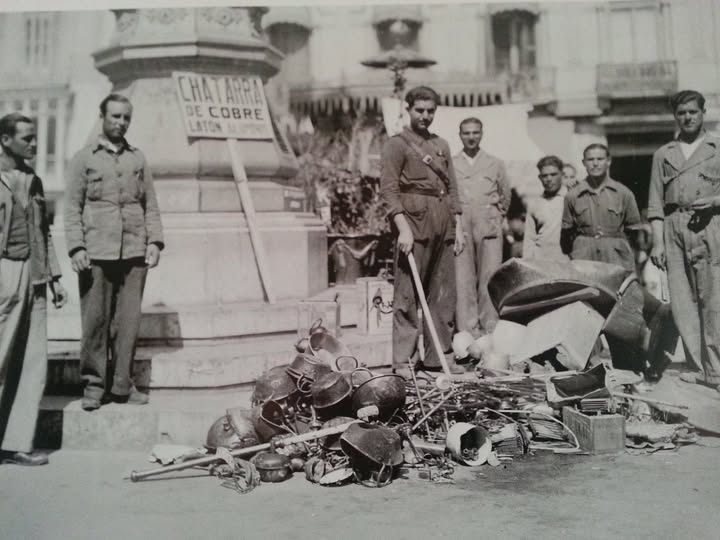
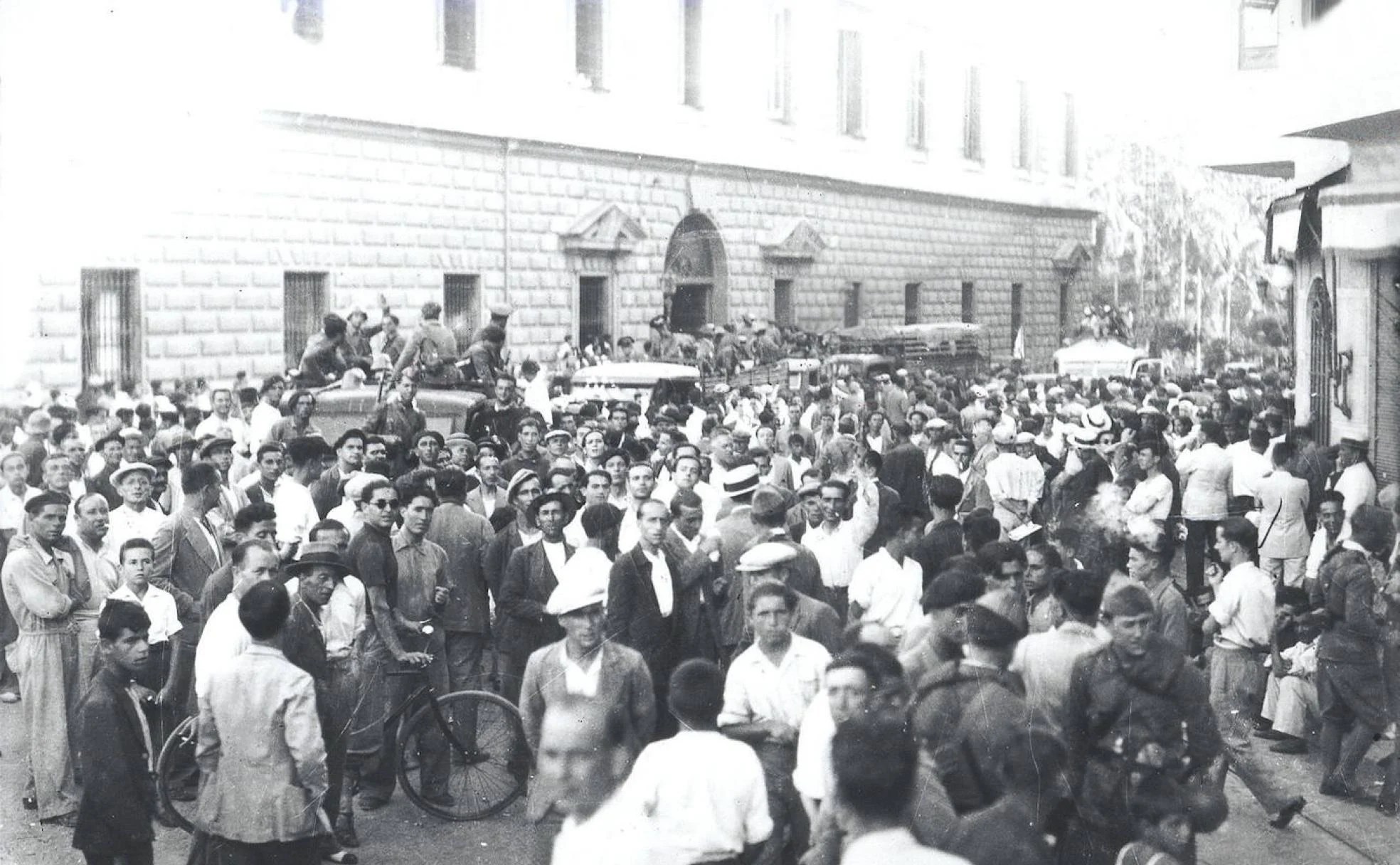
The collapse of the normal security system after 18 July had created local centres of power across the province. Municipal councils remained in existence in many places, but alongside them operated committees formed by the CNT, UGT, PSOE, Communist and Republican organisations. Local militia guarded roads, railway stations, municipal buildings and entrances to towns. Vehicles were requisitioned while weapons were collected and distributed. Suspected supporters of the military rebellion were arrested, while churches, estates and properties belonging to people associated with the right were seized in numerous communities. The armed forces available to defend the province were equally fragmented. Málaga contained loyal soldiers and members of the Guardia de Asalto, Guardia Civil and Carabineros, but much of the manpower outside the capital consisted of local militia. Thousands of men could potentially be mobilised across the province, but they did not constitute a field army. Some had military experience; many did not. Rifles and ammunition were unevenly distributed, artillery was scarce, and civilian cars, buses and requisitioned lorries provided much of the transport but little protection. Most importantly, those forces were spread across a very large area. Men were needed at Antequera, around the Granada approaches, in the Serranía, along roads and railways, and in dozens of towns where local committees were unwilling to surrender their weapons when their own community might be threatened. A report that Málaga possessed several thousand militia did not mean that several thousand armed men could be assembled at one place to stop an approaching Nationalist column.
The province also had difficult terrain on its side. Málaga is divided by mountain ranges which repeatedly interrupt movement between the interior and the coast. The road from Antequera to Málaga had to cross the mountains around Las Pedrizas. Routes from Ronda wound through the Serranía. Eastern communications passed through the Axarquía and along a narrow Mediterranean corridor. These mountains could protect Republican territory, but they also made reinforcement difficult. A force fighting in the northern district could not move rapidly across the province to assist another column near Ronda.
Málaga city remained the centre holding this increasingly complicated territory together. Its port, railway facilities, hospitals, warehouses and population made it the natural destination for supplies and reinforcements. Militia could be organised there and dispatched to threatened districts, wounded militia could be brought back to its hospitals, and political organisations headquartered in the capital attempted to coordinate activities beyond the municipal boundaries.
Nationalist advances elsewhere in Andalucía were also producing refugees. Republican officials, trade unionists, militia members and civilians, traveling alone or as families in groups, feared what would happen when their towns were occupied began moving into territory that remained under government control. During August and September this movement would become increasingly visible inside Málaga province. Every northern or western town lost to the Nationalists meant another group of displaced people moving towards the coast.
The loss of northern Málaga began with the arrival of a sizeable Nationalist military force, not with the spontaneous collapse of the towns around Antequera. General José Enrique Varela brought his army column east from the Nationalist-held area around Estepa and La Roda de Andalucía towards the Antequera plain. The surviving local reconstruction of the operation describes his force as being organised into around twenty military companies of thousands of men. Regular soldiers formed its core, accompanied by the better-trained troops available to the Army of the South and by forces used to secure towns once the column had passed.
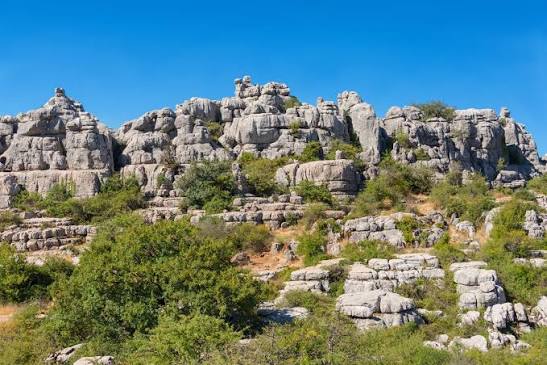
They were entering one of the most heavily populated inland districts of Málaga province. Antequera itself contained roughly 32,000 people, while Mollina, Humilladero and Fuente de Piedra were substantial agricultural communities of several thousand inhabitants each. Bobadilla and Cartaojal added further settlements and rural population of well over 40,000 inhabitants. Most were agricultural workers and their families living across the broad, comparatively open Antequera plains with fields of cereals, olives and vines broken by low hills, farmhouses and compact whitewashed towns. To the south, the landscape changed dramatically, rising into the limestone mass of El Torcal and the mountains around Las Pedrizas. Those mountains would eventually provide the Republicans with somewhere to stop. On the plain, they had far fewer natural obstacles.
The Republicans did not possess an equivalent field army waiting for Varela. Defence remained dispersed between local militia, soldiers and members of the Republican security forces. Men who had taken up arms after the July rising guarded their own towns and roads, while Assault Guards, Carabineros and other government personnel were distributed through the district. Varela could bring a force numbering in the thousands against individual positions defended by only a small fraction of the Republican manpower theoretically available across northern Málaga. The difference became apparent as the column crossed onto the Antequera plain. Fuente de Piedra and Humilladero were occupied with little effective resistance. In Humilladero, the arrival of the troops on 12 August was followed by what the official grave record describes as strong repression, though the killings of the first days are insufficiently documented to provide a responsible immediate death toll. At least some inhabitants escaped before the troops arrived; others remained and faced arrests and subsequent executions. The cemetery later contained victims of the repression, but most of the currently identified burials belong to later months and cannot simply be counted as people killed during the capture.
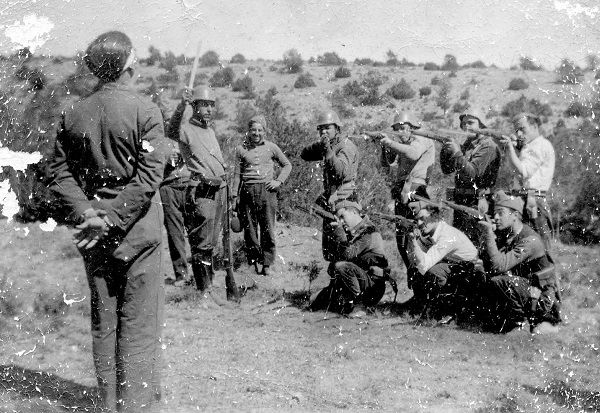
At Mollina, the advance finally encountered an organised attempt to stop it. Contemporary Nationalist accounts put the force confronting Varela at approximately 150 men, including Assault Guards, Carabineros, soldiers and militia, reportedly supported by a cannon and machine guns, a defence easily overwhelmed. Some Republicans fought; others withdrew once it became obvious that the position could not be held. Survivors began moving south and east, joining civilians already leaving the district for Republican territory.
But the end of the fighting at Mollina did not mean the end of the killing. The local historical-memory investigation has identified more than 80 people who died through Nationalist violence in Mollina between August 1936 and March 1938, and states that the majority were killed on the morning of 12 August itself. The research describes troops continuing to fire into the civilian population after organised resistance had collapsed, particularly in the poorer neighbourhoods. People who had never constituted a military obstacle were therefore being killed while Varela’s forces were establishing control of the town. At midday on 12 August, with bodies already lying in the town, Varela personally presided over a meeting in Mollina’s town hall and appointed a new municipal management committee in Queipo de Llano’s name. Political authority changed almost immediately behind the advancing soldiers. Arrests, persecution and killings continued after the troops moved on.
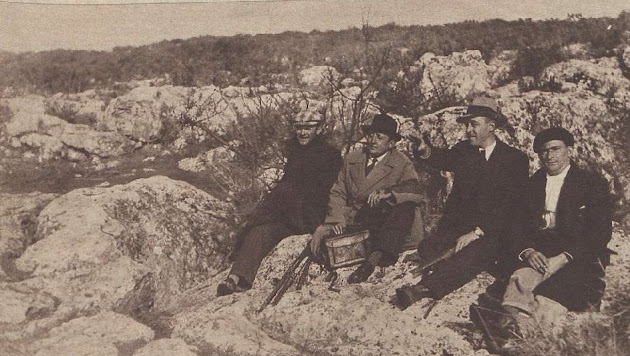
For families elsewhere on the Antequera plain, Mollina demonstrated what remaining behind could mean. People arrived on foot, on animals, in carts and in whatever motor vehicles could be obtained as they spread the news. Militia retreating from the western villages passed through communities further east. The distance from Mollina to Antequera was only about 15km so news could cover it in several hours. By the time Varela approached Antequera, the road was carrying movement in both directions with soldiers, vehicles and weapons advancing eastwards and Republican militia and frightened civilians moving away.
The flight was large enough to leave a permanent mark on accounts of the occupation. The Junta de Andalucía records that many inhabitants of Antequera and the northern district had already begun fleeing before the occupation, with most ultimately moving towards Málaga city. Others did not travel that far. Families stopped in still-Republican communities south of Antequera, particularly Valle de Abdalajís, Villanueva de la Concepción and Villanueva de Cauche. For many, this was a journey of 40–50km or more if they continued all the way to Málaga. Those with access to a truck, car or bus could travel relatively quickly, although vehicles were scarce and increasingly requisitioned for military purposes. Others used carts, mules or donkeys. Many simply walked. A family leaving Antequera for Málaga had to move south from the open plain and climb towards the mountain barrier around El Torcal and Las Pedrizas, carrying food, clothing, bedding and children with them. They did not know whether they were leaving for several days or permanently.
Not everybody fled; leaving meant abandoning houses, livestock, crops, shops and possessions accumulated over a lifetime. Elderly people could find the journey impossible. Some inhabitants believed they had done nothing that would make them targets. Others had relatives or acquaintances among local conservatives and hoped those connections would protect them. For Republican officials, union organisers, militia members and prominent left-wing activists, the calculation was different. The killings accompanying the Nationalist advance elsewhere in Andalucía had already demonstrated the danger of capture.
Ahead lay Antequera, a town of roughly 32,000 people and the political, commercial and transport centre of the district. Its Republican defenders were more numerous than those at Mollina, but the evidence does not support describing them as a conventional 2,000-man army. Nationalist intelligence reported as many as 2,000 armed civilians in and around Antequera, but that estimate included men with shotguns and pistols as well as organised militia. More useful are the reports of actual defensive positions: around the San Luis approaches, the Republicans were believed to have approximately 100 rifles and several machine guns, supplemented by civilians carrying whatever firearms were available. Their position was further weakened by uncertainty over the Guardia Civil. Approximately 50 guards were reportedly concentrated in the barracks on the La Roda road, but Nationalist intelligence expected them to join Varela rather than resist him. Counting them as part of a Republican defending force would therefore exaggerate the strength actually available to stop the attack.
Varela was approaching with the opposite advantage – an organised military column, numerical superiority, experienced officers and the ability to manoeuvre rather than simply drive directly into a barricaded town. During the afternoon of 12 August, his forces reached Antequera. The Republicans attempted to hold the approaches, but they faced the danger of being trapped against the mountains if Varela cut the roads south. Nationalist troops manoeuvred around the defensive positions and reached the outskirts, roads and railway installations. By approximately 5:30–6:00pm, organised Republican resistance was collapsing and the retreat then became part military withdrawal, part civilian exodus, so said Nationalist evening radio propaganda.
Armed men who could escape moved towards El Torcal and the roads into the mountains and political activists and officials went with them. Families who had delayed leaving now joined the movement south. Some travelled only as far as Villanueva de la Concepción or Villanueva de Cauche. Others continued towards Málaga. Behind them, Varela entered Antequera and established his headquarters there. In roughly a day, a force numbering in the thousands had crossed an agricultural district containing tens of thousands of civilians, overwhelmed scattered Republican resistance, killed civilians during and after the occupation of Mollina, driven militia and families south towards the mountains and taken the principal town of northern Málaga. The advance stopped short of Málaga because the people retreating from Antequera finally reached terrain where another defence could be organised, beyond the open plain sat mountainous El Torcal and Las Pedrizas. There, around Villanueva de la Concepción and the tiny settlement of Villanueva de Cauche, Republican militia began gathering again while refugee families crowded into the villages behind them.
Republican forces remained in the southern part of the Antequera district. Valle de Abdalajís, Villanueva de la Concepción and Villanueva de Cauche remained on the Republican side, and positions were established around the approaches to the Puerto de Las Pedrizas. At Villanueva de Cauche, the former Republican mayor of Antequera, Socialist Antonio García Prieto, established the base of the 5th Militia Battalion, which carried his name. The dividing line between Nationalist Antequera and the Republican territory leading south towards Málaga was more than 40km of increasingly mountainous country.
The Republican force established after the retreat from Antequera reorganised the Republican rear. The most identifiable formation was the 5th Militia Battalion, commanded by Antonio García Prieto, the Socialist mayor who had fled Antequera. Its headquarters was established at Villanueva de Cauche, a tiny settlement. The presence of an organised battalion headquarters in such a small place gives a better indication of what had happened to the area, as a rural community that normally contained fewer people than a large city street had suddenly become part of an armed front. At the same time, almost 100 refugee families reaching Villanueva de Cauche from Málaga, Córdoba and Seville provinces. This was an extraordinary addition of over 1,000 people to a settlement whose normal population was itself fewer than 100 people. The refugees were fed partly through rationing organised by García Prieto’s militia and partly by the inhabitants of the village. Some had already fled more than once as Nationalist territory expanded across Andalucía. The Las Pedrizas position explains why the fall of Antequera did not immediately become the fall of Málaga. Varela could occupy the northern plain, use Antequera as his headquarters and send columns east and west without attempting the much more difficult task of forcing the mountain road directly towards the coast.
East of Antequera, the fighting was connected increasingly with the larger struggle around Granada. Granada city had remained in Nationalist hands since July, but its position had initially been precarious. Republican territory surrounded much of the city and separated it from the larger Nationalist zone in western Andalucía. The capture of Antequera and the subsequent expansion eastwards served two purposes, to reduce Republican Málaga and help open communications towards Granada. Archidona, about 20km northeast of Antequera, was one of the first important towns affected. It had a population of roughly 9,000 and occupied the road towards Loja and Granada. Its loss removed another substantial Republican centre from northern Málaga and pushed the effective front further towards the eastern and southeastern mountains.
South and southeast of these positions, Republican territory remained extensive thought mountain roads through Colmenar, Riogordo, Alfarnate and Alfarnatejo connected the interior with the Axarquía and Málaga. Republican militia continued to operate through this country, guarding routes that could potentially be used either for an advance towards Málaga or for movement between the Málaga and Granada fronts. By 18 August, the wider strategic position had nevertheless deteriorated sharply. Nationalist operations had succeeded in establishing communications with Granada, ending the city’s effective isolation. For Málaga province, this meant that the northern threat could no longer be considered simply Varela’s column operating from the direction of Seville. Nationalist-held territory was becoming connected across the Andalusian interior. Málaga was increasingly surrounded on its landward side, while its dependable connection with the rest of Republican Spain ran eastwards towards Almería.
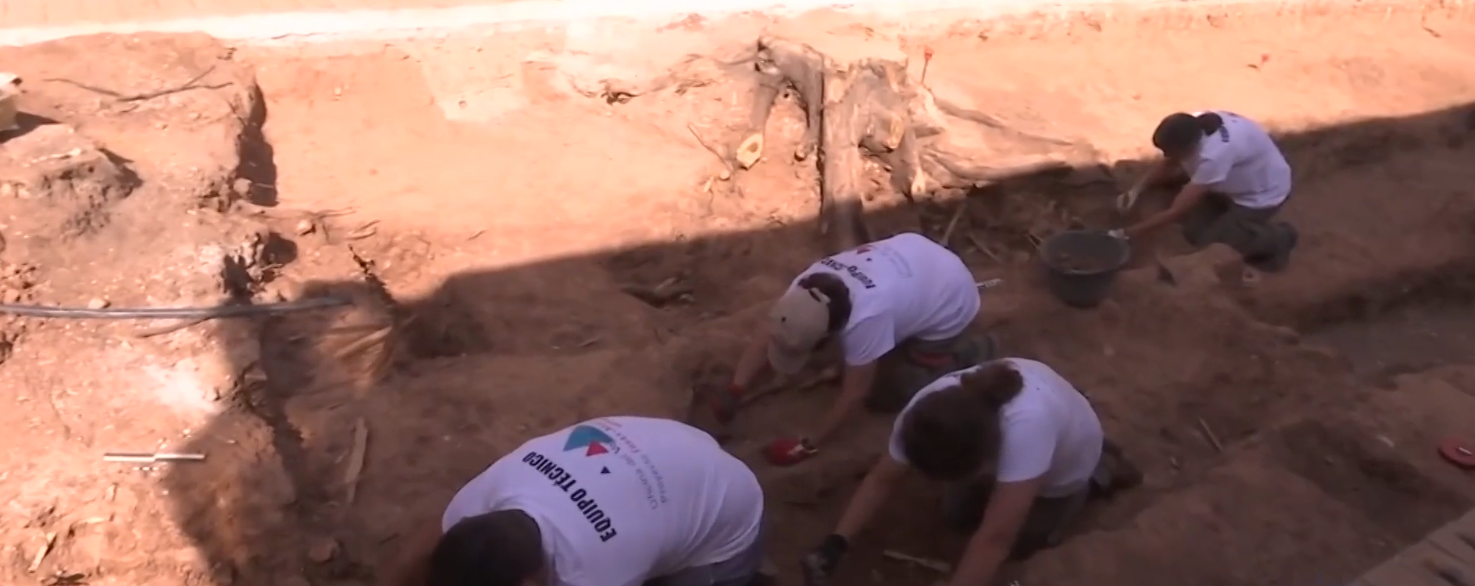
The situation west of Antequera was very different. Here a large block of Republican territory remained intact throughout August. Campillos, Teba, Almargen, Cañete la Real and Ronda were still Republican, as were numerous smaller communities in the Serranía. Ronda alone contained around 30,000 inhabitants. Campillos had several thousand more, while the surrounding agricultural towns and villages brought the population of the Republican western interior into the tens of thousands. Local committees and militia controlled the towns, while armed groups guarded roads and approaches from Nationalist-held Seville and Cádiz provinces. Ronda functioned as the largest political and population centre in the western interior. Campillos, meanwhile, sat on the road and railway communications between Antequera and the Ronda district. The railway was particularly important, as the line linking Algeciras, Ronda, Bobadilla and Granada crossed territory still divided between the two sides. Control of the entire route would allow the Nationalists to connect Cádiz and the Campo de Gibraltar with the interior by rail. As long as Campillos, Teba and Ronda remained Republican, that connection remained interrupted. The September offensive against the western Málaga towns would be organised partly around securing it. Campillos is good example of the type of violenc ein the region; 21 Nationalist victoms of repression, all buried, then exhumed in 1971, all identified, and moved to be buried outside Madrid with Franco, against the the mass graves holding approximately 150 Republicans, all unknown and as of 2025, only 73 exhumed. One in five Republican murdered were women, including mothers of young children, found alongside bullet fragments, spoons, scissors, and earrings after being taken away and never seen or heard from again.
Ronda itself did not spend July and August simply waiting for the Nationalist advance to reach the town. With roughly 30,000 inhabitants and a much larger population scattered through the surrounding Serranía, it became the principal Republican centre in the western interior of Málaga province. Almost immediately after the failure of the military rising, armed militia from Ronda and the neighbouring mountain communities began moving outward into the Sierra de Cádiz. Their purpose was straightforward: if the towns and roads beyond Ronda could remain Republican, the Nationalists would have much greater difficulty reaching the city itself.
Ronda sits within a mountainous district cut by steep valleys, ridges and narrow roads. To the west and northwest, the routes towards Cádiz and Seville passed through or close to communities including Montejaque, Benaoján, Setenil de las Bodegas, Alcalá del Valle, Olvera, Grazalema and El Gastor. Control of these places mattered far more than their population might suggest. A hostile force occupying the towns and roads through the Sierra could gradually work its way towards Ronda; Republican control created a protective belt around it.
One of the most important figures in this effort was Pedro López Calle, the CNT mayor of the small mountain town of Montejaque. A militia column formed around him from armed workers and other Republican volunteers from the district. It became known as the Pedro López Column. Rather than remaining permanently inside Ronda, López and his men operated through the surrounding mountains, sometimes crossing the provincial boundary into Cádiz. Their objective was both defensive and offensive: protect the Republican Serranía, reinforce threatened communities and, where possible, retake nearby towns that had fallen to the rebels. On 24 July, the column participated in the Republican capture of Grazalema, roughly 35kms west of Ronda through difficult mountain country. Three days later, on 27 July, Republican forces attempted to take Olvera, northwest of Ronda. This attack failed. The column also operated around Alcalá del Valle, Setenil de las Bodegas and El Gastor, communities lying across the approaches between Nationalist territory and the Ronda district. The struggle consisted of columns moving along mountain roads, local militia defending their own towns and control of individual communities changing as one side managed to concentrate enough armed men to take them.
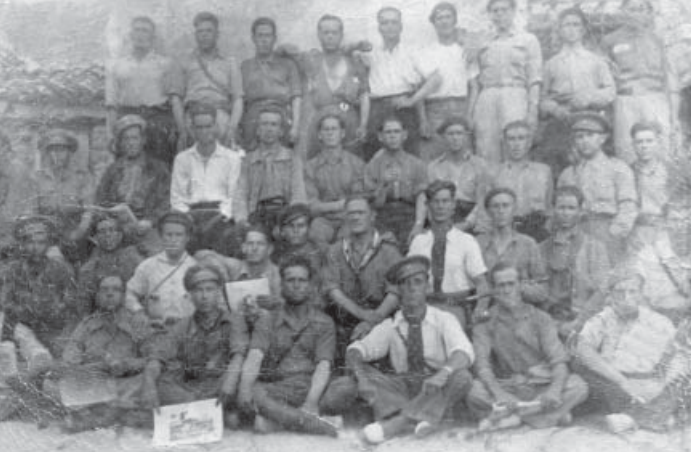
These operations continued through August and on 29 August, the Pedro López Column participated in the Republican recovery of Benaocaz, deep in the Sierra de Cádiz. More than six weeks after the coup, armed Republicans from the Ronda district were therefore still capable of mounting operations outside Málaga province rather than merely retreating towards their own town. Anarchists and other workers who had armed themselves after the rising, alongside men with previous military experience and members of the security forces operating in the Republican zone. Roads were poor, weapons were limited and the Republican district itself still had to be guarded, and their numbers rose and fell as new members joined in various locations. They could retake individual towns and make Nationalist movement through the mountains more difficult, but they could not eliminate the much larger threat developing around them. Nationalist forces were steadily consolidating Cádiz and Seville provinces, while Varela’s capture of Antequera in August created an entirely new danger east of Ronda. The Republican district that had originally faced principally westwards towards the Sierra de Cádiz was gradually becoming threatened from several directions.
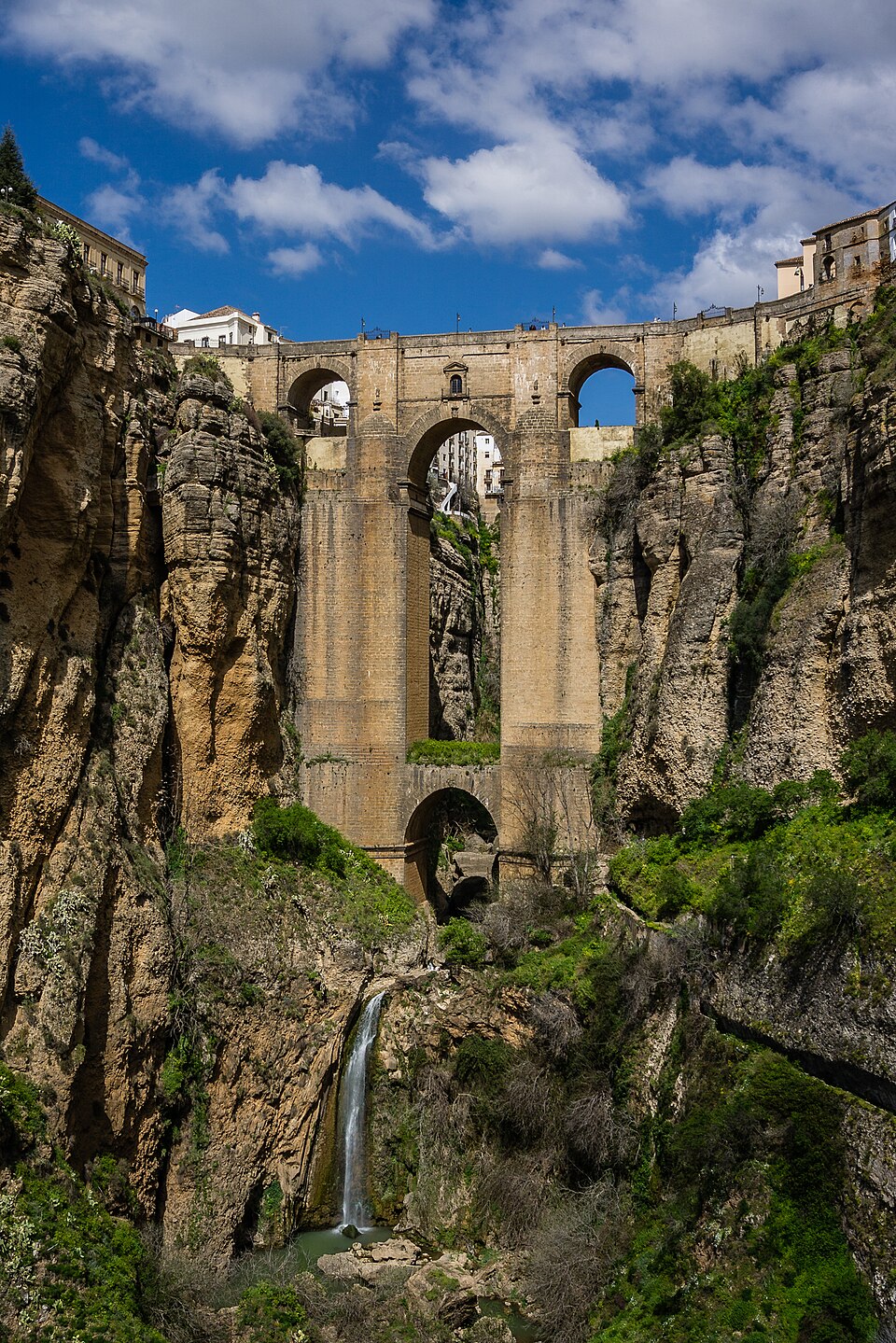
Ronda and its militia were also fighting propaganda. During the weeks after the failure of the military rising, people identified with the political right were arrested and killed in Ronda and the surrounding district. Falangists, conservative politicians, landowners, Catholics and clergy were among those targeted. Some prisoners were killed, and there is evidence that individual victims were left in the Tajo, the enormous gorge running through the centre of Ronda. What did not occur, according to the surviving evidence, was the enormous, organised massacre subsequently described by Nationalist propaganda. On 18 August 1936, almost a month before Nationalist troops entered the town, General Gonzalo Queipo de Llano used his Seville radio broadcasts to claim that 400 ‘respectable people’ had already been murdered in Ronda. His audience had no practical means of checking the figure. Ronda remained behind Republican lines, communications were disrupted and the war had produced an enormous market for stories of atrocities committed in enemy territory. After Nationalist forces captured Ronda on 16 September, Queipo returned to the subject. In his broadcast of 19 September, he claimed that the Republicans had murdered 700 people in the town. Other Nationalist accounts settled on figures of more than 600 victims. The most famous version of the story claimed that approximately 500 people had been thrown into the Tajo. According to this account, Republican militants assembled prisoners from Ronda’s right, forced them through lines of hostile townspeople and threw or drove them over the edge of the gorge. The spectacle supposedly accounted for hundreds of victims.
The story eventually became internationally famous, but none of it was real. Ernest Hemingway was not in Ronda when the killings occurred, but when For Whom the Bell Tolls was published in 1940, he created a fictional massacre in which the right-wing inhabitants of a Spanish town are forced to run between two lines of townspeople before being beaten and thrown from a cliff. Ronda clearly contributed to the setting and to stories Hemingway had heard. Historian Antonio Nadal later reconstructed that there had been 134 victims of Republican repression in Ronda. The Franco regime’s own post-war Causa General, despite having every political incentive to document Republican atrocities, recorded 166 deaths associated with Ronda. More recent research by historian Pablo Benítez Gómez has produced a somewhat higher figure of approximately 203 victims, depending upon the geographical and chronological boundaries used.
The inflated figure served an immediate political purpose. Nationalist forces were approaching Ronda, and reports of hundreds of murdered conservatives presented the coming offensive as the liberation of a town from revolutionary terror. Once Ronda had been occupied, the same stories could be used to explain and legitimise the repression directed against Republicans. The Tajo gave the story extraordinary power, because few Spanish towns possessed a geographical feature so easily transformed into an atrocity narrative. A killing beside an ordinary cemetery wall was difficult to turn into an internationally recognisable story; hundreds of people supposedly hurled into one of Spain’s most dramatic gorges was unforgettable and that image survived long after the numbers had failed to withstand investigation. The deliberate lies are not that different to 21st century news stories that exist without evidence, and people only believing what they like.
Immediately south of developing fronts lay the Guadalhorce valley, where Álora, Pizarra, Cártama, Coín and Alhaurín el Grande remained Republican. These were not front-line villages in August, but their importance increased enormously after the loss of Antequera. Together they formed a populated agricultural belt between the northern mountains and Málaga city. Álora was particularly significant because of its position beside the railway and the Guadalhorce. The railway from Málaga divided further north around Bobadilla, linking the coast with Córdoba, Seville and Granada. The Nationalist occupation of the northern junctions had already broken much of that network. Republican control of Álora and the lower valley preserved the southern section and allowed movement between the capital and positions further inland. The valley also became part of the rear area supporting the new front. Men, food and vehicles could move north from Málaga towards the mountain positions, while wounded militia and refugees travelled in the opposite direction. Álora had roughly 10,000 inhabitants; Coín around 12,000; Alhaurín el Grande around 9,000. The Nationalists had not reached these communities, so these people were continuing ordinary agricultural and commercial life only a few dozen kilometres behind a front that had not existed there three weeks earlier.
Further east, the war remained more distant. Vélez-Málaga, with approximately 24,000 inhabitants, was the second great Republican population centre on the coast after Málaga itself. Around it were the densely settled communities of the Axarquía, while Torrox and Nerja continued the Republican-held coastal strip towards Granada province and Almería, and this eastern corridor was becoming the most important geographical fact in Republican Málaga. The road from Málaga through Vélez-Málaga and Nerja continued east towards Motril and Almería. Even as Nationalist territory expanded around the northern side of the province, the Republic could still move people and material along the Mediterranean coast. Málaga was not yet completely encircled, but the connection was narrow. Mountains rose immediately inland from much of the coast, and Nationalist control further north meant that Republican Málaga increasingly resembled a long coastal territory whose secure exit ran in only one direction.
The Mediterranean coast west of Málaga also remained largely Republican. Marbella and Estepona, together with smaller coastal settlements between them, had not been occupied by Nationalist ground forces. Inland from the coast, the Serranía separated these towns from Ronda and created another collection of mountain roads and passes that had to be defended independently. This produced a peculiar situation by the second half of August. The Republic still controlled a broad sweep of the Málaga coastline, from the western districts through Málaga and eastwards into the Axarquía. It also controlled the Guadalhorce valley, Ronda and much of the Serranía. Yet Nationalist territory had penetrated deeply into the northern part of the province around Antequera and was now connected with the larger rebel zone beyond it. Republican manpower remained divided among local militia, security forces and the newly organised formations being assembled around threatened sectors. Some men were holding Las Pedrizas whole others guarded roads towards Granada. Others remained in Ronda, Campillos or their own villages. Still others were in Málaga city or had been sent outside the province. The result was a defensive system with considerable manpower in total but relatively few men concentrated at any one threatened point.
Many of the mass graves sites through Malaga are from 1937 and through into the post-war period, when remaining Republicans were hunted in the mountains. One thing that stands out is the number of murdered journalists in the upper half of of the province, which explains the shaky photographic evidence of the period. Most surviving images are of the 1937 massacre, which will be covered in February 2027.

