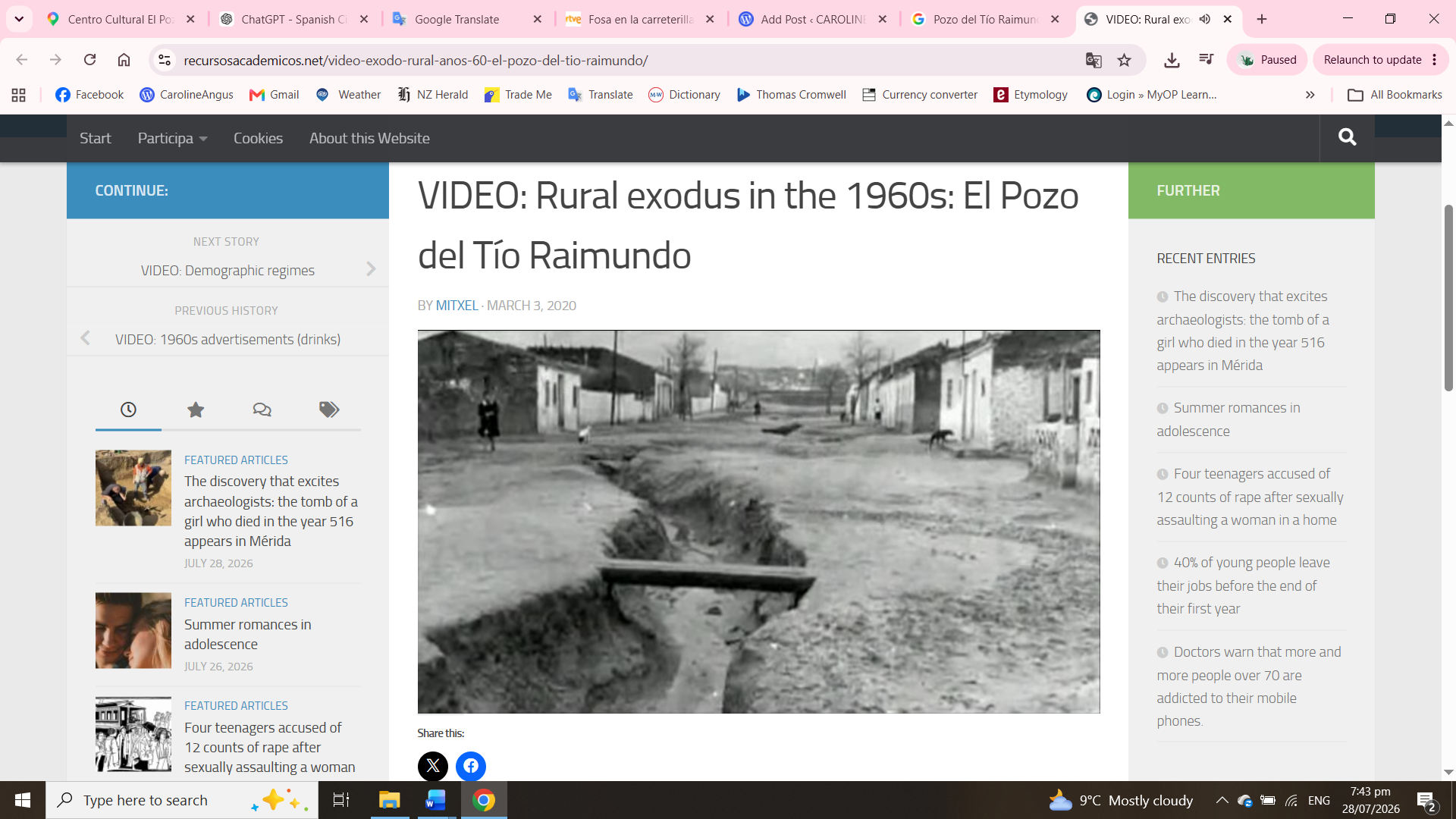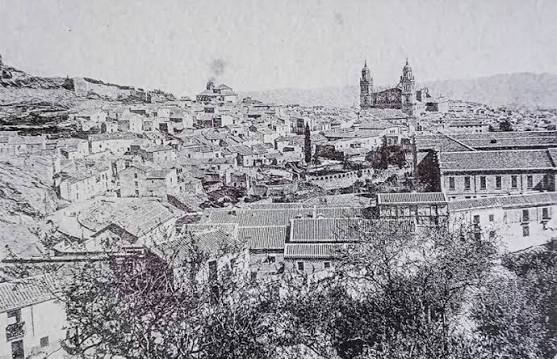
The Nationalist military uprising was a complete failure in the Andalucían province of Jaén in 1936, and Republican authorities retained control of the capital, the Guardia Civil and Assault Guards, and quelled uprisings in military barracks. In the weeks that followed, local authorities and revolutionary committees arrested people whom they suspected of supporting the rebellion or belonging to political, religious, landowning, and professional groups associated with the right, meaning the fighting and death toll in the province was a stark contrast to the murder happening in many places around the country.
Republican authorities confined suspected Nationalist-supporting prisoners in the Provincial Prison of Jaén and in Jaén Cathedral, which they converted into an improvised detention centre. The detainees included conservative politicians, clergy, landowners, professionals, Falangists, and other people whom local committees regarded as politically dangerous. Prisoners later placed aboard the two transports came from Jaén city and from towns including Cazorla, Peal de Becerro, Villacarrillo, Beas de Segura, and Vilches, and some prisoners from Adamuz, 100km away in Córdoba province, where Republican forces were struggling to stem the tide of invading armies. There had already been a prison massacre in Ubeda, where 50 men were killed, and Jaén needed a solution to his prison population.
On 2 August, armed militiamen had arrested the bishop of Jaén, Manuel Basulto Jiménez, at the episcopal palace. They also detained his sister, Teresa Basulto Jiménez, her husband, Mariano Martín, and Félix Pérez Portela, dean and vicar-general of Jaén Cathedral. The authorities confined them in the cathedral with other political and religious prisoners, as but early August, the Provincial Prison and the cathedral had become overcrowded. Armed groups and hostile crowds also threatened the prisoners. Provincial authorities had little option but to seek out a way to remove the detainees from Jaén because they believed that continued detention in the city placed them in immediate danger. Other regions under Nationalist command were shotting their prisoners almost as quickly as they could be rounded up and had no overcrowing issues, but in Republican regions, authorities still following rule of law and quickly becoming overwhelmed.
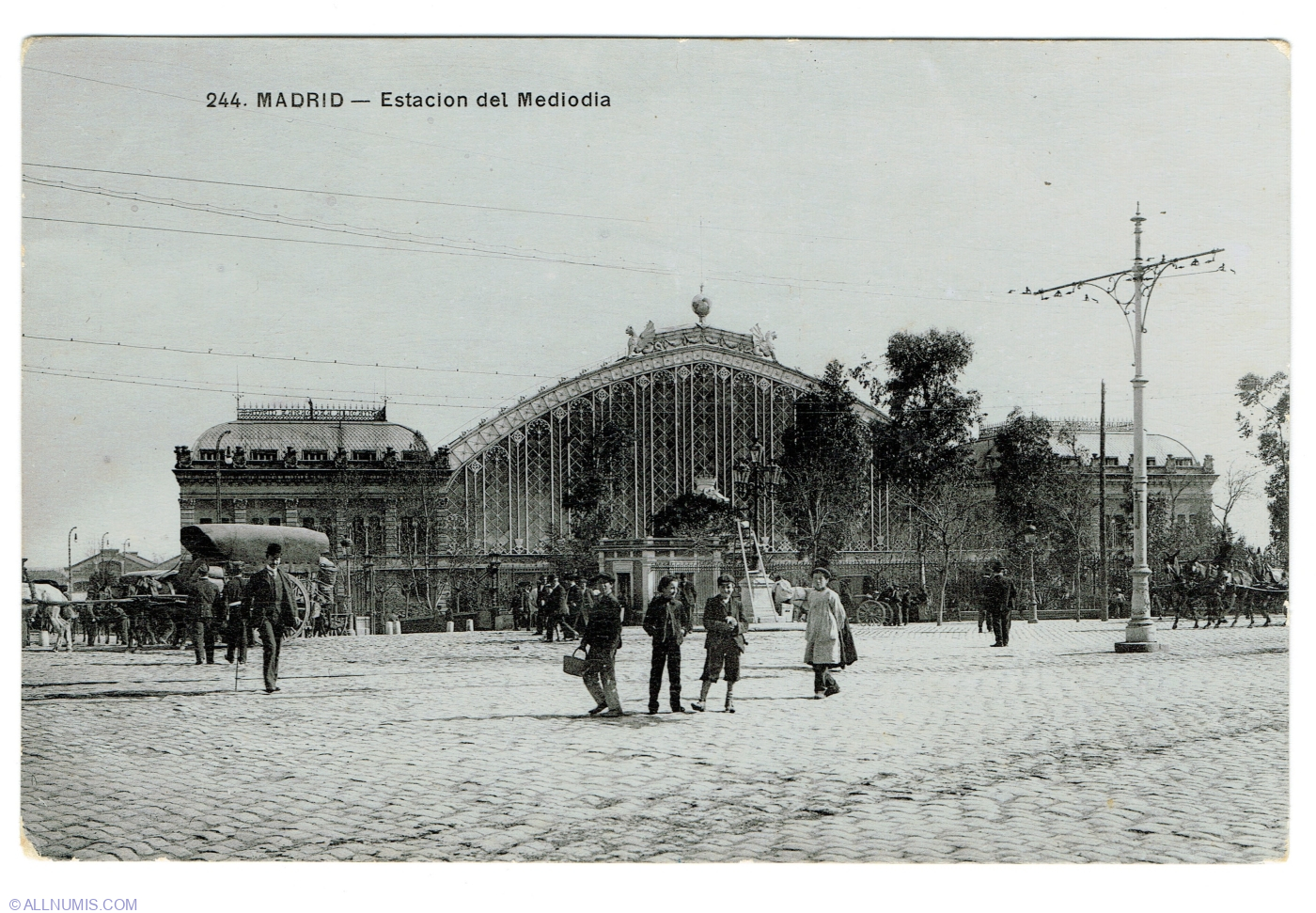
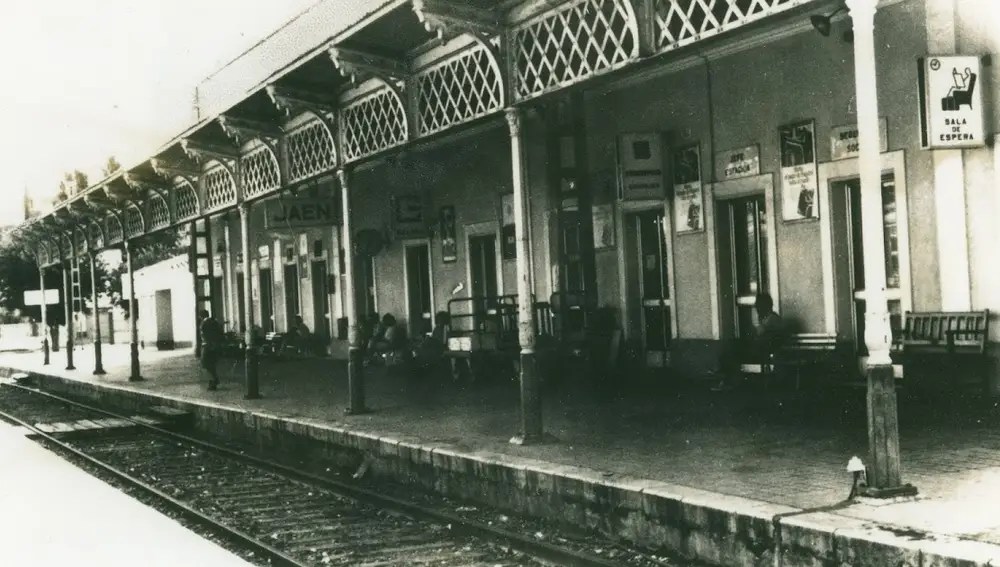
Civil governor Luis Ríos Zuñón requested permission to transfer several hundred prisoners to state custody outside the province. Pedro Villar Gómez, director-general of prisons, authorised their removal to the prison complex 380km north at Alcalá de Henares, east of Madrid. The surviving reconstruction places the number covered by the transfer order at approximately 568, so authorities planned two separate expeditions. They first had to move the prisoners approximately 35km north from Jaén to Espeluy railway station, because the trains did not depart directly from the provincial capital. Trucks would collect prisoners from the Provincial Prison and Jaén Cathedral and carry them to Espeluy, where railway personnel placed them aboard trains bound for Alcalá de Henares.
Before dawn on 11 August 1936, prison authorities began removing the first group of prisoners from the Provincial Prison of Jaén and the improvised detention centre in Jaén Cathedral. Approximately 324 were to be moved in the first train, almost exclusively male prisoners, including conservative politicians, Falangists, landowners, professionals, and other civilians whom the Republican authorities had detained as suspected supporters of the military uprising. The convoy travelled under the protection of approximately 40-50 armed security personnel who stayed with them for the trip towards Madrid. But as the train travelled north, crowds gathered at several stations along the route. Prisoners recalled being insulted and threatened, while some accounts describe stones and other objects being thrown at the train and around 70 prisoners required medical attention before the journey ended.
The train reached Atocha in Madrid during the afternoon of 11 August. After it had stopped in the station, Basilio Villalba Corrales, a railway factor and commander of the station’s socialist militia, intervened and stopped the train before it could continue towards Alcalá de Henares, and ordered armed militiamen to remove a group of prisoners. The crowd initially selected some prisoners at random before recognising several prominent political figures and changing their selection and removed eleven prisoners from the train and Villalba had them shot near the station. The eleven known victims were José Cos Serrano, president of the Federación Provincial de Labradores de Jaén (right-wing agricultural employers’ organisation) and former deputy of the Agarian Party, and León Álvarez Lara, deputy of the Agarian Party. Alongside them was Carmelo Torres Romero, a local Falange leader in Jaén, joined by associates Fernando López Obregón, Vicente de la Riva Galán, José María Marín Acuña, Luis Ventura Balañá, Juan Antonio Torres Romero, Ramón Contreras Graciani, Martín Peinado Burgos, and Luis Funes Morales. The other 313 prisoners continued the journey to Alcalá de Henares but showed the railway service was no longer able to control their services even in Republican-held areas.
The first train had already reached Alcalá de Henares when preparations began for the second transfer. During the night of 11August, prison officials removed the remaining 245 prisoners from the Provincial Prison of Jaén and Jaén Cathedral and transported them by lorry to Espeluy railway station, leaving Jaén just before midnight. This convoy included many of the most prominent prisoners still held in Jaén. Among them were Bishop Manuel Basulto Jiménez, bishop of Jaén since 1919; his sister, Teresa Basulto Jiménez; her husband, Mariano Martín; and Félix Pérez Portela, dean and vicar-general of Jaén Cathedral. Teresa Basulto was the only woman known to have travelled on the train. The remaining prisoners represented a broad cross-section of those detained after the failure of the military uprising in Jaén province. They included clergy, conservative politicians, landowners, lawyers, doctors, businessmen, Falangists, members of right-wing political organisations, and civilians accused of sympathising with the rebellion. Others came from provincial towns where Republican authorities had arrested local conservatives during the first weeks of the war. Prisoners on the train came from Jaén city, Adamuz, Cazorla, Peal de Becerro, Villacarrillo, Beas de Segura, Vilches, and several other towns.
The convoy travelled under the protection of approximately fifty Guardia Civil personnel commanded by Captain Manuel Hermigo Montero. Later in the journey, around another fifty Assault Guards would join the escort through Madrid. The train left Espeluy and travelled north along the Madrid–Zaragoza–Alicante railway network and again crowds gathered at a number of stations as the convoy passed as news of the convoy spread ahead of its arrival into Madrid. A rumour later accused Socialist deputy Alejandro Peris Caruana of broadcasting the train’s departure and route by radio, allowing armed organisations in Madrid to prepare an interception, though it appears to be a lie made up after the event. Railway workers might have been able to pass messages about the train’s journey, again without proof, by either way, armed groups had assembled in the Vallecas railway district before the convoy arrived.
By the morning of 12 August, militia organisations and local revolutionary committees in the Vallecas area at Santa Catalina station, 5km outside of central Madrid, and 45km from Alcalá de Henares prison, had received enough warning to organise an interception. Statements later given by railway employees of the MZA Fifth Track and Works Brigade indicate that armed men reached the railway installations several hours before the train. Brigade chief Julián Sevilla Sáez dismissed his workers from the area, after which the railway lines around Cerro Negro and Santa Catalina remained largely in the hands of the waiting armed groups. The second train was intercepted before it reached Madrid by members of the Comité Antifascista de Villa de Vallecas, supported by militants from the Comité de Defensa de Puente de Vallecas (antifascist and defence groups), the local Casa del Pueblo, libertarian committee members, Communist organisations, and railway militants. Captain Manuel Hermigo Montero, commanding the Guardia Civil escort, now accompanied by the extra Assault Guards, but what happened next has been lost to history as the trains pent two hours in the station as multiple group leaders negotiated with one another. The Jaén Guardia Civil and Assault Guards escorts surrendered control of the train to the local groups, unable to override their authority, and were rumoured to have been threatened that local anarchists had set up three machine guns in nearby Pozo del Tío Raimundo, who would fire upon the Guardia Civil if asked.
The various local committees spent time discussing what to do next and spoke with some of the prisoners before they were all peacefully ordered off the train, the whole scenario seemingly calm. Under guard, the prisoners were marched south away from the city towards Pozo del Tío Raimundo, known as El Pozo (the well) then undeveloped farmland outside the city, where they were a ditch were people could go to water their animals. The group stopped near the rail line in the old dip or water trough, dry in the summer, and were separated into groups decided by those present, separately the politically dangerous from those considered low risk, 52 people considered no threat. One of them produced an old CNT card, showing he had switched sides in the class struggle, and was spared, though why the other 51 were saved remains unknown, and they were marched away.
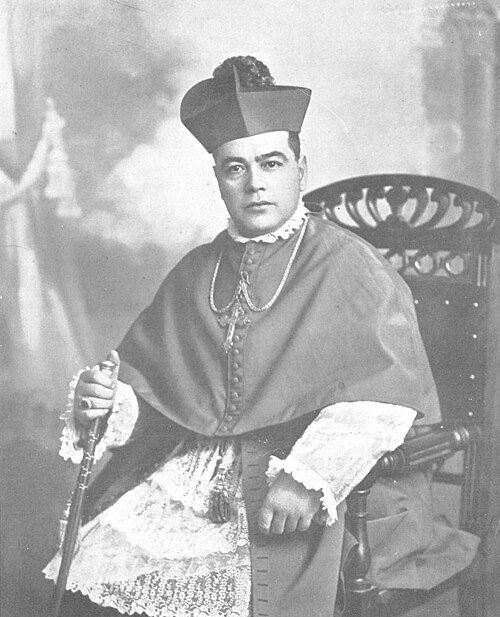
The other 193, including the Bishop and the vicar-general of Jaén, and the bishop’s sister, where lined up in groups of 25 and all shot. The exact location of their deaths has been disputed. Some claim right the main railway station y Santa Catalina, some in the El Pozo dip, and some claim against the walls of the Vallecas cemetery a few kilometres away, where they were transported and properly buried by a group of around 50 men (before being moved home to Jaén in the 1940s) who had completed the ask around midnight on 12 August.
The circumstances surrounding Teresa Basulto’s death remain one of the most debated aspects of the massacre. Several witnesses agreed that she protested after realising that armed men intended to shoot an unarmed woman. According to those accounts, one of the militia members replied that a woman would carry out the execution. Later testimony identified several possible women, most commonly Josefa Coso Majano, but the descriptions given by witnesses do not agree. Some described the shooter as blonde, others referred to facial features that do not match Coso’s appearance, while still others named different women altogether. Stories of these executions claim that they were all killed in front of a crowd of 2,000 at the train station itself, one of the many different version of events that have emerged over the years. this massive gathering somehow managed to evade all evidence of existence.
News of the massacre reached the Republican authorities in Madrid within hours of the killings. The killing of nearly two hundred prisoners while they were being transferred under official escort exposed a serious breakdown in government authority at a time when the Republic was already struggling to control armed political organisations that had emerged after the defeat of the military uprising in the capital. Responsibility for investigating the events fell to the Ministry of the Interior. Officials gathered statements from survivors, security personnel, and government representatives, while attempting to establish how an officially authorised prison transfer had ended in mass murder. From the outset, however, the investigation faced a fundamental problem: many of the men believed to have organised the massacre belonged to influential revolutionary committees that still exercised considerable power in Madrid and its surrounding districts. The massacre strengthened the position of ministers who argued that the Republic could not survive unless armed militias were brought under state control. Similar incidents during the opening weeks of the war had already demonstrated that local revolutionary committees often acted independently of the central government.
The leading participants escaped accountability, the event a war-time series of killings without the battle. Antonio Vijández García remained active in Republican Madrid until the city’s collapse in March 1939, when he died during the final days of the war. Julián Martínez Gómez survived the conflict but was arrested by the Franco regime, tried by a military court, and executed by garrotte in 1942. Other individuals identified in post-war investigations received prison sentences, execution, or acquittal, while some disappeared from the historical record. Francoist investigators devoted considerable attention to the killings, collecting witness statements, compiling victim lists, and prosecuting alleged participants through military tribunals. Those proceedings preserved valuable testimony that would otherwise have been lost, but they also reflected the priorities of the victorious dictatorship. Many statements were obtained years after the events, some witnesses had obvious political motives, and confessions could be influenced by the circumstances in which they were taken, and for that reason, modern historians treat the post-war evidence with caution. Rather than accepting every accusation at face value, recent research compares the Causa General, military trial records, surviving Republican documents, railway records, contemporary correspondence, and later testimony to identify points where independent sources agree. This approach has overturned several long-standing assumptions about who organised the massacre and how it unfolded, while leaving other questions unresolved because the surviving evidence is simply too incomplete.
When word reached Jaén that the massacre had occurred, the Civil Governor Luis Rius Zunón was devastated. He had trusted that his prisoners would reach prison and remain there, and had instead moved them right to the same danger he was trying to avoid. He was given the job of president Compañía Transmediterránea, a shipping company far from Jaén, but within months he quit and left the country, never to return. The prisoner transport massacres fueled deep political hatreds and were later used by the Francoist regime to document the ‘Red Terror,’ leading to severe reprisals and revenge executions against left-wing Republicans when Nationalist forces later took control of the province, spreading their far more brutal ‘White terror’ through the region a year later. In 2025, Pope Leo sent a representative to a beatification Ceremony at the Cathedral of Jaén, for the 109 priests, one Poor Clare nun, and 14 lay people of Jaén who died by Republican violence during the war.