- Fuente del Maestre, Extremadura
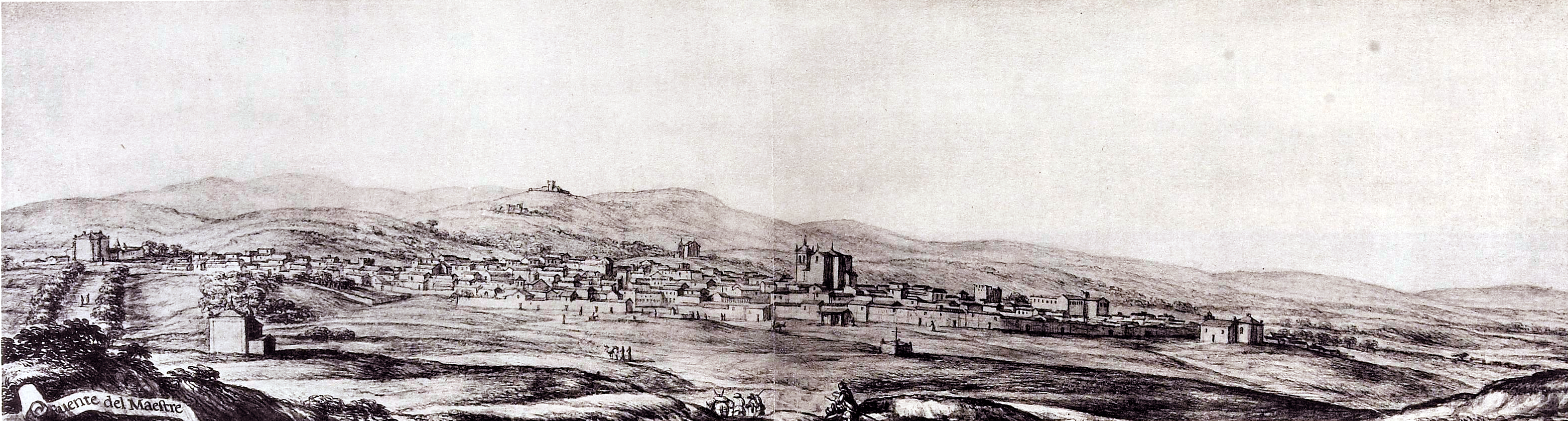
In 1936, Fuente del Maestre was one of the largest towns in southern Extremadura, with a population of approximately 8,300 people. Situated about 12 kilometres west of Villafranca de los Barros and connected to the surrounding agricultural plain by a network of local roads, it occupied an important position between the towns that the Army of Africa would overrun during its advance towards Mérida and Badajoz. The town’s prosperous agricultural economy and politically active population made it one of the most fiercely divided communities in the region. Vast estates surrounded the town, producing cereals, olives and vines, while hundreds of local families depended on seasonal agricultural labour for survival. Land ownership remained concentrated in the hands of relatively few proprietors, leaving many workers unemployed for long periods of the year. The social inequalities created by this system had existed for generations, but they became increasingly contentious after the proclamation of the Second Republic in 1931, when agricultural workers demanded higher wages, more secure employment and access to land.
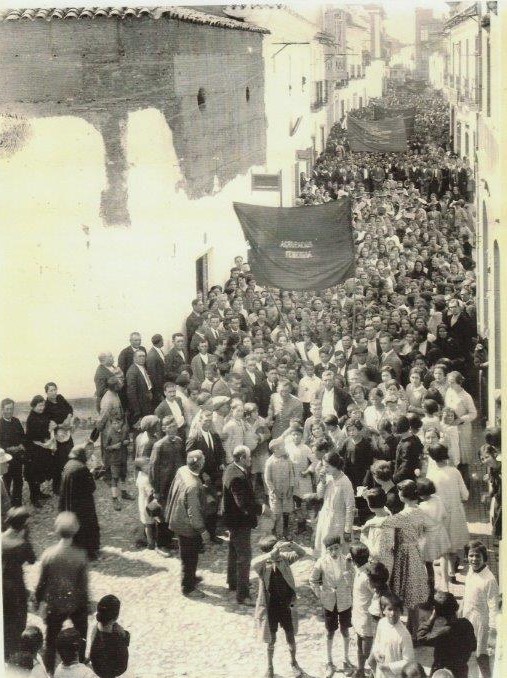
The depth of the social conflict had became apparent in January 1933, when around 1,000 agricultural labourers launched a prolonged strike demanding work and better conditions. The dispute centred on access to land rather than simply wages. After negotiations, workers secured the lease of approximately 3,000 fanegas of farmland, an important victory that demonstrated the growing political influence of organised labour. For many landowners and conservative residents, however, the strike reinforced fears that the Republic threatened traditional patterns of property ownership and local authority. On 1 May 1934, thousands gathered in Fuente del Maestre to celebrate International Workers’ Day. The demonstration ended in violence when members of the Guardia Civil and municipal police opened fire on the crowd, with three or four workers killed, while numerous others suffered injuries. The shootings provoked widespread outrage throughout the province and attracted national attention but the officers involved later received official recognition from the municipal authorities, further convincing many workers that local institutions favoured the interests of the wealthy over those of ordinary labourers.
By the time Spain approached the summer of 1936, local Republican authorities, supported by socialist and UGT activists, moved quickly to secure the town. They disarmed known right-wing supporters, searched homes for hidden weapons and arrested people suspected of supporting the rebellion. Churches were closed, and the political balance that had shifted towards the Popular Front after the February elections appeared secure.
Despite the tension, the first weeks after the coup remained relatively controlled. Conservative residents were arrested and held in the local jail or other improvised detention centres, but the news of the Army of Africa ‘s impending arrival convinced many Republicans that Fuente del Maestre could not be defended. Local militia lacked heavy weapons, military training and any realistic prospect of resisting the Legion and Moroccan Regulares advancing from the south. Many members of the defence committee abandoned the town before the Nationalists arrived. The militia led by Antonio Villarroel also withdrew, while communist deputy José María Cartón passed through Fuente del Maestre with his column during the retreat towards Villafranca de los Barros. Their departure left the town with virtually no organised military defence.
Before leaving, Villarroel’s column carried out the most serious Republican violence recorded in Fuente del Maestre. During the nights of 9 and 10 August, 11 right-wing residents were executed. Francisco Espinosa notes that these killings were committed by the retreating militia but the murders became a justification used by the Nationalist authorities to legitimise the repression that followed. As Republican forces retreated northwards, hundreds of civilians also fled the town. Some travelled towards Mérida and the Republican lines, while others hid in the surrounding countryside, hoping to return once the front had stabilised. Many believed the occupation would resemble that of previous military pronunciamientos, expecting arrests, changes in local government and perhaps imprisonment.
Though the war truly came to Fuente del Maestre on 9 August, the Nationalists did not gain full control until 20 August. Local Falange leader Luis Periáñez was appointed the town’s new leader, and ordered residents to surrender firearms, searched houses for political opponents, confiscated the Casa del Pueblo and other Republican premises, requisitioned valuables and demanded contributions of gold and money for the Nationalist war effort. Barricades appeared on the streets, and patrols began searching for those who had fled or gone into hiding. Executions did not begin immediately, a deliberate effort to encourage refugees to return. Believing the danger had passed, many residents emerged from hiding or returned to their homes, only to be identified, arrested and imprisoned. Within days, Fuente del Maestre entered one of the bloodiest chapters in its history. Falangists compiled lists of suspected Republicans, socialist activists, trade union members, municipal councillors and anyone believed to have supported the Popular Front. Civilian informants identified neighbours, while people who had fled during the Nationalist advance found that returning home often led directly to arrest. Those detained were held in the local jail and other improvised places of confinement before being transferred in small groups to the cemetery on the north-western edge of the town. Victims were removed during the night or before dawn, loaded onto a vehicle remembered by survivors as La Vaca (The Cow), and driven to the cemetery, and truck’s distinctive horn became one of the defining sounds of the repression. Families who heard it knew that another group of prisoners was unlikely to return.
Oral tradition in Fuente del Maestre says between 300 and 350 people were murdered. Research by Javier Martín Bastos has so far identified 203 victims, while stressing that the true figure was probably higher because many deaths never appeared in the Civil Register. I Research by Candela Chaves has also identified six additional victims executed following military death sentences imposed after summary judicial proceedings. Even today, historians consider the exact death toll uncertain. More than half of the victims were agricultural labourers, and shoemakers’ union members formed another large group, with fourteen documented victims. Around thirteen per cent of those executed had served as municipal councillors or held leadership positions within the Casa del Pueblo.
Historians have identified 12 women among those executed, although oral testimony suggests the true number may have reached 15. Testimonies collected after the dictatorship describe women being raped, having their heads shaved, being forced to drink castor oil, paraded through the streets for public humiliation, and subjected to repeated abuse because of their own political activities or those of male relatives. These attacks formed part of a wider campaign intended to destroy Republican families through fear, humiliation and social exclusion.
- Constantina, Seville
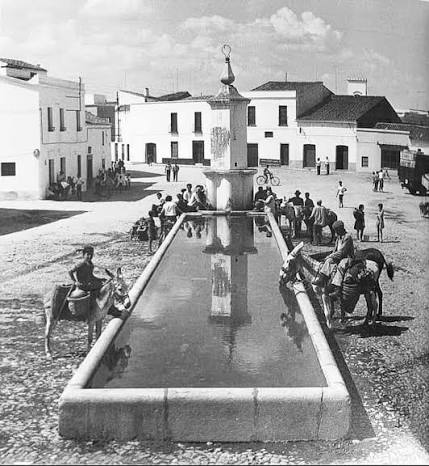
Meanwhile, in the summer of 1936, Constantina was one of the largest towns in the Sierra Norte de Sevilla, lying approximately 80km north of Seville in the wooded hills of the Sierra Morena. With a population of around 14,600 people, it served as the commercial and administrative centre for much of the surrounding district. The municipality extended across a vast rural landscape of cork forests, olive groves, vineyards, pasture, and large agricultural estates, with almost one fifth of its population living outside the town itself on isolated farms, hamlets, and country properties. Picturesque Constantina reflected the deep inequalities found throughout rural Andalucía. – 64% of the municipality’s land, properties larger than 500 hectares, was owned by just 19 landowners, most of whom lived outside the municipality. Other data shows there were 571 residents contributing to the municipal treasury. Of these, 171 paid between 1 and 50 pesetas; 271, from 50 to 500; 44, from 500 to 1,000; 38, from 1,000 to 2,000; 26, from 2,000 to 5,000; and 11, more than 5,000 pesetas., while thousands of agricultural labourers depended on seasonal work that often disappeared outside the harvest months. During the Second Republic, demands for higher wages, shorter working hours, and land reform brought increasing numbers of workers into the UGT, CNT, socialist organisations, and other left-wing parties. Conservative landowners, employers, and the Catholic Church resisted many of these changes, yet agricultural workers earned only 3.5 pesetas a day and campaigned for an eight-hour working day and a wage of five pesetas., Guardia Civil raided workers’ homes, and the burned trade union books during searches. Many labourers believed the Republic offered their first genuine opportunity to improve wages and working conditions, while conservative landowners viewed the growing strength of the unions as a direct threat to their authority.
When news of the military uprising reached Constantina on 18 July 1936, local CNT members discovered that several right-wing residents had gathered in the building known as La Agrícola, where they were allegedly preparing to coordinate with the uprising. They attempted to send a telegram instructing the Guardia Civil at Lora del Río, around 35km to the south, to place themselves under the authority of local Falangists. A CNT telegraph worker intercepted the message and replaced it with one ordering the Guardia Civil to obey the Republican mayor instead and for the next three weeks, Constantina remained under Republican control while the Nationalist advance moved steadily north from Seville. Defence depended upon several hundred armed civilians, workers’ organisations, and those members of the security forces who remained loyal to the Republic, carrying hunting shotguns, sporting rifles, or civilian firearms. Only a minority possessed military rifles or machine guns.
Republican authorities quickly arrested many local people suspected of supporting the uprising. These included landowners, conservative politicians, members of right-wing organisations, and clergy. The most prominent victim was Manuel González-Serna Rodríguez, parish priest of Constantina since 1911. Republican militiamen arrested him during the first week of the conflict and killed him on 23 July 1936 inside the parish church. He was one of approximately 90–100 right-wing residents killed while the town remained under Republican control.
The first refugees arrived from communities already occupied by Nationalist forces. Others came after the fall of El Pedroso, approximately 25km southwest of Constantina, during the first week of August. Their arrival confirmed that the Nationalist advance had entered the Sierra. At the same time, their news spread of executions in occupied towns, convincing many residents that surrender offered little protection to anyone associated with the Republic. At least 113 people were killed, many fled, imprisoned, yet their mass grave holds only 40 people. This news saw barricades and defensive positions were established around Lora del Rio at the approaches to the town, although the surviving evidence has not yet identified every location. Volunteers watched the roads from the south and southwest, where the Nationalist advance was expected. The surrounding hills offered observation points but little protection against artillery or a disciplined infantry assault. The town had no regular Republican Army battalion, no artillery, no armoured vehicles, and no aircraft. Defence rested on local volunteers, trade union members, and armed civilians. Some possessed military rifles, but many relied on hunting guns or civilian weapons. The improvised artillery was organ pipes removed from churches in an attempt to resemble cannon, illustrates the imbalance between the two sides.
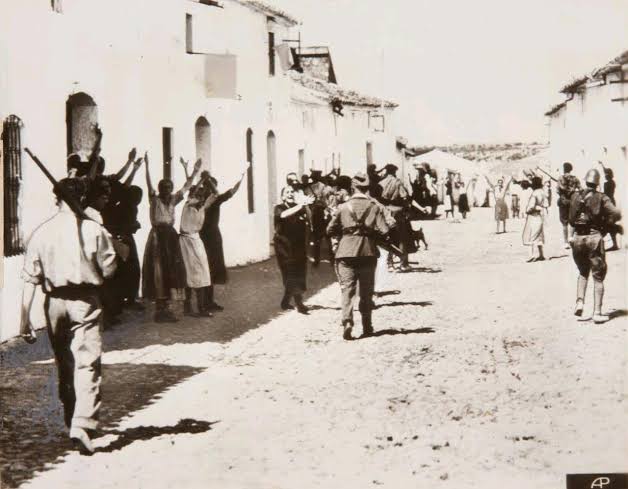
The Nationalist force sent against Constantina was the Buiza Column, commanded by Francisco Buiza Fernández-Palacios. Contemporary descriptions place its strength at approximately 1,000 to 1,200 men. It consisted of professional soldiers from the Army, Legionnaires, Falangists, Requetés, Guardia Civil and Assault Guard personnel who had joined the uprising, supported by machine guns and field artillery. In panic, families loaded carts with bedding, clothing and food, while others left on foot carrying only what they could manage. Some headed north towards Cazalla de la Sierra, approximately 15km away, hoping to continue into Republican-held territory if Constantina fell (days later Cazalla de la Sierra would also be captured, seeing 76 men and women executed). Others sought refuge in isolated farmhouses, cork forests, or the rugged hills surrounding the town.
The Nationalists occupied Constantina on 9 August 1936, with the Republican locals totally outnumbered by the advancing army and their heavy artillery. The military victory immediately transformed into a campaign of arrests. Republican officials, trade union members, municipal employees, labour organisers and many ordinary workers became the first targets. Local Falangists and conservative supporters of the uprising helped identify people associated with the Republic, allowing the occupiers to move rapidly through the town despite having little prior knowledge of many residents. A later Guardia Civil report estimated that approximately 3,000 people fled Constantina during the occupation and its immediate aftermath. In a municipality of around 14,600 inhabitants, this represented roughly one person in every five, men fearing execution, women travelling with children, elderly relatives, agricultural labourers, railway workers, municipal officials and political activists. Some remained hidden in the Sierra for weeks, while others continued north into Republican territory. The sudden disappearance of thousands of people immediately identified families associated with the Republic, making relatives who remained in the town easier to locate.
Years of political conflict, labour disputes and personal grievances suddenly acquired lethal consequences. Fathers, sons, brothers and husbands of known Republicans often came under suspicion simply because of their association with someone who had fled or joined the Republican Army. One of the most important conclusions reached by José Antonio Jiménez Cubero is that the repression developed through several distinct phases rather than one single massacre. Some victims were executed during the first weeks after the occupation in what he classifies as the period of hot terror. Others later died following military courts martial, in prisons, or through post-war repression extending into the 1940s. Earlier historians therefore underestimated the scale of the killings because they counted only the first executions or relied upon incomplete civil registers.
Current research recorded in the Andalucian victims database identifies 393 people killed during the initial phase of terror. A further 57 people died following military justice proceedings during the war, while additional victims died in the post-war years or under other documented circumstances. Together, these records have produced a documented total of 990 lethal victims associated with Constantina, although those deaths occurred through several different mechanisms and over a much longer period than the occupation itself. The principal burial place became the municipal cemetery, although later research has identified additional execution or burial sites elsewhere in the municipality, including Casilla Páez.
The current Andalucian database identifies the large burial trench immediately to the right of the cemetery entrance as the main fosa. Researchers estimate that it ultimately received more than 800 bodies, making it one of the largest known Francoist mass graves in Seville Province. A second burial site, Casilla Páez, also forms part of the municipality’s documented repression landscape, although its chronology and the number of victims still require further archival investigation.
José Antonio Jiménez Cubero’s research demonstrates why older estimates of approximately 300 deaths have been abandoned. Earlier historians generally counted only the executions visible in the first weeks after the occupation or relied on incomplete civil registers. By combining cemetery records, military proceedings, prison files, municipal documentation, oral testimony, and the fate of people killed outside Constantina after arrest, Jiménez Cubero reconstructed a much larger body of victims. His work underpins the current database, which records 990 documented lethal victims associated with Constantina across the different stages of Francoist repression.
Women also appear among the dead in far greater numbers than in many neighbouring municipalities. The current database identifies 63 women among the documented victims connected with Constantina. Some had been politically active in their own right. Others were arrested because they belonged to Republican families, had assisted relatives, or were accused of supporting the local defence. The surviving evidence also shows that people from neighbouring communities died in Constantina. One documented case is Dolores Hernández Aranda, approximately forty-two years old, and her daughter Trinidad Montero Hernández, aged twenty, both from El Pedroso. Nationalist authorities killed both women in Constantina during August 1936. No records can help to identify the number of women who were shaved, poisoned and raped by soldiers and locals.
Families rarely received formal notification of a death. Men disappeared after arrest and did not return. Wives, mothers, and children searched detention buildings, questioned neighbours, and visited the cemetery hoping to discover whether relatives had been buried there. Because executions occurred over an extended period rather than in one public event, many families never learned the exact date or place of death. The cemetery itself became one of the few places where the scale of the killings could later be measured. Local people knew that bodies had been buried in the open ground beside the entrance, and that knowledge survived throughout the Franco dictatorship even though public discussion did not. Decades later, when José Hidalgo Rojas began searching for his executed father’s burial place, local memory directed him to the same area that would eventually be recognised as the principal fosa.
Hundreds of women became the heads of households almost overnight after husbands, fathers, brothers and sons disappeared into prisons, labour battalions, or the cemetery. Many families lost their principal wage earner during the harvest season, leaving women responsible for feeding children with little income and under constant political suspicion. The testimony of Dolores Vilmes provides one of the clearest surviving accounts of daily life after the occupation. Her father, a member of the CNT, escaped Constantina and joined Republican forces. He eventually reached Madrid before retreating with the Republican Army to Alicante in March 1939. Like thousands of other Republican soldiers and civilians, he expected evacuation by sea after the collapse of the Republic. Instead, Nationalist forces occupied the port before evacuation could take place. He was captured, imprisoned and later executed. Her brother followed the same route and met the same fate. He also reached Alicante, was captured after the city’s surrender, and was executed after imprisonment.
Dolores’s future husband survived only because his death sentence was commuted. He was arrested after the war and tried alongside approximately fourteen or fifteen men from Constantina. According to her testimony, nearly all received death sentences. Two survived after their sentences were reduced, including her husband, who received thirty years’ imprisonment instead. He served part of that sentence in La Corchuela prison camp, south of Seville. His imprisonment became the responsibility of the women left behind. Dolores travelled 185km to La Corchuela carrying food and clothing whenever she could obtain them. Like many prisoners’ wives throughout Spain, she relied on relatives, neighbours and whatever work she could find to keep both her household and her imprisoned husband alive. Prison rations alone were often insufficient, making family visits essential for survival. She also described the poverty that followed the occupation. Families associated with the Republic struggled to obtain work because employers knew their political background. Widows and wives of prisoners supported children through sewing, washing clothes, domestic work and seasonal agricultural labour. Every journey to visit an imprisoned relative required money for transport and food that many families simply did not possess.
Modern research confirms that women were also direct victims of the repression. The current Andalucian victims database identifies 63 documented women connected with Constantina who died through Francoist repression. Some were executed in the town itself. Others died elsewhere after arrest. Children grew up without parents, many never learning where they had been buried. Families avoided discussing the executions in public because doing so could attract further attention from the authorities. The silence imposed during the dictatorship meant that many descendants reached adulthood knowing only fragments of what had happened to their relatives.
For more than forty years, the principal mass grave at Constantina Cemetery remained unmarked. Families knew that bodies had been buried in the open ground immediately inside the cemetery entrance, but the dictatorship prevented any public investigation. Relatives visited the cemetery, left flowers, and passed on the location by word of mouth, but no official marker identified the grave and no attempt was made to recover the dead.
One of the people determined to locate the burial site was José Hidalgo Rojas. His father, a Republican councillor, had been arrested after the occupation, sentenced by a military court, and executed. Like many families, the Hidalgos were never formally shown where he had been buried. During the late 1960s, José began collecting information from cemetery workers, gravediggers, elderly residents and other relatives of the victims. By comparing their accounts, he identified the large burial trench immediately to the right of the cemetery entrance as the place where the majority of the executed had been interred.
After the end of the Franco dictatorship, families pressed for the grave to be opened. Work carried out at Constantina was organised primarily to recover human remains for dignified reburial rather than to document every individual scientifically. The excavation took place in 1980 and was financed by the Instituto de Reforma y Desarrollo Agrario (IRYDA). Work proceeded in three separate stages because of the size of the grave. No archaeologists directed the excavation, and no forensic recording system was used. This reflected the period. Spain had not yet developed the archaeological and forensic methods that would later become standard during exhumations of Civil War graves.
As excavation progressed, workers uncovered layer upon layer of human remains. Contemporary reports recorded the recovery of more than 780 skulls, together with thousands of other bones. They also found personal possessions buried with the victims, including rings, earrings, necklaces, chains and other items of jewellery that families had been unable to recover at the time of the executions. Because the excavation did not use modern archaeological techniques, the remains were not recorded individually and could not later be matched to particular victims. After recovery, the remains were gathered together and reinterred beneath a purpose-built mausoleum within the cemetery. The memorial was inaugurated on 2 November 1980, giving hundreds of families, for the first time since 1936, a recognised place where they could mourn relatives who had disappeared during the repression. Subsequent historical research has shown that the 1980 excavation did not recover every victim associated with Constantina. The 1980 excavation lacked the forensic standards expected today, it remains one of the earliest large-scale recoveries of Francoist victims undertaken anywhere in Spain. Without the determination of relatives such as José Hidalgo Rojas, the location of the grave might never have been confirmed. Their work preserved the memory of the victims decades before Spain developed the historical memory movement that later transformed the investigation of Civil War mass graves.
- Balaeric Islands
The 18 July uprising military uprising divided the Balearic Islands almost immediately. On Mallorca, General Manuel Goded declared a state of war on 19 July and the rebel military authorities rapidly secured Palma and most of the island. Goded left Mallorca that morning to take command of the uprising in Barcelona, where he was defeated and captured, but the military retained control, supported by the Guardia Civil, Falangists and other right-wing organisations. There was resistance in several towns and among some members of the security forces, but by the end of July Mallorca was in rebel hands.
Ibiza and Formentera also came under the control of officers supporting the uprising. Their isolation and comparatively small garrisons made their position much less secure than Mallorca. Menorca followed a different course. The island’s military commander, General José Bosch Atienza, initially supported the uprising and declared a state of war, but the rebellion quickly encountered opposition from soldiers, lower-ranking military personnel and civilian supporters of the Republic. Bosch lost control of the situation and was arrested, leaving Menorca in Republican hands (Bosch was executed soon after). Menorca’s principal harbour at Mahón, military installations and surviving Republican forces consequently provided the Republic with a base only a short distance from Nationalist-held Mallorca.
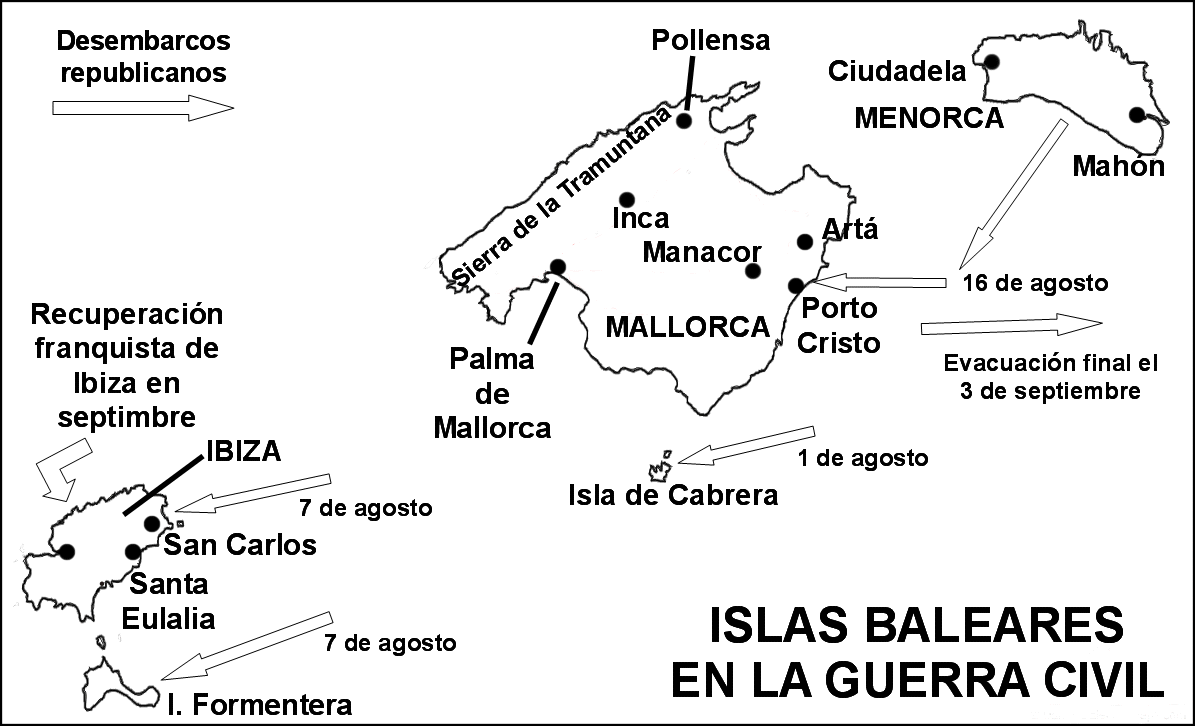
By the beginning of August the archipelago was divided. Mallorca, the largest island, containing Palma and most of the Balearics’ population and military resources, remained under Nationalist control. Menorca remained Republican, while Ibiza and Formentera were held by the rebels but were considerably more vulnerable. Across the Mediterranean in Catalonia, plans were already developing to exploit that vulnerability and then carry the campaign to Mallorca itself.
Within days of the failed military uprising in Barcelona, attention turned towards the Balearic Islands. Mallorca was firmly in rebel hands, but its isolation made it appear vulnerable. The Republic initially possessed the stronger naval presence in the western Mediterranean, Menorca remained Republican, and the rebels on Mallorca had only limited military forces and virtually no modern combat aircraft. Leaving the island untouched also carried an obvious risk: only around 250kms separated Mallorca from the coast, and an enemy air or naval base there could threaten Republican shipping and the cities of eastern Spain.
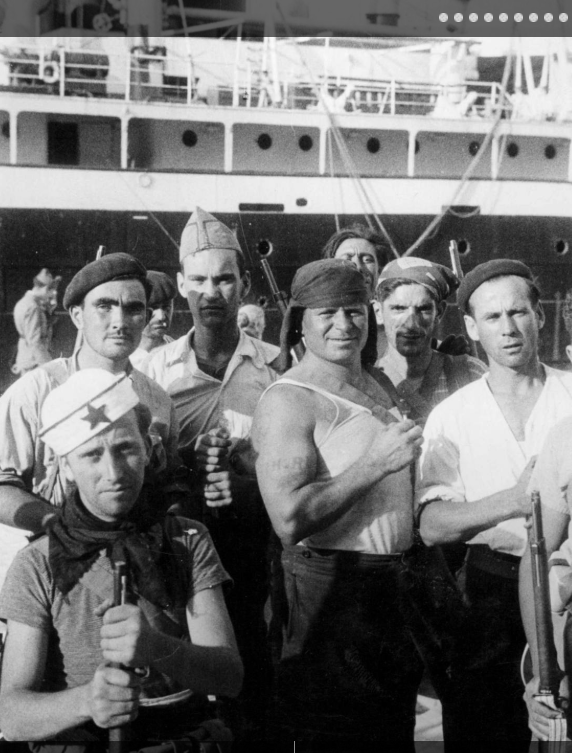
Several plans developed almost simultaneously rather than through a single carefully coordinated decision. In Catalonia, Captain Alberto Bayo Giroud, a professional army officer and aviator, became the central figure in plans to recover the islands. Bayo had served in Morocco and had experience with both infantry and aviation, but the force he was assembling would bear little resemblance to a conventional army formation. Volunteers were recruited principally in Barcelona from the political and trade-union organisations that had armed themselves during the defeat of the uprising. They included contingents associated with the PSUC and UGT, CNT-FAI, Estat Català, ERC and other Republican and Catalan organisations, alongside sailors, soldiers, security personnel and volunteers already serving on Republican Menorca. Women also joined the expedition, some as armed milicianas and others in medical and support roles.
A separate force was meanwhile being organised in Valencia under Manuel Uribarri, an officer of the Guardia Civil who had remained loyal to the Republic. The existence of the two expeditions reflected the confused political and military organisation of the Republican zone during the first weeks of the war; initiatives could originate from Barcelona, Valencia, Madrid or local military authorities and only later be brought into some form of cooperation.
The expedition grew as it moved, with 5,500 Republican personnel across the Balearic operations at their maximum. Around 4,000 were Catalan militiamen, while the remainder included regular soldiers, sailors, security forces and personnel from Menorca. The force that eventually fought on Mallorca reached a maximum of roughly 4,000 men and women during the final days of August. Republican naval vessels provided protection while merchant ships, smaller steamers, launches and requisitioned civilian craft transported the volunteers, weapons, vehicles, ammunition, food and medical supplies. Reports that significant numbers of Mallorcans remained sympathetic to the Republic strengthened the belief that an invasion could trigger an internal rising, meaning there could be additional supplies to be utilised on the island.
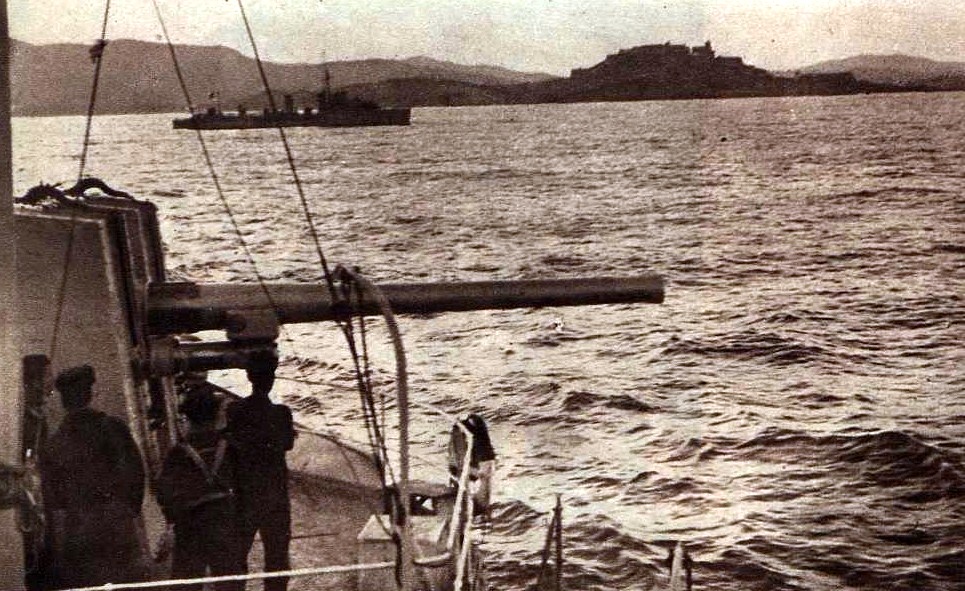
On 7 August, a Republican force associated with Manuel Uribarri’s expedition from Valencia landed on Formentera. The troops encountered little effective resistance, and the island passed rapidly into Republican hands. Local supporters of the Republic emerged after the landing, while the small number of men associated with the July rebellion could do little to prevent the change of control. Formentera could now be used as a secure position immediately beside Ibiza, but it was never intended to be the principal objective. Republican ships and militiamen were already preparing for the much larger island visible to the north. On the morning of 8 August, forces commanded by Alberto Bayo began landing on the northeastern coast at Pou des Lleó, near Sant Carles de Peralta, while another landing was made around Santa Eulària. Bayo’s Catalan militiamen were supported by forces associated with Manuel Uribarri’s expedition, including Guardia Civil who had come from Valencia. The Republican warships Almirante Miranda and Almirante Antequera supported the operation from offshore.
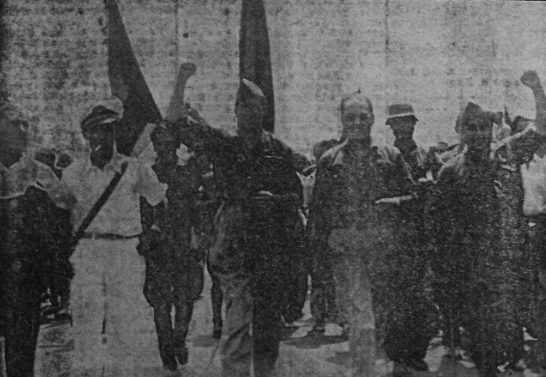
The island’s rebel authorities were poorly prepared to resist a force arriving simultaneously by sea at several points. Ibiza had only a small garrison, communications across the island were limited, and the military command initially received contradictory information about what was happening on the distant northeastern coast. At one point the commander in Ibiza town was even informed that the Republicans had been defeated and had returned to their ships. In reality, Bayo’s men remained ashore and were advancing. When rebel forces and hastily armed civilian volunteers were sent towards the landing area, the defence began to disintegrate.
But near Sant Carles, some of the militiamen and sailors moved ahead of Bayo’s main force after encountering little opposition. Violence followed as the expedition entered communities associated with the defeated uprising. The parish priest of Sant Carles, Joan Tur Ferrer, and members of his family were among the first people killed. These deaths were the beginning of a period of Republican repression on Ibiza in which clergy and people identified with the military rebellion or political right became particular targets.
By 9 August, organised resistance had collapsed and Republican forces controlled Ibiza. Some of the men responsible for the July uprising attempted to escape or hide. Captain Rafael García Ledesma, who had taken part in establishing rebel control of the island, killed himself shortly after the Republican occupation, while Major Juli Mestre Martí, the military commander, was captured and subsequently executed on 15 August. Arrests began almost immediately, including military conspirators, clergy, Falangists, landowners and other people considered supporters of the uprising. Churches were searched, damaged or burned, and property belonging to prominent supporters of the right was seized.
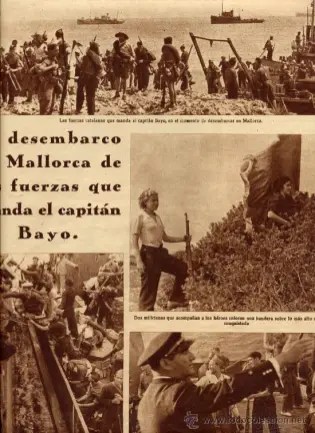
For Alberto Bayo, these islands had always been stepping stones towards the principal objective of his Barcelona militia taking Mallorca. The rapid collapse of resistance on Ibiza appeared to strengthen his belief that another landing could succeed before the rebel authorities on Mallorca had time to concentrate their forces. Manuel Uribarri was unwilling to commit his Valencian column to the operation, considering an attack on Mallorca far more dangerous than the actions already undertaken and disagreed with Bayo over command and the conduct of the expedition. Uribarri withdrew with most of his force back to Valencia, leaving Bayo to continue without a substantial part of the men who had helped take Ibiza.
On 10 August, the Generalitat formally recognised Bayo as its representative in the Balearic Islands and gave him authority over the volunteer militias participating in the expedition. Catalan militia contingents had travelled from Barcelona; soldiers, sailors and other personnel were available on Republican Menorca; volunteers and equipment had been gathered during the operations against Ibiza and Formentera; and additional men continued to arrive as preparations developed. The expedition included members of the PSUC and UGT, CNT-FAI, Estat Català and other Republican and Catalan organisations, together with regular military and naval personnel. Women travelled with the force as militia fighters, nurses and support personnel.