- Basque Country
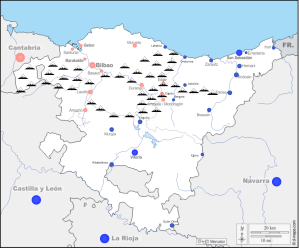
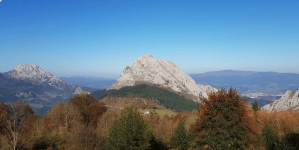
By mid-October 1936, the war of movement in the Basque Country (Euskadi) ground to a sudden, dramatic halt. Following the fall of San Sebastián and most of the province of Gipuzkoa to Nationalist forces in September, a unified coalition of Basque nationalist volunteers (Gudaris), socialists, and communist militias established a formidable defensive wall along the rugged provincial border with Bizkaia. The centre of this strategic line was the small mountain village of Elgeta, protected by the imposing, triple-peaked ridges of the Intxorta Mountains (Intxorta Andi, Intxorta Txiki, and Gaztelumendi). Between 17 and 31 October 1936, this sector transitioned into a gruelling, static positional war.
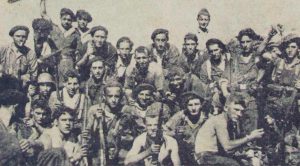
The defence of the Elgeta sector was held by the newly formed Euzko Gudarostea (Basque Army). This was a unique coalition of ideologically diverse forces, the Basque Nationalists (PNV), the disciplined Gudari battalions like the Loyola Battalion, socialist units like the UHP No. 5 Battalion and communist shock troops like the Larrañaga Battalion. Taking advantage of the steep mountain terrain, the defenders dug deep, interconnected trench lines, reinforced machine-gun nests with concrete, and laid heavy barbed-wire networks across the mountain slopes.
Facing them were the highly experienced, mountain-hardened Navarrese Requetés and units of the regular army under command structures based out of neighbouring Bergara. Lacking the numbers for a major breakthrough, they dug their own parallel trenches on adjacent hillsides, leaving a narrow, deadly no-man’s-land spanning just a few hundred meters across the valleys.
The final two weeks of October were characterised by a war of attrition punctuated by vicious, localised attacks with artillery and mortar duels from Nationalist batteries positioned on lower ground continuously bombarded the heights of the Intxortas and the streets of Elgeta to disrupt supply lines. Basque units responded with well-hidden mountain mortars to pin down enemy movements in the ravines. Nationalist columns launched localised, small-scale assaults, often under the cover of dense autumn mountain fog, targeting isolated Basque outposts to test for structural weaknesses. These skirmishes resulted in sharp, localised casualties but failed to yield any territorial gains. Snipers dominated the landscape, freezing all daytime movement. At night, specialised Basque and socialist dinamiteros (dynamite squads) conducted daring counter-raids across the lines, tossing improvised explosives into enemy trenches before slipping back into the dark.
The successful stabilisation of the front at Elgeta during late October 1936 was a vital psychological and institutional victory for the Republic. By forcing a positional stalemate, the Basque defenders bought precious time for the newly formed autonomous Basque Government (established on 7 October under Lehendakari José Antonio Aguirre) to organise a formal regional administration, manufacture arms, and build the iconic “Iron Belt” fortifications around Bilbao. This Intxorta Shield would successfully hold the Nationalist forces at bay for seven months.
Though the land borders had stabilised, the war from above intensified significantly. Having suffered catastrophic air raids from German-supplied Junkers aircraft in late September, the city of Bilbao spent mid-to-late October in a state of high alert. Air-raid sirens became a routine part of life, and the Basque Government began the frantic task of constructing subterranean public shelters beneath the city streets while trying to secure anti-aircraft weapons from abroad via the port of Santurtxi.
As of 17 October 1936, the Basque Country is divided into two distinct worlds. The fierce war of movement that characterised the summer has abruptly frozen into a brutal, high-altitude war of positions. The comprehensive overview of the land, sea, and air operations on this date outlines the military layout across the region. The land front forms an inverted L shape across the provinces. General Emilio Mola’s Nationalist forces have heavily fortified their positions, while the newly unified Basque forces are desperately digging trenches to block further advances.
The naval war in the Bay of Biscay is a asymmetric David-vs-Goliath struggle. The Nationalists dominated the open waters using heavy, captured fleet vessels like the battleship España and the cruiser Almirante Cervera. They are enforcing a strict naval blockade to starve the Basque Country of food, coal, and foreign weapons. Lacking heavy warships, the Basque Government is frantically requisitioning civilian cod-fishing trawlers (bous) from the ports of Pasaia and Santurtxi. They are welding makeshift artillery pieces to their decks, creating the early foundations of the Basque Auxiliary Navy. Their main task was sweeping for Nationalist naval mines and escorting merchant ships carrying vital supplies into Bilbao.
Because the land front has stalled, the Nationalists are heavily using air superiority, backed by early elements of German and Italian aviation, to terrorise the rearguard. The civilian population is bearing the brunt of the air war. Bilbao was on absolute maximum air-raid alert. Following highly destructive air raids in late August and late September (where German-supplied planes dropped over a hundred bombs on the city centre), the sky is treated as a constant threat. Industrial towns along the frontline, specifically Eibar and Durango, were subjected to tactical bombing raids designed to disrupt the production of small arms factories.
Approximately 15,000 to 18,000 active combatants have been mobilised following the 16 October decree creating the formal Euzko Gudarostea. The vast majority of troops remained garrisoned inside Bilbao (the political and logistical headquarters), Eibar (the front-line arms manufacturing capital), and Durango (the central reserve hub). Thousands of Gudaris (Basque nationalist volunteers) and left-wing militias are living directly in the alpine trenches running through the Intxorta peaks. At the same time, roughly 12,000 to 15,000 troops were dedicated strictly to the Basque sector. The bulk of Nationalist forces are stationed in Vitoria-Gasteiz (the capital of Álava, used as the main southern command base), Bergara (the primary staging point for assaults against Elgeta), and San Sebastián (the northern coastal stronghold).
The Basque Country actually experienced a highly unique, non-traditional dynamic of repression compared to the rest of Spain. In a typical Spanish province during the Civil War, the violence followed a rigid ideological binary – the Nationalists executed leftists, trade unionists, and freemasons, while the Republicans executed the wealthy bourgeoisie, right-wing landowners, and the Roman Catholic clergy. However, in the Republican-held Basque territory (Bizkaia and western Gipuzkoa), this traditional formula completely broke down due to the unique role of the Basque Nationalist Party (PNV).
The PNV was a deeply conservative, middle-class, and intensely Roman Catholic party. In a traditional Spanish setting, they would have been natural allies for Franco’s Nationalists. However, because the Spanish Right adamantly refused to grant regional independence, the PNV allied themselves with the left-wing Second Spanish Republic, which promised them immediate home rule. This completely disrupted the standard patterns of repression across both zones. Franco’s forces presented their military uprising as a holy crusade to defend the Catholic Church against Red atheism. Because Basque priests were deeply tied to their communities and often supported Basque autonomy, the Nationalists viewed them as separatist traitors. As a result, the Nationalists shattered their own religious narrative by executing at least 16 Basque Catholic priests (including Aitzol at the Hernani cemetery), a shocking anomaly that deeply angered the Vatican and distressed conservative Catholics worldwide.
In Republican cities like Madrid and Barcelona, the early months of the war saw massive waves of anticlerical violence, resulting in the burning of churches and the execution of thousands of priests and some nuns. Under the leadership of Basque President José Antonio Aguirre (a devout Catholic), the Basque Army (Euzko Gudarostea) was explicitly ordered to safeguard religious freedom. In Bizkaia, churches remained open, religious services continued normally, and priests walked the streets safely under the protection of armed Basque militias. This was the only place in the entire Spanish Republic where the Catholic Church was protected by a pro-Republic government.
The mass graves in the Ziardamendi area (located on Mount Ziarda, on the border between Elgoibar and Azkoitia) represent a crucial, highly sacred chapter of the Basque campaign. unlike the industrialised rearguard executions at the Hernani cemetery, the graves at Ziardamendi are the direct result of intense, early frontline combat that occurred just as the Basque front line was solidifying in the autumn of 1936.
On September 21, 1936, Nationalist columns composed of Navarrese Requetés and Falangists had pushed over the Azkarate mountain pass to attack and conquer Elgoibar. Hurriedly assembled Basque nationalist volunteers (Gudaris) and left-wing militias retreated up onto the rugged northern slopes of Mount Ziarda (Ziardamendi). They established a desperate blocking position to stop the Nationalists from advancing further west toward Eibar and the Bizkaia border.. Vicious skirmishes raged across these steep pine forests until roughly October 5–8, when the front locked into a permanent, static line. The men who fell on these slopes were buried where they died by their comrades or by local locals, frequently directly inside the frontline trench lines.
For generations, local shepherds and families kept the approximate memory of these mountainside graves alive. In June 2012, the Aranzadi Science Society alongside the Basque regional memory institute Gogora conducted a formal scientific exhumation of the primary Ziardamendi site. Investigators located a collective grave on a highly steep, terraced northern slope of Mount Ziarda. The grave had been dug roughly one meter deep into the soft clay soil.
Forensic teams uncovered the skeletons of four combatants lying horizontally, side-by-side, in an alternating head-to-toe pattern to maximise space. Due to the high acidity of the mountain soil, the bones were poorly preserved. Alongside the skeletal remains, archaeologists recovered military artefacts proving they were front-line soldiers, including leather boot fragments, ammunition pouches, and personal items like combs and utility tools.
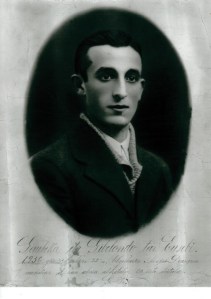
Through advanced DNA testing and cross-referencing military rolls, forensic scientists achieved a major breakthrough by positively identifying one of the four skeletons. Eusebio Gaubeka Guibelondo was a young Basque Gudari from the town of Gatika (Bizkaia), serving in the nationalist Arana Goiri Battalion. He was killed on these slopes around late September 1936 while defending the heights. Following his identification, Gaubeka’s remains were officially returned to his surviving family members for a proper, dignified burial in his hometown, while the remaining unidentified combatants were laid to rest in the official Dignity Cemetery of Elgoibar (Columbario de la Dignidad), which was built specifically to honour those recovered from the regional frontlines.
The town of Oiartzun fell to Nationalist columns very early in the war. The site known as Iragorri (located along the mountain road heading up to the Artikutza park) became an active rearguard execution zone. Historical records and field research verified that multiple individuals, predominantly Republican and left-wing sympathisers captured in the surrounding San Sebastián metropolitan zone, were executed and buried in shallow roadside pits here during October and November 1936. The location was heavily photographed as early as 1942 by Aranzadi’s founder, Jesús Elósegui, ensuring its physical mapping survived the dictatorship.
As the southern front locked into place just north of Vitoria-Gasteiz, heavy combat raged around the foothills of Mount Gorbea and the outskirts of Legutio (Villarreal). In early October 1936, a group of Republican soldiers, specifically identified as belonging to the communist Perezagua Battalion, were killed trying to pierce the Nationalist lines. They were buried by locals in a shallow trench right behind the church of Etxaguen, next to a rural road. When Aranzadi excavated the site, they recovered 10 combatants, making it one of the largest battlefield mass graves structurally exhumed in the province of Álava.
The start of the static, positional war in Elgeta (October 16–31) meant that both sides subjected the mountain ridges to intense artillery barrages. Because digging traditional rectangular graves under active artillery fire was impossible, soldiers routinely used artillery shell craters as instant, makeshift burial pits. Several isolated, single-soldier graves exhumed along the Intxorta slopes contain individual Gudaris or militia fighters who were killed by shrapnel during the late October shelling campaigns and buried immediately inside the blast pits.
The mass grave at the Hernani cemetery (Gipuzkoa) is historically recognised as one of the largest and most notorious sites of Francoist rearguard repression in the Basque Country during the opening months of the Spanish Civil War. Between September and November 1936, following the Nationalist conquest of San Sebastián and eastern Gipuzkoa, the cemetery walls became a primary execution ground for Nationalist firing squads.
An estimated 200 people were executed against the exterior wall of the cemetery. The vast majority were left-wing political prisoners, trade unionists, and Basque nationalist (PNV) sympathisers. Many of the victims were not from Hernani itself. They were held at the overcrowded Ondarreta Prison in nearby San Sebastián. Nationalist authorities routinely conducted sacas, loading people onto trucks under the guise of prison transfers, driving them straight to the Hernani cemetery, and shooting them.
- Alicante, Valencia
By mid-autumn 1936, the province of Alicante occupied a crucial strategic position within the Second Spanish Republic. Geographically insulated from the shifting land fronts, it served as a highly secure, loyalist rearguard, a vital Mediterranean maritime gateway, and the eventual final seat of the Republican government later in the war. However, this relative territorial safety did not spare the province from severe internal conflict. In October 1936, political violence in Alicante shifted dramatically away from the uncoordinated, revolutionary street paseos of the summer. Instead, it transitioned into an industrialised, institutionalised system of repression managed by the newly established Popular Tribunals.
During the wartime Republican period, Alicante city functioned as the principal execution centre for the entire province. Political prisoners, right-wing sympathisers, military mutineers, and falangistas were funnelled from rural districts into centralised urban containment facilities, predominantly the Benalúa Prison and the Adult Reformatory of Alicante. The month of October 1936 marked a pivotal shift in how these prisoners were processed. Rather than entering unmarked graves via clandestine militia networks, executions were increasingly institutionalised.
Historians studying the repression in the Levante region emphasise that the October 1936 cemetery register of Alicante is an invaluable archival tool. It allows researchers to draw a clean, clear line between different types of wartime deaths. Unlike other parts of Spain where bodies were dumped namelessly, the municipal grave registers in Alicante during October routinely catalogued names, dates, and causes of death following formal sentences handed down by the Popular Tribunals. By cross-referencing these meticulous bureaucratic entries against prison roll calls, historians can easily separate formalised state executions from the dwindling number of paseos happening in the city outskirts like Santa Faz.
The structural nature of this institutionalised justice was starkly demonstrated on 13 October 1936. Following the failure of local military elements to successfully back the July coup at the Doce Puentes choke point, the ringleaders were captured and placed on formal trial. On this date, the Popular Tribunal condemned and executed seven high-ranking military officials, including General García Aldave and Comandante Sinter, a multi-execution event logged precisely within the municipal cemetery archives.
The push for centralized, legalized executions in the capital did not completely suppress aggressive radical violence across the wider province, where distinct socio-economic dynamics dictated the severity of local purges. While the capital consolidated its judicial tribunals, the industrial manufacturing hub of Alcoy witnessed a highly intense wave of rearguard repression. Following the July coup, local anarcho-syndicalist and communist committees launched sweeping class-warfare purges targeting wealthy textile factory owners, right-wing industrialists, and local conservative political networks, resulting in an estimated 124 left-wing retaliatory killings.
Because of Alicante’s safety, the province became a storage facility for the Republic’s most high-stakes political prisoners. Most notably, José Antonio Primo de River, the absolute ideological founder of the fascist Falange, was held under maximum security in the Alicante prison throughout October 1936, undergoing a highly publicised, formal judicial trial in November 1936.
During the Republican control of Alicante in October 1936, those executed by the Popular Tribunals were not thrown into mass clandestine trenches. Because the city’s civil bureaucracy remained intact, all were given individual, recorded temporary burials. They were placed in organised municipal cemetery plots, such as individual niches or regulated cemetery rows, and meticulously logged by name in the October cemetery registry. When Francisco Franco’s forces captured Alicante at the end of the war in April 1939, they converted the cemetery’s Cuadro 12 into their own centralized execution and mass burial zone.
Between 1939 and 1945, the regime executed over 700 Republicans by firing squad, tossing their bodies into newly dug mass graves (such as Fosa X, Fosa XX, and Fosa XXXVI) directly inside Cuadro 12. Over decades of continuous use and spatial modifications, these massive post-war graves physically overwrote, disturbed, or buried deeper the older, pre-existing cemetery strata from the early Republican wartime era.
- Seville, Andalucía
In the autumn of 1936, the city of Seville was firmly under the control of the military rebels, dominated by the fierce, iron-fisted rule of General Gonzalo Queipo de Llano. Because Seville fell almost immediately during the July coup, the violence here was not caused by frontline combat, but by a cold, systematic campaign of rearguard cleansing designed to completely eradicate any Republican or left-wing presence.
On 17 October 1936, a large-scale collective execution took place against the exterior walls of Seville’s San Fernando Cemetery, resulting in 39 recorded victims. This group consisted of a mixture of local political targets from the capital alongside prisoners brought in from surrounding municipal jurisdictions. The most prominent individual identified in this group was José León Trejo, the Republican Deputy Mayor (Teniente Alcalde) of Seville.
Following their summary executions, the bodies of the 39 victims were dumped into the Pico Reja Mass Grave, a massive trench measuring four metres deep. To increase the trauma inflicted on the surviving families, the Francoist authorities systematically opened disciplinary files against the deceased after their deaths to permanently strip their widows and children of any pensions, resources, or civil rights. This date is recognised as one of the most heavy, singular days of violence in the capital during October, highlighting the transition into highly organised, daily bureaucratic cleansing campaigns. In recent years, modern forensic exhumations led by the Aranzadi Science Society at Pico Reja recovered the remains of 1,786 victims, with José León Trejo officially confirmed via DNA analysis as the very first victim identified from the pit.
Just two days later, on 19 October 1936, another massive collective execution was carried out, resulting in 19 recorded victims. These 19 individuals were extracted directly from the Provincial Prison of Seville (historically known as La Ranilla). During this phase of the war, La Ranilla was suffocating and overcrowded, housing thousands of unionists, leftist politicians, and ordinary citizens caught up in sweeping provincial dragnets. Under the guise of night transfers, these 19 prisoners were loaded onto trucks in the early hours of dawn, driven straight to the San Fernando Cemetery, and shot by firing squads. Their names and deaths were meticulously recorded by cemetery workers within the municipal logs, providing a precise paper trail for modern researchers cross-referencing empty beds at the prison against the incoming dead.
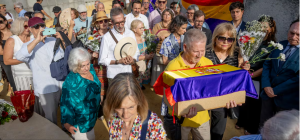
For nearly 90 years, the 39 victims executed on 17 October 1936 were lost to history. However, in June 2026, the University of Granada’s forensic laboratories achieved a massive breakthrough using DNA analysis. They successfully identified José León Trejo, making him the very first victim formally identified from the Pico Reja mass grave. José León Trejo was a 56-year-old high school French professor and a prominent town councillor (edil) for the Unión Republicana party. He was a deeply devoted educator and a father to a large family of nine children. Like many intellectuals, he was taken by Nationalist forces straight out of his home at the hour of the afternoon siesta, still wearing his pyjamas. He was executed that same night at the cemetery wall.
Trejo was heavily marked for death due to a specific political action he took in 1931. While briefly serving as the Civil Governor of Guadalajara, he was ordered to arrest and exile the highly conservative Cardinal Segura (the Archbishop of Toledo). The ultra-Catholic Nationalist commanders never forgave this. In a grim historical irony, when Cardinal Segura returned years later to serve as the Archbishop of Seville, he delivered an annual sermon every single 17 October to publicly thank divine justice for Trejo’s execution. Historical filings from the day show that Trejo was executed along the wall alongside fellow Republican professional Francisco García y García de Leániz, a local lawyer.
The University of Granada’s Genetic Identification Laboratory successfully isolated and identified José León Trejo’s remains out of 1,786 victims in the Pico Reja mass grave. This achievement represents a major milestone in forensic science. The forensic team overcame decades of environmental degradation and complex skeletal mingling through a highly systematic, multi-phase scientific pipeline. Before any genetic work could begin, the Aranzadi Science Society meticulously documented the physical layout of the pit during the exhumation process. Since historical archives explicitly noted that Trejo was executed on 17 October 1936, anthropologists focused heavily on the specific geological and chronological strata of the pit corresponding to the autumn of 1936.
For ancient or highly degraded DNA, traditional soft tissue is entirely gone. Forensic teams selectively sampled petrous bones (the dense part of the skull near the inner ear) or intact tooth roots. The dense mineral structure of these specific bones shields the fragile DNA molecules from water, soil acidity, and bacterial destruction far better than long limb bones. One of the greatest challenges in massive group graves is what experts describe as a genetic traffic jam (atasco), the overwhelming logistical bottleneck of cross-referencing thousands of unknown bone samples against thousands of living family swabs.
The laboratory initially ran into a roadblock when a sample closely matched the broader León Trejo family lineage. Three brothers from the exact same family, José, Manuel, and Joaquín, had all been hunted down and executed by Nationalist forces. Rather than trying to map the entire pit blindly, the University of Granada requested new, highly targeted secondary genetic samples from specific lines of descendants to trace exact paternal and maternal markers. This mathematical elimination process allowed geneticists to definitively isolate José from his brothers. This highly amplified profile was run through statistical-probabilistic algorithms against the family reference database. The resulting genetic certainty broke through the anonymity of the pit, making a French professor the very first named individual to step out of the silence of Pico Reja.
While DNA analysis is still processing the remains from the 19 October saca, municipal records and political registries have successfully identified high-profile casualties from the group of 19 extracted from La Ranilla prison. The primary individual identified in this group is José Aceituno de la Cámara, a towering figure in local left-wing politics. He served as a Member of Parliament (Diputado en Cortes) representing the Unión Republicana party, alongside his role as a prominent city councillor for Seville. His execution on 19 October highlights the ultimate objective of the mid-October sacas. The Nationalist authorities under Queipo de Llano were no longer just rounding up street-level unionists or anarchists; they were systematically executing democratically elected lawmakers, lawyers, and institutional leaders to ensure that the pre-war Republican administrative framework could never be rebuilt.

