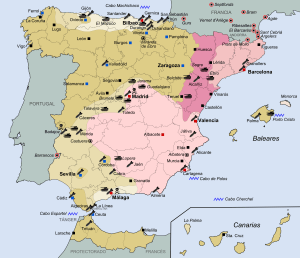
- Madrid
By October 1936, the Second Spanish Republic faced an existential crisis. The initial romanticism of the July uprisings, where improvised worker-militias had successfully halted right-wing army mutinies across Spain’s major cities, had given way to a grim, industrialised war of attrition. Facing a professional, centralised rebel force backed heavily by Nazi Germany and Fascist Italy, the Republican state found itself structurally outmatched.
Over two pivotal weeks in late October 1936, a rapid succession of sweeping decrees fundamentally dismantled the improvised revolutionary militia system. In its place, the state forcefully engineered a professional military apparatus, the Ejército Popular de la República (Popular Army), signalling a transition to total war.
The opening salvo of this structural overhaul occurred on 18 October 1936, when the central Republican government issued a landmark decree formally establishing the first six Mixed Brigades (Brigadas Mixtas). Until this point, the front lines had been manned by highly fractured political columns. Anarchist, Marxist, and socialist volunteers fought in separate units, often refusing to take orders from rival political factions or traditional military officers. The Mixed Brigade design was engineered to end these partisan divisions by blending regular military personnel and loyalist government officers to provide tactical expertise, politicised militia fighters to maintain ideological morale, and integrated support units, including dedicated artillery, communications, and medical components under a singular command structure. The creation of the Mixed Brigades served as the foundational blueprint for the new Popular Army, permanently shifting the Republic’s strategy away from guerrilla skirmishing toward large-scale, coordinated military organisation.
To solidify the authority of these new brigades, Prime Minister Francisco Largo Caballero moved swiftly to strip the political factions of their independent military administration. On 19 October 1936, a comprehensive reorganisation of the militia command was set into motion. Published in the official government Gaceta on 20 October, Largo Caballero’s executive order decreed that the scattered batallones de republicanos voluntarios originally forged in the fires of the July coup would be absorbed into a state-managed body known as the Milicias Voluntarias (Voluntary Militias). These units were stripped of their political titles and organised strictly into numbered battalions. Simultaneously, the decree abolished the old, toothless Inspección General de Milicias. It replaced it with a highly centralised Comandancia de Milicias, an administrative juggernaut whose explicitly stated responsibilities included dictating the organisation, strict military discipline, and logistics of armed voluntary militias on the active front lines, localised territorial militias, and rear-area security detachments. To enforce this new hierarchy across the fragmented territory, the order established rigid regional militia commands for Valencia, Catalonia, the North, and Andalucía.
While Madrid fought to centralise the central zone, a parallel drama unfolded in the semi-autonomous region of Catalonia. Since July, Barcelona had been the epicentre of an anarcho-syndicalist social revolution, where the regional government (Generalitat) shared de facto power with the powerful, union-led Central Anti-Fascist Militias Committee. However, the reality of the worsening military situation forced a hard political compromise. Between 24 and 28 October, the Generalitat passed a series of strict measures to forcefully militarise the Catalan Anti-Fascist Militias. The decree mandated that traditional military discipline and standard penal jurisdiction would take effect across all Catalan columns on 1 November 1936. For the highly egalitarian anarchist militias, who had spent months electing their own commanders and rejecting traditional military hierarchy, this was a bitter pill to swallow. Yet, the threat of total defeat overrode revolutionary idealism; the Catalan rearguard accepted that a centralised command was the only alternative to annihilation.
By the final days of October, the defensive ring around the capital was tightening rapidly, and the Republic could no longer survive solely on the backs of passionate volunteers. The ultimate transformation from a popular uprising into an industrialised war state occurred between 29 and 30 October, when the government declared a General Mobilisation.
This emergency decree mandated the immediate conscription of all healthy male citizens aged 20 to 45. The decree completely altered the social fabric of the Republican zone. The era of the volunteer worker-soldier choosing when and where to fight was officially over. Through total wartime mobilisation, the Republic finally matched the ruthless conscription methods of the Nationalists, converting its vast population advantage into a massive, state-directed army capable of fighting a prolonged war of survival.
The legislative blitz of late October 1936 was the exact moment the Second Spanish Republic grew up militarily. By dissolving independent political militias, enforcing standard military justice, and drafting the civilian population, the Republican state successfully preserved its existence through the harrowing winter of 1936. While these measures deeply wounded the libertarian spirit of the early revolution, they built the highly disciplined, fortified trench and bunker networks that would successfully hold the battle lines across Spain for the next two and a half years.
The tension between preserving individual liberty and the harsh necessity of military efficiency is at the very heart of the tragedy of the Spanish Civil War. For many volunteers, especially the anarchists, the war wasn’t just about beating fascism; it was about building a free, egalitarian society on the spot. To them, electing their own officers and refusing to salute felt like the core of what they were fighting for. When the state took away those personal choices, it felt like a betrayal of the revolution. But courage and conviction simply were not enough against a professional army. The lack of coordination, the refusal of some columns to reinforce others because of political rivalries, and the sheer lack of administrative logistics cost thousands of lives in those first few months. If the Republic had unified its command and formed the Popular Army in July or August instead of waiting until late October, they might have held strategic points much more effectively and prevented early disasters. By the time they finally did it, they were playing catch-up under the worst possible conditions.
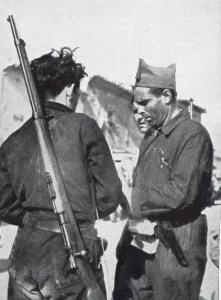
Buenaventura Durruti was the most famous anarchist icon in Spain, leading a massive column of over 6,000 fighters with a strictly democratic command structure where officers could be voted out by rank-and-file soldiers. The late-October decree directly assaulted everything his movement stood for. Durruti recognised the agonising reality that his fighters’ street battle discipline was insufficient to win a prolonged war against a professional, modern army. However, forcing traditional military codes on his passionately anti-authoritarian volunteers would destroy their fighting spirit. Durruti adopted what contemporaries called a strategy of peasant slyness. The Durruti Column decided to officially feign ignorance of the new state regulations to preserve their revolutionary identity. Concurrently, Durruti privately instituted the positive, practical aspects of the decree, such as unified command and rigorous operational organisation, without adopting the insulting traditional military hierarchy, salutes, or penalties. Tragically, Durruti was killed in Madrid in November 1936, and his successors eventually fully militarised the column into the 26th Division of the regular army.
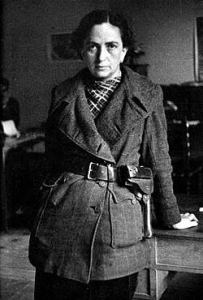
As an Argentine anti-Stalinist Marxist and feminist, Mika Etchebéhère faced double jeopardy. Her unit, a militia of the POUM (Workers’ Party of Marxist Unification), was deeply committed to democratic structures; she had been elected captain by her own fighters after her husband was killed in battle. When the central government began forcibly dismantling independent militias in early 1937, Soviet-backed Spanish Communists targeted the POUM as dissidents. Etchebéhère’s militia was dissolved, and she was briefly arrested and threatened with a political purge. Realising that independent resistance inside the new military system was a death sentence, she accepted the protection of the powerful anarchist commander Cipriano Mera. Mera incorporated her into the official regular army, appointing her second-in-command of the 38th Company of the 14th Division. Etchebéhère adapted by channelling her revolutionary ideals into the anarcha-feminist group Mujeres Libres while operating strictly within the hierarchy of the state’s new Popular Army to keep her troops, and herself, alive.
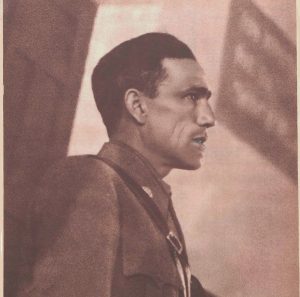
A fierce Madrid construction union leader and militant anarchist, Cipriano Mera became the ultimate example of pragmatic adaptation. Unlike those who saw militarisation purely as a betrayal, Mera viewed the chaos and lack of coordination in the early months as a lethal flaw that was actively slaughtering his friends. Mera argued that while professional soldiers could succumb to panic, a proper army had training, tactics, and logistical systems to fall back on, strengths the militias utterly lacked. He openly wrote about his fear of seeing good militants die meaninglessly due to badly organised actions. Mera completely threw himself into the new system. He accepted official state titles, rising from a simple bricklayer to become a Lieutenant Colonel and commander of the 14th Division and later the IV Army Corps. The anarchist press famously rebranded him as the authentic soldier of the people. Mera successfully proved that an anarchist could wear a uniform and enforce state military discipline without losing his working-class integrity, ultimately utilising his position to protect figures like Etchebéhère from communist political purges.
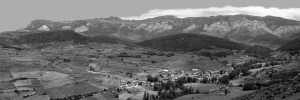
For the militias entrenched on isolated, distant front lines, the centralisation decrees of late October 1936 was an agonising process that varied wildly based on geography, local culture, and isolation. In these remote outposts, the order to uniformise and submit to state hierarchy collided directly with geographic isolation and regional politics. High in the rugged Cantabrian Mountains, along the borders of Palencia and Leon, the front lines were a fractured collection of mining outposts. The defenders here were predominantly militant coal miners, stubborn, heavily armed socialists and anarchists who had been fighting the state and right-wing bosses since the Asturias Uprising of 1934. When word of the October decrees reached these snow-choked mountain passes, the miners flatly refused to give up their democratic structure. To them, the Republican government in Madrid was thousands of miles away and fundamentally out of touch with the reality of mountain warfare. They viewed professional military officers with deep suspicion, often equating them with the very forces that had crushed their 1934 rebellion. Because of their geographic isolation, the Palencia front lines effectively ignored the central command for months. The miners retained their committee systems and elected delegates. It wasn’t until early 1937, when a highly organised Nationalist offensive under General Mola pushed through the mountains, that these groups were forced to accept integration into the Regular Popular Army just to survive. Even then, they did so under protest, often keeping their political flags flying alongside official army insignia.
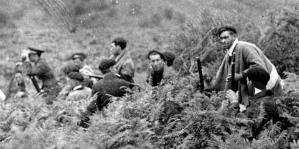
On the northern coast, the Basque Country was completely cut off from the main Republican zone by Nationalist territory. On 1 October 1936, the Republic had granted the region political autonomy. The new Basque president, José Antonio Aguirre, wasted no time exploiting this to run his own war effort. The Basque fighters (gudaris) were highly unique. They were largely devout Catholics and Basque nationalists organised by the PNV (Basque Nationalist Party). They had absolutely no interest in Madrid’s left-wing ideological army or the centralised Comandancia de Milicias. When Largo Caballero issued his late-October decrees, Aguirre and the Basque leadership refused incorporation into the unified Republican military structure. Instead, they created their own separate entity – the Eusko Gudarostea (Basque Army). They adopted strict military organisation and professional command, but under their own regional authority, entirely separate from the central government. The Basque groups adapted by functioning as an allied, sovereign army rather than a branch of the Republic, a fierce independent stance that lasted until the fall of Bilbao in June 1937.
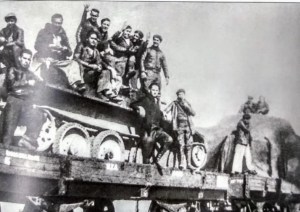
Located in the vast, arid plains of Extremadura, the Bolsa de la Serena (Serena Pocket) was a massive territorial bulge that jutted deep into Nationalist-controlled territory. The front here was incredibly quiet, fluid, and poorly monitored, consisting of scattered agricultural collectives and isolated villages. Out in the Serena pocket, the war felt distant, and the militias, largely uneducated rural peasants and local agricultural workers, were consumed by the daily struggles of harvesting crops, managing collectivised land, and guarding empty stretches of countryside. When the decrees arrived demanding that everyone aged 20–45 be mobilised and organised into rigid, numbered battalions, it caused massive logistical confusion. The lack of professional officers or government representatives in the deep southwest meant the transition was incredibly slow and messy. Many local peasant militias simply ignored the paperwork because they lacked the infrastructure to process it. They adapted by keeping their informal, village-based defence structures intact well into 1937. For these men, the decree felt like an alien bureaucratic demand from a distant capital. They only truly transformed into formal units when the central government finally sent regular political commissars and military instructors down south to forcefully organise the front into the VII Army Corps.
In the deeply individualised provinces of Andalucía, the late-October 1936 decrees collided with a fiercely independent, highly localised political culture. Unlike the centralised structures found in Madrid, Andalusian resistance was fractured into a patchwork of town-by-town fiefdoms. Anarchist pueblos and communist agrarian collectives operated like independent city-states, each fighting their own isolated, hyper-local war against the advancing Nationalist forces. For the Andalusian militiamen out on these fragmented fronts, the call for centralised militarisation was met with a mixture of cultural resistance, logistical chaos, and desperate pragmatism.
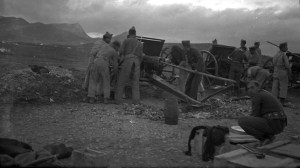
The rugged mountains of Malaga and Ronda were heavily dominated by the anarchist CNT-FAI. Here, the traditional Andalusian spirit of cantonalismo (local autonomy) reigned supreme. Each village militia was intensely loyal to its own immediate community and its own locally chosen leaders. When the central government decreed the abolition of independent militias, the Andalusian anarchists viewed it as an authoritarian power grab by Madrid. They flatly refused to take orders from regular military officers, many of whom they suspected of being secret fascist sympathisers. To these fierce mountain villagers, giving up their democratic structure felt like surrendering the very freedom they were fighting to protect. They essentially ignored the decrees. The militias in the Malaga sector chose to maintain their informal, committee-led defence structures. This fierce refusal to centralise or coordinate with neighbouring provinces had tragic consequences. When a massive, coordinated Nationalist and Italian offensive struck Malaga in early 1937, the fragmented Andalusian militias were incapable of organising a unified defence. The front collapsed catastrophically, leading to the infamous and tragic Desbandá, the mass civilian flight along the coastal highway toward Almería.
In contrast to the anarchist-heavy mountains, parts of the olive-rich province of Jaén were heavily influenced by the Spanish Communist Party (PCE). Here, the rural peasantry had a different relationship with the concept of a centralised state. The communist-led peasant militias in Jaén were much more receptive to the idea of a regular, disciplined army. They viewed the chaotic, uncoordinated actions of the neighbouring anarchist columns as a liability that was actively losing the war. The Jaén provinces became some of the first in Andalucía to actively embrace the late-October decrees. Local leaders worked directly with government representatives to systematically dismantle the village defence committees and reform them into the numbered battalions of the Popular Army. Because they complied with the centralisation orders, the Jaén front received priority for the scarce weapons and ammunition flowing from Madrid. They successfully stabilised their front lines, turning the province into a heavily fortified bulwark that resisted Nationalist advances for the remainder of the war.
Further east, the arid, desert-like province of Almería and its surrounding mining corridors were profoundly isolated from the rest of the Republican zone. Communications with the central government in Valencia or Madrid were slow, unreliable, and frequently disrupted. For the men entrenched in the isolated dust-choked trenches of the Almería front, the bureaucratic paperwork of the late-October decrees felt entirely irrelevant. They were facing critical shortages of food, boots, and rifles. The grand declaration of a Popular Army meant nothing to them without the physical delivery of supplies. Almería adapted through a slow, agonising process of passive delay. Local militia commanders kept their informal structures intact simply because they lacked the administrative infrastructure to process the conscription of men aged 20–45. It wasn’t until the influx of traumatised refugees and retreating soldiers from the fall of Malaga in February 1937 that the Almería front was forcefully reorganised. The sheer shock of that disaster finally shattered the local provincial isolation, forcing the remaining Andalusian fighters to submit to the rigid discipline of the regular Mixed Brigades.
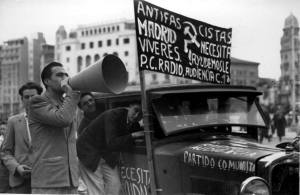
For the civilian populations and local governments inside Republican-held provinces, the late-October decrees of 1936 marked the exact moment the war shifted from a spontaneous revolutionary uprising into a cold, state-controlled war of survival. The transformation from an open militia system to a regular army fundamentally altered everyday life, local politics, and provincial economies across the remaining loyalist territory. In the immediate wake of the July coup, the central Republican government had practically collapsed. Power had shattered into hundreds of local provincial committees, worker syndicates, and regional defence councils. The late-October decrees acted as a massive political hammer. By abolishing the independent militia commands and placing all armed forces under the central Comandancia de Milicias, Madrid (and later Valencia) forcefully stripped local committees of their power. If a local town council or anarchist village collective wanted access to weapons, ammunition, or food rations, they were forced to submit to the central government’s authority. This sparked immense political tension, leading to silent power struggles, and eventually, violent clashes like the 1937 May Days in Barcelona, as the state clawed back control from the local revolutionary groups.
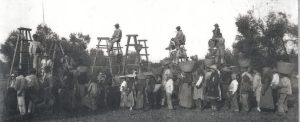
No one could build a professional army of hundreds of thousands of men without completely reorganising the economy. The general mobilisation of October 29–30 tore through the factories, fields, and businesses of every Republican province. Forcing all healthy men aged 20 to 45 into uniform instantly created a catastrophic labour shortage in the rearguard. With millions of men sent to the trenches, the economic survival of the provinces fell squarely on the shoulders of women. In provinces like Valencia and Catalonia, women flooded into the textile mills, agricultural fields, and chemical plants to manufacture uniforms, harvest crops, and produce munitions for the new Popular Army. To feed and equip the regular army, the state began strictly requisitioning provincial resources. Olive oil from Jaén, citrus from Valencia, and industrial outputs from Barcelona were systematically redirected away from local markets and sent directly to the military fronts, triggering the first severe waves of rationing and food shortages for provincial civilians.
Perhaps the deepest psychological shift across the provinces was the death of the volunteer ideal. In the summer of 1936, going to the front was a passionate personal choice made out of ideological conviction. By the end of October, it was a bureaucratic mandate enforced by military police. The general mobilisation turned every province into a zone of surveillance. Military tribunals were established, and guardias patrolled train stations and villages to catch emboscados (men hiding in the hills or backwoods to escape the draft). The loss of the personal choice you mentioned earlier deeply fractured provincial societies. Families who had happily supported local defence volunteers now found their fathers, sons, and brothers forcibly marched off under regular military discipline to fight on distant fronts which they had no personal connection.
For Republicans trapped behind enemy lines in Nationalist-held provinces, the late October 1936 decrees intensified an already terrifying struggle for survival. As the Republic consolidated into a professional war state, the Nationalists responded by turning their territory into a hyper-militarised machine. This transformation effectively sealed the fate of hidden loyalists. The declaration of general mobilisation in late October made it logistically impossible for military-aged Republican men to simply blend into Nationalist society. The rebel authorities instituted strict census checks, identity papers, and mandatory military sign-ups to root out anyone avoiding their own draft. For thousands of left-wing unionists, local officials, and Republican sympathisers, the only option left was to become a topo (mole). Men literally vanished into the architecture of their own homes. They hid in false walls, dugouts beneath floorboards, or cramped attic spaces. Because the Nationalist rearguard was tightly controlled by Falangist militias and neighbours eager to prove their own loyalty to Franco, these men lived in absolute silence. Many stayed hidden not just for the duration of the war, but for decades into the Francoist dictatorship, relying entirely on trusted family members to secretly feed them and dispose of waste.
In rural, mountainous Nationalist provinces, such as the hills of Galicia, the mountains of Leon, and the rugged terrain of Andalucía, going underground at home was too dangerous.
Thousands of Republicans, escaped soldiers, and union activists fled directly into the wilderness, forming the earliest nuclei of the Spanish anti-Francoist guerrilla movement (maquis). In late October 1936, these groups were completely cut off from the Republic’s new central command. They had no access to the newly formed Mixed Brigades or state supply lines. They adapted by launching a brutal, primitive guerrilla war of survival. Living in caves and remote camps, they raided Nationalist supply trucks, sabotaged railway lines, and assassinated local rebel officials. For these men, the war never calcified into trenches; it remained a fluid, desperate game of hide-and-seek in the mountains.
In heavily controlled Nationalist strongholds like Burgos, Valladolid, and Seville, the state authority was absolute. Anyone suspected of Republican ties who could not hide was swept up in the Terror Azul. With the Republic organising into a formidable military threat in late October, the Nationalists escalated their purges to eliminate any potential Fifth Column inside their cities. Executions without trial were rampant. For those spared death, the Nationalist state adapted its prison system to fuel its own war effort. Trapped Republicans were funnelled into a massive network of forced labour battalions. They were marched out under armed guard to build the very strategic roads, supply fortresses, and trench networks that Franco’s army used to fight the newly organised Republican Popular Army.
The topos (hiders) chose complete physical erasure. They spent years in claustrophobic domestic hiding spaces to avoid execution or forced conscription into the Nationalist army, while the maquis chose armed flight, using rugged geography to wage an isolated, independent guerrilla war entirely cut off from Republican supply networks. Those who had already been captured had already been stripped of all civil rights and converted into a massive forced-labour apparatus to build Nationalist military infrastructure.
For the citizens of Madrid, late October 1936 was the moment the war stopped being a distant news report and became a terrifying, immediate struggle for personal and collective survival. As the Nationalist columns closed in from the north and west, the capital was transforming into a heavily fortified bunker. The central government’s late-October centralisation decrees fundamentally reshaped how the Madrileños prepared for the impending onslaught. In the summer, Madrid had possessed a almost festive, chaotic atmosphere, with loosely organised militia groups driving around in colourful, slogan-painted cars. By late October, that spontaneity evaporated into cold, desperate military discipline. Following the general mobilisation decrees of October 29–30, the entire civilian population was weaponised. Tens of thousands of ordinary citizens, including women, teenagers, and elderly men who were not drafted into the trenches, were organised into massive labour brigades. Under the direction of the newly arriving military engineers, the people of Madrid literally tore up their own city. They dug miles of deep trenches through the parks, erected thick sandbag barricades across major avenues like the Gran Vía, and converted the sturdy brick basements of apartment blocks into bomb shelters.
The psychological weight of late October was crushing. The Nationalist forces were close enough that the low rumble of heavy artillery could be heard constantly in the city center. It was during these exact weeks that the iconic slogan ¡No pasarán!, popularised by communist leader Dolores Ibárruri, became the city’s spiritual lifeline. Madrileños knew exactly what the Nationalist regular army and Moroccan Regulares had done to towns along their march to the capital. The fear of a mass slaughter drove a collective psychological adaptation – the city accepted that it was better to turn Madrid into a ruined fortress than to surrender it. The panic of an imminent siege bred immense paranoia. With the Republic trying to forcefully centralise security, Madrid’s citizens lived under constant surveillance. Neighbourhood committees guarded apartment doors, keeping an active eye out for the Fifth Column – fascist sympathisers hidden inside the city who might sabotage the defences or signal rebel bombers.
By the end of October, Nazi and Italian aircraft were systematically bombarding the city centre, targeted explicitly at terrorising civilians. Daily life adapted to a subterranean reality.
The city’s underground Metro stations were converted into massive, makeshift subterranean villages. Every night, thousands of families carrying mattresses, blankets, and pots of food flooded down the stairwells to sleep on the concrete platforms and inside parked train carriages to escape the midnight air raids. The militarisation of the economy meant that food distribution was heavily redirected to the front-line trenches just outside the city limits. In Madrid, massive food queues became a permanent fixture of life. Women stood for hours in the freezing autumn mornings just to receive a meagre ration of beans, lentils, or a single loaf of bread, often diving for cover into doorways when the artillery shells began to rain down.
One thing the capital had to look forward to was the arrival of the International Brigades only weeks away. For a population that felt entirely abandoned by the Western democracies, the sight of these foreign volunteers fundamentally altered the city’s spirit overnight.
By October 1936, the Spanish Republican government was facing an existential crisis. Nazi Germany and Fascist Italy were openly sending advanced aircraft, tanks, and troops to assist Francisco Franco’s Nationalists. Meanwhile, the democratic powers (Britain and France) signed a strict Non-Intervention Agreement, effectively locking the Republic out of international arms markets. To prevent the massive gold reserves of the Bank of Spain (then the fourth largest gold reserve in the world) from falling into Nationalist hands as they advanced on Madrid, the Republican Prime Minister, Francisco Largo Caballero, and his Finance Minister, Juan Negrín, secretly shipped the bullion to the secure naval base of Cartagena in September 1936. 0n 20 October, the Soviet government officially agreed to accept the gold reserves for safekeeping. This agreement set the stage for the secret loading of 7,800 crates of gold onto four Soviet cargo ships (Kine, Kursk, Neva, and Volgoles). They departed Cartagena just five days later, arriving in Odessa in early November.
In reality, the gold was not just being stored. It was used to pay for Soviet military aid, including T-26 tanks, Polikarpov fighter planes, and military advisors. This effectively transformed the Republic into a financial debtor to the USSR and drastically increased communist influence within the Spanish Republican government, deeply complicating their relationship with western democracies.

